
In a swift response to an unexpected aviation incident, the Embassy of India in Mongolia has extended critical support to passengers and crew of Air India Flight AI 174, which made a precautionary landing at Ulaanbaatar International Airport on November 3, 2025. The flight, en route from San Francisco to New Delhi via Kolkata, was diverted due to a suspected technical issue detected mid-flight. All 228 passengers and crew members were safely disembarked and provided with hotel accommodations, food, and necessary immigration assistance through the coordinated efforts of the Indian Embassy and Mongolian authorities. Air India promptly dispatched a recovery aircraft from India, expected to arrive in Ulaanbaatar by Monday evening, to facilitate the passengers’ return to India. The airline expressed regret for the inconvenience caused but emphasized that the diversion was undertaken solely to ensure passenger safety. This incident follows a recent cancellation of another Air India flight on October 17 due to technical issues, underscoring the airline’s commitment to prioritizing safety. The Embassy of India has assured that it is providing all possible assistance to the affected individuals and working closely with Air India to resolve the situation swiftly.
分类: world
-

2 French nationals freed from Iranian prison after more than 3 years in detention
In a significant diplomatic breakthrough, French President Emmanuel Macron announced on Tuesday the release of two French citizens, Cécile Kohler, 41, and Jacques Paris, 72, from an Iranian prison after over three years of detention. The pair had been held on espionage charges, which France consistently labeled as baseless. Macron expressed profound relief, describing the release as a “first step” and emphasizing ongoing dialogue with Iranian authorities to facilitate their swift return to France. French Foreign Minister Jean-Noël Barrot confirmed that Kohler and Paris are currently safe at the French Residence in Tehran, awaiting their final release. The couple was arrested in May 2022 during a visit to Iran, with Paris condemning their detention as unjustified. Relatives recently shared their anguish after a rare phone call revealed the detainees’ despair. Last month, Iranian media reported that a Revolutionary Court in Tehran had sentenced the pair to a cumulative 63 years in prison on charges of espionage and alleged cooperation with Israel. Western nations have long accused Iran of using foreign prisoners as leverage in diplomatic negotiations, a claim Tehran denies.
-

Australia mushroom murderer to appeal verdict, says media
Erin Patterson, the Australian woman convicted of murdering three family members with a poisonous mushroom-laced meal, has filed an appeal to overturn her guilty verdict, according to local media reports. Patterson, 51, was sentenced to life in prison with parole eligibility after 33 years for serving a toxic beef Wellington dish to her estranged husband’s parents, aunt, and uncle during a lunch at her home in 2023. The meal resulted in the deaths of three victims, while one survived. The case, which garnered global attention, saw Patterson maintain her innocence, claiming the mushrooms were accidentally included in the dish. However, a jury found her guilty of three counts of murder and one count of attempted murder in July. Patterson’s legal team has not disclosed the grounds for the appeal, but they previously argued that the notoriety of the case would lead to her prolonged isolation in prison. Meanwhile, the prosecution has challenged the sentence as ‘manifestly inadequate.’ The tragic incident unfolded amid a strained relationship between Patterson and her husband, Simon, who had declined the invitation to the fatal meal. Survivor Ian Wilkinson, whose wife was among the victims, described the profound grief and silence left in the wake of the crime. Death cap mushrooms, the lethal fungi used in the poisoning, are known for their deceptive sweetness and resemblance to edible varieties.
-
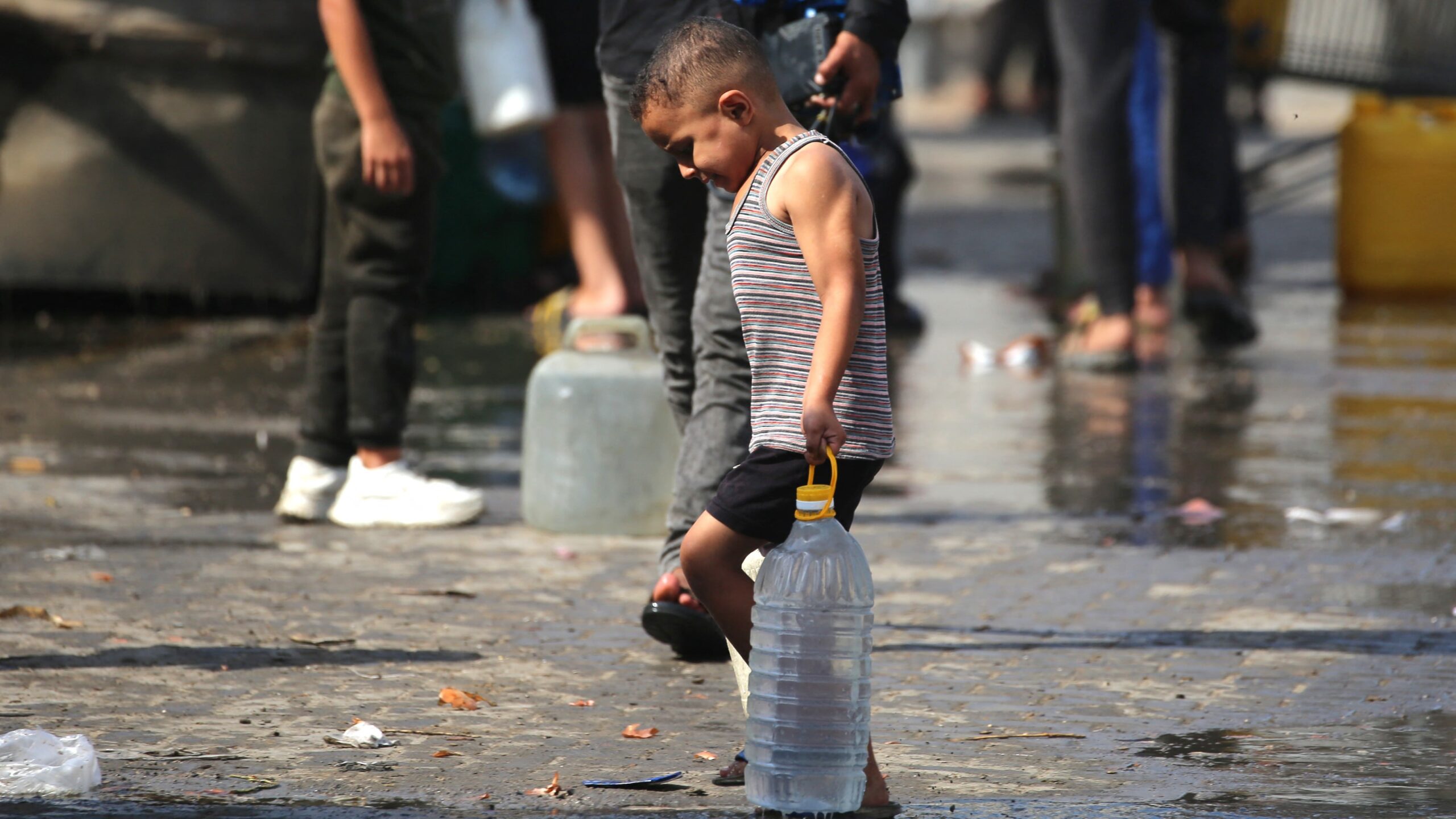
Gaza Strip faces a severe water shortage, despite ceasefire
The Gaza Strip remains in the grip of a severe water crisis, exacerbated by the aftermath of Israel’s two-year military campaign and the persistent blockade, even after a ceasefire was declared. Local officials report that the region’s water supply is critically insufficient, meeting only 15% of the daily needs of its over two million residents. Hosni Muhanna, spokesperson for the Gaza City Municipality, revealed that the current supply amounts to roughly 100,000 cubic meters per day, far below the required levels. The destruction of vital infrastructure during the conflict, including wells and the central desalination plant, has left only 17 out of 88 wells operational. Gaza now relies heavily on the Mekorot water line, Israel’s national water company, which provides a meager 15,000 cubic meters daily. Even before the war, the Israeli blockade had rendered most of Gaza’s water undrinkable, with UNICEF estimating in 2020 that only 10% of the population had access to clean water. The crisis has forced hundreds of thousands of households to purchase water for drinking and bathing, while the lack of fuel and essential equipment hampers recovery efforts. Additionally, the accumulation of 260,000 tonnes of waste and millions of tonnes of rubble further complicates the situation, posing significant environmental and health risks. The United Nations Environment Programme (UNEP) has warned that the ongoing environmental destruction could have long-term consequences for Gaza’s residents. The Israeli army’s reported disposal of construction waste within Gaza has added to the crisis, as documented by Israeli news outlet Haaretz. The Gaza City Municipality has called for urgent international assistance to restore basic services and prevent further deterioration of living conditions.
-

Typhoon Kalmaegi death toll jumps to 26 in Philippines
The devastating impact of Typhoon Kalmaegi has left at least 26 people dead in the central Philippines, according to the country’s civil defence office. The storm, which caused widespread flooding, has particularly affected Cebu province, where 21 of the fatalities were reported. Rafaelito Alejandro, the deputy administrator of civil defence, confirmed that most of the victims succumbed to drowning. ‘Based on the information we have, most of them died from drowning,’ Alejandro stated in a phone interview with AFP. The typhoon has inundated multiple towns, leaving communities grappling with the aftermath. Rescue and relief operations are underway as authorities work to assist those affected by the disaster. The incident underscores the vulnerability of the Philippines to extreme weather events, which are becoming increasingly frequent and severe due to climate change.
-

Sudan’s Rapid Support Forces: What to know about the paramilitary group
Since April 2023, Sudan has been engulfed in a brutal civil war between the Sudanese Armed Forces (SAF) and the paramilitary Rapid Support Forces (RSF). The conflict has displaced approximately 14 million people out of Sudan’s 51 million population, with unofficial death toll estimates surpassing 200,000. The RSF, once part of the SAF, has received significant support from the United Arab Emirates (UAE), which supplies the paramilitary group through routes in Somalia, Libya, and Chad. The SAF is led by General Abdel Fattah al-Burhan, while the RSF is commanded by General Mohamed Hamdan Dagalo, known as Hemedti. Hemedti, a former Janjaweed commander, rose to prominence under the regime of Omar al-Bashir, who ruled Sudan from 1989 to 2019. The Janjaweed, notorious for war crimes in Darfur, was transformed into the RSF in 2013. The RSF has since expanded its influence into civilian affairs, including border control and tax collection. The conflict escalated in 2023 when negotiations to integrate or dissolve the RSF failed. The RSF has been accused of widespread atrocities, including mass killings, sexual violence, and genocide, particularly in Darfur. Despite UAE denials, evidence suggests continued and intensified support for the RSF. The fall of el-Fasher in October 2025 marked another grim chapter in the war, with reports of 2,000 civilians killed in the first two days. The international community, including the US and Saudi Arabia, has struggled to mediate a resolution, leaving Sudan’s future uncertain.
-

Oman: Nine arrested for stealing gas extraction tools
In a significant crackdown on workplace theft, Oman’s Oil and Gas Installations Security Police Headquarters has apprehended nine individuals accused of attempting to steal gas extraction tools and equipment. The suspects, all of Asian nationality, were allegedly targeting their employer’s facility within a petroleum concession area. The arrest underscores Oman’s stringent measures to safeguard its critical energy infrastructure and combat illicit activities in the sector. Legal proceedings are now underway against the accused. This incident follows a recent major drug bust by Oman’s Royal Police, where five members of an international drug gang were arrested, highlighting the country’s broader efforts to tackle organized crime. The arrests were part of a coordinated operation by the General Directorate for Combating Drugs and Psychotropic Substances, demonstrating Oman’s commitment to maintaining security and order.
-

Look: Indian Sikh pilgrims enter Pakistan, first major crossing since May conflict
In a significant development marking a thaw in strained relations, over 2,100 Indian Sikh pilgrims crossed into Pakistan on Tuesday, the first major border crossing since deadly clashes in May. The pilgrims were granted visas to attend a 10-day festival celebrating the 556th birth anniversary of Guru Nanak, the founder of Sikhism. The Wagah-Attari border, the only active land crossing between the two nuclear-armed neighbors, had been closed to general traffic following the May conflict, which saw over 70 casualties in missile, drone, and artillery exchanges. AFP journalists observed pilgrims queuing on the Indian side, some carrying luggage on their heads, before being welcomed by Pakistani officials with flowers and rose petals. The pilgrims will visit sacred sites, including Nankana Sahib, Guru Nanak’s birthplace, and Kartarpur, where he is buried. Pakistan’s High Commission in New Delhi emphasized that the visa issuance aligns with efforts to promote inter-religious harmony. However, the Kartarpur Corridor, a visa-free route opened in 2019, remains closed since the conflict. The May clashes erupted after India accused Pakistan of backing an attack on tourists in Kashmir, a claim Pakistan denied. Sikhism, a monotheistic religion originating in the 15th century in Punjab, has its most revered shrines in Pakistan, a legacy of the 1947 partition that divided British India into Hindu-majority India and Muslim-majority Pakistan.
-

Philippines: Typhoon Kalmaegi kills at least 5, strands hundreds of thousands
Typhoon Kalmaegi has wreaked havoc in the central Philippines, claiming at least five lives and displacing hundreds of thousands of residents. The storm, which made landfall on Tuesday, brought torrential rains that flooded entire towns on the island of Cebu. Videos verified by AFP show cars, trucks, and even massive shipping containers being swept away by muddy floodwaters. In the 24 hours preceding the typhoon’s arrival, Cebu City received 183 millimetres of rain, far exceeding its monthly average of 131 millimetres. Provincial governor Pamela Baricuatro described the situation as ‘unprecedented,’ emphasizing that floodwaters posed the greatest danger. Local disaster official Ethel Minoza reported the recovery of two children’s bodies in Cebu City, where rescue operations are ongoing. Three other fatalities were confirmed, including an elderly resident who drowned in Leyte province and a man struck by a falling tree in Bohol. Don del Rosario, a 28-year-old Cebu City resident, recounted the rapid rise of floodwaters, calling it the worst disaster he has experienced in his lifetime. Scientists attribute the increasing intensity of storms like Kalmaegi to human-driven climate change, which warms oceans and increases atmospheric moisture. Hundreds of residents still living in tent cities following a 6.9-magnitude earthquake in September were forcibly evacuated for their safety. Nearly 400,000 people were pre-emptively relocated from the typhoon’s path, according to Rafaelito Alejandro of the Office of Civil Defense. As of 2:00 pm local time, Kalmaegi was moving westwards through the Visayan island chain with winds of 130 kilometres per hour. The Philippines, which faces an average of 20 storms annually, has already reached that number this year, with three to five more storms expected by December’s end. Miriam Vargas, a 34-year-old single mother in Dinagat Islands, described the terrifying experience of enduring the storm in darkness after losing electricity. The country was previously hit by two major storms in September, including Super Typhoon Ragasa, which caused significant damage and fatalities in Taiwan.
-
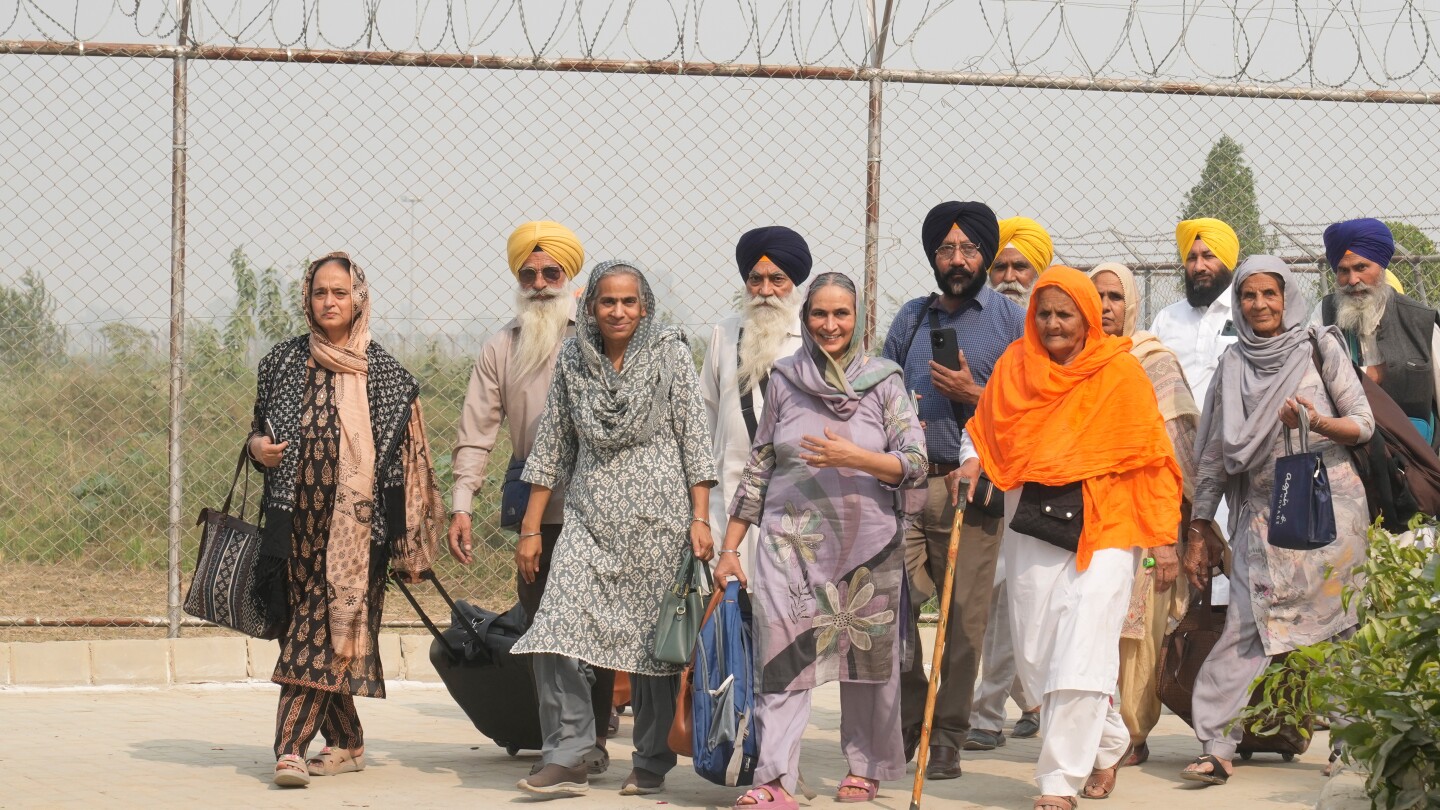
Nearly 2,100 Indian Sikhs arrive in Pakistan for annual religious festivities
In a significant gesture of goodwill, more than 2,000 Sikh pilgrims from India crossed into eastern Pakistan on Tuesday to participate in the annual commemoration of the birth of Guru Nanak, the founder of Sikhism. This marks the first people-to-people interaction between the two nations since a brief but intense conflict in May. The Wagah border crossing, which had been closed for months due to heightened tensions, was reopened by Pakistani authorities specifically to facilitate this pilgrimage. Government official Nasir Mushtaq emphasized that the decision to grant visas and reopen the border underscores Pakistan’s respect for religious minorities and its commitment to fostering cultural ties, despite ongoing political disputes with India. The pilgrims arrived in Lahore before proceeding to Nankana Sahib in Punjab, the site of Guru Nanak’s shrine. Sikhs constitute a small minority in predominantly Muslim Pakistan, making this event particularly noteworthy. The relationship between India and Pakistan has been fraught with hostility, especially after India accused Pakistan of supporting militants responsible for a deadly attack in Indian-administered Kashmir in April, which claimed 26 lives. Pakistan denied the allegations and called for an international investigation. Following the incident, diplomatic relations deteriorated, border crossings were sealed, and both nations engaged in cross-border military strikes. The conflict was temporarily halted after U.S. President Donald Trump mediated a ceasefire, but full diplomatic, trade, and people-to-people ties remain unresolved.