分类: world

  • Russian strike on the Kyiv region kills 4 and wounds at least 15, with peace talks stalled

    Russian strike on the Kyiv region kills 4 and wounds at least 15, with peace talks stalled

    KYIV, Ukraine — A severe overnight missile and drone offensive struck the Kyiv region, resulting in at least four fatalities and injuring 15 individuals, with three victims in critical condition. Mykola Kalashnyk, head of the regional administration, confirmed the assault damaged residential areas, educational facilities, enterprises, and critical infrastructure across four districts.

    Ukrainian President Volodymyr Zelenskyy identified energy infrastructure as the primary target, revealing Russia launched approximately 430 drones and 68 missiles. This escalation occurs amid heightened global tensions following the U.S. postponement of peace talks between Russia and Ukraine, attributed to the ongoing Middle East conflict.

    Analysts observe Moscow strategically benefits from Middle East hostilities through surging global energy prices, while potentially diverting Western attention and military resources away from Ukraine. Zelenskyy urgently appealed to Western allies for enhanced air defense missile production, warning that Russia intends to exploit Middle Eastern turmoil to intensify European destruction.

    Simultaneously, Kyiv awaits White House approval for a major drone production agreement proposed last year. Zelenskyy separately criticized the U.S. 30-day waiver on Russian oil sanctions, estimating it could provide Moscow with approximately $10 billion in war funding.

    In retaliatory actions, Ukrainian drones struck Russia’s southern Krasnodar region, damaging the Afipsky oil refinery and Port Kavkaz infrastructure, injuring three individuals. These developments unfold as both nations claim tactical advances along the front lines, despite Russia’s invasion entering its fifth year.

  • Fighting persists in Middle East

    Fighting persists in Middle East

    The Middle East conflict involving Israel, the United States, and Iran has intensified dramatically as it enters its third week, with regional casualties surpassing 2,000 amid growing international concerns about a potential global energy crisis.

    In a significant humanitarian response, the Red Cross Society of China has pledged $200,000 in emergency assistance to the Iranian Red Crescent Society. This special funding is designated specifically to support families affected by the devastating attack on Shajareh Tayyebeh primary school in Iran’s Hormozgan Province, where numerous children were among the 175 reported fatalities.

    Foreign Ministry spokesman Guo Jiakun expressed profound condolences, stating: “Attacking schools and harming children constitutes a serious violation of international humanitarian law and gravely offends the moral conscience of humanity.” Preliminary military investigations suggest a US missile may have struck the educational facility.

    The maritime theater witnessed heightened tensions as Iran’s navy claimed to have launched coastal anti-ship missiles toward the USS Abraham Lincoln approximately 340 kilometers from Iran’s maritime borders in the Sea of Oman. Iranian state television reported the aircraft carrier and its strike group were observed “fleeing the area at high speed,” though US officials promptly dismissed these claims, asserting no evidence supported the allegation of targeting or impact.

    Energy markets face unprecedented disruption as approximately 1,000 commercial vessels remain gridlocked in the Persian Gulf, creating a shipping crisis that analysts warn could surpass the scale of the 1980s Tanker War. Despite the International Energy Agency’s coordinated release of 400 million barrels from global petroleum reserves—the largest in the agency’s history—oil prices continue hovering around $100 per barrel.

    Retired Royal Navy officer Tom Sharpe noted: “There was a much higher tolerance to run the gauntlet back then but the threat was less and the Iranians had nothing like the missile and drone arsenal they have now, which is more like the tanker wars on steroids.”

    The conflict has expanded geographically with heavy exchanges of drones and missiles reported across multiple nations. Saudi Arabia’s Defense Ministry confirmed intercepting over 50 drones, including one targeting the Diplomatic Quarter in Riyadh. The UAE engaged 278 ballistic missiles, 15 cruise missiles, and 1,540 drones since hostilities began, with debris from intercepted projectiles falling in central Dubai.

    In a concerning development, a US military refueling plane crashed in Iraq, with the Islamic Resistance in Iraq claiming responsibility for downing the aircraft and killing all crew members. Meanwhile, France announced its first military casualty in the Erbil region, signaling the conflict’s expanding international footprint.

  • Rescuers blame weather and ‘underprepared skiers’ for rise in Alps avalanche deaths

    Rescuers blame weather and ‘underprepared skiers’ for rise in Alps avalanche deaths

    From the aerial perspective of a rescue helicopter soaring above the French Alps, the mountain range reveals a scarred landscape. Fresh avalanche tracks mar the pristine white slopes, serving as stark reminders of a particularly lethal winter season. According to the European Avalanche Warning Services, this season’s death toll has surpassed 100 fatalities—a grim statistic not witnessed in nearly a decade.

    The Tarentaise valley network, while breathtakingly beautiful under its dense snow blanket, has become increasingly treacherous. Frédéric Bonnevie, a mountain patroller with 32 years of experience, observes significant environmental shifts. ‘As with all around the world, the climate is changing,’ he notes, pointing to shorter winter seasons and premium powder snow now found at higher elevations. This season’s substantial snow accumulation has proven unusually unstable, contributing to a dramatic spike in avalanche-related fatalities.

    A concerning pattern emerges among avalanche victims. According to Stéphane Bornet, director of French snow safety association Anena, many are technically proficient skiers who frequent the resorts but lack comprehensive mountain environment knowledge. ‘Several victims didn’t possess basic safety kits—transceivers to signal their location or shovels,’ Bornet reveals. ‘They also neglected fundamental route research.’

    The survival statistics present a sobering reality: carrying a transceiver increases avalanche survival chances to 70%, with the initial 16 minutes following burial being critical. Without this equipment, survival rates plummet to 20%, while rescue operations require substantially more personnel and resources.

    Veteran slope patroller Pierre Boulonnais, with 17 years serving Val Thorens, demonstrates the snow’s hidden dangers through a simple excavation. Beneath 60 centimeters of soft powder lies densely compressed snow—invisible to the eye but potentially deadly. ‘If trapped under just 50 centimeters of this density, you already have over a quarter tonne weighing upon you,’ Bornet explains.

    The French media has extensively covered recent avalanche incidents, including the tragic discovery of two female skiers buried in La Chapelle d’Abondance and the helicopter evacuation of 64 residents from an isolated village in Isère. These events have sparked debates about climate change impacts and calls for ‘foreigners and the reckless’ to bear rescue costs.

    Despite elevated risk awareness, many visitors like snowboarder Bella acknowledge feeling ‘twitchy’ due to social media avalanche reports, though lowered risk ratings provide some reassurance. Meanwhile, rescue crews maintain that avalanche dangers remain significantly high.

    Beyond environmental factors, rescuers identify concerning behavioral shifts. An off-piste instructor with 25 years’ experience observes that modern skiers increasingly venture into dangerous terrain immediately after snowfall to maximize limited vacation time, rather than allowing proper snow settlement. Bonnevie concurs: ‘The new generation wants to be the best, biggest, and quickest.’

    While avalanche deaths have reached similar heights previously, and climate change’s exact role requires further examination, temperature fluctuations undoubtedly affect snowfall patterns. ‘We had substantial snow in late October, insufficient accumulation during Christmas holidays, then heavy snowfall in January creating high avalanche risks,’ Bonnevie explains.

    Officials emphasize that human complacency represents a manageable factor compared to climatic changes. Bornet concludes: ‘Remember that mountains constitute a magnificent playground and adventure field. Let’s ensure your memories remain positive ones.’

  • Iran, US threaten attacks on oil facilities

    Iran, US threaten attacks on oil facilities

    The Middle East conflict has escalated into a global energy crisis as Iran and the United States exchange threats targeting critical oil infrastructure. Iranian armed forces issued a stark warning that US-linked oil facilities would be reduced to “a pile of ashes” in retaliation for potential American strikes. This comes after President Donald Trump declared he might “wipe out” Iran’s primary crude export terminal on Kharg Island, which handles the overwhelming majority of the country’s oil shipments.

    The strategic Strait of Hormuz has become a focal point in the confrontation, with Tehran threatening to strike oil tankers traversing this crucial waterway that normally carries one-fifth of global oil supplies. The resulting disruption has already driven crude prices up by more than 40 percent since hostilities began two weeks ago.

    Trump announced that US forces had “totally obliterated” all military targets on Kharg Island in what he described as “one of the most powerful bombing raids in the History of the Middle East.” While claiming he had chosen not to target oil infrastructure for now, the President warned that any interference with shipping through the Strait of Hormuz would cause him to “immediately reconsider this decision.”

    The human cost continues to mount, with Iranian health ministry figures reporting over 1,200 fatalities since the conflict began on February 28, though these numbers remain unverified independently. The UN refugee agency estimates up to 3.2 million people have been displaced within Iran.

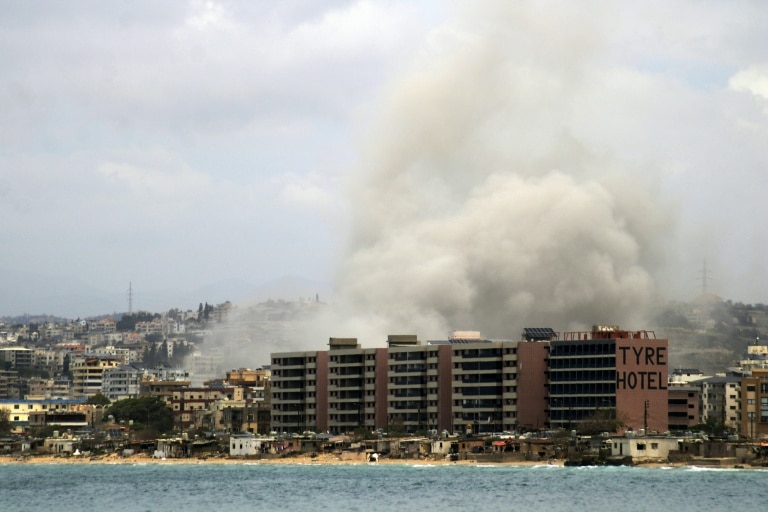
    The conflict has regionalized significantly with Tehran launching missile and drone attacks against at least ten countries. Recent developments include intercepted missiles over Qatar, drone downings in Saudi Arabia, and a ballistic missile interception by NATO forces launched from Iran. Lebanon has been drawn into the conflict after Israeli strikes killed medical personnel and targeted Iranian-backed Hezbollah forces.

    US military reinforcements, including the amphibious assault ship USS Tripoli with 2,500 Marines, are reportedly en route to the region as the aerial campaign continues. The Pentagon claims over 15,000 targets have been struck in Iran during the two-week conflict.

  • North Korea fires about 10 missiles toward sea in show of force, Seoul says

    North Korea fires about 10 missiles toward sea in show of force, Seoul says

    In a significant military demonstration, North Korea launched approximately ten ballistic missiles toward the eastern sea on Saturday, according to South Korea’s Joint Chiefs of Staff. The projectiles were fired from the Sunan area, location of Pyongyang’s international airport, traveling roughly 350 kilometers before landing outside Japan’s exclusive economic zone. Japanese Defense Minister Shinjiro Koizumi confirmed no damage to aircraft or vessels resulted from the launch.

    This provocative act coincides with the ongoing Freedom Shield joint military exercises between United States and South Korean forces, an annual springtime drill involving thousands of personnel. The timing appears deliberately confrontational, as North Korea has historically condemned such allied drills as rehearsal for invasion.

    The geopolitical context extends beyond the Korean Peninsula, with analysts noting potential connections to Middle Eastern conflicts. Recent reports suggest the U.S. might be relocating certain missile defense assets, including THAAD systems from Seongju, to support operations against Iran. When questioned about potential redeployments, South Korean President Lee Jae Myung’s office declined to confirm operational details but maintained that any asset movements wouldn’t compromise the allies’ defensive capabilities against North Korea.

    Diplomatic prospects appear increasingly dim following the missile launches, which occurred mere hours after South Korean Prime Minister Kim Min-seok met with U.S. President Donald Trump in Washington. While South Korean officials had expressed hope that Trump’s anticipated visit to China might create diplomatic openings, North Korea’s latest demonstration signals continued defiance. Pyongyang has recently hardened its stance toward Seoul while demanding Washington abandon denuclearization prerequisites for negotiations.

    North Korea’s rhetoric has intensified concurrently with global tensions. Kim Yo Jong, influential sister of North Korean leader Kim Jong Un, recently criticized U.S.-South Korea drills as destabilizing during a period of global security deterioration. Separately, North Korea’s Foreign Ministry has issued statements supporting Iran’s new supreme leader while condemning U.S.-Israeli military actions.

    The 11-day Freedom Shield exercise, continuing through March 19, represents one of two major annual command post drills between the allies. These primarily computer-simulated exercises aim to enhance joint operational readiness against evolving security challenges, accompanied by field training under the Warrior Shield program.

    North Korea continues rejecting diplomatic overtures regarding its nuclear program, which stalled following the collapse of Kim Jong Un’s 2019 summit with Trump. Recent intelligence suggests Kim has prioritized relations with Russia, potentially providing military support for Moscow’s Ukraine campaign in exchange for aid and technological transfers.

  • ‘Suez moment’: US missteps in Iran echo across East Asia to the Gulf and Europe

    ‘Suez moment’: US missteps in Iran echo across East Asia to the Gulf and Europe

    The United States’ military engagement against Iran is generating profound consequences for global security frameworks, triggering what experts characterize as the most significant drain on American superpower capabilities since the Cold War era. According to multiple analyses, the conflict has compelled Washington to redeploy critical defense assets from East Asia and Europe to the Middle East, creating security vulnerabilities across multiple theaters.

    The ongoing campaign, now entering its third week, has demonstrated Iran’s vulnerability to aerial bombardment yet failed to achieve strategic objectives. Despite claims of striking 6,000 targets and eliminating Supreme Leader Ayatollah Ali Khamenei, the anticipated popular uprising against Tehran’s leadership has not materialized. Instead, Mojtaba Khamenei has assumed leadership while Iranian officials publicly demonstrate confidence amidst the attacks.

    Iran continues to project power through drone assaults on regional capitals and strategic maritime attacks, with at least six vessels targeted in the Strait of Hormuz this week alone. These operations persist despite relentless aerial bombardment and decades-long sanctions, highlighting the Islamic Republic’s resilience.

    Academic experts draw historical parallels to the 1956 Suez Crisis, noting similar patterns of imperial overreach. Professor Fawaz Gerges of the London School of Economics observes: ‘There is no superpower to replace the Americans, unlike how the French and British were sidelined.’ However, key differences emerge as Russia and China provide military support to Iran, though experts suggest they remain limited to regional spoiler roles.

    The security realignment extends beyond the Middle East. South Korea faces renewed tensions as the US relocates THAAD missile-defense systems to the Persian Gulf, raising questions about American commitment to Asian allies. Similarly, European NATO members contribute air defense systems to Middle East operations, creating new vulnerabilities amid Russia’s ongoing war in Ukraine.

    Gulf states previously reliant on US protection now pursue security diversification through agreements with Pakistan, Turkey, and China. Professor Peter Frankopan of Oxford University notes: ‘Across the Gulf, I hear threats to turn to China for security systems. The US is an enormous economy with innovative opportunities, but in football terms, this looks like an own goal.’

    The economic dimension compounds strategic concerns, with the Trump administration rolling back Russian oil sanctions to address energy price surges. European nations, heavily dependent on Gulf refineries after sanctioning Russia, face particular vulnerability to Hormuz closures. Notably, France and Italy have initiated direct negotiations with Iran to secure energy passage, while India pursues similar bilateral arrangements—developments that signal erosion of American maritime supremacy.

    As Ian Lesser of the German Marshall Fund notes: ‘The very fact that there is debate over whether ties with the US are an asset or liability is disturbing.’ This conflict appears to be accelerating the transition toward a more chaotic, multipolar world order.

  • US dispatched Marines to Mideast, feeding Iran invasion warnings

    US dispatched Marines to Mideast, feeding Iran invasion warnings

    The Trump administration has authorized a significant military deployment to the Middle East amid escalating tensions with Iran, marking what analysts describe as a potential major escalation in the ongoing conflict. Defense Secretary Pete Hegseth has approved a request from US Central Command to dispatch additional warships and approximately 2,500 Marines to the region following Iran’s aggressive actions in the Strait of Hormuz.

    According to Wall Street Journal reports citing three US officials, the deployment includes an amphibious ready group and attached Marine expeditionary unit, typically consisting of several warships and 5,000 personnel. The Japan-based USS Tripoli and its Marine contingent are already en route to the Middle East.

    The mobilization comes in response to Iran’s intensified campaign against commercial shipping, with at least six vessels attacked since Wednesday—including one Thai-flagged ship with three crew members currently missing. US intelligence sources have additionally accused Iran of mining the strategic waterway, through which approximately 20% of global oil shipments pass annually.

    The economic impact has been immediate and severe. Brent crude prices have surged from under $70 per barrel to over $100 within a month, while US gasoline prices have jumped from $2.94 to $3.63 per gallon on average. These increases persisted despite the International Energy Agency’s coordinated release of strategic oil reserves—the largest in history—aimed at mitigating what the agency termed “the largest supply disruption in the global oil market.”

    Iran’s new supreme leader, Mojtaba Khamenei, declared in his first address that “the lever of blocking the Strait of Hormuz must definitely be used” to increase economic pressure on the US. The Islamic Revolutionary Guard Corps has vowed that “not a liter of oil” shall pass through the strait and threatened attacks on any ship linked to the US or Israel.

    Military analysts suggest the Marine deployment could indicate preparation for ground operations. While President Trump publicly stated he was “nowhere near” sending troops into Iran, administration officials have privately discussed several options including commando raids on nuclear facilities, occupation of Kharg Island (which handles 90% of Iran’s oil exports), and clearing Iran’s coastline around the strait.

    Harrison Mann, former US Army major and Defense Intelligence Agency executive officer, warned that such operations risk high casualties and could lead to “a prelude to forever war.” The deployment occurs amid strong public disapproval, with 53% of registered voters opposing military action against Iran according to a recent Quinnipiac poll.

  • Six Americans killed after US refuelling jet crashes in Iraq

    Six Americans killed after US refuelling jet crashes in Iraq

    The United States Central Command (Centcom) confirmed on Friday the tragic loss of all six military personnel aboard a KC-135 Stratotanker that crashed in western Iraq on Thursday. The aircraft was operating under Operation Epic Fury in friendly airspace when the incident occurred, according to an official statement released via social media platform X.

    Centcom explicitly stated that preliminary assessments indicate the crash resulted from neither hostile enemy fire nor friendly fire, though a comprehensive investigation into the exact circumstances remains ongoing. The identities of the deceased service members are being withheld pending the mandatory 24-hour notification period for next of kin.

    This incident elevates the total number of U.S. fatalities to 13 since the commencement of joint U.S.-Israeli military engagements against Iranian interests on February 28. The disclosure emerged amidst a Pentagon press briefing where Secretary of War Pete Hegseth characterized the conflict with the somber admission that ‘war is hell, war is chaos.’ When questioned for specific casualty figures and locations, Secretary Hegseth deferred to Chairman of the Joint Chiefs of Staff Dan Caine, who provided ambiguous details citing engagements ‘in Kuwait, Jordan, down across the southern flank… most from one-way attack strikes,’ without offering concrete numbers.

    Further complicating transparency, Pentagon officials announced they would no longer publicly distinguish between personnel killed in action (KIA) and wounded in action (WIA), asserting that approximately 90% of casualties have returned to duty. This policy shift follows earlier revelations that at least 150 U.S. military personnel have been confirmed wounded, a figure that may exclude 19 individuals recently evacuated from Saudi Arabia to a military medical facility in Germany for combat injuries.

    The growing number of casualties has reportedly strained medical resources, with the largest Pentagon-run hospital in Germany temporarily suspending non-urgent care to prioritize combat injuries, fueling speculation that the actual number of serious wounds may be higher than officially acknowledged.

    Amid the crash investigation, strategic analysis from the Institute for the Study of War contends that Iranian-backed Iraqi militias, notably Kataib Hezbollah, almost certainly executed several attacks targeting U.S. and European forces in Iraq on March 11 and 12. This assessment aligns with a stark warning from Iran’s new supreme leader, Mojtaba Khamenei, who declared in his inaugural statement that Tehran is prepared to activate new, unconventional fronts against the U.S. and Israel should the conflict persist.

  • US defends Israel in new ICJ intervention in South Africa genocide case

    US defends Israel in new ICJ intervention in South Africa genocide case

    The International Court of Justice (ICJ) has become the stage for a significant international legal confrontation as multiple nations formally intervened in South Africa’s genocide case against Israel. The United States submitted a declaration on Thursday that explicitly defends Israel against allegations of committing genocide in Gaza, marking a notable development in the proceedings.

    According to the court’s Friday press release, the US filing was accompanied by separate interventions from Namibia, Hungary, and Fiji. These submissions were made under Article 63 of the ICJ statute, which permits countries that are parties to a disputed treaty to present their interpretation of that treaty. Iceland and the Netherlands also filed declarations under the same provision on Thursday.

    The case originated in December 2023 when South Africa accused Israel of violating the Genocide Convention through its military operations in Gaza following the October 7 Hamas-led attacks. Pretoria’s case contends that Israel’s actions—including mass casualties, infrastructure destruction, and creating conditions threatening Palestinian survival—constitute genocide, which Israel denies, maintaining its military campaign is justified self-defense.

    The US intervention stands apart for its direct rebuttal of South Africa’s allegations. Washington’s declaration argues that accusations of Israeli genocide are “false” and urges the court to apply a stringent legal threshold when assessing genocidal intent. The submission emphasizes that genocide requires clear proof of specific intent to destroy a protected group, asserting that such intent should only be inferred when it represents the only reasonable explanation for observed conduct.

    The US further contends that the exceptional gravity of genocide demands that the court be fully convinced before making such a determination, noting that civilian casualties and destruction during conflict alone do not demonstrate genocidal intent. Washington warned that lowering the standard risked broadening the term’s application beyond its original meaning and could misuse the Genocide Convention to bring extraneous disputes before the court.

    While Article 63 interventions are technically limited to treaty interpretation, the US declaration explicitly challenges South Africa’s allegations. Hungary and Fiji’s submissions similarly advance legal arguments aligning with Israel’s position, calling for narrow interpretations of genocide and high evidentiary thresholds.

    In contrast, Namibia’s declaration advocates for a broader interpretation of the Genocide Convention, emphasizing how genocidal intent may be inferred from patterns of conduct and cumulative evidence. Namibia argues that acts including denial of humanitarian aid, repeated displacement, and deprivation of basic necessities could constitute deliberately inflicting conditions intended to destroy a protected group. Their submission also stresses that genocide can occur through omissions, such as refusing life-saving humanitarian assistance to civilians under state control.

    These latest filings expand the growing list of states seeking to intervene, which now includes 22 nations—an unusually high number for ICJ proceedings. Since April 2024, countries including Colombia, Libya, Mexico, Palestine, Spain, Turkey, Chile, the Maldives, Bolivia, Ireland, Cuba, Belize, Brazil, the Comoros, Belgium, and Paraguay have submitted interventions. Palestine and Belize have additionally sought to participate under Article 62, which allows states with potentially affected legal interests to join proceedings.

    The ICJ has already issued legally binding provisional measures ordering Israel to prevent acts that could violate the Genocide Convention and permit humanitarian aid into Gaza, though Israel has repeatedly ignored these orders. A final ruling on whether Israel breached the Convention is expected by 2028, though timing may vary based on hearing lengths and party compliance with deadlines.

    On Thursday, Israel was scheduled to submit its counter-memorial responding to South Africa’s accusations after several deadline extensions, though the court had not announced the filing as of the latest reports.

    The humanitarian situation in Gaza remains dire, with reports indicating over 70,000 Palestinian casualties—mostly women and children—during Israel’s military operations. Most of Gaza’s homes, hospitals, schools, and infrastructure have been destroyed, rendering the enclave largely uninhabitable for its 2.3 million civilians.

    A September UN commission of inquiry concluded that Israel has committed genocide in Gaza since October 2023. The report’s authors, including legal experts Navi Pillay and Chris Sidoti, indicated to Middle East Eye that their analysis used evidence and methodology similar to what the ICJ will employ in its proceedings.

  • War nears two-week milestone as fighting persists

    War nears two-week milestone as fighting persists

    The Middle Eastern conflict approaches its two-week milestone with intensifying military engagements and no immediate resolution on the horizon. Current casualty figures have surpassed 2,000 fatalities across the region, amplifying global apprehensions regarding potential energy market disruptions and humanitarian consequences.

    In a significant humanitarian gesture, the Red Cross Society of China has pledged $200,000 in emergency assistance to the Iranian Red Crescent Society. This aid specifically addresses the tragic incident at Shajareh Tayebeh primary school in Iran’s Hormozgan province, where over 160 casualties—predominantly young students—were reported. Chinese Foreign Ministry spokesman Guo Jiakun condemned the attack, emphasizing that “targeting educational institutions and harming children constitutes a grave violation of international humanitarian law and profoundly offends humanity’s moral conscience.” Preliminary military investigations suggest the school strike resulted from a targeting error involving a US Tomahawk missile.

    Maritime tensions escalated dramatically as Iran’s navy reported launching coastal anti-ship missiles toward the USS Abraham Lincoln aircraft carrier battle group operating approximately 340 kilometers from Iranian territorial waters in the Sea of Oman. Iranian state media claimed the US vessels were observed “fleeing the area at high speed” following the engagement. US officials promptly refuted these assertions, maintaining no evidence indicates their warships were either targeted or struck. The United States has strategically positioned two aircraft carrier groups—including the USS Gerald R. Ford—in the region as a show of force.

    The conflict’s ripple effects continue to destabilize global energy markets despite coordinated international efforts. Oil prices persist near $100 per barrel notwithstanding the International Energy Agency’s historic decision to release 400 million barrels from global petroleum reserves. Retired Royal Navy officer Tom Sharpe noted that approximately 1,000 commercial vessels remain gridlocked in the Persian Gulf, creating a shipping crisis potentially exceeding the scale of the 1980s Iran-Iraq Tanker War. Whereas 150 ships typically transit the Strait of Hormuz daily under normal circumstances, only a minimal trickle of vessels currently navigates this critical chokepoint.

    Regional hostilities expanded significantly with intensive drone and missile exchanges reported across multiple fronts. Lebanon has recorded over 600 fatalities, Iran acknowledges approximately 1,300 casualties, Israel reports a dozen deaths, and at least seven US service members have perished in combat operations. Saudi Arabia’s Defense Ministry confirmed intercepting more than 50 drones, including one targeting the Diplomatic Quarter in Riyadh. The United Arab Emirates reported debris from intercepted projectiles damaging structures in central Dubai, though no injuries resulted from what authorities termed a “minor incident.” UAE defenses have engaged 278 ballistic missiles, 15 cruise missiles, and 1,540 drones since hostilities commenced.

    The conflict’s expansion into neighboring territories was further evidenced by a crashed US military KC-135 refueling aircraft in Iraq. While US officials attributed the incident to non-hostile causes, the Iran-backed Islamic Resistance in Iraq claimed responsibility for downing the aircraft with missile fire, asserting all crew members perished. In a separate development, French President Emmanuel Macron announced the nation’s first combat fatality in Iraq’s Erbil region, signaling the conflict’s broadening international dimensions.