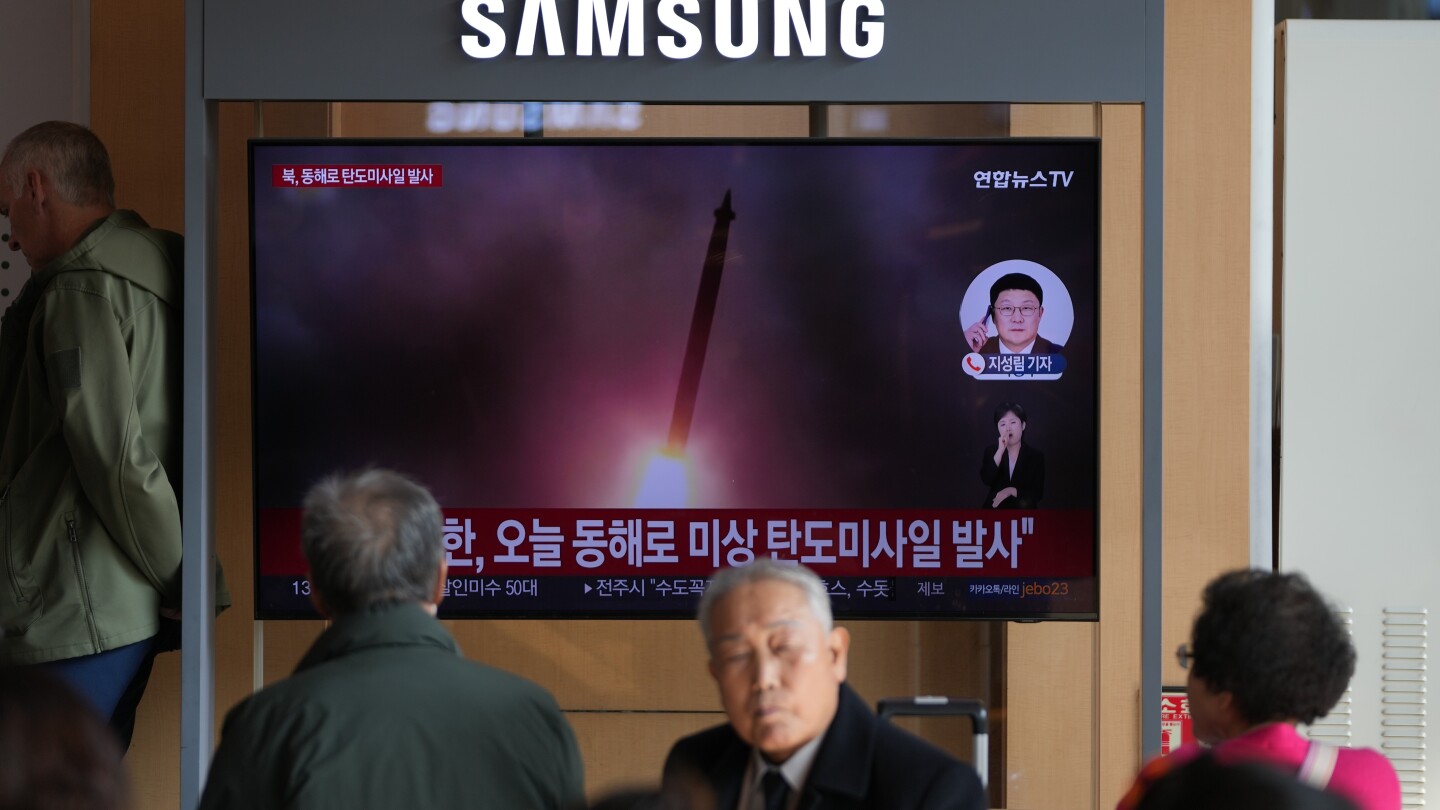
North Korea launched at least one ballistic missile toward its eastern waters on Friday, according to South Korea’s military. This latest provocation underscores Pyongyang’s intensified weapons testing activities, which have surged in recent weeks. The South Korean Joint Chiefs of Staff did not disclose specific details about the missile’s type or flight range. This incident follows a series of recent tests, including the firing of hypersonic and cruise missiles last month, which North Korea claims have enhanced its nuclear capabilities. Earlier this week, North Korea also conducted artillery drills, firing 10 rounds into its western waters as U.S. Defense Secretary Pete Hegseth began a two-day visit to South Korea. The artillery exercises were repeated on Saturday, coinciding with a summit between South Korean President Lee Jae Myung and Chinese President Xi Jinping in Gyeongju. During the summit, Lee urged Beijing to play a more active role in persuading North Korea to resume dialogue with Washington and Seoul. Hegseth, following annual security talks with South Korean officials, commended South Korea’s plans to increase military spending in response to North Korean threats and regional uncertainties. North Korean leader Kim Jong Un has consistently avoided diplomatic engagements with the U.S. and South Korea since talks with former U.S. President Donald Trump collapsed in 2019. Kim has instead focused on expanding his nuclear and missile programs, including the development of intercontinental ballistic missiles capable of targeting U.S. allies in Asia and the U.S. mainland. At a recent military parade in Pyongyang, attended by officials from Russia, China, and Vietnam, Kim showcased advanced weapons, signaling potential future tests. North Korea has also denounced U.S. sanctions targeting its cybercrime activities, accusing Washington of hostility and vowing countermeasures. Experts interpret these actions as indications that Pyongyang has no immediate plans to return to negotiations.
分类: world
-
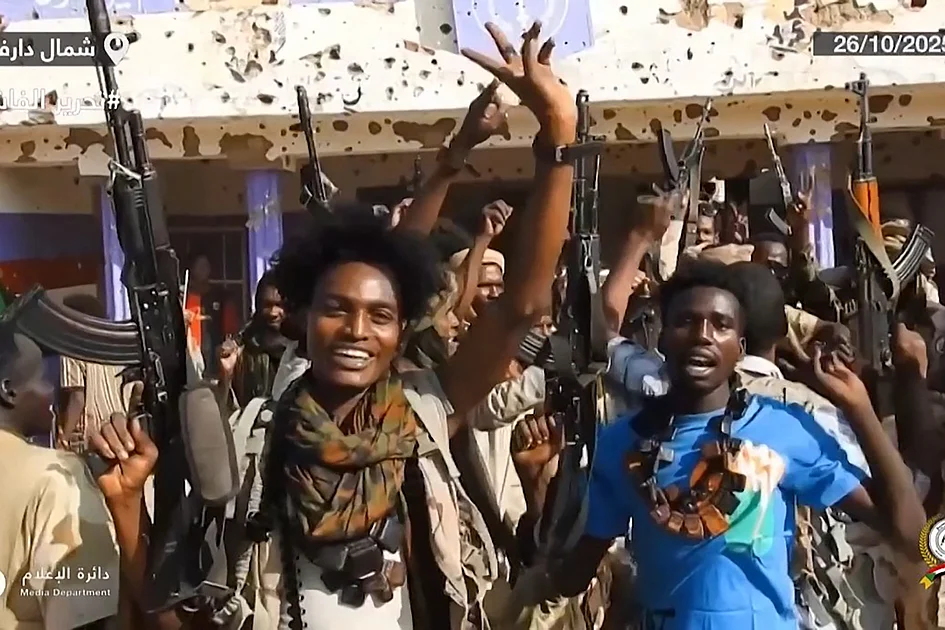
Sudan paramilitaries agree to mediators’ truce proposal
In a significant development in Sudan’s protracted conflict, the Rapid Support Forces (RSF) announced on Thursday their acceptance of a humanitarian truce proposal put forward by international mediators. This announcement comes shortly after the RSF seized control of El Fasher, the last major stronghold of the Sudanese army in the western Darfur region. The capture of El Fasher marks a pivotal moment in the two-year-long war, effectively consolidating the RSF’s dominance over all five state capitals in Darfur. The RSF stated that the truce aims to address the severe humanitarian crisis caused by the conflict, protect civilians, and facilitate the delivery of urgent aid. The proposal, backed by the Quad countries—the United States, Egypt, the UAE, and Saudi Arabia—has yet to receive a response from the Sudanese government. Earlier in the day, army chief Abdel Fattah Al Burhan vowed to continue the fight, emphasizing his commitment to defeating the RSF and avenging the losses suffered by his forces. The conflict, which began in April 2023, has divided Sudan along geographical lines, with the RSF controlling Darfur and parts of the south, while the army retains the north, east, and central regions. The mediators’ proposal, details of which remain undisclosed, is expected to include provisions for a temporary ceasefire, a permanent cessation of hostilities, and a transition to civilian governance.
-

‘Our job is only killing’ – how Sudan’s brutal militia carried out a massacre
In a harrowing turn of events, the Rapid Support Forces (RSF) in Sudan have been accused of committing war crimes and crimes against humanity in the city of el-Fasher. The International Criminal Court (ICC) has launched an investigation into the atrocities, which are believed to have resulted in the deaths of over 2,000 people. The RSF, a paramilitary group, has been engaged in a brutal conflict with the Sudanese military since their ruling coalition collapsed in 2023. The city of el-Fasher, the last stronghold in Darfur held by the Sudanese military, fell to the RSF after a prolonged siege that lasted nearly two years. Satellite images reveal that the RSF constructed a massive sand barrier around the city, effectively sealing off access routes and blocking aid. The siege intensified in September and October, with reports of mass killings, including an attack on a mosque and a displacement camp. Videos shared with BBC Verify depict the RSF imposing a blockade on food and essential supplies, and executing unarmed captives. The RSF, which emerged from the Janjaweed militia responsible for the Darfur genocide in the early 2000s, has a long history of committing atrocities against non-Arab groups in Sudan. Despite the RSF’s attempts to reframe the narrative through social media posts showing humanitarian efforts, the global community has expressed outrage over the violence in el-Fasher. The RSF has detained some of its members, including a commander identified as Abu Lulu, who was implicated in the executions. However, analysts from Yale Humanitarian Research Lab have accused the RSF of attempting to cover up mass atrocities by removing bodies and identifying graves near a children’s hospital. The ICC’s investigation continues as the world watches the unfolding humanitarian crisis in Sudan.
-

Brazil stumps up billions of dollars for its ambitious rainforest fund at UN climate summit
In a landmark move to combat deforestation and climate change, Brazil unveiled its ambitious Tropical Forests Forever Facility on Thursday during the United Nations annual climate summit in Belem. The initiative, spearheaded by President Luiz Inácio Lula da Silva, aims to incentivize countries to preserve their tropical forests by offering financial rewards. The fund has already secured $5.5 billion in pledges, with Norway leading the charge with a $3 billion commitment.
-
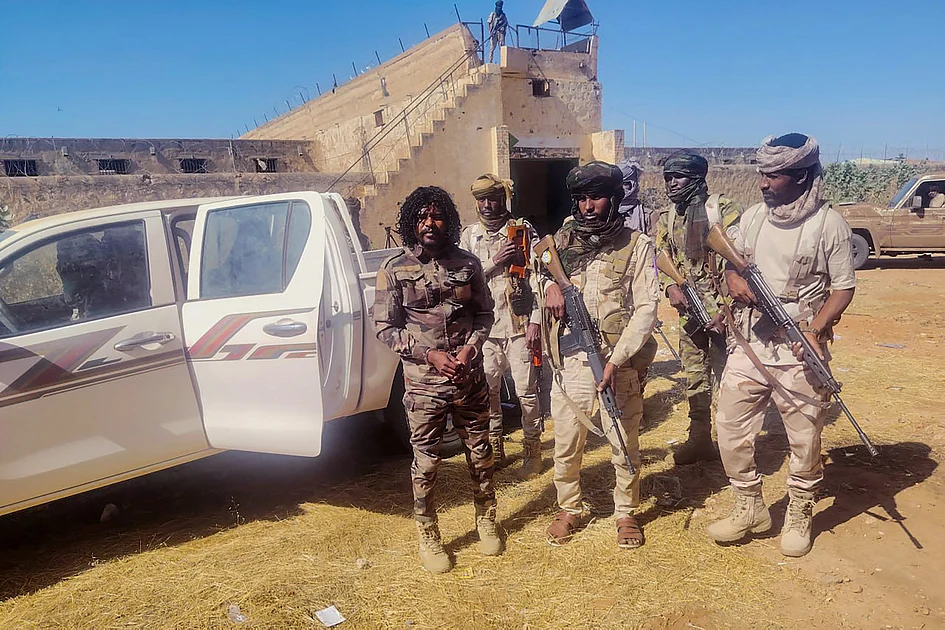
Sudan’s RSF agrees to US proposal for ceasefire
In a significant development, Sudan’s paramilitary Rapid Support Forces (RSF) has agreed to a ceasefire proposal put forward by the United States, as announced in a statement on Thursday. This move comes amidst the ongoing conflict that has plagued the nation since April 2023, when tensions between the Sudanese army and the RSF escalated over plans to integrate their forces. The RSF, which was previously a partner in power with the army, has now taken a step towards de-escalation by accepting the US-mediated ceasefire, which aims to facilitate humanitarian efforts in the war-torn region. The conflict has caused widespread devastation, and this ceasefire could potentially pave the way for peace talks and aid delivery to affected populations.
-
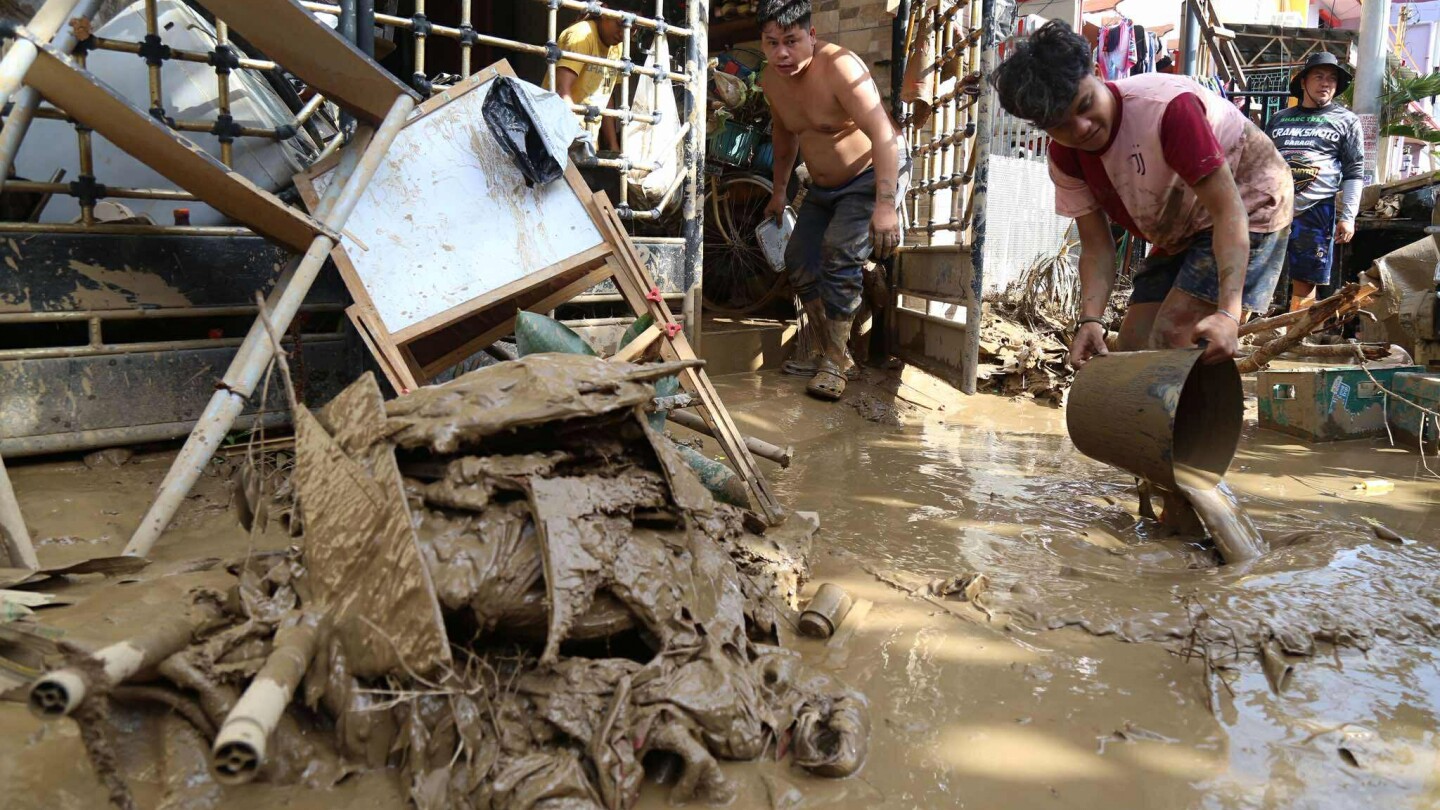
Hurricane? Cyclone? Typhoon? Here’s the difference
Typhoon Kalmaegi has left a trail of destruction in the Philippines, claiming at least 114 lives and leaving many more missing. The storm subsequently made landfall in Vietnam on Friday, exacerbating the region’s challenges. Meanwhile, a second typhoon, Fong-Wong, is predicted to strike the Philippines by Sunday, potentially intensifying into a major storm.
-
Fifty years of plunder: How Morocco and its allies profit from Western Sahara
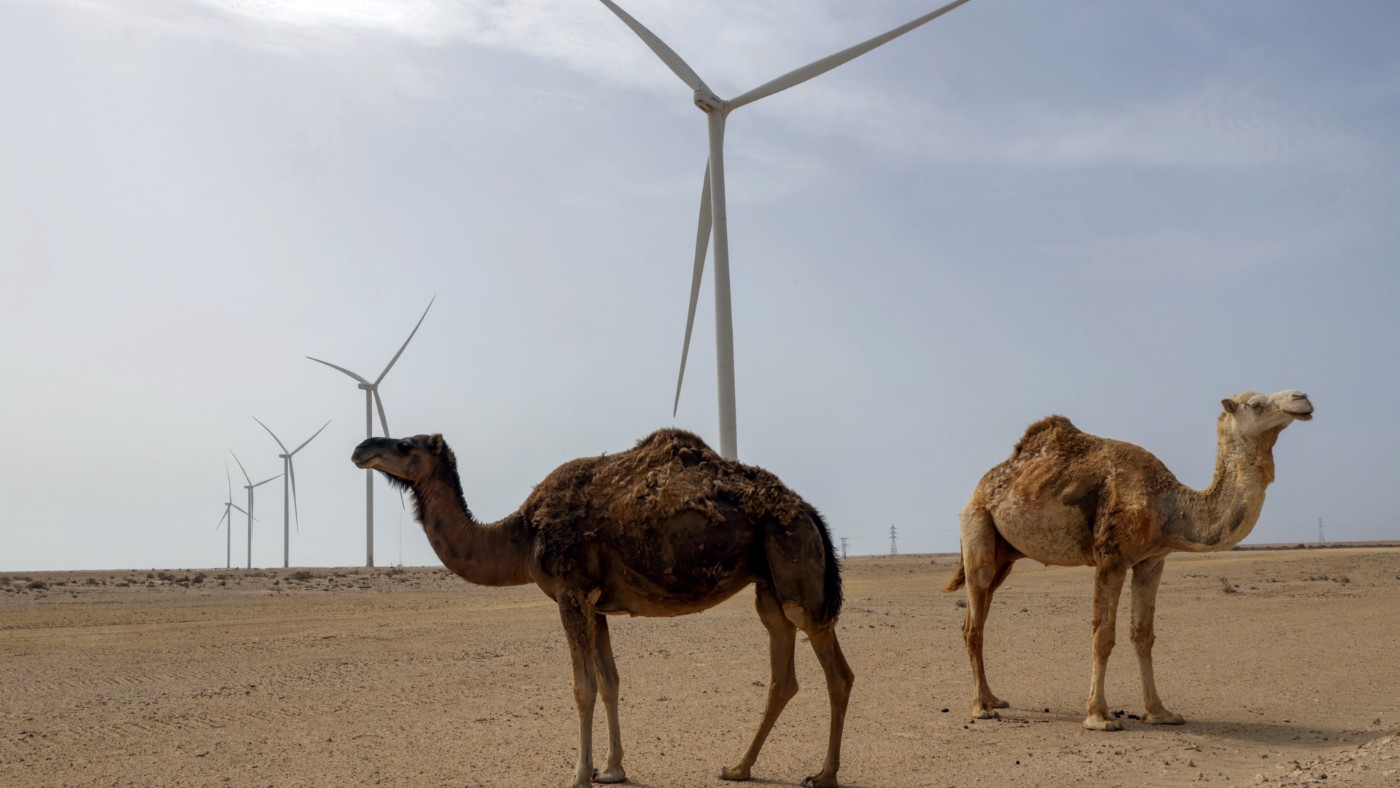
In late October 2020, Minatu Ljatat, a Sahrawi refugee from the Awserd camp in southwestern Algeria, joined a group of 200 activists to protest at the Guerguerat crossing in occupied Western Sahara. Known as the “plunder corridor,” this area is the primary route for Morocco to export resources from the territory it has controlled since 1975. The activists aimed to block traffic, including trucks transporting fish from Moroccan-occupied waters, in a peaceful demonstration for Sahrawi independence. However, on November 13, Morocco forcibly removed the protesters, prompting the Polisario Front to end a ceasefire that had held since 1991. This marked a turning point in the decades-long conflict, as foreign companies from France, Spain, Israel, and the U.S. intensified their exploitation of Western Sahara’s resources, often under the guise of renewable energy projects. Despite legal challenges in the European Court of Justice, Sahrawis feel increasingly marginalized, with many advocating for a return to armed struggle. The international community’s complicity in Morocco’s occupation has further complicated efforts for self-determination, leaving the Sahrawi people in a precarious position. Ljatat, who fled her homeland in 1976, remains hopeful for a free Western Sahara but laments the lack of progress. The conflict, often referred to as Africa’s last colonial struggle, continues to draw global attention as the Sahrawis fight for their right to exist on their ancestral land.
-
Hezbollah rejects any negotiations between Lebanon and Israel
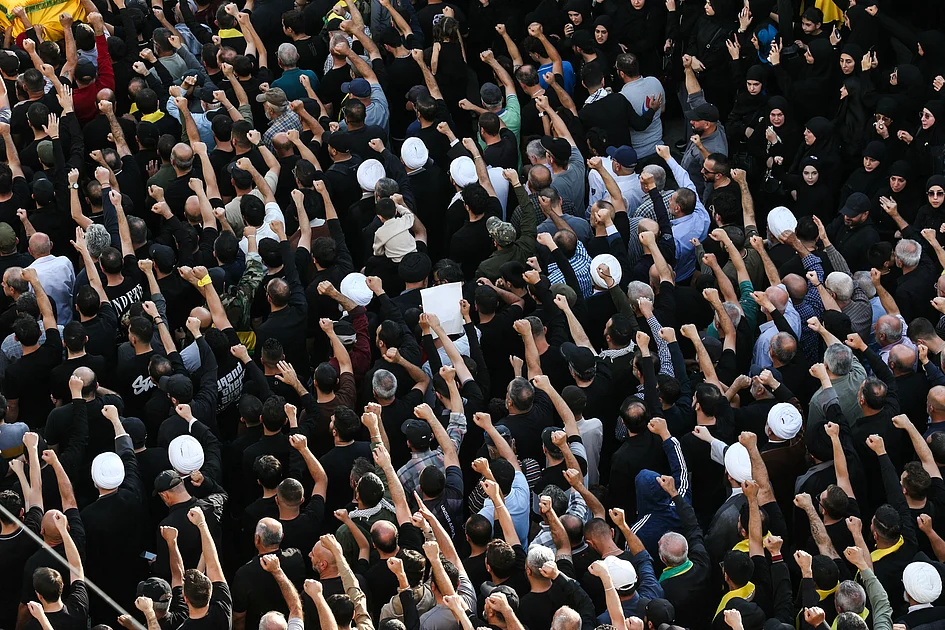
Hezbollah, the Iran-backed militant group in Lebanon, has firmly rejected any potential political negotiations between Lebanon and Israel, asserting its right to self-defense. This declaration comes amid increasing pressure from the United States and Egypt on Lebanese leaders to engage in direct talks with Israel. Despite a ceasefire agreement reached in November 2024, tensions remain high, with Israel maintaining troops in southern Lebanon and continuing military strikes against Hezbollah positions. Hezbollah, which has refused to disarm since the Lebanese Civil War, criticized the Lebanese government’s efforts to dismantle its military capabilities, calling the disarmament push a ‘hasty decision’ that Israel has exploited. The group also reaffirmed its commitment to the ceasefire but warned against any threats to its sovereignty. Meanwhile, Israel has accused Hezbollah of attempting to rearm and has intensified its operations in Lebanon. The Lebanese government, under international pressure, is set to discuss the progress of its disarmament efforts, though Hezbollah and its allies remain staunchly opposed to such measures.
-
The frontier at the heart of Pakistan-Afghanistan tensions
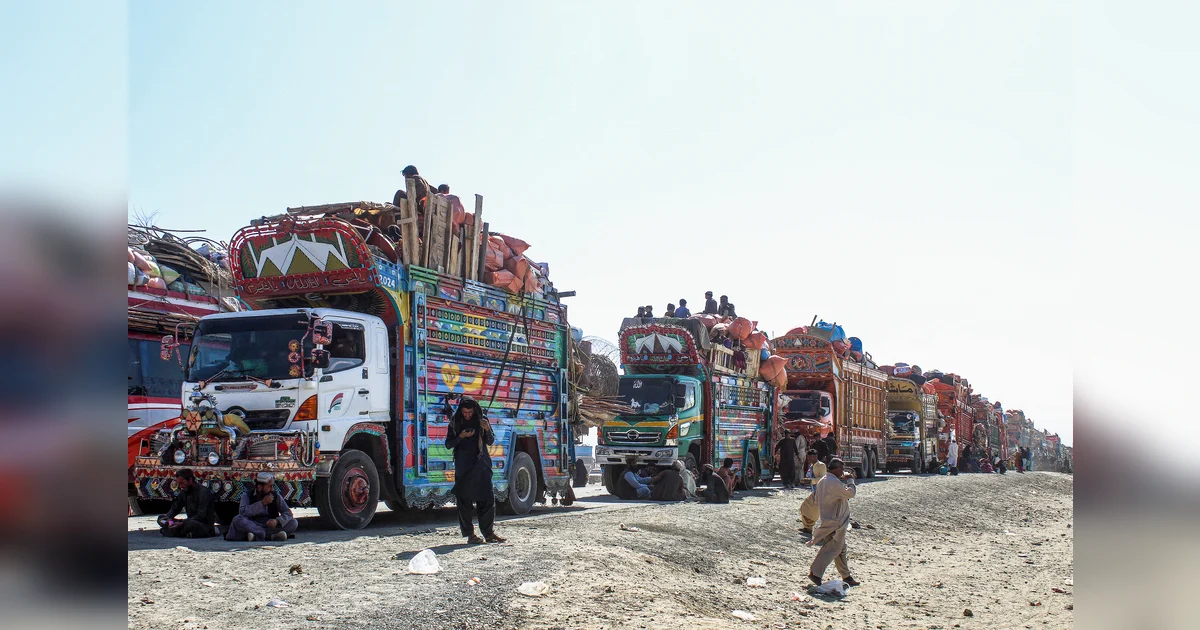
The longstanding border dispute between Pakistan and Afghanistan, centered on the Durand Line, has reignited tensions between the two nations. The Taliban-led Afghan administration refuses to recognize the 2,600-kilometer border, labeling it as ‘imaginary,’ while Pakistan asserts its international legitimacy. The Durand Line, established in the late 19th century by British diplomat Sir Mortimer Durand, divides Pashtun communities and separates Afghanistan from the sea. Despite Islamabad’s efforts to fortify the border with trenches and fencing, Kabul has consistently condemned these measures. The porous border facilitates both informal crossings and vital trade, with Pakistan being Afghanistan’s largest trading partner. However, recent closures have resulted in significant economic losses, estimated at $50 million since October 12, 2025. Security concerns have escalated since the Taliban’s return to power in 2021, with Pakistan accusing Afghanistan of harboring armed groups, including the Pakistani Taliban (TTP). In December 2024, Pakistani airstrikes in Afghanistan’s Paktika province, targeting alleged terrorist hideouts, reportedly killed nearly 50 people. The Taliban denies these accusations and rejects the border as a colonial relic. Recent clashes in October 2025, which began with explosions in Kabul, led to over 70 deaths and hundreds of injuries. A fragile ceasefire brokered by Turkey and Qatar has temporarily halted violence, but negotiations in Istanbul have yet to yield a lasting agreement. Talks are set to resume, with both sides warning that failure to reach a deal could reignite conflict.
-
South Korean officials question feasibility of building nuclear submarine in US shipyard
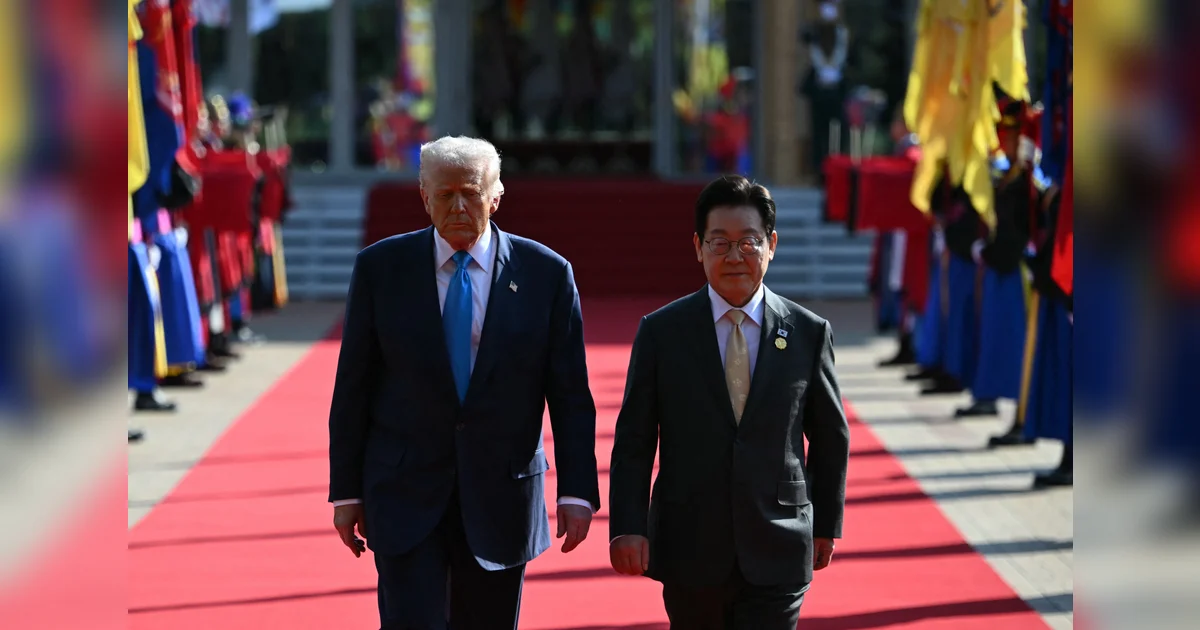
South Korean officials have raised doubts about the feasibility of constructing a nuclear-powered submarine in a US shipyard, following US President Donald Trump’s recent social media announcement. Trump stated last week that he had approved South Korea’s request to build such a submarine, specifying it would be constructed at the Philadelphia shipyard. However, Prime Minister Kim Min-seok clarified during a parliamentary hearing on Thursday that the South Korean-owned Philly Shipyard currently lacks the capability to undertake such a project. This statement comes after Trump’s post on Truth Social, where he responded to South Korean President Lee Jae Myung’s request for nuclear fuel to power submarines equipped with conventional weapons. Defence Minister Ahn Gyu-back further emphasized that it would be more logical to build the submarines in South Korea, given the nation’s advanced shipbuilding expertise. South Korea is home to leading shipbuilders like Hanwha Ocean, which owns the Philly Shipyard but has declined to comment on the matter. US Defence Secretary Pete Hegseth assured that the Trump administration would collaborate with relevant departments to fulfill the commitment, emphasizing the president’s desire for strong alliances.