分类: world

  • Iran vets friendly ships for Hormuz passage: trackers

    Iran vets friendly ships for Hormuz passage: trackers

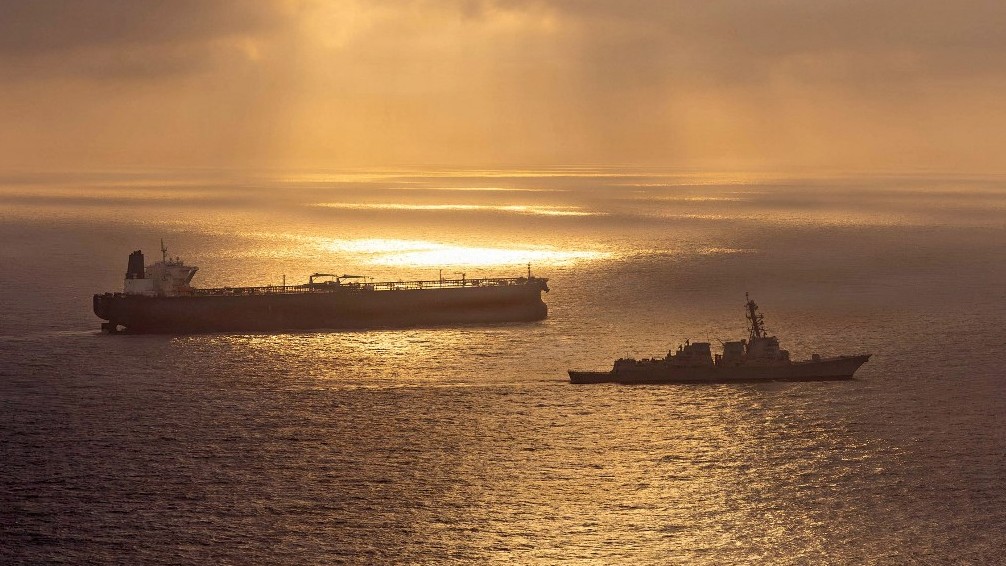
    Iran has established a selective authorization system for commercial vessels attempting to navigate the strategically vital Strait of Hormuz, according to maritime intelligence reports. This development comes as the key global energy corridor remains effectively closed due to ongoing Middle East hostilities that commenced with US-Israeli strikes on Iran on February 28.

    Maritime analytics firm Windward revealed in a Tuesday analysis that at least five vessels successfully transited the strait through Iranian waters on March 15-16. The company described this as ‘rising evidence that Iran is exerting permission-based transit and control of the strait,’ indicating Tehran has implemented a vetting process favoring ships from allied nations.

    JPMorgan commodities analyst Natasha Kaneva corroborated these findings, noting that at least four ships were tracked using the non-standard Larak-Qeshm Channel near the Iranian coastline in recent days. ‘This could reflect a process designed to confirm vessel ownership and cargo, enabling passage for ships that are not affiliated to the US or its allies,’ Kaneva stated in an analytical note.

    Among the vessels granted passage was the Pakistani-flagged oil tanker Karachi, which notably transited with its automatic identification system activated—unusual behavior in a conflict zone where ships typically disable transponders to avoid targeting.

    The geopolitical implications are significant as approximately one-fifth of global oil and liquefied natural gas normally passes through this chokepoint. Kaneva emphasized that most crude shipments through the strait are destined for Asian markets, particularly China.

    Diplomatic efforts are underway as multiple nations engage Tehran to secure transit rights for their commercial fleets. This has yielded some success, with two Indian-flagged liquefied petroleum gas tankers—Shivalik and Nanda Devi—successfully delivering approximately 92,700 metric tonnes of LPG to Gujarat’s Vadinar Port after receiving Iranian clearance. Similarly, Turkey’s transport minister confirmed a Turkish-owned vessel received Iranian authorization for safe passage.

    The United States continues to advocate for allied military protection of shipping interests in the region as this new selective transit paradigm reshapes maritime commerce through one of the world’s most critical energy corridors.

  • UN investigates strike on Iranian girls’ school

    UN investigates strike on Iranian girls’ school

    A United Nations fact-finding mission has initiated a formal inquiry into a devastating airstrike on the Shajareh Tayyebeh primary school in Minab, southern Iran. The attack, which occurred on February 28th during the initial phase of a US-Israeli military operation, resulted in the deaths of at least 175 individuals, the vast majority of whom were schoolchildren.

    Concurrent investigations by US military authorities have yielded preliminary findings indicating American responsibility for the strike. According to reports from Reuters and The New York Times, officers at US Central Command allegedly utilized outdated intelligence data provided by the Defense Intelligence Agency to establish the target coordinates. The strike on the educational facility was executed simultaneously with missile attacks on nearby Iranian naval installations.

    The Iranian government has formally accused the United States of perpetrating what it characterizes as an ‘unforgivable war crime.’ UN investigator Max du Plessis emphasized the critical importance of an independent investigation during a press conference in Geneva, stating, ‘Given the innocent lives that have been lost, there is a critical need for such an investigation to be done.’

    Multiple eyewitness accounts and medical personnel from the Iranian Red Crescent describe a ‘double-tap’ strike pattern, where a second missile targeted survivors who had sought shelter after the initial explosion. Iranian foreign ministry spokesperson Esmaeil Baqaei specifically identified the weapon used as an ‘American Tomahawk missile’ that ‘slaughtered 168 Iranian little angels.’

    This incident represents one of the most severe civilian casualty events in decades of US military operations in the Middle East. Human rights organizations including Amnesty International have already attributed responsibility to US forces, while the Trump administration maintains its denial of intentionally targeting civilians.

    The UN mission is concurrently investigating a separate Israeli strike on Tehran’s Evin prison during June’s conflict, which it has preliminarily classified as a war crime.

  • Palestinian Islamic leader issues fatwa calling for Eid prayers outside Al-Aqsa Mosque

    Palestinian Islamic leader issues fatwa calling for Eid prayers outside Al-Aqsa Mosque

    In an unprecedented religious decree, prominent Palestinian Islamic cleric Ekrima Sa’id Sabri has issued a fatwa calling for Eid al-Fitr prayers to be conducted outside Jerusalem’s Al-Aqsa Mosque complex after Israeli authorities implemented a comprehensive closure of the sacred site. The influential preacher and member of the Islamic Waqf Department urged all Muslims to gather near the mosque on Friday, emphasizing that prayers conducted in proximity to the holy site would hold equivalent religious significance to those performed within its walls.

    The closure of Islam’s third holiest site marks the first time since the 1967 Six-Day War that Palestinians have been prevented from performing Ramadan Friday prayers at the mosque. Israeli authorities justified the restrictions citing security concerns during regional tensions, but Palestinian leadership condemns the move as politically motivated. Khaled Zabarqa, legal representative for Sheikh Sabri, asserted that ‘the Israeli occupation’s pretext of security reasons is a false and fabricated excuse designed to advance Judaization plans for Al-Aqsa.’

    This sacred compound, known to Jews as the Temple Mount and representing Judaism’s most revered site, has long been the epicenter of Israeli-Palestinian religious tensions. While mainstream Jewish religious authorities prohibit Jewish prayer at the site pending messianic redemption, certain activist groups have increasingly demanded access for Jewish worship, fueling Palestinian concerns about potential alterations to the status quo.

    The current closure has drawn international condemnation, with eight Muslim-majority nations recently denouncing the restrictions as ‘unjustified’ and asserting that Israel holds ‘no sovereignty’ over the holy site. Despite these objections, Israeli forces maintain a heavy presence throughout Jerusalem’s Old City, preventing Palestinian access while permitting limited Waqf administrative staff to enter the compound.

    Middle East Eye reported that Israeli authorities formally notified the Islamic Waqf administration of their decision to close the site during Eid celebrations, a move expected to provoke widespread outrage among Muslim worshippers. Since the implementation of restrictions earlier this month, nightly attempts by Palestinians to pray near the barriers have frequently resulted in confrontations with Israeli security forces.

    The issuance of this religious ruling represents a significant development in the ongoing struggle over sacred space in Jerusalem, transforming the geographical limitations into a spiritual opportunity for believers seeking divine reward during Islam’s holiest days.

  • Iran war could plunge 45 million into acute hunger, says UN agency

    Iran war could plunge 45 million into acute hunger, says UN agency

    The World Food Programme (WFP) issued a dire warning on Tuesday that prolonged military engagement in the Middle East could push global acute hunger to unprecedented levels. According to the UN agency’s projections, the number of people facing severe food insecurity might surge to 364 million by June if hostilities continue—an increase of 45 million individuals compared to pre-conflict estimates.

    Carl Skau, WFP’s Deputy Executive Director, characterized the situation as ‘a terrible, terrible prospect’ during a briefing in Geneva, noting that this would represent the highest level of global hunger ever recorded. The analysis indicates that military actions initiated in late February have severely disrupted critical aid corridors to nations already struggling with chronic food shortages, causing significant delays in humanitarian shipments.

    The conflict’s ripple effects are particularly devastating in the Middle East, where many countries depend heavily on food imports. Fertilizer prices have skyrocketed, and transportation costs have increased dramatically due to rising fuel prices, creating a perfect storm for food insecurity.

    In Lebanon, where approximately one million people have been displaced and food insecurity has been endemic for years, both the government and WFP have implemented emergency response measures including cash assistance programs and expanded food aid distributions.

    Iran, which was already experiencing economic stagnation, high food inflation, and rapid currency devaluation before the conflict, now faces even greater challenges as households have minimal capacity to withstand additional economic shocks.

    While some border crossings have reopened in Gaza following the October ceasefire, food prices remain prohibitively high, severely limiting access to affordable nutrition for the population.

    The crisis extends beyond the immediate conflict zone, with Afghanistan emerging as particularly vulnerable. The nation receives 80% of its food supply through imports, predominantly from Iran, leaving 17.4 million Afghans in urgent need of food assistance as supply chains are disrupted.

  • Is Israel already running low on missile interceptors?

    Is Israel already running low on missile interceptors?

    As the military confrontation between the US-Israel alliance and Iran enters its third week, defense analysts are raising alarms about potential depletion of Israel’s air defense interceptor inventory. Despite official denials from the Israeli Defense Forces and Foreign Ministry, strategic indicators suggest mounting pressure on defensive capabilities.

    The complexity of Israel’s multi-layered defense architecture—spanning from the renowned Iron Dome for short-range threats to high-altitude ballistic missile defenses—faces unprecedented strain. Each defensive layer operates through three critical components: trained personnel, detection radar systems, and the interceptors themselves, with the latter becoming increasingly scarce.

    Recent developments indicate serious concerns about interceptor sustainability. Israel’s emergency approval of approximately $826 million for urgent defense procurement over the weekend signals recognition of the critical situation. Meanwhile, the United States is reportedly relocating components of its THAAD missile defense system from South Korea to the Middle East, suggesting shared concerns about defensive capacity.

    The current crisis stems partly from last year’s 12-day conflict with Iran, which significantly drained interceptor stockpiles for both Israel and the US. Research indicates that during that engagement, allied forces intercepted 273 of 322 Iranian missiles—an 85% success rate that came at substantial material cost.

    Iran’s current strategy employs overwhelming numbers: over 500 missiles and 2,000 drones launched since hostilities began. The economic asymmetry favors Tehran, as inexpensive, easily replaceable drones force the expenditure of costly interceptors. Ballistic missiles present additional challenges, often requiring multiple interceptors per incoming threat, especially when equipped with cluster munitions.

    The conflict has expanded beyond Israel, with Persian Gulf states also consuming defensive resources against Iranian attacks. Compounding the problem, Iran has specifically targeted missile defense radars across the region, with reports indicating successful destruction or damage to several systems.

    Military analysts question the strategic timing of this renewed conflict given the known inventory constraints. Possible explanations include unexpected rapid stockpile replenishment, confidence in preemptive destruction of Iranian offensive capabilities, or miscalculation regarding Iran’s willingness to prolong the engagement.

    As the economic consequences mount globally, Iran appears positioned to sustain conflict longer than its adversaries, leveraging lower-cost offensive systems against the high-expense defense infrastructure of Israel and the US. The finite nature of interceptor inventories now represents a critical factor in determining the conflict’s duration and potential outcome.

  • Italy warns stricken Russian tanker could explode in Med at any time

    Italy warns stricken Russian tanker could explode in Med at any time

    A sanctioned Russian liquefied natural gas (LNG) tanker, the Arctic Metagaz, is drifting unmanned through the Mediterranean Sea with a massive hull breach, raising alarms among European nations about an imminent ecological catastrophe. The vessel, part of Russia’s shadow fleet evading Western sanctions, sustained critical damage from a suspected Ukrainian sea drone attack near Maltese waters in early March.

    Italian officials have characterized the damaged tanker as an ‘environmental bomb’ capable of exploding at any moment. Secretary of Italy’s Council of Ministers Alfredo Mantovano emphasized the ‘enormous’ risks during a national radio broadcast, noting the vessel’s unpredictable movement patterns.

    The Arctic Metagaz currently drifts approximately 45 nautical miles from Italian territorial waters and 25 miles from Libya’s search-and-rescue zone. According to intelligence reports, the compromised tanker carries substantial LNG quantities alongside 450 tonnes of fuel oil and 250 tonnes of diesel—a hazardous combination threatening marine ecosystems.

    This incident represents the latest escalation in Ukraine’s targeted campaign against Russia’s shadow energy fleet. Ukrainian intelligence services have claimed responsibility for disabling several Russian vessels in recent months, including three Black Sea tankers in December and the Quendil oil tanker in Mediterranean waters. These vessels routinely navigate with transponders disabled to circumvent international sanctions.

    The geopolitical context underscores these maritime developments: Russia’s continued bombing of Ukrainian civilian energy infrastructure has precipitated reciprocal targeting of Russian energy exports. The Arctic Metagaz originally departed from Murmansk in February before being crippled by explosions and fire. While Libyan coast guards rescued the crew, initial reports of the vessel’s sinking proved inaccurate.

    Environmental organizations including the World Wildlife Fund have activated maximum alert status, warning that potential spills could trigger fires and persistent pollution in ecologically sensitive habitats housing protected species. Italian and Maltese authorities continue monitoring the tanker’s southward drift toward Libyan waters while nine EU nations have jointly petitioned the European Commission for emergency intervention.

  • Air strike hit Kabul rehab centre as patients ate dinner, survivor tells BBC

    Air strike hit Kabul rehab centre as patients ate dinner, survivor tells BBC

    A catastrophic aerial bombardment has reduced a drug rehabilitation facility in Kabul to smoldering ruins, marking one of the deadliest incidents in the escalating conflict between Pakistan and Afghanistan. The Omid Addiction Treatment Hospital, formerly known as Camp Phoenix during the U.S.-NATO military operations, was struck during evening hours on Monday as patients were breaking their Ramadan fast and engaging in prayers.

    Emergency response teams continue extraction operations through the debris, with Taliban officials estimating approximately 400 fatalities though official confirmation remains pending. Survivors describe apocalyptic scenes of trapped patients engulfed in flames as the single-story compound became an inferno. Mohammad Shafee, a twenty-year-old patient, recounted his narrow escape while serving dinner: “Only five of us survived after the explosion. When I returned, most colleagues and diners were hit.”

    The geopolitical context reveals deepening tensions: Pakistan maintains the strike targeted “military installations and terrorist support infrastructure,” dismissing Afghan allegations of intentional hospital targeting as “entirely baseless.” This incident occurs amid months of cross-border hostilities, with Islamabad accusing Kabul of harboring militants—a claim Taliban officials vehemently deny.

    Humanitarian consequences are severe: overwhelmed medics treated dozens of wounded amid the ruins while families desperately searched for missing relatives. One mother of nine anxiously awaited news about her husband, a seven-month resident of the facility. The Kabul Forensic Medicine Department has received at least 100 bodies, with many victims severely disfigured complicating identification.

    UN officials report this attack brings at least six Afghan healthcare facilities impacted since late February, highlighting the conflict’s devastating effect on civilian infrastructure. The rehabilitation center itself represented a complex legacy—transitioning from U.S.-NATO military training compound to addiction treatment facility under the Afghan republic government, then continuing operations under Taliban administration as they rounded up drug addicts from streets across provinces.

    The facility, designed for 2,000 occupants, recently held approximately 5,000 patients kept for six-month periods, reflecting Afghanistan’s severe opioid addiction crisis. A separate male addiction facility nearby reportedly remained unaffected by the strike.

  • Taliban says hundreds killed in Pakistani air strike on Kabul hospital

    Taliban says hundreds killed in Pakistani air strike on Kabul hospital

    A significant escalation in cross-border hostilities has erupted between Afghanistan and Pakistan, with the Taliban government leveling a grave accusation against its neighbor. Senior Taliban official Hamdullah Fitrat, serving as deputy spokesman, has publicly charged Pakistan with conducting a lethal assault on the Omid Addiction Treatment Hospital in Kabul. The facility, described as a 2,000-bed drug rehabilitation center, was reportedly struck on Monday evening.

    According to Taliban claims, the attack resulted in catastrophic structural damage to the hospital complex. Disturbing imagery circulated by international news agencies depicted rescue personnel from the Afghan Red Crescent organization extracting numerous victims from the collapsed wreckage. Survivors were photographed congregating in makeshift triage areas near the devastation.

    Fitrat provided a stark casualty assessment via social media platform X, stating: ‘As a consequence of this aggression, substantial portions of the medical facility have been demolished. We hold serious apprehensions regarding a substantial death toll, which has regrettably reached approximately 400 fatalities, with an additional 250 individuals sustaining injuries.’

    The Pakistani government has issued an emphatic rebuttal of these allegations. Information Minister Attaullah Tarar dismissed the reports as ‘factually incorrect and deliberately crafted to misguide international perception.’ Official statements from Islamabad maintain that military operations exclusively targeted terrorist infrastructure allegedly operated by Afghan-based militants.

    Minister Tarar specified that precision strikes were conducted against bases utilized by the Taliban regime to support armed factions designated as Fitna Al Khawarij and Fitna Al Hindustan. These groups have claimed responsibility for numerous attacks against Pakistani military and civilian targets in border regions including Balochistan and Khyber Pakhtunkhwa.

    This incident exacerbates already deteriorating diplomatic relations between the neighboring nations. Tensions have intensified considerably since the Taliban’s ascension to power in 2021 following the United States’ withdrawal from Afghanistan. Former strategic allies have engaged in open conflict since February, with both sides reporting hundreds of combatant casualties in border skirmishes.

    The geopolitical complexity is deepened by ethnic dimensions, as the Taliban predominantly comprises Pashtun members. This ethnic group maintains a significant population of approximately 40 million within Pakistan’s 200 million citizens, further complicating bilateral relations. Both nations routinely exchange accusations regarding civilian targeting and support for insurgent groups operating across their shared 2,640-kilometer frontier.

  • Belgian court orders trial of ex-diplomat for Congo independence icon Patrice Lumumba’s killing

    Belgian court orders trial of ex-diplomat for Congo independence icon Patrice Lumumba’s killing

    In a landmark judicial decision addressing Belgium’s colonial past, a Belgian court has mandated that 93-year-old former diplomat Étienne Davignon stand trial for alleged involvement in the 1961 assassination of Patrice Lumumba, Congo’s first prime minister and independence leader. This unprecedented ruling marks one of the few instances where Belgian authorities have pursued legal action concerning the nation’s controversial colonial history in Congo.

    Lumumba, a seminal figure in Congo’s struggle for independence from Belgian rule, served merely three months as prime minister before being ousted from power and subsequently killed at age 35. His brief tenure in 1960 represented a transformative moment for the mineral-rich nation’s sovereignty movement.

    Davignon, who served as a junior diplomatic intern in Kinshasa (then Léopoldville) during Lumumba’s administration, stands as the sole surviving individual among ten Belgians suspected of participation in the assassination plot. The Belgian federal prosecutor’s office has formally charged the former European Commission vice president with “participation in war crimes” specifically related to Lumumba’s “unlawful detention and transfer.”

    The judicial development follows a decade-long legal pursuit initiated by Lumumba’s children, who filed a case in Belgian courts in 2011 seeking accountability for their father’s death. Although Lumumba was ultimately killed by Congolese separatists in January 1961, historical evidence has consistently suggested complicity by both Belgian and American authorities due to Lumumba’s perceived Communist sympathies during the Cold War era.

    The case remains particularly haunting as Lumumba’s body was never recovered, with historical accounts indicating it may have been dissolved in acid following his execution. Davignon maintains two weeks to appeal the charges and has previously denied any wrongdoing in connection with Lumumba’s death.

  • From Gaza to Tehran, Palestinians and Iranians compare life under the bombs

    From Gaza to Tehran, Palestinians and Iranians compare life under the bombs

    Residents of Tehran and other Iranian cities are experiencing haunting parallels to the destruction in Gaza as civilian infrastructure becomes systematic military targets in the ongoing conflict. The pattern of attacks on schools, hospitals, and residential areas has created eerie similarities that both Iranians and Palestinians recognize as part of a devastating regional strategy.

    The war’s impact on education has been particularly severe. Multiple schools across Iran have suffered direct hits, including the Shajareh Tayyebeh school in Minab where a double-tap strike killed at least 168 people. The targeting of educational institutions mirrors the systematic destruction of Gaza’s school system, where over 97% of schools have been damaged or destroyed according to UNICEF data.

    Healthcare facilities have similarly become battlegrounds. Tehran’s Gandhi Hospital suffered significant damage to its IVF department, creating anguish for prospective parents who lost genetic materials. This pattern directly recalls the destruction of Gaza’s al-Basma IVF Center in December 2023, which wiped out nearly 4,000 frozen embryos. The targeting of medical infrastructure follows a documented pattern from Gaza, where 94% of medical facilities have been damaged and no fully functional hospitals remain according to the WHO.

    Civilian casualties have mounted rapidly, with at least 1,444 civilians killed in the first two weeks of conflict—a rate comparable to the initial phase of the Gaza offensive that claimed over 4,100 Palestinian lives in a similar timeframe. The psychological impact on survivors is profound, with many reporting sleep disturbances from constant bombardment and trauma from witnessing destruction they previously only saw in news reports from other conflict zones.

    Regional analysts and residents note that the tactical approach appearing in Iran reflects testing and refinement of methods previously deployed in Gaza, with similar patterns now emerging in Lebanon and Syria. The consistent targeting of civilian infrastructure across multiple conflicts suggests a strategic doctrine rather than isolated incidents, creating humanitarian crises that will require years of reconstruction and recovery.