分类: world

  • China and Vietnam hold joint free clinics on border

    China and Vietnam hold joint free clinics on border

    In a significant demonstration of cross-border cooperation, Chinese and Vietnamese military forces conducted simultaneous free medical clinics along their shared frontier on Tuesday. The event, part of the 10th China-Vietnam Border Defense Friendship Exchange, provided healthcare services to over 1,700 local residents from both nations.

    The medical initiative unfolded concurrently in Dongxing city within China’s Guangxi Zhuang Autonomous Region and Hoanh Mo commune in Vietnam’s Quang Ninh province. For approximately four hours, military physicians from both countries worked side-by-side at 16 medical stations established at a square outside Dongxing’s gymnasium facility.

    The comprehensive medical services encompassed more than ten specialized departments including cardiology, rehabilitation therapy, traditional Chinese medicine, and ultrasound examinations. A contingent of 80 military medical professionals from both nations participated in the humanitarian effort, delivering care across 1,707 patient consultations.

    Among the beneficiaries was Vu Thi Chin, a 53-year-old Vietnamese merchant who frequently traverses between Dongxing and Vietnam’s Mong Cai for border commerce. Following gallbladder surgery, she sought cardiac health guidance and dietary recommendations from Chinese military doctors. Vu expressed profound appreciation for the medical assistance, noting the physicians demonstrated exceptional skill and patience in addressing her health concerns.

    Chinese rehabilitation specialist Wang Li described his participation as an honor, emphasizing that supporting border communities aligned with military service principles. The collaboration additionally provided a platform for medical professionals from both militaries to exchange clinical insights and treatment methodologies for prevalent health conditions.

    This medical diplomacy initiative precedes scheduled joint naval operations in the Beibu Gulf, marking the 40th such coordinated patrol between Chinese and Vietnamese forces. Vietnamese frigates Tran Hung Dao and Ly Thai To have docked in Guangxi’s Fangchenggang city to join Chinese vessels CNS Hengyang and Enshi for these maneuvers.

    The upcoming naval exercises will incorporate formation maneuvering, joint escort operations, anti-piracy simulations, and search-and-rescue missions. This year holds particular significance as it commemorates the 20th anniversary of Sino-Vietnamese joint naval patrols in the Beibu Gulf—a mechanism that has evolved into a crucial platform for military diplomacy between the neighboring nations.

    According to statements from China’s People’s Liberation Army South China Sea Fleet, these cooperative efforts substantially contribute to enhancing mutual trust, deepening bilateral cooperation, and collectively maintaining regional peace and security stability.

  • Allies cautious following US call for naval backup

    Allies cautious following US call for naval backup

    In a significant display of diplomatic resistance, multiple key U.S. allies have declined Washington’s urgent call for naval support in the Strait of Hormuz, creating tensions within international security partnerships. The rejection comes amid escalating Middle Eastern tensions and highlights growing divisions over military engagement with Iran.

    President Donald Trump voiced conspicuous frustration during a Monday press briefing, explicitly criticizing nations that have benefited from American protection but demonstrated reluctance to participate in the proposed multinational security coalition. “Some are very enthusiastic about it, and some aren’t,” Trump stated, emphasizing that enthusiasm levels from protected allies would influence his future considerations.

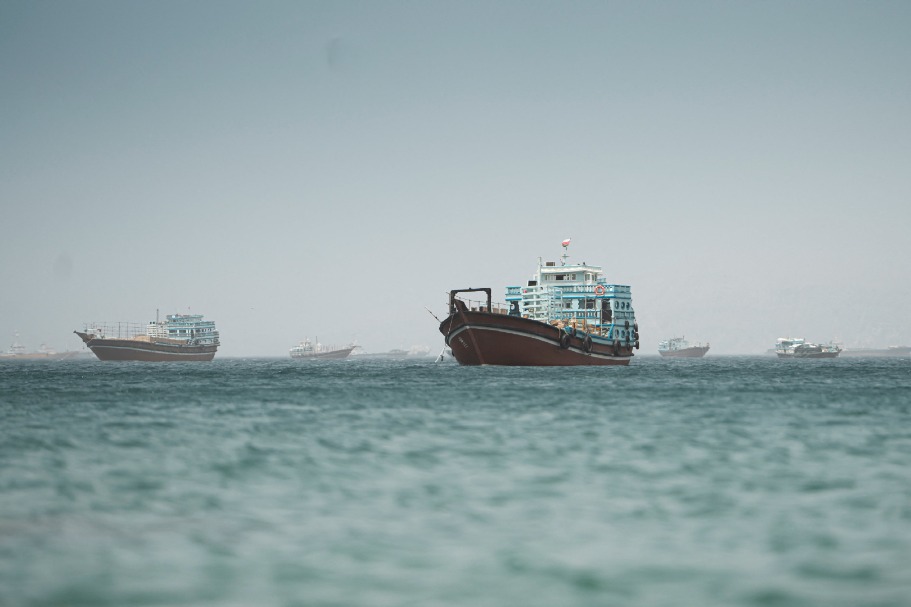
    The strategic waterway between Iran and Oman represents a critical global energy artery, facilitating approximately 20% of worldwide oil and liquefied natural gas shipments. Recent disruptions have triggered concerns about energy security and market stability, prompting the U.S. to formally request naval assistance from seven energy-dependent nations including China, France, Japan, and the United Kingdom.

    International responses have revealed a pattern of cautious hesitation. Australia’s Transport Minister Catherine King confirmed no intentions to deploy vessels, while Japan’s Prime Minister Sanae Takaichi emphasized careful evaluation within legal frameworks. European powers demonstrated even stronger resistance, with German Defense Minister Boris Pistorius declaring “This is not our war” and Italian Foreign Minister Antonio Tajani advocating for diplomatic solutions over military escalation.

    The United Kingdom has adopted a deliberative stance, with Energy Secretary Ed Miliband confirming consideration of “any options” while prioritizing multilateral coordination. Meanwhile, The Washington Post reported concerning casualty figures, with over 200 U.S. personnel wounded across seven Middle Eastern countries during recent military operations, underscoring the human cost of regional engagements.

  • War in the Middle East: latest developments

    War in the Middle East: latest developments

    The Middle East conflict has intensified dramatically, with multiple fronts witnessing significant escalation and global repercussions beginning to unfold.

    In Lebanon, Israeli airstrikes targeted central Beirut’s Zuqaq al-Blat neighborhood for the second time without prior warning, resulting in at least 12 casualties according to health ministry reports. Southern Lebanon also saw violence as an Israeli strike hit a vehicle in Sidon, near areas where displaced civilians have sought refuge.

    Iran prepared for funerals of two slain security officials—Ali Larijani and Basij paramilitary force head Gholamreza Soleimani—as Iranian authorities announced the execution of an individual convicted of espionage for Israeli intelligence services. Iranian Foreign Minister Abbas Araghchi warned that the ‘wave of global repercussions has only begun and will hit all—regardless of wealth, faith, or race.’

    Regional tensions expanded as multiple explosions were reported in Erbil, the capital of Iraq’s autonomous Kurdistan region, though specific targets remained unclear. The strategic Strait of Hormuz disruption has forced Iraq to resume limited oil exports of 250,000 barrels daily through Turkey’s Ceyhan port after significant production declines.

    Energy markets responded to the turmoil with benchmark US oil contracts falling over 4% to $92.11 per barrel, while stock markets in Asia and Europe showed gains.

    Gulf nations reported multiple security incidents with projectiles targeting various locations. Saudi defense systems intercepted ballistic missiles near Prince Sultan Air Base (which hosts US personnel) and drones aimed at Riyadh’s diplomatic quarter. Kuwait and Qatar also reported intercepting rocket and missile attacks respectively.

    The human cost continued to mount as Israeli medics confirmed two additional fatalities near Tel Aviv from Iranian missile barrages, bringing the total death toll to 14.

    International diplomatic tensions emerged as US President Donald Trump criticized NATO’s approach to Iran as a ‘foolish mistake’ and expressed disappointment with UK Prime Minister Keir Starmer’s response to the crisis, noting that the British leader ‘hasn’t been supportive.’

  • US forces strike Iranian missile sites near Strait of Hormuz: command

    US forces strike Iranian missile sites near Strait of Hormuz: command

    In a significant military escalation, United States forces launched precision strikes against hardened Iranian missile installations positioned along Iran’s coastline adjacent to the strategically vital Strait of Hormuz. The operation was confirmed Tuesday by the US Central Command via an official statement on social media platform X.

    The tactical execution involved deploying multiple 5,000-pound deep penetrator munitions specifically designed to destroy fortified underground targets. The strikes targeted Iranian military infrastructure that posed potential threats to one of the world’s most crucial maritime chokepoints for global oil transportation.

    This military action represents a substantial escalation in regional tensions, marking one of the most direct confrontations between US and Iranian forces in recent years. The Strait of Hormuz serves as a critical passageway for approximately 21% of global petroleum consumption, making stability in the region essential to international energy markets.

    The operation follows increasing concerns about Iran’s military positioning along this strategic waterway, though specific provocations leading to this precise military response were not detailed in the initial announcement. The use of specialized bunker-busting munitions indicates the hardened nature of the targeted facilities and the strategic intention to permanently disable these capabilities.

  • Why sweeping mines in the Strait of Hormuz wouldn’t be easy

    Why sweeping mines in the Strait of Hormuz wouldn’t be easy

    The potential mining of the Strait of Hormuz by Iran presents catastrophic implications for global economic stability, with particular severity for US agricultural sectors dependent on diesel and fertilizer imports. This strategic waterway, through which approximately 21 million barrels of oil transit daily, represents a critical chokepoint for energy markets worldwide.

    Drawing from personal experience as a former US Navy minesweeping officer, the author reflects on the evolution of naval mine countermeasures since the Vietnam War era. Historical precedent demonstrates that traditional minesweeping operations involving manned vessels have been largely phased out in favor of advanced technologies including helicopter-towed systems and unmanned underwater drones equipped with sophisticated sonar capabilities.

    Current intelligence assessments indicate Iran’s Islamic Revolutionary Guard Corps has spent decades preparing for potential strait closure operations, amassing an estimated 5,000 sea mines and hundreds of miniature submarines and small craft capable of mine deployment. The complexity of clearance operations is compounded by Iran’s complementary capabilities in drone warfare and potentially advanced anti-ship missiles supplied by international partners.

    Rather than engaging in perilous post-deployment clearance operations, US strategy appears focused on preventive measures targeting mine-laying vessels before deployment. However, the most definitive solution—occupation of adjacent shoreline territories—would require substantial ground force deployment and risk significant escalation.

    Notably, Iran continues to export its own oil through the strait despite hostilities, suggesting maintained safe channels that could theoretically be utilized by international shipping. However, such passage would render vessels vulnerable to coordinated attacks from Iranian drone and missile systems.

    The strategic impasse grants Iran substantial leverage in regional negotiations while complicating US military options. Resolution may ultimately necessitate escalated military engagement despite domestic political constraints, as the economic consequences of prolonged strait closure would prove unsustainable for global markets.

  • Chinese national charged for trying to smuggle 2,000 ants from Kenya

    Chinese national charged for trying to smuggle 2,000 ants from Kenya

    In a significant wildlife enforcement operation, Kenyan authorities have apprehended two individuals for attempting to smuggle over 2,000 live queen garden ants from the country. Zhang Kequn, a Chinese national, was intercepted at Nairobi’s Jomo Kenyatta International Airport last week after customs officials discovered the insects concealed in his luggage—each specimen individually packaged in test tubes or tissue paper.

    The subsequent investigation revealed that Zhang had acquired the ants from his Kenyan associate, Charles Mwangi, at a rate of 10,000 Kenyan shillings ($77) per 100 ants. Both men now face multiple charges including illegal dealing in wildlife species and conspiracy to commit a felony. During their court appearance on Tuesday, prosecutors presented evidence of their operation while both defendants entered not guilty pleas.

    This case highlights a growing concern among Kenyan conservation authorities about international demand for exotic insects. While not explicitly confirmed in this instance, wildlife officials have noted increasing interest from collectors in Europe and Asia who keep ants as exotic pets. Zhang’s luggage was reportedly destined for China when intercepted.

    The defendants’ attorney, David Lusweti, argued that his clients were unaware they were violating wildlife protection laws, stating they merely identified what they believed to be a legitimate economic opportunity. Despite these claims, both men remain in custody pending their next court hearing scheduled for March 27th.

    Kenya Wildlife Service officials indicate this investigation is expanding, with additional arrests anticipated as authorities probe suspected ant harvesting operations in other regions. This case follows a similar incident in May 2023 where four individuals received prison sentences and substantial fines for attempting to smuggle thousands of queen ants overseas, reportedly destined for collectors in Europe and Asia.

  • About 90 ships cross the Strait of Hormuz as Iran exports millions of barrels of oil despite the war

    About 90 ships cross the Strait of Hormuz as Iran exports millions of barrels of oil despite the war

    Despite ongoing military conflict and effective closure of the Strait of Hormuz, Iran has successfully maintained substantial oil exports through sophisticated maritime operations, according to comprehensive data from maritime intelligence and trade analytics platforms.

    Maritime intelligence from Lloyd’s List Intelligence reveals approximately 90 vessels, including 16 oil tankers, transited the strategic waterway between March 1-15. This represents a dramatic reduction from the pre-conflict daily average of 100-135 vessels, yet demonstrates Iran’s continued export capabilities. Notably, over one-fifth of these transiting vessels maintained suspected Iranian affiliations, employing ‘dark’ transit techniques to evade Western sanctions and oversight.

    Trade analytics platform Kpler estimates Iran has exported exceeding 16 million barrels of oil since early March, with China emerging as the primary beneficiary of discounted Iranian crude amid Western sanctions. “Iran has demonstrated continued resilience in oil export volumes,” noted Kpler trade risk analyst Ana Subasic.

    The geopolitical landscape reveals complex diplomatic maneuvering. Vessels affiliated with India and Pakistan have recently joined Iranian-linked tankers in successful strait transits. Two Indian-flagged liquefied petroleum gas carriers, Shivalik and Nanda Devi, navigated the strait around March 13-14 following diplomatic engagement between New Delhi and Tehran. Similarly, Pakistan’s Karachi tanker completed its passage on Sunday, though officials remained discreet about its routing.

    Richard Meade, Editor-in-Chief of Lloyd’s List, suggests these transits likely occur “with at least some level of diplomatic intervention,” indicating Iran may have “effectively created a safe corridor” for selected maritime traffic near its coastline.

    The strategic dynamics have propelled oil prices beyond $100 per barrel—a 40% surge since conflict initiation—prompting U.S. Treasury Secretary Scott Bessent to acknowledge permitting Iranian tanker movements to stabilize global markets. Meanwhile, Iran maintains threats to blockade oil shipments destined for the U.S., Israel, and allied nations.

    Consulting firm Reddal’s Kun Cao contextualizes the situation: “The strait isn’t simply closed but functions through selective access—prioritizing Iranian exports and a narrow set of tolerated non-Iranian movements.” However, ING strategists warn that if Tehran’s objective remains inflicting economic pain through elevated energy prices, transit permissions may become increasingly restricted.

  • By wresting control of the Strait of Hormuz, Iran has turned the tables on US

    By wresting control of the Strait of Hormuz, Iran has turned the tables on US

    A decade-long strategic effort by Iran to construct a sophisticated ‘shadow fleet’ of oil tankers is now paying significant dividends, enabling the Islamic Republic to effectively bypass Western sanctions and maintain crucial oil exports amid heightened regional tensions. This parallel maritime network, operating outside the traditional Western financial and insurance systems, has become Tehran’s primary instrument for sustaining its economic lifeline while simultaneously challenging American hegemony in global trade governance.

    The strategic significance of this development has become particularly evident in the Strait of Hormuz, where Iranian-affiliated vessels continue transit operations while Western counterparts face effective exclusion from this critical chokepoint. According to maritime analytics firm Kpler, more than twenty long-range tankers have successfully navigated the passage since the conflict’s escalation, with at least six vessels operating under US sanctions or as part of Iran’s alternative fleet network.

    Iran’s export capabilities remain remarkably robust despite geopolitical pressures, with TankerTrackers.com data indicating sustained daily oil exports exceeding 1.02 million barrels—primarily destined for Chinese markets. This represents a strategic economic partnership that has proven resilient against Western pressure campaigns, with approximately 90% of Iranian crude now flowing to Chinese refiners through innovative barter arrangements and alternative currency mechanisms that circumvent the US dollar-dominated financial system.

    The emergence of this parallel trade architecture represents a fundamental challenge to traditional Western economic dominance. As noted by Nicholas Mulder, Cornell University historian and author of ‘The Economic Weapon,’ extensive sanctions regimes have inadvertently fostered the development of sophisticated evasion mechanisms that ultimately reduce targeted nations’ vulnerability to economic pressure.

    This realignment extends beyond bilateral Iran-China relations, with recent developments indicating broader geopolitical shifts. Pakistan’s state-owned National Shipping Corporation vessel recently transited the strait with its tracking systems active, followed by similar movements from Indian-flagged tankers—both nations having engaged in direct negotiations with Iranian authorities for safe passage guarantees.

    The situation mirrors earlier experimentation by Houthi forces in the Red Sea, though Iranian implementation demonstrates considerably greater sophistication in intelligence capabilities and targeting precision. Maritime security analysts observe that Iran has effectively weaponized maritime access, creating a selective transit system that disadvantages Western-affiliated shipping while accommodating vessels from allied nations.

    The Trump administration’s response has appeared inconsistent, simultaneously demanding NATO assistance in securing the waterway while questioning America’s strategic interest in maintaining the transit corridor. This ambivalence reflects broader tensions in US foreign policy regarding energy security, alliance commitments, and the costs of maintaining global trade infrastructure.

    Geopolitical analyst Parag Khanna suggests these developments may signal emerging structural alternatives to US-led global governance, with regional powers increasingly crafting bottom-up solutions to maintain essential trade flows. The critical question remains whether new international coalitions can effectively provide the public good of secure maritime transit that Washington appears increasingly reluctant to underwrite.

  • ‘We will wait for each one’: Ukrainians greet POWs with tears and cheers

    ‘We will wait for each one’: Ukrainians greet POWs with tears and cheers

    In a powerful display of national solidarity, communities in northern Ukraine’s Chernigiv region maintain a solemn vigil along border roads to welcome soldiers returning from Russian captivity. This emotional tradition, born from the ashes of occupation, has evolved into a coordinated effort where civilians use social media to track prisoner swap convoys and alert towns along the route.

    The scene at a recent exchange was particularly poignant: Larysa Gladka, a 50-year-old widow whose husband fell in combat and whose son currently serves, stood alongside neighbors scanning the horizon with binoculars. When the convoy finally appeared, ambulance sirens pierced the air as buses carrying emaciated prisoners with shaved heads and visible wounds approached. Gladka described the overwhelming emotions: “You rejoice and cry, and you tremble inside from the emotion—seeing those eyes that are both sad and joyful and filled with tears.”

    Prisoner exchanges represent one of the few remaining areas of cooperation between Moscow and Kyiv amid the ongoing conflict. Since Russia’s full-scale invasion in February 2022, Ukraine has secured the return of over 8,000 POWs alongside the remains of more than 17,000 fallen soldiers through these carefully negotiated swaps.

    For the returnees, many detained for years under reported conditions of ill-treatment and torture, the roadside receptions provide a crucial psychological counterpoint to Russian claims that nobody awaits their homecoming. Yaroslav Rumyantsev, freed after 39 months in captivity, characterized the experience as “a second birthday” that brought tears and goosebumps.

    The Coordination Headquarters for the Treatment of Prisoners of War continues working toward further exchanges, though the timing remains uncertain following the derailment of US-mediated negotiations due to conflicts in the Middle East. Despite the challenges, Chernigiv residents remain committed to their self-imposed duty. As local council employee Anna Kondratenko stated: “Until the end—until everyone is exchanged. We will wait for each one. We will wait for all our guys.”

  • UN watchdog says projectile struck Iran nuclear power plant

    UN watchdog says projectile struck Iran nuclear power plant

    The United Nations’ atomic energy monitoring agency has confirmed that Iranian authorities reported a projectile impact at the Bushehr Nuclear Power Plant, the country’s sole operational nuclear facility. According to the International Atomic Energy Agency (IAEA), the incident occurred Tuesday evening but resulted in no structural damage to the plant or injuries to personnel.

    IAEA Director General Rafael Grossi, based in Vienna, issued a renewed appeal for restraint amid ongoing regional conflicts, emphasizing the critical importance of avoiding potential nuclear accidents. The statement, disseminated through official social media channels, acknowledged Iran’s prompt notification of the incident while underscoring the agency’s continued monitoring of the situation.

    Bushehr NPP, situated in southwestern Iran, represents the Islamic Republic’s only functioning nuclear power reactor. The facility achieved grid connection in 2011 under IAEA supervision and has operated within the framework of international nuclear safety protocols.

    The development occurs against the backdrop of heightened tensions between Iran and the United States, particularly since the 2018 reinstatement of stringent sanctions following Washington’s withdrawal from the Joint Comprehensive Plan of Action (JCPOA). This agreement had previously provided Iran with sanctions relief in exchange for verifiable limitations on nuclear activities potentially conducive to weapons development.

    Iran maintains its nuclear program exclusively serves peaceful civilian purposes, consistently denying allegations of weapons development ambitions. The IAEA continues to oversee Iranian nuclear facilities through regular inspections and monitoring arrangements established under international safeguards agreements.