分类: world

  • War in the Middle East: latest developments

    War in the Middle East: latest developments

    The Middle East conflict has entered a new phase of heightened military engagements and diplomatic initiatives across multiple fronts. In a significant escalation, Israeli forces confirmed targeting a critical Iranian naval weapons development complex in Tehran. Military officials stated the facility was central to research and production of advanced naval systems, including surface vessels, submarines, and both manned and unmanned maritime equipment.

    Cross-border violence continued with lethal consequences as an airstrike in Iraq’s Kirkuk province killed a fighter from the Hashed al-Shaabi paramilitary force, now integrated into Iraq’s regular armed forces. Security sources reported the base near Kirkuk International Airport was hit by two missiles launched from a fighter jet.

    The economic dimension of the conflict emerged as Emirates Global Aluminium reported substantial damage to its Al Taweelah facility in Abu Dhabi’s Khalifa Economic Zone from Iranian missile and drone attacks. The incident, which previously injured six people, represents one of the world’s largest aluminum producers suffering direct conflict-related damage.

    Lebanon’s health sector has paid a heavy price, with Health Minister Rakan Nassereddine reporting 51 medical personnel fatalities since hostilities began with Hezbollah on March 2. The casualties include 46 paramedics and five health workers, with nine new medic fatalities reported just today.

    Ukrainian President Volodymyr Zelensky announced significant defense agreements during his Gulf tour, revealing 10-year cooperation pacts with Saudi Arabia and Qatar, with similar anticipated agreements with the Emirates focusing on establishing joint defense production capabilities.

    Syrian state media reported successful interception of a drone attack originating from Iraq targeting the al-Tanf military base in southern Syria, a facility previously housing US forces. Meanwhile, Iran’s Revolutionary Guards claimed to have discovered and neutralized 122 unexploded cluster bombs around Shiraz, allegedly dropped during US and Israeli operations.

    Media safety concerns escalated as Lebanese President Joseph Aoun condemned Israeli strikes that killed three journalists in southern Lebanon, including correspondents from Hezbollah’s Al Manar and pro-Hezbollah Al Mayadeen channels. Israel defended the action, claiming one journalist was a “terrorist in Hezbollah’s intelligence unit.”

    Diplomatic efforts continued as Iran’s President praised Pakistan’s mediation preparations to host foreign ministers from Saudi Arabia, Egypt, and Turkey for Middle East peace talks. Concurrently, Kyiv vehemently denied Iranian claims of destroying a Ukrainian anti-drone system depot in the UAE, labeling the assertion as disinformation.

  • French police foil Paris bomb attack outside US bank

    French police foil Paris bomb attack outside US bank

    French counterterrorism forces successfully intercepted a potentially devastating attack in central Paris during the early hours of Saturday, apprehending a suspect mere moments before he could detonate an improvised explosive device outside a Bank of America branch. The dramatic intervention occurred at approximately 3:30 AM local time in the prestigious 8th arrondissement, just streets away from the iconic Champs-Élysées avenue.

    According to official sources familiar with the investigation, tactical police units observed the individual placing a sophisticated explosive apparatus containing five liters of combustible liquid alongside an ignition mechanism loaded with 650 grams of explosive powder. As officers moved to make the arrest, an accomplice reportedly fled the scene in a vehicle that had transported the primary suspect to the location.

    The detained individual, currently in police custody, allegedly confessed to being recruited through Snapchat messaging services in exchange for a payment of €600 ($692). France’s specialized counterterrorism prosecution office has formally assumed control of the investigation, characterizing the operation as an ‘attempted damage by fire or other dangerous means in connection with terrorist undertaking’ and ‘terrorist criminal conspiracy.’

    Both the Paris Judicial Police and France’s Domestic Intelligence Service (DGSI) are collaborating on the high-priority case, with the explosive device transferred to forensic laboratories for comprehensive technical analysis. Bank of America’s corporate headquarters confirmed awareness of the incident and ongoing coordination with French authorities.

    Interior Minister Laurent Nunez publicly commended the rapid response of security forces, emphasizing that France maintains its highest state of vigilance amid current international tensions. The incident occurs against the backdrop of heightened security alerts across European nations following Middle East conflict escalation, with particular concerns regarding potential targeting of Western interests, Jewish institutions, and Iranian dissident communities.

  • French police thwart a suspected bombing outside a Bank of America building in Paris

    French police thwart a suspected bombing outside a Bank of America building in Paris

    PARIS — French security forces have successfully disrupted a potential terrorist bombing targeting a Bank of America facility in central Paris, according to official statements released Saturday. The operation resulted in one arrest while a second suspect remains at large.

    The National Anti-Terrorism Prosecutor’s Office (PNAT) has initiated a formal investigation into multiple terrorism-related charges. These include attempted destruction using incendiary methods, manufacturing of explosive devices, illegal possession and transportation of such materials with malicious intent, and participation in a terrorist conspiracy network.

    Interior Minister Laurent Nuñez praised the swift response of Paris police units that prevented what he described as ‘a violent act of terrorist nature’ during overnight operations. ‘Our vigilance remains at maximum levels,’ Minister Nuñez emphasized. ‘I commend all security and intelligence services operating under my authority during this complex international situation.’

    According to RTL radio sources, the incident unfolded in the early hours of Saturday when police patrols observed two individuals carrying suspicious packages near the Bank of America building in Paris’s 8th arrondissement. One suspect was reportedly attempting to ignite a device using a lighter when intercepted by authorities, enabling their accomplice to flee the scene.

    The development occurs amid heightened security measures across France following recent Middle Eastern conflicts. French authorities have intensified protection for Iranian opposition figures and strengthened security around potential targets, including American interests and Jewish community sites, as confirmed by Minister Nuñez earlier this week.

  • Humpback whale freed by rescuers in Baltic Sea has become stranded again

    Humpback whale freed by rescuers in Baltic Sea has become stranded again

    BERLIN — A humpback whale that captivated German national attention with its dramatic rescue from shallow Baltic waters has encountered renewed distress, becoming stranded for the second time within days despite earlier successful intervention efforts.

    The marine mammal, measuring approximately 12-15 meters (39-49 feet), initially gained freedom on Friday after complex rescue operations at Timmendorfer Strand beach. Rescuers employed innovative techniques including an excavator to carve an escape channel through the sandbank after conventional methods using coast guard and fire department vessels to generate directional waves proved ineffective.

    Temporary success turned to concern when the whale reappeared Saturday approximately 100 kilometers east of its original location near Wismar in Mecklenburg-Pomerania state. Greenpeace confirmed the re-stranding through German news agency dpa, while environmental authorities acknowledged the whale’s return to distress without immediate confirmation of subsequent rescue plans.

    Scientific experts speculate navigation error as the probable cause for the whale’s Baltic presence, suggesting either pursuit of herring shoals or typical male migration patterns. The Baltic Sea presents multiple survival challenges for the creature—insufficient salt concentration has already triggered skin disease development, while the ecosystem lacks appropriate nutritional sources for sustained humpback whale survival.

    The whale’s only viable survival path requires navigating several hundred kilometers through German and Danish waters to reach the Atlantic Ocean—a journey that grows increasingly improbable with each stranding incident. The situation has evolved into a national conversation piece with Germans exchanging updates and media outlets providing continuous coverage of the marine drama.

  • Twenty-two migrants die off Greek coast after six days at sea

    Twenty-two migrants die off Greek coast after six days at sea

    A humanitarian catastrophe unfolded in the Mediterranean Sea as twenty-two migrants perished during a desperate six-day journey toward European shores, according to the Greek coastguard. The tragedy occurred when an overcrowded dinghy carrying undocumented migrants encountered severe weather conditions and critical shortages of supplies.

    The ill-fated vessel departed from Tobruk in eastern Libya on March 21st, embarking on a route frequently used by human smugglers. After losing navigational bearings and drifting aimlessly for nearly a week without food or water, the craft was finally intercepted 53 nautical miles south of Crete’s coastal city of Ierapetra.

    A European border agency vessel conducted rescue operations on Friday, saving twenty-six survivors including one woman and a child. Two survivors required immediate hospitalization in Heraklion, Crete, for emergency medical treatment. Authorities confirmed that twenty-one survivors originated from Bangladesh, four from South Sudan, and one from Chad.

    Greek officials have arrested two South Sudanese men, aged 19 and 22, on suspicion of human trafficking operations. Both face serious charges including “illegal entry into the country” and “negligent homicide” as investigations continue.

    This incident highlights the ongoing migration crisis affecting southern European nations. Greece and Italy remain primary entry points for migrants crossing the Mediterranean, with most journeys originating from Turkey and North Africa. While summer typically brings calmer seas and increased crossing attempts, this early spring tragedy demonstrates the year-round dangers of irregular migration.

    UNHCR statistics reveal the scale of this humanitarian challenge: 41,696 sea arrivals reached Greece in 2025, with over 4,000 already arriving in 2026. The agency documented at least 103 deaths or disappearances in the eastern Mediterranean corridor last year, with December witnessing another tragic incident where seventeen migrants drowned near Crete’s coastline.

    Maritime safety experts emphasize that smuggler-operated vessels frequently lack adequate safety equipment, sufficient supplies, and proper navigation systems, creating consistently perilous conditions regardless of seasonal weather patterns.

  • Expectant mothers in Cuba struggle under fuel blockade

    Expectant mothers in Cuba struggle under fuel blockade

    A deepening energy crisis fueled by stringent economic sanctions is creating dangerous conditions for pregnant women across Cuba, exposing stark disparities in healthcare access. Reporting from Havana, the BBC documents how expectant mothers face radically different pregnancy experiences based on their proximity to power resources and transportation options.

    The national fuel shortage has crippled transportation infrastructure, making routine prenatal visits nearly impossible for many women. Those without access to private vehicles or sufficient funds for exorbitant taxi fares must walk miles under the Caribbean sun to reach medical facilities. Hospital generators frequently fail during blackouts, compromising critical medical equipment and climate control essential for patient care.

    This energy emergency compounds existing medical supply shortages, creating a perfect storm of challenges for Cuba’s once-vaunted healthcare system. Doctors report increasing difficulties in maintaining sterile environments and reliable cold storage for medications. The situation illustrates how geopolitical tensions directly impact civilian populations, particularly vulnerable groups like pregnant women and their unborn children.

  • Why US hasn’t dared try to take the Hormuz Strait

    Why US hasn’t dared try to take the Hormuz Strait

    The strategic Strait of Hormuz has become a critical flashpoint in the ongoing military confrontation between the United States, Israel, and Iran that commenced in late February. Iran’s retaliatory measures have targeted commercial vessels transiting this vital maritime corridor, effectively disrupting global energy shipments and triggering a worldwide fuel crisis despite some ships managing limited passage.

    US President Donald Trump has issued a firm ultimatum demanding Iran fully reopen the crucial waterway to oil and gas transportation while simultaneously rallying NATO allies for collaborative efforts. Naval expert Jennifer Parker, a veteran with 20 years of service in the Royal Australian Navy, provides critical insight into the complex military requirements for restoring safe commercial navigation and explains Washington’s strategic hesitation.

    The geographical dynamics significantly complicate defensive operations. Iran maintains dominant control over the northern Persian Gulf, the Strait of Hormuz, and the Gulf of Oman, enabling them to employ cost-effective weaponry like drones against maritime targets. Establishing secure shipping conditions necessitates a two-phase campaign: first, eliminating Iran’s offensive capabilities through either diplomatic coercion or targeted destruction of coastal infrastructure including radar installations, command centers, and weapons storage facilities; second, implementing comprehensive reassurance measures involving continuous aerial surveillance and naval protection.

    The United States possesses advanced air power and intelligence capabilities to neutralize most fixed targets, but the proliferation of easily concealed drone technology presents particular challenges. Subsequent security operations would require sophisticated coordination of airborne early warning systems, maritime patrol aircraft, combat air patrols, and warship escorts.

    Four primary factors deter immediate military intervention to secure the strait: diversion of essential assets from primary war objectives, the necessity of securing both maritime and coastal territories potentially requiring risky ground operations, the substantial naval resources required for effective escort missions, and the risk-benefit analysis of exposing warships and their crews to Iran’s asymmetric threats before reducing coastal dangers.

    The potential mining of the strait introduces additional complications. While physical evidence remains unconfirmed, the psychological threat alone effectively deters commercial shipping. Mine clearance operations could span weeks or months, though experts question Iran’s incentive to extensively mine waters crucial for their own oil exports from Kharg Island.

    Currently, US military priorities focus on four key objectives: destroying Iran’s ballistic missile capabilities, eliminating nuclear infrastructure, neutralizing naval forces (largely accomplished), and dismantling proxy networks including Hezbollah. Redirecting resources to secure the strait could compromise these strategic goals, explaining Washington’s cautious approach despite the significant economic implications of the ongoing maritime disruption.

  • War in the Middle East: latest developments

    War in the Middle East: latest developments

    The Middle East is witnessing a significant escalation of conflict, marked by a series of military engagements and diplomatic maneuvers across the region. A focal point of the violence is southern Lebanon, where an Israeli airstrike resulted in the deaths of three journalists. Lebanese President Joseph Aoun has condemned the strike as a ‘blatant crime,’ while the Israeli military defended its actions by claiming one of the journalists was a ‘terrorist’ within Hezbollah’s intelligence unit. This incident underscores the perilous conditions for media personnel in conflict zones.

    Simultaneously, a dangerous tit-for-tat aerial campaign is underway between Iran and Israel. AFP journalists in Jerusalem reported explosions from incoming missiles, which the Israeli military attributed to launches from Iran. This attack followed Israel’s own wave of strikes on targets within the Iranian capital, Tehran. Iranian state media claimed these strikes hit residential areas, resulting in over a dozen casualties, though these figures remain unverified.

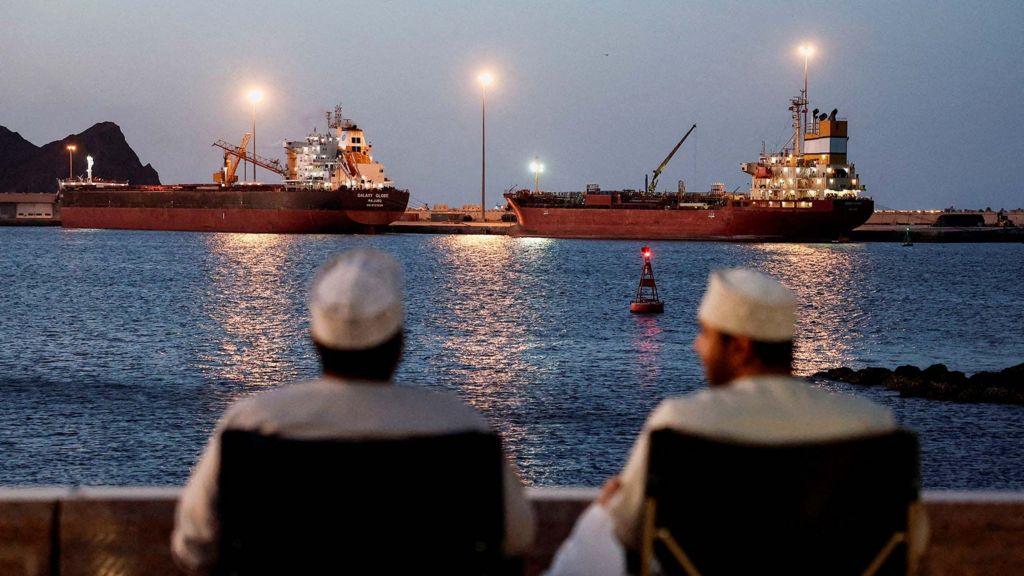
    The conflict’s ripple effects are disrupting global trade and regional stability. In Oman, a drone attack on the port of Salalah injured a worker and damaged infrastructure, prompting Danish shipping giant Maersk to suspend operations for 48 hours. Iran claimed responsibility, stating it targeted a US logistics vessel. Similarly, Kuwait’s international airport suffered heavy damage to its radar system from a separate drone attack, though no casualties were reported.

    Amid the hostilities, diplomatic efforts are seeking to de-escalate tensions. Iran’s President Masoud Pezeshkian praised Pakistan’s mediation efforts, as Islamabad prepares to host a crucial meeting of foreign ministers from Saudi Arabia, Egypt, and Turkey. In a significant bilateral development, Qatar and Ukraine signed a defense agreement focused on technological cooperation and countering threats from missiles and drones, a move that aligns with Kyiv’s interests amid Iran’s aerial campaigns.

    Further diplomatic activity involves Indonesia, which is negotiating with Iran to secure safe passage for its tankers through the critical Strait of Hormuz, with Tehran responding favorably. Conversely, Kyiv has vehemently denied an Iranian claim of destroying a Ukrainian anti-drone system depot in the UAE, labeling it a disinformation campaign. In Bahrain, the government denied allegations of a religiously-motivated crackdown after rights groups reported widespread arrests predominantly targeting the Shia community.

  • First submarine named after Massachusetts joins the Navy fleet

    First submarine named after Massachusetts joins the Navy fleet

    BOSTON — The U.S. Navy formally welcomed the USS Massachusetts into active service during a commissioning ceremony on Saturday, marking a historic milestone as the first submarine to bear the name of the Bay State. This advanced Virginia-class fast attack vessel, capable of operating at depths exceeding 800 feet (240 meters), represents the 25th collaborative production between General Dynamics Electric Boat and Newport News Shipbuilding.

    Commanding Officer Mike Siedsma, a seasoned Navy veteran with 21 years of submarine service across four vessel classes, expressed profound admiration for the achievement. ‘Witnessing the construction process, training our team, and bringing this submarine into Boston Harbor for the first time is truly extraordinary,’ Siedsma remarked. Historical records indicate no submarine has visited Boston Harbor since the late 1980s or early 1990s.

    The submarine’s commissioning occurs against a backdrop of heightened geopolitical tensions. While Siedsma declined to disclose the vessel’s initial deployment location, his comments followed recent naval engagements where a U.S. submarine sank an Iranian warship off Sri Lanka’s coast. ‘The geopolitical situation is very interesting,’ Siedsma noted. ‘Our mission demonstrates the formidable power projection capabilities of the United States Navy.’

    Notably, the USS Massachusetts breaks new ground in naval inclusion with 39 women among its 147 crew members—representing approximately 25% of the complement. This integration follows the 2008 reversal of the submarine service’s gender restrictions. Sheryl Sandberg, former Meta COO and the vessel’s sponsor, emphasized the symbolic significance: ‘These sailors inspire every little girl to believe she can achieve anything.’

    The $2.8 billion submarine, weighing 8,000 tons and armed with 24 Tomahawk cruise missiles, becomes the fifth U.S. Navy vessel named after Massachusetts. Historical predecessors include an 1845 steamer and the World War II-era South Dakota-class battleship USS Massachusetts (BB-59).

    The vessel features unique tributes to its namesake state, including a wardroom mug rack crafted from Massachusetts county wood, donated by the television program ‘This Old House.’ Sandberg reflected on the broader historical context, noting how the commissioning echoes Massachusetts’ foundational role in American independence and ongoing freedom struggles.

  • Yemen’s Houthi enter war with missile targeting Israel

    Yemen’s Houthi enter war with missile targeting Israel

    Yemen’s Houthi rebels dramatically escalated regional tensions on Saturday by launching a ballistic missile toward Israeli territory, formally entering a conflict that has now entered its second month with growing global economic consequences. The Iranian-backed group’s intervention marks a significant expansion of hostilities beyond direct Iran-Israel confrontations, raising immediate concerns about Red Sea shipping security.

    The missile launch, confirmed by both Houthi leadership and Israeli defense authorities, represents the group’s first direct military action in the current conflict after previously limiting operations to maritime attacks during the Gaza war. Israeli defense systems successfully intercepted the projectile, with no reported casualties or damage.

    Meanwhile, regional economic disruptions intensified as Saudi Arabia diverted substantial oil exports to the Red Sea port of Yanbu, circumventing Iran’s closure of the Strait of Hormuz to hostile nations. This strategic shift has contributed to rising global energy prices, exacerbating worldwide economic pressures.

    The conflict has generated widespread collateral damage across the region. Iranian military forces targeted a US logistics vessel near Oman’s Port of Salalah, while drone attacks wounded foreign workers in Oman. Aviation infrastructure suffered damage in Kuwait and Erbil, and industrial zones in the United Arab Emirates sustained strikes that injured five personnel.

    Iran’s domestic industry felt the conflict’s impact as well, with the Khuzestan Steel Company halting production following US-Israeli airstrikes. The Revolutionary Guards issued retaliatory warnings targeting regional industrial sites, military bases, and hotels housing American troops.

    Diplomatic efforts continued amid the violence, with US special envoy Steve Witkoff expressing optimism about potential US-Iran negotiations and a 15-point peace plan. Pakistan prepared to host foreign ministers from Saudi Arabia, Turkey, and Egypt for crisis talks, while Germany’s foreign minister anticipated imminent direct US-Iran meetings. Thailand joined other nations in securing safe passage for oil tankers through the Strait of Hormuz via agreement with Iranian authorities.