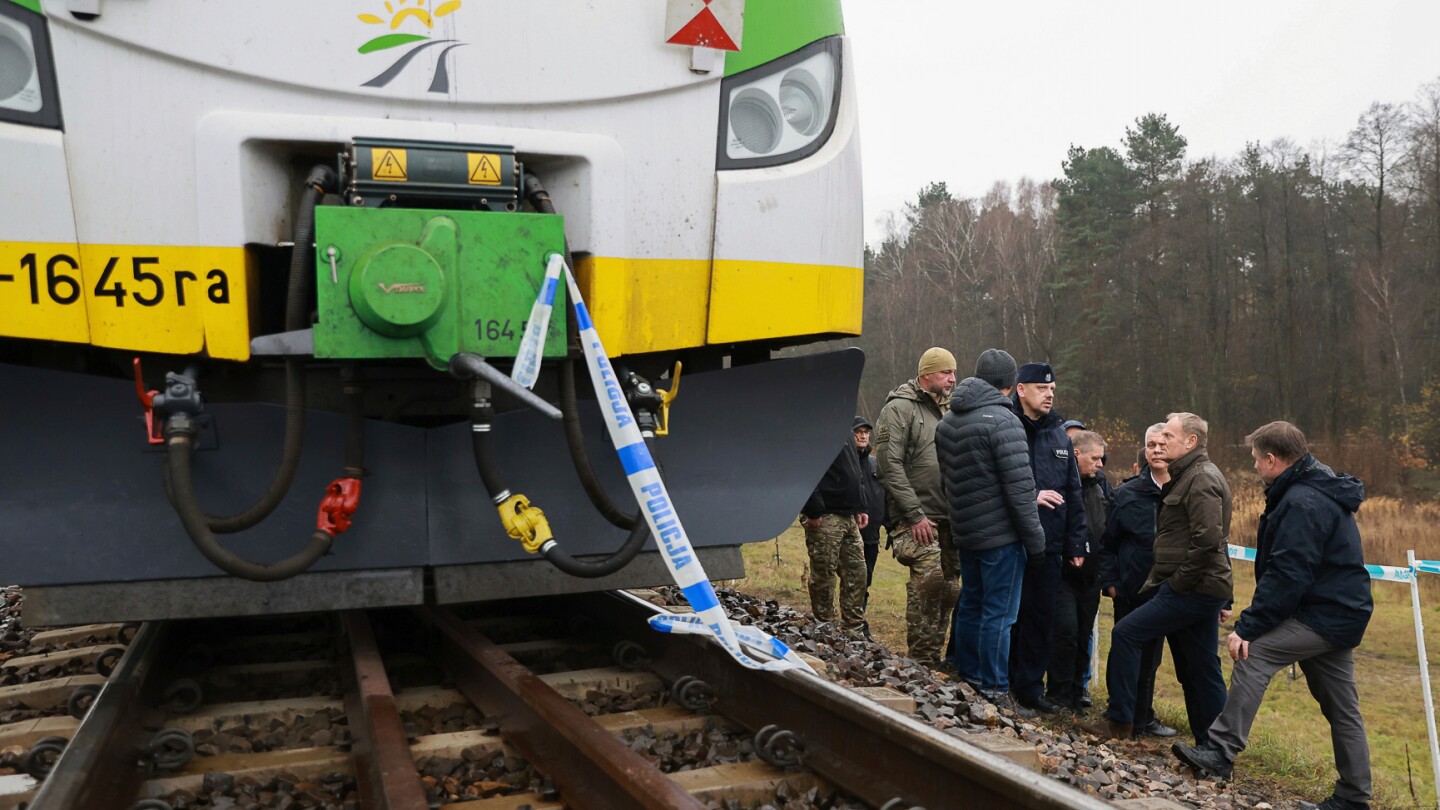
WARSAW, Poland — A critical railway line connecting Warsaw to southeastern Poland was severely damaged by an explosion on Sunday, which authorities have labeled as an act of sabotage. Prime Minister Donald Tusk confirmed the incident on Monday, stating that the explosion occurred on the Warsaw-Lublin route near the village of Mika, approximately 100 kilometers (62 miles) southeast of the capital. The blast destroyed a section of the railway track, disrupting train services. Fortunately, no injuries were reported among the two passengers and several staff members aboard the train at the time. The incident was first detected by a train driver who reported irregularities on the track around 7:40 a.m. Sunday. Subsequent investigations revealed damage at multiple locations along the route. Tusk vowed to apprehend the perpetrators, calling the act ‘unprecedented’ and emphasizing that justice would be served ‘regardless of who is behind them.’ This incident adds to a series of suspected sabotage and espionage cases in Poland since Russia’s invasion of Ukraine in February 2022, with dozens of individuals detained in connection with these activities.
分类: world
-
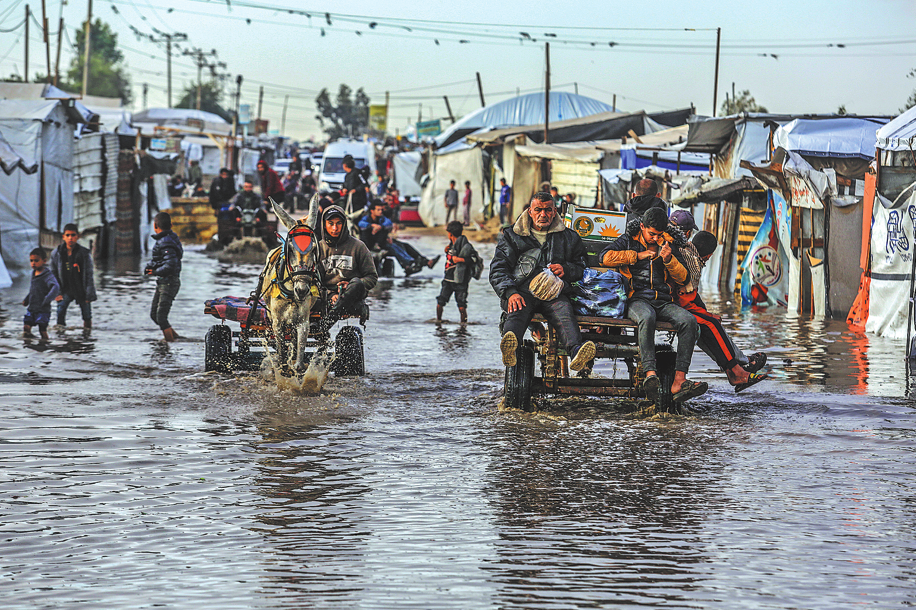
First winter rains soak makeshift Gaza tents
The first heavy rains of winter have inundated the Mawasi tent camp in Gaza, exacerbating the already dire living conditions for displaced Palestinians. On Saturday, torrential downpours flooded the makeshift shelters, forcing residents to dig trenches in a desperate attempt to divert water from their tents. The rains, which began on Friday, seeped through torn tarpaulins and fragile structures, soaking the meager belongings of families. Strong winds further threatened to topple tents and disrupt the already scarce food and supply distribution.
Bassil Naggar, a resident who recently purchased a new tent for $712 on the black market, described the relentless struggle to keep his shelter dry. ‘I spent all of Friday pushing water out of my tent,’ he said, noting that his neighbors’ tents and possessions were also ruined. ‘Water puddles are inches high, and there is no proper drainage.’
The United Nations reports that Mawasi housed up to 425,000 displaced Palestinians earlier this year, most of whom are living in temporary tents after being displaced by Israel’s military campaign. While the Israeli defense body overseeing humanitarian aid claims to be allowing winter supplies like blankets and tarpaulins into Gaza, aid organizations argue that these efforts are insufficient as temperatures drop and winds intensify.
Amid the worsening humanitarian crisis, international efforts to stabilize Gaza are underway. The UN Security Council is set to vote on a U.S. proposal for a UN-mandated stabilization force, which would operate independently of the UN and maintain Israel’s control over Gaza’s security perimeter. Meanwhile, Russia has introduced a competing resolution advocating for a UN-led stabilization force, opposing territorial changes in Gaza and urging a two-state solution.
On Saturday, Russian President Vladimir Putin and Israeli Prime Minister Benjamin Netanyahu discussed the Gaza ceasefire, Iran’s nuclear program, and stability in Syria during a phone call. As the first stage of the Gaza ceasefire agreement nears its end, the focus shifts to the more challenging task of establishing a governing body and deploying an international stabilization force.
-

Climate protesters seek action at COP30
Thousands of climate activists gathered in Belem, Brazil, on Saturday, staging a vibrant and peaceful protest to demand stronger global action against climate change. The demonstration, dubbed the ‘Great People’s March,’ coincided with the halfway point of the COP30 climate conference, where negotiations have stalled amid disagreements among nations. Protesters, including indigenous leaders and environmental advocates, marched through the city under the scorching sun, chanting slogans and rolling a massive inflatable globe to symbolize the planet’s fragility. Some participants staged a symbolic funeral procession for fossil fuels, carrying coffins labeled ‘coal,’ ‘oil,’ and ‘gas’ to highlight the need for a transition to renewable energy. Indigenous leader Txai Surui, 28, emphasized the urgency of the situation, stating, ‘We are here to pressure countries to fulfill their promises and prevent any regression.’ The march concluded near the COP30 venue, where security forces were deployed to maintain order. Inside the conference, COP30 President Andre Correa do Lago acknowledged the lack of progress in negotiations and urged delegates to prioritize meaningful dialogue over procedural delays. He pledged to release a summary of key positions on Sunday to guide ministers in the final week of talks. The protesters’ demands include reparations for environmental damage caused by corporations and governments, particularly to marginalized communities, and greater representation of indigenous voices in climate discussions.
-
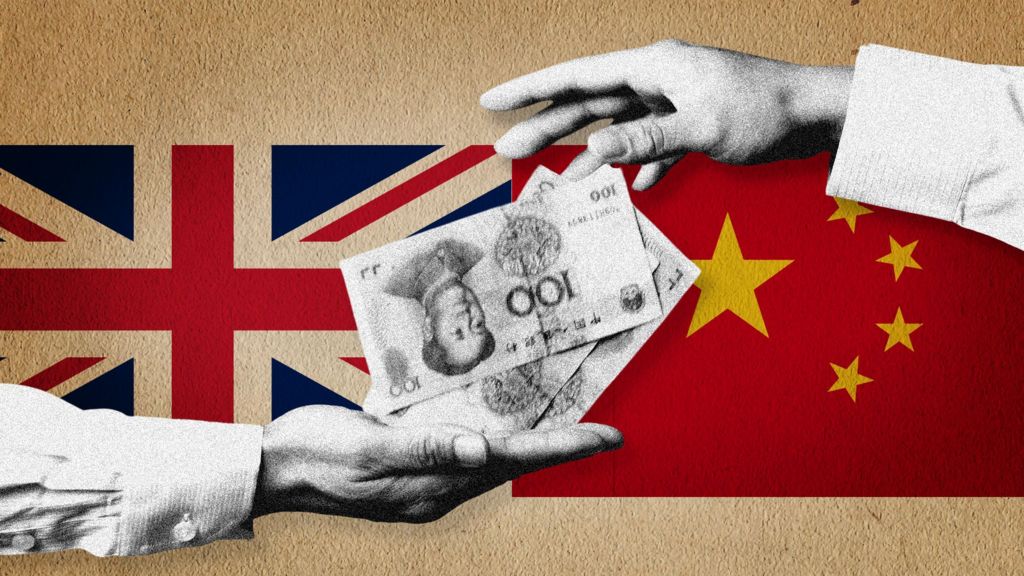
China’s investment spree in UK gave it access to military-grade technology, BBC told
China has invested over £45 billion ($59 billion) in UK businesses and projects since the turn of the century, with a significant portion of these investments aimed at acquiring cutting-edge technology, including military-grade capabilities. This investment surge, peaking after a 2015 Chinese state directive, has positioned the UK as the top destination among G7 nations for Chinese capital, relative to its population and economic size, according to US-based research group AidData.
-

UN climate talks shift into higher gear with government ministers and presidency’s new document
BELEM, Brazil — As the United Nations climate talks, COP30, enter their second and final week, the focus shifts from professional negotiators to high-ranking government ministers who are now tasked with making critical political decisions. The conference, held on the edge of the Brazilian Amazon, resumed after a rest day with foreign and other ministers arriving to address key issues. These officials will wield significantly more authority and flexibility than the negotiators who have been handling the discussions thus far.
David Waskow, director of the international climate initiative at the World Resources Institute, emphasized the shift, stating, ‘It brings a whole different dimension to the table.’ The pressure intensified late Sunday when the Brazilian presidency of the talks released a five-page summary outlining strategies to address contentious issues. These include urging nations to enhance their emissions-cutting plans, resolving trade disputes related to climate, and securing financial aid for poorer nations.
The summary presented a range of options for negotiators to consider or modify, even on topics not originally part of the agenda. Among the proposals is the creation of detailed ‘road maps’ to translate ambitious goals into actionable steps. This approach has already been employed to solidify last year’s $300 billion annual target for wealthy nations to provide climate financial aid to developing countries.
Small island nations, particularly vulnerable to rising sea levels, have called for the talks to address the inadequacy of current emissions-cutting plans. So far, 116 nations have submitted plans that collectively fall short of the reductions needed to limit global warming to 1.5 degrees Celsius, as outlined in the 2015 Paris Agreement. This issue may be combined with calls for a fossil fuel phase-out plan, a contentious topic that gained momentum after Brazilian President Luiz Inácio Lula da Silva recently advocated for a new road map.
Andreas Sieber, associate policy director at the advocacy group 350.org, remarked, ‘The fight is on. The presidency text outlines of a high-ambition COP30 outcome are finally visible: a pathway to close the decarbonization gap, anchored in a fossil-fuel phase-out road map and a credible climate-finance package.’
The Associated Press’ climate and environmental coverage is supported by multiple private foundations, though the AP retains full editorial control. This story was produced as part of the 2025 Climate Change Media Partnership, a journalism fellowship organized by Internews’ Earth Journalism Network and the Stanley Center for Peace and Security.
-

Japan tourism and retail stocks slide after row with China over Taiwan
Japanese tourism and retail sectors faced significant setbacks on Monday as China issued a stark warning to its citizens against traveling to Japan. This advisory comes amidst escalating tensions between Tokyo and Beijing over Taiwan, a contentious issue that has strained bilateral relations. Japanese Prime Minister Sanae Takaichi, known for her critical stance on China’s military maneuvers in the region, recently hinted at potential military intervention should Beijing attempt to seize Taiwan. Her remarks, made in parliament on November 7, referenced Japan’s 2015 security law, which permits military action in ‘survival-threatening situations’—scenarios where an armed attack on allies poses an existential threat to Japan. The fallout was immediate: shares in Shiseido, a leading cosmetics firm, plummeted nearly 10%, while Takashimaya, a prominent department store chain, and Fast Retailing, the parent company of Uniqlo, saw declines exceeding 5%. China, a top contributor to Japan’s tourism industry, further intensified the rift by summoning Japan’s ambassador last week, urging its citizens to avoid travel to the country. Taiwan, located approximately 100 kilometers south of Japan’s nearest island, remains a flashpoint. Beijing views Taiwan as a renegade province destined for reunification, even if by force, while many Taiwanese favor maintaining the current status quo—neither declaring independence nor unifying with China. The ongoing dispute underscores the fragile geopolitical balance in the region, with economic and political ramifications reverberating across markets.
-
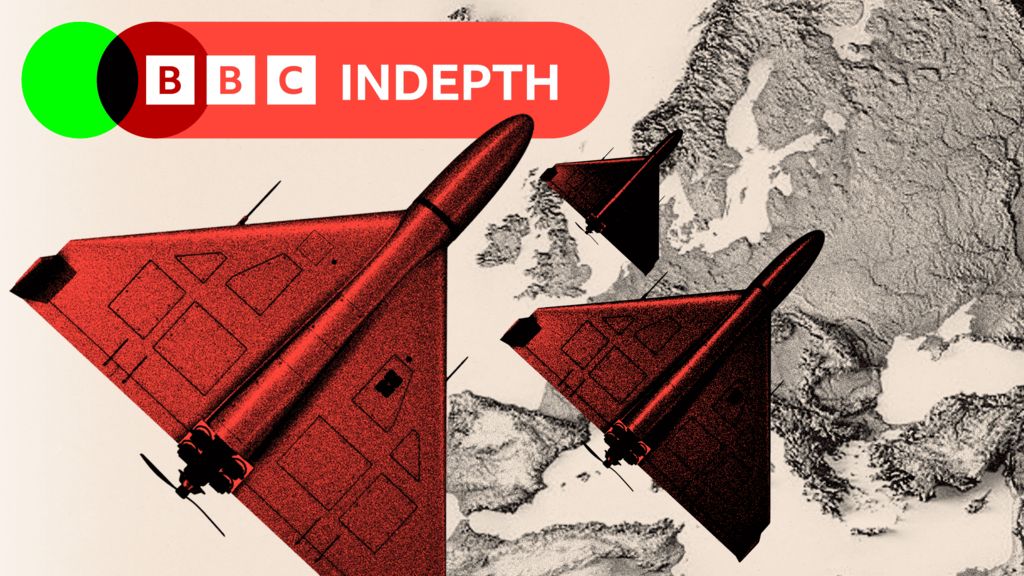
Mysterious drones have been spotted at night at airports across Europe. How worried should we be?
The escalating use of drones in modern warfare has prompted Europe to consider a groundbreaking defense mechanism: the ‘drone wall.’ This initiative comes in response to increasing incursions by Russian drones, which have not only targeted Ukraine but also ventured into NATO airspace, including Poland, Belgium, and Denmark. The drone wall, envisioned as a multi-layered defense system, aims to protect critical infrastructure and airspace across Europe from the Baltic states to the Black Sea. The system will integrate radar, sensors, jamming technologies, and weaponry to detect, track, and neutralize incoming drones. However, the project faces significant challenges, including technological limitations, financial constraints, and the rapid evolution of drone threats. Experts argue that while the drone wall is a necessary step, it is not a foolproof solution. The debate also extends to whether Europe should focus on defensive measures or target the sources of drone launches. As tensions between Europe and Russia continue to rise, the drone wall represents a critical but complex response to the growing threat of aerial warfare.
-

Two US marines implicated in killing family in notorious Iraq war shooting, expert tells BBC
Safa Younes, now 33, remains the sole survivor of a harrowing incident that claimed her entire family in the Iraqi town of Haditha. On November 19, 2005, US Marines stormed her family home, opening fire and killing her parents, siblings, and aunt. Safa, then just 13, survived by pretending to be dead among the bodies of her loved ones. Two decades later, a BBC Eye investigation has uncovered new evidence implicating two Marines in the killings, raising serious questions about the accountability of US armed forces. The Haditha massacre, which resulted in the deaths of 24 Iraqi civilians, including women and children, remains one of the most controversial episodes of the Iraq War. Despite extensive investigations, no one has been convicted for the killings. The Marines claimed they were responding to gunfire after a roadside bomb attack, but Safa insists her family was unarmed and innocent. Forensic expert Michael Maloney’s analysis suggests that two Marines entered the room where Safa’s family was shot, contradicting earlier accounts. The case highlights systemic failures in military justice, with survivors like Safa still seeking accountability and closure.
-

Bangladesh tense ahead of ousted PM Hasina’s verdict
Bangladesh’s capital, Dhaka, was rocked by several crude bomb explosions on Sunday, escalating tensions ahead of a highly anticipated verdict in the case against ousted former Prime Minister Sheikh Hasina. The explosions, which caused no casualties, have further unsettled a city already grappling with political unrest. Hasina, 78, is being tried in absentia for crimes against humanity, accused of ordering a deadly crackdown on student protests in mid-2024. She denies the allegations and has remained in India since fleeing Bangladesh after her ouster in August last year. In response to the escalating violence, Dhaka Metropolitan Police Commissioner has authorized officers to use lethal force against anyone involved in arson or bomb attacks. Security has been significantly tightened across Dhaka, Gopalganj — Hasina’s ancestral home and a stronghold for her party — and two neighboring districts, with Border Guard Bangladesh personnel deployed to assist local authorities. Police and Rapid Action Battalion teams have been stationed around key government buildings and major intersections, resulting in an unusually quiet city. ‘It’s very tense — hardly anyone is coming out,’ said Ramjan Ali, an autorickshaw driver in Dhaka. ‘I’ve been on the road since morning, but I’ve barely earned anything today.’ In the days leading up to the verdict, authorities recorded over 30 crude bomb explosions and reported dozens of buses torched in Dhaka and several other districts. Additionally, dozens of Awami League activists have been arrested for alleged involvement in explosions and acts of sabotage.
-

Mike Pompeo becomes adviser to scrutinized Ukraine defense company that’s looking to boost missiles
Former U.S. Secretary of State Mike Pompeo has been appointed to the advisory board of Fire Point, a leading Ukrainian defense company known for its advanced long-range drones capable of targeting deep within Russian territory. This move comes as the company faces an ongoing corruption investigation. Fire Point is actively enhancing its global presence by establishing a new factory in Denmark and expanding its production capabilities to include battle-tested cruise missiles, aiming to more than double its current output. Despite the scrutiny, company executives maintain transparency, having commissioned an independent audit to address concerns. Critics, however, highlight the firm’s opaque origins, its monopoly on Defense Ministry contracts, and alleged ties to Tymur Mindich, a controversial associate of President Volodymyr Zelenskyy implicated in a major corruption scandal. Fire Point’s Chief Technology Officer, Iryna Terekh, expressed support for the investigation, emphasizing the company’s commitment to adhering to high corporate standards. The firm has also gained international recognition, with U.S. Special Envoy to Ukraine Keith Kellogg visiting its facilities. Fire Point’s success is partly attributed to the Danish model, a financing mechanism where foreign governments directly fund Ukrainian defense companies. However, the company’s rapid rise is shadowed by ongoing investigations into potential price inflation and questionable contracts. Despite these challenges, Fire Point continues to innovate, with its Flamingo cruise missile proving effective in recent strikes against Russian targets. The company’s crowdfunding initiatives, such as a campaign by the Czech organization Weapons to Ukraine, further underscore its growing influence. As Fire Point navigates both expansion and scrutiny, its role in Ukraine’s defense industry remains pivotal.