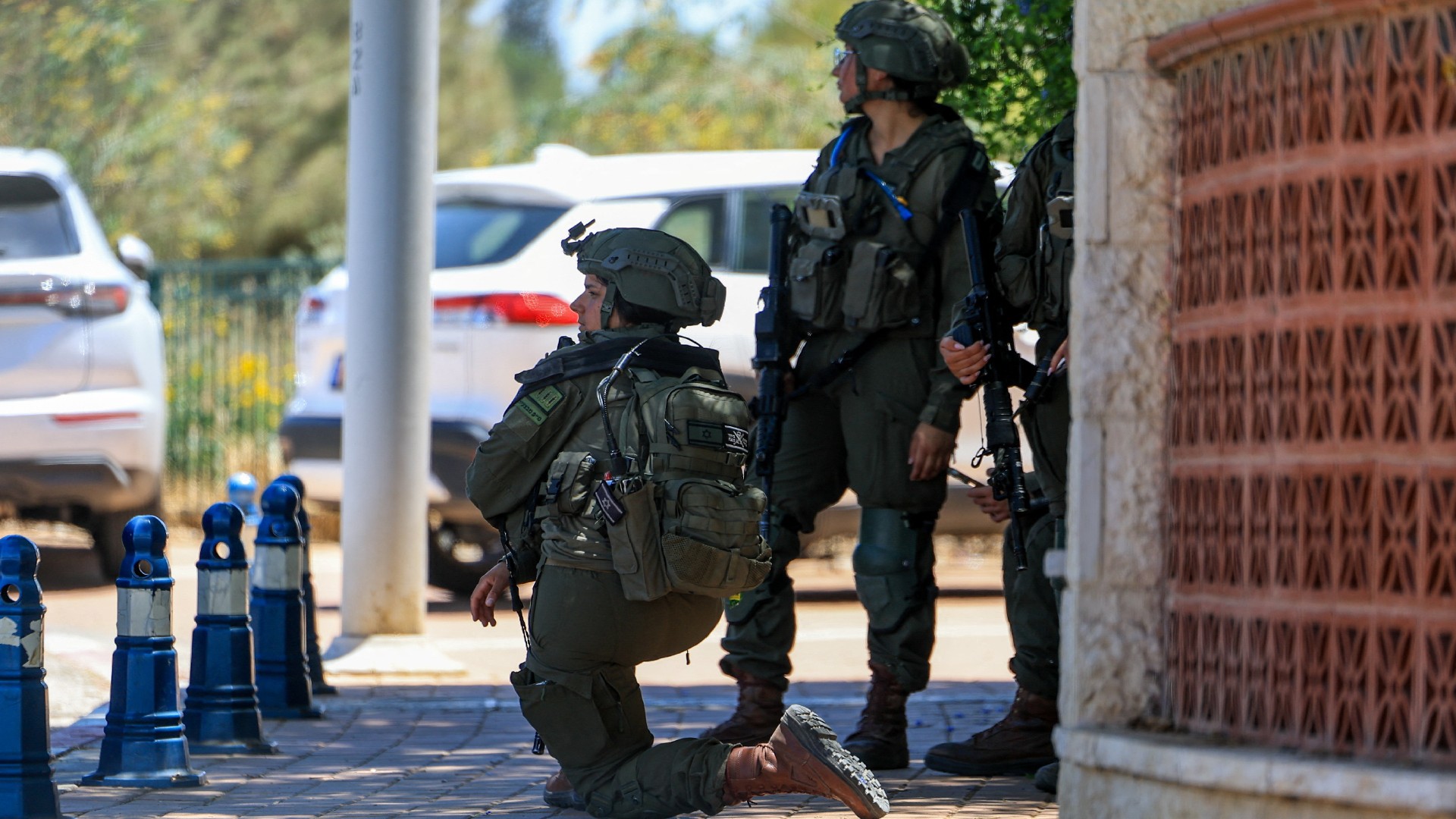
A string of coordinated shooting incidents in central Israel has left one civilian dead and five others injured, triggering a large-scale manhunt, military deployments across the occupied West Bank, and sharp political rhetoric from both Israeli and Palestinian factions, official sources confirmed Sunday. The violence unfolded across three separate locations close to the West Bank city of Qalqilya, according to initial reports from Israeli law enforcement and emergency response teams. The fatality was identified as a 35-year-old Israeli national, while the wounded include multiple civilians with injuries ranging from moderate to life-threatening. One man in his 40s was rushed to a nearby hospital in critical condition, medical officials confirmed. Two additional victims were treated at a gas station adjacent to the Israeli town of Kochav Yair, with one suffering serious harm, while a fifth and sixth casualty were recorded near Tzur Yitzhak, another central Israeli settlement. In an official statement released shortly after the attacks began, Israeli police noted that large security detachments remained deployed across the incident sites, with active searches ongoing, and issued a public appeal for residents to maintain heightened vigilance amid ongoing uncertainty. Early official accounts from the Israeli military indicated that forces had killed one suspect – a Palestinian citizen of Israel from the central Israeli city of Tayibe – while a second possible attacker was wounded and escaped the initial dragnet. However, police later revised this account, confirming that only a single shooter was involved in the attacks, and that the gunman was shot dead by security forces after a widespread manhunt. Investigators have since recovered the weapon used in the assault: a makeshift “Carlo” submachine gun, a commonly improvised variant of the Carl Gustav that is frequently used by Palestinian armed groups. In the wake of the violence, Israeli military chief of staff Eyal Zamir issued new operational directives for expanded activities across the occupied West Bank. Israeli military forces subsequently moved to surround multiple Palestinian villages and sealed off a key nearby West Bank border crossing, tightening restrictions on movement in the area. Israeli Prime Minister Benjamin Netanyahu confirmed that he had convened a top-level security assessment meeting and was closely monitoring developments related to what he described as the “deadly shooting attack.” Far-right Israeli National Security Minister Itamar Ben Gvir drew immediate controversy with a hardline public statement posted to the social platform X, calling for the execution of any attacker taken alive. “If the terrorist is caught alive he will be executed. This is the law and we will demand its implementation,” Ben Gvir wrote. “Jewish blood is not in vain. Whoever murders a Jew will see the hanging rope.” The armed Palestinian group Hamas quickly claimed the attacks as a legitimate response to ongoing Israeli actions in the region, framing the violence as a reaction to Israeli aggression against Gaza, what the group described as ongoing “crimes of Judaisation,” extrajudicial killings of Palestinians, Israeli settlement expansion, military raids, and daily attacks against Palestinian communities in the West Bank and East Jerusalem. “The occupation – no matter how far it goes in its oppression and crimes – will not succeed in stopping the rise of resistance in the valiant West Bank,” the group said in an official public statement. A second major Palestinian armed faction, Palestinian Islamic Jihad, echoed this framing, describing the shooting as a “natural consequence of the criminal policies pursued by the war criminal government of the Zionist entity.” The attack comes amid a months-long surge in violence across Israel and the occupied Palestinian territories, stoking widespread concerns of further escalation ahead.
分类: world
-
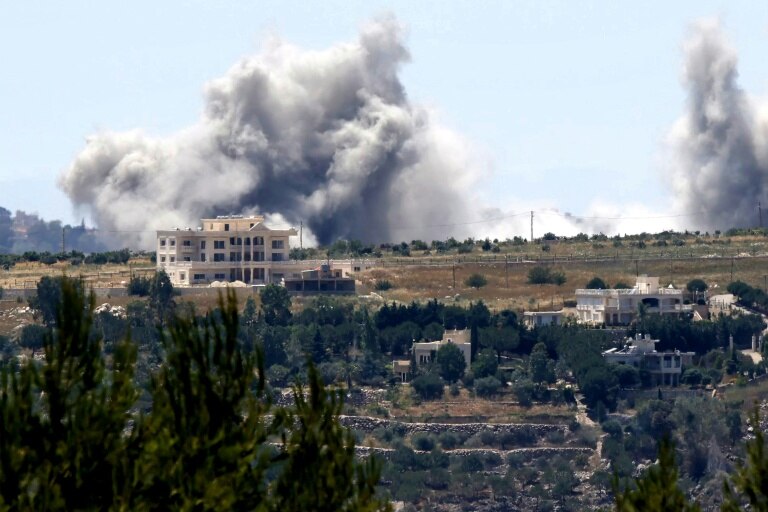
Israel strikes south Beirut after intercepting Hezbollah launches
Fresh cross-border violence has sent tensions soaring between Israel and Lebanon’s Iran-backed militant group Hezbollah, after Israel carried out targeted airstrikes on Beirut’s southern suburbs Sunday, responding to what it says were rocket launches by Hezbollah targeting Israeli civilian areas.
Sunday’s strikes marked only the third time that southern Beirut—an area long considered a core Hezbollah stronghold—has been hit by Israeli attacks since mid-April, a zone that had remained relatively quiet amid months of routine cross-border fire exchanges between the two sides. In an official confirmation of the operation, Israeli Prime Minister Benjamin Netanyahu’s office stated the military had just targeted a Hezbollah militant command center in Beirut’s Dahiyeh district, launching the assault in direct response to Hezbollah fire directed at Israeli territory.
A separate statement from the Israel Defense Forces (IDF) elaborated on the operation, noting that after Hezbollah fired projectiles toward civilian communities inside Israel, the IDF executed a “precise strike” against a key Hezbollah command post. The military added that it had taken multiple proactive steps to minimize civilian harm before the attack, including the use of precision-guided munitions and advanced aerial surveillance to reduce unintended civilian casualties. Lebanon’s state-run National News Agency (NNA) confirmed the strikes hit two residential apartments located in separate multi-story buildings. An Agence France-Presse (AFP) photographer on the ground documented visible damage to two apartments in one residential building on a narrow Beirut side street, while widespread traffic gridlock formed as panicked local residents attempted to evacuate the suburb, and Lebanese military units deployed to secure the affected area.
Earlier on Sunday, air raid sirens triggered across northern Israel, and the IDF confirmed it had successfully intercepted two projectiles that had crossed the border from Lebanese territory. Hezbollah has not issued an immediate public response to the Beirut strikes, though the group did confirm separate offensive operations targeting Israeli military personnel along the Lebanese border earlier the same day.
This latest escalation comes just days after indirect negotiations in Washington, where Lebanese and Israeli diplomatic representatives presented a conditional ceasefire proposal that would have required Hezbollah to halt all cross-border fire and withdraw its fighters from positions near the Israeli-Lebanese border. The proposal collapsed after Hezbollah rejected the terms, demanding that Israel fully withdraw from all contested Lebanese territory before any ceasefire can take effect. Even before Sunday’s strike, Israeli officials had explicitly warned they would target southern Beirut if Hezbollah resumed attacks on northern Israel.
The current unrest in Lebanon grew out of the broader Middle East conflict, when Hezbollah opened the border front on March 2, launching rockets at Israel in a show of support for its regional patron Iran. Tehran has since maintained that any comprehensive agreement to end the wider regional conflict—currently paused by a separate ceasefire reached in April—must also include an end to hostilities along the Israel-Lebanon border.
Iranian officials have already issued sharp threats of retaliation over Sunday’s strikes. Iranian parliamentary speaker and chief negotiator Mohammad Bagher Ghalibaf accused the United States of giving Israel a “green light” to carry out the Beirut attack, warning that “our armed forces, as always, are free to act” in response. Ebrahim Rezaei, spokesman for the Iranian parliament’s national security commission, echoed the threat, promising a “decisive and painful response” to the Israeli operation.
Iran’s position tying the Lebanon conflict to the broader regional war has significantly complicated diplomatic efforts led by the United States to de-escalate tensions. In an interview aired Sunday on U.S. network NBC’s *Meet the Press*, recorded one day before the strike, U.S. President Donald Trump called on Israel to adopt more targeted military tactics. “I’d like to see a more surgical attack on Hezbollah,” he said. “I’d like to see Lebanon have a better life.”
Sunday’s violence extended far beyond the capital, with the NNA reporting a wave of additional Israeli strikes across multiple locations in southern Lebanon. The attacks come one day after Lebanese authorities confirmed at least five people, including a Lebanese army general, were killed in separate Israeli strikes across the region.
On Sunday, the IDF also issued a mandatory evacuation warning for most of the coastal city of Tyre and its surrounding outskirts. The city currently shelters thousands of internally displaced people who fled earlier fighting near the border, and it has faced heavy sustained bombardment since hostilities began. An AFP correspondent on the ground reported that Lebanese civil defense teams evacuated roughly 500 families from school buildings that had been repurposed as emergency shelters, moving them to the city’s Christian quarter, which was not included in the evacuation order.
Further north near the coastal city of Sidon, public funerals were held Sunday for four people killed in an Israeli airstrike a day prior: three members of one extended family and a local rescue worker. Lebanon’s ministry of health reports that at least 131 rescue workers have been killed by Israeli strikes since the conflict began. “We do not carry rockets, our only weapon is the bread we deliver to people,” Qassem Foani, a fellow rescuer, told AFP. “They went and gave the family bread, but as they were leaving, a drone struck them.”
According to updated counts from Lebanon’s health ministry, Israel’s wide-ranging air campaign and ground invasion of southern Lebanon have killed more than 3,600 people in the country since hostilities escalated earlier this year.
-
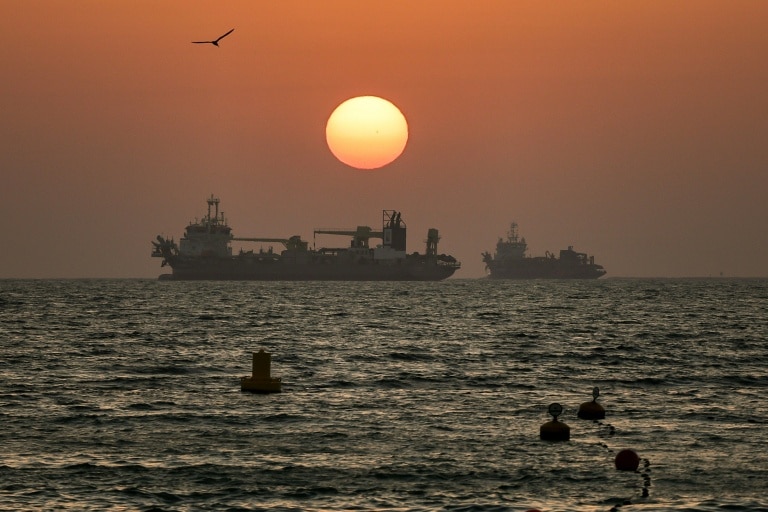
US says shot down Iran drones as war reaches 100th day
One hundred days into the ongoing regional conflict that has roiled the Middle East, no path to a lasting ceasefire has emerged, as a fresh escalation at the strategic Strait of Hormuz and continued deadlock in diplomatic talks have deepened uncertainty across the region and global markets.
On Sunday, the U.S. Central Command (CENTCOM) confirmed it had intercepted and destroyed two Iranian drones that posed a direct threat to international commercial shipping moving through the Strait of Hormuz, one of the world’s most critical energy chokepoints. This latest confrontation followed a earlier pattern of tit-for-tat exchanges: a prior U.S. drone interception and strikes on Iranian radar sites prompted Tehran to launch a barrage of missiles at U.S. Gulf allies Bahrain and Kuwait just one day prior.
The 100-day milestone arrived alongside renewed diplomatic efforts led by Pakistan, which has stepped in as a neutral mediator after weeks of indirect negotiations between Washington and Tehran that have been repeatedly interrupted by cross-border threats and sporadic armed exchanges. Pakistan’s Interior Minister Mohsin Naqvi traveled to Tehran on Saturday to deliver a special confidential message from Pakistani Army Chief General Syed Asim Munir — who has spearheaded Pakistan’s mediation efforts after an initial round of indirect talks in Islamabad — to Iran’s Supreme Leader, alongside a separate communication from Pakistan’s prime minister.
Parallel to the Tehran-Washington talks, Lebanon’s top military commander General Rodolphe Haykal also traveled to Pakistan over the weekend to meet with Munir, as Beirut pushes for a resolution to the separate parallel conflict on Lebanese soil between the Israeli military and Iran-backed Hezbollah. Iran has insisted that any regional peace agreement must include provisions to end fighting in Lebanon, and a source familiar with Haykal’s trip confirmed the visit was directly tied to the ongoing Pakistani-mediated negotiations between Tehran and Washington.
Despite these new diplomatic overtures, core sticking points have left talks firmly deadlocked. Iranian Supreme Leader military advisor Mohsen Rezaei told CNN earlier that negotiations with the U.S. remain at an impasse, calling on former U.S. President Donald Trump to break the deadlock while demanding the release of approximately $24 billion in Iranian assets frozen by U.S. sanctions. Washington, however, is considering redirecting those frozen funds to compensate U.S. Gulf allies for damage caused by recent Iranian strikes, a senior source familiar with Treasury Secretary Scott Bessent’s policy position confirmed.
Iranian top diplomat Abbas Araghchi described negotiations with the Trump administration as uniquely cumbersome in a CNN interview published Sunday, noting that shifting U.S. negotiating positions and contradictory public statements have made consistent progress impossible. “The main problem of negotiating with this administration is that you have to face so many changing positions, moving the goal posts, different statements, contradictory remarks,” he said.
Fighting on the Lebanese front flared back up on the 100th day of the war, after Prime Minister Benjamin Netanyahu announced Israeli forces had struck a Hezbollah militant command center in Beirut’s southern suburbs, a core Hezbollah stronghold. The strike was framed as a response to fresh fire directed at Israeli territory. Lebanon’s state-owned National News Agency reported the strikes damaged two residential apartments in separate buildings, and AFP correspondents on the ground saw widespread panic as residents fled the area, while Lebanese military units deployed to secure the perimeter. Araghchi had previously warned that any Israeli strike on Beirut would trigger a full-scale resumption of regional hostilities.
Beyond the front lines and negotiating rooms, the prolonged conflict has pushed ordinary Iranians into deepening economic and psychological distress. With soaring inflation and collapsing purchasing power, many residents describe daily life as barely survivable. “I really have gone numb,” 32-year-old Ahvaz-based fitness trainer Elaheh told AFP. “Daily life? It’s a joke. Everything is horrible. We only try to survive.”
Thirty-five-year-old chef Farhad echoed that despair, noting economic hardship had already taken hold before the current conflict escalated, and conditions have only grown worse. “Things that just a few months ago you might have considered buying have now become dreams and fairy tales,” he said. Farhad added that the constant cycle of drone strikes and missile exchanges has become a grim new normal, leaving the region trapped in a permanent state of uncertainty. “I feel like this situation is going to stay like this for a while; a sort of suspended, up-in-the-air state where those guys fire a few missiles, these guys launch a few drones,” he said.
The ongoing volatility has already rattled global commodity and energy markets, and has piled additional domestic political pressure on Trump ahead of upcoming U.S. midterm elections, with voters closely scrutinizing the administration’s handling of the crisis.
-
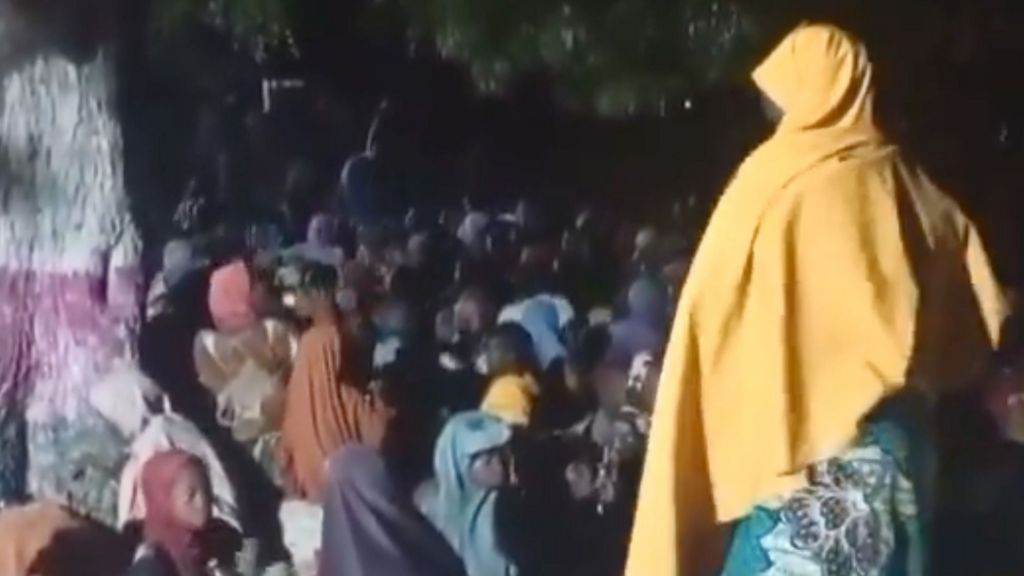
Hundreds of captives freed from Boko Haram mountain hideout
A large group of captives held by Boko Haram jihadists in Nigeria’s northeastern Borno State has been freed from a remote mountain stronghold, ending months of harsh captivity, though conflicting accounts have emerged over who is responsible for the operation.
The hostages, most residents of the majority-Muslim Ngoshe community near the Cameroon border, were abducted in early March as locals gathered to break their daily Ramadan fast. The Nigerian military confirms at least 360 people were rescued, while a local youth organization, the Borno South Youth Initiative, puts the total number of freed captives at 416.
In an official statement, military spokesperson Lieutenant-Colonel Haruna M Sani framed the operation as one of the most ambitious hostage rescues the Nigerian armed forces have carried out in the northeast. The weeks-long mission, built on detailed intelligence, struck the Boko Haram hideout in the Mandara Mountains under cover of darkness, catching the insurgents off guard. Facing the rapid, overwhelming force of advancing troops, Sani said many fighters fled into the surrounding rugged terrain and others surrendered without resistance.
However, local community groups have pushed back against the military’s account. Samaila Kaigama, president of the Borno South Youth Alliance (Bosaya), said his organization spent weeks negotiating with Boko Haram to secure an unconditional release, and accused government forces of trying to take credit for work led by local mediators. In a public Facebook video, Kaigama criticized “government boys” for claiming glory for the community-led effort.
According to Nigerian authorities, all freed hostages have received initial medical screenings, and are receiving ongoing care after their ordeal. Tragically, two young infants did not survive the harsh conditions of their prolonged captivity, dying from exhaustion exacerbated by the mountainous terrain, Daniel Bwala, special adviser to Nigerian President Bola Tinubu, confirmed in a post on X.
The release comes at a time when the Tinubu administration faces growing public backlash over soaring insecurity across the country. The presidency has publicly commended the military for the operation, and local officials have stated that work is underway to secure the Ngoshe area so that the freed captives can return to their homes and farms. Officials also noted that a small number of abductees are believed to have escaped into Cameroon during the operation, and cross-border efforts are ongoing to bring them home safely. On Sunday, the Nigerian military released photos and videos showing the freed hostages resting under trees overnight following their rescue, matching images posted to the official Nigerian Army social media channel.
Mass kidnapping has become an endemic tactic for armed groups across Nigeria in recent years, with criminal and insurgent factions targeting soft, high-vulnerability locations including remote villages, schools, churches and mosques to generate revenue through ransom payments. While Nigerian law bans the payment of ransoms to abductors, analysts confirm that payments from desperate hostage families, intermediaries, and in some cases state officials have continued, directly fueling the cycle of abductions across the country.
The 2014 kidnapping of 276 schoolgirls from the northeastern village of Chibok remains one of Boko Haram’s most notorious attacks, with roughly 90 girls still missing after more than a decade. During the group’s insurgency, captives were often forced into sexual slavery, domestic servitude, or coerced into serving as suicide bombers.
Boko Haram first launched its armed campaign to establish an Islamic state across northern Nigeria in 2009. While the group no longer controls the large swathes of territory it held at the height of its power in the early 2010s, it and its splinter factions (including the Islamic State West Africa Province) retain the capability to carry out regular attacks and kidnappings across the country’s northeast.
Nigeria has received international support to counter ongoing insurgency and kidnapping threats. Earlier in 2024, a small contingent of U.S. military personnel deployed to the country to train local armed forces and provide intelligence support. Just last month, Nigerian and U.S. forces announced they had carried out a joint operation that killed a senior Islamic State leader in the region. Nigeria’s security challenges remain multifaceted, overlapping threats that include Islamist insurgency, criminal kidnapping gangs, intercommunal land clashes, and separatist unrest in the country’s south.
-

Polls open in tight Peru presidential runoff
On Sunday morning, voting booths opened across Peru for a tightly contested presidential runoff that will shape the future of a country that has already seen eight leaders hold office over the past 10 years. With rising violent crime and persistent political instability top of mind for voters, roughly 27 million eligible Peruvians from the high Andes Mountains to the remote Amazon basin are casting ballots to select a chief executive for a five-year term.
The race pits two ideologically opposed candidates against each other: conservative Keiko Fujimori, a 51-year-old veteran who has run for the presidency four times previously, and 57-year-old leftist former cabinet minister Roberto Sanchez. Pre-election opinion polling has shown the pair neck-and-neck, with a late campaign surge from Sanchez fueled by overwhelming support from rural communities pushing him into the runoff after an unexpectedly strong first-round performance.
The lead-up to Sunday’s vote has been overshadowed by lingering institutional distrust and last-minute political drama. Peru’s first round of voting was delayed for weeks by crippling logistical failures and a slow vote count, deepening public skepticism of the country’s already fragile democratic institutions. A day before polls opened, a judge ruled that Sanchez must stand trial on charges of past financial irregularities tied to his political party, a decision that has sparked accusations of judicial interference in the election. If Sanchez wins the presidency, he will gain legal immunity, though he will still face a hostile right-leaning legislature that has already removed multiple sitting presidents from office in recent years.
For Fujimori, her campaign leans heavily on the complicated legacy of her late father, Alberto Fujimori, who served as president in the 1990s. While he is credited with stabilizing Peru’s economy and defeating the violent Shining Path Maoist insurgency, he died in prison while serving a sentence for corruption and crimes against humanity. Keiko Fujimori has positioned herself as part of a broader right-wing wave across Latin America, where U.S.-backed conservative candidates have claimed victory in recent elections in Bolivia, Chile, Ecuador and other regional neighbors. She has campaigned on hardline security pledges, promising to militarize the country’s prison system and expel irregular migrants with the same “force” her father used against insurgents in the 1990s.
Sanchez, a trained psychologist and sitting congressman, draws his political roots from the rural, working-class base of his political mentor, former president Pedro Castillo, who was removed from office and jailed in 2022 after he attempted to dissolve Congress. A visible marker of that connection is the wide-brimmed palm straw hat Sanchez always wears in public, a gift from Castillo; he has pledged to pardon Castillo if elected. Over the course of the campaign, Sanchez has moderated his early calls for “radical change” and distanced himself from radical ultranationalist factions, saying he seeks a “respectful” working relationship with U.S. President Donald Trump. He frames his opponent as a product of the powerful, corrupt political establishment controlled by a deeply partisan Congress that he labels a “dictatorship.”
Public frustration with the status quo runs deep across the country. Many voters say they see no ideal option on the ballot. “There is a lot of disorder and corruption, and we’re going to vote, as always, for the ‘lesser evil’,” Hugo Vasquez, a 67-year-old craft vendor in the capital Lima, told reporters. Early voter Evelyn Pazos, 43, echoed the widespread desire for a fair process, saying “I hope the entire process is carried out transparently, that the people’s vote is respected.”
For most Peruvians, the top issue driving their vote is public safety. Criminal gangs have expanded their control across much of the country, and official reports show extortion complaints have jumped ninefold over the past five years. “They kill, dismember, demand protection money. Enough!” said Roberto Lovaton, a 58-year-old Lima taxi driver. Sanchez has campaigned on rooting out systemic corruption within the police and judiciary, which he says has allowed criminal networks to flourish with impunity.
Economically, the next president will inherit a mixed picture: official indicators show steady GDP growth of more than 3% and low inflation, but 70% of all working Peruvians remain trapped in the informal sector with no labor protections or social benefits. Fujimori runs on a platform of neoliberal economic reform, strong protections for private property rights, and attracting increased foreign direct investment from the United States. Sanchez, meanwhile, has promised to raise minimum wages for working Peruvians but has sought to reassure nervous investors by committing to maintain an open market economy and preserve the independence of Peru’s central bank, two key pillars of the country’s current economic stability.
Political analysts warn that no matter the outcome, Peru is unlikely to see a quick end to its long-running instability. Neither candidate holds a majority in the 130-seat unicameral legislature, meaning the next president will be forced to build cross-party alliances to pass legislation and complete their full five-year term, a requirement that has sunk previous administrations. “Whoever wins will face questions of legitimacy if the result is close. That means more instability,” said analyst David Sulmont. The winner of the runoff will be sworn in to replace interim president Jose Maria Balcazar on July 28.
-
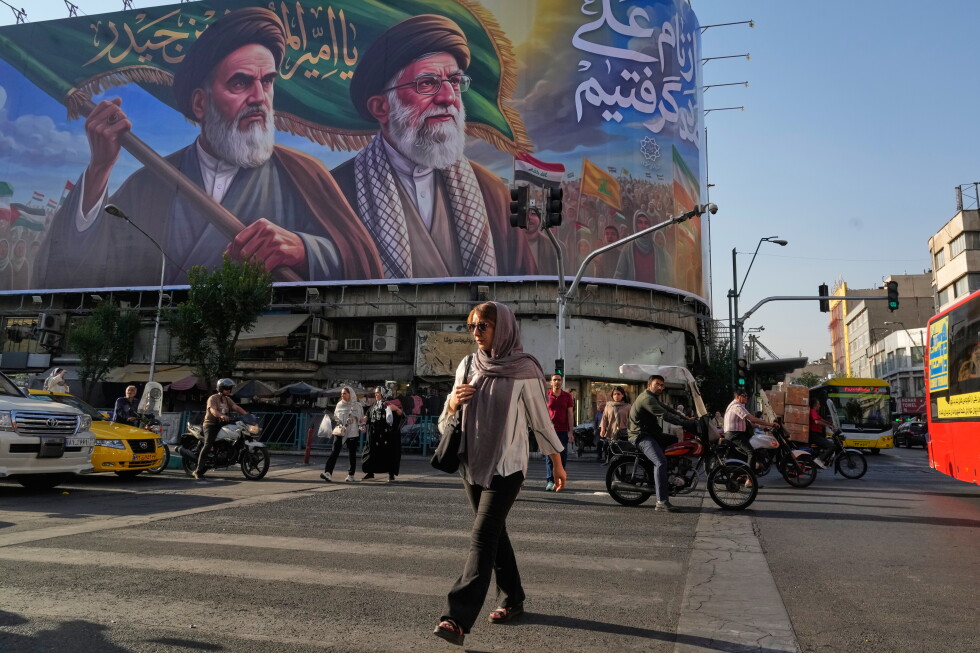
Pakistan’s interior minister is in Tehran as the US downs more Iranian drones over Hormuz
Diplomatic efforts to de-escalate the months-long Middle East conflict gained new momentum Sunday, as Pakistan’s top interior official arrived in Tehran to broker renewed negotiations between Iran and the United States — even as U.S. forces downed two additional Iranian drones threatening international shipping in the strategic Strait of Hormuz. This mediation push comes as the U.S. administration ramps up pressure on Iran to reach a comprehensive agreement that would end the broader regional conflict, which has roiled global energy markets and pushed vulnerable food-importing nations to the brink of a widespread hunger crisis. While a preliminary ceasefire for the main Iran-Israel-U.S. conflict took hold April 8, negotiators have yet to lock in a permanent end to hostilities, leaving the region on edge.
According to Iran’s state-run Islamic Republic News Agency (IRNA), Pakistani Interior Minister Mohsin Naqvi is carrying a formal message from Pakistan’s Army Chief Field Marshal Asim Munir to Iran’s newly installed Supreme Leader Ayatollah Mojtaba Khamenei. Khamenei, who assumed leadership after his father was killed in the opening day of the U.S.-Israeli bombardment campaign against Iran on February 28, has not appeared in public since taking power. Official Iranian media confirmed Naqvi held introductory talks with Iranian Interior Minister Eskandar Momeni Saturday evening, followed by a separate meeting with Iranian Foreign Minister Abbas Araghchi Sunday morning. No details of the message’s content have been released publicly.
Pakistani authorities have confirmed Islamabad is leading a regional mediation bloc with backing from Qatar, Turkey, and Egypt, working to bridge longstanding gaps between Washington and Tehran. The coalition’s core goals are to reduce cross-border and maritime tensions and secure the full reopening of the Strait of Hormuz, the world’s most critical chokepoint for global oil and liquefied natural gas exports. The ongoing closure of the strait has already sent energy prices soaring worldwide, triggering widespread economic disruption.
Even as diplomatic efforts move forward in Tehran, the fragile U.S.-brokered ceasefire between Israel and the Iranian-backed Lebanese militant group Hezbollah has failed to hold, threatening to scuttle broader regional peace talks. Hezbollah has publicly rejected the U.S.-mediated deal reached last week in Washington, demanding that any ceasefire in Lebanon be tied to broader negotiations between Iran and the U.S. to end the overall conflict.
Over the weekend, the Israeli military launched a series of airstrikes across southern Lebanon, targeting more than 150 alleged Hezbollah military positions including rocket launch pads and command and control centers. Early Sunday, Israeli defense systems intercepted five projectiles fired from Lebanon into northern Israel, with all unexploded ordnance landing in unpopulated open areas. While Hezbollah did not immediately claim responsibility for the projectile launches, the group confirmed it carried out targeted attacks on Israeli military personnel deployed in southern Lebanon. The Israeli military confirmed two of its soldiers were killed in Saturday’s clashes in the border region.
Israeli forces currently occupy large swathes of southern Lebanon as part of their latest ground offensive. Israeli Prime Minister Benjamin Netanyahu, who faces national elections later this year, has insisted he will continue the offensive until Hezbollah is permanently removed as a threat to Israel’s northern border. Iran has repeatedly stated that any lasting regional truce must include an end to hostilities in Lebanon.
In a parallel development, Lebanese Army Commander General Rodolphe Haikal traveled to Pakistan Saturday at the invitation of Pakistan’s army chief. The Lebanese military has not released any details on the purpose of the visit, nor confirmed whether it is tied to Pakistan’s ongoing mediation efforts between Washington and Tehran.
In the Persian Gulf, hostilities continued over the weekend: the U.S. military confirmed it shot down two Iranian drones Sunday, following a larger exchange of fire Saturday that saw Tehran launch missiles and drones targeting U.S. assets in the region. In response to Saturday’s attacks, U.S. forces struck Iranian coastal surveillance radar sites along the Strait of Hormuz. U.S. Central Command confirmed the downed drones posed an immediate threat to commercial and military maritime traffic transiting the strait.
IRNA reported that Iran’s Islamic Revolutionary Guard Corps claimed Saturday’s attacks targeted two key U.S. positions: the Ali Al Salem Air Base that hosts U.S. forces in Kuwait, and the U.S. Navy’s Fifth Fleet based in Bahrain. The U.S. military confirmed there were no casualties among American personnel in Saturday’s attacks. Earlier this month, an Iranian drone strike heavily damaged the main passenger terminal at Kuwait International Airport, killing one person and injuring dozens more.
The U.S. has maintained a strict naval blockade of Iranian ports in response to Iran’s control of the strait. The spike in global energy prices triggered by the closure of the corridor has created significant political headwinds for President Donald Trump’s Republican Party ahead of November’s midterm congressional elections.
-
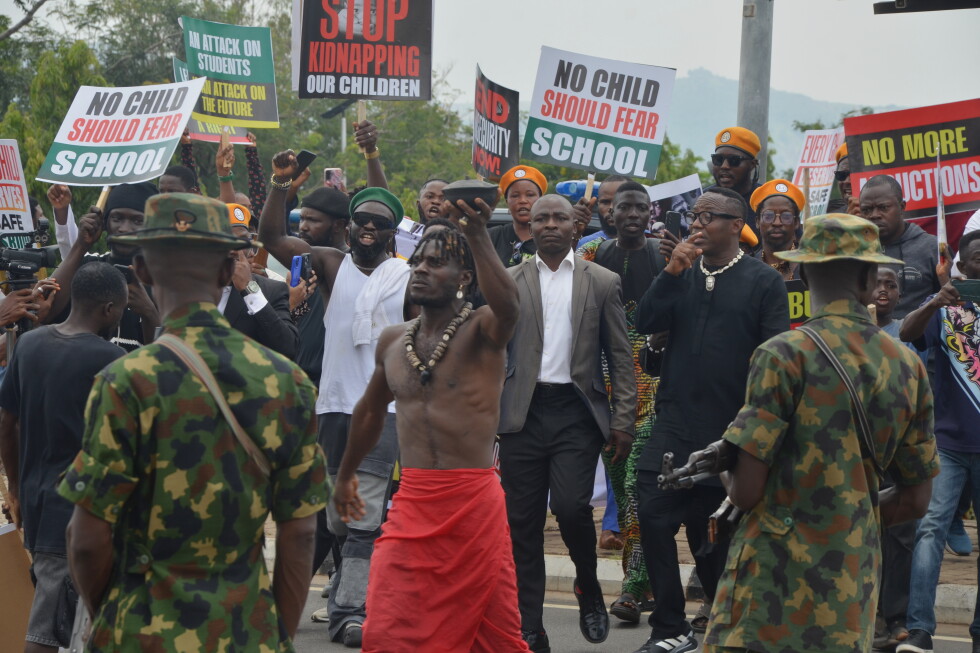
The Nigerian army frees 360 abducted people in northeastern Borno state
ABUJA, Nigeria – In a significant blow to jihadist insurgency in Nigeria’s restive northeast, the Nigerian Army announced Sunday that it has freed 360 people held captive by the militant group Boko Haram in southern Borno State. The liberation operation targeted the Mandara Mountains, a rugged terrain long recognized as one of the extremist organization’s key entrenched strongholds.
Among the freed hostages were dozens of children, all abducted from scattered civilian communities across Borno State, according to an official statement from the military. Army spokesperson Haruna Sani confirmed that two infants died from exhaustion after the rescue, their health already broken by the harsh conditions of prolonged captivity and the difficult crossing of mountainous terrain during extraction efforts.
“All remaining rescued abductees have been successfully evacuated to secured locations, where they are receiving urgent medical care and targeted humanitarian support,” Sani said, framing the operation as a major operational victory that delivers a crippling blow to the terrorist network.
Nigeria has grappled with a worsening, multi-layered security crisis for more than a decade, particularly across its northern regions. Long-standing insurgency by Boko Haram and its splinter faction, the Islamic State West Africa Province (ISWAP) – which pledged allegiance to the Islamic State group – has been compounded by widespread kidnappings for ransom, illegal mining operations, and attacks on civilian communities by armed gangs that have stretched state security resources thin.
Just one month prior, Nigerian forces partnered with the United States military to carry out a joint offensive that killed 175 ISWAP fighters, marking another high-profile win against the insurgency. Data from the United Nations estimates that more than 10 years of extremist unrest in northeast Nigeria has killed thousands of civilians and displaced millions more from their homes.
Despite repeated public pledges from President Bola Tinubu’s administration to curb insecurity and protect Nigerian citizens, independent security analysts continue to argue that the federal government has fallen short of deploying the resources and strategic action needed to resolve the long-running crisis.
-
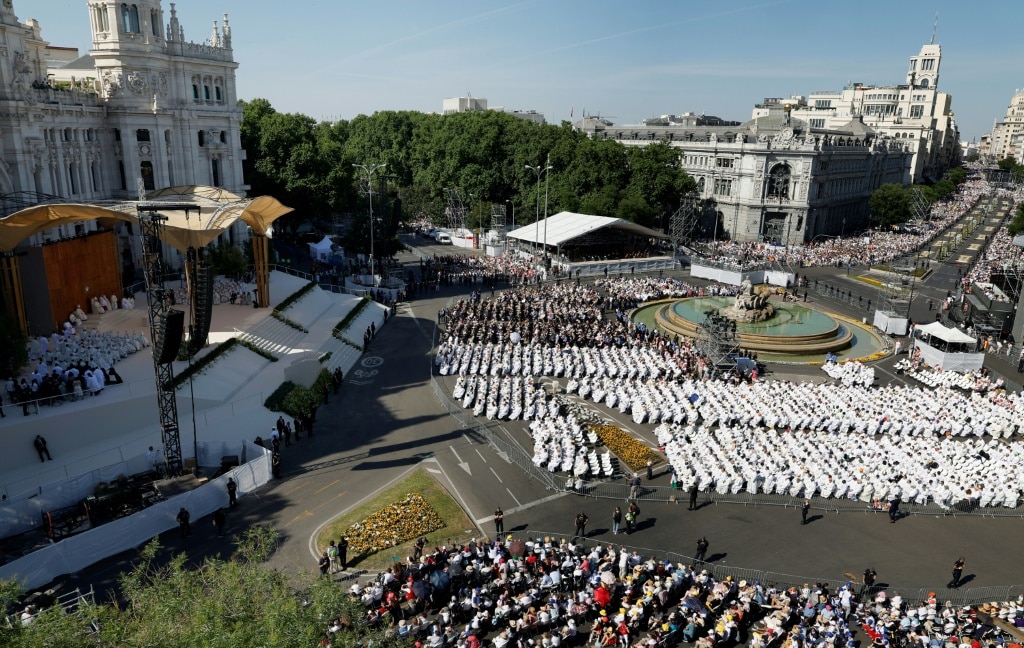
Over 1.2 million people attend Pope’s mass in Madrid
On the second day of his seven-day national tour, Pope Leo XIV drew a crowd of more than 1.2 million worshippers and visitors to central Madrid Sunday, where he led an open-air mass calling for a revitalization of Catholic faith across the traditionally Catholic European nation.
Spanish King Felipe VI and Queen Letizia joined the throngs of devotees who packed Cibeles Square and its surrounding streets, waving both Spanish and Vatican flags, for a service rich in centuries of religious tradition. In his homily, the pontiff urged Spaniards to reject framing religion as a static relic of history, urging them instead to engage with it as a living, enduring guide for modern life. “Spaniards should not look at religion as a museum of the past to be visited, but a school of faith from which to draw even today,” Pope Leo told the assembled crowd.
Spain has long been regarded as a core stronghold of Catholicism in Western Europe, but like many of its regional neighbors, it has seen a sharp decline in regular religious observance in recent decades. A survey released last month by Spain’s autonomous government research body the Centre for Sociological Research found that just 56 percent of Spaniards now identify as Catholic, a dramatic drop from the 90 percent figure recorded in the 1970s.
Authorities and event organizers mounted a massive logistical and security operation to manage the historic gathering. After the conclusion of the mass, Pope Leo led a traditional procession along a route lined with white and yellow carnations, the official colors of the Vatican flag, matching the turnout estimates that pegged attendance at more than 1.2 million in the square and surrounding areas.
Attendees from across the globe shared perspectives on the pontiff’s visit, with many highlighting his message of unity amid growing global and domestic division. Nico Aldeanueva, a 28-year-old traveler from Philadelphia, United States, described the pope as a unifying voice at a time of fractured discourse across political, social and cultural lines. “We have, it seems like, never-ending conflict and for the time being here you get to hit pause and get to enjoy the moment and feel the faith,” Aldeanueva said.
Sixty-four-year-old Ana Milagros, a local attendee waving a Vatican flag, called the U.S.-born pontiff approachable and sincere, noting his efforts to bridge deep divides across Spanish politics, society and the economy. “The pope is trying with this visit… to help all of us,” she said.
The Sunday mass marked the second day of Pope Leo’s week-long visit to Spain. On Saturday, an estimated 500,000 people, the vast majority young worshippers, gathered with the pope outside Real Madrid’s Santiago Bernabéu stadium for an overnight prayer vigil. The tour opened with an official ceremonial reception at Madrid’s Royal Palace, where Pope Leo called for an end to divisive rhetoric and oversimplified public discourse, while praising Spain’s left-wing government for its commitment to global peace and cross-national solidarity amid heightened geopolitical tensions between the government, his native United States and Israel over ongoing Middle East conflicts.
Later Sunday, the pope is scheduled to meet leading figures from Spanish culture, sport and business at a local arena to foster ongoing dialogue between Catholic faith and modern civil society. On Tuesday and Wednesday, he will travel to Barcelona, where a key highlight of his visit will be the blessing of the newly completed tower of the Sagrada Familia basilica, a construction that officially makes the site the tallest church in the world. The tour will conclude with a focus on global migration during stops in the Canary Islands Thursday and Friday, a major arrival point for irregular migrants crossing the Atlantic, where thousands of people have died attempting to reach European shores.
-

Huge crowds throng Madrid streets for Pope’s open-air mass
On the second day of his landmark official visit to Spain — the first papal trip to the country in 15 years — Pope Leo XIV drew an estimated 1.2 million pilgrims and well-wishers to the streets of Madrid Sunday for an open-air mass at the iconic Plaza de Cibeles, Vatican officials confirmed. Among the thousands of congregants gathered in the central square were Spain’s reigning monarchs, King Felipe VI and Queen Letizia, who formally welcomed the pontiff to the Royal Palace during opening ceremonies on Saturday. As Pope Leo processed through central Madrid ahead of the service, massive crowds lined the route, waving Vatican and Spanish flags, shouting blessings, and tossing flower petals in his path, with local authorities deploying a large-scale security operation to oversee the event and the subsequent procession through the city center. The Chicago-born pontiff’s visit comes amid growing global attention to his firm anti-war stances, which have already drawn public criticism from U.S. President Donald Trump. On Saturday, during his initial welcome, Pope Leo highlighted Spain’s vocal opposition to ongoing global conflicts and its policy of support for migrant communities, praising the nation’s consistent commitment to upholding international law. That position aligns with recent high-profile diplomatic clashes between Spanish Prime Minister Pedro Sánchez’s socialist government and the Trump administration over the U.S.-Israeli military campaign against Iran, as well as disputes between Madrid and Tel Aviv over the ongoing conflict in Gaza. Even before Sunday’s mass, large crowds turned out across Madrid to greet the pontiff on Saturday. Later that evening, an estimated 500,000 attendees — the vast majority of them young people — joined Pope Leo for a hours-long prayer vigil near Real Madrid’s Santiago Bernabéu Stadium that extended into the night. Addressing the gathered youth, the pontiff issued a stirring call to action: “In the face of the emptiness of indifference and compliance, before the violence of war and lies, you must be the sparks of a new humanity.” Beyond the public masses and processions, Pope Leo’s itinerary includes two unprecedented and highly anticipated events: an address to the full Spanish parliament, marking a rare papal address to a national legislative body in Europe, and a closed meeting with survivors of clerical sexual abuse within the Catholic Church. Later this week, the Pope will travel to the Canary Islands alongside Prime Minister Sánchez to hold a memorial honoring thousands of migrants who have lost their lives while attempting to cross the Mediterranean Sea to reach European shores.
-
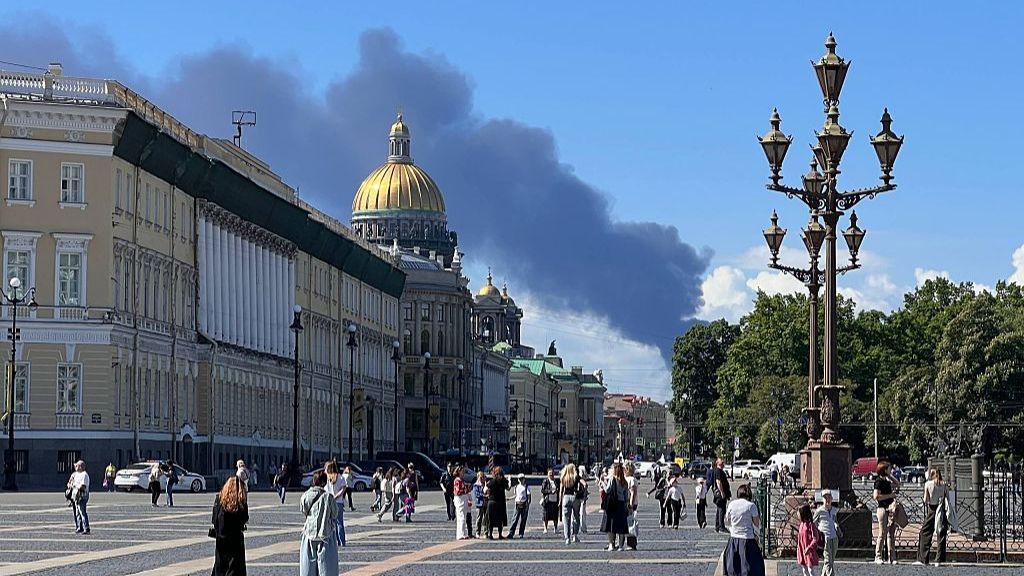
Steve Rosenberg: Lasting image of Russia’s economic forum is plume of smoke over St Petersburg
The 2026 St. Petersburg International Economic Forum (SPIEF), Russia’s flagship annual economic and diplomatic event, opened and closed this week against a backdrop of unexpected conflict and high-stakes diplomatic drama that overshadowed the carefully curated image of economic resilience the Kremlin sought to project.
On Wednesday, the opening day of the forum, a massive plume of thick black smoke rose high above the St. Petersburg skyline, visible to every delegate arriving at the city’s waterfront expo center. The smoke came from a Ukrainian drone strike that hit unspecified infrastructure in the area, local officials confirmed, marking a dramatic incursion deep into Russian territory that coincided with the forum’s high-profile sessions. A second drone attack hit the region on the forum’s closing day, amplifying the sense of ongoing vulnerability.
Even amid the chaos of the strikes, the forum played host to the kind of surreal, symbolic moments that underscored the disconnect between the curated narrative inside the conference halls and reality outside. Walking the exhibition floor, attendees encountered a performer dressed as Koshchei the Deathless, the immortal villain from Russian folklore, performing street magic for passersby — pulling coins from thin air, reassembling broken glasses, and generating puffs of smoke from his fingertips. “Russians are unpredictable people,” the performer told onlookers. “We do things no one expects.”
The most shocking unexpected development of the week came not from a street magician, however, but from Kyiv. Shortly after the first drone strike, Ukrainian President Volodymyr Zelensky published an open letter to Russian President Vladimir Putin that included a taunting critique of Russia’s battlefield setbacks and Putin’s age, before extending an offer to meet for face-to-face peace negotiations in a neutral third country.
Putin’s response was anything but unpredictable. The Kremlin leader, who has repeatedly rejected direct talks with Zelensky since the full-scale invasion began, dismissed the offer out of hand, criticizing the letter’s tone as “rude.” “It’s not the author of the letter I need to respond to,” Putin said during his plenary address at SPIEF. “It’s our soldiers on the frontline… I say to them: keep at it, brothers!” The comment made clear that Putin has no intention of ending the war on any terms other than Russia’s full compliance with his original demands.
In his address to assembled delegates, Putin stuck to a familiar script, projecting unwavering confidence and projecting strength. “There are wars and sanctions. But the economy is developing,” he claimed. “Everything is stable.” Inside the conference hall, surrounded by supportive business owners, allied foreign dignitaries, and government officials, the performance held together. Outside the bubble of the forum, however, a different picture emerges.
Russia has now been at war for five years, sustaining massive battlefield casualties that have strained both the country’s military and its domestic population. Ukrainian long-range drones now regularly strike targets hundreds of kilometers inside Russia’s borders, including major cities far from the front lines. When the outlet asked senior Russian officials about the war and its trajectory, nearly all fell back on pre-approved Kremlin talking points. When asked whether the five-year-long conflict would end soon, Alexander Zhukov, deputy speaker of Russia’s lower parliament the Duma, simply replied: “I can only respond in the words of our president. He said this situation must be resolved soon.”
Economically, the country is far from the stable, growing powerhouse Putin described. While outright collapse has not materialized, as many Western analysts initially predicted, ongoing sanctions and war spending have created significant strain across most sectors. Growth has stalled, and many independent Russian economists warn of broad stagnation and even decline in key industries. The war continues to suck up massive amounts of both human capital and federal budget resources. During a recent reporting trip to Russia’s Lipetsk region, small business owners described ongoing struggles to stay operational amid restricted access to global markets and supply chain disruptions.
Even some pro-business Russian figures acknowledged the headwinds. “Interest rates are a bit too high,” Kirill Dmitriev, Putin’s special envoy for foreign investment, admitted in an interview on the SPIEF sidelines. “We believe rates should be lower to attract more investments.” Still, Dmitriev pushed back on critics, arguing that “Russia’s economy has proved resilient over the last five years: something that many Western analysts believed was impossible.” A small number of domestic businesses have even found new openings amid the shifts: as international travel has become difficult and unwelcoming for most Russians, domestic tourism has grown, prompting new investment in domestic resort and tourist infrastructure.
Unlike the stage magician performing at the forum, the Kremlin cannot conjure new revenue out of thin air to close growing budget gaps created by war spending. It did, however, manage to attract a high-profile American guest that it leveraged for PR. Rodney Mims Cook Jr, chair of the U.S. Commission of Fine Arts who is overseeing the controversial renovation of the White House State Ballroom, brought a personal greeting from former U.S. President Donald Trump to Putin. Russian state media trumpeted his visit as the first official U.S. delegation to attend SPIEF in a decade. But the U.S. State Department quickly distanced itself from the visit: U.S. Secretary of State Marco Rubio said he was unaware of any official U.S. delegation attending the event, and noted the attendees were not high-ranking government officials.
Wandering the forum’s exhibition halls, one of the most striking installations was a giant “nevalyashka” — the traditional Russian roly-poly tumbler doll that wobbles when pushed but never falls over. The installation perfectly summed up the narrative Russian authorities want to project to the world: that despite five years of war and sweeping international sanctions, Russia remains standing, cannot be knocked off balance, and will outlast its opponents. It is a deliberately defiant image. But for foreign investors looking for stable, long-term opportunities to put capital to work, the constant wobbling that comes from ongoing conflict and geopolitical isolation is unlikely to make for an appealing sales pitch.