分类: world

  • Israeli cabinet ‘secretly approves record number’ of new West Bank settlements

    Israeli cabinet ‘secretly approves record number’ of new West Bank settlements

    In a move that has deepened long-simmering tensions in the Middle East, Israel’s cabinet has quietly given final approval to 34 new Israeli settlements in the occupied West Bank — a single decision that breaks all previous records for settlement expansion in one sitting, Israeli broadcaster i24NEWS has reported. The unprecedented step comes amid Israel’s ongoing military campaign against Iran, and marks a dramatic acceleration of territorial expansion that critics warn eliminates any remaining path to a two-state solution for Israelis and Palestinians. The total number of settlements approved in this one vote already surpasses 63 percent of the all-time annual record set just last year in 2025, when 54 new settlements were greenlit.

    Under international law, all Israeli settlements constructed in the West Bank, a territory occupied by Israel since the 1967 Six-Day War, are formally classified as illegal. This widespread international condemnation has done little to slow expansion under the current Israeli administration, which took office in 2022. To date, the government has approved a total of 102 new settlements since 2022, alongside the creation of nearly 200 unregulated settler outposts that have since been retroactively legalized by state authorities.

    According to anonymous sources who spoke to i24NEWS, Eyal Zamir, the chief of staff of the Israel Defense Forces, attended the cabinet meeting where the vote took place. While Zamir did not issue an explicit formal objection to the settlement plan, he raised clear concerns about strained military personnel allocations to secure the new sites. He recommended that the government phase the rollout, authorizing a smaller number of settlements at a time rather than launching all 34 at once.

    The Israeli cabinet intentionally classified the decision initially, a move widely interpreted as an attempt to avoid sharp international backlash at a moment when relations between Israel and its key ally the United States are already strained over the war in Iran. Details of the secret approval were ultimately leaked to the public this Thursday after receiving formal clearance from Israeli military censors. While the full list of locations for the new settlements has not yet been made public, early reports indicate that several sites are located in areas of the West Bank that have never before hosted Israeli settlements, including remote zones that are rarely accessed even by regular Israeli military forces.

    This aggressive push into unoccupied territory comes as settlement expansion has ramped up sharply since the outbreak of the Israel-Gaza war in 2023. Peace Now, the leading Israeli anti-settlement peace advocacy organization, confirmed that 2025 saw a record-breaking 54 settlement approvals, shattering the previous annual record of nine set just two years prior in 2023. Twenty-six of those 2025 approvals were retroactively legalizing unauthorised settler outposts that had already been built illegally on Palestinian land. The group’s data also shows that unauthorised outpost construction surged in 2025, with 86 new outposts erected — a 39 percent increase from 2024, working out to an average of one to two new unauthorised outposts per week.

    A recent United Nations report released March 17 documents the severe human cost of this accelerating expansion and rising settler aggression. Between November 2024 and October 2025 alone, the UN recorded that more than 36,000 Palestinians have been forcibly displaced from their homes in the West Bank amid a sharp spike in targeted attacks by Israeli settlers. Over the same 12-month period, 1,732 documented incidents of settler violence that resulted in Palestinian casualties or property damage were recorded — a 25 percent increase from the previous year.

    In recent weeks, this violence has reached new levels of brutality. Dozens of Israeli settlers have carried out a wave of arson attacks against Palestinian property, including the burning of a Palestinian medical clinic, opened fire on civilian Palestinian residents, and vandalized a Palestinian school with hateful graffiti reading “Death to Arabs”. Data from the Palestinian Ministry of Health, compiled by Agence France-Presse, shows that at least 1,050 Palestinians have been killed in the West Bank by Israeli military forces or settlers since October 2023, including six additional fatalities recorded since the beginning of March 2026.

    Lior Amihai, executive director of Peace Now, told independent outlet Middle East Eye that the 34-settlement approval is no accident, but a deliberate step toward permanent annexation of the entire West Bank. “They’re not hiding it. They’re actually very clear about it, and this is the de facto annexation that they’re doing, taking over the territories and ethnic cleansing the Palestinians from Area C,” Amihai explained, referencing the 60 percent of the West Bank that falls under full Israeli security and civilian control. Even with the initial attempt at secrecy, likely driven by a desire to avoid international pressure amid US tensions over the Iran war, Amihai said the current Israeli government makes no attempt to hide its end goal. “This government at large does not hide its intentions to destroy the possibilities of a Palestinian state and peace between Israelis and the Palestinians.”

    This latest approval marks the largest single batch of settlements ever approved by an Israeli cabinet, cementing the current government’s legacy as the most aggressively pro-expansion administration in Israeli history. The move is expected to draw sharp condemnation from the international community, though it remains to be seen if it will result in any meaningful diplomatic or economic consequences for Israel.

  • These Iranians supported the US-Israeli war. Now they realise their mistake

    These Iranians supported the US-Israeli war. Now they realise their mistake

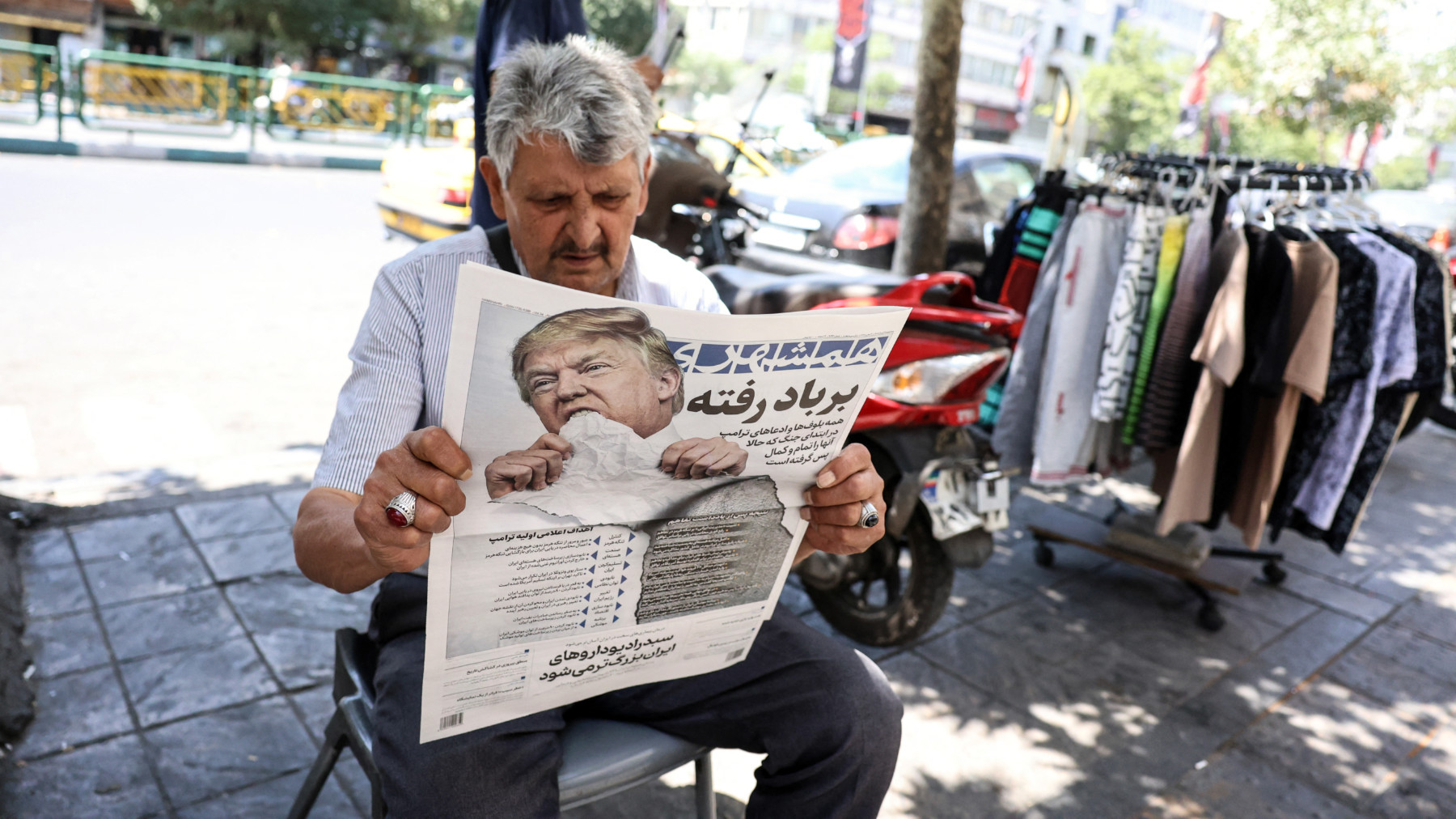
    After weeks of devastating US-Israeli airstrikes across Iran, the announcement of a ceasefire has brought much-needed quiet to civilian communities across the country – but for a segment of Iran’s anti-establishment population that initially pinned hopes of political change on the foreign assault, the end of bombing has only delivered crushing disillusionment. For many who once framed external military action as a shortcut to systemic change, the destruction of civilian infrastructure and broken promises of targeted intervention have forced a painful reckoning.

    Leila, a 25-year-old Iranian who requested a pseudonym for security reasons, is among those who now admit they were wildly wrong in their early assumptions. “I thought this was it – I thought the Islamic Republic was finally coming to an end,” she explained. Like many other opposition-aligned Iranians, she bought into the narrative that the strikes would be quick, decisive, and deliver immediate political transformation, even claiming she believed Washington and Jerusalem had already struck a post-conflict power-sharing deal with exiled opposition leader Reza Pahlavi. “I was wrong,” she says plainly.

    Leila is far from alone. In the opening days of the conflict, a subset of Iranian opponents of the ruling government viewed former U.S. President Donald Trump and Israeli Prime Minister Benjamin Netanyahu as unlikely allies who could clear the path for the change they had long demanded during years of internal unrest. But as the campaign dragged on and the full scale of civilian and infrastructure damage came into view, those rosy expectations evaporated almost entirely.

    Leila questions the logic of targeting the country’s basic civilian networks, pointing to the destroyed bridges, demolished railway lines, and flattened oil depots that dot the post-strike landscape. “How does that help change a government?” she asks. The contradiction between Trump’s past messaging and his eventual threats hit especially hard: back in January, at the peak of widespread anti-government protests that had been met with a brutal security crackdown, Trump took to social media to promise demonstrators that help was imminent. Just weeks before the ceasefire, he issued a terrifying public warning to Iran that “a whole civilization will die tonight, never to be brought back again” before backing down to agree to the pause in hostilities.

    “In the span of just two months, we went from ‘help is on the way’ to threats about the destruction of Iranian civilization,” Leila said. The fallout has not only been political – it has torn apart personal relationships, too. She says she lost friendships over her decision to trust foreign powers, after she dismissed warnings from peers that Trump and Netanyahu would not act in Iran’s best interest, even accusing doubters of being sympathetic to the ruling establishment. Many of those bonds have never healed. “Now I feel like everything I believed in just collapsed,” she admits.

    Twenty-nine-year-old Ali shared a nearly identical arc of hope followed by disillusionment. In the wake of the January nationwide protests – sparked by soaring inflation that escalated into widespread anti-government unrest, with conflicting death tolls putting fatalities between 3,117 (per Iranian government figures) and at least 7,015 (per the U.S.-based Human Rights Activists News Agency) – Ali came to believe external military force was the only path to change. “We thought war would finish everything,” he said. Instead, the strikes destroyed his family’s home, leaving him and his relatives homeless, though they escaped with their lives.

    Ali had bought into claims that U.S. and Israeli military technology would enable precision strikes that avoided civilian casualties, targeting only regime figures and military sites. “Maybe when they realised they couldn’t change the system, they started hitting everything. Or maybe I was just naive,” he reflected.

    Not all anti-establishment Iranians shared the initial optimism that foreign intervention would bring freedom. Forty-seven-year-old Maryam says she always knew the campaign would end in disaster. “Only blind people could think that a war started by Trump and Netanyahu would bring us freedom,” she argued. “Didn’t we see Gaza? Lebanon? Syria? How could anyone think this would be different?”

    By the end of the strikes, U.S. and Israeli attacks had leveled critical national infrastructure: energy facilities, transportation links, steel and petrochemical plants, a Tehran synagogue, multiple hospitals, universities, schools, and hundreds of small local businesses. “Maybe we should be relieved that the explosions have stopped,” Maryam concedes. “But how do you rebuild a country after this?” She remains sharply critical of Iranians who initially backed the strikes, many of whom she says are now trying to distance themselves from their earlier support. “I cannot forgive that,” she says.

    Fifty-four-year-old Abbas goes even further, arguing that the war has permanently ended any remaining political relevance for Reza Pahlavi, the son of Iran’s last monarch and a leading exiled opposition figure. “Reza Pahlavi did everything he could to reach to power,” Abbas said. “But he never condemned any of the US or Israeli attacks on Iran’s infrastructure.” He pointed to Pahlavi’s public praise for Trump, noting the opposition leader used every form of flattery to win U.S. support, only to be cast aside once Washington reached a ceasefire deal with the Tehran government. “I hope his supporters understand now: you can’t rely on someone who is willing to see his own people killed and his country destroyed just to get to power,” Abbas added.

    For many ordinary Iranians, the ceasefire has brought a long-overdue sense of relief, even as deep uncertainty lingers. Thirty-four-year-old Niloufar, a Tehran resident who spent 40 days sheltering indoors to avoid airstrikes, says the announcement of a ceasefire still feels surreal. “When the ceasefire was announced, it felt unreal. Like something had lifted off my chest,” she said. “For the first time in 40 days, I was able to sleep peacefully.”

    Despite the pause, sporadic explosions continue to be reported, and a recent Israeli strike in Lebanon that killed dozens has already been labeled a violation of the ceasefire terms by Iranian officials. Many Iranians remain skeptical that the truce will hold, and distrust runs deep on all sides. Thirty-one-year-old Mehdi says he trusts neither the U.S. and Israeli governments nor his own country’s ruling establishment. “I don’t trust the US or Israel. Honestly, I don’t even trust them more than our own government,” he said. He notes that negotiations were already underway before the strikes began, leaving him wondering why this round of talks should be trusted more than past efforts. “We were negotiating, then suddenly they attacked,” he said. “What if they negotiate again and then strike even harder?”

    That sense of profound, widespread disillusionment defines the current moment for many opposition Iranians. Ali sums it up bluntly: “Before the war, we used to say things couldn’t get worse. Now we know they can. We thought war would solve everything. Now we know it’s not that simple.” He adds a final, sharp judgment: “And we learnt something else, too: Reza Pahlavi is a stupid and ineffective politician who shows little real concern for the lives of those of us still living inside Iran.”

  • Venezuela police tear-gas protesters demanding salary rises

    Venezuela police tear-gas protesters demanding salary rises

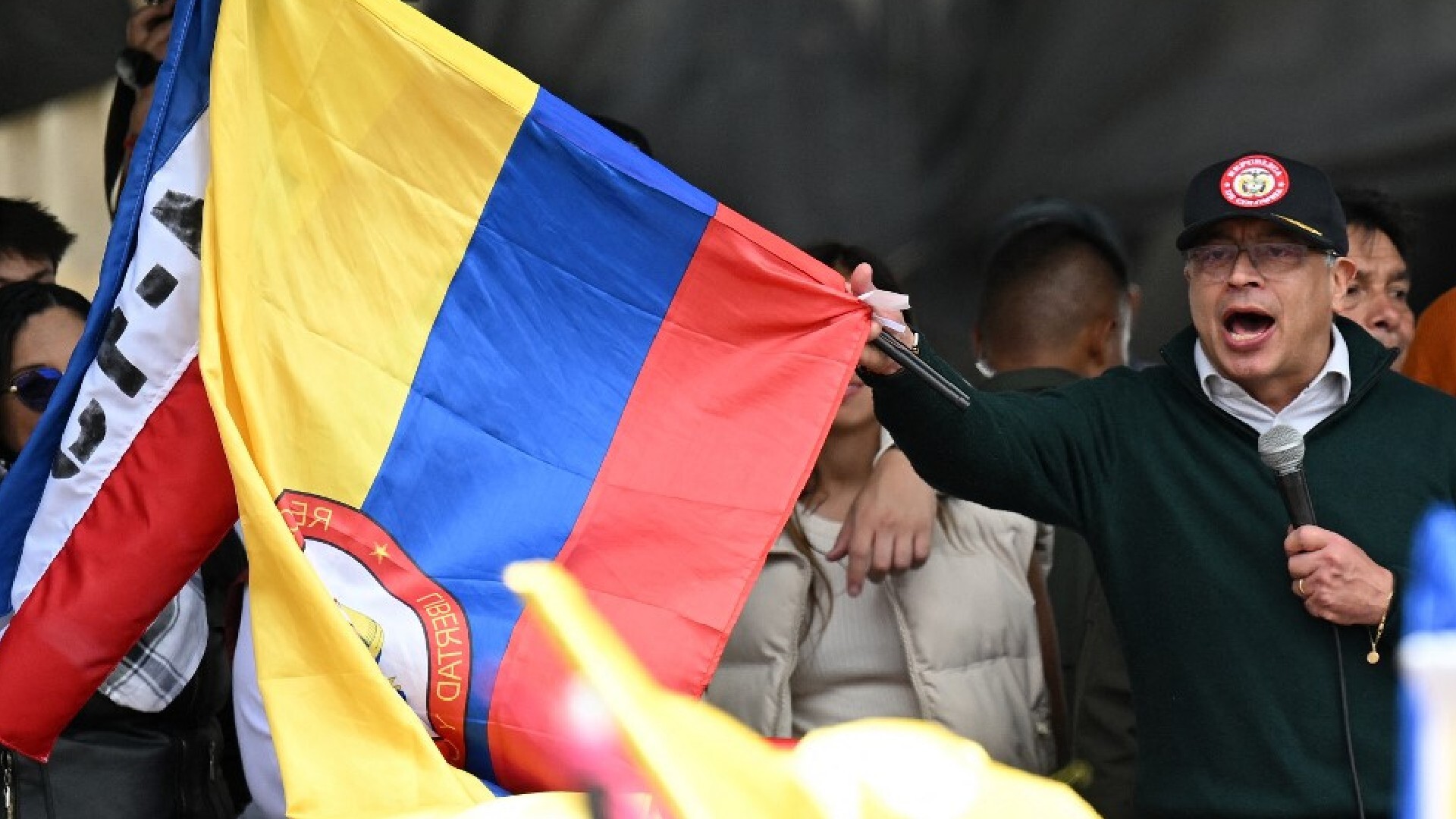
    On April 8, 2026, a massive demonstration of roughly 2,000 Venezuelans marched through central Caracas toward the Miraflores Presidential Palace, demanding urgent increases to stagnant baseline salaries and pensions – only to be dispersed with tear gas by riot police, according to on-the-ground reporting from Agence France-Presse.

    The confrontation marks the largest show of public dissent against interim President Delcy Rodriguez’s administration since August 2024, reflecting a sharp shift in public mood: after years of violent crackdowns on opposition under ousted former president Nicolas Maduro that deterred public protest, Venezuelans have begun to openly voice their long-simmering frustrations with economic hardship. As protesters pushed forward within kilometers of the presidential compound, helmeted riot police officers equipped with shields moved to block their path, triggering scattered clashes between demonstrators and law enforcement.

    Rodriguez, who took power in January 2026 after Maduro was ousted and captured during a U.S. military raid, has already faced mounting criticism for failing to address Venezuela’s crippling cost-of-living crisis, which has left most working and retired citizens unable to cover basic needs. Just one day before the protest, Rodriguez addressed the nation on television to confirm a planned wage increase would take effect on May 1 – but she declined to reveal the size of the adjustment, a choice that further fueled public anger.

    Venezuela’s official monthly minimum wage has remained frozen at 130 bolivars, equivalent to just $0.27 USD, since 2022. This figure is roughly 330 times lower than the United Nations’ $90 per month (equaling $3 per day) extreme poverty threshold. Even public sector workers, who earn up to $150 per month when including state-mandated bonuses, still take home far less than the $645 per month that independent economic estimates calculate a Venezuelan family needs to cover basic food costs alone. The nation currently grapples with annual inflation exceeding 600%, eroding any limited purchasing power workers have managed to retain.

    Protesters emphasized that they are demanding increases to base salaries, not just adjustments to one-time or monthly bonuses – a workaround past administrations have repeatedly used to claim wage growth while leaving core pay stagnant. “Enough of this deception about salary increases. They want to pass off our government bonuses as a salary. That is completely unheard of,” 71-year-old retiree Mauricio Ramos told AFP, echoing the sentiment of many demonstrators.

    The interim administration has framed its cautious approach to wage hikes as a measure to avoid worsening already sky-high inflation, a policy shaped in large part by U.S. influence. After the January raid, former vice president Rodriguez was endorsed by then-U.S. President Donald Trump to take power, in exchange for granting Washington expanded access to Venezuela’s vast oil reserves. Since taking office, she has followed through on commitments to roll back repressive policies from the Maduro era, granting amnesty to political prisoners and rolling out a series of market-aligned economic reforms. But these changes have yet to deliver tangible relief to everyday Venezuelans, who continue to struggle to afford essential goods including food and medicine.

    Thursday’s demonstration signals a new wave of public assertiveness in Venezuelan politics. After the brutal crackdown on anti-Maduro protests that followed his disputed 2024 presidential election victory, public protests had largely ceased for nearly two years as citizens feared state repression. With the previous regime removed, that fear has begun to fade, allowing long-unmet demands for economic justice to move back into the public sphere.

  • Global South forum hails China’s role

    Global South forum hails China’s role

    Against a backdrop of growing global debate over the future of the international order, development and policy experts from across the Global South have identified China’s emergence on the global stage as a transformative force reshaping modern development trajectories and cross-border cooperation frameworks.

    These analysts agree that China’s decades-long domestic transformation, paired with its deepening engagement with developing economies, has become a central reference point in global conversations about alternative growth paths and much-needed reform to global governance systems.

    Donald Ramotar, former president of Guyana, noted that China’s development success stems from its ability to calibrate national policies to shifting global conditions while never losing sight of core domestic priorities. “They had a very intense discussion on appreciating their position in the world and the balance of forces that existed,” Ramotar explained, emphasizing that China successfully opened its economy while building an entirely new development model aligned with its own national needs.

    Ramotar added that China’s foreign policy has consistently centered on cooperation and reciprocal benefit, especially when partnering with low- and middle-income nations facing structural development barriers. “This advanced position of a win-win foreign policy has helped them link with many countries,” he said, pointing out that these equitable development partnerships have allowed participating nations to expand domestic productive capacity and deepen mutually beneficial trade ties.

    Ramotar also highlighted China’s leadership in major multilateral initiatives, including the recent expansion of the BRICS bloc and cross-continental connectivity projects under the Belt and Road Initiative. He argued these efforts reflect a clear understanding that shared economic progress is inextricably linked to global stability: “Peace and economic development are directly connected.” China’s approach to engagement with the Global South, he added, is rooted in the core belief that shared growth drives long-term global stability and expands trade opportunities for all parties: “They believed that if they help other countries to develop and trade with them, both sides will advance.”

    Siphamandla Zondi, a professor of politics and international relations at the University of Johannesburg, framed China’s long-range global outlook as a product of its unbroken history as a civilizational state, a foundation that enables multi-generational policy planning and a unique approach to international engagement that differs dramatically from the short-term, transactional approach common in many Western capitals.

    “The Chinese are able to draw from a pretty intact history … and are able to plan on the basis of the next 300 years,” Zondi said, drawing a contrast with the lasting colonial disruption that has shaped long-term planning capacity in many African and Global South nations.

    Zondi explained that China’s focus on inter-civilizational dialogue and collective self-reliance defines its cooperation with developing countries, adding: “They think about cooperation, coexistence and solidarity as a way of life.” For China, he noted, development remains the central organizing principle of global power and international influence, rejecting the zero-sum logic that has defined traditional great power competition.

    Addressing the common framing of China’s rise in Western geopolitical analysis as a zero-sum challenge to existing power structures, Zondi noted that Beijing’s strategy focuses far more on enabling global production networks than on exercising coercive dominance. China’s unbroken civilizational roots allow it to approach global affairs from a long-term, cross-cultural perspective rather than a narrow, purely nation-state-centric outlook, he added, with intercultural dialogue positioned as a core tool for managing competition and addressing shared transnational challenges.

    “They see the possibility for dialogue among civilizations as a way to resolve competition and challenges,” Zondi said. “The Chinese rise is not about rising to domination but rising to the center as an enabler.”

    Helga Zepp-LaRouche, founder and leader of the Germany-based Schiller Institute, echoed these observations, noting that China’s proposals for global governance offer a much-needed alternative framework for the international community, one built on inclusion, sovereign equality, and mutual respect for all nations.

    “It must not be always one winner and one loser; you can have win-win cooperation where everybody wins,” she said, pointing out that development-focused partnerships are growing increasingly attractive to nations working to close crippling infrastructure gaps and reduce widespread poverty.

    Zepp-LaRouche also linked China’s remarkable domestic economic transformation to consistent, long-term investment in education, technological innovation, and cultural development — all of which she identified as core drivers of productivity and sustained long-term growth. She added that China’s policy trajectory reflects long-range development planning that transcends short-term geopolitical rivalry, a approach that has been reinforced by widespread public confidence in national long-term planning and progress.

    “I have come to the conclusion that the Chinese people are not only content with their government, but they are extremely optimistic,” Zepp-LaRouche said, noting that most Chinese citizens expect future generations to enjoy even higher living standards.

    Looking forward, the experts agreed that as the global system shifts toward a more diversified distribution of economic and political power, nations across the Global South will increasingly seek out practical, equitable development partnerships and new cooperative global platforms. China’s decades of development experience and cooperative policy approach, they concluded, will remain a critical reference point for global discussions about how to navigate this ongoing global transition.

  • The Lebanese civilians killed in Israel’s massacre

    The Lebanese civilians killed in Israel’s massacre

    Just days after former U.S. President Donald Trump announced a two-week ceasefire agreement between the United States and Iran, the Middle East has been plunged back into deadly violence after Israel carried out the most destructive and lethal wave of air strikes on Lebanon since the start of 2024.

    The scale of the attack was unprecedented in recent months: Israeli military officials confirmed they launched 100 separate strikes across Lebanon in just a 10-minute window on Wednesday, with the heaviest bombardments concentrated in the capital Beirut. Lebanon’s Ministry of Public Health confirmed Thursday that the assault left at least 200 people dead and more than 1,000 others injured, marking the single deadliest day of Israeli bombing in Lebanon in months.

    Israeli officials have repeated longstanding justifications for the large-scale attack, stating that all operations target only members of the armed group Hezbollah, with the stated goal of weakening the organization’s capacity to launch cross-border attacks against Israeli territory. In a video address released Thursday, Israeli Defense Minister Israel Katz claimed that “more than 200 terrorists were eliminated yesterday” in the strikes.

    However, on-the-ground reporting and multiple verified accounts confirm that a large share of the fatalities are innocent civilians, including children caught in the sudden, widespread attacks. Multiple reports document that children being collected from schools by their parents were among those killed in the surprise bombardments. Outlets including Middle East Eye have begun profiling the civilian victims of the assault, whose lives spanned multiple professions and communities across the country.

    Among the dead is Ghada Dayekh, a veteran radio presenter and reporter with the independent Sawt Al-Farah radio station. Dayekh had worked at the outlet for nearly four decades, reporting from southern Lebanon continuously since the 1980s, before an Israeli strike destroyed her home in the southern city of Sour.

    Another journalist, Suzanne Khalil, a presenter and reporter for Al-Manar TV, was killed in an Israeli strike targeting the village of Kaifoun in Lebanon’s Mount Lebanon Governorate. Khatoon Salma Kershet, a respected poet and researcher who was an alumna of the American University of Beirut, was killed alongside her husband Mohammed in a strike on the Tallet al-Khayyat neighborhood of central Beirut; her death was officially confirmed by the university.

    Two young people affiliated with Al-Karama High School in Choueifat — student Talin Ahmed Hamzi and recent graduate Yasmin Hussein Allam — were also killed in the strikes, the school announced via its official Instagram page. In Kaifoun, Rana Hessaiki Mlaheb was killed while on a mission to purchase medication for people displaced by previous Israeli air raids, local outlet L’Orient Today confirmed.

    In one of the most devastating individual losses reported, physician Nadim Shamseddine was killed alongside his wife Asrar and their three young children when a strike hit their family home in Kaifoun — a space where Shamseddine also saw patients for his medical work. In Beirut, Ola Attar became the latest member of her family to die from violence: her husband Hamad Attar was killed in the catastrophic 2020 Beirut Port explosion, and she leaves behind two orphaned children.

    The deadly attack comes at a moment of fragile hope for de-escalation in the region, following Trump’s ceasefire announcement between Washington and Tehran just 48 hours before the strikes. It has already drawn widespread condemnation from humanitarian groups, who have called attention to the rising civilian death toll and the growing displacement of Lebanese communities amid escalating cross-border violence.

  • Nigerian army general and several soldiers killed during an assault on a base in the northeast

    Nigerian army general and several soldiers killed during an assault on a base in the northeast

    On an early Thursday morning in Nigeria’s restive northeastern Borno State, a brazen pre-dawn raid on a military installation in Benisheikh left a brigadier general and an unspecified number of service members dead, according to official Nigerian military and government statements. While the attack succeeded in killing senior military personnel, security forces successfully repelled the assault, army spokesperson Michael Onoja confirmed in an official release.

    Onoja labeled the attackers “terrorists,” the standard terminology the Nigerian military uses for members of the multiple Islamic insurgent groups that have waged a decade-long campaign of violence across the country’s northern regions. Nigeria’s President Bola Tinubu later released a formal statement identifying the fallen senior officer as Brigadier General Oseni Omoh Braimah, extending his deepest condolences to the families of all troops killed in the confrontation.

    In his remarks, Tinubu framed the deadly attack as a signal of growing insurgent desperation amid government military pressure. “The insurgents’ counterattack is a sign of desperation,” the president said. “I extend my condolences to the families of our gallant soldiers, led by Brigadier General Oseni Omoh Braimah, who made the ultimate sacrifice in the defense of our country today in Borno State. The government will never forget their sacrifices.”

    Tinubu reaffirmed the federal government’s unwavering commitment to eradicating extremist violence across the nation, adding: “Their sacrifices will not be in vain. Because of the courage and dedication of our troops on the front line, our resolve to defeat terrorism and all forms of violence across Nigeria is stronger than ever.”

    Echoing the president’s framing, Onoja emphasized that the raid came as insurgent groups have sustained heavy territorial and manpower losses from recent Nigerian military offensives, pushing them to carry out reckless, doomed attacks against fortified military outposts. “This attack is a clear indication of the desperation of terrorist elements who, having suffered significant losses in recent operations, continue to resort to futile and ill-fated offensives against well-defended military positions,” he said. “Regrettably, the encounter resulted in the loss of a few brave and gallant soldiers who paid the supreme price in the line of duty.”

    The attack unfolds against the backdrop of a years-long, deteriorating security crisis across northern Nigeria. Africa’s most populous nation has struggled to contain overlapping insurgencies and militia violence for more than a decade, with the northeast being the epicenter of the conflict. Two of the most prominent active groups are the original Boko Haram insurgent organization and its breakaway faction, the Islamic State West Africa Province (ISWAP), which pledged allegiance to the Islamic State. In the country’s northwest, bordering Niger, the IS-affiliated Lakurawa network also carries out regular attacks on security forces and civilian targets, alongside widespread ransom kidnappings.

    In recent years, the crisis has expanded further, with extremist groups from the neighboring Sahel region expanding their operations into Nigerian territory. Last year, Jama’at Nusrat al-Islam wal-Muslimin (JNIM), a major al-Qaeda-affiliated Sahel insurgent group, carried out its first claimed attack on Nigerian soil, marking a worrying expansion of regional insecurity.

    Earlier in 2024, the United States deployed 200 U.S. troops and surveillance drones to Nigeria as part of a new security cooperation agreement to support Nigerian counter-insurgency efforts. U.S. military officials stressed that American personnel would not participate in direct combat operations, retaining no operational command authority that remains fully in the hands of Nigerian security forces. The deployment was agreed on after former U.S. President Donald Trump raised public claims that Christian communities were being disproportionately targeted in Nigeria’s ongoing violence. Most recently, U.S. forces carried out targeted airstrikes against Islamic State positions in the region on December 26.

    According to United Nations data, the decade-long insurgency has claimed the lives of thousands of Nigerian civilians and security personnel. Many independent security analysts have repeatedly criticized the Nigerian federal government for failing to deploy sufficient resources and effective strategy to protect civilian populations and end the long-running conflict.

  • IMF to cut global growth forecast due to Mideast war

    IMF to cut global growth forecast due to Mideast war

    As top global economic policymakers gathered in Washington for the annual joint Spring Meetings of the International Monetary Fund and World Bank, IMF Managing Director Kristalina Georgieva delivered a sobering opening announcement Thursday: the ongoing Middle East war will force the fund to downgrade its projections for global economic growth, even if the fragile current ceasefire holds long-term.

    Georgieva emphasized that the conflict has left lasting ‘scarring effects’ that will reshape global economic conditions for years to come. ‘Even in a best case, there will be no neat and clean return to the status quo ante,’ she stated. Even under the fund’s most optimistic outlook, upward spiraling energy costs, widespread infrastructure damage, disrupted global supply chains and eroded investor confidence will pull growth below pre-conflict projections.

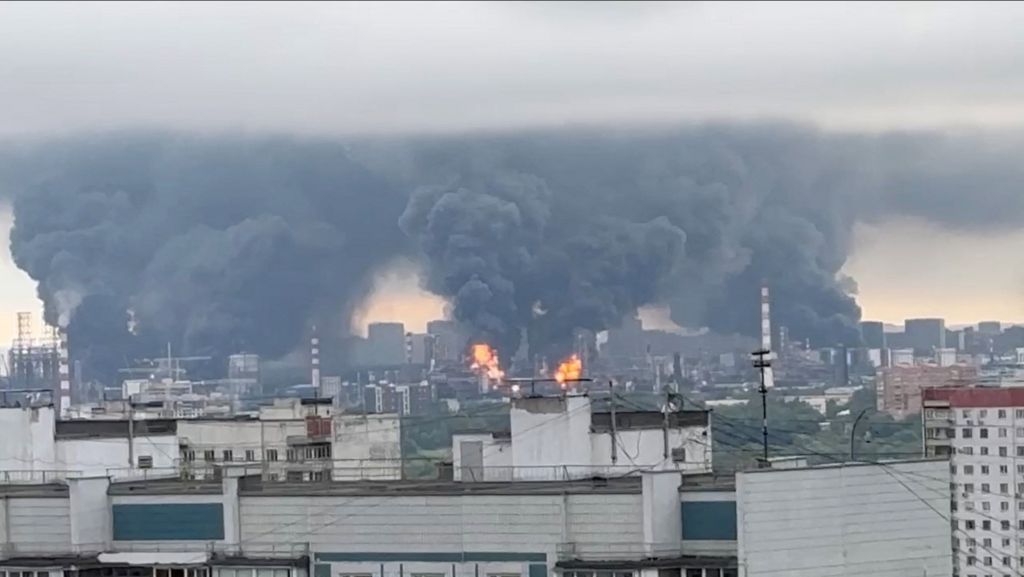
    The violence, which began when the U.S.-Israel campaign against Iran launched on February 28, has upended regional stability and sent shockwaves through global markets. After Iran effectively blocked access to the Strait of Hormuz, a critical chokepoint for nearly a fifth of the world’s daily oil supply, crude prices surged dramatically, snarling supply chains from the Middle East to the farthest corners of the global economy. While a fragile ceasefire is currently in place, both Tehran and Washington have repeatedly accused the other of violating the agreement’s terms, with negotiations for a more enduring peace set to kick off Saturday.

    In anticipation of widening economic fallout, the IMF projects it will need to provide between $20 billion and $50 billion in immediate balance-of-payments support to countries impacted by the conflict. The lower end of that range would be sufficient only if the current ceasefire holds, Georgieva noted. The conflict is also projected to push food insecurity to crisis levels, leaving at least 45 million additional people facing acute hunger as energy and fertilizer price hikes drive up global food costs.

    The IMF chief drew particular attention to the asymmetric burden of the crisis, noting that low-income net energy importers will bear the brunt of the damage far more than wealthier or energy-exporting nations. ‘Spare a thought for the Pacific Island nations at the end of a long supply chain, wondering if fuel still reaches them in the wake of such a severe disruption,’ she said.

    The warning aligns with earlier comments from the World Bank, which released its own assessment Wednesday noting that the conflict has already taken a ‘serious and immediate economic toll’ across the Middle East. Even excluding Iran, the World Bank projects regional economic growth will slow to just 1.8% in 2026, a massive 2.4 percentage point downgrade from projections made before the war began.

    In addition to cutting growth projections, the IMF is also set to revise its global headline inflation forecasts upward, as oil price shocks and supply chain disruptions feed through to consumer prices worldwide. On Wednesday, the heads of the IMF, World Bank and World Food Programme held a pre-Spring Meetings working session to coordinate on the dual economic and food security crises sparked by the conflict, issuing a joint statement warning that rising energy, fertilizer and transport costs will inevitably push more people into food insecurity.

    To coordinate a response to energy market volatility, the two global financial institutions have launched a dedicated coordination group, which will hold its first high-level meeting on Monday. As part of the official Spring Meetings agenda, the IMF will also release its annual Fiscal Monitor report, which is expected to highlight growing government debt levels as countries grapple with a consecutive string of major economic shocks.

    In a separate analysis of the economic costs of conflict released earlier this week, the IMF found that nations directly experiencing active conflict see an immediate 3% drop in national output, with declines continuing to deepen for years after the start of fighting. A previous analysis focused specifically on the Iran conflict concluded that ‘all roads lead to higher prices and slower growth,’ with a particular focus on how heavily disrupted fertilizer supplies will exacerbate global food insecurity. The report emphasized that low-income countries face the gravest risk of widespread hunger, noting that many will require additional external support even as global development assistance has trended downward in recent years.

  • Russia brands Nobel Prize-winning rights group Memorial ‘extremist’

    Russia brands Nobel Prize-winning rights group Memorial ‘extremist’

    In a move that escalates the Russian government’s crackdown on independent civil society, the country’s Supreme Court formally designated Nobel Peace Prize-winning human rights organization Memorial as an extremist group on Thursday. This latest designation lowers the legal bar for authorities to prosecute anyone connected to the organization, deepening a years-long campaign to erase one of Russia’s most prominent voices for human rights.

    Memorial traces its origins to the late 1980s, founded in the final years of the Soviet Union with a core mission of documenting the millions of lives lost to political repression in the Soviet Gulag penal system. Its founding chairman was Andrei Sakharov, a legendary Soviet dissident and Nobel Peace Prize laureate, and the organization built the world’s largest public database of Gulag victims. Emerging as a beacon of hope during Russia’s turbulent transition to democracy in the 1990s, Memorial expanded its mandate in subsequent decades to track growing authoritarian trends under President Vladimir Putin.

    Over the past 15 years, the organization has documented a sharp surge in political detentions across Russia. As of 2026, the group counts more than 1,000 political prisoners held in the country – a massive jump from just 46 recorded in 2015, spurred by a widespread crackdown on dissent following the 2022 full-scale invasion of Ukraine. Memorial’s rolls of political prisoners include prominent Kremlin critics, opponents of the Ukraine war, and religious minorities. It has also documented human rights abuses linked to Russia’s military campaigns in Chechnya and Syria, investigated the mistreatment of Ukrainian prisoners of war, and tracks persecution of religious groups including more than 200 jailed Jehovah’s Witnesses.

    The latest designation is not the first time Memorial has faced harsh repression from the Russian state. In 2015, the organization was added to the government’s controversial “foreign agent” registry, a label widely seen as branding groups as enemies of the state that forces mandatory public funding disclosures and prominent disclaimer labels on all published content. In 2021, the Supreme Court ordered Memorial to liquidate all its operations within Russia, forcing the bulk of its leadership and staff to relocate to exile, where the group maintains its work through satellite offices across Europe and beyond. The Russian government further restricted Memorial’s activity earlier this year, when it designated the organization’s international arm as an “undesirable organization”, a status that already banned Russians from collaborating with or donating to the group.

    Thursday’s extremist designation adds much harsher legal penalties for any association with Memorial, even for actions connected to the group’s exiled network. Memorial officials have denounced the ruling as unlawfully overbroad: the designation formally targets a non-existent entity called the “Memorial international public movement”, a vague legal wording that gives Russian authorities wide latitude to target any group or individual linked to Memorial’s legacy. All logos associated with any Memorial affiliate are now classified as extremist symbolism, meaning even public display can open people to prosecution.

    Natalia Sekretaryeva, head of Memorial’s legal department, told Agence France-Presse that the ruling was “absurd” but widely expected. She noted that even Russians who participated in the organization’s long-standing annual *Returning of the Names* ceremony – a quiet, public event to honor victims of Soviet political repression – now face the risk of being charged as accomplices to extremism. In an official statement, Memorial called the ruling unlawful, framing it as “a new stage of political pressure on Russian civil society”. International human rights groups have swiftly condemned the move: Amnesty International described the extremist designation as “deplorable” and called on Russian authorities to immediately reverse the ruling.

    In 2022, just months after Russia launched its full-scale invasion of Ukraine, Memorial was awarded the Nobel Peace Prize alongside imprisoned Belarusian activist Ales Bialiatski and Ukraine’s Center for Civil Liberties. The Norwegian Nobel Committee recognized the three groups for “an outstanding effort to document war crimes, human right abuses and the abuse of power”. Within hours of the prize announcement, a Moscow court ordered the seizure of Memorial’s former headquarters, transferring the property to state ownership.

    Work with Memorial has long carried severe personal risks for activists on the ground in Russia. In 2009, Natalya Estemirova, the organization’s lead researcher in Chechnya, was abducted outside her home and found dead hours later from multiple gunshot wounds. In 2020, Yury Dmitriev, a 70-year-old historian who spent decades locating unmarked mass graves of Gulag victims in Russia’s Karelia region, was jailed on widely contested child sex charges that supporters frame as retaliation for his work. Most recently, Memorial co-chair Oleg Orlov was jailed in 2024 for protesting the Ukraine war, and was only released months later during a high-profile prisoner exchange between Russia and the United States.

    Since the 2021 liquidation of Memorial’s Russian operations, all the group’s financial assets in the country have remained frozen, and its core activities have been shifted to exiled satellite offices across Europe and other regions. The latest extremist designation closes off any remaining space for even informal association with the group inside Russia, cementing its complete erasure from the country’s public sphere.

  • European leaders urge a negotiated settlement as Iran closes the Strait of Hormuz

    European leaders urge a negotiated settlement as Iran closes the Strait of Hormuz

    As the escalating military confrontation between the U.S., Israel and Iran continues to roil the Middle East, European powers find themselves caught in a precarious diplomatic balancing act this Thursday. While steering clear of direct participation in the conflict, key European leaders and EU institutions are actively pushing diplomatic efforts to solidify a fragile ceasefire, de-escalate deadly fighting in Lebanon, and restore unimpeded access through the strategic Strait of Hormuz.

    This conflict has placed Europe in an deeply uncomfortable position. The bloc remains committed to backing the United States, its core NATO ally, but it has faced repeated public criticism from U.S. President Donald Trump over its refusal to join combat operations and its limitations on access to European military bases. European leaders have pushed back on this criticism in increasingly blunt terms: French President Emmanuel Macron noted last week that Washington has no grounds to complain about a lack of European backing for a military operation that the U.S. chose to launch unilaterally, without any prior consultation with allies.

    The current ceasefire framework emerged at the eleventh hour on Tuesday, brokered by Pakistan, after Trump issued a dramatic threat that “a whole civilization will die tonight.” The agreement, which initially called for a two-week halt to hostilities, was meant to reopen the Strait of Hormuz — a waterway that carries roughly a fifth of the world’s daily oil supplies, making it critical to global energy security. That fragile truce quickly unraveled, however, after Israel launched a wave of air strikes in Lebanon targeting Iran-backed Hezbollah forces. In response, Iran reclosed the strait, arguing that the ceasefire agreement was supposed to cover all fronts including Lebanon. Both Israel and the U.S. reject this interpretation of the deal.

    Iran has also drawn sharp international condemnation over its demand to collect shipping tolls as a precondition for reopening the strategic waterway, a move that has united European leaders in opposition.

    ### Pushing for a Broad Negotiated Peace
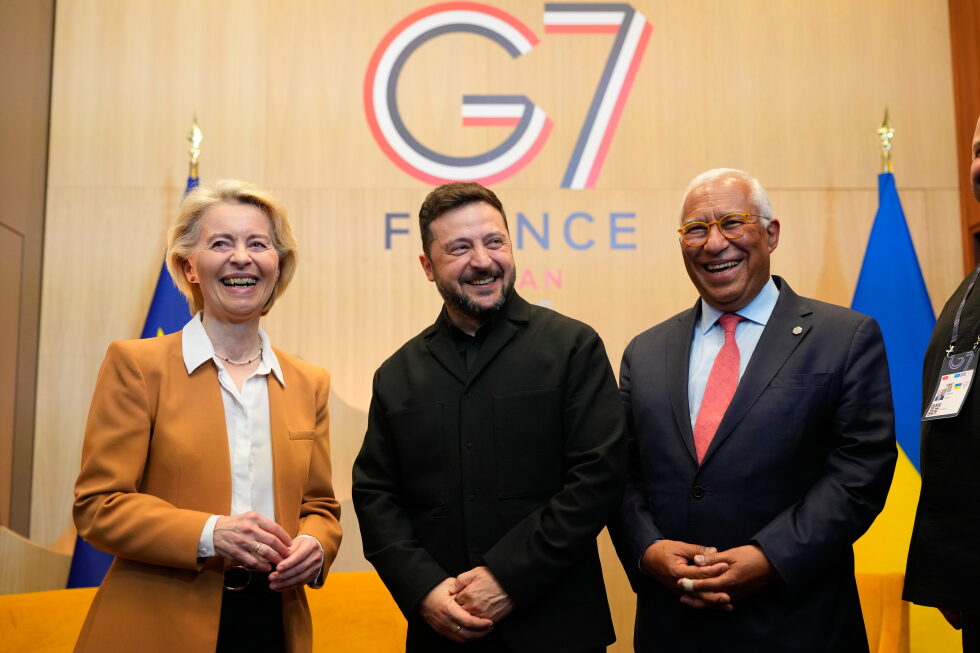
    On Wednesday, a large bloc of European nations — including France, Italy, Germany, the United Kingdom, Spain, the Netherlands, Denmark, Canada, and the European Union collectively — issued a joint statement calling for rapid progress toward a substantive negotiated end to the conflict, a call later joined by leaders from Norway, Sweden, Greece and Finland. The group emphasized that a diplomatic resolution is “crucial to protect the civilian population of Iran and ensure security in the region,” adding that a negotiated settlement “can avert a severe global energy crisis.”

    Macron, who held separate calls with both Iranian President Masoud Pezeshkian and Trump on Wednesday, reiterated the call for all warring parties to fully uphold the existing ceasefire and open the door to comprehensive negotiations.

    ### Demand for Ceasefire to Extend to Lebanon
    European leaders have uniformly pushed for the truce to be expanded to Lebanon, after the deadliest single day of fighting in the country Wednesday left nearly 200 people dead. German Chancellor Friedrich Merz warned that the intensity of Israel’s military campaign in Lebanon threatens to derail the entire peace process, an outcome that cannot be allowed. British Foreign Secretary Yvette Cooper told reporters she was “deeply troubled” by Israel’s military onslaught, noting that any ceasefire that excludes Lebanon would risk destabilizing the entire Middle East region. “That escalation that we saw from Israel yesterday, I think, was deeply damaging and we want to see an end to hostilities in Lebanon,” Cooper told Times Radio.

    Spanish Prime Minister Pedro Sánchez, who has emerged as Europe’s most outspoken critic of U.S. and Israeli military action in the region, went further, calling on the European Union to suspend its longstanding association agreement with Israel. In a post on X, Sánchez slammed Israeli Prime Minister Benjamin Netanyahu, writing “His contempt for life and international law is intolerable. The international community must condemn this new violation of international law.”

    ### Preparing to Secure Free Navigation Through Hormuz
    French Foreign Minister Jean-Noël Barrot confirmed Thursday that European nations and their global partners are finalizing plans to deploy naval vessels to escort commercial shipping through the Strait of Hormuz once active hostilities cease. Macron confirmed that roughly 15 nations have already committed to participate in the coordinated escort mission.

    European leaders have unanimously rejected Iran’s demand for shipping tolls, warning that any restriction on free navigation through the strait would carry severe global consequences. Italian Prime Minister Giorgia Meloni told parliament that any unilateral imposition of extra duties by Iran would have “unpredictable economic consequences” for the global economy. “Full restoration of freedom of movement in the Strait of Hormuz is needed, and it must not be subject to any restrictions, as appears to have happened in recent hours,” she said. Cooper echoed that sentiment, saying it is “crucial” that Iran not be allowed to impose tolls on shipping passing through the waterway. Merz confirmed that Germany will contribute to the effort to restore free navigation, though German officials have declined to elaborate on what form that contribution will take.

    ### Navigating Rising Tensions Within NATO
    The conflict has exacerbated existing frictions within the NATO alliance, after Trump once again raised the prospect of a U.S. withdrawal from the trans-Atlantic military bloc. Trump has publicly lashed out at European allies for failing to come to Washington’s aid in the conflict, going so far as to label NATO allies “cowards” and dismiss the alliance as a “paper tiger.” After meeting with NATO Secretary-General Mark Rutte at the White House on Wednesday, Trump reiterated his claim that NATO failed to support the U.S. during this conflict, and would fail to do so again if the U.S. faced a future crisis.

    Merz framed the current conflict as a critical “trans-Atlantic stress test” for the alliance, saying he is determined to prevent the dispute from further damaging relations between the U.S. and its European NATO partners. “We don’t want, I don’t want a split in NATO,” Merz said. “NATO is a guarantor of our security, also and above all in Europe. We must continue to keep a cool head here.”

    Reporting for this article was contributed by Giada Zampano in Rome, Jill Lawless in London, Sylvie Corbet in Paris and Geir Moulson in Berlin.

  • Canada’s Mark Carney ‘so proud’ of astronauts in call to Artemis II

    Canada’s Mark Carney ‘so proud’ of astronauts in call to Artemis II

    In a moment of national pride for Canada, former Bank of England Governor and prominent Canadian figure Mark Carney has shared his overwhelming enthusiasm for the country’s contribution to NASA’s groundbreaking Artemis II mission, following a formal call with astronaut Jeremy Hansen, who made history as the first Canadian selected for a deep space voyage.

    Hansen, a highly trained Canadian Space Agency astronaut, secured his place on the four-person Artemis II crew — the first crewed mission to orbit the Moon since NASA’s Apollo program concluded in the 1970s. In recognition of this milestone, Canada’s prime minister held a personal conversation with Hansen to congratulate him on his historic selection, cementing Canada’s role as a key international partner in the next era of lunar exploration.

    Carney, speaking publicly after the announcement, emphasized his deep pride in Hansen and the entire Canadian astronaut corps, noting that the mission represents more than just a personal achievement for Hansen. It stands as a testament to decades of Canadian investment in space research, technological innovation, and international scientific collaboration. As part of the Artemis Accords, Canada has partnered with NASA and other space agencies to advance lunar exploration, with plans to establish a long-term lunar outpost and eventually send crewed missions to Mars. Hansen’s participation in Artemis II marks a major milestone in Canada’s growing presence in human spaceflight, opening new doors for future Canadian scientists and engineers to contribute to deep space exploration.

    The Artemis II mission, scheduled to launch no earlier than September 2025, will test all of the Orion spacecraft’s critical systems with a crew on board, paving the way for subsequent landings of the first woman and first person of color on the lunar surface. For Canada, a country with a long history of contributing to space exploration — including the iconic Canadarm robotic arm system that has supported decades of space shuttle and International Space Station missions — Hansen’s flight represents a new chapter of leadership in global space exploration.