分类: world

  • Indonesia searches for hundreds missing in deadly floods

    Indonesia searches for hundreds missing in deadly floods

    Southeast Asia is grappling with a humanitarian catastrophe of immense proportions following the devastating impact of an exceptionally rare tropical storm, Cyclone Senyar. Torrential cyclonic rains triggered catastrophic flooding and lethal landslides across the region nearly a week ago, with Indonesia’s island of Sumatra bearing the brunt of the destruction.

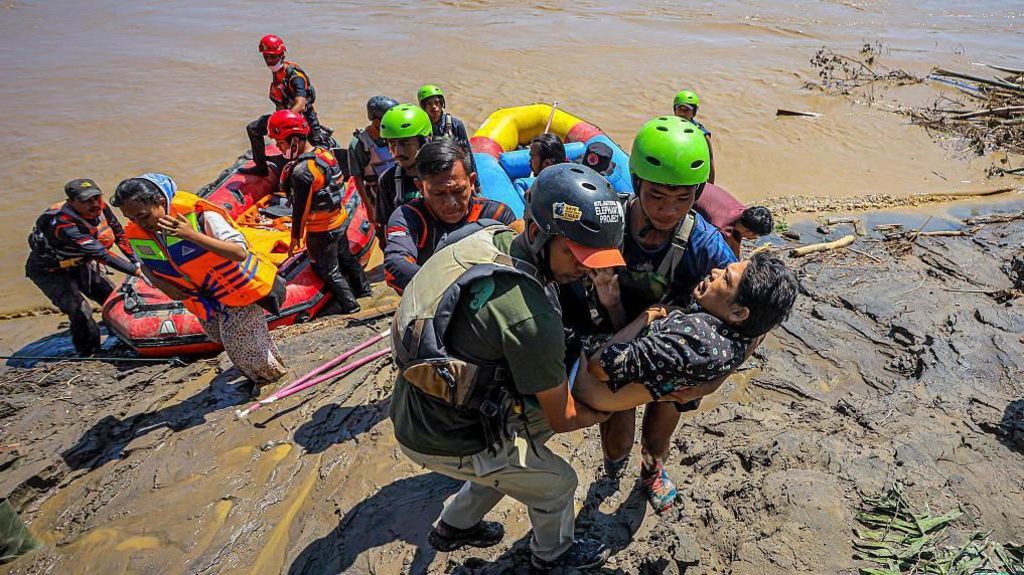
    The Indonesian government confirms the death toll has surged past 440, while rescue teams are engaged in a desperate search for at least 400 individuals reported missing, many feared buried under massive mudslides. The National Disaster Management Agency identified the provinces of Aceh, North Sumatra, and West Sumatra as particularly hard-hit areas where numerous people remain unaccounted for.

    Aid distribution faces significant logistical challenges. While assistance is being delivered by air and sea, numerous villages remain completely isolated and have yet to receive any help. Agency head Suharyanto specifically highlighted Central Tapanuli and Sibolga as cities requiring urgent attention due to their isolated conditions, with ships expected to reach Sibolga on Monday.

    The situation has grown increasingly desperate in some areas. Police spokesperson Ferry Walintukan acknowledged reports of looting, with residents breaking into shops to secure food and water. Police units have been deployed to restore order. ‘The looting happened before logistical aid arrived,’ Walintukan explained. ‘Residents didn’t know that aid would come and were worried they would starve.’

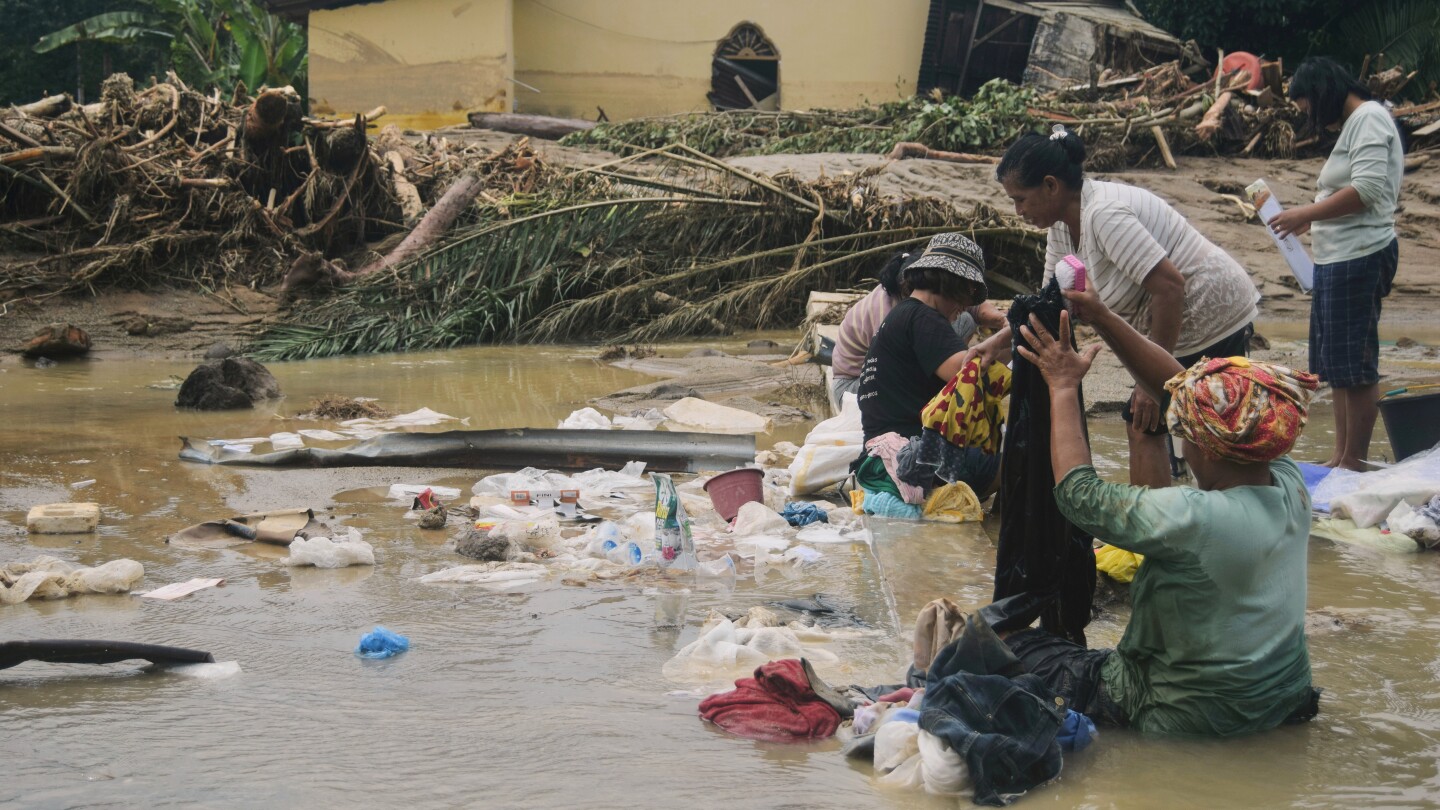
    In villages like Sungai Nyalo, approximately 100km from West Sumatra’s capital Padang, floodwaters have receded but left behind a landscape blanketed in thick grey mud, covering homes, vehicles, and agricultural land. Despite the devastation, many residents like 55-year-old Idris have chosen to remain, reluctant to abandon their homes even as clearing operations have yet to begin.

    The crisis has drawn international response, with Malaysia sending critical medical supplies to the devastated Aceh province. In a significant technological assistance move, tech billionaire Elon Musk has pledged to provide free Starlink satellite internet services to support emergency communications throughout the disaster response.

    The regional impact of the severe weather is extensive. Neighboring Thailand reports at least 170 flood-related fatalities, while Malaysia has also recorded several deaths. The Philippines faces a dual crisis, with floods killing over 200 people this month sparking massive anti-corruption protests involving tens of thousands of citizens. Sri Lanka is simultaneously confronting one of its worst weather disasters in years, with at least 193 lives lost to floods and mudslides.
  • Operations restart at Iraq’s Khor Mor field, days after drone attack halts production

    Operations restart at Iraq’s Khor Mor field, days after drone attack halts production

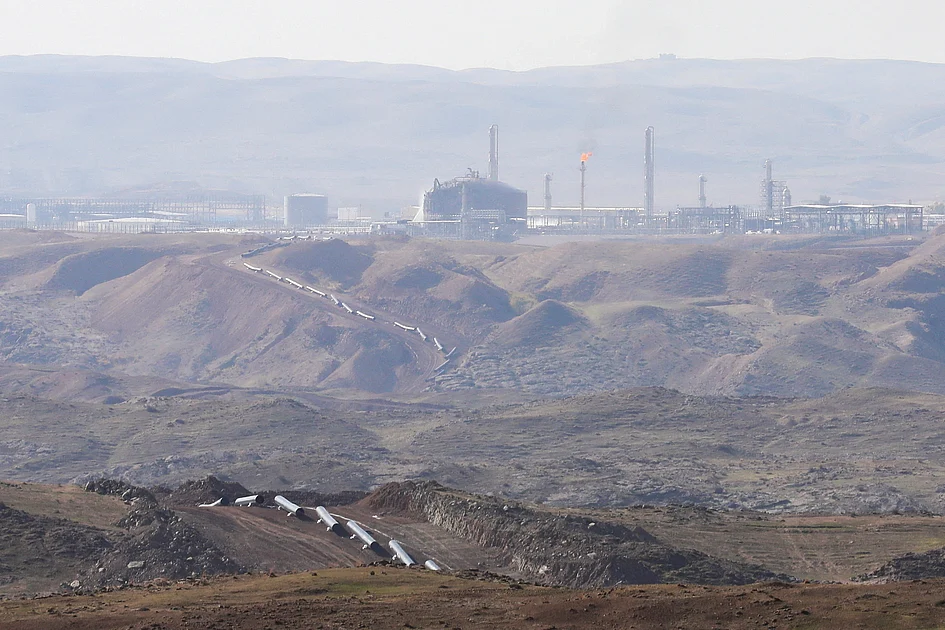
    Operations have fully resumed at Iraq’s critical Khor Mor gas field following a destructive drone attack that temporarily halted production and caused widespread power outages across the region. The Kurdish regional government’s electricity ministry confirmed that gas transmission to power stations recommenced at 2 a.m. local time on Sunday (11 p.m. GMT Saturday), marking a significant recovery for the energy infrastructure.

    The attack occurred on Thursday when an unidentified rocket struck a storage tank at the facility, operated jointly by Dana Gas. The assault forced an immediate shutdown of production capabilities, leading to extensive electricity disruptions throughout the Kurdistan region. No group has claimed responsibility for the attack, and authorities continue investigations to determine the perpetrators.

    This incident represents the most severe security breach since July’s series of drone attacks that targeted oilfields and reduced regional production by approximately 150,000 barrels per day. The Khor Mor field stands as one of the largest natural gas facilities in the Kurdistan region, playing a crucial role in power generation and energy stability.

    The Kurdistan Regional Government maintains autonomous control over northern Iraq’s territories, where American energy companies maintain substantial investment portfolios. The rapid restoration of operations demonstrates the region’s resilience in maintaining critical energy infrastructure despite security challenges.

  • Saudi Arabia announces major revamp of King Khalid International Airport terminals

    Saudi Arabia announces major revamp of King Khalid International Airport terminals

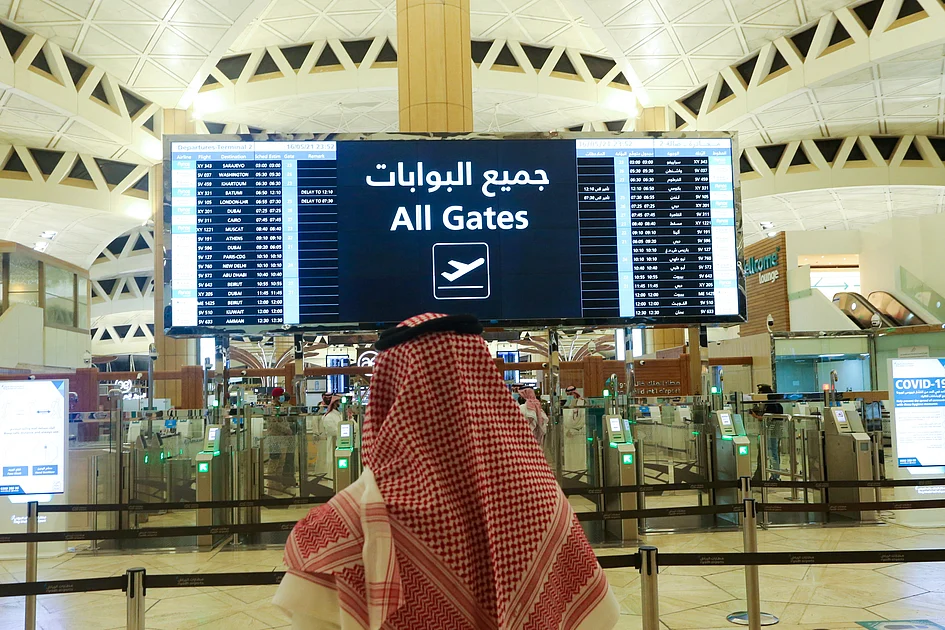
    Saudi Arabia has unveiled ambitious plans for a sweeping operational overhaul of King Khalid International Airport (KKIA) terminals, marking the facility’s first comprehensive modernization since its inauguration over four decades ago. The transformation initiative, scheduled for implementation during the first quarter of 2026, represents one of the airport’s most significant development projects to date.

    Operated by Riyadh Airports Company (RAC), the airport will undergo substantial terminal reconfiguration following completed redesigns that preserve the facility’s original architectural identity. Under the new operational structure, Terminal 5 will exclusively serve international flights operated by foreign carriers, while Terminals 3 and 4 will be dedicated to domestic operations. Terminals 1 and 2 will continue handling international flights operated by Saudi national airlines.

    The strategic reorganization is projected to deliver substantial operational benefits, including increased terminal capacity, enhanced passenger flow between terminals, and reduced inter-flight waiting periods. Aviation authorities emphasize that the exact commencement date will be announced following confirmation of full operational readiness across all airport sectors and partnering airlines.

    This development forms part of a broader strategic vision coordinated between Riyadh Airports Company, the General Authority of Civil Aviation, and MATARAT Holding. The initiative aligns with Saudi Vision 2030 objectives, aiming to elevate the kingdom’s aviation sector to international leadership standards while establishing the nation as a global logistics hub connecting three continents through advanced infrastructure and world-class traveler experiences.

  • Pope Leo XIV doubles down on insistence for 2-state solution to resolve Israeli-Palestinian conflict

    Pope Leo XIV doubles down on insistence for 2-state solution to resolve Israeli-Palestinian conflict

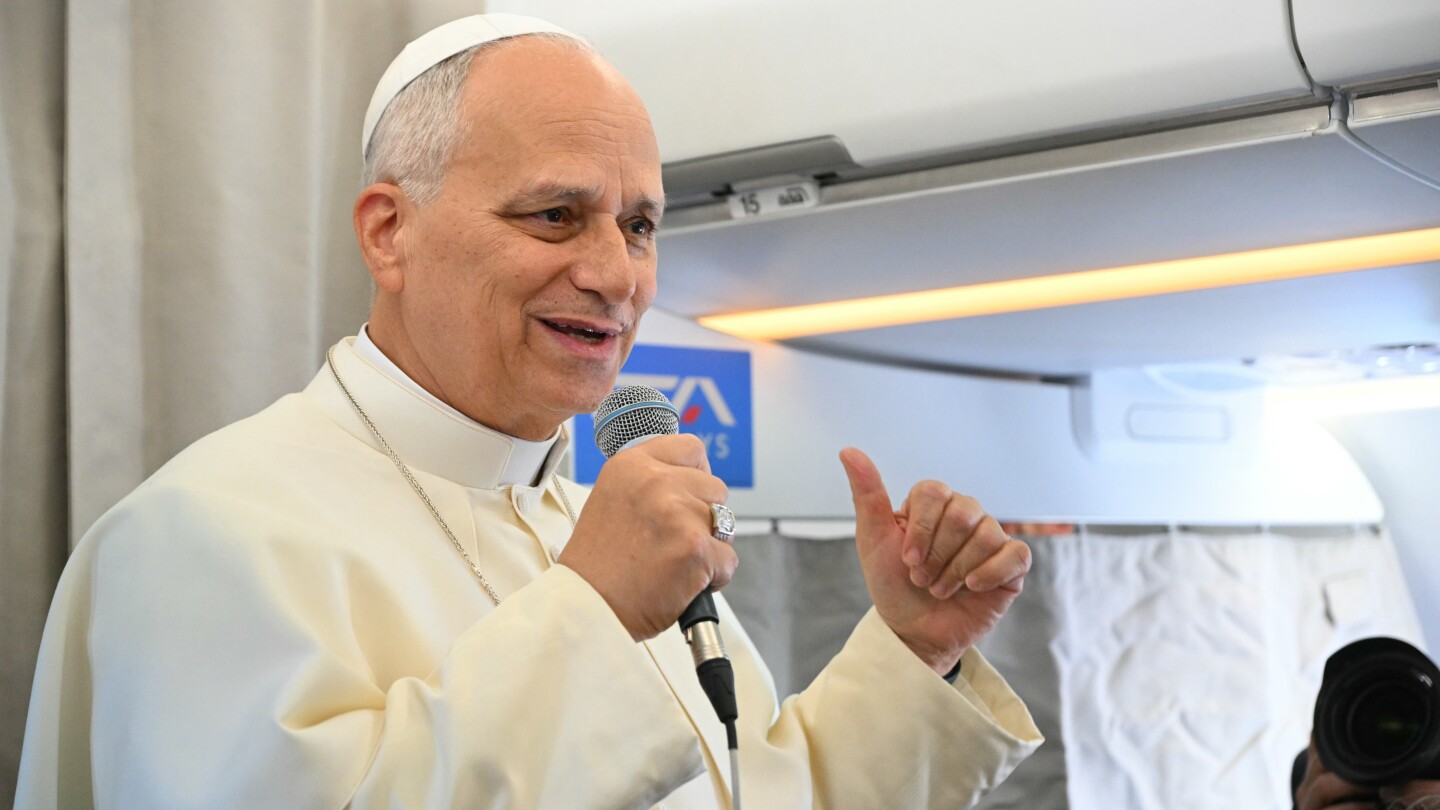
    Aboard the Papal Plane — During his inaugural airborne press conference en route to Beirut, Pope Leo XIV emphatically reinforced the Vatican’s diplomatic stance regarding the Israeli-Palestinian conflict, declaring a two-state solution as the singular viable path toward achieving lasting justice for both nations. The pontiff’s remarks came during the concluding segment of his first international journey as head of the Catholic Church.

    While responding to limited questions from Turkish journalists during the brief flight from Istanbul, Pope Leo revealed details of his private discussions with Turkish President Recep Tayyip Erdogan in Ankara. Their dialogue encompassed both the Gaza and Ukraine conflicts, with the Pope acknowledging Turkey’s “significant role” in facilitating preliminary negotiations between Russia and Ukraine. “Although resolution remains elusive,” he noted, “recent developments include fresh, substantive peace proposals.”

    Regarding the Middle East, the American-born Pope reiterated the Holy See’s consistent position supporting Palestinian statehood in East Jerusalem, the West Bank, and Gaza—a framework internationally regarded as the fundamental compromise for regional stability. The Vatican originally extended recognition to Palestine in 2015, but the current Israel-Hamas war has revitalized global momentum for this approach, evidenced by additional countries formalizing recognition during the latest UN General Assembly.

    “We acknowledge Israel’s present opposition to this solution,” Pope Leo stated, “yet we perceive it as the exclusive mechanism capable of resolving the enduring conflict. As friends to both parties, the Holy See strives to serve as a mediating voice that fosters mutual understanding and equitable justice.”

    The Pope’s commentary contrasted sharply with Israeli Prime Minister Benjamin Netanyahu’s persistent rejection of Palestinian statehood, which his administration believes would effectively reward Hamas and potentially establish an expanded threat along Israel’s borders. Netanyahu recently emphasized that no external pressure would alter Israel’s position.

    Notably absent from the Pope’s travel summary was any reference to his visit to Istanbul’s Blue Mosque, his most visible interaction with Turkey’s Muslim community. Instead, he focused on the primary purpose of his Turkish visit: commemorating the 1,700th anniversary of the Council of Nicaea. This historic gathering of bishops in AD 325 produced the Nicaean Creed, which remains a unifying theological foundation for Catholic, Orthodox, and Protestant denominations worldwide.

    Looking toward future ecumenical collaboration, Pope Leo proposed an unprecedented joint commemoration in Jerusalem for 2033—marking the 2,000th anniversary of Christ’s crucifixion and resurrection. This initiative, welcomed by Orthodox patriarchs, aims to demonstrate renewed Christian unity after centuries of division.

  • Cyclone death toll jumps to 159 in Sri Lanka; floods hit capital

    Cyclone death toll jumps to 159 in Sri Lanka; floods hit capital

    Sri Lanka is confronting a severe humanitarian crisis in the wake of Cyclone Ditwah, with the official death toll surging to 159 individuals. The Disaster Management Centre (DMC) has confirmed an additional 203 persons remain missing as the nation struggles with the extensive devastation.

    While the cyclone itself moved away from the island on Saturday, its legacy continues to unleash chaos. The capital, Colombo, is now battling significant flooding in its northern districts. Officials attribute this new threat to rising water levels in the Kelani River, caused by heavy upstream rains that followed the storm’s passage.

    The scale of displacement is staggering. Preliminary reports indicate over 20,000 homes have been completely destroyed, forcing approximately 122,000 citizens into government-operated temporary shelters. A further 833,000 people have been adversely affected and are in urgent need of humanitarian assistance.

    In response to the catastrophe, President Anura Kumara Dissanayake has declared a nationwide state of emergency. This measure aims to streamline disaster response and facilitate international aid coordination. The Sri Lankan government has officially appealed for global support.

    International relief efforts are underway. India spearheaded the response, delivering critical relief materials and deploying two helicopters with crew members to conduct aerial rescue operations. Japan has also committed assistance, announcing plans to dispatch an assessment team to evaluate immediate needs on the ground.

    Despite the subsiding rains, access remains a critical hurdle. Several key roads in the worst-hit central provinces are still impassable, complicating relief distribution. Furthermore, a collapse of infrastructure has left nearly one-third of the population without electricity or clean running water due to ruined power lines and flooded water purification plants. Widespread internet disruptions have further hampered communication efforts.

    This event now stands as Sri Lanka’s most lethal natural disaster since 2017, drawing grim comparisons to historical tragedies that have previously battered the island nation.

  • Sumatra residents loot for food and water after deadly floods

    Sumatra residents loot for food and water after deadly floods

    MEDAN, Indonesia — Desperate survivors of catastrophic flooding on Indonesia’s Sumatra island have resorted to looting essential supplies as aid delivery struggles to reach isolated communities, authorities confirmed Sunday. The devastating floods and subsequent landslides have claimed at least 303 lives, with officials warning the death toll will likely increase as recovery operations continue.

    The disaster, which struck nearly a week ago, has created unprecedented challenges for rescue teams. Inaccessible road networks, compromised communication infrastructure, and persistent adverse weather conditions have severely hindered relief efforts. The hardest-hit regions of Sibolga city and Central Tapanuli district remain particularly vulnerable due to delayed assistance.

    Disturbing social media footage captured residents navigating through hazardous floodwaters and damaged structures to access food, medical supplies, and fuel from compromised retail establishments. The looting incidents, first documented by North Sumatra Police on Saturday, occurred primarily before organized aid could reach stranded communities.

    Police spokesperson Ferry Walintukan explained the desperation behind these actions: ‘The looting happened before logistical aid arrived. Residents were unaware assistance was forthcoming and faced legitimate concerns about starvation.’

    The Indonesian government has mobilized substantial resources, deploying eleven helicopters from Jakarta for ongoing logistics distribution operations. Military aircraft have been conducting aerial supply drops to remote villages, where survivors have been seen desperately signaling for help. Additionally, four naval vessels have docked to support relief operations.

    Cabinet Secretary Teddy Indra Wijaya acknowledged the operational challenges: ‘Unpredictable weather continues to hamper our aid delivery, particularly to areas where land access remains completely severed.’

    Indonesia’s geographical position on the Pacific ‘Ring of Fire’ makes it exceptionally vulnerable to natural disasters, including frequent seismic activity, volcanic eruptions, and seasonal flooding that regularly triggers deadly landslides across the archipelago nation of 280 million people.

  • Pope Leo XIV to pray at Armenian cathedral in Istanbul during Turkish-Armenian reconciliation

    Pope Leo XIV to pray at Armenian cathedral in Istanbul during Turkish-Armenian reconciliation

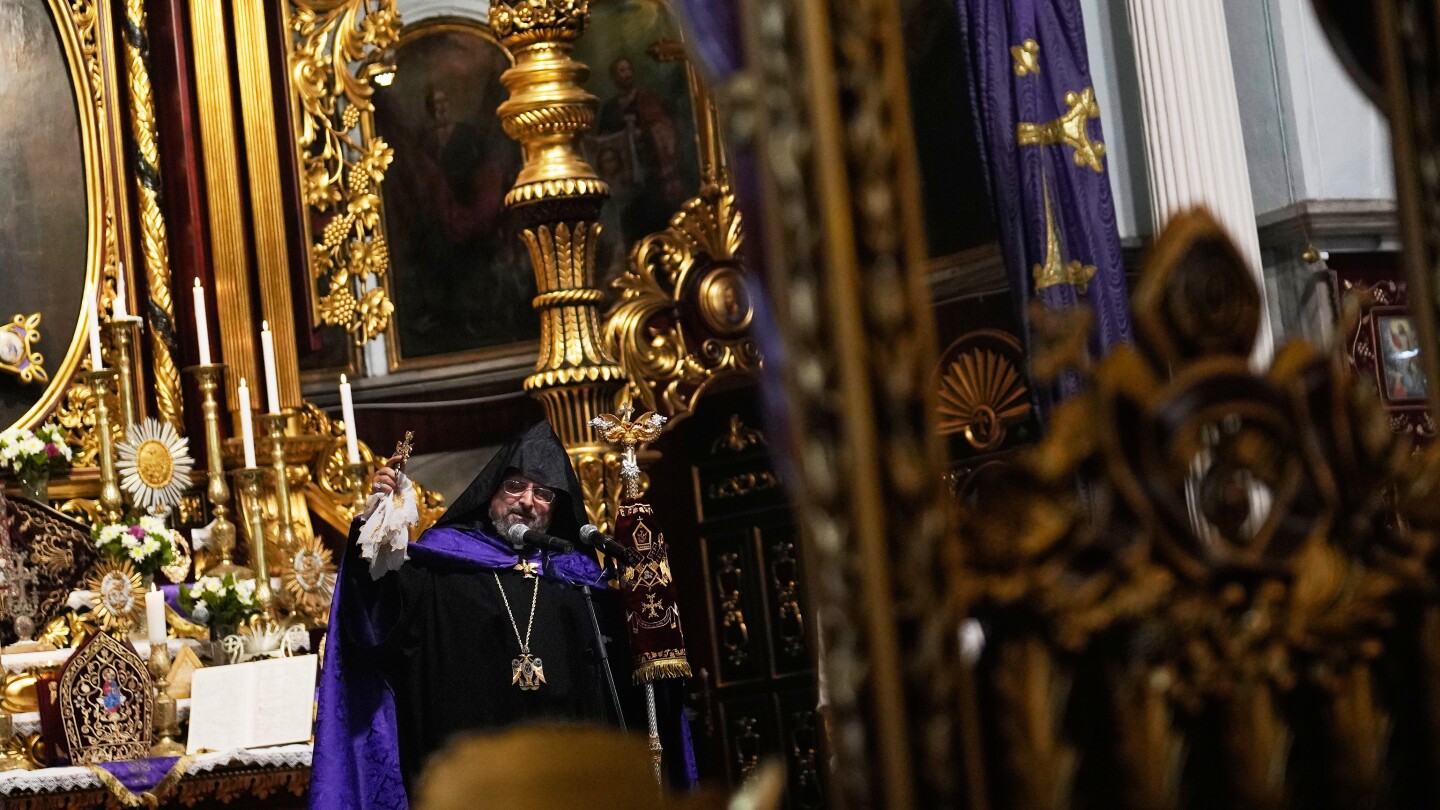
    In a significant ecumenical gesture, Pope Leo XIV is scheduled to pray at the Armenian Apostolic Cathedral in Istanbul on Sunday, demonstrating Vatican support for Christian minorities in Turkey and potentially advancing normalization efforts between Turkey and Armenia. The visit occurs against the backdrop of historical tensions stemming from the early 20th-century mass killings of Armenians in Ottoman Turkey—recognized as genocide by most historians but persistently denied by Turkish authorities, who attribute the deaths to civil unrest.

    The pontiff’s itinerary follows the footsteps of predecessors Paul VI, John Paul II, and Benedict XVI, all of whom visited the same cathedral during their respective trips to Istanbul. Approximately 500 Armenian worshippers are expected to attend the service, which will feature traditional prayers, speeches from both Pope Leo and Patriarch Sahak II, and the unveiling of a commemorative marble stone.

    Observers note that while Pope Francis previously ignited diplomatic friction by explicitly using the term ‘genocide’ during his 2015 Armenia visit, Pope Leo is anticipated to avoid such controversial language. This diplomatic caution aligns with ongoing bilateral efforts to reconcile Turkey and Armenia, which have maintained closed borders and absent formal diplomatic relations since the 1990s.

    Richard Giragosian, director of the Regional Studies Center in Yerevan, emphasized the symbolic and political weight of the visit: ‘More than just the symbolic importance of bringing the Vatican closer to the Armenian Church… (the visit) is also, in some ways, promoting Armenia-Turkish normalization.’

    The context is further complicated by regional geopolitics, including Turkey’s support for Azerbaijan in the Nagorno-Karabakh conflict and recent Vatican-Azerbaijan cooperation agreements that have concerned Armenian communities. Despite these tensions, the Vatican is reportedly engaged in behind-the-scenes diplomacy to secure the release of Armenian detainees in Azerbaijan.

    Armenian communities have expressed mixed reactions to the visit, with some viewing it as an honorable recognition of their heritage and others questioning its practical impact on Turkey’s stance regarding historical atrocities. The event underscores the delicate balance between religious symbolism, historical acknowledgment, and contemporary diplomatic maneuvering in a region marked by enduring divisions.

  • Pope wraps up Turkey visit and heads to Beirut to try to give Lebanese hope after years of crises

    Pope wraps up Turkey visit and heads to Beirut to try to give Lebanese hope after years of crises

    ISTANBUL — Pope Leo XIV departed Turkey on Sunday, concluding the initial phase of his inaugural foreign papal journey before proceeding to Lebanon. His visit aims to deliver a potent message of hope to the nation’s beleaguered citizens and reinforce the vital Christian presence within the Middle East.

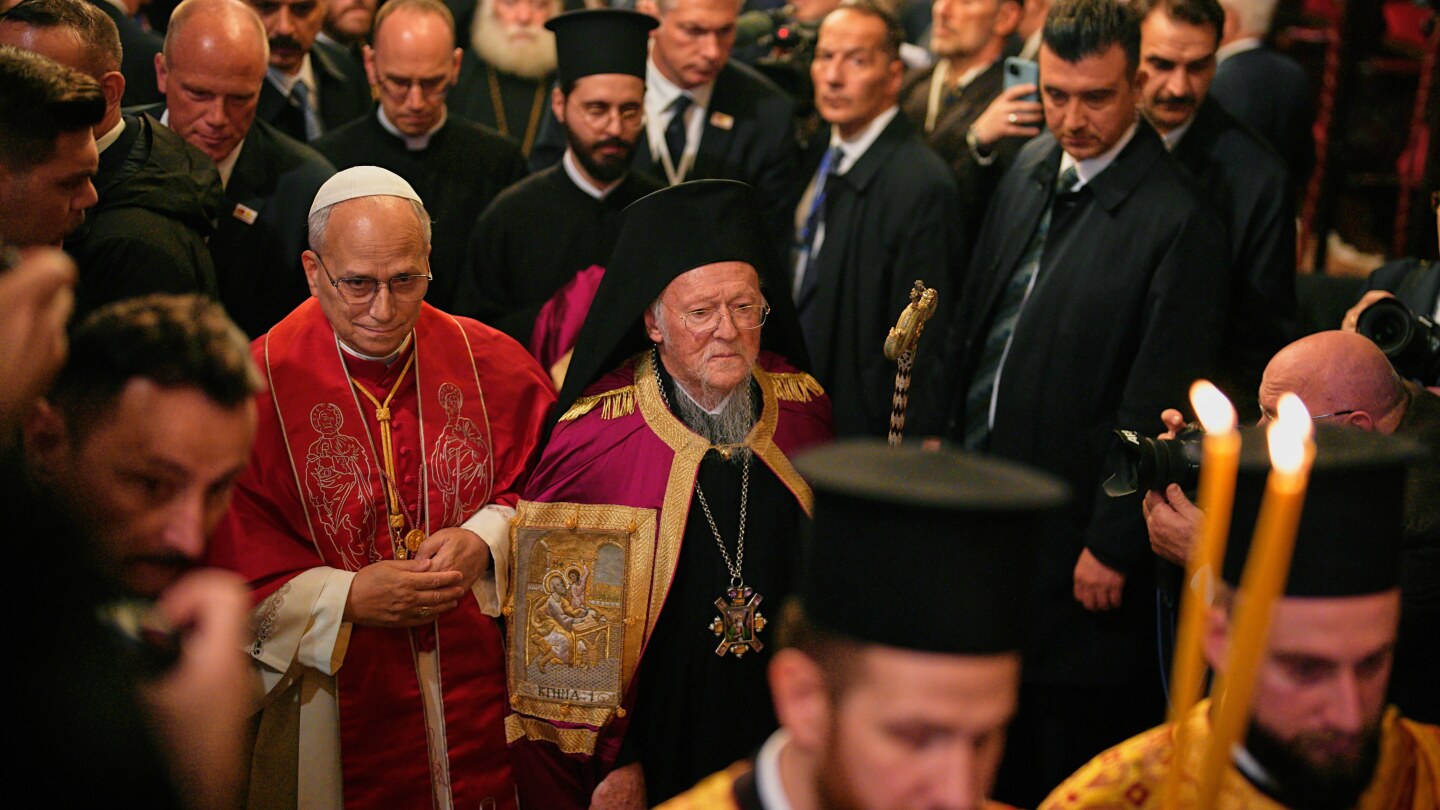
    The Pontiff’s schedule in Istanbul featured two significant ecumenical engagements: a solemn prayer service at the Armenian Apostolic Cathedral and participation in a divine liturgy alongside Ecumenical Patriarch Bartholomew, the spiritual head of global Orthodox Christianity. This invitation, extended to commemorate a major Christian anniversary, formed the foundational purpose for Leo’s regional tour.

    Arriving in Lebanon during a period of profound instability, the Pope seeks to honor a commitment originally made by his predecessor, Francis, whose declining health prevented his own long-desired pilgrimage. Francis frequently echoed St. John Paul II’s 1989 declaration that Lebanon represents more than a nation—it is a symbolic ‘message’ of fraternity and coexistence. This ethos is institutionalized through a unique power-sharing governance structure, mandating a Maronite Christian president, a Sunni Muslim prime minister, and a Shiite parliament speaker.

    As a Muslim-majority country with a substantial Christian minority constituting approximately one-third of its population, Lebanon has perpetually held strategic importance for the Vatican, serving as a critical stronghold for regional Christianity. However, decades of persistent conflict have precipitated a concerning diminishment of ancient Christian communities tracing their origins to the Apostolic era.

    Local religious leaders, including Bishop George, Archbishop of the Melkite Greek Catholic Archeparchy of Beirut, emphasized the visit’s critical timing. ‘The Holy Father is coming at a very difficult moment for Lebanon and for our region,’ he stated, noting widespread public anxiety over the future and lingering fears of a resurgent full-scale war with Israel. ‘In this difficult moment, the pope’s visit is a sign of hope. It shows that Lebanon is not forgotten.’

    The nation’s precarious state stems from a cascading series of catastrophes. A devastating economic collapse in 2019 obliterated the national currency and banking sector, erasing life savings and triggering critical shortages of electricity, fuel, and medicine. This was compounded in August 2020 by the cataclysmic Beirut port explosion, where improperly stored ammonium nitrate detonated, killing 218 individuals, injuring thousands, and inflicting billions in damages.

    A central, highly symbolic moment of Pope Leo’s itinerary is scheduled for December 2nd: a period of silent prayer at the epicenter of the 2020 blast site, followed by a personal meeting with affected victims and their families. Public fury persists over the tragedy, widely attributed to governmental negligence, and is exacerbated by the repeated stalling of a formal investigation. Five years onward, no official has been held accountable, fostering deep disillusionment among citizens who hope the Pontiff will forcefully advocate for truth and justice.

    Further complexity arises from the ongoing regional conflict. The war in Gaza, initiated after the October 2023 Hamas-led attack, drew in the Lebanese militant group Hezbollah into a escalating conflict with Israel that erupted into full-fledged war in September 2024. This conflict resulted in over 4,000 fatalities and widespread destruction. Although a U.S.-brokered ceasefire nominally halted hostilities two months later, near-daily Israeli airstrikes continue, fueling fears of a renewed total war.

    Ahead of the papal arrival, Hezbollah issued a statement urging the Pope to publicly denounce the ‘injustice and aggression’ it claims Lebanon endures—a clear reference to Israeli military actions. The group also called on its supporters to gather respectfully along the route of the papal motorcade. Hezbollah maintains political alliances with several Christian parties, such as the Free Patriotic Movement and Marada Movement, though it faces opposition from the Lebanese Forces, the largest Christian parliamentary bloc, which criticizes the group for entangling the nation in war.

    The papal visit also resonates powerfully in neighboring Syria. After a 14-year civil war that forced hundreds of thousands of Christians to flee, the ousting of autocrat Bashar Assad by Islamist insurgents in December has led to sporadic sectarian violence and attacks on religious minorities, including a June suicide bombing at a Damascus church. A delegation of 300 Syrian Christians, led by a Greek Melkite Catholic priest, traveled to Lebanon seeking audience with Pope Leo. For individuals like 24-year-old delegate Dima Awwad, his presence offers a beacon of hope amid ‘fear of an unknown future’ and a reaffirmation of the Eastern Christian community’s desire to remain in their historic homeland.

  • Sri Lanka flood death toll rises to 159, many more missing

    Sri Lanka flood death toll rises to 159, many more missing

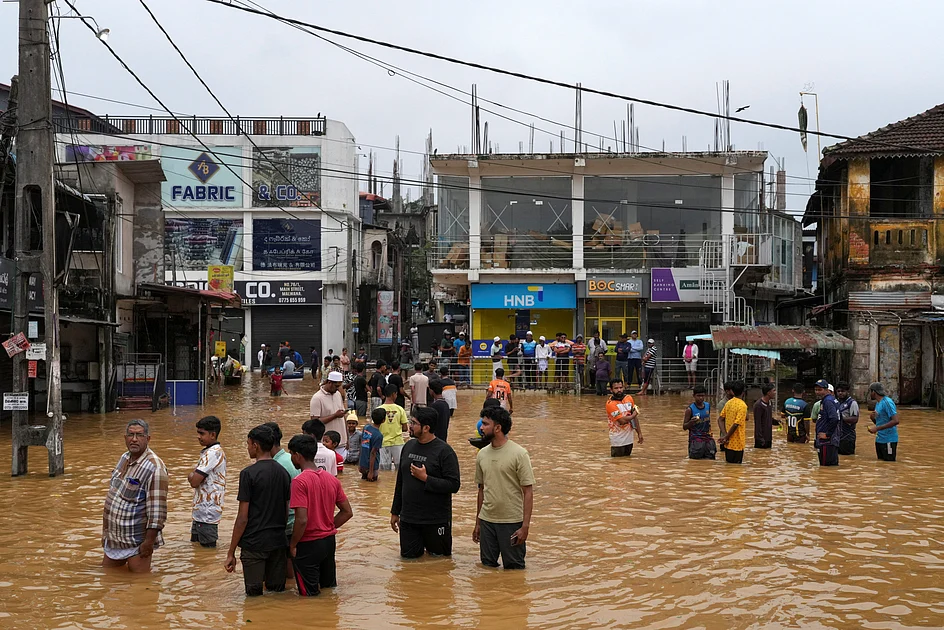
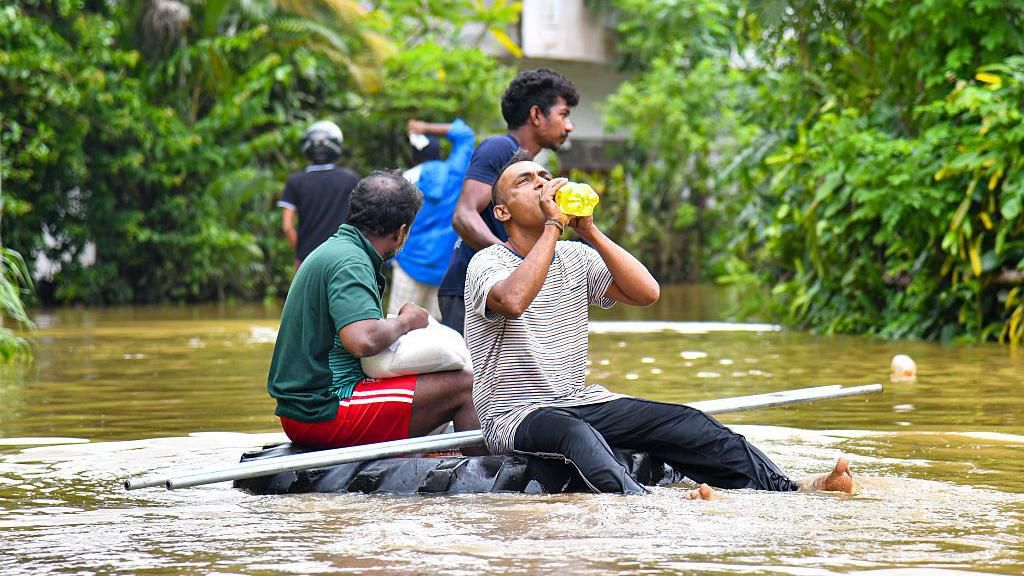
    Sri Lanka faces a catastrophic humanitarian crisis as the aftermath of Cyclone Ditwah claims 159 lives with over 200 individuals still unaccounted for, marking one of the nation’s most severe weather disasters in recent history. According to the Disaster Management Centre, the devastating floods and mudslides have obliterated more than 20,000 residential structures, forcing approximately 108,000 citizens to seek refuge in government-operated temporary shelters.

    The widespread destruction has left nearly one-third of the country without essential utilities including electricity and clean running water, prompting officials to declare a state of emergency. Emergency evacuation protocols have been activated in multiple regions as water levels in the Kelani River continue to surge at alarming rates.

    Kandy and Badulla districts report the highest concentration of fatalities, with numerous communities remaining completely isolated due to impassable roads blocked by landslides. Saman Kumara, a resident of Maspanna village in Badulla, described the desperate situation: ‘We lost two villagers… others are sheltering in the only standing structures. We’re trapped with diminishing supplies of food and clean water.’

    Tragic incidents include the drowning of 11 elderly residents at a care facility in Kurunegala district, while dramatic rescue operations saved 69 passengers from a submerged bus in Anuradhapura. Survivor WM Shantha recounted the harrowing experience: ‘The navy helped us reach a building roof that partially collapsed during the ordeal.’

    The Sri Lankan government has formally requested international assistance and is appealing to overseas citizens for financial contributions to support relief efforts. Meteorologists note that while Cyclone Ditwah has moved away from the island nation after making landfall on Friday, the country continues to experience unprecedented monsoon conditions that exceed typical seasonal patterns.

    This disaster represents the most severe flooding event since the 2003 catastrophe that claimed 254 lives, coinciding with widespread flooding across Southeast Asia affecting millions in Indonesia, Malaysia, and Thailand.

  • Ukraine hits tankers in Black Sea in escalation against Russia

    Ukraine hits tankers in Black Sea in escalation against Russia

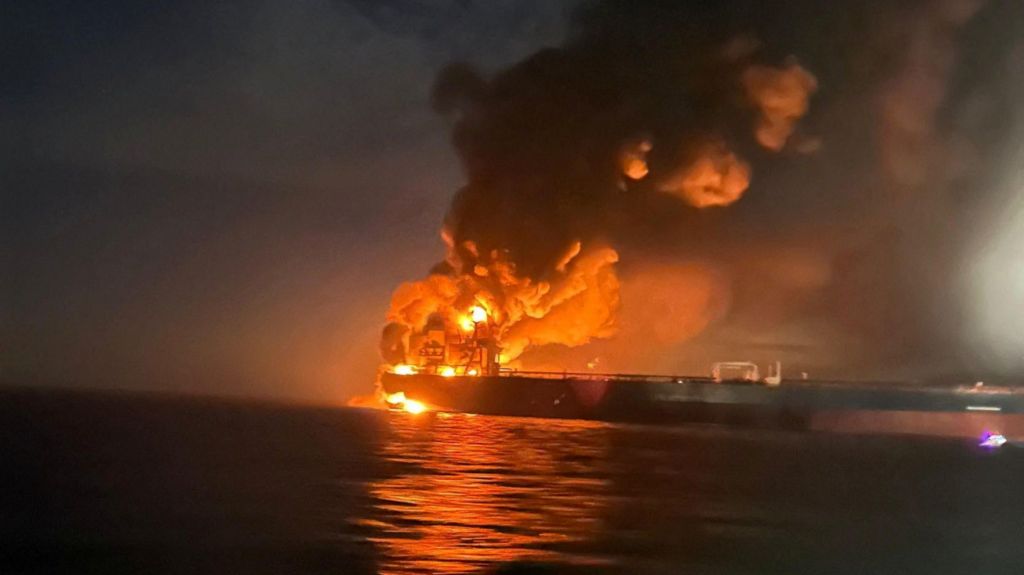
    In a significant escalation of its maritime campaign, Ukrainian security forces have successfully targeted two Russian-affiliated oil tankers traversing the Black Sea using advanced naval drones. Verified footage reveals the precise moment Ukrainian Sea Baby drones—specially engineered unmanned surface vessels—slammed into the vessels before detonating in massive fireballs that engulfed the ships in black smoke.

    The targeted vessels, identified by Turkish authorities as the Kairos and Virat (both registered under Gambian flags), were struck in separate operations. The Kairos was hit southwest of the Black Sea while the Virat was attacked further east near the Turkish coast. Reports indicate the Virat sustained additional drone strikes on Saturday following the initial Friday attacks. Remarkably, no casualties were reported from either incident.

    These sophisticated strikes represent a strategic shift in Ukraine’s efforts to cripple Russia’s war-funding capabilities. The targeted tankers belong to Moscow’s so-called ‘shadow fleet’—an armada of aging, often poorly documented vessels deployed to circumvent Western sanctions imposed after Russia’s 2022 invasion. According to London Stock Exchange data, both vessels were already subject to international sanctions.

    The attacks have triggered immediate regional consequences. The Caspian Pipeline Consortium—a major oil transportation group co-owned by Russia, Kazakhstan, and several Western energy giants including Exxon Mobil and Chevron—announced suspension of loading operations at Russia’s Novorossiysk port following unrelated drone attacks that damaged critical infrastructure.

    Turkish coast guard units responded to assist the stricken vessels, releasing footage showing firefighting efforts aboard the burning Kairos. Meanwhile, diplomatic developments unfolded as Ukrainian President Zelensky confirmed a security delegation led by Rustem Umerov was en route to the United States for continued peace negotiations, following the resignation of previous lead negotiator Andriy Yermak after corruption probes.