分类: world

  • Chinese sailor forced to halt Antarctic expedition after robbery

    Chinese sailor forced to halt Antarctic expedition after robbery

    In a devastating blow to polar exploration, Chinese sailor Zhai Mo’s historic Antarctic circumnavigation attempt has been abruptly suspended following a brutal attack on his vessel while anchored in Papua New Guinea waters. The incident, which occurred despite prior security assurances from local authorities, has left the expedition’s sailing craft completely unseaworthy and forced an indefinite postponement of the ambitious 36,000-nautical-mile journey.

    The assault on ‘Zhai Mo No 1’ represents more than mere vandalism—it constitutes a systematic dismantling of the vessel’s operational capabilities. Upon returning from a mandatory customs clearance procedure in the capital city, Captain Zhai and his five crew members discovered their ship ransacked with critical navigation systems, engines, generators, and life-saving equipment either stolen or deliberately destroyed. In a particularly malicious act, perpetrators opened the vessel’s bottom valves, causing extensive flooding throughout all compartments.

    This expedition, which embarked from Shanghai’s Bailianjing wharf on October 10, aimed to achieve humanity’s first complete circumnavigation of Antarctica along the Antarctic Circle while promoting polar ecological conservation and maritime culture. The vessel had previously completed a successful Arctic Ocean circumnavigation, making its current state of disrepair particularly tragic.

    While local law enforcement has intercepted one boat involved in the raid and recovered some stolen equipment, multiple perpetrators remain at large with investigations ongoing. The Chinese embassy in Papua New Guinea has activated emergency protocols, coordinating with local authorities and the Chinese community to provide assistance to the stranded crew members, all of whom are confirmed safe despite the traumatic experience.

    The incident raises significant questions about maritime security in remote waters and represents a substantial setback for international polar exploration efforts. The team must now reevaluate their entire Antarctic mission while assessing whether the extensive damage to their vessel and equipment can be overcome for future expeditions.

  • New materials reinforce Nanjing war truth

    New materials reinforce Nanjing war truth

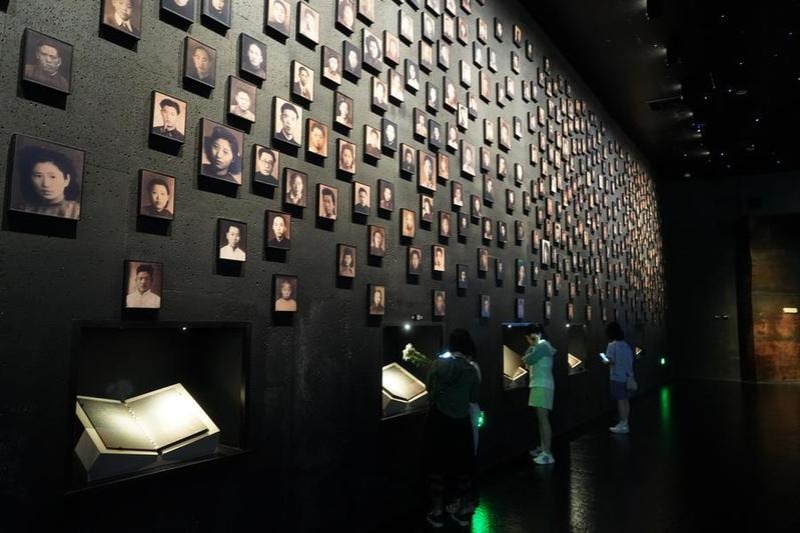
    In a significant development for historical documentation, the Memorial Hall of the Victims in Nanjing Massacre by Japanese Invaders has publicly revealed thirteen previously undisclosed sets of cultural artifacts and archival materials. This revelation coincides with the 88th anniversary commemorations of the tragic events that unfolded in Nanjing during 1937-1938.

    The comprehensive collection includes multiple categories of evidentiary materials: personal correspondence from Japanese military personnel, photographic documentation of post-occupation Nanjing, archival records of a Chinese military physician killed during the defense operations, an Imperial Japanese Army photographic album, and international publications in English and French detailing wartime atrocities.

    Among the most compelling evidence are two letters written by Japanese soldiers that provide firsthand perpetrator accounts of systematic executions. One particularly disturbing document, dated January 8, 1938, describes in graphic detail the daily execution of Chinese prisoners at a riverside location, with bodies disposed of in the Yangtze River. The soldier’s casual description of these acts as ‘very interesting’ and ‘so satisfying’ offers chilling insight into the psychological mindset of the perpetrators.

    Historical researchers have verified the authenticity of these documents through cross-referencing with previously published materials, including address information matching records in Japanese historical publications. According to Wang Weixing, research fellow at the Jiangsu Provincial Academy of Social Sciences, these letters constitute ‘ironclad evidence’ of Japanese military operations during the massacre period.

    The collection also features eight photographic images donated by Chinese citizens from Henan province, documenting key locations and events during the occupation period. These include images of architectural damage from artillery bombardment, the Japanese military’s formal entry ceremony, and engineering operations conducted during the siege.

    International perspectives are represented through publications including the November 22, 1938 edition of American magazine LOOK, which featured a exposé titled ‘Killing for Fun’ with photographic evidence of Japanese military conduct. Additional evidentiary value comes from French and English publications that document demographic information contradicting revisionist claims about Nanjing’s population at the time of occupation.

    Academic experts emphasize that these materials provide crucial third-party verification of historical events, particularly significant given ongoing attempts by certain factions to deny or minimize the scale of atrocities. The evidence directly counters arguments regarding population figures that have been used to question the established historical record.

    The memorial hall’s expanded collection strengthens the historical narrative through multiple evidentiary streams, ensuring that the memory of victims is preserved with factual accuracy and that future generations may access comprehensive documentation of these historical events.

  • Bestselling author RF Kuang withdraws from Dubai festival over Sudan war

    Bestselling author RF Kuang withdraws from Dubai festival over Sudan war

    Prominent American author Rebecca F Kuang has publicly withdrawn from the Emirates Airline Festival of Literature in Dubai, aligning herself with the Palestinian-led Boycott, Divestment and Sanctions (BDS) movement’s call to boycott the United Arab Emirates. The decision stems from the UAE’s alleged involvement in the ongoing conflict in Sudan.

    In an Instagram story posted Monday, Kuang shared her formal communication with event organizers, stating she is ‘no longer able to travel to Dubai’ for the festival. The author emphasized her consistent respect for ‘organized calls for cultural boycotts against genocide from communities affected.’ She specifically referenced her adherence to ‘the Palestinian BDS National Committee’s recent call given the mass atrocities in Sudan.’

    The literary festival receives sponsorship from multiple government-affiliated entities, including the Investment Corporation of Dubai (identifying as the government’s ‘principal investment arm’), the Dubai Culture and Arts Authority, and Abu Dhabi’s Department of Culture and Tourism.

    Kuang’s announcement followed significant social media criticism highlighting the apparent contradiction between her literary focus on colonial themes and her planned participation in the UAE-based event. Critics questioned the authenticity of her written works concerning colonization, forced labor, and displacement given her initial acceptance to headline the January festival.

    Middle East Eye has documented the UAE’s alleged role in supplying arms to Sudan’s Rapid Support Forces (RSF) paramilitary group, which stands accused of ethnic cleansing and mass killings. In April 2025, the Sudanese government filed an International Court of Justice case against the UAE, alleging complicity in genocide.

    This development coincides with growing global attention on the UAE’s foreign policy actions. In November, the Palestinian BDS National Committee issued a statement drawing parallels between tactics used in Gaza and Sudan, specifically calling for boycotts of Emirati institutions. The movement has previously successfully pressured international artists, including American rapper Macklemore in 2024, to cancel UAE appearances.

    On Tuesday, academic and cultural workers formally launched the ‘Cultural and Academic Boycott of the UAE’ campaign (TAGATU3), gaining signatures from prominent figures like Angela Davis and Hatem Bazian. The initiative urges rejection of funding and collaborations with Emirati government entities and complicit institutions.

  • China again urges Japan to destroy the abandoned chemical weapons

    China again urges Japan to destroy the abandoned chemical weapons

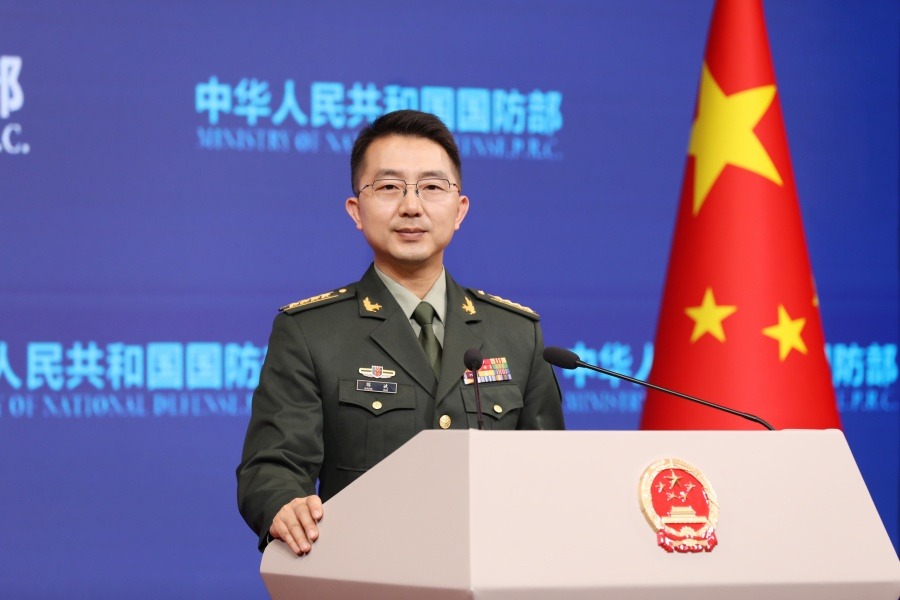
    China has intensified its diplomatic pressure on Japan, demanding the immediate and comprehensive destruction of chemical weapons abandoned on Chinese territory during World War II. The Chinese Ministry of National Defense issued a formal statement through Senior Colonel Jiang Bin, highlighting Japan’s ongoing responsibility under international law.

    Historical records indicate that Imperial Japanese forces deployed chemical weapons in violation of international conventions during their occupation of China, resulting in approximately 200,000 military and civilian casualties. In their retreat, Japanese forces concealed evidence of these violations by abandoning massive stockpiles of chemical agents across Chinese territory. These remnants continue to pose severe threats to public safety and environmental health, with over 2,000 documented poisoning cases attributed to accidental encounters with the weapons.

    Despite Japan’s ratification of the Chemical Weapons Convention, which mandates the secure disposal of such hazardous materials, progress has been critically delayed. Chinese officials attribute this delay to insufficient commitment and resource allocation from Japanese authorities. The Defense Ministry emphasized that toxin elimination represents both a historical obligation and a binding international legal requirement for Japan.

    The Chinese government has called for enhanced Japanese cooperation in several critical areas: expedited information sharing regarding weapon locations, comprehensive assistance in identification and recovery operations, and assuming full responsibility for environmental remediation of contaminated sites. China’s statement concludes by urging Japan to reflect sincerely on its wartime aggression and fulfill its promises of creating ‘a world free of chemical weapons.’

  • Israel is threatening to demolish a popular West Bank youth football pitch

    Israel is threatening to demolish a popular West Bank youth football pitch

    Israeli authorities have issued a demolition order against a vital youth football facility in Aida refugee camp near Bethlehem, threatening to erase one of the few recreational spaces available to Palestinian children living under occupation.

    The artificial turf pitch, constructed in 2021 on land leased from the Armenian Patriarchate of Jerusalem, serves hundreds of young athletes aged 6-19, including girls who have represented Palestine internationally. The facility became operational despite the challenging environment created by the separation wall that looms immediately adjacent to the playing field.

    Two weeks ago, Israeli soldiers affixed a notice to the gate declaring all activities must cease immediately and warning of potential demolition due to alleged permit violations. Similar notices were served to a nearby theater and garden in the same area.

    Muhannad Abu Surour, director of the Aida Youth Centre’s sports program, described how children discovered the notice during early morning training. “The news spread quickly because of how important the pitch is,” he told Middle East Eye. “The children came to my house, knocking on my door, telling me what happened.”

    The camp, established by the UN in 1950 following the Nakba, now houses approximately 7,000 residents in overcrowded conditions, including about 2,500 children. Surrounded by Israeli checkpoints, military bases, and settlements with seven watchtowers overlooking the area, Aida has been frequently raided by Israeli forces and was once described as the most tear-gassed place globally.

    Young athletes expressed devastation at the potential loss. Salma Al-Azzam, 17, described the pitch as “a place to release pressure” from the camp’s constricting environment. “We were all very upset when we heard about the demolition decision,” she said. “I was shocked and there was a lump in my throat. We have many good players who deserve a chance.”

    Local officials revealed the complex land ownership situation. George Juha of Bethlehem Municipality explained they leased the land from the Armenian church specifically for children’s use. “We made good use of it, but the Israelis don’t like good for anyone,” Juha stated. “They don’t want playgrounds, or construction, or anything at all.”

    The demolition notice claims the facility violates military regulations and lacks proper permits. A final decision rests with the planning committee of Israel’s civil administration, which governs occupied West Bank territories. Israeli authorities did not respond to requests for comment.

    The field’s international connections include a partnership with Chile’s Club Palestino, which represents the Chilean Palestinian community and has provided equipment and organized exchanges. A mural on the separation wall depicts children kicking a football under the slogan “Unity, freedom and justice” in three languages.

    For 16-year-old Noor Abu Ghuneia, who has represented Palestine internationally, the potential demolition represents more than lost games. “This is the only field we have to play on,” she said. “We always said that this place is where we train so we can represent Palestine abroad. If they demolish it, we won’t be able to play.”

  • World Food Program warns of catastrophic hunger in Cameroon without additional funding

    World Food Program warns of catastrophic hunger in Cameroon without additional funding

    YAOUNDE, Cameroon — The World Food Program (WFP) issued an urgent warning on Friday that catastrophic hunger levels loom over vulnerable populations in Cameroon unless immediate funding of $67 million is secured. This financial shortfall threatens to reverse years of progress in combating food insecurity across the Central African nation.

    Gianluca Ferrera, WFP’s Country Representative for Cameroon and Sao Tome and Principe, addressed journalists in the capital Yaoundé, emphasizing that without this critical funding, most ongoing humanitarian operations would face termination. “The suspension of these vital activities would trigger multiple cascading risks,” Ferrera stated, highlighting the precarious situation.

    Cameroon currently grapples with what the Norwegian Refugee Council identifies as the world’s most neglected displacement crisis, driven by three simultaneous emergencies: the persistent Boko Haram insurgency in the northern territories, an ongoing separatist conflict in the English-speaking regions, and a continuous influx of refugees fleeing violence in the Central African Republic along the eastern border. These man-made crises, exacerbated by climate-related shocks, have created a perfect storm of displacement and food insecurity.

    The humanitarian statistics paint a grim picture: over 3.3 million people require immediate assistance while more than 2 million remain internally displaced. The funding crisis will have immediate consequences—starting in January, approximately 52,000 children will lose access to school meal programs. Additionally, WFP plans to scale down operations significantly, potentially closing five field offices, which would eliminate food and nutrition assistance for over half a million vulnerable individuals.

    The funding contrast is stark: in 2022, WFP secured $106 million for Cameroon operations, while current contributions barely reach $20 million. This dramatic reduction occurs against the backdrop of unprecedented cuts to U.S. foreign aid, which totaled $64 billion in 2023 according to comprehensive figures. The previous administration’s closure of USAID was celebrated by some officials, though a July Lancet medical study credited USAID programs with preventing approximately 91 million deaths globally in the first two decades of this century alone.

  • Woman wanted by Interpol over trafficking of tiger parts arrested in India

    Woman wanted by Interpol over trafficking of tiger parts arrested in India

    Indian authorities have captured one of the world’s most sought-after wildlife traffickers in a significant victory against international animal poaching networks. Yangchen Lachungpa, whose name featured prominently on Interpol’s most-wanted list, was taken into custody following a meticulously coordinated operation between the Madhya Pradesh State Tiger Strike Force and the Wildlife Crime Control Bureau.

    The arrest marks a critical development in combating the illicit trade of endangered species, particularly highlighting the sophisticated networks transporting tiger parts across international borders. Lachungpa stands accused of masterminding trafficking corridors extending from India to Nepal, Tibet, and Bhutan, with operational bases in multiple Indian cities including the capital, Delhi.

    This case presents unusual dimensions in wildlife crime enforcement, as female involvement in high-level animal part trafficking remains exceptionally rare. Lachungpa had previously faced arrest in 2017 but vanished after obtaining bail, continuing her alleged criminal activities until this week’s apprehension.

    Court proceedings have already commenced, with judicial authorities denying bail during her Thursday appearance, reflecting the seriousness of the charges. Investigative records indicate collaborator testimonies, including from Jai Tamang—arrested in 2015—who confessed to providing Lachungpa with wildlife contraband in exchange for shelter.

    The trafficking network specifically targeted tigers, whose body parts command high prices in traditional Chinese medicine markets. While documented tiger poaching cases show a decrease from 56 in 2023 to 26 in 2024 according to the International Fund for Animal Welfare, experts caution that actual numbers likely significantly exceed reported figures due to undetected killings.

  • Dubai-Hyderabad Emirates flight receives bomb threat, lands safely

    Dubai-Hyderabad Emirates flight receives bomb threat, lands safely

    An Emirates aircraft operating as flight EK526 from Dubai to Hyderabad became the subject of an intensive security response on Friday following receipt of a potential security threat. The incident prompted the immediate implementation of standard security protocols coordinated between aviation authorities and airline ground teams.

    The aircraft, which departed from Dubai International Airport, landed without incident at Rajiv Gandhi International Airport in Hyderabad at approximately 8:30 AM local time. Following standard security protocols, passengers disembarked normally after comprehensive security checks were conducted by authorities.

    Emirates officials confirmed in an official statement: ‘Authorities alerted us to a potential security threat on Emirates’ flight EK526 from Dubai to Hyderabad. Standard security procedures were implemented with full co-operation from Emirates’ ground teams.’ The airline emphasized that passenger and crew safety remains their highest priority throughout such incidents.

    The Indian news agency PTI reported the security concern specifically involved a bomb threat, though official sources described it more broadly as a ‘security threat.’ Indian authorities followed established safety procedures to ensure the protection of all passengers and the aircraft itself.

    Emirates, recognized as the world’s largest international carrier, maintains extensive operations throughout India with regular flights to multiple destinations including Mumbai, Hyderabad, Ahmedabad, Chennai, Bengaluru, Kochi, Delhi, Kolkata, and Thiruvananthapuram. The airline has built its reputation on safety and operational excellence within the global aviation industry.

  • Which European countries have mandatory or voluntary military service

    Which European countries have mandatory or voluntary military service

    In response to heightened security threats following Russia’s invasion of Ukraine, multiple European NATO members are implementing voluntary national service programs to bolster their military capabilities. This strategic shift marks a significant evolution from Cold War-era conscription models that diminished after the Soviet Union’s collapse.

    Currently, nine European NATO states maintain compulsory conscription systems: Denmark, Estonia, Finland, Greece, Latvia, Lithuania, Norway, Sweden, and Turkey. Turkey, hosting NATO’s second-largest military after the United States, requires male citizens aged 20-41 to serve 6-12 months. Norway has adopted gender-neutral conscription with typically 12-month service periods.

    Several nations are introducing innovative voluntary approaches. Belgium’s defense ministry recently contacted 17-year-olds with monthly €2,000 incentives to join a new reservist program aiming to expand forces from 6,000 to 20,000. Similarly, France is launching a 10-month paid ‘national service’ program offering €800 monthly, targeting 18-19-year-olds with planned participation growing to 50,000 by 2035.

    Germany’s parliament approved a voluntary military service system requiring all 18-year-old men to complete questionnaires assessing their willingness and capability to serve. Chancellor Friedrich Merz aims to develop Europe’s ‘strongest conventional army,’ expanding active personnel from 183,000 to 260,000 by 2035 alongside 200,000 reservists. Despite government support, recent protests saw students in 90 German cities demonstrating against the initiative.

    Poland, possessing one of NATO’s largest armies, introduced one-month voluntary basic training in 2024, with Prime Minister Donald Tusk announcing plans for ‘large-scale military training for every adult male’ to build a 500,000-strong force including reservists.

    The United Kingdom maintains a professional military force comparable to France and Germany in conventional strength, uniquely permitting 16-year-olds to enlist with parental consent. Other NATO members with professional armies include Albania, Czechia, Hungary, Italy, Luxembourg, Montenegro, North Macedonia, Portugal, Slovakia, Slovenia, and Spain.

    Non-NATO European states demonstrate varied approaches: Austria maintains compulsory service for men aged 18-35, Cyprus mandates military service for male citizens over 18, while Switzerland requires male citizens aged 18-30 to serve in military or civilian capacities, recently rejecting a proposal to extend this obligation to women.

  • Panda ambassadors fostering China-France friendship

    Panda ambassadors fostering China-France friendship

    In a remarkable display of cross-cultural diplomacy, giant pandas have emerged as unexpected ambassadors strengthening the bond between China and France. The story centers on Yuan Meng, an eight-year-old panda who returned to his ancestral home in Sichuan province two years ago after capturing hearts in France. Now residing at the Chengdu Research Base of Giant Panda Breeding, the charismatic bear has earned the affectionate nickname “Director Sheep” due to his distinctive vocalizations that resemble bleating sounds.

    Yuan Meng’s journey represents a much larger narrative of international cooperation. His parents, Huan Huan and Yuan Zai, were originally sent to France’s Beauval Zoo in 2012 as part of a comprehensive panda conservation initiative. Their presence transformed the French zoo, with annual visitor numbers skyrocketing from 600,000 to an impressive 2 million by 2024. The couple’s European legacy includes three offspring: Yuan Meng (born 2017, the first panda ever born in France) and twins Huan Lili and Yuan Dudu (born 2021).

    The panda exchange program operates under carefully structured agreements ensuring genetic diversity, typically requiring overseas-born cubs to return to China before age four. Yuan Meng’s departure was delayed until just before his sixth birthday due to his overwhelming popularity among French admirers. Such was his celebrity status that Beauval Zoo unveiled a 2.5-meter bronze statue in his honor in March 2024.

    This interspecies diplomacy has deep historical roots dating to 1869 when French Catholic priest and naturalist Pierre Armand David contributed to the scientific discovery of giant pandas in Sichuan. The Dengchigou Catholic Church, where David once resided, now serves as an educational center celebrating both panda conservation and Sino-French friendship, blending western Sichuan architecture with Gothic design elements.

    China’s conservation efforts have yielded significant results, with the International Union for Conservation of Nature reclassifying giant pandas from “endangered” to “vulnerable” in 2016. The establishment of the Giant Panda National Park in 2021 across three provinces represents the latest milestone, with Ya’an city containing nearly 40% of the park’s territory and Baoxing county reporting the nation’s highest density of wild pandas.

    The collaboration continues to evolve, with China’s forestry authority and the French Biodiversity Office recently agreeing to partner the Giant Panda National Park with France’s Pyrenees National Park. This alliance will focus on biodiversity monitoring, species protection, scientific education, and personnel training exchanges.

    As China and France celebrate 61 years of diplomatic relations in 2025, these charismatic black-and-white ambassadors symbolize both nations’ shared commitment to environmental stewardship and international cooperation, demonstrating how wildlife conservation can build bridges between cultures.