分类: world

  • US seized ‘very large’ tanker near Venezuela, Trump says

    US seized ‘very large’ tanker near Venezuela, Trump says

    In a dramatic escalation of tensions, United States military forces have intercepted and seized a massive oil tanker off the Venezuelan coast, an operation personally confirmed by President Donald Trump. The seizure occurred amidst a substantial US naval deployment in the Caribbean region that Caracas has characterized as preparation for regime change.

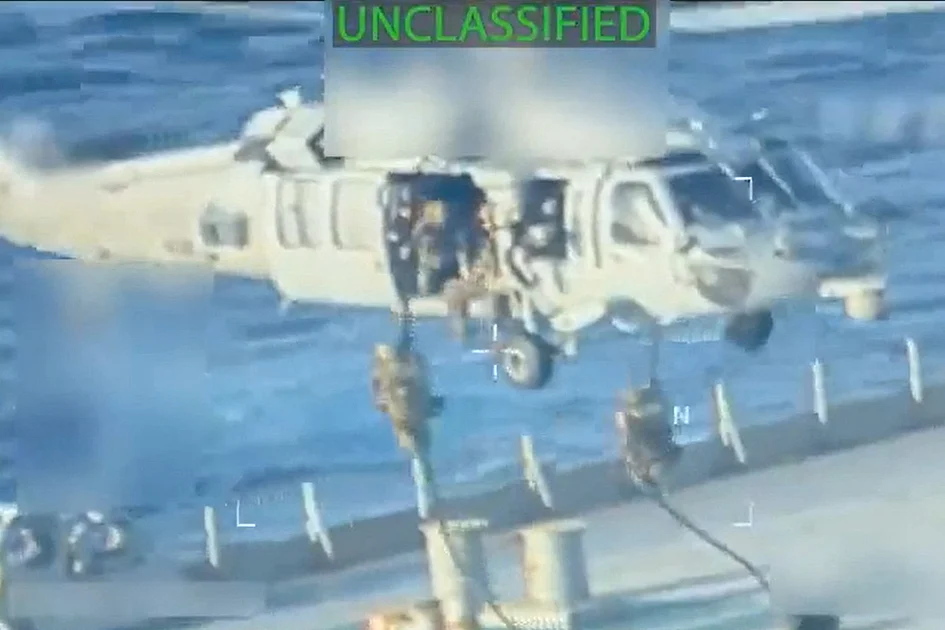
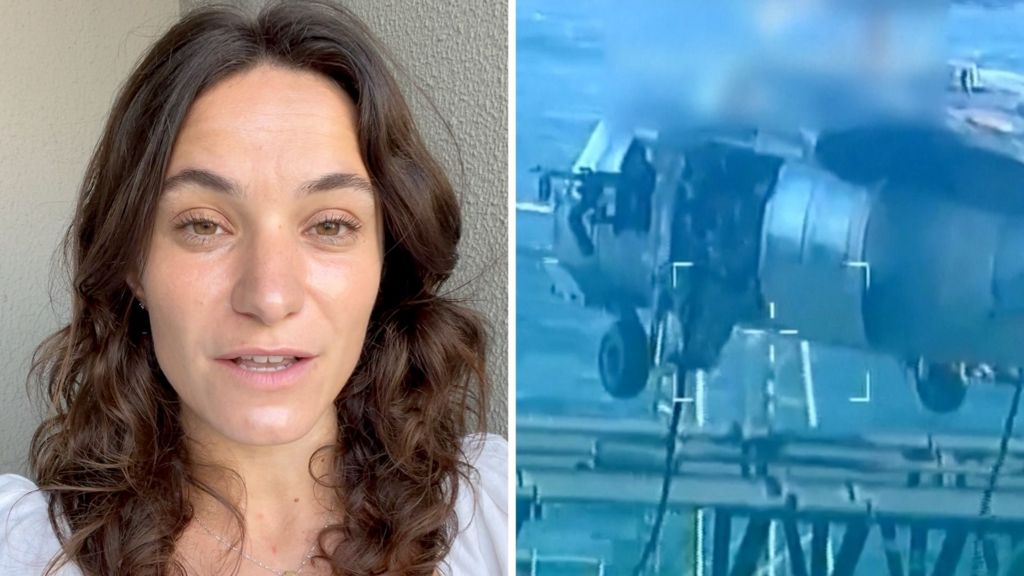
    US Attorney General Pam Bondi released operational footage showing special forces troops rappelling from helicopters onto the vessel’s deck before securing the ship’s bridge with raised rifles. President Trump described the captured tanker as ‘very large—the largest one ever seized’ during remarks to reporters at a White House business roundtable.

    The Justice Department identified the vessel as part of an ‘illicit oil shipping network’ allegedly transporting sanctioned petroleum from both Venezuela and Iran. US media reports indicate the tanker was destined for Cuba before being intercepted by Coast Guard personnel.

    Venezuela’s foreign ministry issued a fierce condemnation, denouncing the operation as ‘blatant theft and an act of international piracy’ that was publicly celebrated by the US president. The incident occurs alongside heightened political tensions involving Venezuelan opposition leader Maria Corina Machado, who recently accepted the Nobel Peace Prize in Oslo while in hiding from Maduro’s government.

    The Trump administration has intensified pressure on Caracas in recent months, deploying warships and conducting lethal strikes against more than twenty alleged drug trafficking vessels in the region. Washington has formally designated Maduro’s government as a ‘narco-terrorist’ organization and accused him of stealing the 2024 presidential election.

    Venezuela has responded by swearing in thousands of new soldiers and accusing the United States of attempting to seize control of its substantial oil reserves through military aggression disguised as counter-narcotics operations.
  • From Iran to China to Venezuela – how tanker seized by US hid true location

    From Iran to China to Venezuela – how tanker seized by US hid true location

    In a significant maritime enforcement action, US military forces have captured the oil tanker ‘Skipper’ near the Venezuelan coast, exposing sophisticated methods employed by vessels evading international oil sanctions. The operation, conducted via helicopter raid on Wednesday, targeted a vessel with an extensive history of deceptive practices, according to ship tracking analyses.

    Maritime intelligence reveals the 20-year-old tanker systematically falsified its location data and engaged in covert operations to transport sanctioned oil from Venezuela and Iran. Despite requirements under UN treaty for vessels to maintain operational Automatic Identification Systems (AIS), the Skipper consistently manipulated its tracking signals in a practice known as ‘spoofing’ to conceal its activities.

    US Attorney General Pam Bondi identified the vessel as a critical component of an ‘international oil smuggling network,’ originally sanctioned in 2022 when operating under the name Adisa. The tanker had most recently sailed under the Guyanese flag, though the government quickly disavowed any legitimate registration, stating the vessel was ‘falsely flying the Guyana Flag.’

    Analysts from maritime analytics firm Kpler documented the vessel’s elaborate deception patterns. While its AIS indicated presence at Iraq’s Basrah Oil Terminal in July, terminal records showed no such visit. Instead, the vessel loaded Iranian crude at Kharg Island before conducting ship-to-ship transfers in August and ultimately delivering its cargo to China under false declarations.

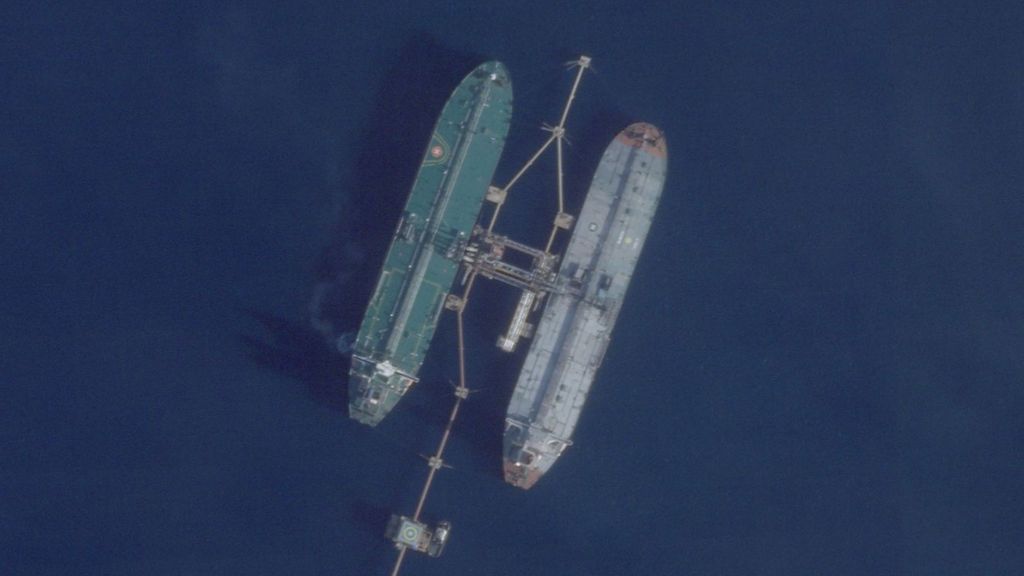
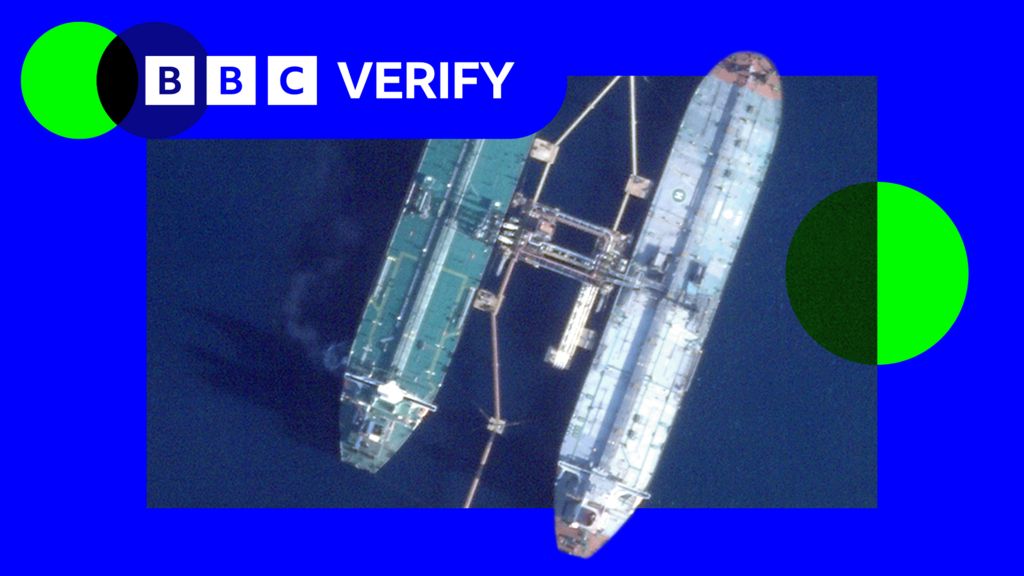
    The Skipper’s most recent activities involved loading approximately 1.1 million barrels of Merey crude from Venezuela’s Port of Jose in November, with Cuba listed as its destination. Satellite imagery confirmed the vessel participated in another ship-to-ship transfer just days before its seizure, occurring near Venezuela’s coast at Barcelona despite previous tracking showing it near Guyana.

    Maritime security expert Frederik Van Lokeren, former Belgian naval lieutenant, noted that while such transfers aren’t inherently illegal, they remain ‘extremely uncommon’ and typically indicate sanctions evasion attempts. He emphasized Venezuela’s growing dependence on Iranian and Russian allies for refining capacity amid degraded domestic capabilities.

    The vessel’s ownership structure reveals complex international connections, with beneficial ownership attributed to Nigeria-based Thomarose Global Ventures Ltd and registered ownership to Marshall Islands-based Triton Navigation Corp. The latter entity was previously identified by US Treasury as facilitating a global oil smuggling network for sanctioned Russian magnate Viktor Artemov.

    This seizure highlights ongoing challenges in enforcing oil sanctions against Venezuela, imposed by the US in 2019 to pressure President Nicolás Maduro’s administration amid widespread election rigging allegations. Industry analysts note that position spoofing and dark fleet operations have become increasingly common among vessels transporting sanctioned Venezuelan oil.

  • Three things to know after US seizes Venezuelan oil tanker

    Three things to know after US seizes Venezuelan oil tanker

    In a significant maritime enforcement operation, United States naval forces have intercepted and seized a Venezuelan-flagged oil tanker navigating through international waters near the Venezuelan coastline. The action, authorized under U.S. federal court orders, represents the latest escalation in Washington’s ongoing campaign to apply economic pressure on the government of Nicolás Maduro.

    According to official statements from the U.S. Department of Justice, the seizure was executed based on allegations that the vessel and its cargo were involved in activities violating international sanctions regimes. The tanker, whose identity remains undisclosed in initial reports, was reportedly transporting crude oil allegedly tied to Venezuela’s state-owned petroleum company PDVSA, which has been subject to comprehensive U.S. sanctions since 2019.

    The operation unfolds against the complex backdrop of deteriorating U.S.-Venezuela relations, with the Biden administration maintaining sanctions intended to curb the Maduro government’s revenue streams. Maritime security analysts note this interception follows established patterns of U.S. enforcement actions targeting Venezuelan oil exports, which Washington believes improperly benefit the current administration rather than the Venezuelan populace.

    Regional security implications are being carefully monitored, with neighboring Caribbean nations expressing concern over escalating naval activities in their strategic waterways. The Venezuelan government has condemned the seizure as an act of “piracy” and violation of international maritime law, promising to pursue all available diplomatic and legal channels to challenge the action.

    Energy market observers suggest such enforcement actions contribute to tightening global oil supplies despite Venezuela’s substantial reserves, as the country’s export capabilities remain constrained by international sanctions and domestic production challenges.

  • Poland arrests Russian archaeologist wanted in Ukraine

    Poland arrests Russian archaeologist wanted in Ukraine

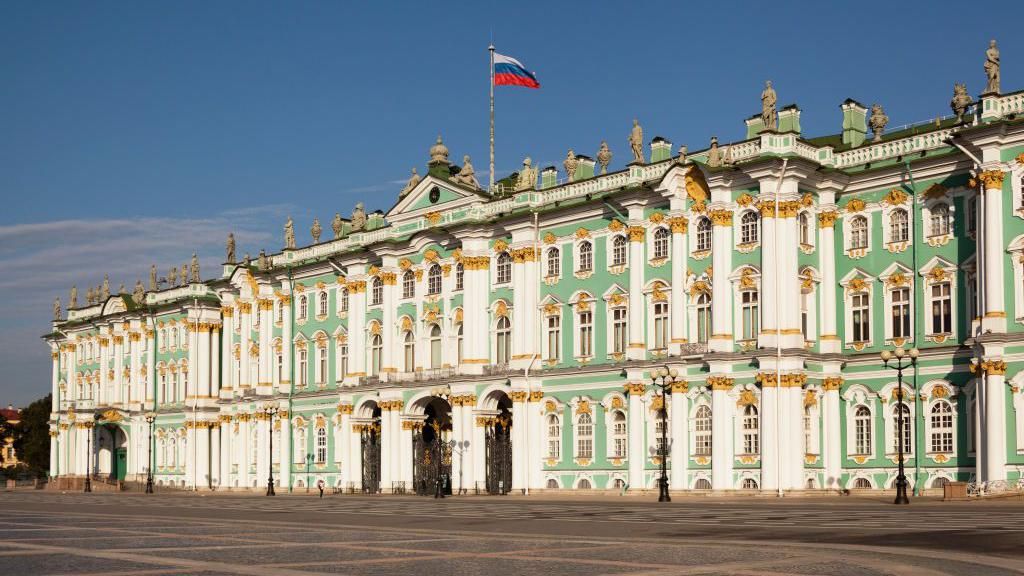
    Polish authorities have taken into custody a distinguished Russian archaeologist from St. Petersburg’s State Hermitage Museum following an international extradition request from Ukraine. The scholar, identified under Polish judicial protocols as Aleksandr B and publicly acknowledged by Russian officials as Alexander Butyagin, faces serious allegations regarding archaeological activities in Crimea.

    Ukrainian prosecutors assert that between February 2014 and November 2025, Butyagin conducted unauthorized excavations at the ancient Greek settlement of Myrmekion in Kerch. According to official statements, these activities resulted in partial destruction of the archaeological complex, with estimated damages reaching approximately 201.6 million Ukrainian hryvnia ($4.77 million).

    The arrest occurred on December 4th when Butyagin visited Poland to deliver academic lectures on Pompeii. Following detention, he was questioned by Warsaw prosecutors but declined to provide explanations regarding the allegations. Warsaw District Court has authorized his temporary incarceration at the Warsaw-Białołęka detention center for 40 days until January 13th pending extradition proceedings.

    Russia’s Foreign Ministry has condemned the detention as ‘absolute legal tyranny,’ vowing to pursue diplomatic channels to protect their citizen’s interests. The Kremlin identified Butyagin as head of the Ancient Archaeology of the Northern Black Sea region department at the prestigious Hermitage Museum.

    Myrmekion, an Ancient Greek colony established by Ionians in the sixth century BCE, represents significant cultural heritage in contemporary Crimea. Ukraine’s extradition request emphasizes that Butyagin operated without appropriate permits during what they term ‘the temporary occupation of Crimean territory.’

    The Russian Embassy in Warsaw has received official notification and is providing consular assistance to the detained academic, according to Polish judicial authorities.

  • An airstrike on a hospital in a rebel-controlled area of Myanmar kills 34 and injures 80

    An airstrike on a hospital in a rebel-controlled area of Myanmar kills 34 and injures 80

    In a devastating escalation of Myanmar’s ongoing civil conflict, a military airstrike has obliterated a critical hospital in Rakhine State, resulting in substantial casualties among patients and medical personnel. The assault occurred Wednesday evening in Mrauk-U township, an area under the control of the ethnic Arakan Army rebel force.

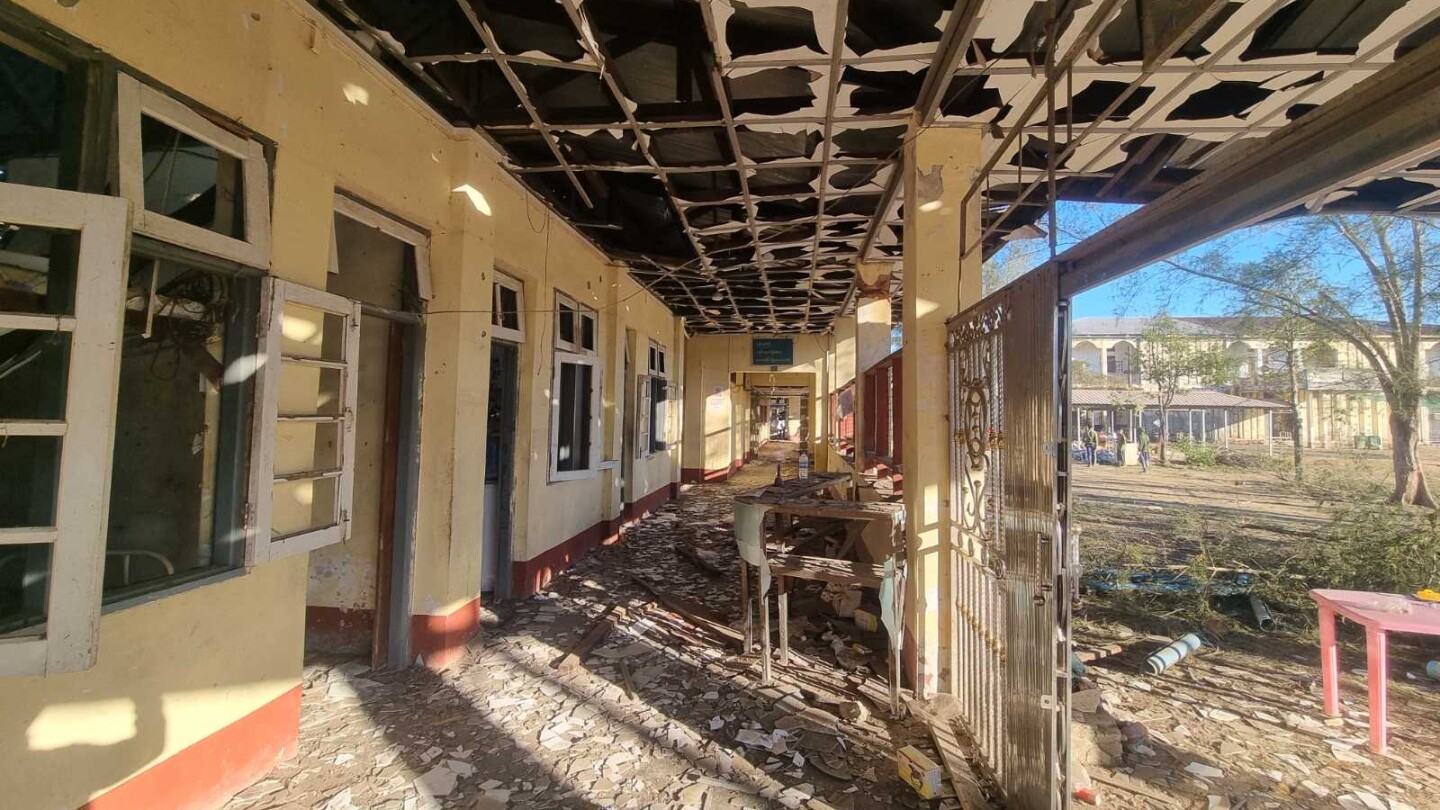
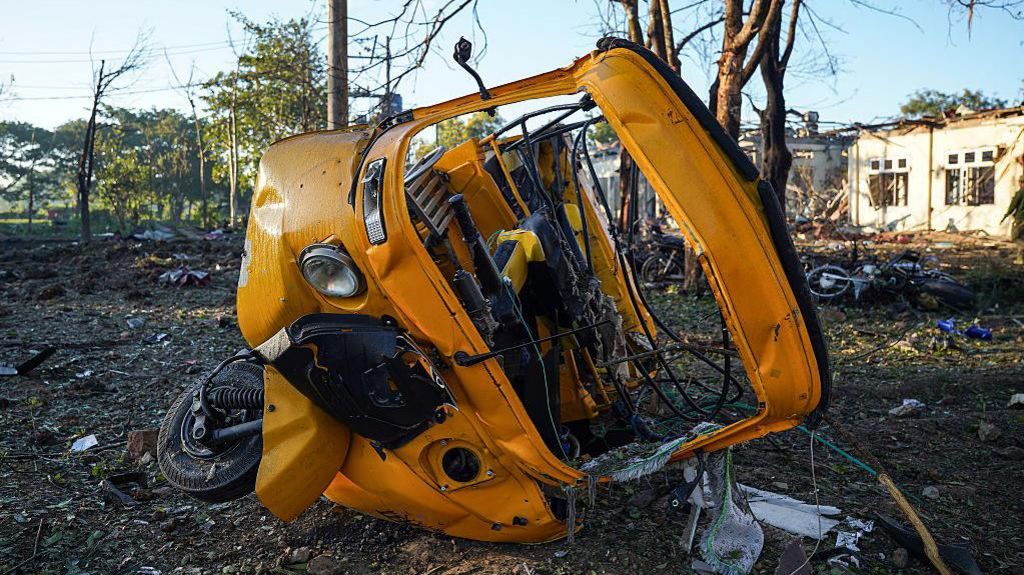
    According to verified reports from rescue workers and independent media outlets, the aerial bombardment killed 34 individuals—17 women and 17 men—while injuring approximately 80 others. Wai Hun Aung, a senior rescue services official in Rakhine, confirmed that a jet fighter deployed two bombs at 9:13 p.m., with one striking the hospital’s recovery ward and another landing adjacent to the main building. The attack reduced most of the medical facility to rubble and damaged nearby vehicles.

    This hospital had served as a vital healthcare lifeline for local communities after most medical facilities in Rakhine shuttered due to prolonged conflict. Doctors had recently regrouped in Mrauk-U to restore essential medical services when the strike occurred.

    The military junta that seized power in Myanmar’s 2021 coup has remained silent regarding the attack. Meanwhile, the shadow National Unity Government—formed by lawmakers barred from office—has strongly condemned the assault and called for international intervention to pressure the military regime.

    The Arakan Army, which captured Mrauk-U in February 2024, represents the armed wing of the Rakhine ethnic minority seeking autonomy from Myanmar’s central government. Their November 2023 offensive has secured 14 of Rakhine’s 17 townships, including a strategically significant regional army headquarters.

    This incident occurs against the backdrop of planned December 28 elections, which opposition groups decry as an attempt to legitimize military rule. The junta has intensified airstrikes against pro-democracy forces ahead of the polls, deepening Myanmar’s political crisis that began with the 2021 power grab.

  • Thousands ready to evacuate as flooding hits Pacific Northwest

    Thousands ready to evacuate as flooding hits Pacific Northwest

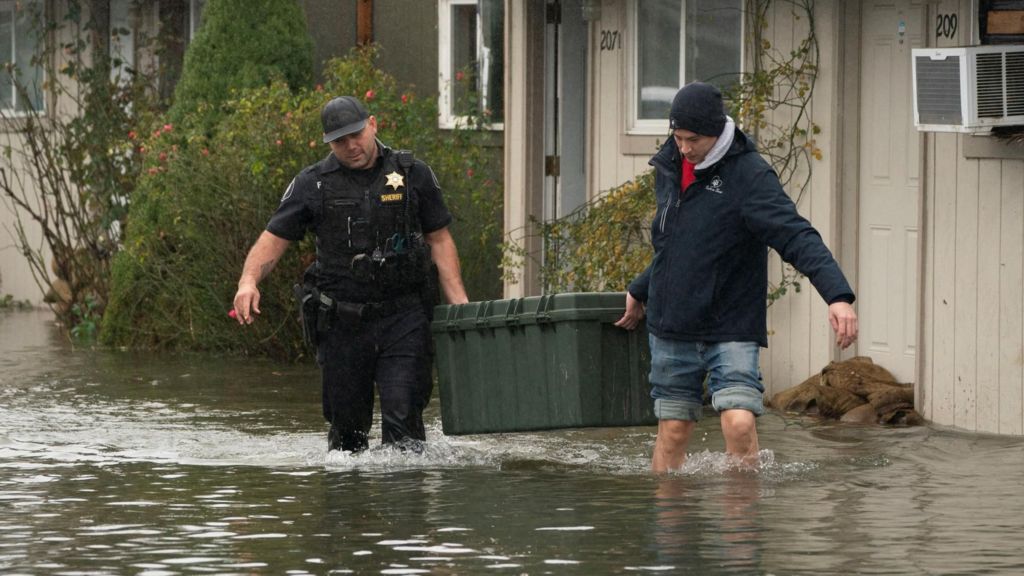
    The Pacific Northwest faces unprecedented flooding crises as an atmospheric river system unleashes torrential rains across Washington, Oregon, and British Columbia. Meteorological experts warn of potentially record-breaking flood levels along the Skagit and Snohomish river basins, prompting large-scale evacuations on both sides of the US-Canada border.

    Washington Governor Bob Ferguson declared a statewide emergency Wednesday, estimating approximately 100,000 residents might require evacuation as rising waters threaten communities. Skagit County, a vital agricultural region north of Seattle, issued immediate evacuation mandates for floodplain residents. Robert Ezelle, Director of Washington’s Emergency Management Division, confirmed evacuation operations targeting 75,000 people from vulnerable low-lying areas.

    Transportation networks have suffered severe disruptions, with major highways to Vancouver closed due to flooding, debris flows, and elevated avalanche risks. The emergency declaration highlighted concerns about supply chain interruptions and transportation system impacts throughout the affected regions.

    In British Columbia, evacuation orders encompass Tulameen, Eastgate, and several additional communities. Abbotsford authorities directed emergency evacuations for 371 properties late Wednesday as waters continued rising.

    The atmospheric river phenomenon—where evaporated moisture forms skyborne currents resembling terrestrial rivers—has dumped exceptional rainfall across the bi-national region. While the most intense precipitation should diminish by Thursday afternoon, hydrological experts note that water will continue feeding into river systems for days.

    Meteorological models predict another storm system approaching Sunday, compounding an already critical situation where saturated ground and swollen waterways have created potentially catastrophic flooding conditions.

  • Ambassadors promote China-Africa cooperation at lecture tour in Shanxi

    Ambassadors promote China-Africa cooperation at lecture tour in Shanxi

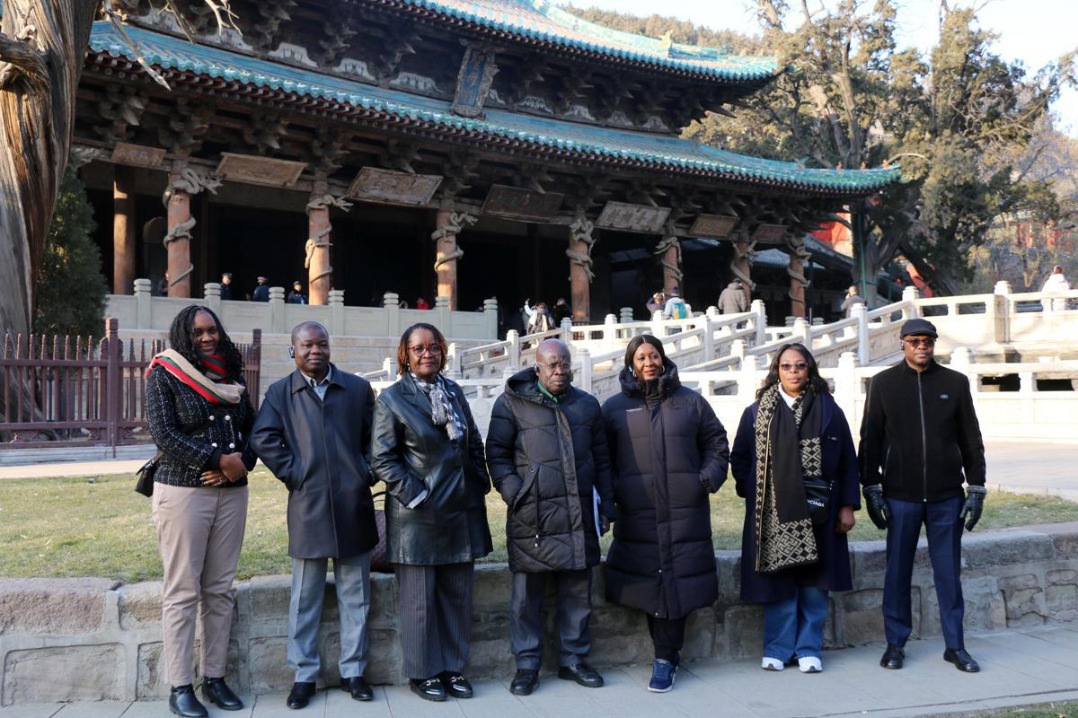
    TAIYUAN – In a significant diplomatic engagement, seven ambassadors from five African nations converged in Taiyuan for the “Lecture Tour by Ambassadors from African Countries · Shanxi 2025” event this Tuesday. This high-level forum served as a strategic platform to catalyze the high-quality development of Sino-African cooperation through concrete regional partnerships.

    The proceedings revealed substantial alignment between Africa’s developmental objectives and Shanxi’s economic transformation agenda. Namibian representative Bertha Amakali articulated her nation’s 35-year independence journey, emphasizing priorities in poverty reduction, economic self-sufficiency, and emerging energy sector development. She specifically outlined potential Chinese collaboration in energy infrastructure investment, technical capacity building, and long-term enterprise partnerships.

    Complementing these perspectives, Lu Xiangdong of the Chinese People’s Association for Friendship with Foreign Countries observed that African development priorities resonate strongly with Shanxi’s ongoing industrial modernization efforts. He emphasized that enhanced cultural and people-to-people exchanges would fundamentally strengthen bilateral relations.

    Economic data presented by Shanxi’s Department of Commerce Deputy Director Li Guorong demonstrated remarkable commercial momentum: provincial trade with Africa has surged from 5.25 billion yuan in 2020 to 11.17 billion yuan in 2024, achieving a 20.8% compound annual growth rate. The province has established commercial ties with over 50 African nations, with five countries individually exceeding 100 million yuan in trade volume.

    Burkina Faso’s Ambassador Daouda Bitie characterized Shanxi as a pivotal hub in practical China-Africa cooperation, citing particularly successful collaborations in energy development and vocational training. Zimbabwe’s Ambassador Abigail Shoniwa expressed admiration for Shanxi’s green transition and industrial diversification through innovation, noting parallel cultural richness between her nation and the Chinese province.

    The diplomatic delegation engaged in extensive field visits to Jinci Museum, Pingyao Ancient City, and several local enterprises, exploring synergistic opportunities in cultural tourism, green energy development, and technological exchange. According to Shanxi Foreign Affairs Office Director Dong Xiaolin, these exchanges form an integral component of the province’s broader internationalization strategy, which includes enhanced cultural understanding programs and exchange delegations.

    The event was jointly hosted by the Chinese People’s Association for Friendship with Foreign Countries and Shanxi’s foreign affairs authorities, representing a concerted effort to deepen Sino-African relations through provincial-level diplomacy.

  • What we know about US seizure of oil tanker off Venezuela

    What we know about US seizure of oil tanker off Venezuela

    In a dramatic display of military force, United States special operations units have intercepted and seized a massive crude oil tanker off the Venezuelan coast, escalating tensions between Washington and the government of Nicolás Maduro. The operation, captured in official footage released by US authorities, shows camouflaged soldiers fast-roping from helicopters onto the deck of the vessel identified as the Skipper.

    The Trump administration justifies the seizure as part of its campaign against international terrorism financing, claiming the tanker was involved in an ‘illicit oil shipping network supporting foreign terrorist organizations.’ According to US Attorney General Pam Bondi, the vessel had been under sanctions for years for allegedly generating revenue for Hezbollah in Lebanon and Iran’s Islamic Revolutionary Guard Corps-Quds Force.

    Venezuelan Foreign Minister Yvan Gil has condemned the action as ‘international piracy,’ accusing President Trump of attempting to plunder Venezuela’s energy resources. The South American nation possesses the world’s largest known crude oil reserves, though extraction is complicated by the oil’s heavy viscosity and aging infrastructure exacerbated by US sanctions.

    The operation involved coordinated efforts between multiple US agencies including the Coast Guard, FBI, Homeland Security Investigations, and Department of Defense. A specialized Maritime Security and Response Team—trained in counterterrorism and high-risk enforcement procedures—conducted the boarding from the USS Gerald Ford, the world’s largest warship currently deployed in the Caribbean.

    Maritime intelligence firms indicate the Skipper had been spoofing its location for an extended period while operating as part of the ‘dark fleet’ used to transport sanctioned commodities. The vessel, measuring 333 meters with a capacity of approximately 1.8 million barrels, had recently transferred about 200,000 barrels to another ship before its interception. At current global crude prices around $61 per barrel, the remaining oil could be valued at over $95 million.

    This seizure represents the latest escalation in Washington’s pressure campaign against Maduro’s government, which has included designating Venezuelan criminal groups as Foreign Terrorist Organizations and deploying 15,000 troops to the region under the guise of combating drug trafficking. The administration claims it is engaged in a ‘non-international armed conflict’ with narco-terrorists, though legal experts question the legitimacy of military strikes that have killed more than 80 people in international waters since September.

  • US and Japan hold joint flight drills as China ups military activity near Japan

    US and Japan hold joint flight drills as China ups military activity near Japan

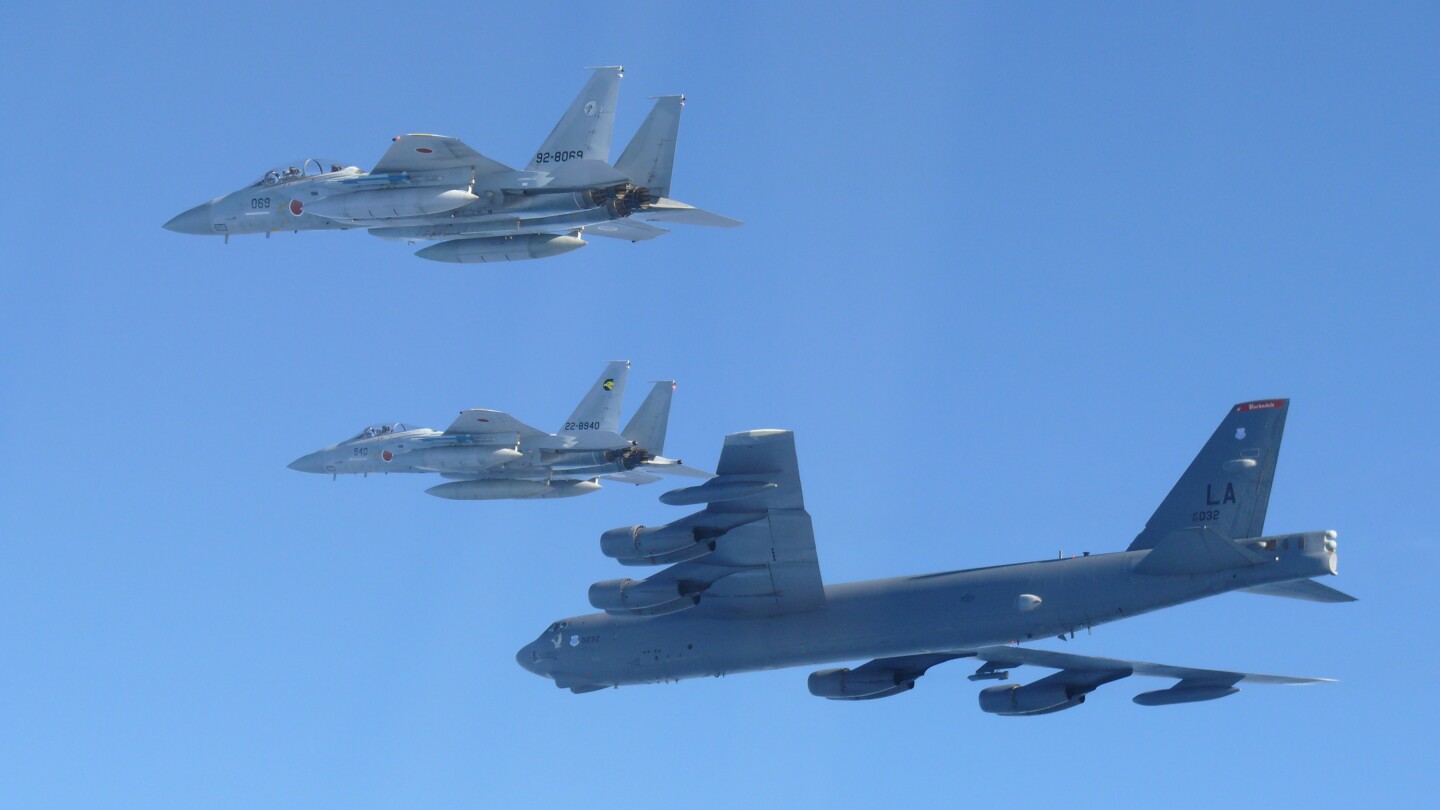
    In a significant display of military cooperation, United States strategic bombers and Japanese fighter jets conducted joint aerial exercises near Japan’s western airspace on Wednesday. The drills involved two U.S. B-52 strategic bombers alongside three Japanese F-35 stealth fighters and three F-15 jets, operating above waters between Japan and South Korea.

    The exercises occurred amidst escalating regional tensions, coming just one day after Chinese and Russian strategic bombers conducted coordinated flights around western Japan. While no airspace violations occurred during these flights, the incident prompted Tokyo to scramble fighter jets in response.

    Japanese defense officials characterized the joint drills as demonstrating the “strong resolve” between allied forces to “prevent unilateral attempts to change the status quo by force.” The Joint Staff statement emphasized that Japan’s security environment is “becoming even severer,” though they denied the exercises were a direct response to any specific incident.

    Tensions further intensified over the weekend when Japanese authorities reported that Chinese military aircraft had locked radar on Japanese jets—an action considered potential preparation for weapons deployment. Tokyo has formally protested to Beijing, demanding explanations and preventive measures, while China denied the allegations and instead accused Japanese aircraft of interfering with Chinese exercises.

    The situation prompted a high-level telephone discussion between Japanese Defense Minister Shinjiro Koizumi and U.S. counterpart Pete Hegseth early Friday. Both ministers expressed “serious concern” over actions increasing regional tensions, specifically noting that “China’s actions are not conducive to regional peace and stability.”

    Koizumi reaffirmed Japan’s commitment to maintaining robust surveillance and monitoring activities in surrounding airspace and waters. Washington concurrently emphasized its “unwavering” alliance with Japan amid the deteriorating security situation in the Indo-Pacific region.

    The geopolitical friction follows recent remarks by Japanese Prime Minister Sanae Takaichi suggesting possible military involvement if China were to take action against Taiwan—a self-governing island that Beijing claims as its territory.

  • More than 30 dead after Myanmar military air strike hits hospital

    More than 30 dead after Myanmar military air strike hits hospital

    In a severe escalation of violence, Myanmar’s military junta conducted an aerial bombardment that struck a hospital in Mrauk-U town, Rakhine State, on Wednesday night, resulting in a significant civilian death toll. Local sources confirm at least 34 fatalities, with dozens more injured, many of whom were patients receiving medical care.

    The targeted facility lies within a region controlled by the Arakan Army, a prominent ethnic armed organization engaged in prolonged conflict against the military regime. The attack, occurring at approximately 21:00 local time, inflicted extensive damage, photos from the scene reveal collapsed structures, shattered medical equipment, and debris scattered across the compound.

    This incident underscores the junta’s intensified reliance on aerial assaults and unconventional tactics, including bomb-dropping paragliders, to reclaim territories lost to ethnic militias. Analysts attribute recent military gains to enhanced technological and equipment support from international allies such as China and Russia.

    The regime has refrained from commenting on the hospital strike, which coincides with preparations for the nation’s first general election since the 2021 coup. Pro-military channels on Telegram deny deliberately targeting civilians, asserting operations aim at militant strongholds.

    However, Khaing Thukha, spokesperson for the Arakan Army, condemned the act as a ‘vicious attack by the terrorist military,’ emphasizing the victims’ non-combatant status and demanding accountability.

    Amid the turmoil, the scheduled December 28 election faces widespread skepticism. United Nations human rights expert Tom Andrews labels it a ‘sham election,’ intended to fabricate legitimacy for the junta. Reports indicate arrests of political dissidents and anti-election activists, while ethnic armies and opposition groups boycott the polls, further destabilizing the prospect of peaceful resolution.