分类: technology

  • Dubai travellers to soon skip airport queues, check in at locations across city

    Dubai travellers to soon skip airport queues, check in at locations across city

    In a landmark move to cement its status as a global future-ready metropolis, Dubai has unveiled three groundbreaking initiatives under its ambitious 10X program. Approved by Sheikh Hamdan bin Mohammed bin Rashid Al Maktoum, Crown Prince of Dubai, these projects represent the third phase of the initiative that seeks to position Dubai a decade ahead of other world cities through innovative governance models.

    The three selected ventures—the City Terminal Project, the 20 Minute City, and the Disease Early Detection System—are set to transform urban mobility, healthcare, and travel experiences through cross-governmental collaboration and technological innovation.

    The City Terminal Project, developed through partnership between Dubai Aviation Engineering Projects and multiple entities including Dubai Police, Emirates, and e& Group, will decentralize airport procedures. Travelers will be able to complete check-in operations at various city locations before being transported directly to airport departure gates via secured transportation, effectively eliminating conventional airport queues and reducing terminal congestion.

    Simultaneously, the 20 Minute City initiative led by Dubai’s Roads and Transport Authority aims to create hyper-accessible urban environments where residents can reach 80% of essential services within 20 minutes through walking, cycling, or sustainable transit. The pilot project in Al Barsha 2 will feature enhanced road safety measures, expanded shaded green areas, and flexible mobility corridors.

    In healthcare, the Disease Early Detection System spearheaded by the Dubai Health Authority introduces predictive healthcare capabilities focusing initially on diabetes management. This proactive approach aims to improve treatment outcomes while reducing the condition’s estimated annual cost of Dh2.78 billion to Dubai’s economy. Multiple medical institutions including Canadian Specialist Hospital and King’s College Hospital London will participate in the pilot phase.

    These projects emerged from a competitive selection process that evaluated 79 proposals developed by over 120 employees across 33 government entities. Selection criteria emphasized implementation feasibility, cross-government integration, and potential quality-of-life improvements for residents.

    Sheikh Hamdan emphasized that the 10X Initiative has fundamentally transformed Dubai’s governmental operations, fostering a culture of innovation and collaboration that transcends traditional bureaucratic boundaries. ‘Accelerating government performance is central to our future vision,’ he stated, noting Dubai’s commitment to ‘pioneer bold, high-impact projects that redefine excellence in public service.’

    Since its 2017 launch by Sheikh Mohammed bin Rashid Al Maktoum, the Dubai 10X Initiative has consistently driven innovation in governance, reinforcing Dubai’s leadership in future-ready urban development and technological adoption.

  • China’s 5G base stations top 4.83 million by end of 2025

    China’s 5G base stations top 4.83 million by end of 2025

    China’s telecommunications sector demonstrated remarkable growth throughout 2025, exceeding all infrastructure development targets established in its 14th Five-Year Plan (2021-2025). Official data released by the Ministry of Industry and Information Technology reveals the country achieved unprecedented milestones in next-generation network deployment and technological innovation.

    By December 2025, China had established 4.838 million operational 5G base stations nationwide, translating to an impressive density of 34.4 stations per 10,000 people. This infrastructure deployment surpassed national planning objectives by 8.4 units per capita, representing one of the most rapid large-scale 5G implementations globally.

    The telecommunications industry reported sustained financial growth with total business volume increasing 9.1% year-on-year. Revenue reached 1.75 trillion yuan (approximately $250.8 billion), marking a 0.7% increase despite global economic headwinds. Emerging technologies including cloud computing, big data, IoT applications, and data center services contributed significantly, accounting for 25.7% of total sector revenue.

    China’s technological leadership became particularly evident in patent development, with Chinese entities claiming 42% of all global 5G standard-essential patent declarations. Concurrently, researchers achieved substantial breakthroughs in next-generation connectivity, successfully verifying core 6G system architecture and related technologies.

    Infrastructure accomplishments extended to comprehensive network coverage with gigabit optical network access available in every Chinese county. The nation achieved complete 5G coverage across all townships and over 95% of administrative villages. Advanced 5G-A (5G-Advanced) services expanded to more than 330 cities, while the national optical fiber network reached 74.99 million kilometers in total length.

    User adoption metrics showed robust growth with mobile subscriptions reaching 1.827 billion, including 1.204 billion 5G subscribers. Mobile IoT terminals experienced particularly strong expansion, growing 8.7% to 2.888 billion users, with substantial increases in vehicular internet and public service applications.

    The integration of digital technologies with traditional industries reached new heights, with 5G and gigabit networks now implemented across 91 major economic categories. The industrial internet ecosystem achieved comprehensive coverage of all 41 industrial classifications, demonstrating deep digital transformation throughout China’s economic landscape.

  • Pay with your face: UAE introduces region’s first biometric payment method

    Pay with your face: UAE introduces region’s first biometric payment method

    The United Arab Emirates has launched the Middle East’s inaugural biometric payment system, marking a significant advancement in financial technology infrastructure. The Central Bank of the UAE (CBUAE) is currently conducting a proof-of-concept pilot at the Dubai Land Department, enabling consumers to complete transactions through facial recognition or palm scanning technology.

    This groundbreaking initiative operates within the CBUAE’s Sandbox Programme and Innovation Hub at the Emirates Institute of Finance, developed in partnership with Network International and powered by PopID’s biometric authentication technology. The system eliminates traditional payment instruments, allowing users to authenticate purchases without physical cards or mobile devices.

    Central Bank officials emphasize that the pilot program remains in a controlled testing environment where security protocols, operational efficiency, and system readiness undergo rigorous evaluation. No definitive timeline has been established for commercial deployment beyond the experimental phase.

    Saif Humaid Al Dhaheri, Assistant Governor for Banking Operations and Support Services at CBUAE, highlighted the dual benefits of enhanced transaction security and improved customer experience. Meanwhile, Network International CEO Murat Cagri Suzer projected that biometric authentication will assume an increasingly prominent role in digital commerce as financial institutions seek alternatives to conventional payment methodologies.

    The development aligns with broader regional trends toward digital payment adoption, with recent reports indicating declining cash usage across UAE markets. This innovation represents the latest advancement in the country’s ongoing digital transformation initiatives within the financial sector.

  • Collaboration helps tap into blue wonders

    Collaboration helps tap into blue wonders

    In a groundbreaking fusion of technology and ecology, Hong Kong-based startup Archireef is revolutionizing coral restoration through innovative 3D-printed solutions. The company’s biodegradable terracotta reef tiles, designed to mimic natural brain coral structures, are demonstrating remarkable success in rebuilding degraded marine ecosystems across two continents.

    Founded in 2020 by Vriko Yu and University of Hong Kong professor David Baker, Archireef emerged from frustration with conventional restoration methods using plastic, metal, and concrete. Their patented terracotta tiles provide an optimal substrate for coral attachment, boasting a 95% survival rate for transplanted corals in Hong Kong waters where traditional approaches had failed.

    The technology’s breakthrough comes at a critical juncture. Hong Kong’s northeastern waters have witnessed an 80% decline in coral coverage since the 1980s due to urban development and pollution, despite hosting 84 hard coral species—more than the entire Caribbean Sea.

    Archireef’s expansion into the Middle East marks a significant milestone in global marine conservation. In 2022, the company partnered with Abu Dhabi Developmental Holding Company to address severe coral bleaching that devastated 73% of the emirate’s reefs in 2017. The results have been extraordinary: within six months of deployment, fish abundance increased sixfold, and biodiversity levels improved fivefold within a year.

    The collaboration represents a powerful synergy between Hong Kong’s research capabilities and Abu Dhabi’s scaling ambitions. Through Abu Dhabi’s Hub71 accelerator, Archireef established a regional eco-engineering facility at KEZAD Group, producing customized tiles for local conditions while providing comprehensive marine restoration services from consulting to monitoring.

    This transnational partnership exemplifies how scientific innovation, entrepreneurial vision, and supportive policy can converge to address environmental challenges. As climate technology becomes increasingly vital, the Hong Kong-Abu Dhabi model demonstrates how specialized expertise from Asian financial hubs can combine with Middle Eastern investment power to create tangible ecological impact.

    With the recent launch of the Abu Dhabi Coral Garden initiative aiming to deploy 40,000 artificial reef modules, Archireef’s technology is positioned to play a crucial role in engineering more resilient coastlines worldwide. The success proves that where coral takes root, international collaboration grows alongside it.

  • Chengdu firm sets up large computing model in space

    Chengdu firm sets up large computing model in space

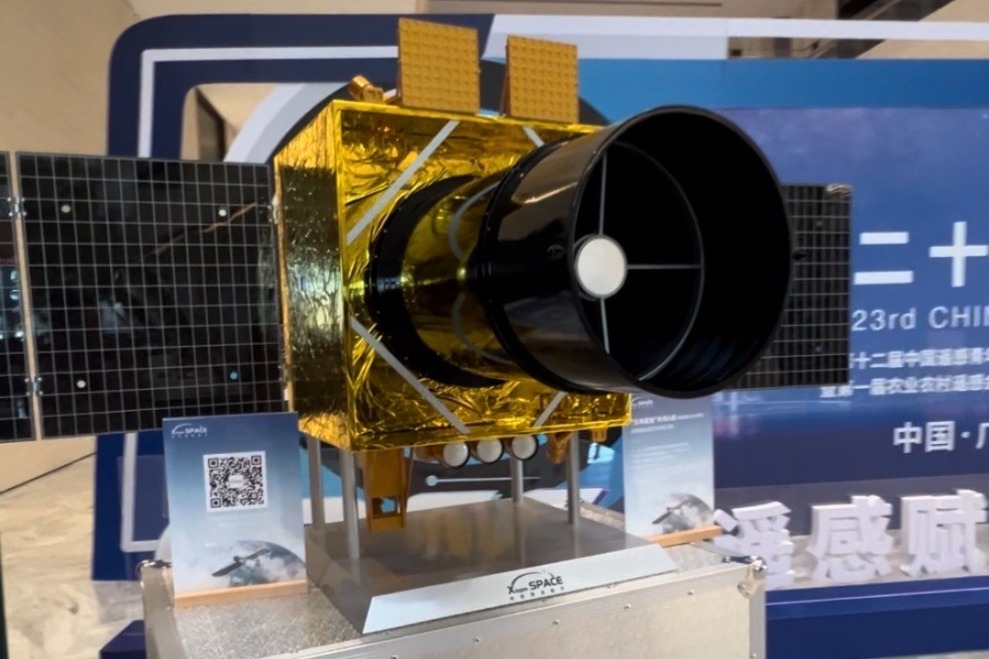
    In a groundbreaking advancement for space technology and artificial intelligence, Chengdu-based GuoXing Aerospace Technology has successfully deployed a general-purpose AI model aboard orbiting satellites, creating the world’s first operational space-based computing center. The company announced this technological milestone at a recent seminar, revealing they have uplinked Alibaba’s sophisticated Qwen3 large language model to their inaugural satellite cluster launched in May 2025.

    The achievement represents a significant leap in space computing capabilities, with the system successfully completing multiple end-to-end reasoning tasks entirely in orbit. During trials, questions transmitted from Earth to the satellite were processed on board and results returned to ground stations—all within an impressive two-minute timeframe.

    This development emerges as global demand for computing power reaches unprecedented levels, driven largely by artificial intelligence applications. The space-based computing race has intensified with recent developments, including SpaceX’s November launch of the Starcloud-1 satellite equipped with Nvidia GPUs.

    Wang Yabo, Executive Vice-President of the Sichuan-based startup, outlined ambitious plans to expand this initial success into a comprehensive network of 2,800 specialized computing satellites by 2035. The proposed constellation will include 2,400 inference satellites and 400 training satellites deployed across multiple orbital configurations at altitudes ranging from 500 to 1,000 kilometers.

    The system is designed to utilize advanced laser inter-satellite links for high-speed data transfer, with projected capabilities of delivering 100,000 petaflops of inference compute and 1 million petaflops of training compute worldwide. The company plans to deploy additional satellite clusters this year, targeting completion of a 1,000-satellite network by 2030.

  • Axis Communications positions AI‑driven security as digital infrastructure for 2026

    Axis Communications positions AI‑driven security as digital infrastructure for 2026

    Axis Communications is embarking on a transformative journey in 2026, fundamentally reimagining its position within the global security sector. The company is accelerating its transition from traditional hardware manufacturing toward delivering fully integrated, intelligence-driven security ecosystems that function as critical digital infrastructure.

    This strategic evolution builds upon an extensive portfolio encompassing network video, audio surveillance, advanced analytics, and access control technologies—all engineered to operate in seamless unison. The core objective is to empower organizations to shift from reactive monitoring frameworks to proactive security operations, resulting in significantly improved response times, substantially enhanced detection accuracy, and systems that actively contribute to operational resilience.

    Loubna Imenchal, Managing Director for Middle East, Türkiye, Central Asia and Africa at Axis Communications, emphasizes that global surveillance technology demand is experiencing sustained structural growth. This trend is fueled by long-term investments in smart city initiatives, national infrastructure modernization, and comprehensive digital transformation programs. While the video surveillance market continues to expand at nearly 6% annually through 2030, growth is increasingly driven by data value extraction rather than camera hardware alone.

    Contemporary businesses are reevaluating security technology’s potential amid pressures to optimize resources. Artificial intelligence, machine learning, and edge analytics are transforming conventional cameras into intelligent sensors and video footage into strategic business assets. This technological convergence is repositioning security from a cost center to a measurable value generator.

    The Middle East, particularly the UAE and Saudi Arabia, represents one of the world’s most dynamic growth regions due to massive mega-projects and digital infrastructure development. Africa simultaneously emerges as a promising long-term opportunity driven by rapid urbanization and public-sector digitization initiatives.

    Artificial intelligence serves as the foundational force behind this transformation, fundamentally reshaping physical security through advanced detection, classification, and contextual interpretation capabilities. Axis emphasizes its architectural approach to intelligence integration rather than superficial AI implementation, ensuring reliability and real-world performance.

    The future trajectory points toward predictive security systems powered by the convergence of AI, edge computing, and cloud-based architectures. Organizations that embrace security as integrated digital infrastructure rather than discrete hardware components will gain significant competitive advantages.

    Axis Communications plans to strengthen its regional leadership, expand intelligent solution adoption, and deepen strategic partnerships throughout 2026, aiming to actively shape—rather than follow—the future of intelligent security systems.

  • Dubai announces plan to build world’s first villa using only robotic construction

    Dubai announces plan to build world’s first villa using only robotic construction

    Dubai Municipality has unveiled a groundbreaking initiative to construct the world’s first residential villa using exclusively robotic construction systems, marking a revolutionary step in building technology. This ambitious project forms part of a comprehensive strategy to transform construction methodologies through advanced automation and digital innovation.

    The pioneering venture will be executed through an international consortium comprising over 25 technology firms, academic institutions, and local contractors, with specialized construction robotics companies Zacua Ventures and Würth Group leading the technical implementation. The announcement coincided with the activation of the Construction Innovation and Research Centre (04 ConTech Valley) in partnership with Expo City Dubai, established through a formal agreement to advance research in construction materials, systems, and future urban infrastructure technologies.

    Concurrently, Dubai Municipality launched the Global ConTech Report in collaboration with Zacua Ventures, revealing significant projections for the construction technology sector. The report forecasts global investments exceeding $30 billion by 2033, with an annual growth rate of 17.5%, while identifying labor shortages as a primary driver accelerating adoption of robotic solutions and additive manufacturing technologies.

    Further amplifying this technological transformation, authorities introduced the 70–70 Strategy for 2030 in partnership with Sobha Realty. This dual-focus initiative aims to transition 70% of construction to off-site manufacturing while achieving minimum 70% factory automation within six years, targeting enhanced quality control, operational efficiency, and environmental sustainability.

    The municipality also accredited China State Construction Engineering Corporation for its modular construction system, establishing new benchmarks for smart construction standards. Additionally, AMANA will implement modular systems to develop youth-oriented shared workspaces within public facilities, creating flexible integrated environments for emerging professionals.

  • Dubai’s self-driving robotaxis: Why milliseconds can make or break safety on road

    Dubai’s self-driving robotaxis: Why milliseconds can make or break safety on road

    Dubai’s ambitious transition to autonomous transportation is entering a critical phase as robotaxis begin operating on city streets, with full-scale deployment anticipated by 2026. While public attention has primarily focused on the vehicles themselves, industry experts reveal that the true determinant of safety lies in the invisible digital infrastructure supporting these autonomous systems.

    The emerging consensus among technology leaders indicates that latency—the minimal delay in data processing—represents the fundamental safety challenge for self-driving vehicles in dense urban environments. Autonomous taxis depend on continuous streams of sensor data to make instantaneous decisions, from pedestrian detection to responding to sudden traffic changes. In dynamic settings like Dubai’s roadways, micro-delays in processing can significantly impact vehicle responsiveness.

    Kamel Al Tawil, Managing Director for MENA at digital infrastructure firm Equinix, emphasizes that “latency directly determines how quickly an autonomous vehicle can interpret its surroundings and respond to hazards. In real-world city traffic, milliseconds matter.”

    This technological imperative aligns with Dubai’s Autonomous Transportation Strategy, which targets converting 25% of all trips to autonomous modes by 2030. The comprehensive plan envisions deploying approximately 4,000 driverless taxis across the emirate, aiming to reduce traffic accidents, alleviate congestion, and save hundreds of millions of travel hours annually.

    Current progress demonstrates tangible advancement: Dubai’s Roads and Transport Authority (RTA) has designated 65 locations across two operational zones for initial robotaxi services. In 2025, Baidu’s Apollo Go received Dubai’s inaugural permit for fully autonomous trials without safety drivers, while RTA’s partnership with WeRide enables residents in Umm Suqeim and Jumeirah to book autonomous rides through Uber’s platform—currently with specialist drivers onboard, transitioning to fully driverless operations imminently.

    Regulatory frameworks established under Law No. 9 of 2023 mandate stringent requirements for autonomous vehicle operators, including local storage and processing of operational data encompassing vehicle movements, maintenance records, and accident information. These regulations necessitate integrated electronic systems with real-time safety controls, enabling immediate intervention during malfunctions.

    The geographical proximity of data processing infrastructure has emerged as a critical safety consideration rather than merely a technical preference. Al-Tawil explains that “when data is processed far from where it’s generated, even minor network delays can degrade real-time perception. Autonomous systems consequently rely on edge and on-vehicle processing, where critical data is analysed as close to the vehicle as possible.”

    Local data processing not only ensures compliance with UAE safety and security standards but also facilitates secure software updates and enables real-time vehicle-to-everything (V2X) communication. Equinix’s UAE data centers are specifically engineered to manage high-density computing workloads, processing vast sensor data volumes in real time to support safety-critical applications.

    As Dubai accelerates its autonomous mobility initiatives, the focus is expanding beyond visible technological marvels to encompass the underlying digital ecosystems that enable their safe operation. The success of this transportation revolution will ultimately depend on how rapidly and reliably these vehicles can process information when confronting the unpredictability of urban environments—decisions that must occur within milliseconds, and crucially, within close geographical proximity.

  • ‘Game changer’: New way Aussies can shop using AI

    ‘Game changer’: New way Aussies can shop using AI

    Australian consumers are poised to experience a transformative shift in digital shopping as Mastercard pioneers the world’s first secure ‘agentic transaction’ system utilizing artificial intelligence. This groundbreaking development addresses longstanding security concerns that have hindered AI-assisted commerce.

    Recent data reveals nearly half (48%) of Australians already employ AI tools for online purchases, with 78% anticipating these technologies will become mainstream. However, traditional security models have struggled to verify whether transactions were genuinely initiated by the account holder when conducted through AI assistants.

    Mastercard’s innovation, developed in collaboration with Commonwealth Bank and Westpac, successfully demonstrated its capability through two practical applications: purchasing movie tickets at Events Cinemas and booking a Thredbo vacation. The system utilizes locally developed AI technology named ‘Matilda’ by Australian firm Maincode, showcasing domestic innovation in global payment solutions.

    The core breakthrough lies in embedded security features that replace the current practice of inputting credit card details into chat interfaces. Instead, the system incorporates biometric verification methods like facial recognition alongside detailed transaction visibility, creating robust fraud detection capabilities and streamlined dispute resolution processes.

    Surin Fernando, Mastercard’s Australasian Senior Vice President, emphasizes this represents a fundamental evolution in consumer behavior: ‘Australians will discover products through increasingly personalized methods while gaining the ability to execute transactions immediately or schedule future purchases based on shopping intent.’

    Industry leaders highlight the significance of this development. Paul Monnington, Mastercard’s Australasia lead, describes it as ‘one of the most significant shifts in consumer behavior in decades.’ Banking executives note the technology will make consumer spending ‘quicker and easier’ while maintaining stringent security standards that benefit both merchants and customers.

    This advancement effectively bridges the experiential gap between physical retail’s seamless tap-and-pay convenience and the traditionally cumbersome online checkout process, potentially setting new global standards for AI-commerce security.

  • K2, WeRide sign agreement to operate autonomous buses in Abu Dhabi

    K2, WeRide sign agreement to operate autonomous buses in Abu Dhabi

    In a significant advancement for autonomous transportation, UAE-based mobility solutions provider K2 and global autonomous driving technology firm WeRide have formalized a strategic partnership to deploy and operate self-driving buses across Abu Dhabi. The landmark agreement was signed during the Unmanned Systems Exhibition and Conference (UMEX) 2026 with official endorsement from both the Smart and Autonomous Systems Council (SASC) and the Integrated Transport Centre (ITC).

    This collaboration represents a concrete step toward realizing Abu Dhabi’s comprehensive smart mobility strategy, facilitating the practical implementation of autonomous public transportation systems. The initiative aims to solidify the emirate’s standing as an international center for intelligent, sustainable transit solutions.

    K2 brings substantial regional operational expertise to the partnership, with subsidiaries having previously conducted extensive testing of robotic taxis and last-mile delivery solutions across tens of thousands of kilometers. WeRide contributes its advanced Level 4 autonomous driving technology and global deployment experience to the venture.

    Waleed Alblooshi, Vice President of Strategy at K2, emphasized the synergistic nature of the partnership: “K2 leverages its local expertise, fleet management capabilities, and experience in deploying real-world mobility solutions, while WeRide contributes its global AV expertise and extensive deployment experience.”

    Ryan Zhan, Regional General Manager for Middle East and Africa at WeRide, characterized the agreement as marking “the next phase of our growth” in the region. “By combining our proven L4 autonomous driving technology with K2’s deep local expertise,” Zhan noted, “we are accelerating safer, smarter, and more sustainable autonomous public transport across the UAE and the wider Middle East.”

    The autonomous bus initiative aligns with broader regional transportation modernization efforts, including Ras Al Khaimah’s recent consolidation of autonomous vehicle operations under a single transport authority and previous successful trials of fully driverless ride-hailing services in the Abu Dhabi metropolitan area.