分类: sports

  • Spain deliver World Cup masterclass against France to reach final

    Spain deliver World Cup masterclass against France to reach final

    In a dominant World Cup semi-final showdown at Arlington, Texas’ AT&T Stadium on Tuesday, Spain delivered a clinical masterclass to end France’s bid for a third world title, securing a 2-0 victory that advances the European champions to the tournament final, where they will face the winner of Wednesday’s England-Argentina clash.

    Didier Deschamps’ French side entered the match as overwhelming favorites, riding a wave of electrifying attacking performances through the knockout stage. But they were outmatched by a sharp, disciplined Spanish side that held firm against their star-studded forward line and capitalized on key opportunities to seal the win.

    The turning point came in the first half, when Salvadoran referee Ivan Barton awarded Spain a penalty after France left-back Lucas Digne committed a reckless challenge on Spanish teenage winger Lamine Yamal. Mikel Oyarzabal, in red-hot club and international form, converted the spot kick emphatically past France goalkeeper Mike Maignan, notching his fifth goal of the tournament and putting France behind for the first time at this year’s World Cup. The goal marked the Real Sociedad forward’s 18th in his last 20 appearances for Spain, underlining his status as Spain’s breakout attacking threat.

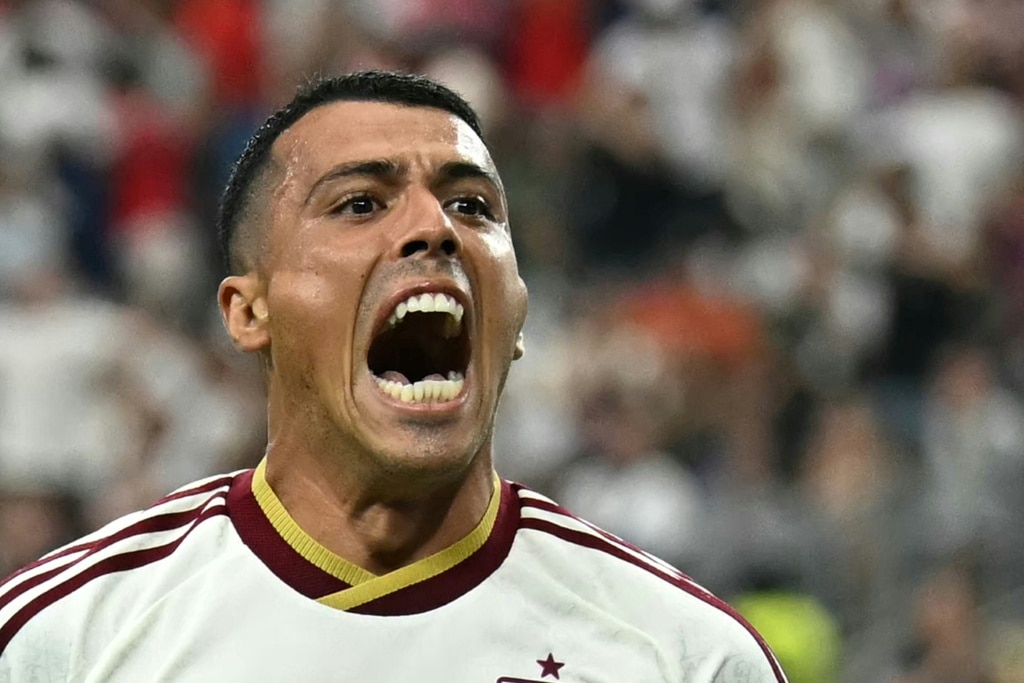
    Deschamps made an early attacking substitution in the 57th minute, bringing on Desire Doue to reinvigorate his forward line which featured Kylian Mbappe, Ballon d’Or winner Ousmane Dembele and Michael Olise. Just 60 seconds later, however, Spain extended their lead through a well-crafted team goal, as Dani Olmo teed up defender Pedro Porro to slot home the second goal, putting the match out of France’s reach.

    Shell-shocked by the rapid turnaround, France never managed to mount a consistent comeback, capping a deeply disappointing day for the two-time World Cup winners who reached the final in both 2018 and 2022. For Spain, the result adds yet another milestone to an already historic run: La Roja have conceded only one goal across the entire tournament, becoming the first side in men’s World Cup history to record six consecutive clean sheets at a single edition. Their unbeaten streak across all competitions now stretches to 37 matches, equaling the all-time record for a European men’s national team.

    After the match, Spanish head coach Luis de la Fuente credited his squad’s cohesive team culture for the historic run, noting that the group had stayed loyal to the playing philosophy the staff implemented nearly four years prior. “These players deserve everything,” he said. “Day after day they’ve shown their commitment, their solidarity, their generosity, their talent. They make the difficult look easy.”

    For Deschamps, the defeat brings an underwhelming end to his 14-year tenure in charge of France, with only a third-place play-off match remaining before he steps down. The 57-year-old, who won the World Cup as both a player and a coach, said his squad was “devastated” by the result, accepting responsibility for the loss while stopping short of blaming his players. He did, however, question the officiating of referee Barton, saying: “Is the referee at the level required to officiate a World Cup semi-final? I’m not saying this just because we lost today. There were quite a few situations. There were some favourable calls, too,” he added, without elaborating further.

    Attention now turns to Wednesday’s second semi-final in Atlanta, where long-time rivals England and Argentina will face off for a spot in the final. The fixture carries decades of historical weight, coming 40 years after Diego Maradona’s infamous “Hand of God” goal eliminated England from the 1986 World Cup, with tensions also shaped by the long-running sovereignty dispute over the Falkland Islands (known as the Malvinas in Argentina).

    England captain Harry Kane, who is in contention for the tournament Golden Boot alongside Lionel Messi and Mbappe, said his side would not be distracted by the off-pitch history. “From a player’s point of view it’s us against a great team, who are smart, who are tactical, who know how to buy fouls, know how to slow the game down — like many different teams you come up against throughout your whole career,” Kane told ITV.

  • Lewandowski ready to provide big lift to the Chicago Fire

    Lewandowski ready to provide big lift to the Chicago Fire

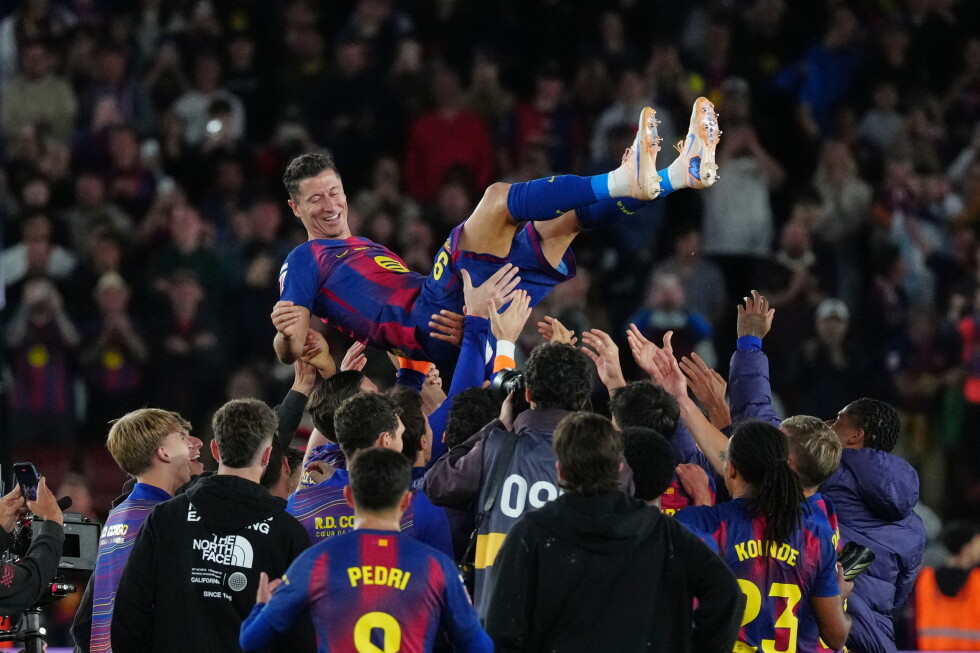
    CHICAGO – One of European soccer’s most decorated strikers, Robert Lewandowski, is ready to bring his elite goalscoring pedigree to Major League Soccer after officially signing with the Chicago Fire, bringing a jolt of star power and expectations to the Eastern Conference side. The 37-year-old Polish international put pen to paper on a two-year deal with the club, confirming he made the deliberate choice to leave Europe behind when his contract with Spanish powerhouse Barcelona expired in May. Speaking at his introductory press conference Tuesday, held at the Fire’s training ground, Lewandowski shared that he could not envision continuing his playing career at another top European club after his time at Camp Nou. Moving from the elite European soccer circuit to the United States comes with its share of adjustments, but the veteran striker says he and his family are embracing the fresh start. “It’s not easy to uproot and move from Europe to the USA, but we are very excited,” Lewandowski said. “Our lives are changing, but this is a new experience we’re ready for.” Lewandowski leaves a dominant legacy at Barcelona, where he notched 119 goals across 192 appearances over four seasons. During his tenure, he helped the club claim three La Liga titles – including the 2024-25 season crown – and one Copa del Rey, Spain’s prestigious domestic knockout tournament. On the international stage, Lewandowski boasts an unmatched record for Poland: he earned a record 167 caps for his country since making his debut in 2008, where he scored on his first senior appearance against San Marino at age 20. To this day, he remains Poland’s all-time leading goalscorer with 86 international goals to his name. As a Major League Soccer Designated Player, Lewandowski fills one of the three league-approved roster spots allowed to exceed the salary cap, a designation reserved for the league’s highest-profile talent. For the Chicago Fire, the signing comes at an opportune moment: the club currently sits third in the Eastern Conference standings as MLS prepares to resume its season this week following the men’s World Cup break. Lewandowski is in line to make his debut as soon as Thursday, when the Fire host the Vancouver Whitecaps at their current home venue. Looking ahead to his tenure with the club, Lewandowski says he sees clear title potential with his new side. “This is the new step in my career, and the new step in my life,” he said. “We are already in a solid position, but we have to start working hard. I hope we will get to enjoy a lot of success together after this season.” For Fire head coach Gregg Berhalter, adding a player of Lewandowski’s caliber and resume was an obvious, transformative move for the organization. “This is a massive signing for our football club,” Berhalter said. “We’re excited to bring Robert to the club, and we’re excited to see how he can help change the culture here. We have a good team right now, and I think Robert is the piece that can help take us to the top.” The Polish striker is expected to form a new strike partnership with Hugo Cuypers, the current leading goalscorer in MLS with 13 goals on the season. While two-striker formations are less common in modern soccer, Berhalter says the club has put in extensive work to integrate the dynamic, testing combinations in and around the penalty box and game plans to stretch opposing back lines with two elite finishers. “We’ve been scoring goals lately, we’ve been really picking apart opposition back lines, and we don’t see any reason why that can’t continue with Hugo and Robert on the field together,” Berhalter added. Off the pitch, the Fire are also preparing for long-term growth: the club is scheduled to open McDonald’s Park, a new soccer-specific stadium purpose-built for the team, in 2028, setting the stage for a new era of the franchise anchored by the signing of one of the game’s biggest stars.

  • Kylian Mbappé denied a 3rd straight World Cup final and stays even with Messi in Golden Boot race

    Kylian Mbappé denied a 3rd straight World Cup final and stays even with Messi in Golden Boot race

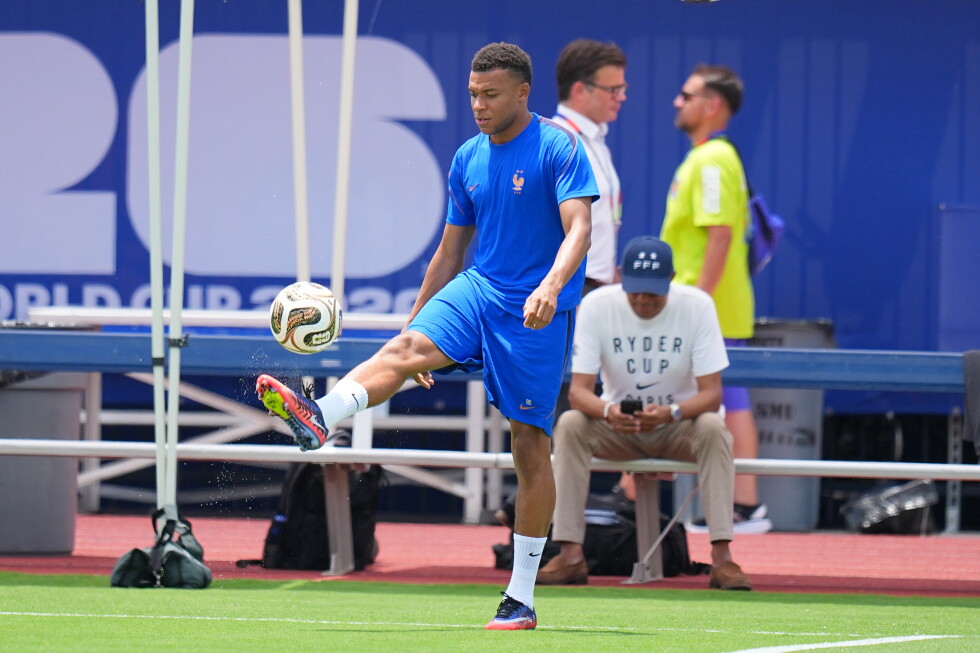
    ARLINGTON, Texas — One of men’s soccer’s brightest global superstars will miss a shot at a third straight FIFA World Cup final appearance, even as he remains level at the top of the tournament’s Golden Boot race alongside Argentine icon Lionel Messi, four years after Mbappé claimed the top scorer honor in Qatar.

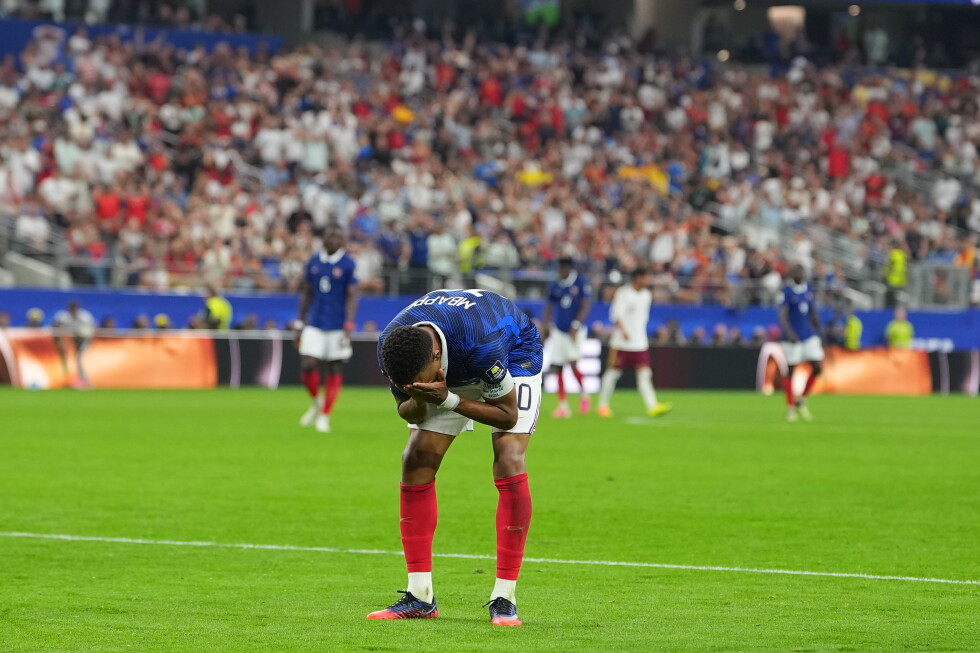
    France’s star forward Kylian Mbappé was largely neutralized by Spain’s defensive structure throughout Tuesday’s semifinal clash, failing to convert clear chances as his side fell 2-0 to La Roja at AT&T Stadium. The defeat ends France’s 2024 World Cup title defense and eliminates any chance of Mbappé lifting the trophy for a second time in his career, after his 2018 win in Russia.

    Heading into the match, Mbappé had already notched eight goals at the tournament, matching the total he scored during France’s run to the 2022 final in Qatar. That mark now leaves him tied with Messi, who will take the field Wednesday for Argentina’s second semifinal against England. The winner of that semifinal will face Spain in Sunday’s tournament final, to be held in East Rutherford, New Jersey, while France will play the loser of the Argentina-England clash in the third-place match this Saturday in Miami Gardens, Florida.

    Statistically, Mbappé had one of the quietest opening halves of his World Cup campaign, registering only 15 touches — fewer than any other starting forward on the pitch. His most visible contribution in the first half came off the scoreboard, when he argued aggressively with referee Ivan Barton over the penalty call that gave Spain their opening goal.

    The 27-year-old’s clearest scoring opportunity arrived in the 67th minute, when his shot deflected off Spanish defender Marc Cucurella and drifted just wide of the goal. By that point in the match, France was already down 2-0, leaving little time for a comeback. Mbappé picked up a yellow card in the 86th minute after charging as Spain goalkeeper Unai Simón bent to collect the ball, resulting in a hard collision that left Simón on the turf.

    Mbappé’s path to this semifinal included a quarterfinal exit from the match against Morocco in the 77th minute, shortly after he scored his eighth goal of the tournament in France’s 2-0 win. Coincidentally, the eight goals he has so far in 2024 exactly matches the tally he recorded at the 2022 Qatar World Cup, where France fell to Messi-led Argentina in a dramatic penalty shootout in the final. Mbappé’s first World Cup title came in 2018, when France defeated Croatia to claim the crown in Russia.

    As the tournament enters its final stretch, all eyes will remain on the Golden Boot race: only Messi, who is already a World Cup champion, stands between Mbappé and a second top scorer award.

  • Majestic Spain stun France to reach World Cup final

    Majestic Spain stun France to reach World Cup final

    In a stunning upset that has shaken the men’s World Cup, European champions Spain delivered a near-perfect tactical performance to defeat pre-tournament favorites France 2-0 on Tuesday, ending Les Bleus’ quest for a third World Cup title and booking their place in the final. The match, played at Arlington, Texas’ AT&T Stadium, saw Spain take a first-half lead from a Mikel Oyarzabal penalty before Pedro Porro’s clinical second-half strike sealed the win, cementing one of the most memorable semi-final results of this year’s tournament.

    Spain, the 2010 World Cup champions, will now face the winner of the other semi-final between Argentina and England in Sunday’s title decider at New Jersey’s MetLife Stadium. France entered the semi-final as the overwhelming bookmakers’ pick to lift the trophy, having put together a run of dazzling, high-scoring performances to advance through the knockout stages. Their much-vaunted attacking quartet, led by captain Kylian Mbappé and 2023 Ballon d’Or winner Ousmane Dembélé alongside Bradley Barcola and Michael Olise, was expected to tear through Spain’s defense. But the Spanish side combined controlled possession with physical intensity to completely neutralize France’s biggest attacking threat.

    Spain had beaten France in their two previous competitive meetings, and head coach Luis de la Fuente’s side made good on their pre-match promise to take the game to Les Bleus from the opening whistle. The Spanish midfield, anchored by Manchester City star Rodri and supported by Fabian Ruiz and Dani Olmo, dominated from kickoff, outnumbering France’s central midfield duo of Adrien Rabiot and Aurélien Tchouaméni and controlling the tempo of the game through crisp, quick passing that left France chasing shadows.

    French frustration began to bubble as early as the ninth minute, when Rabiot was yellow-carded for stepping on Olmo’s foot just outside the France penalty area. Despite Spain’s early territorial dominance, France carved out the first clear goalscoring chance in the 16th minute, when Mbappé broke clear into the box. Only a last-ditch block from teenage defender Pau Cubarsí stopped the French captain from equalizing.

    Spain’s persistent pressure finally paid off in the 20th minute. Barcelona winger Lamine Yamal was fouled in the box after Aston Villa defender Lucas Digne, attempting to clear a Marc Cucurella cross, accidentally caught Yamal with a stray boot as he tried to clear the ball. Referee Ivan Barton, from El Salvador, immediately pointed to the spot, and Oyarzabal coolly converted the penalty, sending French goalkeeper Mike Maignan the wrong way to put Spain ahead.

    France’s problems worsened just 11 minutes later, when star center-back William Saliba was forced to withdraw from the game with a muscle injury, replaced by Maxence Lacroix. Spain nearly doubled their lead eight minutes before halftime, when a sequence of sublime one-touch passing carved open France’s reorganized defense, only for Dayot Upamecano to block Fabian Ruiz’s goalbound effort on the line. France finished the first half with their best spell of possession, but Unai Simón, Spain’s goalkeeper, read Rabiot’s clever through ball to Mbappé perfectly and snuffed out the chance before the French captain could get a shot away.

    Spain reclaimed full control of the match within minutes of the second half kickoff, as Didier Deschamps’ failure to adjust France’s tactical setup left the Spanish midfield unchallenged in the center of the park. In the 58th minute, Spain landed the decisive blow: Porro and Olmo combined for a sensational one-two on the edge of the penalty area that put the Tottenham Hotspur defender clean through on goal. Porro clipped a calm, precise finish past Maignan to double Spain’s lead, putting the match out of France’s reach.

    Three minutes later, Spain thought they had a third, but Lamine Yamal’s finish was ruled out by a marginal offside call that spared France further embarrassment. Deschamps responded with a flurry of attacking substitutions in a bid to salvage the match, but Spain’s organized defense refused to let France break through. Mbappé, who was kept quiet for almost the entire 90 minutes, saw his best late chance blocked at the near post by Simón. In the closing minutes, Mbappé was booked for a late follow-through challenge on Simón, a moment that summed up France’s day of frustration.

    For Spain, the result extends an incredible undefeated streak against France in competitive matches, and sets up a chance for the nation to win their first World Cup title since their 2010 triumph in South Africa.

  • Villa warned over sportswashing after Visit Rwanda deal

    Villa warned over sportswashing after Visit Rwanda deal

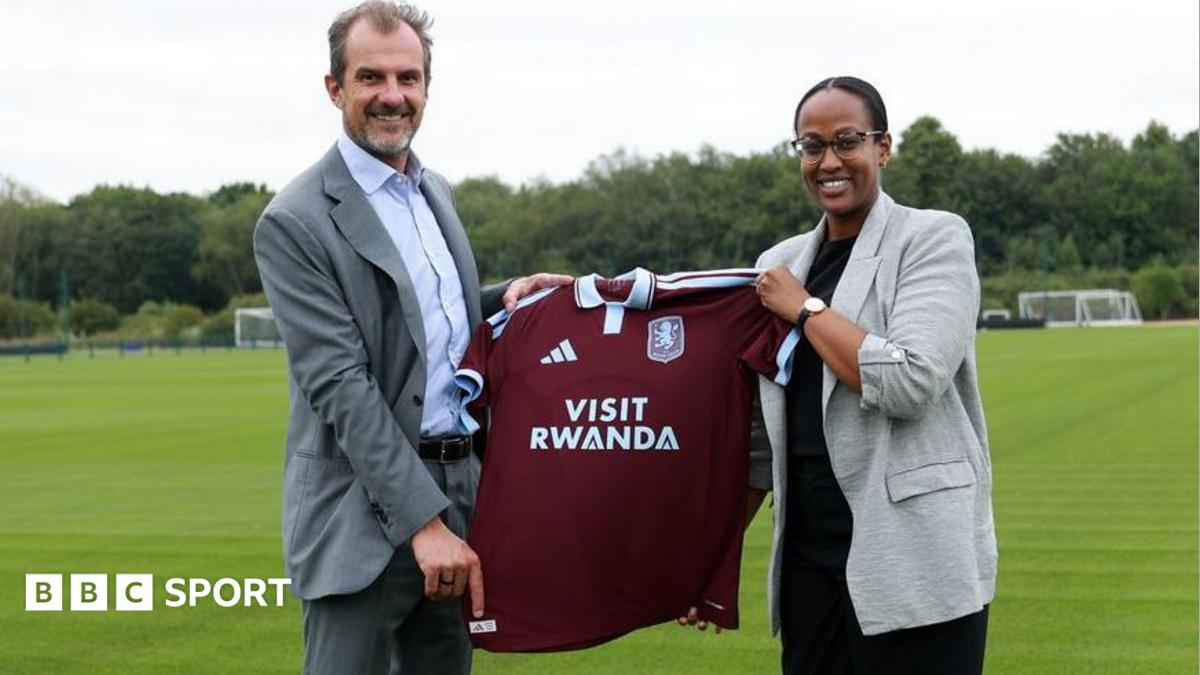
    English Premier League side Aston Villa has landed the largest sponsorship agreement in its century-long history, a multi-year £20 million-per-year deal with Rwandan tourism board Visit Rwanda that has quickly reignited global debate over alleged “sportswashing” of Rwanda’s alleged human rights abuses and military interference in the Democratic Republic of Congo (DRC).

    The deal will see Visit Rwanda replace betting brand Betano on the front of matchday kits for Aston Villa’s men’s senior team, women’s senior team, and youth academy squads. The partnership marks the first major major commercial agreement negotiated by Francesco Calvo, who took over as the club’s president of business operations last year following the departure of Chris Heck. In a formal statement announcing the partnership, Calvo framed the deal as a milestone in the club’s global growth strategy, saying it unlocks cross-sector opportunities across tourism, foreign investment, and grassroots sports development.

    “This is a very exciting partnership for Aston Villa and a symbol of the club’s continuing expansion and growth into international markets,” Calvo said. “There is a great range and depth of opportunities for collaboration, learning and innovation and we are looking forward to working with Visit Rwanda to deliver meaningful activations through tourism, investment and sporting development.”

    But the agreement has drawn immediate condemnation from human rights advocates and political leaders, who accuse Rwanda of using high-profile football partnerships to distract the global public from systemic human rights violations at home and its role in fueling ongoing deadly conflict in eastern DRC. Felix Jakens, head of campaigns for Amnesty International UK, said the pattern of Rwanda leveraging elite football sponsorships for positive public relations is nothing new, and that Aston Villa and the Premier League have a responsibility to address the allegations.

    “It’s not new that Rwanda is using sportswashing to deflect attention from its terrible human rights record,” Jakens said in a statement to BBC Sport. “Aston Villa should be well aware that Rwanda is seeking to leverage this partnership to create positive PR. The country is prolific in arbitrary detention, torture and the repression of free speech – these are abuses at home. We are seeing bloodshed right before our eyes in the Democratic Republic of Congo, and Rwanda is playing a significant role in fuelling that conflict – both through its support to the M23 rebels and the direct actions of its military in Eastern Congo. Rwanda’s sportswashing needs to be called out, and we’d like Aston Villa and the Premier League to play their part in this.”

    The criticisms come amid a long-running international dispute between DRC and Rwanda. Just last month, DRC formally filed a case against Rwanda at the International Court of Justice (ICJ), accusing the neighboring country of violating multiple international treaties by deploying military forces and arming rebel groups to carry out illegal operations on DRC territory. The allegations stretch back decades, rooted in regional instability that followed the 1994 Rwandan genocide. Rwanda has repeatedly denied all claims that it supports armed groups in eastern DRC, but independent United Nations experts and several Western governments have verified that Rwanda provides backing for the M23, one of the most active and violent insurgent groups in the region.

    Aston Villa’s deal marks the latest high-profile Rwandan tourism sponsorship in global football that has faced public scrutiny. Visit Rwanda already holds partnerships with clubs across Europe’s top leagues, including Paris Saint-Germain (PSG), Atletico Madrid, and previously Arsenal and Bayern Munich, and each of these deals has sparked protests and campaigns from fans and human rights groups.

    Last year, amid a worsening humanitarian crisis in eastern DRC tied to the M23 insurgency, DRC Foreign Minister Therese Kayikwamba Wagner openly called on Arsenal, Bayern, and PSG to end what she labeled “blood-stained” sponsorship deals, questioning the moral standing of accepting revenue from a nation she accuses of military aggression. “It is time Arsenal ended its blood-stained sponsorship deals with this oppressor nation. If not for your own consciences, then the clubs should do it for the victims of Rwandan aggression,” Wagner wrote in open letters to the clubs’ leadership.

    Fan campaigns have also pressured clubs to cut ties: PSG supporters launched a national petition demanding an end to the partnership in 2024, while Arsenal’s fan-led group Gunners for Peace ran a public campaign urging the club not to renew its Visit Rwanda sleeve sponsorship, even suggesting rival Tottenham Hotspur would be a more ethical alternative.

    In response to past criticisms, the Rwanda Development Board has repeatedly rejected the accusations as misinformation, saying the Visit Rwanda initiative is designed to showcase the country’s progress toward peace, stability, and inclusive economic growth, and that DRC has attempted to undermine the partnerships through unfair political pressure.

    In recent months, a handful of high-profile clubs have moved to end their commercial sponsorship deals with Visit Rwanda. Arsenal announced last November that its eight-year sleeve sponsorship agreement would conclude at the end of the 2025-26 season, a deal that was reportedly worth more than £10 million annually at its peak. Bayern Munich announced last August that it would transition away from commercial branding to focus solely on expanding its existing youth academy partnership in Kigali with Rwanda’s Ministry of Sports. However, other clubs have expanded their ties: just two months ago in April 2025, PSG extended its Visit Rwanda sponsorship until 2028, while La Liga side Atletico Madrid signed a new three-year deal to feature the Visit Rwanda logo on both its men’s and women’s senior team kits.

    Aston Villa’s need for a new front-of-shirt sponsor arose after all Premier League clubs agreed to remove all gambling industry sponsorship from the front of matchday kits by the end of the 2024-25 season, requiring the club to find a replacement for outgoing sponsor Betano. The BBC has reached out to Aston Villa for additional comment on the new sponsorship following the human rights criticisms, and the club has not yet issued a further response.

  • Argentina v England in the World Cup: much more than just a game

    Argentina v England in the World Cup: much more than just a game

    When Argentina takes on England in the 2026 World Cup semi-final in Atlanta, Georgia, the fixture carries far more meaning than 90 minutes of soccer for millions of Argentines. From the 1982 Falklands War to Diego Maradona’s legendary controversial 1986 World Cup moments, decades of shared history have turned this rivalry into something that extends far beyond the white lines of the pitch.

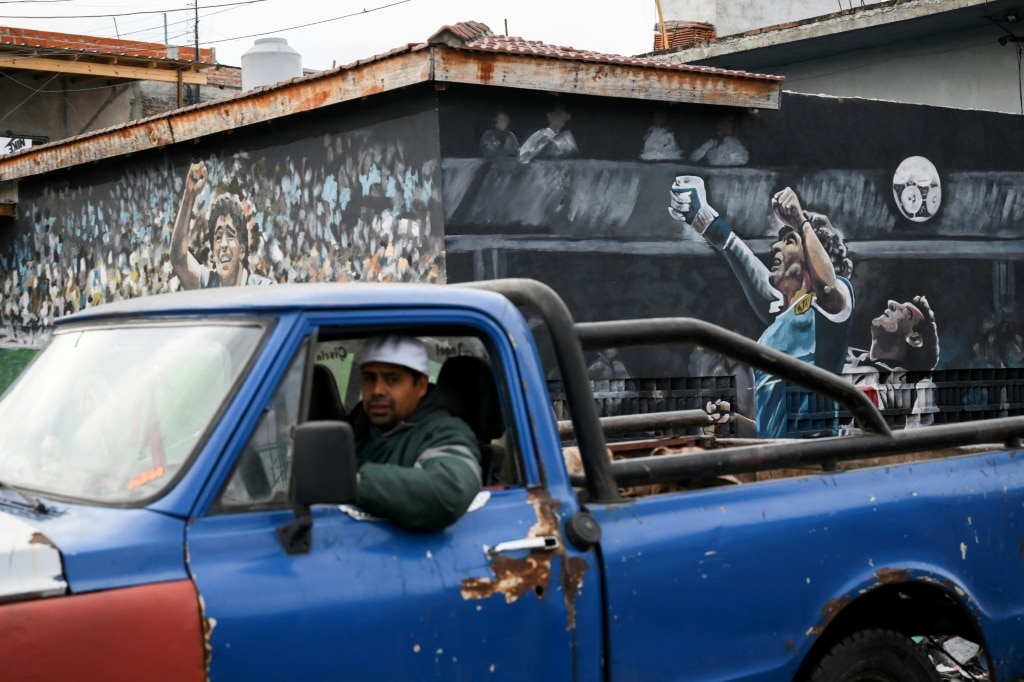
    The core of this layered history lies in the dispute over the South Atlantic archipelago Argentina calls the Malvinas, a territory claimed by Argentina but controlled by the United Kingdom since the 19th century. The 1982 war over the islands left 649 Argentines and 255 Britons dead, ending in a British victory that still stings for many in Argentina. Today, the claim to the Malvinas is enshrined in Argentina’s constitution, taught in every national school textbook, and woven into daily life through murals, tattoos, and place names honoring the disputed territory. In a deeply politically divided country, the national football team and the Malvinas claim remain two of the only unifying issues that bridge left-right divides.

    This historical weight is captured in Argentina’s 2026 World Cup anthem *La Cuarta Estrella*, which puts the Malvinas at the top of its rallying cries: “For Malvinas, for Diego, for Leo’s last, Argentina, I want to see you double world champions.” The anticipation has gripped the nation, with ordinary fans saying the excitement has crowded out all other thoughts. Thirty-three-year-old teacher Ezequiel Murmis told AFP, “I’m going crazy, I haven’t slept, I can’t think of anything else,” after attending a screening of *El Partido*, a new documentary revisiting Argentina’s iconic 1986 World Cup quarter-final win over England.

    That 1986 match remains one of the most famous in football history. Maradona’s opening goal, punched into the net with his hand and later dubbed the “Hand of God,” became a symbol of Argentine defiance just four years after the Falklands War defeat. Minutes later, Maradona scored what is still widely called the “Goal of the Century,” a stunning solo run that weaved through a bewildered England defense, cementing his legacy as a national hero before his death in 2020.

    Not all Argentines tie the current match to the decades-old conflict, however. Ernesto Alonso, a veteran of the 1982 Falklands War, argued that Maradona already gave Argentina the symbolic victory it craved in 1986. “Of course we’re all excited and want to win but we cannot shift the responsibility for the Malvinas issue onto the national team,” he explained.

    Andres Burgo, author of the original book that became *El Partido*, noted that 2026 is a far cry from 1986, when fresh war wounds made restoring national honor the overwhelming priority for the team. “That game was tainted by political pressure,” Burgo explained. “This year’s semi-final has less symbolic importance and more sporting significance.” Even so, the documentary has drawn packed audiences across Argentina, a clear sign the old tensions still run deep. Leaving a Buenos Aires screening, 33-year-old insurance agent Tomas Barbeito, wearing an Argentina national team jersey, admitted he felt “very anxious” ahead of the match: “It’s like we want to avenge something we shouldn’t have to avenge.”

    Despite the decades of rivalry, many Argentine fans acknowledge a deep respect for English football culture. After Argentina’s recent win over Switzerland, the entire team could be seen jumping in celebration to the traditional Argentine chant: “He who doesn’t jump is English!” That fiery, confrontational passion that defines Argentine fan culture has few parallels — and England is one of them. Both nations are famous for their all-consuming love of the game, and both have seen that passion spill over into crowd violence at times.

    Burgo pointed out that beyond the rivalry, Argentines recognize a kindred spirit in English football. “There are countries that don’t have a passion for football, like the United States; countries that have passion but not a distinct football culture. England has both, passion and culture, and I think Argentine fans recognize and respect that,” he said. Barbeito echoed that contradictory but warm sentiment: “But the truth is, I like the English and how they live and breathe football.”

    As kickoff approaches in Atlanta, the clash brings together sporting ambition and decades of shared history, for a match that means as much off the pitch as it does on it.

  • War, racism and Trump: Has corruption overshadowed the 2026 World Cup?

    War, racism and Trump: Has corruption overshadowed the 2026 World Cup?

    Billed as the most ambitious World Cup in history – expanded to 48 teams, hosted across three North American nations, and projected to deliver a record-breaking $9 billion in revenue for FIFA – the 2026 tournament will likely be remembered not for on-pitch drama, but for pervasive political meddling, systemic bias, and overt corruption that have tainted the global game’s flagship event. At the center of the turmoil stand two figures: former US president Donald Trump, who leveraged the tournament to advance his political agenda, and FIFA president Gianni Infantino, who repeatedly bent the governing body’s rules to accommodate the whims of the Trump administration.

    Beyond widely criticized issues including exorbitant ticket prices, logistical chaos from cross-country travel between host cities, and dangerous heat at matches, critics have labeled the 2026 tournament an ‘imperial World Cup,’ shaped entirely by the priorities of a heavily politicized US presidency. The level of influence-peddling surrounding the event has even led some long-time football fans to look back wistfully at the tenure of Sepp Blatter, Infantino’s disgraced predecessor who was forced out of FIFA over a sweeping corruption scandal and is banned from football activities through 2027. Blatter himself weighed in on the controversy last week, posting on social media platform X that ‘football must never become a playground for political power’ – a remark that sparked ironic calls from fans for Blatter to return, with supporters joking that he would ‘make corruption classy again.’ Other observers have summed up the current mood by noting that ‘Infantino and FIFA are so corrupt that even Sepp Blatter, the former chief of corruption, is shocked.’

    The controversies began long before the opening kickoff. In December 2025, during the 2026 World Cup draw ceremony, Infantino presented Trump with FIFA’s first, and what many believe will be its only, ‘FIFA Peace Prize’ – an honor awarded just months before the US and Israel launched a planned military attack on Iran in February 2026. The award came as the culmination of a series of honors for Trump, who had previously renamed the John F. Kennedy Center for the Performing Arts to add his own name, a change later reversed by US courts. In his remarks presenting the prize, Infantino told Trump: ‘We want to see hope, we want to see unity, we want to see a future. This is what we want to see from a leader and you definitely deserve the first Fifa Peace Prize.’ In the months after the award, the Trump administration has taken a series of aggressive international actions: abducting Venezuela’s sitting head of state, threatening to invade Greenland, intensifying the decades-long US blockade on Cuba, and plunging the region into open war with Iran.

    The Trump administration’s restrictive and discriminatory policies have directly disrupted the tournament for teams, officials, and fans from targeted nations. The most high-profile incident involved Omar Artan, a Somali referee set to make history as the first official from Somalia to work a World Cup. US authorities denied Artan entry at Miami International Airport, detained and interrogated him for 11 hours, then deported him over unsubstantiated ‘vetting concerns.’ A White House official later claimed Artan had been ‘talking to some very bad people,’ but the US government never released any evidence to back the assertion. The deportation was no random mistake: it aligned with the Trump administration’s longstanding hostile approach to Somalia, which is included in Trump’s controversial travel ban, and to Somali communities within the US. Trump has repeatedly insulted Somali Americans, publicly telling members of the community to ‘go back to where they came from.’

    The travel ban has locked thousands of fans out of the tournament entirely. Supporters from Iran, Haiti, Ivory Coast, Senegal and dozens of other nations have been unable to secure entry to the US to watch their teams play. A separate controversial visa bond scheme, which briefly required fans from Algeria, Cape Verde, Ivory Coast, Senegal and Tunisia to pay deposits of up to $15,000 to enter the country, was only suspended after widespread public and international pressure.

    Iran, the target of the ongoing US-Israeli war that began in early 2026, has faced the harshest barriers to competing in the tournament. Even before the war, Trump pushed FIFA to eject Iran from the World Cup entirely and replace the nation with Italy. After the war began, the US forced Iran to move its pre-tournament training base from Tucson, Arizona to Tijuana, Mexico, just miles from the US border. Just days before the tournament’s opening match, US officials revoked the entire ticket allocation for Iranian fans, leaving thousands who had already booked travel and accommodation stranded. Iranian players only received entry visas 10 days before their first match, while most of the team’s coaching staff, media personnel, and federation leaders – including federation president Mehdi Taj – were barred from entering the US entirely. For Iran’s first two group stage matches, the team was required to enter the US less than 24 hours before kickoff and leave immediately after the final whistle, eliminating critical training time and denying players the chance to rest and recover between matches. Iran’s head coach Amir Ghalenoei has described his side as the ‘most oppressed’ team in World Cup history, saying the US has done everything in its power to wear the team down and force it out of the competition.

    Political interference has extended even to disciplinary decisions for star players and host nation teams. Before the tournament began, FIFA’s disciplinary committee cut a three-match ban for violent conduct against Portuguese superstar Cristiano Ronaldo to a one-game suspension, allowing him to play from the tournament’s opening match – a decision that many viewed as a favor driven by marketing and political pressures. The most blatant example of political meddling, however, involved US striker Folarin Balogun, who received a red card in the US Round of 32 win over Bosnia and Herzegovina, which carried an automatic one-match suspension under FIFA’s official rules. Just days after the decision, Trump personally called Infantino to demand a ‘review’ of the call, claiming the foul had never occurred. FIFA subsequently and quietly lifted the suspension, clearing Balogun to play in the Round of 16 match against Belgium. Trump’s public confirmation that he pressured FIFA to reverse the decision was unprecedented in international football, drawing immediate backlash from fans and governing bodies across the globe. UEFA, the European governing body for football, issued a scathing public statement accusing FIFA of crossing ‘a red line’ by making an ‘incomprehensible and unjustifiable’ decision to cave to political pressure. Despite the favorable ruling, the US team was soundly defeated by Belgium in the match.

    While political interference has dominated headlines, controversial on-pitch officiating, most notably decisions from the Video Assistant Referee (VAR) system, has also sparked widespread anger. One of the most controversial matches of the knockout stage was Argentina’s chaotic 3-2 comeback win over Egypt in the Round of 16. Egypt held a 2-0 lead late in the match and appeared set to advance to the quarter-finals before conceding three late goals, but the result was immediately overshadowed by widespread anger over officiating calls: a legitimate Egyptian goal was ruled out after VAR review, late penalty appeals for Egypt were ignored, and Egyptian officials protested intensely before Argentina’s stoppage-time winning goal. Online, millions of football fans argued that biased officiating had denied Egypt a fair chance to advance, making the match one of the most debated knockout games in modern World Cup history.

    Systemic racism has also emerged as a persistent blight on the tournament, with incidents recorded at stadium entrances, inside venues, online, and at security checkpoints. In the lead-up to the Argentina-Egypt match, a viral video showed an Egyptian fan asking an American security guard if she was only conducting extra pat-down searches of Egyptian fans, to which the guard replied: ‘Yeah, because these are the orders coming in right now.’ Inside the stadium, tensions boiled over after Argentina’s comeback win, with videos showing Argentine fans attacking Egyptian supporters. Other footage showed Argentine fans waving Israeli flags toward Egypt’s coaching staff as they left the pitch – a deliberate provocation, as Egypt head coach Hossam Hassan has been an outspoken advocate for Palestinian people, who have faced a genocidal Israeli military campaign in Gaza since 2023. Hassan dedicated Egypt’s knockout win over Australia to Palestine, telling reporters: ‘I’m dedicating this victory to the Egyptian people and the Palestinian people.’

    Multiple high-profile racist incidents have marred the tournament beyond the Argentina-Egypt match. FIFA is currently investigating a confrontation between popular streamer IShowSpeed, who is Black, and an Argentine fan during a match between Argentina and Cape Verde. During a live stream, the fan reportedly told IShowSpeed to ‘go cry to the zoo’ in a racist slur. In another incident, French star Kylian Mbappé publicly condemned Paraguayan senator Celeste Amarilla after she posted racist remarks about Mbappé following Paraguay’s defeat to France, calling Mbappé a ‘colonised Cameroonian, desperately trying to pass himself off as French’ and a ‘brute’ who could not read or write. FIFA officials acknowledged the growing crisis in a public statement in early July, admitting that ‘racial abuse is growing and has become a persistent threat to the wellbeing of players.’ The governing body confirmed it had identified more than 89,000 abusive posts on social media related to the tournament, 11 percent of which contained explicit racial abuse.

    As the tournament progresses, the controversies continue to overshadow the on-pitch action, leaving fans and analysts questioning the future of football’s most iconic global event amid rising political interference and systemic bias.
  • India finally breaks through in the UK after beating England in ODI at Edgbaston

    India finally breaks through in the UK after beating England in ODI at Edgbaston

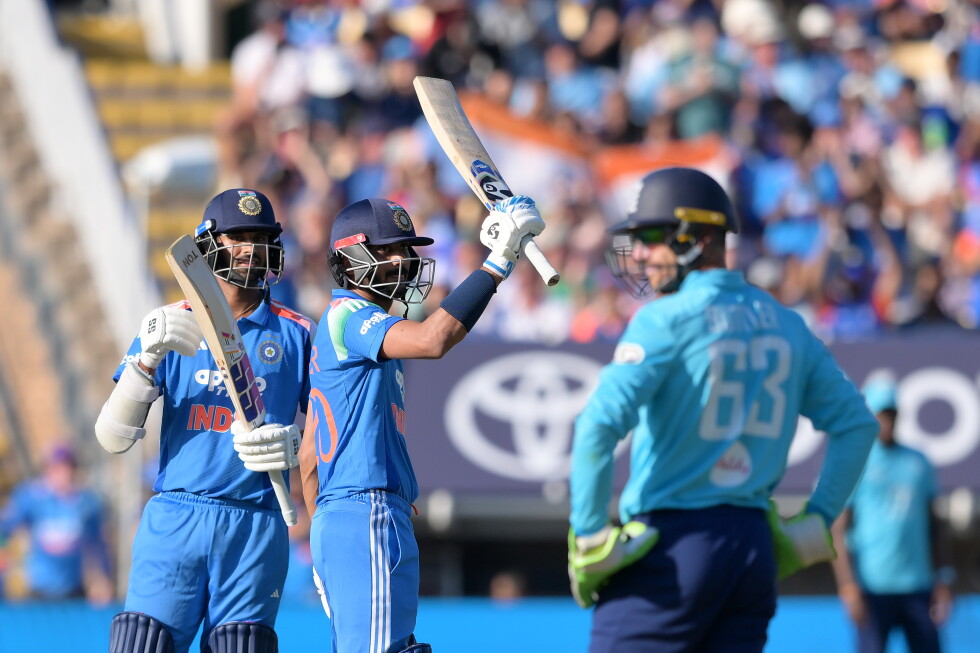
    BIRMINGHAM, England – After a string of demoralizing losses across the opening stages of their UK tour, India has turned their campaign around with a landmark victory, handing England their first one-day international defeat at the Edgbaston ground in 12 years on Tuesday. The result marked India’s first win on the tour, breaking a losing streak that had dragged down the world’s top-ranked T20 side.

  • Kylian Mbappé in for France in World Cup semifinals against Spain after ‘slight’ ankle injury

    Kylian Mbappé in for France in World Cup semifinals against Spain after ‘slight’ ankle injury

    ARLINGTON, Texas — As anticipation builds ahead of Tuesday’s highly anticipated World Cup semifinal showdown between France and Spain, one of the tournament’s biggest storylines has been resolved: star French striker Kylian Mbappé will feature in Les Bleus’ starting lineup, despite exiting the team’s quarterfinal clash with Morocco early due to a minor right ankle injury.

    Mbappé left the pitch in the 77th minute of France’s quarterfinal victory, but the forward’s fitness has been cleared by head coach Didier Deschamps, who confirmed that the French captain is in full health to lead his side into the semifinal. This start will mark Mbappé’s seventh consecutive opening lineup appearance at this tournament, one of just six French players to start every match for the defending champions.

    The 27-year-old comes into the semifinal locked in a tight race for the tournament’s Golden Boot, having notched eight goals so far — a tally that puts him level with Argentina’s Lionel Messi, the other leading contender for the award. Across his entire World Cup career, Messi holds the all-time record with 21 tournament goals, just one goal ahead of Mbappé’s career total of 20.

    Joining Mbappé in the French starting eleven will be fellow forward Ousmane Dembélé and goalkeeper Mike Maignan, who are also among the six players to have started every one of France’s seven matches leading into this semifinal.

    For Spain, the starting lineup brings both consistency and a notable absence. Teenage sensation Lamine Yamal will make his sixth consecutive start for La Roja, just one day after celebrating his 19th birthday. The Barcelona winger made an early mark on the tournament after coming off the bench in Spain’s opening draw against Cape Verde, a small island nation that pulled off one of the biggest upsets of this World Cup by holding Spain to a 0-0 draw.

    Versatile Arsenal forward Mikel Merino, meanwhile, is set to return to the substitute bench for the sixth time in Spain’s seven matches at the tournament. Merino has become Spain’s unlikely match-winner off the bench in knockout play: the utility player scored late game-winning goals just minutes after entering as a substitute in both the round of 16 1-0 win over Portugal and the 2-1 quarterfinal defeat of Belgium.

    The one key absence for Spain is forward Nico Williams, who has been sidelined by a persistent muscle injury that first emerged during the team’s final group stage match against Uruguay. Williams came off the bench in all three of Spain’s opening group games, then missed the first two knockout matches before making a brief return as a 79th-minute substitute against Belgium, but was not deemed fit enough to earn a spot in the starting lineup for the semifinal.

  • Who is the referee for the World Cup semifinal between France and Spain?

    Who is the referee for the World Cup semifinal between France and Spain?

    The official officiating crew for the first 2024 FIFA World Cup semifinal has been confirmed, with 35-year-old Salvadoran referee Ivan Barton set to take charge of the high-stakes match between France and Spain on Tuesday. This assignment marks Barton’s fourth officiating appointment at this year’s tournament, bringing his experience at the global event to one of its biggest stages.

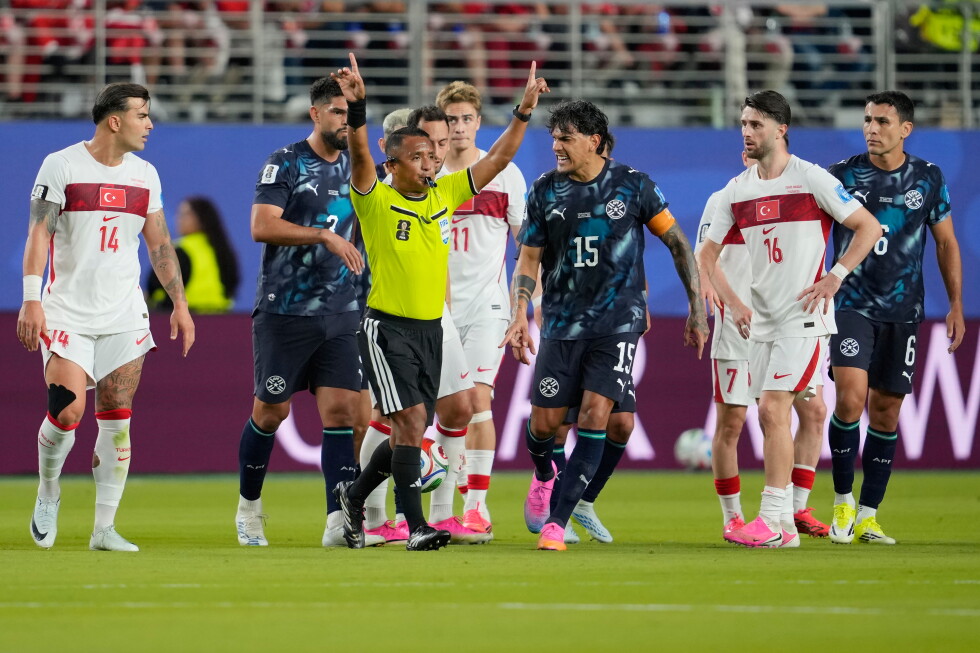
    Throughout the current World Cup, Barton has already overseen three prior matches, with the most widely discussed incident coming during a group-stage clash between Turkey and Paraguay. In that contest, Paraguay star Miguel Almiron was shown a red card and sent off after covering his mouth amid an on-field confrontation with other players. To date, that ejection remains the only red card Barton has issued across his three matches at the tournament. His other previous World Cup assignments this year include group-stage fixtures between Japan and Sweden, and Switzerland and Colombia, giving him familiarity with the pace and physicality of top international competition ahead of the semifinal.

    Alongside Barton, the full match official team has also been finalized. David Moran of El Salvador and Antonio Pupiro of Nicaragua will serve as Barton’s assistant referees, while Sweden’s Glenn Nyberg has been named the fourth official for the fixture. The video assistant referee (VAR) team will be led by Poland’s Tomasz Kwiatkowski, with support from Dennis Higler of the Netherlands and Guillermo Pacheco of Mexico.

    The France-Spain semifinal, the first of two final-four matches scheduled at this year’s World Cup, will be hosted at AT&T Stadium, the home ground of the National Football League’s Dallas Cowboys. The second semifinal will follow a day later on Wednesday, when England face off against Argentina in Atlanta at the venue originally announced for the fixture.