分类: sports

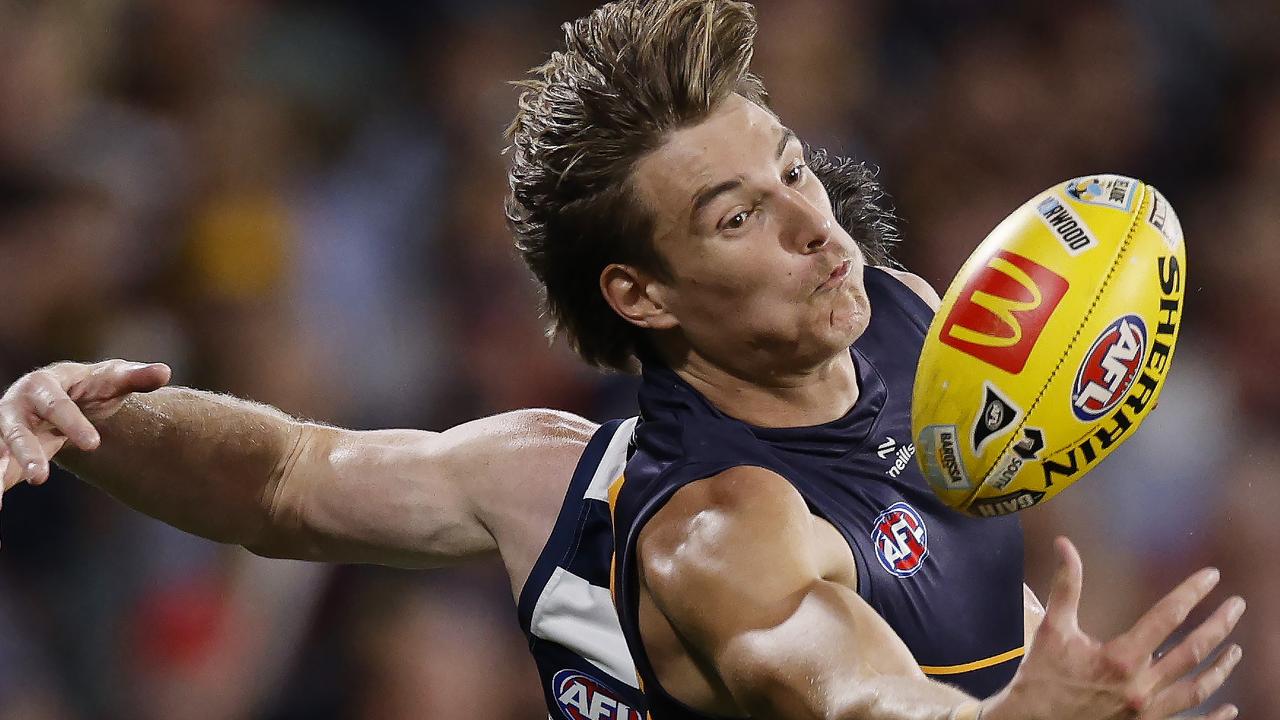
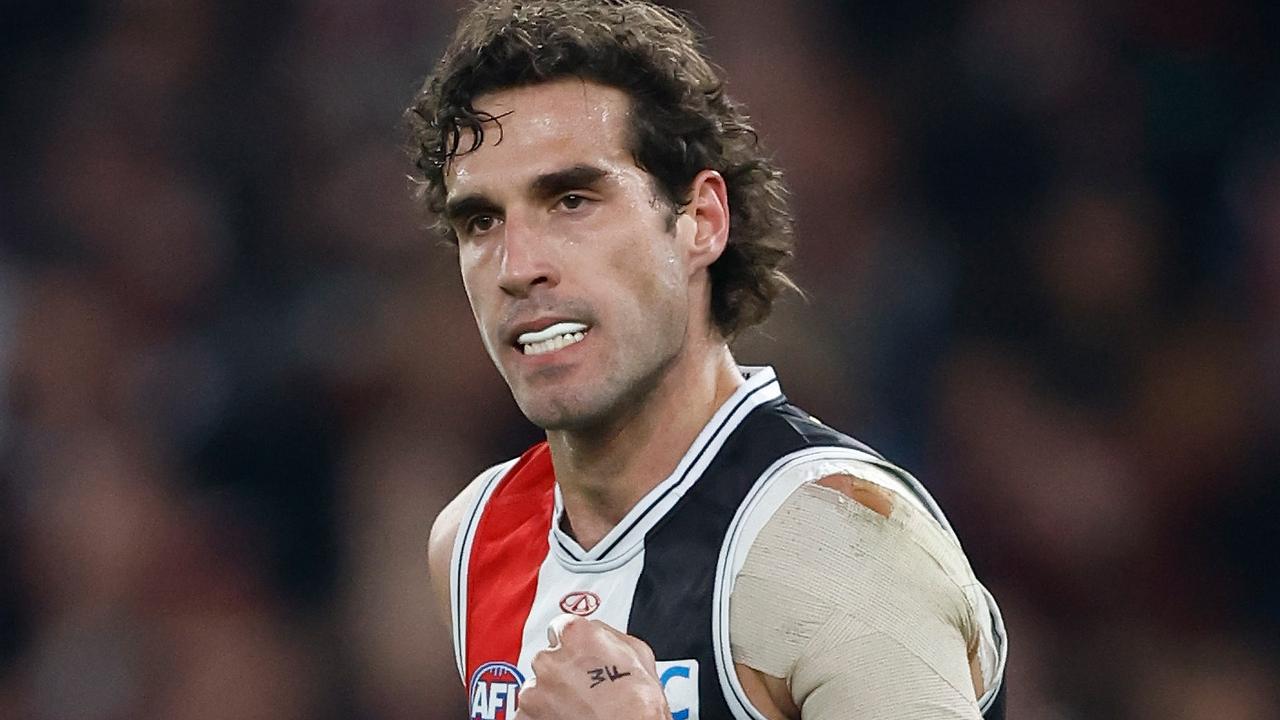
  • AFL 2026: St Kilda coach Ross Lyon ‘hoping’ Max King could play as soon as next week

    AFL 2026: St Kilda coach Ross Lyon ‘hoping’ Max King could play as soon as next week

    As the Australian Football League (AFL) season enters its critical mid-to-late stretch, a wave of unrivaled optimism is sweeping through St Kilda Football Club’s Moorabbin headquarters, centered on star key forward Max King’s long-awaited return from a debilitating multi-year injury layoff. Head coach Ross Lyon has confirmed that King, who has not appeared in a senior AFL match for more than two seasons due to repeated setbacks to his knee and surrounding soft tissue, is now hitting every key rehabilitation milestone and has successfully returned to the full running program required for elite AFL competition.

    Lyon shared the latest update on King’s recovery in a press conference this week, noting that the club is targeting a potential return next week, while cautioning against overly rigid timelines that have proven problematic for injury comebacks in the past. “We’ve never been more optimistic about where Max is at,” Lyon told reporters. “He’s hitting all his milestones, and he’s back to hitting his full 23-minute running blocks at AFL standard. We’re hoping for next week, but we’ll cross that bridge when we get to it. We take it day by day. I loved what Max said in his recent Telstra interview – he told reporters he isn’t doing all this rehab just to play in the reserves Victorian Football League, and I align completely with that mindset. We’re optimistic, but we still have steps to get through before we can confirm his return.”

    Off the field, Lyon reaffirmed the club’s commitment to star big man Rowan Marshall, who is contracted to St Kilda through the end of the 2027 season. When asked about expected rival club interest in Marshall during the upcoming mid-season trade period, Lyon confirmed the club’s stance would remain unchanged from last year, when it rejected all offers for the key player. “Two things are clear: any rival interest is noted, and he is firmly contracted to us,” Lyon said in a characteristic closing remark before exiting the press conference.

    Before any potential announcement about King’s comeback, the Saints face a season-defining top-flight fixture this Thursday night against the Geelong Cats, a perennial AFL powerhouse that has stumbled to an uncharacteristic ninth position on the premiership ladder, with only one win recorded since Round 11. Despite the Cats’ underwhelming win-loss record, Lyon warned against writing off the 2022 premiers, noting that context around their recent results has been lost amid widespread public discussion of their poor form.

    “I wouldn’t say Geelong is out of form at all,” Lyon explained. “They played Fremantle without star defender Tom Stewart and key midfielder Bailey Smith, and they were still in the game right down to the final siren. Against a red-hot Brisbane Lions side that’s near the top of the ladder, they generated 61 inside 50 entries and only let themselves down with inaccurate goalkicking of 6.6. Against Greater Western Sydney, they were six goals up before three key players went down with injury, which completely flipped the result. All that nuance and detail gets lost in the noise around their win-loss record, but it doesn’t get lost in our analysis. We’re heading into this game knowing we’ve got a serious, dangerous challenge on our hands.”

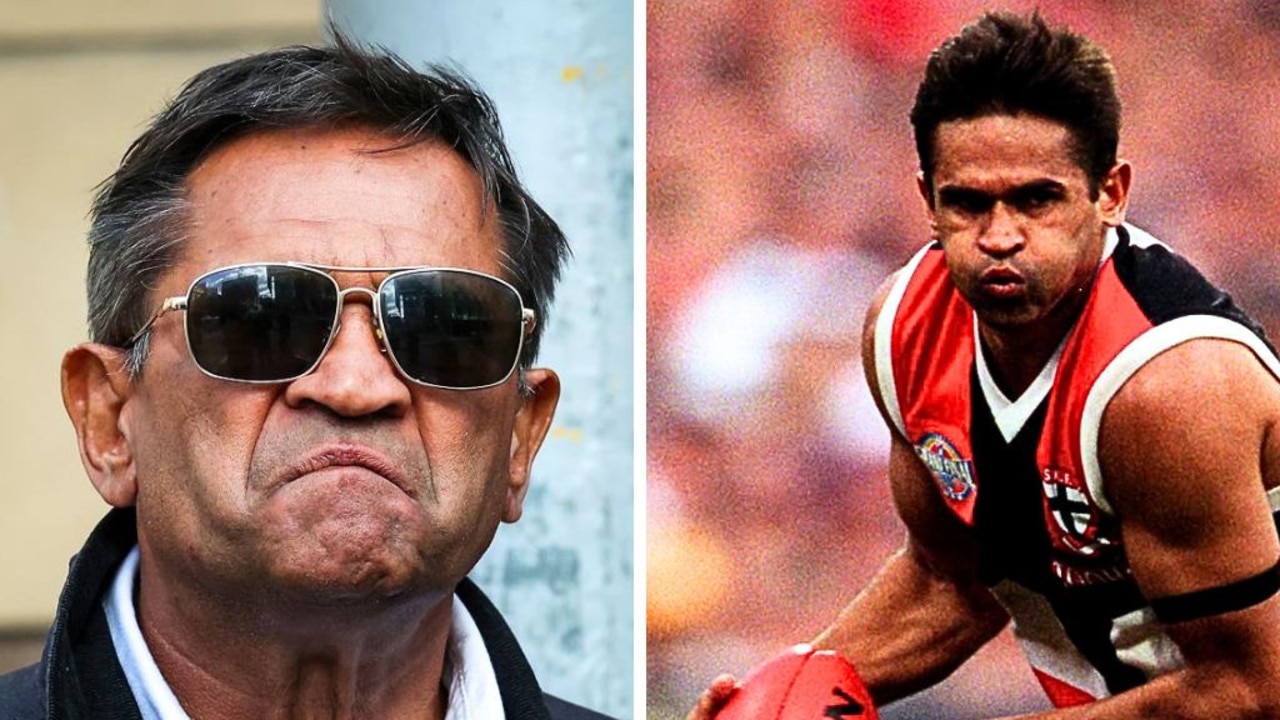
  • Nicky Winmar dumped from Australian Football Hall of Fame after DV offences

    Nicky Winmar dumped from Australian Football Hall of Fame after DV offences

    The Australian Football League Commission has taken decisive disciplinary action against former St Kilda star Nicky Winmar, stripping the once-celebrated player of his induction to the Australian Football Hall of Fame after a court found him guilty of multiple domestic violence offenses.

    Earlier this month, Winmar was convicted in Bendigo Magistrates’ Court on three counts of unlawful and common assault for a violent incident in which he dragged a woman by her hair and repeatedly slammed her head into a door. Under AFL Commission rules, the body has the authority to revoke an individual’s Hall of Fame membership if their criminal actions are judged to have damaged the reputation of the league, the sport, or the honor of Hall of Fame induction itself.

    AFL Commission Chair Craig Drummond emphasized the league’s zero-tolerance stance in a formal statement following the ruling. “Violence against women has no place. Not in our community, not in our game, and not in the values the Australian Football Hall of Fame seeks to uphold,” Drummond said. He acknowledged Winmar’s decades-long on-field contributions to Australian rules football, noting that the Commission recognizes the player’s place in the sport’s history. Even so, Drummond explained, the recent guilty verdict means retaining Winmar’s spot in the Hall of Fame would be incompatible with the honor’s core values, and the Commission bears a legal and ethical responsibility to protect the integrity of the institution.

    St Kilda Football Club, where Winmar played 231 of his 251 career AFL games, has enacted its own separate disciplinary measure. The club’s board voted to suspend Winmar from its own internal Hall of Fame pending the final outcome of all legal proceedings, including any potential appeal Winmar may file. In an official statement, the club echoed the AFL’s stance, saying “Violence against women has no place in our community. Our thoughts are with anyone impacted by this matter.” A final ruling on whether Winmar will be permanently removed from the St Kilda Hall of Fame will be issued once all legal processes are fully completed.

    This disciplinary action follows other public removals of Winmar’s legacy honors in the weeks since his conviction. In the days immediately after the verdict was handed down, a public statue honoring the AFL great was taken down from Perth’s Optus Stadium, a step that preceded the national Hall of Fame’s formal decision to expel him.

  • Argentina and England collide with World Cup final spot at stake

    Argentina and England collide with World Cup final spot at stake

    The 2026 FIFA World Cup enters its final competitive stretch this week, with one of the most anticipated semi-final matches in tournament history set to kick off Wednesday in Atlanta: two global football giants, Argentina and England, will go head-to-head for a spot in the championship final, where Spain is already waiting after a stunning upset against defending hopeful France.

    This fixture carries far more than just semi-final stakes, layered with decades of on-pitch drama and off-political tension that stretches back decades. For Argentina, the match is an opportunity to etch their names in football history: if Lionel Scaloni’s side claims victory and goes on to win the final, they will become the first men’s national team since Brazil’s 1962 side to lift consecutive World Cup trophies. What would be a legendary repeat would also serve as the perfect crowning achievement for Argentine icon Lionel Messi, who came out of what was expected to be a final World Cup run in 2022 to return to the 2026 tournament.

    Now 39 years old, Messi has already notched eight goals in this tournament, putting him level at the top of the Golden Boot rankings. The 2022 champion has been the driving force behind Argentina’s run to the semi-finals, scoring crucial goals in hard-fought 3-2 wins over Cape Verde and Egypt to keep his side’s repeat bid alive.

    Standing in Argentina’s way is an England side led by manager Thomas Tuchel, who have turned in inconsistent but dangerous performances throughout the tournament, powered by the red-hot form of strikers Harry Kane and Jude Bellingham. The pair have accounted for 12 of England’s 13 total goals in the 2026 tournament, carrying the Three Lions to their first World Cup semi-final since they reached the final as hosts in 1990. This match will mark the first competitive meeting between the two sides since the 2002 World Cup, a history rife with iconic, controversial moments.

    The most famous of their past encounters came in the 1986 World Cup quarter-finals in Mexico, where Diego Maradona scored two of the most famous goals in football history to secure a 2-1 Argentine win: the controversial “Hand of God” goal, followed by a 60-yard solo run that is still widely regarded as one of the greatest goals ever scored. Twelve years later at the 1998 World Cup in France, David Beckham was sent off for a kick against Diego Simeone, and Argentina advanced to the next round after a penalty shootout. Beyond the pitch, the fixture has long been overshadowed by the ongoing sovereignty dispute over the Falkland Islands, known as the Malvinas in Argentina, which led to a 1982 war between the two nations that claimed hundreds of lives. In the lead-up to Wednesday’s match, however, Scaloni has sought to separate political history from the football contest.

    “ The reality is this is a football match,” Scaloni told reporters. “I am not going to mix everything up, especially regarding things that happened so long ago. It was a very sad time in our history and we can’t do much about it. This is a football game, that’s all.”

    For Tuchel, the historic weight of the fixture has not created any extra pressure for his side, which is targeting the first World Cup final appearance since the Three Lions won the tournament as hosts in 1966. “I don’t feel a burden,” Tuchel said. “We feel the tension and will be nervous but that is normal. What I like is that I feel the players are really competitive, hungry and excited to play this match.” The German manager also confirmed that midfielder Declan Rice, who had been sidelined with illness in recent days, would be fit to start Wednesday’s match.

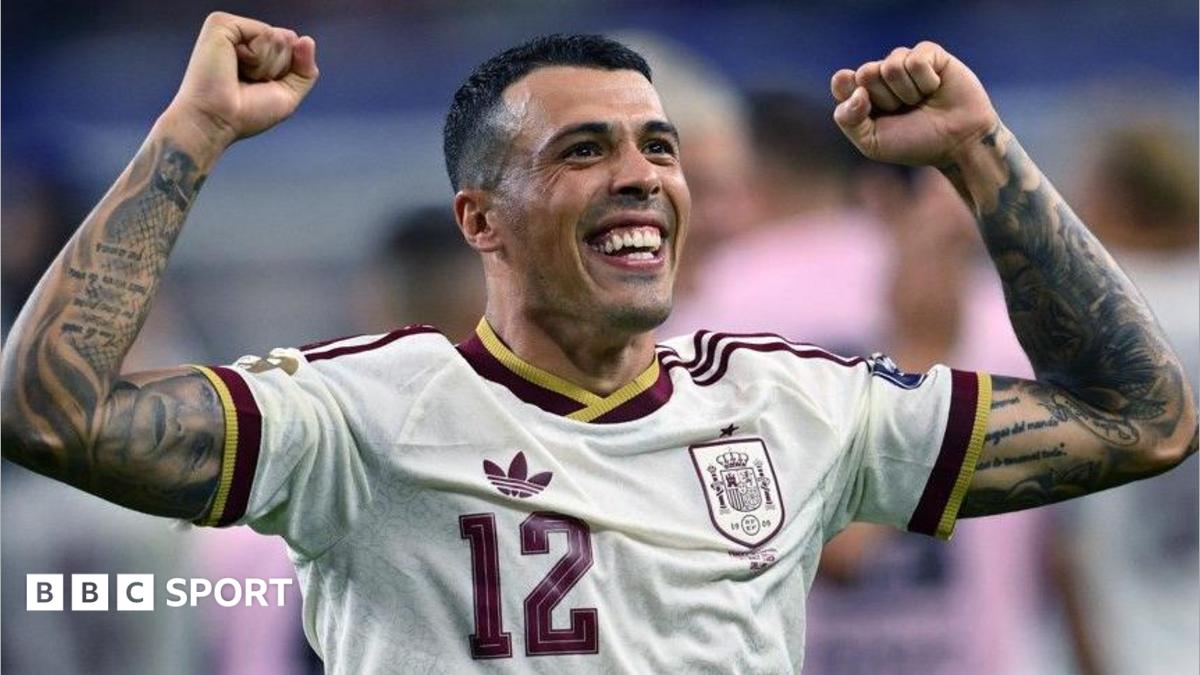
    The winner of the semi-final will advance to Sunday’s championship match in New Jersey, where they will face off against Spain, who delivered a clinical masterclass on Tuesday to knock out tournament favorites France, who were widely tipped to claim a third World Cup title. European champions Spain, the 2010 World Cup winners, put in a polished performance in Arlington, Texas, to end France manager Didier Deschamps’ World Cup tenure with a defeat. Mikel Oyarzabal put Spain ahead with a powerful first-half penalty, before Pedro Porro doubled the lead in the second half to secure the 2-0 win.

    Speaking after the upset victory, Spain manager Luis de la Fuente praised his side’s consistent commitment to their tactical identity over the four-year cycle leading up to the tournament. “We started almost four years ago with an idea and we’ve been faithful to that idea and it’s brought us here,” De la Fuente said. “These players deserve everything. Day after day they’ve shown their commitment, their solidarity, their generosity, their talent. They make the difficult look easy.”

  • Mates, mate and freedom – how Argentina got the best out of Messi

    Mates, mate and freedom – how Argentina got the best out of Messi

    Lionel Messi’s 2026 FIFA World Cup campaign has been a rollercoaster of tangled emotions, capped by unguarded tears after Argentina’s dramatic comeback from a 2-0 deficit to book their quarter-final spot against Switzerland. This was not the first time Messi had broken down in tears during the tournament: just days after the opening match, he cried when he learned of a sudden health complication affecting his father. This time, however, the tears flowed from relief—relief that a missed penalty, which for a tense stretch looked set to end Argentina’s World Cup run early, did not end up letting his teammates down.

    Widely expected to be his final World Cup appearance, this tournament has reconnected Messi with the joy of the game that defined him as a young prospect leaving his hometown of Rosario, Argentina. Under manager Lionel Scaloni, the 39-year-old Inter Miami forward has found a national squad built explicitly around his strengths, centered on collective unity rather than individual stardom.

    Scaloni, who took over Argentina’s national side on an interim basis in 2018 when no other coach wanted the role, inherited a fractured, underperforming squad of fatigued star players under constant public scrutiny. He made the unpopular call to bench veteran big names and promote unheralded prospects, then built a system rooted in one core principle: let Messi lead. Where other coaches force Messi into rigid tactical structures, Scaloni lets the Argentine icon dictate his position on the pitch, with the entire squad adapting to his choices. Against Egypt, Messi shifted to the right flank; 38 minutes into the quarter-final against Switzerland, he moved central, and the entire team adjusted to open up space for their leader.

    “The best moments of all, by far, are celebrations of the group. I coach for this, not because I like a 4-3-3,” Scaloni explained ahead of the quarter-final. “I like drinking mate with my friends and players, sharing a barbecue, playing truco, as we have always done.” It is a philosophy that aligns perfectly with Messi’s own preferences, and one that has delivered unprecedented results: under Scaloni, Argentina has lifted four trophies—two Copa Américas, the 2022 World Cup, and the 2022 Finalissima—and won their last three consecutive World Cup semi-finals.

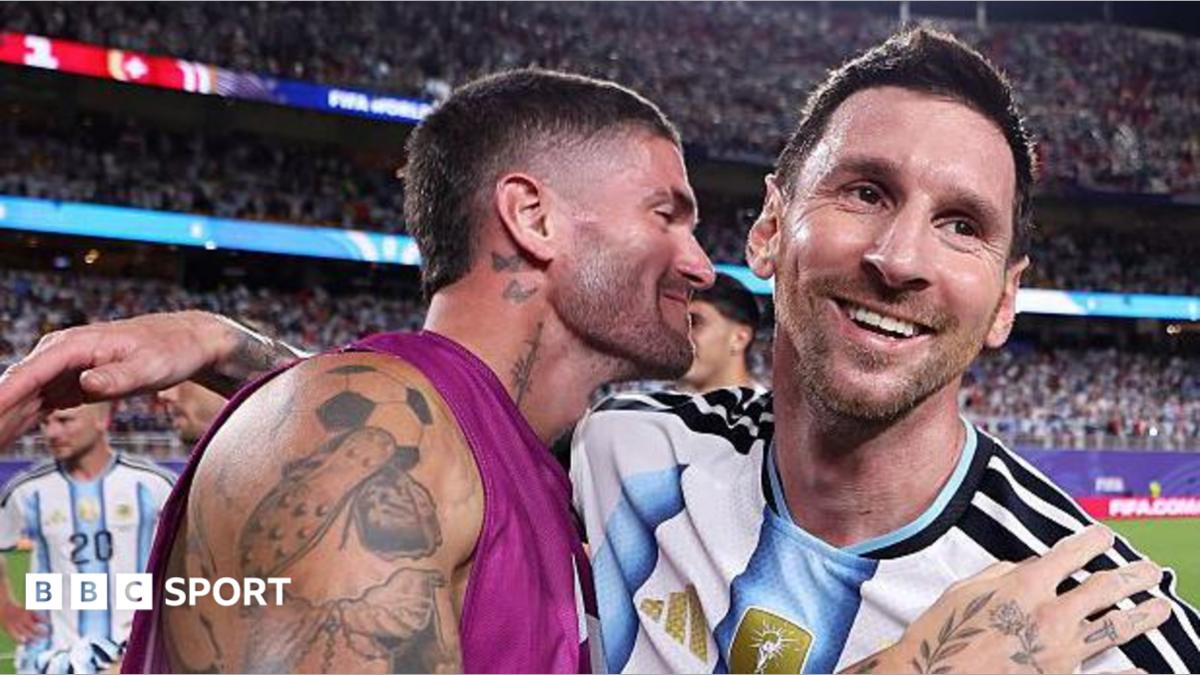
    At the heart of the squad’s special bond with Messi is midfielder Rodrigo de Paul, who has grown into Messi’s closest confidant and constant companion in the national setup. The pair’s friendship began unexpectedly when de Paul noticed a subdued Messi leaving training alone one afternoon. After waiting 40 minutes to give him space, de Paul knocked on Messi’s hotel door and invited him for a round of mate and truco. That small gesture grew into a daily routine: every morning, the pair share mate in de Paul’s room, with other squad members joining in strictly by order of arrival, no exceptions allowed. De Paul playfully teases Messi, calls him “El Pequeno” (the little one) despite his age and status, and treats him as just another member of the group—exactly what Messi has always craved, rather than being put on a pedestal as a global monument to the sport. When the team walks out onto the pitch, Messi leads with de Paul right at his side, the rest of the squad fanning out behind in a wedge, a unified group protecting their leader.

    For most of the current Argentina squad, Messi was not just a teammate first—he was their childhood idol, the reason many of them picked up a football at all. Every player wears the same Adidas Adistar Messi boots, and for Messi’s June birthday, the squad wore custom T-shirts printed with photos of each player alongside Messi across his decades with the national team. Off the pitch, Messi has matched the squad’s commitment: he has put in months of double training sessions with de Paul and stuck to an obsessive nutrition plan that has boosted his top speed by 5% compared to the 2022 Qatar World Cup. While he covers just 631 meters at maximum speed across the tournament and walks for 47% of any given match, he is currently the tournament’s top goalscorer. He also joins Kylian Mbappé as one of only two players in history to register 10 or more direct goal involvements in two separate World Cups, having hit the mark in 2022 and again in 2026.

    In Argentine culture, football success carries far more weight than just a trophy. For generations, the nation has linked football greatness to national identity, running through a line from Diego Maradona to Messi: a nation rich in talent, repeatedly held back by political and economic instability, sees a World Cup win as proof Argentina still belongs among the world’s very best. That is why the squad sings their unofficial tournament anthem “La Cuarta Estrella” after every win, led by de Paul. The song honors Messi, pays tribute to Maradona, references the 1990 World Cup final that many Argentines see as a stolen title, and calls for a fourth World Cup star to be added to the national shirt.

    After the dramatic Egypt comeback that saw Messi in tears, midfielder Leandro Paredes summed up the squad’s commitment: when they saw their leader crying, the team embraced him not just to comfort him, but to remind him they are all in this together, and they will leave everything on the pitch to make his dream of a second consecutive World Cup title come true. As Argentina prepares to face England in the 2026 World Cup semi-final on 15 July, fans around the world can watch the match live on BBC One and BBC iPlayer, with full commentary available on BBC Radio 5 Live and BBC Sounds.

    ### Broadcast Details for England v Argentina 2026 World Cup Semi-Final
    – Date: 15 July
    – Kickoff: 20:00 BST
    – Coverage: UHD broadcast on BBC One and BBC iPlayer starting at 19:00 BST; build-up and full match commentary on BBC Radio 5 Live and BBC Sounds from 18:00 BST; live text updates, in-play clips, highlights and analysis available on the BBC Sport website and app.

  • Spain and goalkeeper Unai Simón post another shutout to reach the World Cup final

    Spain and goalkeeper Unai Simón post another shutout to reach the World Cup final

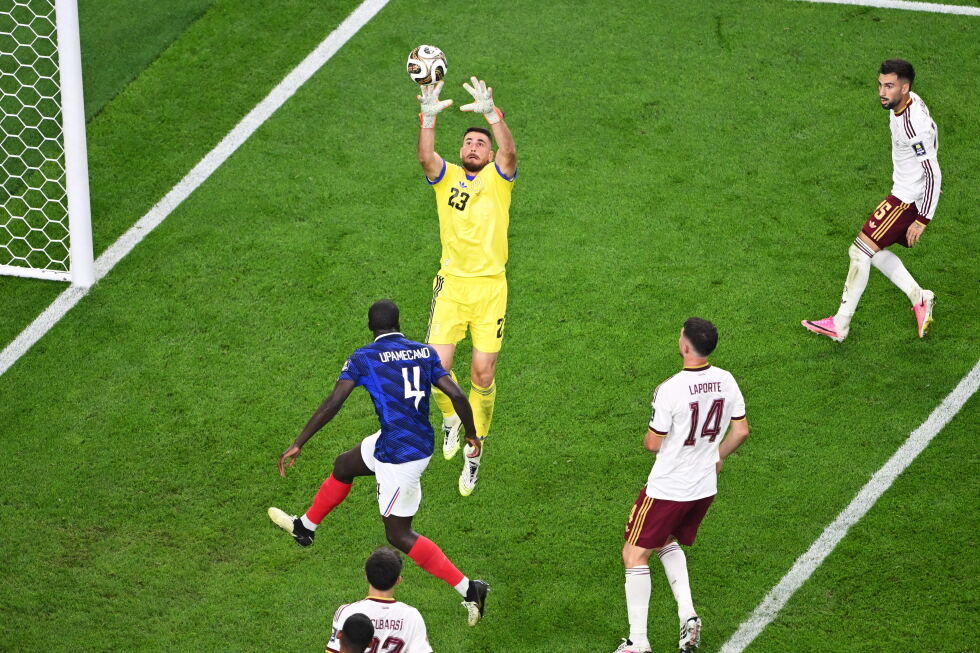
    ARLINGTON, Texas — In a tense late-game sequence that encapsulated Spain’s relentless defensive resilience on the sport’s biggest stage, goalkeeper Unai Simón pulled off a game-saving stop that will go down in World Cup semifinal lore. With top-ranked France throwing every available player forward in a desperate search for an equalizer, co-tournament leading scorer Kylian Mbappé charged toward goal on a break, only for Simón to sprint off his line and beat the French captain to the ball, clearing it with a header.

    The clearance fell straight to French forward Desire Doue, who found himself unmarked between Simón and the goal line with an open chance to level the score. But even in that split-second chaos, Simón scrambled back to goal, adjusted his body position, and launched into a leaping, no-handed deflection on the edge of the 18-yard box before finally securing possession to end the threat. That stop capped another masterclass from Spain’s organized backline and standout goalkeeper, securing a 2-0 shutout victory over France on Tuesday and punching La Roja’s ticket to the 48-team expanded World Cup final.

    Tuesday’s clean sheet marked Spain’s sixth shutout of this tournament, a new World Cup record, and comes 16 years after the nation’s only previous trip to the World Cup final, where they lifted the trophy. The result also ended France’s bid to become just the third men’s national team in history to reach three consecutive World Cup finals.

    Heading into the semifinal, Mbappé entered the match in scintillating form: the 2022 Golden Boot winner had notched eight goals through the first five matches of this tournament, tying him with Argentina legend Lionel Messi atop the all-time World Cup scoring standings with 21 career goals. Against Spain’s rock-solid defense, however, Mbappé mustered just three total shots, none on target, and France failed to generate any clear high-danger scoring chances throughout the 90 minutes.

    Spain defender Pau Cubarsi highlighted the team’s collective identity after the final whistle, saying in translated comments: “We are very happy with the work that the team has done. Today we knew it would be a very complicated game with spectacular players, but I think we have them, too. We are a great family. We have helped each other for 90 minutes, we have pressed as never before.”

    France manager Didier Deschamps acknowledged Spain’s defensive dominance after the defeat, conceding his side’s own errors left them unable to break down the organized Spanish unit. “Spain has been able to defend well. I’ve watched all of their matches, and today they’ve done it very well,” Deschamps said. “They’ve closed out all the spaces and also we’ve made some technical mistakes. So it is difficult to create problems when the technical level is below standard, especially compared to previous matches.”

    Simón’s historic run of clean sheets was only interrupted once throughout this entire tournament: Belgium scored a 41st-minute equalizer in Spain’s 2-1 quarterfinal win, snapping a 650-minute scoreless streak that broke the previous World Cup record. That streak stretches back to the 2022 World Cup round of 16, when Spain held Morocco scoreless before exiting on penalties, and included an unexpected 0-0 draw against Cape Verde in this year’s group stage. Simón surpassed the prior record of 517 consecutive scoreless minutes in a 3-0 knockout round opening win over Austria.

    Just eight days before Tuesday’s semifinal, hosted at AT&T Stadium, home of the NFL’s Dallas Cowboys, Spain notched a 1-0 round of 16 win over Portugal that secured their record-breaking sixth consecutive World Cup shutout. In that match, Simón stopped two shots from 41-year-old Cristiano Ronaldo, who was competing in the final World Cup of his legendary career. That sixth straight clean sheet broke a long-standing tie with Italy’s 1990 squad and Switzerland’s 2006-10 side for the longest shutout streak in World Cup history.

  • France fireworks fizzle as Spain advance to World Cup final

    France fireworks fizzle as Spain advance to World Cup final

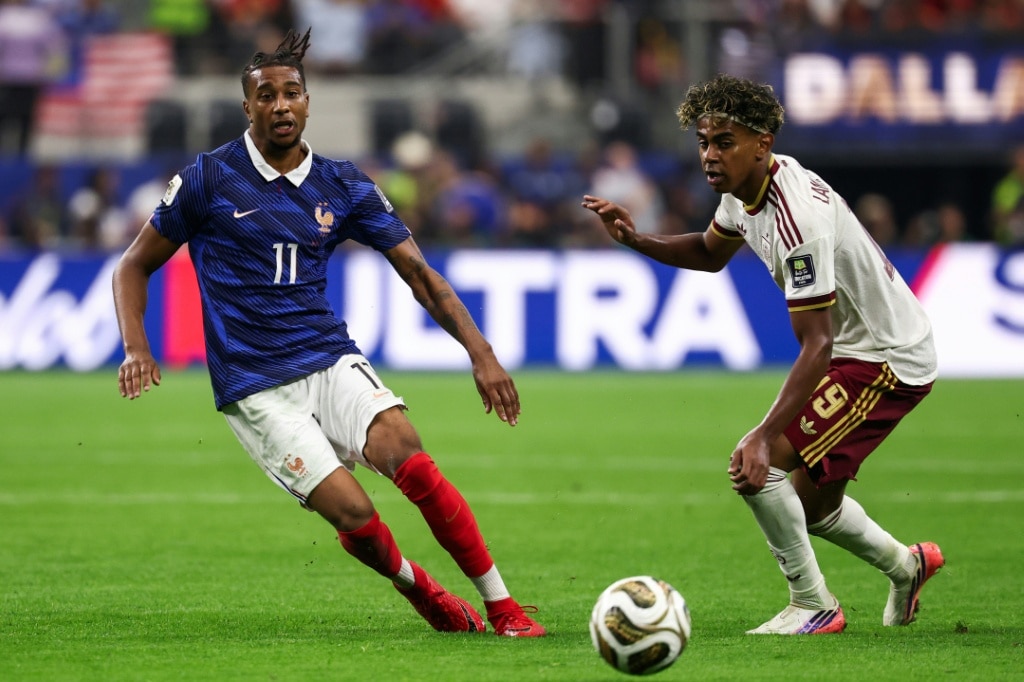
    Coming into the 2025 FIFA World Cup semi-final clash against Spain at Arlington, Texas’ AT&T Stadium, France entered the tie with a reputation as the tournament’s most devastating attacking unit. Praised as the most exciting offensive collective since Brazil’s iconic 1982 squad, Les Bleus had piled up 16 goals across six prior matches, with the dynamic front line of Kylian Mbappe, Ousmane Dembele, Michael Olise, Bradley Barcola and Desire Doue terrorizing opposition defenses at every turn. But on Tuesday night, that free-scoring form vanished into the Texas humidity, as Spain’s dominant midfield masterclass secured a clinical 2-0 victory that crushed France’s bid to reach an unprecedented third consecutive World Cup final.

    For France, the match was a painful lesson that attacking flair alone cannot win knockout football, echoing the fate of Brazil’s beloved 1982 side that fell short of glory despite their mesmerizing play. Spain’s midfield trio of Rodri, Dani Olmo and Fabian Ruiz completely shut down France’s supply lines to their star forwards, leaving the vaunted French attack unable to register a single shot on target until more than 75 minutes had elapsed. By that point, Spain had already built a two-goal cushion and was controlling the tempo with ease, cruising through the final stages to confirm their place in the tournament’s deciding match.

    Speaking after the final whistle, Mbappe, who came into the match one win away from making history as only the second player ever after Brazil’s Cafu to feature in three straight World Cup finals, admitted France had been outplayed across every area of the pitch. “We kept finding ourselves outnumbered 3-on-2 in midfield,” the Real Madrid star explained. “And against Spain, that’s a real problem…When you put it all together, the result is a defeat. It’s a huge disappointment. I don’t think we played the match we wanted to play — whether tactically, technically, or in terms of our overall performance level. And when you don’t do what you’re supposed to do in a World Cup semi-final, you don’t win.”

    The result brings a bitter, underwhelming end to Didier Deschamps’ tenure as France head coach, who is set to depart his post after the tournament. Deschamps, who led France to World Cup glory in 2018 and a runner-up finish in 2022, had been widely expected to cap his tenure with another deep run, with many arguing a third final appearance would have cemented his legacy as one of France’s greatest ever managers. Many questions will now be raised about why Deschamps failed to prepare a tactical game plan to neutralize Spain’s renowned possession-based passing system, a weakness that was exploited fully on Tuesday.

    Despite the disappointing exit, Deschamps struck a reflective tone when addressing reporters, insisting he had no regrets over his time in charge of the national side. “It is not really important on a personal level whether I leave this competition in the semi-final or final,” Deschamps said. “It’s not time to talk about the future. And I am extremely happy. I am very proud of everything we’ve done with the national team. I have been lucky as a player to enjoy a big moment. Today is not such a moment but I think we must accept it without forgetting everything that we’ve experienced so far.”

    For Mbappe, the premature exit means France will now face a third-place match at Miami’s Hard Rock Stadium on Saturday, a fixture that carries little consolation for a side that entered the tournament with title ambitions. While the 27-year-old acknowledged the crushing weight of the disappointment for the entire squad, he struck a defiant note about the future of French football, with the 2028 European Championships on the near horizon.

    “It was a dream for us to reach the final, to give our country the chance to keep dreaming and to make history,” he said. “Now, it is something we have to face with our heads held high. I believe that when you win, you win with your head held high; so when you lose, you have to lose with your head held high, too. But right now, there is immense disappointment. I find it hard to put into words just how disappointed the squad and I are. Yet even if it might seem a bit robotic at times, we have to pick ourselves up, go on vacation, and move on to the next chapter. Because football waits for no one. We have to start over, put this failure behind us, and learn from it.”

    For Spain, the victory marks a return to the World Cup final, bringing the nation one step away from lifting a second world title after their maiden triumph in 2010.

  • Adelaide Crows star Josh Worrell to face court over crash with pedestrian

    Adelaide Crows star Josh Worrell to face court over crash with pedestrian

    A prominent Adelaide Crows AFL defender is scheduled to appear in court following a collision with a pedestrian that occurred on his commute to team training earlier this month.

    25-year-old Josh Worrell was traveling along Port Road in Woodville, on the outer boundary of Adelaide, when his vehicle struck a 29-year-old male pedestrian early Friday morning, leaving the pedestrian with physical injuries from the crash.

    In the immediate aftermath of the incident, Worrell offered to transport the injured man to a local hospital for treatment. While both parties later attended a police station to file an official report of the collision that same afternoon, their report fell outside the mandatory reporting window required by South Australian law, leaving Worrell facing formal criminal charges.

    In an official statement released following the completion of initial investigations, South Australia Police confirmed that the AFL player has been cited for two offenses: aggravated driving without due care, and failure to present to a police station within the legally required 90-minute window after a collision that resulted in injury. Authorities added that Worrell will receive a summons ordering him to appear at a local court for arraignment at a future date.

    In a surprising turn of events just one day after the crash, Worrell suited up for the Adelaide Crows and played the full 90-minute match against the Gold Coast Suns at Adelaide Oval, where the Crows secured a dominant 128-49 victory.

    Speaking to reporters on Tuesday, Crows head coach Matthew Nicks confirmed that the club is prioritizing support for the young defender as he navigates the legal aftermath of the incident. “It’s been a pretty challenging few days for Josh, he’s working through after his accident,” Nicks told journalists. “But we’re just doing whatever we can to support him through that.”

    Media outlets have approached Adelaide Football Club for additional comment on the incident and the club’s internal review process, with further updates expected as the legal case progresses.

  • A special team beats brilliant individuals – how silky Spain flattened France

    A special team beats brilliant individuals – how silky Spain flattened France

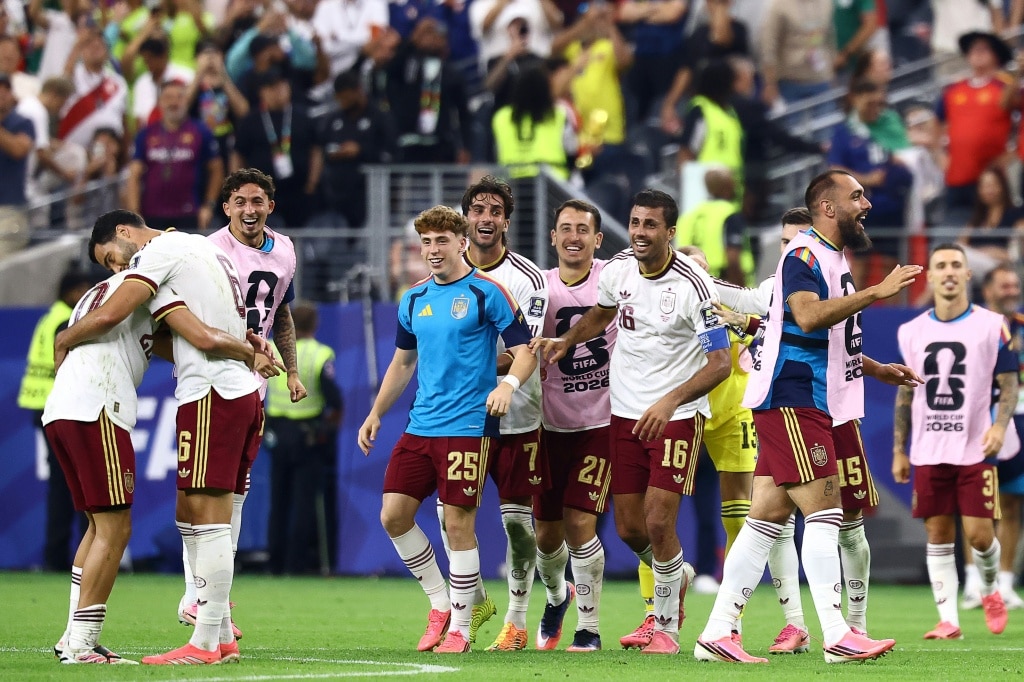
    In one of the most stunning semi-final performances in recent World Cup history, Spain delivered a near-perfect display of controlled collective football to crush pre-tournament favorites France 2-0 at Dallas Stadium, securing their place in the 2026 World Cup final and leaving football pundits and fans alike in awe of their dominance.

    Les Bleus entered Tuesday’s highly anticipated matchup as overwhelming favorites to advance. Boasting a star-studded attacking line led by Kylian Mbappe, Ousmane Dembele and Michael Olise, Didier Deschamps’ side had cruised through the knockout stages, with many analysts questioning whether any side could stop their momentum toward a second consecutive World Cup title.

    But Spain, the reigning European champions who entered the match level with Italy on a joint-record 37-game unbeaten streak, silenced all doubters with a disciplined performance that shut down France’s vaunted attack completely. The win marks just the second time Spain has reached a men’s World Cup final, and they will now face either Argentina or England in Sunday’s title decider, entering the match as clear favorites after their dominant semi-final showing.

    Spain’s road to the final has been one of slow-burn momentum rather than early fireworks. They began their campaign with an underwhelming 0-0 draw against first-time World Cup qualifiers Cape Verde, required late 91st and 88th-minute winners to see off Portugal in the Round of 16 and Belgium in the quarter-finals respectively, and teenage star Lamine Yamal entered the semi-final with only one tournament goal to his name. But Luis de la Fuente’s side have peaked at the exactly the right moment, and their clean sheet against France marked their sixth shutout in seven matches – a feat never before achieved in a single World Cup edition. For France, the result means a consolation third-place play-off, after managing only three attempts on target all game.

    Pundits who witnessed the match were quick to praise Spain’s all-round performance. “Spain scalped France – they flattened France,” former Premier League champion Chris Sutton told BBC Radio 5 Live from the stadium. “We heaped so much praise on France throughout this tournament, but they were swatted aside by silky Spain. Spain outfought and outplayed this French team from start to finish.”

    Another former Premier League winner, Roy Keane, highlighted France’s lack of coordination on ITV: “France were not playing as a unit. You have brilliant individuals, but they never functioned as a team. Spain have been absolutely brilliant – an absolute joy to watch.”

    Much of the credit for Spain’s historic run has gone to manager Luis de la Fuente, whose appointment in December 2022 was met with widespread skepticism. A low-profile youth team coach who had led Spain’s U-19, U-21 and U-23 sides, de la Fuente was even dubbed “Luis de la Who?” by some critics after taking over from high-profile predecessor Luis Enrique. But the 65-year-old has defied all expectations, leading Spain to a 2023 Nations League title, 2024 European Championship glory, and now a World Cup final in less than three years in charge.

    That skepticism now seems completely unfounded, with analysts pointing to de la Fuente’s decade-long work building Spain’s current core through the national youth setup as the foundation of their success. Mikel Merino, captain Rodri and goalkeeper Unai Simon all won the 2015 European U-19 Championship under de la Fuente, while core starters Mikel Oyarzabal and Dani Olmo also came through his youth programs.

    “De La Fuente started this journey 10 years ago with Oyarzabal, Dani Olmo, Rodri and Simon,” Spanish football expert Guillem Balague told BBC 5 Live. “They won the under-19 and under-21 Euros together, got to know each other, formed a family, and that feeling of being better together than individually is in their DNA.”

    De la Fuente embraced that team-first spirit in his post-match comments, confirming he had received a congratulatory phone call from King Felipe VI after the final whistle. “Our players deserve to be here because of effort, talent, sacrifice, and the constant work to be a better version of ourselves,” he said. “We’ve recaptured the spirit of 2010, when we won the World Cup. The character of this team is evident in the fact that those who didn’t play stayed behind to train after the match. This is a process, and it was all planned for us to reach this moment in as great shape as possible.”

    Against France, that process translated into a tactical masterclass that exposed the favorites’ weaknesses. Spain’s iconic possession-based, short-passing football dominated the game from kickoff, with the midfield trio of Fabian Ruiz, Rodri and roaming playmaker Dani Olmo completely overran France’s two-man central midfield. Olmo’s ability to drop deep created a persistent three-versus-two numerical advantage that France could never solve, while Spain targeted France’s passive zonal 4-4-1-1 block by pushing their full-backs forward to create overloads on the flanks.

    The two goals that sealed the win came from those exact tactical strengths. Oyarzabal opened the scoring from the penalty spot, before Pedro Porro found an unmarked space in the box after a clever overlapping run to slot home Spain’s second just before the hour mark. Remarkably, the two goals came from Spain’s only two attempts on target all game, while France recorded an expected goals (xG) total of just 0.3 – the lowest for any team in a World Cup semi-final since Brazil faced Sweden in 1994.

    The result prompted a wave of celebration across Spain, with thousands of fans taking to the streets of major cities immediately after the final whistle. As they prepare for Sunday’s final, de la Fuente said he has no preference between facing England or Argentina, who will play their semi-final on Wednesday. But Balague said Spain’s performance on Tuesday has already marked them as the team to beat.

    “I think the winner of the World Cup played today,” he said. “Having raised the bar, Spain are finishing games, they are creating chances. They have so many layers that they can adapt to any opponent. If it’s Argentina, who are defensively suspect, Spain can break them on the counter. If it’s England, Spain’s core is settled and their game plan is clear – they’ve been building to this moment for a decade.”

    For France, who have been knocked out in the semi-finals, the focus now turns to an unwanted third-place play-off, with manager Didier Deschamps set to take charge of his final game in charge.
  • AFL 2026: Hawthorn star Jack Ginnivan takes aim at rule he believes is ‘worst’ in the game

    AFL 2026: Hawthorn star Jack Ginnivan takes aim at rule he believes is ‘worst’ in the game

    A growing wave of criticism against the Australian Football League’s polarizing stand rule has gained a high-profile new critic, with Hawthorn Hawks star playmaker Jack Ginnivan becoming the latest prominent voice to call out the regulation, arguing it undermines the quality of play and creates unnecessary confusion for athletes and officials alike.

    Introduced back in 2021, the stand rule was designed with a clear on-field goal: to prevent players positioned on the mark from moving laterally before a set shot, in turn opening up attacking space and creating more dynamic play across the ground. But from its launch, the regulation has split opinions across the league, drawing consistent pushback from players, coaches, and fans who argue it creates more problems than it solves.

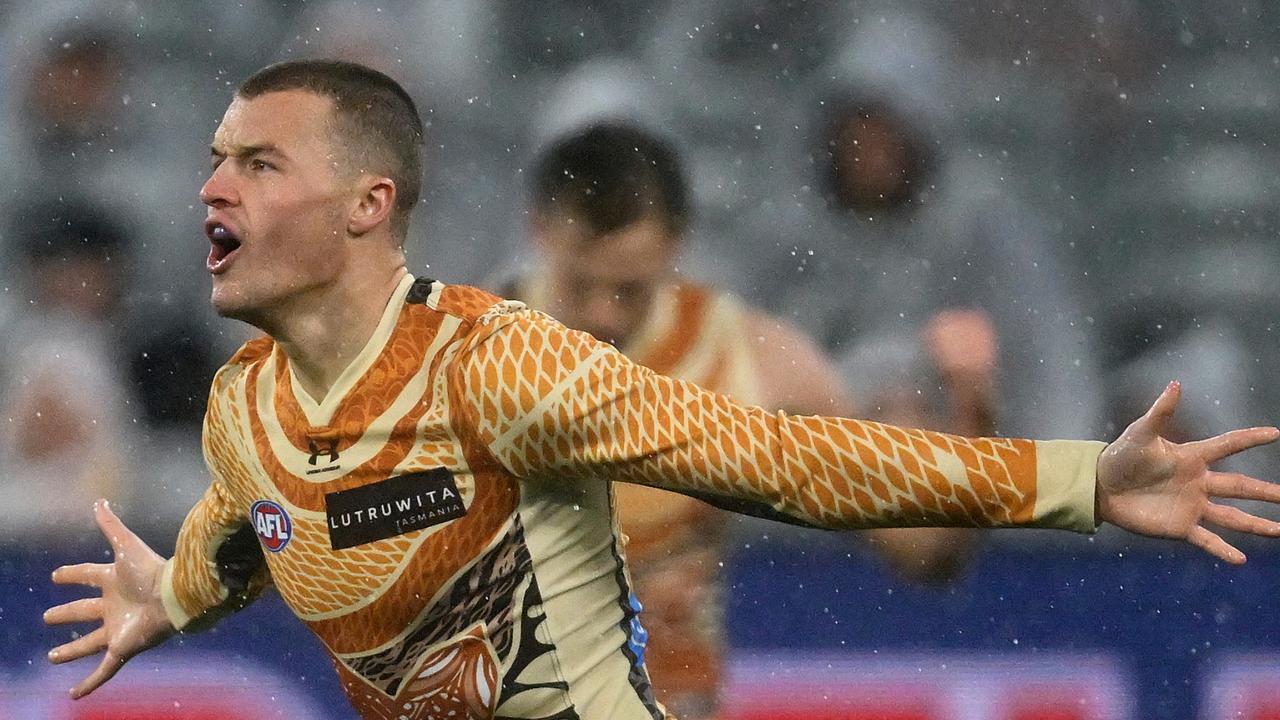
    Ginnivan, who knows the rule’s inconsistent impacts firsthand after benefiting from a controversial 50-meter penalty under the regulation during Hawthorn’s rain-soaked clash against Carlton at the Melbourne Cricket Ground last Saturday, doubled down on those criticisms in a recent appearance on the Ball Magnets podcast. The forward, known for his straightforward, unfiltered comments to media, did not mince words when assessing the rule.

    “I think it’s the worst rule the AFL has, like easily,” Ginnivan said. “It’s just so confusing for players and umpires to adjudicate. It just doesn’t need to exist, it creates unnecessary 50-meter penalties that can directly lead to a goal out of nowhere, and it sort of just ruins the game.”

    The controversial incident from Saturday’s match perfectly illustrates the confusion Ginnivan highlighted. As the Hawks prepared for a difficult set shot in heavy, slippery rain, Carlton’s Adam Cerra stepped off the mark just as the umpire appeared to call play-on. Despite the call, officials awarded Ginnivan a 50-meter penalty, moving his shot from a tough angle to an unmissable position directly in front of goal. Ginnivan went on to convert the kick, but he stressed that the chaos of the moment was not the fault of the officiating team—it was the fault of a poorly written rule.

    Ginnivan sympathized with veteran umpire Matt Stevic, who was forced to make the split-second call in the chaotic moment. “It’s just so hard for Matt Stevic to umpire it because the rule is so bad,” he explained.

    Offering his own perspective on how set shots should work, Ginnivan argued the old system allowed for more flexibility and strategic play without unnecessary confusion. “I felt like if I was to run straight, if Dimma (Blake Hardwick) was there, I could feign the handball if I wanted to. But if I wanted to run straight, I am OK. I don’t think I stepped off my line, I am pretty sure I was still running straight. But then the confusion of, ‘Oh (he) called play-on’, it’s just so hard for everyone involved.”

    Ginnivan’s public criticism adds to a growing body of discontent with the stand rule, reigniting calls for the AFL to revisit the regulation and consider adjustments ahead of the next season to restore clarity and consistency to on-field officiating.

  • ‘Extremely happy’ Deschamps gets the farewell game no-one wants

    ‘Extremely happy’ Deschamps gets the farewell game no-one wants

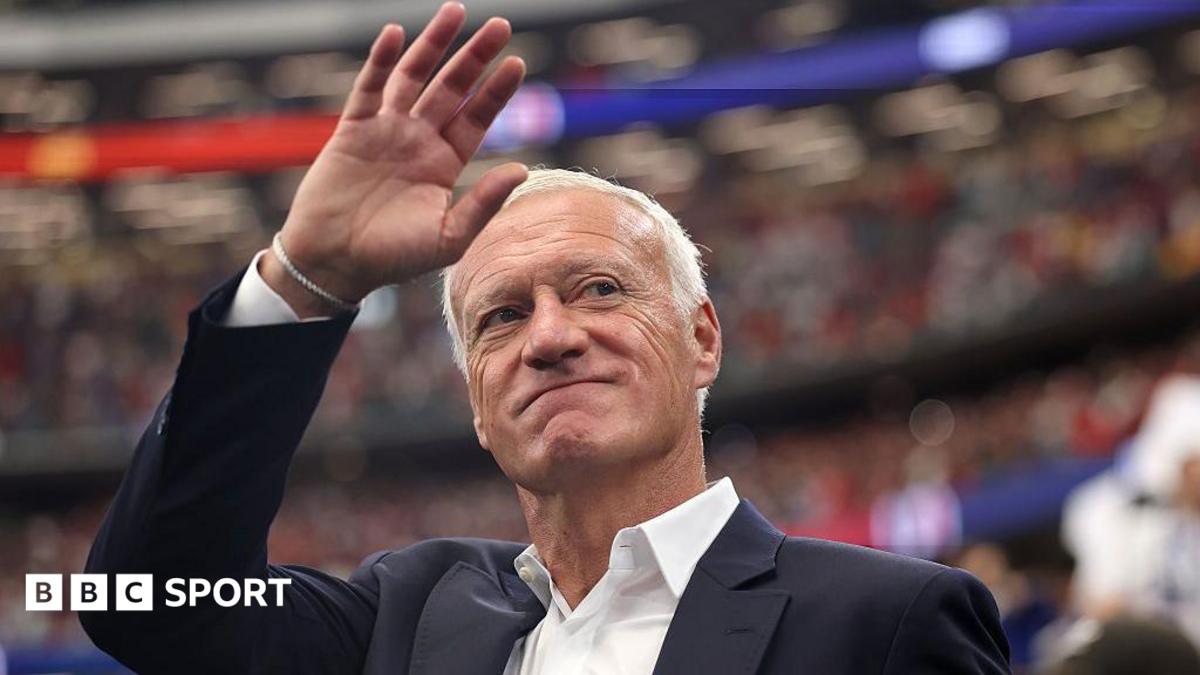
    In a lopsided 2026 FIFA World Cup semi-final clash held in Dallas, Spain secured a dominant 2-0 victory over France, punching their ticket to the tournament’s final and bringing an unanticipated early end to Didier Deschamps’ 14-year tenure as France’s head coach.

    Deschamps, who had already announced his plan to step down following this 2026 tournament, will now wrap up his legendary career with France in Saturday’s third-place play-off in Miami, where his side will face the loser of the other semi-final between England and Argentina. A unique figure in World Cup history, Deschamps is one of just three people to win the tournament both as a player (1998) and a manager (2018), alongside Brazil’s Mario Zagallo and West Germany’s Franz Beckenbauer. Even in defeat, the 57-year-old set a new record in Dallas: he now holds the mark for the most World Cup matches managed at 26, breaking a previous tie with legendary West German boss Helmut Schön that stood at 25.

    Heading into Tuesday’s semi-final, France were tipped as overwhelming favourites, having advanced through the tournament with a string of dynamic attacking displays led by joint-top tournament scorer Kylian Mbappé, Ballon d’Or winner Ousmane Dembélé and Bayern Munich rising star Michael Olise. But against a well-drilled Spanish side, the French attacking unit failed to register any meaningful threat all match: they mustered only 10 total shots, their lowest tally at this 2026 World Cup, and recorded an expected goals value of just 0.3.

    Post-match, criticism of France’s flat performance and flawed tactics came quickly from both inside and outside the squad. Mbappé, who had been expected to lead his side to victory, called out the team’s strategic misalignment, noting that France’s 3-v-2 midfield setup played directly into Spain’s strengths. “When you don’t do what you have to do in a World Cup semi-final, you don’t win,” Mbappé said. “Spain respected their gameplan… They are better than us at controlling a game. We didn’t manage to do it. We were too sloppy technically. We could not hurt them when we could have.” Former France midfielder Patrick Vieira echoed that sentiment in his ITV commentary, saying “They haven’t shown up. I was expecting more. There was big expectation for France to win the World Cup. All our top players went missing. Collectively we were really bad.”

    Despite the disappointing end to his World Cup run, Deschamps remained reflective rather than bitter in his post-match press conference, brushing off questions about his legacy and upcoming departure. “It’s not time to talk about the future,” he said. “It is not important on a personal level whether I leave a competition in a semi-final or final. I am extremely happy. I am very proud of everything we’ve done to reach this stage and to win a World Cup – to take the French team to the highest level. I have been lucky as a player. I have enjoyed happy moments. Today is not such a moment. We must accept it without forgetting everything we experienced.”

    Across French football, figures from past and present have rushed to honour Deschamps’ transformative impact on the national side, which extends far beyond this final result. When Deschamps took over the French job in 2012, the program was in chaos: France had crashed out of the group stage at both Euro 2008 and the 2010 World Cup, the latter marred by a public player mutiny against then-manager Raymond Domenech. Under Deschamps’ leadership, France rebuilt their culture, maximized the nation’s depth of elite talent, and climbed back to the top of international football, reaching the 2016 Euro final on home soil, winning the 2018 World Cup, and falling just short of retaining the title in a penalty shootout loss to Argentina in the 2022 final. Over his 14 years in charge, Deschamps won 20 of his 26 World Cup matches, losing only three.

    Former France striker Olivier Giroud, who won the 2018 World Cup under Deschamps, called the outgoing manager a foundational figure for a generation of French players. “There was extra motivation for all the players at this World Cup to give Didier the ending he wanted, and deserved,” Giroud said. “He deserved to exit by the big door. He did not quite manage that but he is still a great, for what he has already done in his 14 years. His record does the talking for him. He gave me so much of his confidence, and I tried to repay him on the pitch. This makes us very close, and because we won that World Cup, we are linked forever. The biggest thing he taught us was his desire, and his drive and ambition to be the absolute best and to win every single game.”

    Gael Clichy, a former France defender who played in Deschamps’ first year in charge and now manages third-tier French side Caen, echoed that praise, saying Deschamps’ legacy is already secure regardless of the semi-final result. “His legacy was that he took a team that was below par and he managed to bring that team back up to the top,” Clichy told BBC Radio 5 Live. “This legacy of his really means we don’t have to talk about what he should or could have done. What he has done for French football as a player and a coach is fantastic. It is phenomenal.”

    All signs point to Deschamps being succeeded by his 1998 World Cup winning teammate Zinedine Zidane, with ESPN reporting in March that a verbal agreement is already in place for Zidane to take over the French national side this summer. Zidane, who has not managed since leaving Real Madrid in 2021, won three Champions League titles during his tenure at the Spanish club. Clichy noted that whoever follows Deschamps will face a difficult challenge filling his shoes.

    For Spain, the victory sets up a historic shot at their first World Cup title since 2010, as they prepare to face the winner of Wednesday’s England-Argentina semi-final in the 2026 World Cup final.