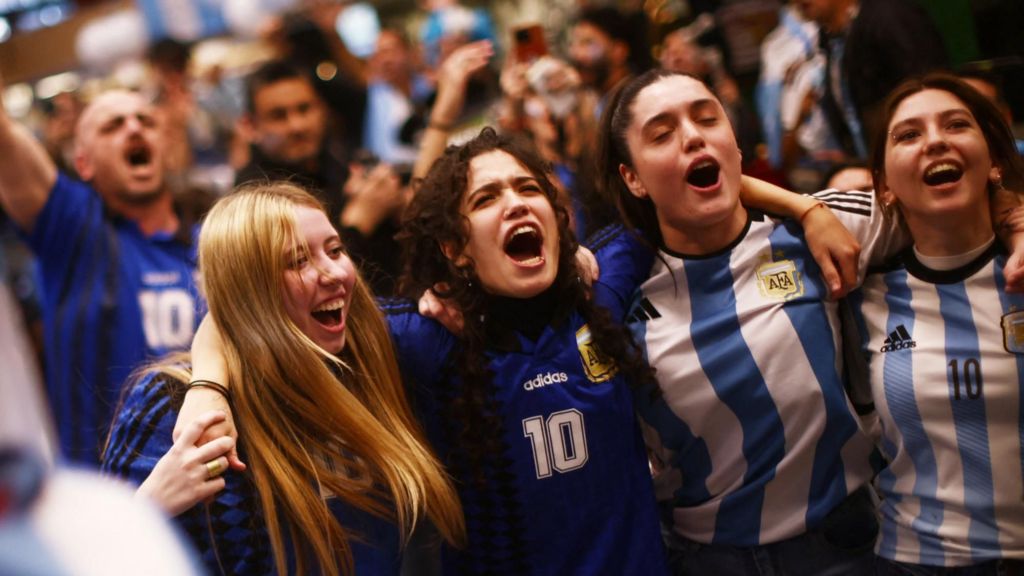
Jubilant scenes erupted across Argentina and major diaspora communities in the United States this week as the national men’s football team sealed a dramatic semi-final victory over England, punching their ticket to the World Cup final. From bustling city plazas in Buenos Aires to suburban neighbourhoods in Miami and New York, millions of fans flooded the streets waving sky-blue and white striped flags, blowing vuvuzelas, and singing traditional chants long into the night. The win, which came after a tightly contested match that kept supporters on the edge of their seats, has united the global Argentina fanbase in collective excitement, with many describing the moment as a once-in-a-generation opportunity to lift football’s most coveted trophy. Local authorities in major Argentine cities reported large but peaceful gatherings, with fans sharing hugs and taking to social media to post clips of their celebrations that have since gone viral across platforms.
分类: sports
-
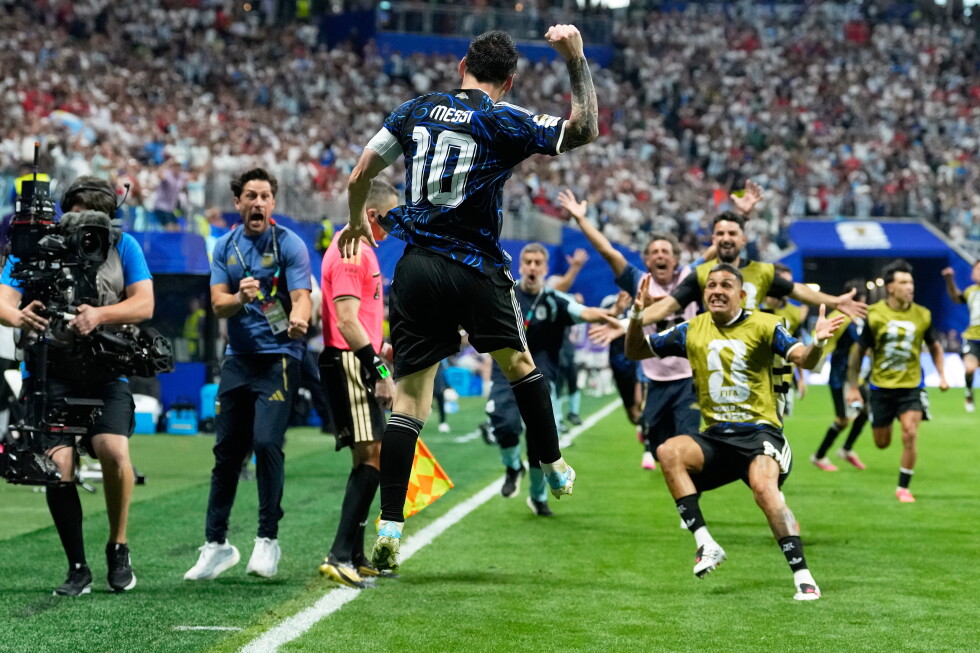
The World Cup final is set, with Messi and Argentina facing Yamal and Spain for the title on Sunday
The expanded 48-team 2026 FIFA World Cup co-hosted across the United States, Canada and Mexico is days away from crowning a new champion, and the title decider has delivered one of the most anticipated storylines in modern soccer history. When Lionel Messi’s defending champion Argentina faces Spain’s rock-solid defensive side in East Rutherford, New Jersey this Sunday, it will be more than a fight for the golden trophy—it is a clash of contrasting styles, generations, and long-brewing destiny that no soccer fan could have scripted.
The road to the final began with two breakout semifinal performances. On Tuesday, Spain booked their spot with a commanding 2-0 victory over France, while a day later, tournament comeback kings Argentina pulled off another late rally to defeat England 2-1, punching their ticket to the decider.
Argentina enters the match chasing history that has not been made in more than 60 years. The South American side is vying for its fourth World Cup title, and would become the first nation to win back-to-back World Cups since Brazil achieved the feat in 1958 and 1962. Leading the charge is Messi, the tournament’s all-time leading goalscorer, who has powered Argentina to a tournament-high 19 goals so far—an explosive attacking record that stands as the best in the competition.
Standing in their way is a Spanish side built on elite defensive discipline that has been nearly unbreakable throughout the tournament. Spain has conceded just one goal across seven matches, the lowest total of any team, earning their place in the final as they chase their second World Cup title, their first coming in 2010. Ranked second in the pre-tournament FIFA world rankings behind Argentina’s top spot, La Roja have been almost unbeatable for more than a year: they carry a 37-match unbeaten streak across all competitions into Sunday’s final, with 28 wins and nine draws since their last loss, a 1-0 defeat to Colombia in March 2024.
What makes this final even more remarkable is the twist of fate that brought the two teams to New Jersey, after a planned pre-tournament showcase never came to be. As the reigning South American and European champions respectively, Argentina and Spain were scheduled to meet in a high-profile Finalissima clash in Doha, Qatar last March. The match was ultimately canceled over security concerns, sparked by escalating regional unrest linked to the ongoing conflict involving Iran, the United States and Israel. What was supposed to be a preview of a World Cup final has instead become the main event, with the two sides set to square off not at Lusail Stadium—site of Argentina’s iconic 2022 penalty shootout win over France— but at a venue just outside New York City for soccer’s biggest stage.
Beyond the team rivalry, the final will deliver a once-in-a-generation meeting between two Barcelona superstars separated by 20 years. A viral 2007 photograph captured Messi, then a rising young star participating in a UNICEF initiative, posing with an infant. That baby was Lamine Yamal, now Spain’s breakout young left-footed talent who followed in Messi’s footsteps to become a star at Barcelona. Two decades after that innocent photo op, the pair will share the World Cup final pitch, capping the tournament with a narrative that feels too perfect to be scripted.
A look at both teams’ journey to the final highlights their contrasting paths to the decider. Spain have remained unbeaten throughout this World Cup, posting six wins and one draw across seven matches, with 13 goals scored and just one conceded. Their campaign began with a tense 0-0 draw against Cape Verde in the group stage, followed by a 4-0 rout of Saudi Arabia and a 1-0 win over Uruguay. In the knockout round, they dismantled Austria 3-0, edged Portugal 1-0, defeated Belgium 2-1, and shut out France 2-0 to reach the final.
Argentina, by contrast, has been perfect so far, with seven wins from seven matches and zero draws, netting 19 times while conceding seven. The Albiceleste started their group stage campaign with a 3-0 win over Algeria, a 2-0 defeat of Austria, and a 3-1 victory over Jordan. They have lived up to their “comeback kings” reputation in the knockout round, grinding out tight wins: 3-2 over Cape Verde, 3-2 over Egypt, 3-1 over Switzerland, and the late 2-1 turnaround against England that booked their final spot. Argentina also brings an impressive long-form World Cup unbeaten streak into Sunday: they have not lost a World Cup match since their opening group game defeat to Saudi Arabia in 2022, going 11 wins and two draws over their last 13 outings.
As the 104-match, five-week extravaganza comes to a close, all eyes turn to the East Rutherford pitch. One side boasts the most dynamic attack in the tournament, the other boasts the tightest defense. One is led by the greatest goalscorer in tournament history chasing back-to-back titles, the other is a youthful defensive juggernaut led by the sport’s next great star chasing a second world crown. After a canceled pre-tournament match and a months-long journey across North America, the biggest World Cup in history is set for a picture-perfect ending that no fan will want to miss.
-
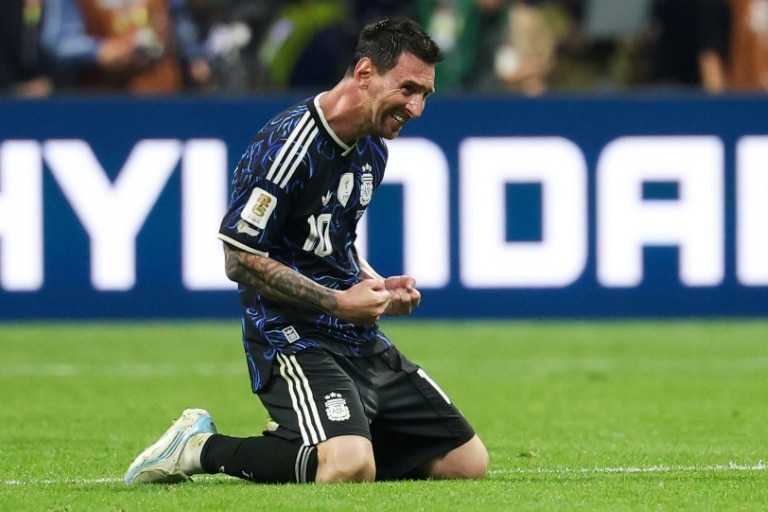
Messi’s Argentina stun England in comeback to reach World Cup final
In a drama-charged World Cup semi-final that will go down as one of the most memorable chapters in the decades-long Argentina-England football rivalry, Lautaro Martinez’s 92nd-minute match-winning header sealed a dramatic 2-1 comeback victory for defending champions Argentina, who will now face European champions Spain in Sunday’s historic final. Played out in front of a packed crowd of 68,239 fans at Atlanta’s Mercedes-Benz Stadium, the contest lived up to every bit of its billing as a clash between two of the sport’s most storied national sides.
-
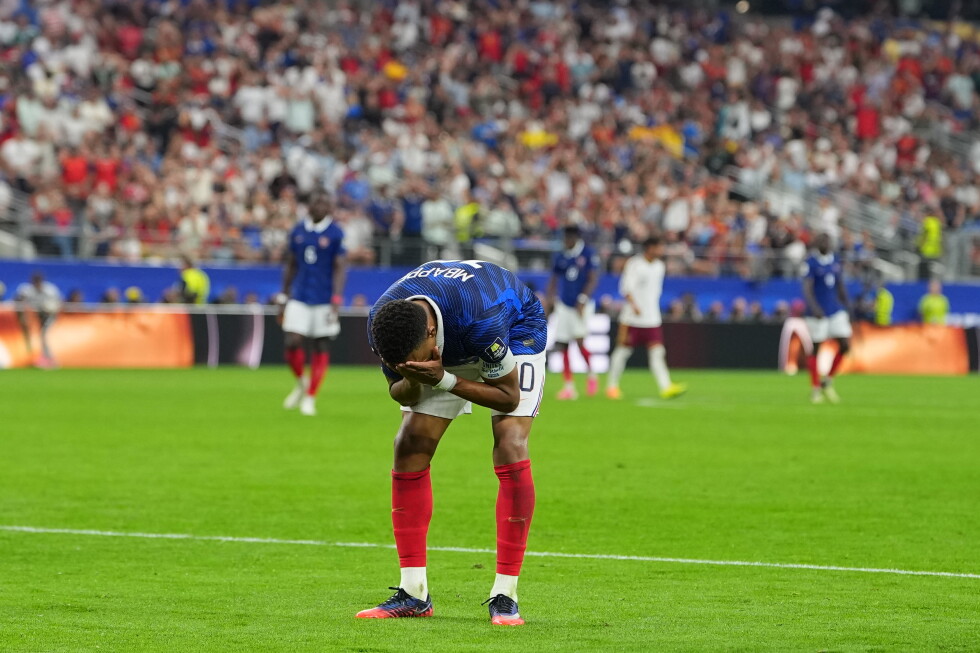
One Extraordinary Photo: France’s Kylian Mbappe shows his frustration against Spain
ARLINGTON, Texas — For veteran Associated Press photojournalist Julio Cortez, a Pulitzer Prize winner and AP’s regional chief photographer based in Dallas, this Women’s World Cup assignment marked his third time covering the global tournament, capping 16 years of work with the news agency. What began as a quiet stretch of the match shifted into one of the most memorable photographic opportunities of the entire competition, capturing the raw, unfiltered heartbreak of elite sports at its highest stakes.
The match was France’s semifinal against Spain, and with less than 10 minutes remaining in regular play, the French side was staring down a 2-0 deficit, with the clock ticking down on their dreams of reaching a third consecutive World Cup final. For French superstar Kylian Mbappé, every missed scoring chance had already been followed by unmistakeable displays of frustration, and the 81st minute would bring one of the game’s last best opportunities for France to get back into the match.
Mbappé broke into open field after receiving a well-placed pass, with Spanish goalkeeper Unai Simon rushing out of his penalty box to cut off the advance, leaving the Spanish net completely unguarded. The breakaway left France with a golden chance to cut the deficit to a single goal, setting up a potential late comeback. But Spain’s backline rallied quickly, blocking the attempt and shutting down the threat before France could capitalize. In the immediate aftermath, Mbappé froze, unable to believe his missed opportunity. He doubled over, buried his face in his hands, and in that moment of unguarded emotion, Cortez captured the iconic image that would come to define the match’s outcome.
Cortez never expected to get the shot when the breakaway unfolded. Moments before, the play had been concentrated on the opposite side of the pitch, so he had positioned his 400mm telephoto lens on a luxury suite above the team benches, where global soccer icon David Beckham was seated in attendance. With no high-stakes action near his vantage point, Cortez had been scanning the stands for celebrity guests — until the sudden breakaway shifted all momentum back to his side of the field.
In the space of a single second, Cortez switched gears, moving from his long-lens camera to a second body outfitted with a Sony G-Master 50-150mm f/2 lens to frame the fast-developing play. After the scoring attempt was blocked, Cortez kept his lens locked on Mbappé, anticipating the star’s raw reaction to the missed chance that would all but end France’s run in the tournament. For several seconds, other players cleared out around Mbappé as he processed the disappointment, leaving Cortez a clean frame to capture the unscripted moment of despair.
What makes the image stand out, beyond its perfect timing, is how it distills the high emotion of a World Cup semifinal. France came into the match chasing history, eyeing a third straight trip to the tournament’s championship match — a feat that would have cemented their status as one of the greatest international sides of the modern era. But Spain’s organized defense shut down every French attacking push throughout the late stages of the game, leaving Mbappé visibly frustrated long before the fateful 81st minute; the star had already picked up a yellow card in an earlier run-in with Simon.
In any high-stakes elimination match, emotions run to extremes: the winner leaves the pitch with unbridled joy and a spot in the final, while the loser is left to grapple with the crushing weight of what could have been. This shot does not capture a goal, a celebration, or a trophy lift — it captures the quieter, universally recognizable pain of falling short at the last moment, turning a single frame of the match into a story that resonates far beyond soccer.
-
Lionel Messi delivers again for Argentina, defending champions reach another World Cup final
ATLANTA — In a match that will go down as one of the most dramatic chapters in modern World Cup history, Lionel Messi once again cemented his legacy as soccer’s ultimate big-game player, orchestrating a late comeback that lifted Argentina to a 2-1 semifinal victory over England on Wednesday. With just one win now standing between him and a second World Cup trophy for his nation, the 39-year-old superstar did not add to his tournament-leading goal tally, but his vision and precision in the final minutes turned a likely exit into a historic ticket to the final.
This comeback marks the second unlikely rally Argentina has pulled off in this tournament, coming just eight days after a similarly improbable last-gasp win over Egypt in the round of 16. For a career already widely regarded as the greatest in the sport’s history, Wednesday’s performance added another iconic entry to Messi’s already overflowing collection of legendary moments.
England looked poised to fulfill its dream of reaching its first World Cup final since 1966, when it claimed its only global title, after Anthony Gordon put the Three Lions ahead in the 55th minute. For the next half hour, England held on tightly to its lead, clinging to the chance of a historic upset. But Argentina, a side that has built its tournament run on resilience and never-say-die spirit, had other plans.
The turning point came in the 85th minute. Working a short corner routine, Messi received a quick return pass after pushing the ball out along the touchline, spotted Enzo Fernández unmarked 25 yards from goal, and played a perfectly weighted pass into his path. Fernández fired a blistering curling shot that sailed beyond England goalkeeper Jordan Pickford into the top corner, leveling the score and shifting all momentum to Argentina.
By the time stoppage time rolled around, an Argentine winner felt almost inevitable. Just two minutes into the added stoppage period, Messi delivered again, whipping a pinpoint cross into the six-yard box. Lautaro Martínez slipped between two England defenders and guided a calm header past Pickford for the game-winning goal.
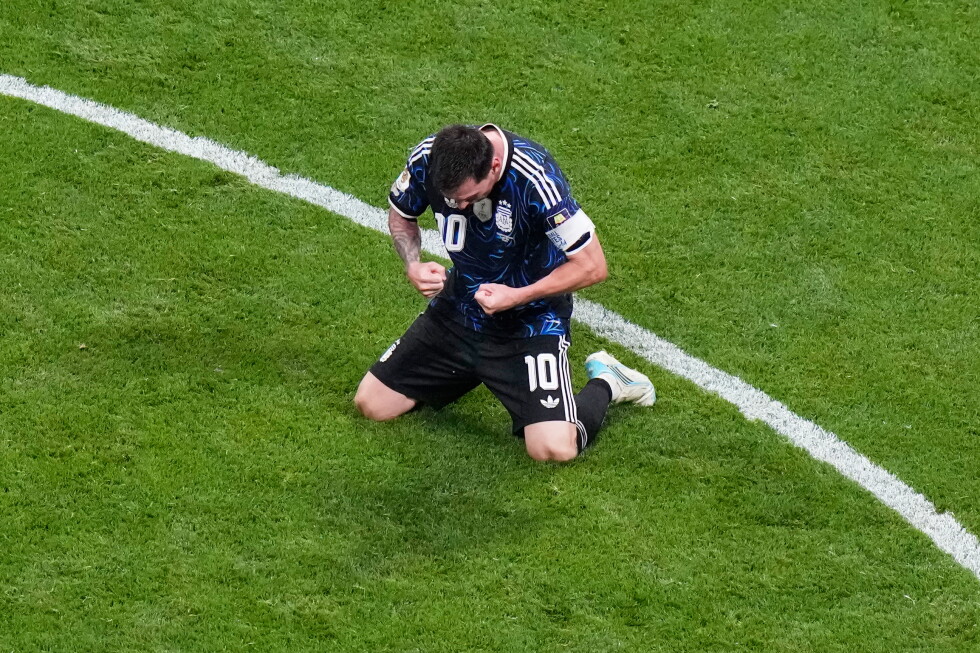
Argentina saw out the remaining minutes without conceding, and when the final whistle blew, Messi dropped to his knees on the Atlanta pitch, pumping his fists in celebration of yet another unforgettable victory. The win sets up a World Cup final showdown with Spain on Sunday, where Argentina will have the chance to make history as the first men’s national team to repeat as World Cup champions since Brazil accomplished the feat back in 1958 and 1962.
Individually, Messi remains tied with France’s Kylian Mbappé in the race for the tournament’s Golden Boot, with both strikers having notched eight goals so far. He also holds the record for most goals scored in World Cup history across all tournaments, with a total of 21. Yet for Messi, all individual accolades pale in comparison to the prize that now sits one win away: a second World Cup trophy for Argentina.
-
Kylian Mbappé-led France falls flat in World Cup loss to Spain when hopes for a title were high
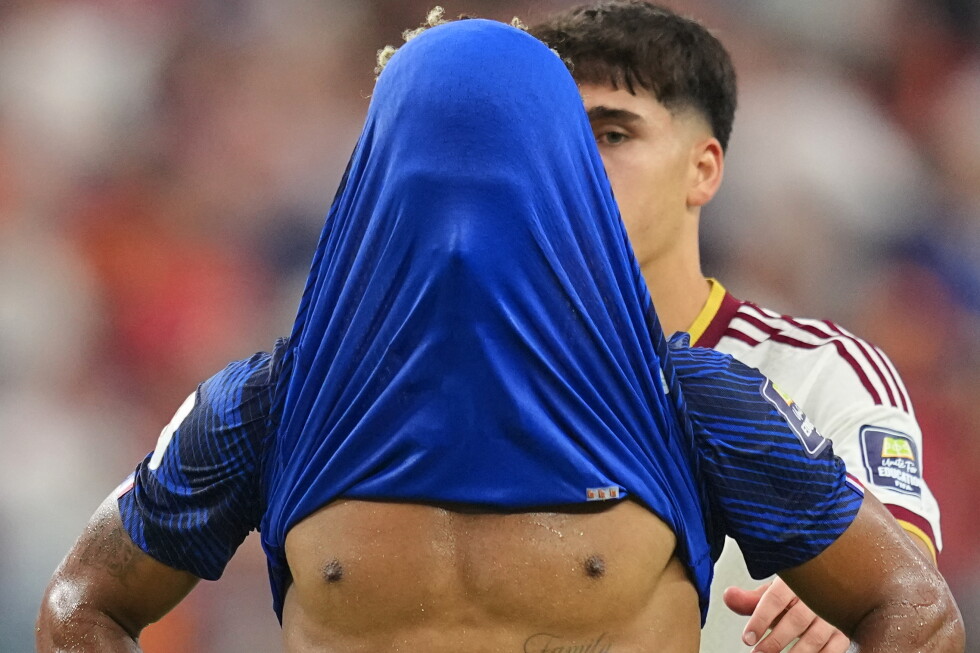
ARLINGTON, Texas — Entering Tuesday’s high-stakes World Cup semifinal at AT&T Stadium, home of the NFL’s Dallas Cowboys, France carried all the momentum: an undefeated run through the tournament’s first six matches, a dynamic attacking front led by golden boot contender Kylian Mbappé, and the experience of a squad that had reached the final of the last two World Cups. Many expected the defending runners-up to outclass Spain’s solid defense and punch their ticket to a third consecutive title decider, in what was widely expected to be head coach Didier Deschamps’ final match on soccer’s biggest global stage.
But the night belonged entirely to Spain, who shut out Les Bleus 2-0 to secure their spot in the World Cup final, leaving France and its long-tenured coach with a crushing early exit.
Deschamps, who has publicly stated this tournament would be his final World Cup at the helm of the French national team, boasts one of the most impressive resumes in international soccer: he lifted the trophy as a player for France in the 1998 home World Cup, then claimed gold again as manager in the 2018 tournament in Russia, before guiding his side to the 2022 final in Qatar, where France fell to Argentina in a dramatic penalty shootout.
Speaking to reporters after the final whistle through a translator, Deschamps reflected on his decades-long career with the French program while acknowledging the sting of the defeat. “I’ve been lucky as a player to enjoy happy moments. Today is not such a moment. But I think we must accept it without forgetting everything that we’ve experienced so far. But today’s feeling is that I am not happy,” he said, adding that it was too early to make any official announcements about his future.
The disappointment of the upset rippled 4,000 miles across the Atlantic to France itself, where unrest broke out in major urban centers. Multiple clashes were reported between law enforcement and young people in Paris, with similar disturbances recorded in Lyon. French sports media and pundits widely lamented the team’s flat performance, which marked the first time France conceded defeat in this year’s tournament after opening with six straight unbeaten matches.
Leading French sports daily L’Équipe summed up the widespread national disappointment, noting that Deschamps’ side were outperformed in every department of the game, “unable to live up to their dreams and to the hope they had inspired.”
Even France’s star players acknowledged the subpar showing, though captain Mbappé was quick to defend his embattled head coach, and pledged the squad would fight hard to secure a third-place finish for Deschamps when they face the loser of the other semifinal between England and Argentina this Saturday in Miami Gardens, Florida.
“Nothing changed about what Didier means to us as a French people. As a manager, as a player, he wrote an amazing story,” Mbappé said, after sharing a quick sideline hug with Deschamps following the final whistle. “There’s one game left for him, so we’re going to try to play the best game for him because he deserves it, and also the fans deserve to have a win and finish third in this World Cup.”
Much of France’s failure to threaten stemmed from the total shutdown of its high-profile attacking unit. The dynamic playmaking of Mbappé, Ousmane Dembele and Michael Olise, which had carried Les Bleus through the earlier rounds, never materialized against a sharp Spain defense that notched its sixth clean sheet in seven matches of the tournament.
Mbappé’s only clear-cut chance of the night came in the 67th minute, when his shot deflected off Spain defender Marc Cucurella and drifted just wide of the goal. By that point, Spain already held a comfortable 2-0 lead. Entering the semifinal, the 27-year-old French captain was tied with Argentina’s Lionel Messi for the tournament lead in goals with eight, but he failed to add to his tally Tuesday. He picked up a yellow card in the 86th minute after a frustrating collision with Spain goalkeeper Unai Simón, rushing toward the keeper as he bent to collect the ball and sending Simón tumbling to the turf.
Midfielder Rayan Cherki, speaking through a translator, summed up the team’s collective disappointment while looking ahead to future tournaments. “In so many ways, France was missing everything today. We’ll be back in four years, and we won’t make the same mistakes.”
-
Wærenskjold sprints to his 1st stage win at the Tour de France, Pogačar protects his lead
NEVERS, France — The 2024 Tour de France’s 11th stage delivered a textbook sprint finish that ended with a breakthrough win for 26-year-old Norwegian rider Søren Wærenskjold on Wednesday, while defending champion and current race leader Tadej Pogačar successfully protected his commanding overall position atop the general classification.
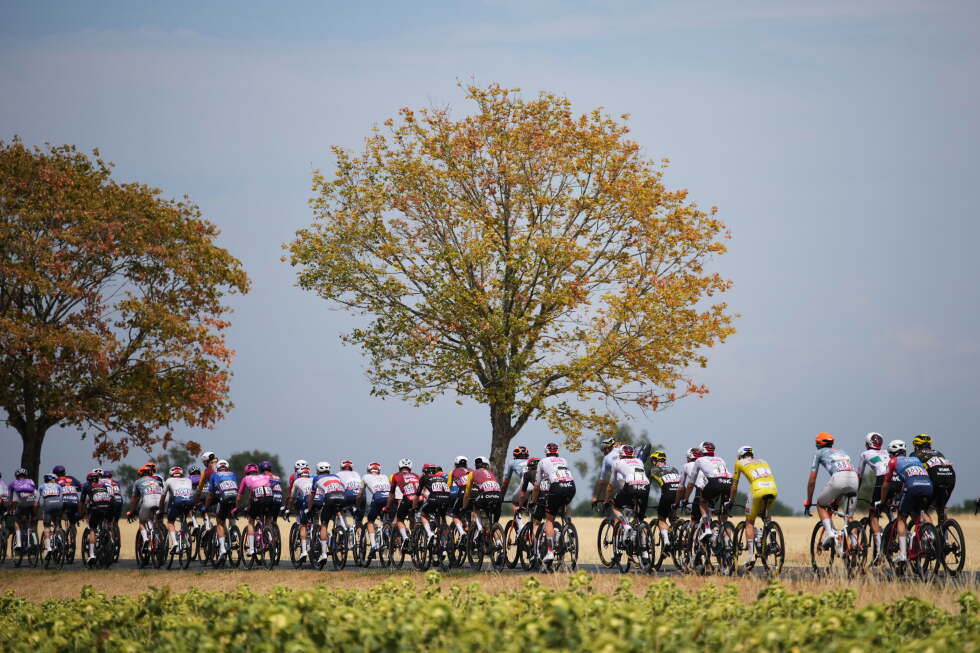
The 161.3-kilometer (100.2-mile) parcours from central France’s Vichy to Nevers was defined by rolling terrain that flattened out in the closing kilometers, a profile that always favored a bunch sprint finish. Expectations held true as the peloton reeled in every early breakaway ahead of the final dash to the line, setting the stage for the fastest riders in the race to compete for the stage honors.
Wærenskjold held off fellow Norwegian sprinter Olav Kooij by a tire’s width to take the win, with Belgian sprint star Jasper Philipsen and a large pack of fast-finishing riders trailing close behind. What makes the victory even more remarkable for the Norwegian is that it came just 24 hours after he crashed heavily during the demanding, hilly 10th stage that finished at Le Lioran. Wærenskjold recovered from the incident to claim the first Grand Tour stage win of his professional career.
For overall classification contender Tadej Pogačar, Wednesday’s stage was all about maintaining the advantage he built on the previous day of racing. The Slovenian, who claimed his third stage win of this year’s Tour on Tuesday to extend his lead over his closest rivals, crossed the finish line in the main peloton alongside defending champion Jonas Vingegaard, Pogačar’s primary challenger for the yellow jersey. Pogačar now retains his cushion of more than three and a half minutes over Vingegaard in the general classification standings as the race heads toward the decisive mountain stages in the Alps.
-
Milan prosecutor dismisses fraud case against former Italian referee chief Gianluca Rocchi
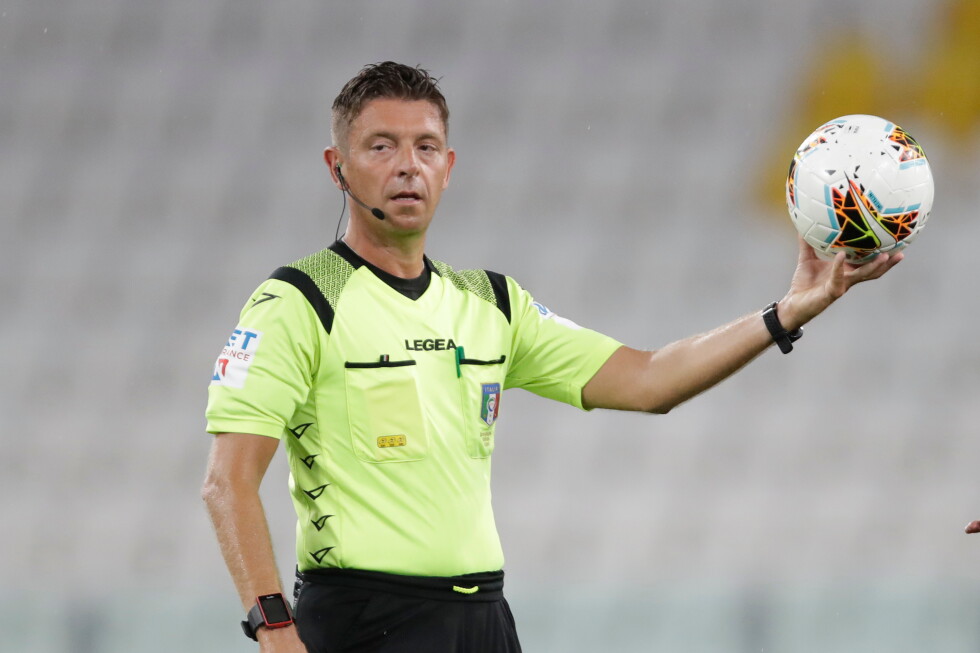
MILAN — In a significant development in Italian football’s latest judicial inquiry, public prosecutors in Milan have formally closed the sports fraud case against Gianluca Rocchi, the former head of referee designation for Italy’s top two professional leagues, and his deputy Andrea Gervasoni, clearing both men of all criminal allegations.
Rocchi, who oversaw referee and VAR appointments for Serie A and Serie B until the investigation launched, was first named as a target of a criminal probe back in April this year. The accusations against him centered on two key claims: that he had manipulated video assistant referee (VAR) decisions during top-flight matches, and improperly altered referee selection processes to favor specific clubs.
In an official statement released Wednesday, the Milan Public Prosecutor’s Office confirmed it had found “no evidence of a structured system aimed at interfering with appointments” that would support the sports fraud charges. The investigation centered on incidents that took place during the 2024-25 Serie A season. One of the most high-profile claims was that Rocchi had swapped the assigned referee for an Inter Milan match with an official thought to be more favorable to the Milan-based club. Inter Milan, which finished just one point behind eventual Serie A champion Napoli that season, was never implicated in any wrongdoing as part of the inquiry.
The second allegation tied to Rocchi involved a March 1, 2025 Serie A fixture between Udinese and Parma. Prosecutors claimed he interfered with VAR protocols by banging on the window of the VAR booth to urge officials to conduct an on-field review of a potential penalty call. Jurisdiction over this specific incident has been transferred to the Monza Public Prosecutor’s Office, as the league’s central VAR operations room falls within their geographic authority.
Shortly after the investigation was opened earlier this year, Rocchi immediately resigned from his post. He was temporarily replaced by Dino Tommasi before the Italian Football Federation appointed Daniele Orsato as his permanent successor.
Antonio D’Avirro, Rocchi’s legal representative, spoke publicly after the case dismissal Wednesday, noting that his client was relieved by the outcome. “I’ve spoken to him and he is very pleased; now we will consider our next steps. I’m meeting him tomorrow to discuss the matter in detail,” D’Avirro said. He added that while the case was resolved quickly, the personal and professional cost for Rocchi had already been high.
D’Avirro also pushed back against the remaining allegations tied to the Udinese-Parma incident, arguing no sporting fraud could be established in that case. “I fail to see how those ‘knocks’ could constitute sporting fraud; they were intended to correct a serious error the referee was making, certainly not to alter the match result. From a legal standpoint, I do not see how a case for sporting fraud could be established.”
-
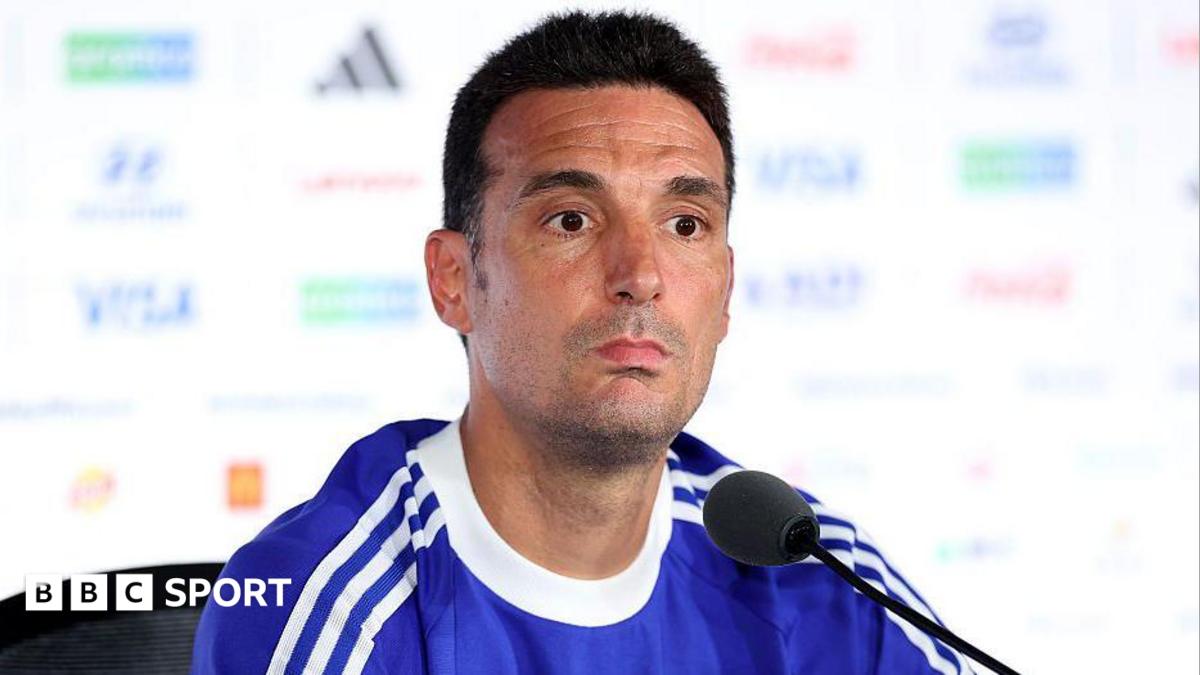
We shouldn’t confuse politics and football – Scaloni
One of the most iconic rivalries in international men’s football is set to reignite this Wednesday at Atlanta Stadium, as defending champions Argentina face England for a spot in the 2026 FIFA World Cup final. For England, a win would mark their first appearance in a World Cup final since their historic 1966 triumph, adding extra weight to an already charged encounter.
Long-running political tensions between the two nations have overshadowed this fixture for decades, rooted in the 1982 Falklands War – a 74-day conflict over the sovereignty of the South Atlantic territory (claimed as Las Malvinas by Argentina) that killed 649 Argentine soldiers, 255 British service members, and three civilians. The sovereignty dispute remains unresolved to this day, and off-pitch tensions have repeatedly spilled into on-pitch encounters, most notably Diego Maradona’s infamous 1986 World Cup quarter-final victory over England.
Speaking ahead of the high-stakes semi-final, Argentina head coach Lionel Scaloni – who led his nation to the 2022 World Cup title in Qatar – made clear he will not blend political history with the 90 minutes of football on Wednesday. “The reality is that this is a football match. I can’t mix things up, especially out of respect for what happened so many years ago,” Scaloni told reporters. “It was a very sad period in our history, and there isn’t much we can do about it, that’s the reality. Things are happening elsewhere in the world, and we criticise the existence of war. We certainly remember those people, of course. But it is a football match; we shouldn’t confuse the two.”
Organizers have implemented enhanced security protocols around the match to account for the decades of historical friction between the two fanbases. Tensions flared in the lead-up to the semi-final after video captured Argentine players singing a controversial pre-match chant referencing the disputed islands following their dramatic 3-2 last-16 win over Egypt. This encounter also marks the first time Lionel Messi, Argentina’s 39-year-old eight-time Ballon d’Or winner, has ever faced England in a World Cup fixture during his legendary career. Messi has carried Argentina through their 2026 tournament run, notching eight goals to tie France’s Kylian Mbappe for the tournament lead.
Despite reaching the semi-finals, Argentina have not yet hit their collective stride in this year’s knockout stage. Following a tough extra-time win over Cape Verde in the round of 32, the defending champions required another 30 minutes of extra play to defeat ten-man Switzerland in the quarter-finals. But Scaloni pushed back on any concerns over his side’s form or fatigue ahead of Wednesday’s clash. “A month-and-a-half ago I would have taken getting to the semi-final if you had offered me that, so I don’t mind how we got here,” he said. “I can’t reproach my players. Whether we are tired or not I don’t care. This is a World Cup semi-final.”
Scaloni confirmed that his coaching staff has been preparing the squad to handle England’s standout attacking duo: striker Harry Kane and midfielder Jude Bellingham, both of whom have netted six goals apiece through England’s run to the semi-final. “They are two great players, among the best in the world. Any coach would like to have them,” he acknowledged.
The match is scheduled to kick off at 20:00 BST on July 15, with full broadcast coverage available across BBC platforms. UK viewers can watch live UHD coverage on BBC One and BBC iPlayer starting from 19:00 BST, while radio commentary will air on BBC Radio 5 Live and BBC Sounds from 18:00 BST. Live text updates, in-play clips, and post-match analysis will also be available via the BBC Sport website and mobile app.
-
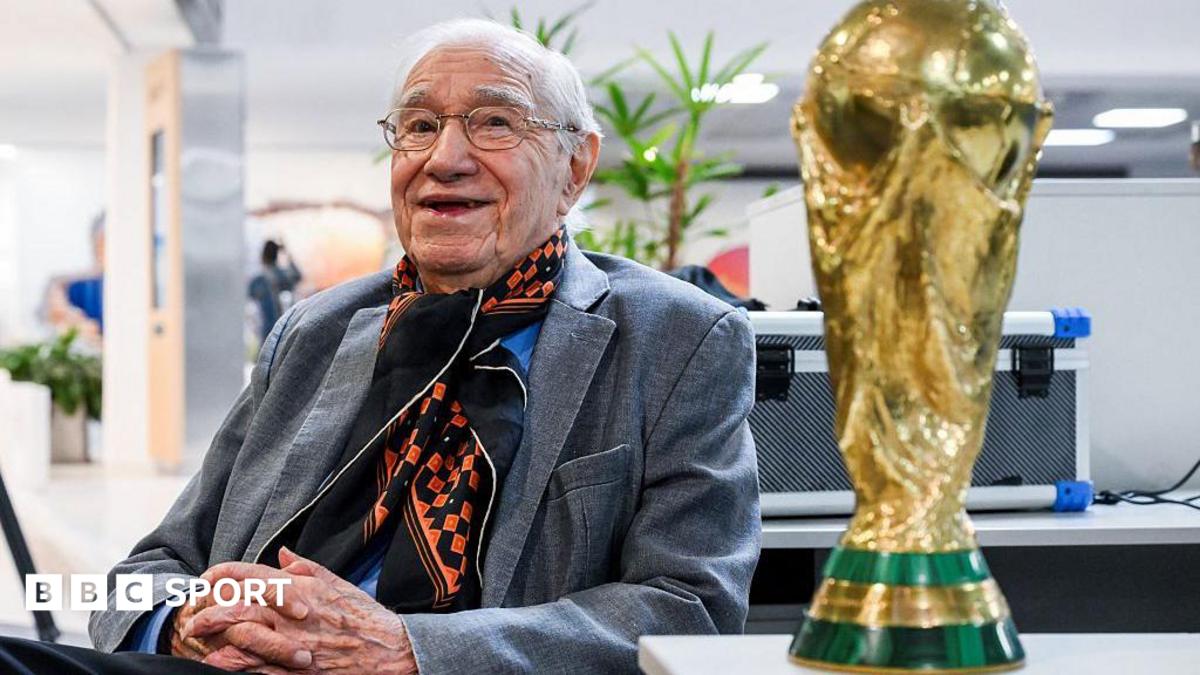
The 91-year-old Argentine journalist covering his 18th World Cup
As Argentina prepares to lock horns with old rival England in the 2026 FIFA World Cup semifinal at 20:00 BST on July 15, one beloved figure in the press box is drawing global attention for a once-in-a-lifetime milestone: 91-year-old Spanish broadcaster Enrique Macaya Márquez, better known simply as Macaya, has covered every men’s World Cup since the iconic 1958 tournament in Sweden, an unmatched streak of 18 consecutive editions that spans nearly 70 years of football history.
Macaya was just 24 when he received his first World Cup assignment, sent to the 1958 Swedish tournament to cover a field that introduced 17-year-old Brazilian prodigy Pelé to the world. One of his earliest matches was Pelé’s Brazil against Austria, but the moment that remains indelibly etched in his memory is what Argentine football fans still call the “Disaster of Sweden” — Argentina’s stunning 6-1 defeat to Czechoslovakia. “We knew almost nothing about Czechoslovakia. We had no information, no data, and they surprised us,” Macaya recalled in an interview.
Over the course of his seven-decade career, Macaya has witnessed the transformation of men’s football from a regional pastime to a $30 billion global spectacle. He has reported from pitchside on every generation of the game’s greatest stars, from Pelé and Diego Maradona to the current era’s Lionel Messi, watching as analog broadcast technology evolved into high-definition digital streaming, and post-match print analysis shifted to real-time, data-driven instant statistics. Yet through all these sweeping changes, Macaya has held fast to one core journalistic principle: he refuses to rush to snap judgments.
That approach shaped his view back in 2018, when Lionel Scaloni — a relatively unknown former player — was unexpectedly appointed head coach of the Argentine national team. At the time, Macaya admitted he had little confidence in the appointment. “I didn’t have high hopes, I didn’t know him,” the DSPORTS Radio commentator said. But Scaloni’s tenure has defied all expectations: he has led Argentina to three major trophies, including the 2022 World Cup title, turning what was widely labeled one of the riskiest coaching appointments in football history into one of its greatest success stories. For Macaya, that turnaround only reinforced his long-held belief: “You can’t pass judgement without a much deeper, more complete understanding of the person being judged.”
Today, as Argentina returns to the World Cup semifinal stage to face England, Macaya is confident the South American side has what it takes to lift the trophy for a second consecutive time. “Of course they can,” he said. “If we’re talking about what is possible, about the future, I believe Argentina is capable of winning.”
When asked to name his favorite player in the current squad, he did not hesitate: “Clearly, it’s Messi.” But the iconic broadcaster pushed back against the perennial debate over who holds the title of the greatest footballer of all time, refusing to draw simplistic comparisons between eras. “That question deserves a smile,” he said. “There’s no way to measure players throughout history. Times have changed. Opponents have changed. Every player is unique. I can say who I personally liked, but that doesn’t mean I believe that player was the best in history.”
This nuanced perspective extends to all cross-era comparisons, from the rivalry between Messi and Maradona (two of Argentina’s greatest number 10s) to the 1970 Brazilian side led by Pelé and Maradona’s 1986 World Cup-winning team. “It is very difficult to make a cold comparison,” he explained. “The opponents were different. The needs were different. The support from their team-mates was different. Each had their own life and their own history.”
Macaya also noted that defeats are just as important to football history as victory. “Negative results are also part of that memory,” he said. Even so, he acknowledges that World Cup triumphs hold a special place in his heart as an Argentine journalist, particularly Maradona’s 1986 win. “Winning the World Cup is my favourite memory, and in Maradona’s case, I think the trophy had finally given him the answer he sought his entire life: to be a world champion.”
After nearly 70 years of traveling the world to cover football’s biggest tournament, Macaya says retirement is finally on the horizon. “I’m going to retire at some point,” he said with a laugh. “I’m retiring now… so I’ll hang up and leave it for another time.” For a man who has spent a lifetime documenting the history of the World Cup, a gentle, gradual goodbye feels like a fitting end to a remarkable career — one that has already cemented his place in football lore. True to his open-ended approach to the game, though, Macaya’s farewell never feels truly final.
The 2026 World Cup semifinal between England and Argentina will be broadcast live globally, with full UK coverage available on BBC One and BBC iPlayer starting at 19:00 BST, with radio commentary on BBC Radio 5 Live and BBC Sounds from 18:00 BST.