分类: sports

  • Root’s unbeaten 99 rescues England against India and forces an ODI series decider

    Root’s unbeaten 99 rescues England against India and forces an ODI series decider

    On Thursday at Cardiff’s Sophia Gardens, a stunning clinical knock from Joe Root dragged England across the finish line to secure a four-wicket victory against India, forcing a winner-takes-all decider in their three-match one-day international series this Sunday at London’s iconic Lord’s Cricket Ground.

    India won the second match of the series earlier, leaving the two sides level heading into the second ODI, and looked set to claim an advantage after collapsing England’s top order early in the hosts’ run chase. India posted a total of 233 all out after batting first, with 6 overs left unused, powered by solid half-centuries from star batters Virat Kohli (65) and Shreyas Iyer (66). India looked well placed at 178 for 3 before their middle and lower order failed to push the total to a more imposing score, a mistake that would later prove costly.

    The side from the subcontinent was already at a disadvantage before England began their chase: allrounder Washington Sundar suffered a leg injury while batting, forcing him to sit out the entire England innings and leave India one bowler short. With a required run rate of fewer than five runs per over, the chase should have been a straightforward assignment for England. But the hosts’ inconsistent ODI form showed early, as they collapsed to 8 for 2 inside the opening overs. Ben Duckett was dismissed by Jasprit Bumrah on the very first delivery of the England innings, and Jacob Bethell quickly followed, caught off Prasidh Krishna’s bowling. Captain Harry Brook gave the crowd a moment of excitement with a ramped six off Krishna, but he overcommitted to the scoop shot against young fast bowler Gurnoor Brar and was caught for 16, leaving England 17 for 3. Wicketkeeper Ishan Kishan held four catches to dismiss England’s first four batters, putting India firmly in control.

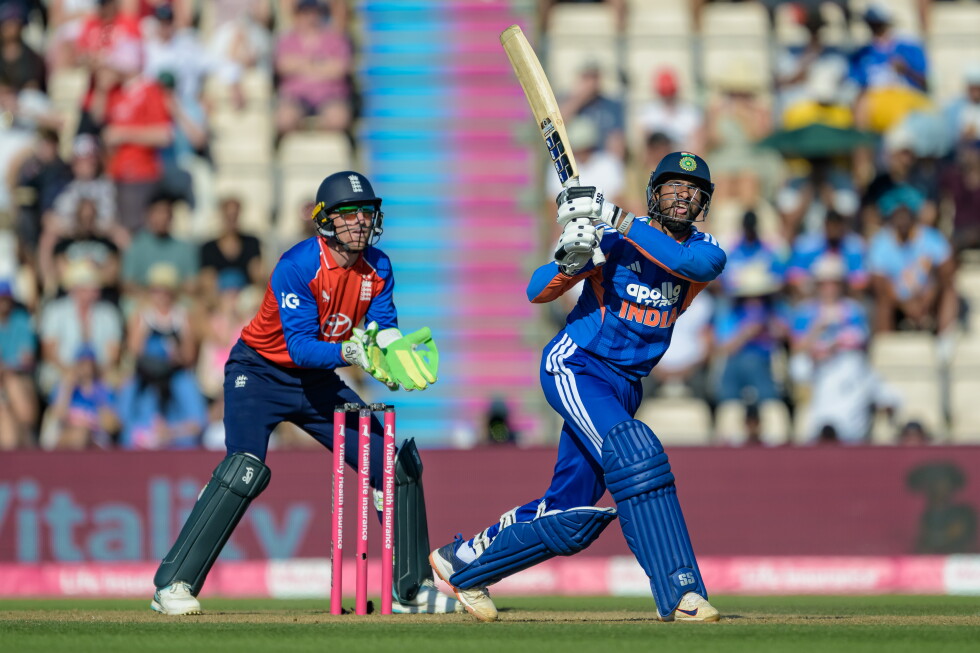
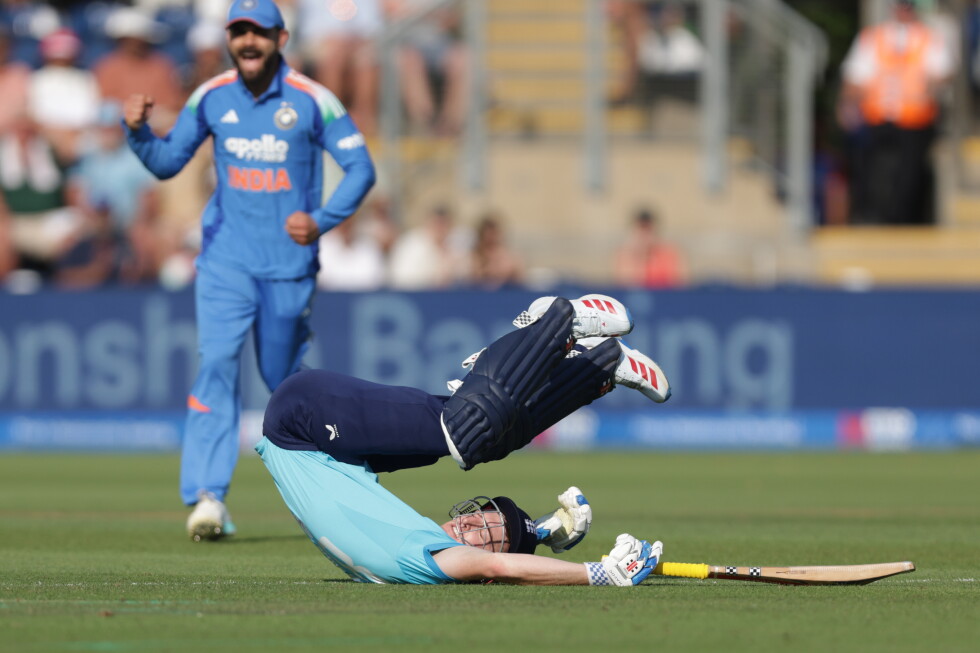
    That was when Joe Root stepped in to rescue England once again, joining the innings after just one delivery and anchoring the chase with trademark patience. He finished the innings unbeaten on 99, his 67th ODI half-century and second consecutive half-century in the series, reaching the milestone off 76 deliveries – his slowest ODI fifty since the 2019 ICC Cricket World Cup. Jos Buttler’s brief cameo ended when he was bowled by Axar Patel attempting another aggressive shot for 17, leaving England at 125 for 5 and reigniting India’s hopes of victory. Will Jacks provided stable support to Root, putting on an unbroken 72-run partnership until Jacks was dismissed by Brar at 197 for 6, leaving Root stranded one run short of his 21st ODI century.

    Tailender Gus Atkinson calmed a visibly frustrated Root, hitting a crucial six over the fine leg boundary off Bumrah’s final over that just missed a seated steward in the stands. Bumrah responded with a bouncer that struck Atkinson on the helmet, but the fast bowler only finished with the one early wicket of Duckett. Atkinson contributed 23 runs off 38 balls in the final stand, and hit the winning runs when he pulled Prasidh Krishna to the boundary, leaving Root not out one run short of a century. England finished on 233 for 6, reaching the target with 5.5 overs to spare.

    All eyes will now turn to Lord’s on Sunday, where the two sides will clash to decide the winner of the ODI series.

  • Argentine superstition ramps up ahead of World Cup final

    Argentine superstition ramps up ahead of World Cup final

    As Argentina’s national men’s football team prepares to face Spain in Sunday’s World Cup final, nerves and excitement have reached a fever pitch across the South American nation, with supporters turning to centuries of local superstitious good-luck rituals to steady their anxiety and boost their side’s chances of claiming back-to-back world titles.

    Lionel Messi’s squad advanced to the final after a tense 2-1 semi-final victory over long-time rival England in Atlanta, leaving the team just 90 minutes away from retaining the championship trophy they won in the last tournament. For millions of Argentine fans, pre-match and in-game rituals – locally referred to as *cabala* – are far more than quirky habits; they are non-negotiable traditions that help channel overwhelming pressure into a sense of control over the outcome of the game.

    In Buenos Aires’ working-class Liniers neighborhood, 48-year-old accountant and self-described football addict Andres Gonzalez explained that his viewing group enforces strict rules to maintain consistent good fortune. “No one moves from the spot they occupied the last time we won,” Gonzalez told Agence France-Presse. “If you went to the bathroom and we scored a goal while you were gone, we lock you in – you stay there until the final whistle.”

    Superstitious football traditions cut across all layers of Argentine society, even reaching the nation’s highest office. President Javier Milei publicly revealed his own unbreakable ritual this Thursday, telling local outlet El Observador radio that he would “under no circumstances” break his custom of watching all Argentine World Cup matches from the presidential residence.

    For 65-year-old Buenos Aires saleswoman Estela Vargas, household game-day rules are carved in stone: every viewer must wear the same Argentina gear and sit in the exact same chair for every match, and her pet dog must stay outside the living room during play. She made one exception for the semi-final against England, though: “Since he’s an English bulldog, we put an Argentina jersey on him for that game,” Vargas said. “But for Sunday against Spain? Rain or shine, he stays outside.”

    Other households have equally idiosyncratic rules. In Graciela Campos’ home, her mother-in-law has a designated match-day role: she must leave the living room, retreat to the kitchen, and knit a blue-and-white Argentine scarf for the full 90 minutes of play. For 74-year-old retiree Lidia Otero, a lifelong Boca Juniors and national team fan, specific in-game interventions are key. Otero recalled that during the first half of the England semi-final, her dog sat facing the TV, and Argentina failed to score. “In the second half I turned her around, and that’s when the result turned around,” she said. “All my rituals work every time.”

    Even young fans have inherited the tradition. Eleven-year-old die-hard Messi supporter Rodrigo Serna practices a decades-old custom of freezing enemy players’ stickers to “cool off” their chances of winning. “I grab the opposing player’s sticker and put it in the freezer. My grandpa taught me that,” he said.

    Diego Maradona, the legendary Argentine playmaker who led the nation to its 1986 World Cup title and died in 2020, remains a spiritual touchstone for many fans, with a permanent altar erected at his former Buenos Aires home in the Villa Devoto neighborhood where supporters leave offerings and prayers for victory ahead of Sunday’s match.

    Sociologist Diego Murzi explained that these rituals fill a deep emotional need for Argentine football fans, who see themselves as active participants in the team’s performance rather than passive spectators. “In football, Argentines don’t feel like spectators but like protagonists,” Murzi told AFP. “Rituals are part of that – feeling involved by bringing good luck and warding off bad luck.”

    Murzi pointed to iconic 1986 World Cup-winning coach Carlos Bilardo as a classic example of how deeply rooted superstition is in Argentine football culture. “Bilardo is a man of science, but a superstitious person to an extreme degree,” Murzi said. He recalled that during Argentina’s first match of the 1986 tournament, a phone rang in the team locker room, a player answered, and no one was on the line. After Argentina won that match, Bilardo made the exact same sequence happen before every game for the rest of the tournament. That 1986 title win proved the ritual worked for him, and the tradition endures today across generations of Argentine fans.

    Nearly every neighborhood in central Buenos Aires has been decked out in the national team’s iconic blue and white in the lead-up to Sunday’s final, a visible sign of the unified excitement and anxiety gripping the nation as it waits for kickoff.

  • Argentine golfer at British Open makes ear-cup gesture to mimic Enzo’s World Cup goal celebration

    Argentine golfer at British Open makes ear-cup gesture to mimic Enzo’s World Cup goal celebration

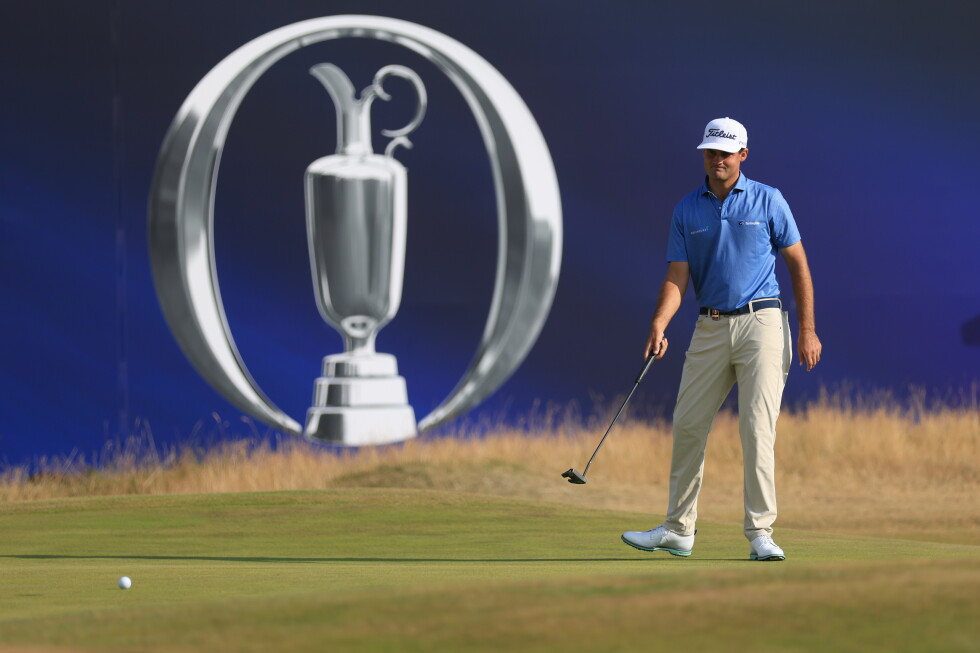
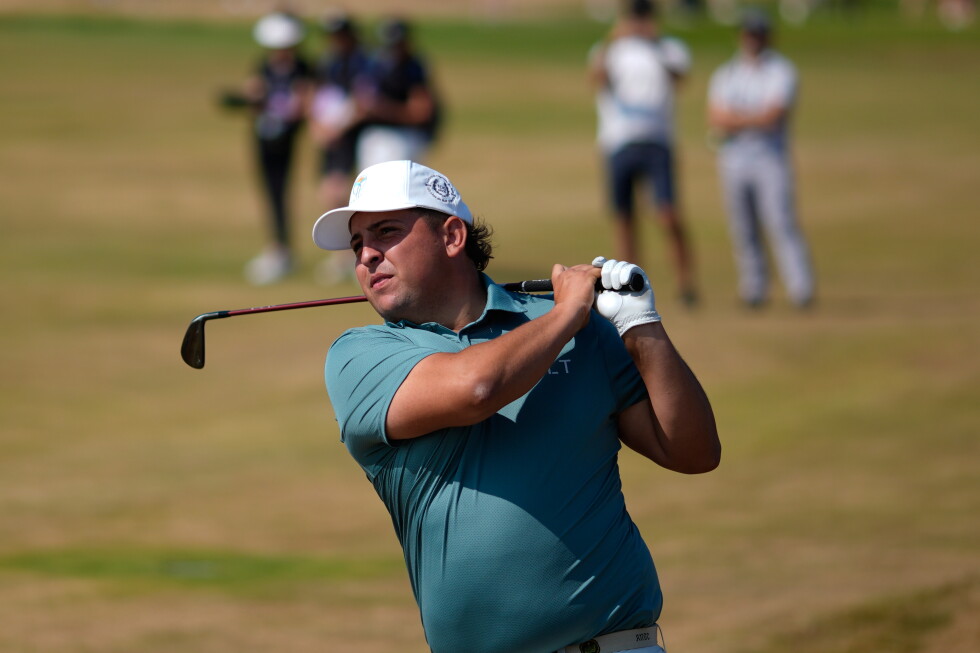
    SOUTHPORT, England — Ahead of the first round of the British Open at Royal Birkdale, 25-year-old amateur Mateo Pulcini walked up to the first tee to a playful warm-up few could have predicted: lighthearted jeers from a small group of British spectators, a playful jab coming just 12 hours after Argentina’s men’s national soccer team pulled off a dramatic 2-1 comeback semifinal victory over England at the World Cup. As the only Argentine competitor in the entire British Open field, Pulcini leaned into the playful tension, and hours later he delivered a lighthearted, viral response that has captured golf fans’ attention across the globe.

    After sinking a 40-foot putt for a birdie on the 18th green to close out his opening round, Pulcini pulled off a gesture instantly recognizable to soccer fans around the world: he cupped both hands behind his ears, replicating the iconic celebration that Argentine midfielder Enzo Fernandez used after scoring the 85th-minute equalizing goal that turned Wednesday’s match around. The gesture was an explicit nod to his countrymen’s historic win, and Pulcini later confirmed the spontaneous celebration was a split-second decision driven by excitement.

    “I was pretty excited and that came to my mind, and I did it,” the 25-year-old told reporters after his round. Pulcini was quick to clarify that the early boos he received were all in good fun, emphasizing that the gallery at Royal Birkdale had been overwhelmingly welcoming throughout his opening round. “There were only a few boos [on the first tee] and that was just a bit of fun,” he said. “People are being great. Fans are being spectacular. They were cheering for me as well.”

    When asked to compare the thrill of his long birdie putt to the rush of watching Fernandez’s game-changing goal, Pulcini did not hesitate to pick the soccer moment. “Enzo’s goal, for sure,” he said.

    The 2023 British Open marks Pulcini’s major championship debut. He earned his spot in the field by winning the Latin American Amateur Championship in a playoff held in Peru earlier this year. He closed out his first opening round at the iconic links course with a 5-over par 75.

  • Merlier wins crash-marred 12th stage of the Tour de France, Pogacar retains overall lead

    Merlier wins crash-marred 12th stage of the Tour de France, Pogacar retains overall lead

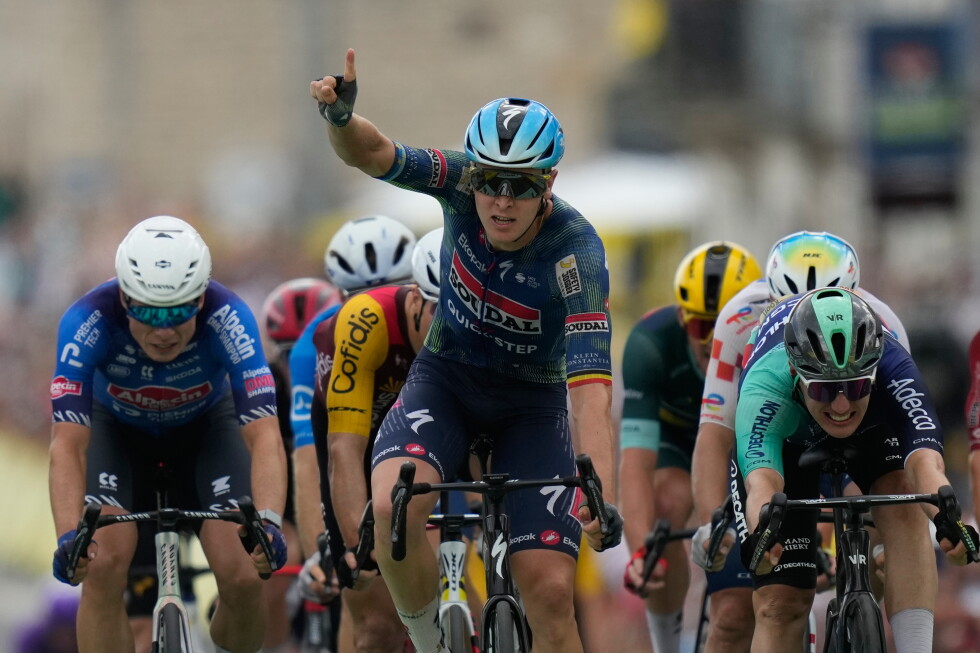
    CHALON-SUR-SAÔNE, France – On a tense Thursday of the 2024 Tour de France, Belgian sprinter Tim Merlier secured his third stage victory of this year’s race, capping off a dramatic final sprint that was marred by a multi-rider crash just meters from the finish line. Reigning overall champion Tadej Pogacar emerged from the incident unscathed, retaining his comfortable general classification lead heading into the race’s second weekend.

    The 12th stage of the Tour covered a mostly flat 111-mile route that began at the Magny-Cours motor racing circuit – a former host of Formula 1 Grand Prix – and wound through eastern France to the finish in Chalon-sur-Saône. Early in the stage, French rider Baptiste Veistroffer launched a solo breakaway that held off the peloton for much of the day. He was eventually reeled in by a 14-rider counter-attack group inside the final 30 kilometers, and that small group was itself caught by the charging main peloton shortly before riders reached the third and final minor climb of the day.

    As teams jockeyed to position their top sprinters for the final push to the line, tension ran high on the home straight. The crash unfolded when Colombian sprinter Fernando Gaviria clipped another rider’s rear wheel and tumbled to his left, pulling Wednesday’s stage winner Soeren Waerenskjold of Norway down with him. Trailing riders had no time to avoid the fallen pair, and four additional cyclists went over their handlebars in the pileup. Race medics reported that none of the involved riders suffered serious injuries. After several minutes of assessment and recovery, Gaviria – who sported a heavily bloodied left knee and appeared to have injured his left arm – walked across the finish line with assistance from a teammate.

    When the dust settled, Merlier crossed the line first to claim his sixth career Tour de France stage victory. Young Dutch sprinter Olav Kooij took second place, while Belgian Jasper Philipsen finished third. The result extended Merlier’s impressive run of form at this year’s race, and the rider credited extra motivation from having his family trackside for the stage. “Winning for them is special,” Merlier told reporters after the finish. “I managed to find the opening, I had to stay calm and wait. It was a finale and a finish that suited me very well.” For Philipsen, the day brought another near-miss: his Alpecin-Premier Tech team placed three riders at the front of the peloton to lead out his sprint, but the team’s early attack mirrored mistakes from previous stages, leaving the three-time stage winner still searching for his first victory of the 2024 Tour.

    In the overall general classification standings, Pogacar – a four-time Tour champion – maintained his large lead over his closest rival, two-time champion Jonas Vingegaard of Denmark. After 12 stages, Pogacar holds a 3-minute 36-second advantage over Vingegaard in second place, while Belgian Remco Evenepoel sits in third, 4 minutes 6 seconds off the overall lead. Pogacar extended his lead earlier this week with a signature attacking performance in the 10th stage, one that has put him in a commanding position with less than two weeks of racing remaining.

    The Tour’s next challenge will be the 13th stage on Friday, the longest route of this year’s race at 206 kilometers. The stage is set to test general classification contenders with a steep Category 1 climb – the Tour’s second-hardest ranking – coming late in the route. The 2024 Tour de France will conclude with its iconic traditional finish on the Champs-Élysées in Paris on July 26.

  • World Rugby bans Italy coach Gonzalo Quesada for 2 matches over referee comments

    World Rugby bans Italy coach Gonzalo Quesada for 2 matches over referee comments

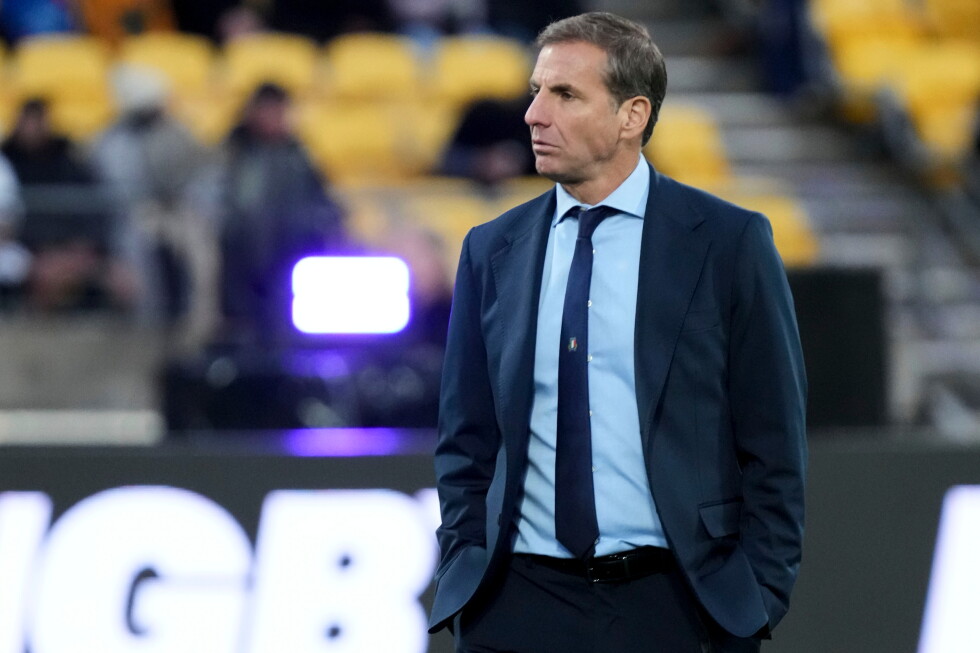
    World Rugby has handed Italy men’s national rugby union head coach Gonzalo Quesada a two-match suspension, marking one of the first high-profile sanctions under the governing body’s sweeping new policy aimed at cracking down on abuse toward match officials. The suspension, announced by World Rugby on Thursday, was triggered automatically by critical comments Quesada made in broadcast interviews following Italy’s 47-17 defeat to the All Blacks (New Zealand) in last Saturday’s Nations Championship fixture held in Wellington.

    The controversial turning point of the match came roughly 30 minutes before full-time, when Italian lock Niccolò Cannone was first issued a yellow sin-bin card by referee Luc Ramos for a head-butting incident. The foul was later upgraded to a permanent red card following a video review by the match’s officiating team, forcing Italy to play the remainder of the test with 14 players. Cannone has already received his own separate four-match suspension for the incident.

    Under the terms of Quesada’s ban, the coach is barred from all match-day activities and prohibited from entering the stadium for Italy’s next two scheduled Nations Championship matches. He will miss this Saturday’s test against Australia in Perth and a home fixture against South Africa scheduled for November 7 in Turin. Quesada retains the right to file an appeal against the automatic sanction.

    In his public post-match comments aired after the loss, Quesada acknowledged that New Zealand earned its lopsided win, noting “the All Blacks absolutely deserved the win; they played an extraordinary game.” Even so, he argued that officiating mistakes contributed significantly to the final scoreline, saying “I think the refereeing team was partly to blame for the score. They made a lot of mistakes today.” He also pushed back against the red card decision for Cannone, calling the call overly harsh. “I think the decision against Niccolò was harsh. It obviously forced the team to play with 10 men for a very long time. Every minute against the All Blacks lasts more than 60 seconds; playing with 10 men against them is really tough.”

    World Rugby’s new automatic sanction process for official abuse, rolled out across all international rugby competitions earlier this month, was first approved during the governing body’s annual Shape of the Game forum held in London last February. The policy is explicitly designed to target critical public comments about officials, which World Rugby says have become a foundational driver of a sharp rise in unacceptable harassment and direct threats toward match officials at all levels of the sport. The framework’s automatic suspension rule is intended to deter harmful rhetoric before it translates to offline harm for the sport’s referees and officiating teams.

  • Bellingham slapped Argentina substitute after England exit

    Bellingham slapped Argentina substitute after England exit

    England’s 2026 FIFA World Cup campaign suffered a heartbreaking 2-1 semi-final defeat to Argentina on Wednesday, and the final whistle brought more than just disappointment for the Three Lions — it sparked an on-pitch altercation that has put star midfielder Jude Bellingham at risk of disciplinary action. The dramatic clash, which unfolded in Atlanta immediately after full-time, has become one of the most talked-about talking points from a tense, feisty encounter that saw Argentina advance to the World Cup final.

    The sequence of events began long before the final whistle, however. After Argentina playmaker Enzo Fernandez scored an 85th-minute equalizer to cancel out England’s early second-half lead, unplayed Argentina substitute Valentin Barco ran onto the pitch to celebrate directly in front of the England squad. Barco, a 21-year-old full-back who currently plies his trade at French club Strasbourg and is heavily linked with a summer transfer to Chelsea, had only featured once previously in the tournament, coming on as a late substitute in Argentina’s group stage victory over Jordan. Former England goalkeeper Paul Robinson, who was commentating on the match for BBC Radio 5 Live, slammed Barco’s celebration as “probably the worst example of sportsmanship we’ve seen at this World Cup”.

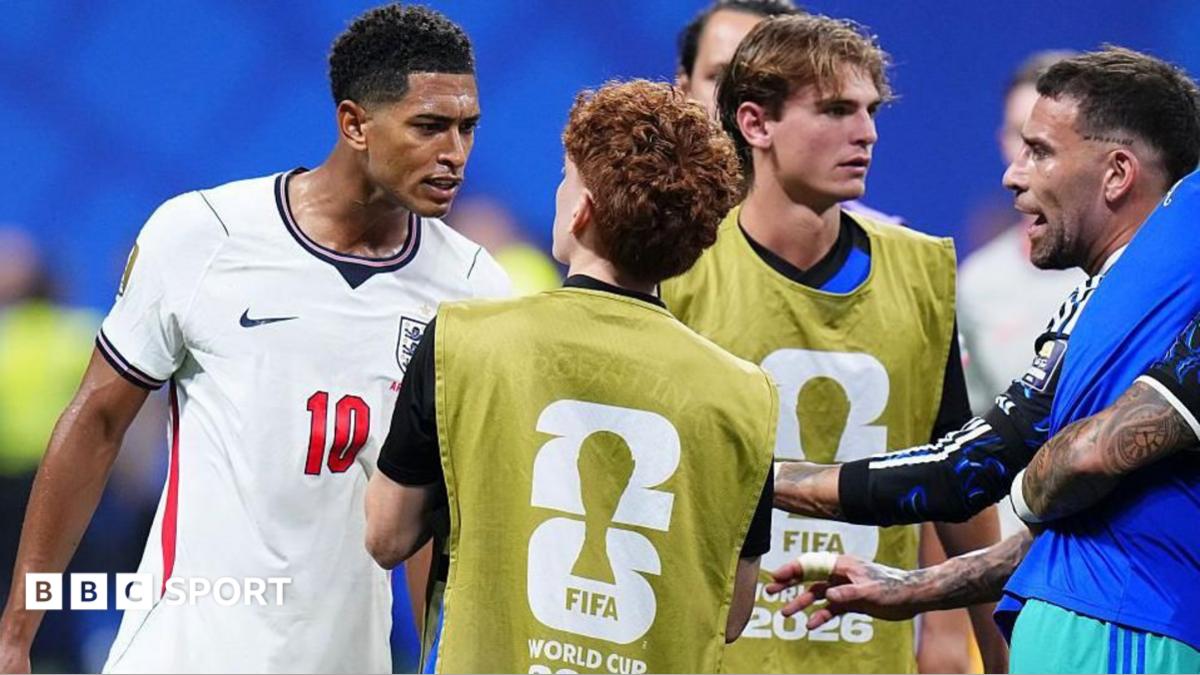
    When full-time finally came after Lautaro Martinez headed a stoppage-time winner for Argentina to end England’s title hopes, Barco was on the pitch hugging his teammates in the area close to Bellingham. That was when the 23-year-old England star, who finished the tournament with six goals to his name, approached Barco and struck the back of his head, triggering a small melee that drew in players from both national sides before Bellingham departed the scene.

    The semi-final was a tense, physical affair from its opening minutes. American referee Ismail Elfath struggled to control the tempers flaring on both sides, with the first half alone producing 19 fouls. Early in the fourth minute, Bellingham already had a verbal confrontation with Argentina captain Lionel Messi after a foul on England midfielder Elliot Anderson. Bellingham later downplayed that exchange, telling reporters post-match: “We were really just discussing a foul, actually. It wasn’t anything bad. I’m sure everyone will do their thing and make it a big deal, but it was nothing.”

    Now, attention has turned to whether FIFA’s disciplinary committee will take formal action against Bellingham for violent conduct. If found guilty, the Real Madrid star would face a suspension for England’s upcoming bronze medal match against France, scheduled to kick off at 22:00 BST this Saturday in Miami. However, football rules and early analysis suggest a lesser outcome is more likely. According to the laws of the game, a deliberate strike to an opponent’s head does not qualify as a red-card offense if the force used is deemed negligible. Most analysts expect FIFA to classify Bellingham’s action as petulant behavior rather than violent conduct, which could reduce or eliminate any potential suspension.

    The result of the semi-final ended England’s dream of lifting the 2026 World Cup trophy, with Argentina progressing to face their third final in modern World Cup history, a run that has drawn widespread praise from fans and pundits alike, with many crediting Messi’s leadership for the side’s deep run in the tournament. The loss for England has also sparked debate over whether manager Thomas Tuchel’s defensive tactics contributed to the side’s late collapse, with critics labeling the team’s second-half performance “passive” after holding the lead.

  • UK urges FIFA to investigate Argentina over Falklands banner at World Cup

    UK urges FIFA to investigate Argentina over Falklands banner at World Cup

    LONDON – In the wake of Argentina’s dramatic 2-1 victory over England in a 2024 FIFA World Cup semifinal held in Atlanta, a fresh diplomatic and sporting controversy has erupted over a display of political messaging during Argentine players’ post-match celebrations, prompting the British government to call for a formal investigation from global soccer’s governing body FIFA.

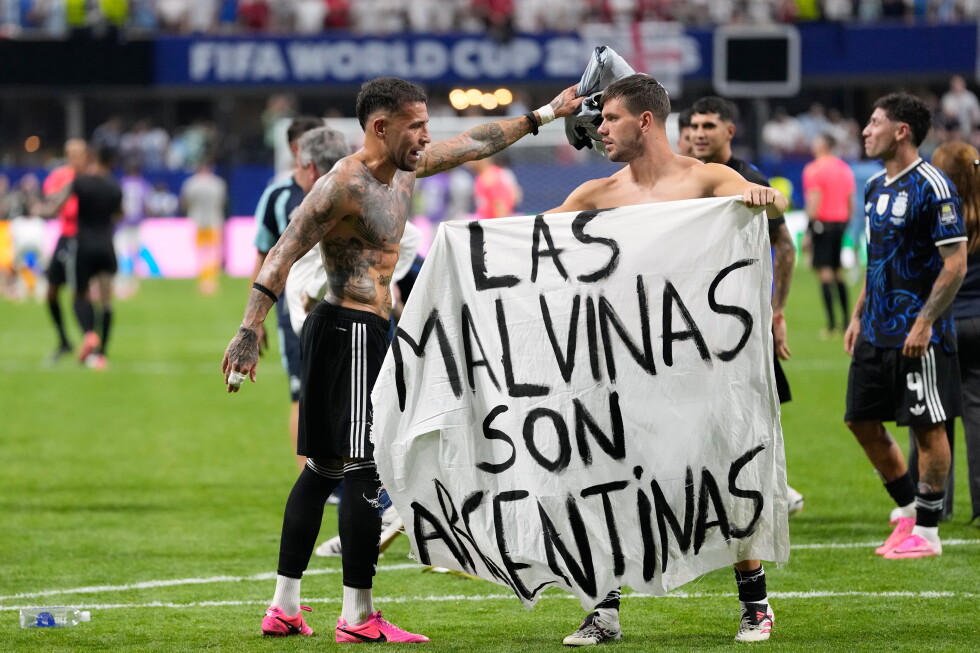
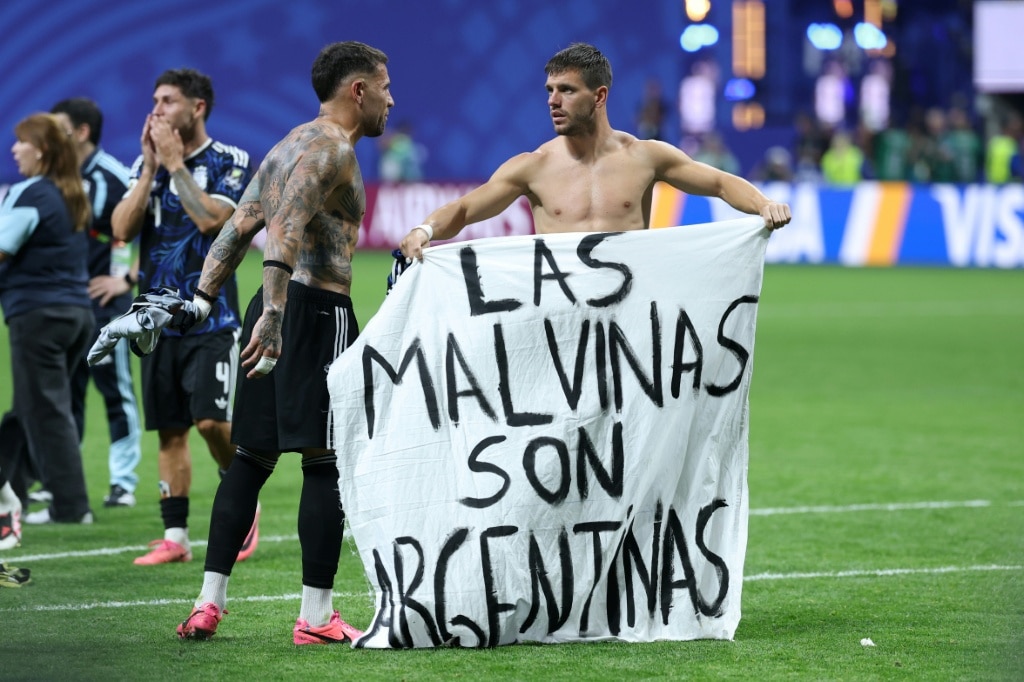
    During jubilant celebrations following Wednesday’s final whistle, members of the Argentine national squad unfurled a banner passed to them from fans in the spectator stands that read “Las Malvinas son Argentinas” – a phrase translating to “The Malvinas are Argentine.” Argentina has long claimed sovereignty over the South Atlantic archipelago, which it calls Islas Malvinas; the territory is administered as a British Overseas Territory under the name Falkland Islands.

    The act puts the Argentine team at risk of formal disciplinary action from FIFA, as the organization enforces strict regulations that prohibit any form of political expression or messaging on the field of play during official international tournaments. U.K. Business Secretary Peter Kyle publicly condemned the players’ actions in comments to the BBC, labeling the banner display “entirely inappropriate.”

    Kyle emphasized that a core foundational principle of global international soccer competitions, including the World Cup, is the separation of political discourse from athletic competition. “That is now a matter for FIFA,” Kyle stated. “I expect FIFA to do its investigation thoroughly.”

    Long-simmering political tensions over the Falkland Islands have long amplified the already fierce sporting rivalry between the English and Argentine men’s national soccer teams. The remote archipelago is home to roughly 3,500 permanent residents, sitting approximately 8,000 miles (13,000 kilometers) off the coast of the United Kingdom and just 300 miles (480 kilometers) off the Argentine mainland.

    The dispute over territorial sovereignty stretches back nearly two centuries. Argentina asserts that British forces illegally seized the islands from its control in 1833, after Argentine authorities moved to assert sovereignty over the territory. For its part, the United Kingdom maintains its territorial claim dates back to 1765, and that British forces reaffirmed control in 1833 by expelling Argentine personnel that had occupied the islands.

    The conflict boiled over into open war in 1982, when Argentine military forces invaded the archipelago. The resulting 10-week conflict ended in a British victory, but left a heavy human toll: 649 Argentine troops, 255 British service members, and three civilian islanders died in the fighting. The sovereignty dispute remains unresolved to this day, with the people of the Falkland Islands overwhelmingly affirming their desire to remain a British territory in multiple public referendums.

  • Messi magic sends Argentina into World Cup final as England fall short

    Messi magic sends Argentina into World Cup final as England fall short

    In a breathtaking World Cup semi-final showdown that delivered drama from the first whistle to the final stoppage time, 39-year-old Lionel Messi produced another iconic performance to steer Argentina to a dramatic 2-1 comeback victory over England, booking the South American champions a spot in Sunday’s World Cup final against European titleholders Spain.

    Played out against a backdrop of long-running historical tension between the two nations over the sovereignty of the Falkland Islands, Wednesday’s clash in Atlanta was always set to be more than just a football match. Messi acknowledged the weight of the moment after the final whistle, calling the fixture “quite a special one, especially playing against England with all the historical context.” When the full-time whistle blew, several Argentine players marked the win by displaying a banner reading “Las Malvinas son argentinas” — “The Falklands are Argentine” — a move that openly defies FIFA regulations banning political symbols from match venues.

    The match unfolded in a way that will haunt English football for years to come. Anthony Gordon put the Three Lions ahead in the 55th minute, putting England 60 minutes away from their first World Cup final appearance in six decades. But rather than pushing to extend their lead, England manager Thomas Tuchel made the controversial decision to shift to a defensive setup, substituting attacking players for defenders in a bid to protect the one-goal advantage. He substituted goalscorer Gordon for defender Ezri Konsa in the 72nd minute, a choice that immediately shifted the momentum of the game entirely in Argentina’s favor.

    Tuchel defended his call post-match, arguing that the tactical switch was a necessary response to growing gaps in England’s defense. “In the moment, no regrets. The team gave everything and we were very, very close,” he said. “Straight after our goal, without any substitutions, we conceded way too many crosses and way too many chances so we tried to help.” But leading football outlets were critical of the call. The UK’s *The Times* noted that Tuchel’s changes were only intended to hold Argentina at bay, not put the game to bed — a strategy that could never work against a side of Argentina’s quality. *The Guardian* added that the defensive shift invited Argentina to seize control of the front foot, writing that “Tuchel played with fire. Argentina dominated the closing stages. It was their attack versus England’s defence.”

    Messi capitalized on the opened space, pulling the strings for his side as they pinned England deep in their own half for the final 30 minutes. The equalizer came just after Tuchel’s reshuffle, when Messi slipped a precise pass to Enzo Fernandez outside the penalty box, who drilled a stunning shot into the net past the England keeper. With England reeling and Argentina throwing everything forward, the winning goal came in stoppage time: Messi sent a deft, pinpoint cross into the box that substitute Lautaro Martinez headed home, completing the comeback.

    England’s stars including Jude Bellingham and Harry Kane stood stunned on the pitch as Argentina celebrated. The defeat extends England’s decades-long drought of major tournament finals, marking the fourth time in the last five major tournaments that the Three Lions have reached at least the semi-final stage without claiming a spot in the final.

    For Argentina, the win keeps their historic bid for back-to-back World Cup titles alive. Should they win on Sunday, they will become the first national men’s side to claim consecutive World Cup crowns since Brazil in 1962. They will face a Spanish side that pulled off a stunning 2-0 semi-final upset over defending champions France on Tuesday, shutting down star forward Kylian Mbappe to book their place in the final. The title decider will be hosted in New Jersey this weekend.

    Messi, who is already the tournament’s joint-leading scorer with eight goals to go with four assists, has proven once again that at an age when most elite footballers have long retired, he remains the undisputed heart of the Argentine side. This is far from the first comeback the 39-year-old has dragged his side through at this tournament: in the round of 16, Argentina fought back from a two-goal deficit to beat Egypt, with Messi leading that charge as well.

    Argentine manager Lionel Scaloni praised his squad’s resilience after the semi-final win, saying “The other day I said this group never stops surprising me. And I’ll tell you the truth, we’re going to try to win, we’re going to leave everything out there. It’s incredible. We are unique, truly, and it’s not arrogance, it’s from the heart.” Tens of thousands of Argentine fans have traveled to support the side throughout this World Cup, packing the streets of Atlanta in the lead-up to Wednesday’s semi-final to cheer on their team ahead of the biggest match of the tournament so far.

  • International Cricket Council revamps formats for men’s World Cups

    International Cricket Council revamps formats for men’s World Cups

    Following weekend board meetings, cricket’s global governing body, the International Cricket Council (ICC), has announced sweeping structural changes to two of men’s cricket’s most prestigious international tournaments, introducing a new preliminary round to the 2027 50-over World Cup and redesigning the playoff pathway for the 2028 Twenty20 World Cup.

    In an official statement, the ICC framed the adjustments as a deliberate push to deliver more high-stakes competitive matches, raise overall playing standards, solidify the competitive hierarchy of top-tier international cricket, and create a more engaging experience for both participating players and global audiences.

    The traditional 50-over ODI World Cup, held on a four-year cycle, most recently wrapped up in 2023 in India, where Australia claimed its sixth title by defeating the host nation in a tightly contested 10-team final. The 2027 edition will break recent precedent with an expanded 14-team field, co-hosted across three southern African nations: South Africa, Zimbabwe, and Namibia.

    Under the new format rolled out by the ICC, the 2027 tournament will kick off with a new opening phase dubbed the “Super Series”. The three teams that secure the 12th, 13th, and 14th qualifying positions will compete in this preliminary round, with only one winner advancing to the main 12-team group stage, joining the 11 highest-ranked automatic qualifiers.

    The main group stage will split 12 teams into two groups of six. After round-robin play, the top three teams from each group, plus the highest-performing fourth-place team across both groups, will progress to the newly created Super 7 stage. This phase will use a single round-robin structure where every team faces each of the other six competitors once. The top four teams on the Super 7 standings will advance to the knockout semifinals, with the bracket pairing the first-ranked side against fourth, and second against third.

    “This structure has been designed to strengthen the competitive narrative across every stage of the event,” the ICC noted in its breakdown of the new format.

    For the 2028 T20 World Cup, co-hosted by Australia and New Zealand, the ICC has reworked the tournament’s group and playoff structure from previous editions. The 20-team tournament will retain its total size, but rearrange the initial group stage layout: instead of four groups of five, teams will be split into five groups of four for the opening round, with the top finisher from each group advancing to the next round.

    The second phase, renamed the Super 10, will split the 10 advancing teams into two groups of five for round-robin play. Unlike previous T20 World Cup formats where the top two from each second-phase group advanced directly to the semifinals, the 2028 edition introduces a new eliminator round to fill out the final four. The winner of each Super 10 group will earn an automatic semifinal spot. The second-place team from each group will then face the third-place team from the opposite Super 10 group in knockout eliminators, with the two winners claiming the remaining two semifinal positions.

    Twelve teams have already secured their place in the 2028 tournament based on results from the 2024 T20 World Cup and ICC Men’s T20 team rankings: Afghanistan, Australia, Bangladesh, England, India, Ireland, New Zealand, Pakistan, South Africa, Sri Lanka, West Indies, and Zimbabwe. Eight remaining spots will be awarded via a 16-team global qualifier tournament, with the U.S., Canada, Italy, Namibia, Nepal, Netherlands, Oman, and the United Arab Emirates already guaranteed automatic entry into that qualifier, while Scotland has earned direct placement into the European regional final.

  • Jackson Suber leads a day of surprises at Birkdale with a 65 in his first British Open

    Jackson Suber leads a day of surprises at Birkdale with a 65 in his first British Open

    SOUTHPORT, England — The opening round of the British Open at Royal Birkdale delivered one of golf’s most unexpected early-storylines, as 26-year-old American rookie Jackson Suber claimed the first-day lead with a blistering 5-under-par 65, capping a stunning debut on traditional links golf just three days after stepping onto European soil for the first time.

    A day of warm, swirling breezes stretched first-round play across 15 hours, packed with dramatic swings, surprising breakout performances from debutants and a high-profile rebuttal of a legendary critic from one of the game’s most controversial stars. Half of the top 12 players on the opening-day leaderboard are first-time British Open competitors, proving links golf can be as kind to newcomers as it is to seasoned veterans.

    Few could have predicted Suber’s dream start. A former Ole Miss player who has yet to claim a professional win anywhere in the world and is playing just his third major championship, Suber entered the week with zero experience on a championship links course as demanding as Royal Birkdale. He shrugged off the steep learning curve with a clutch par save on the newly redesigned par-3 15th, where severe sloping on both sides of the green makes holding position notoriously difficult. He followed that up with a birdie on the par-4 16th, then produced a masterclass on the 17th: choking up on a 4-iron from 233 yards out, he landed his approach 6 feet from the pin to sink an eagle that catapulted him to the top of the leaderboard.

    “Just kind of kept the ball in good spots and didn’t put much pressure on my game to make pars,” Suber said of his steady performance, which marked just his seventh round of play across any major championship.

    Suber holds a one-stroke lead over South Korea’s Sungjae Im and England’s home hopeful Dan Brown, with nine players tied at 4-under 67. That group includes four more British Open debutants: Alex Smalley, Ryan Gerard, M.J. Daffue and Pierceson Coody.

    One of the most talked-about performances of the day came from Bryson DeChambeau, who silenced three-time Open champion Nick Faldo’s recent criticism of his links strategy. DeChambeau, who has missed the cut in all three majors this year and largely avoided mainstream media since the Masters, fired a 4-under 67 that left him just two shots off Suber’s lead, defying Faldo’s claim earlier this week that “DeChambeau has zero clue of strategy.”

    Faldo, speaking on the Sky Sports Golf Podcast, had argued that traditional links golf rewards controlled placement, not brute force: “You thread it, don’t you? You feed it down the fairway. … You don’t think, ‘Oh, I’ll just blast it down there.’” But DeChambeau turned that criticism on its head, using his signature long-drive strategy to carry Royal Birkdale’s fearsome fairway bunkers entirely, landing on 15 of 18 greens despite only hitting four fairways and rarely finding himself in serious trouble. He carded birdies on both the par-4 second and par-4 10th, blasting blind tee shots over hazards to land within striking distance of the green both times. Only a weak chip and missed putt on the 18th kept him from matching Suber’s score.

    “I feel like I did a really good job today of being incredibly strategic and focused super hard on placing it in the right places,” DeChambeau told reporters from the R&A after his round. “Besides 18, I placed the ball in some good areas. I just need to hit more fairways. Other than that, I feel like my strategy was nice today.”

    The day also brought dramatic ups and downs for some of the game’s top-ranked players. World No. 1 Scottie Scheffer got off to a blistering start, birdying four of his first six holes to jump to 4-under, but failed to card another birdie over his final 12 holes, finishing with a 2-under 68. Scheffler, who played alongside DeChambeau, shrugged off the late cold streak, noting that the Open is a 72-hole tournament.

    “If I continue to strike the ball the way I did today and just keep giving myself looks, that’s part of it,” Scheffler said. “Golf is played over 72 holes, and I definitely liked what I saw today.”

    Four-time major winner Rory McIlroy suffered a far tougher opening, struggling with a sudden putting slump that saw him miss three 4-foot putts across a four-hole stretch on his way to a 1-over 72, six shots off the lead. One of the day’s unluckiest breaks hit debutant Alex Smalley, who held a share of the lead late until a wild bounce off a spectator fence sent his 18th tee shot out of bounds, resulting in a double bogey that dropped him back into the tie at 67.

    “Got up to where the ball was supposed to be and was told it hit a spectator fence and kicked another 15 yards right out of bounds,” Smalley said. “All three of us in our group actually hit it over there, and mine just got an unlucky break. Poor tee shot, poor break. Sometimes that’s how it goes.”

    Other notable players in the tie at 67 include 2018 Open champion Francesco Molinari, Cameron Young, Robert MacIntyre and Thomas Detry, all still well within striking distance of the lead heading into Friday’s second round.