分类: sports

  • Malinin stunned by Kagiyama in short program as Japan narrows gap on US in Olympic figure skating

    Malinin stunned by Kagiyama in short program as Japan narrows gap on US in Olympic figure skating

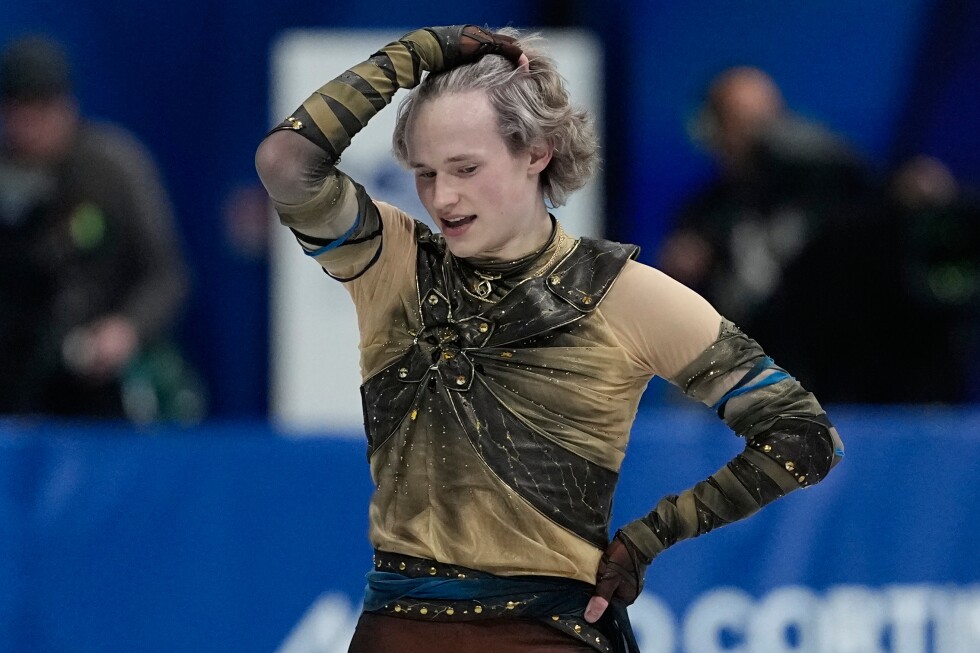
    MILAN — The Olympic figure skating landscape witnessed a dramatic shift as Japanese sensation Yuma Kagiyama delivered a stunning performance that disrupted Ilia Malinin’s seemingly unstoppable march toward gold. During Saturday night’s team event short program at the Milano Ice Skating Arena, Kagiyama executed a technically masterful routine featuring two near-flawless quadruple jumps, including a sophisticated quad toe-triple toe combination, to secure 108.67 points.

    This exceptional performance placed Kagiyama ahead of the heavily favored American skater Ilia Malinin, the two-time reigning world champion who had remained undefeated in his previous 14 completed competitions spanning over two years. Malinin’s second-place finish with 98.00 points created an intensely close team standings battle, with Japan trailing the defending champion United States by a single point (33-32) at the competition’s midway mark.

    Malinin, who had entered the arena wearing his signature “Quad God” tank top, appeared momentarily stunned by the scoring outcome but maintained an optimistic perspective. “That’s only 50% of my full potential here,” remarked the 21-year-old skating phenomenon, who notably opted not to attempt his groundbreaking quad axel—a jump only he has successfully landed in competition.

    The team event elimination phase saw Italy securing third position with 28 points, followed by Canada (27 points) and Georgia (25 points). Canada narrowly advanced to the next round thanks to Stephen Gogolev’s personal-best performance of 92.99 points, which edged out France by a single point.

    The competition’s momentum now clearly favors Japan, with Kagiyama expressing his satisfaction: “I didn’t feel the pressure and I didn’t feel nervous today. I’m very happy our score is so close to the USA.” The Japanese team’s strong showing included additional impressive short programs from Kaori Sakamoto and pairs world champions Riku Miura and Ryuichi Kihara.

    As the second half of the team event commenced with the free dance, the American team remained determined to defend their title, particularly motivated by their prolonged wait for official recognition of their 2022 Beijing Olympic victory due to the Russian doping controversy. World champions Madison Chock and Evan Bates, who had previously won the rhythm dance segment, returned to the ice seeking to maintain the United States’ narrow advantage in this high-stakes Olympic confrontation.
  • Japan extends its snowboard power to big air with a 1-2 Olympic finish

    Japan extends its snowboard power to big air with a 1-2 Olympic finish

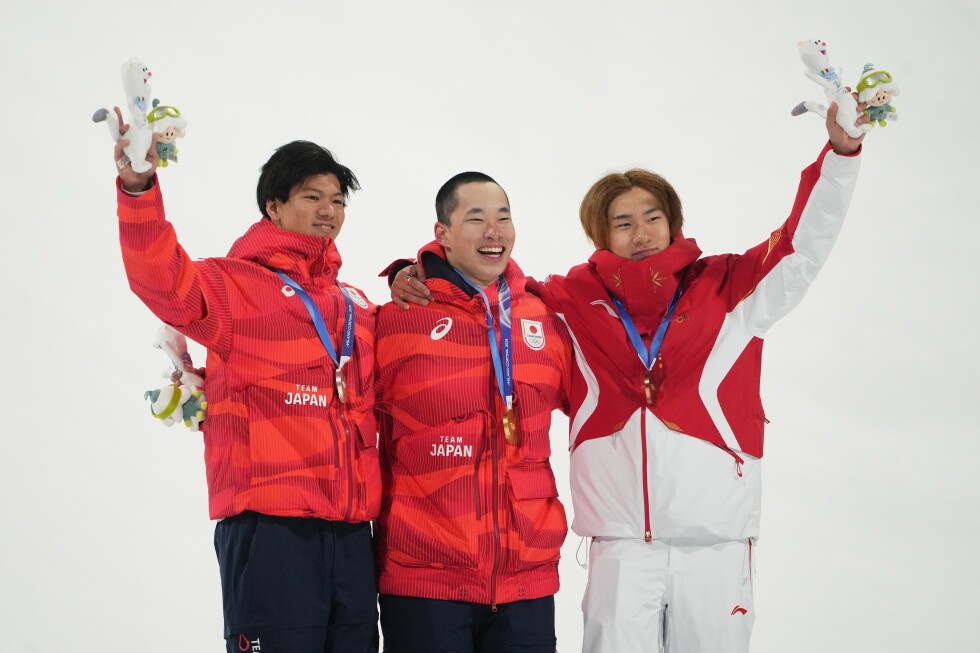
    LIVIGNO, Italy — Japan’s snowboarding dynasty has expanded its Olympic dominance beyond the halfpipe into the high-flying realm of big air competition. At the Winter Games on Saturday night, Kira Kimura and Ryoma Kimata delivered a spectacular performance, securing gold and silver respectively in an event that showcased their nation’s technical mastery and depth of talent.

    The victory represents a strategic triumph for Japan’s year-round training system, which leverages advanced air bag technology to enable athletes to practice complex maneuvers with reduced injury risk. This innovative approach has revolutionized training methodologies, allowing riders to perfect dangerous tricks during summer months and extend their practice sessions significantly.

    Japan’s snowboarding prowess, previously demonstrated through Ayumu Hirano’s historic halfpipe achievements, now extends across multiple disciplines. The country qualified all four of its riders for the 12-man final—an unprecedented feat in Olympic big air competition since its debut in 2018. While qualifier leader Hiroto Ogiwara finished last and Taiga Hasegawa placed 11th, their presence underscored Japan’s remarkable depth.

    Kimura claimed victory with a total score of 179.50, recovering from a second-run fall to execute a breathtaking final attempt: riding backward while completing 5.5 rotations with a precise board grab between bindings. Defending world champion Kimata finished eight points behind his teammate despite having an opportunity to overtake him in the final rounds.

    China’s Su Yiming, the defending Olympic champion, earned bronze to complete his medal collection after previously winning slopestyle silver. American rider Ollie Martin, just 17 years old, finished just outside medal contention despite strong performances.

    New Zealand’s Lyon Farrell, who placed eighth, observed: ‘They have a ton of heart. They put their heads down and perfect things to the most minute detail.’ The sentiment was echoed by U.S. snowboard director Rick Bower, who noted Japan’s systematic approach to rider development.

    With Ogiwara already looking ahead to slopestyle competition, Japan’s snowboarding program demonstrates both immediate success and long-term vision, establishing the nation as the comprehensive force in Olympic snowboard parks.

  • A Super Bowl starting at 12:30 a.m.? Welcome to an Olympic-sized problem for fans in Italy

    A Super Bowl starting at 12:30 a.m.? Welcome to an Olympic-sized problem for fans in Italy

    CORTINA D’AMPEZZO, Italy — The 2026 Winter Olympics in Milan-Cortina has created an unprecedented scheduling conflict for American athletes as the Super Bowl’s kickoff coincides with critical competition preparation hours. With the championship game beginning at 12:30 a.m. local time on Monday, Olympians face the difficult choice between supporting their home teams and maintaining optimal athletic readiness.

    Zack DiGregorio, a Massachusetts-native luge athlete and devoted New England Patriots fan, exemplifies this dilemma. Despite his mother’s two-decade career with the Patriots organization, DiGregorio acknowledges the conflict: “If I happen to wake up in the middle of the night to go to the bathroom, I may be tuning in.”

    The timing conflict affects numerous competitors, with 15 Massachusetts natives and eight Washington state athletes on the U.S. Olympic team potentially torn between sporting loyalties. While some athletes plan to watch regardless of the hour, others prioritize their Olympic ambitions. Curler Korey Dropkin, another Massachusetts native, stated: “I’m not going to be able to watch because that’s going to be real late here. But as my form of support, I’m going to wear my Pats jersey to bed.”

    This marks only the second occurrence of the Winter Olympics and Super Bowl overlapping on the same day, following the 2022 precedent. International Olympic Committee President Kirsty Coventry has highlighted the broader implications: “You’ve got big events all working and overlapping. When are we all going to sit down as one big sporting family and have these conversations around how we prioritize?”

    Resourceful supporters are finding creative solutions. Mark Henderson, father of freestyle skier Grace Henderson, negotiated with a Livigno bar to remain open beyond its 2 a.m. closing time to accommodate approximately 20 family members. Krista DiGregorio, Zack’s mother, seeks similar arrangements in Cortina d’Ampezzo, joking about “begging or perhaps sliding a few euros in their direction.”

    Despite the football distraction, the Olympic spirit remains paramount. The DiGregorio family has decorated their rental with Patriots memorabilia but considers Zack’s participation in the opening ceremony already a championship-level achievement. As Krista DiGregorio reflected: “To be there and see how happy he is, how happy his teammates are, the people he’s grown up with and gotten close to, it’s been wonderful.”

  • Langenhan, Mueller, Fischnaller lead way after 1st 2 runs of Olympic men’s luge race

    Langenhan, Mueller, Fischnaller lead way after 1st 2 runs of Olympic men’s luge race

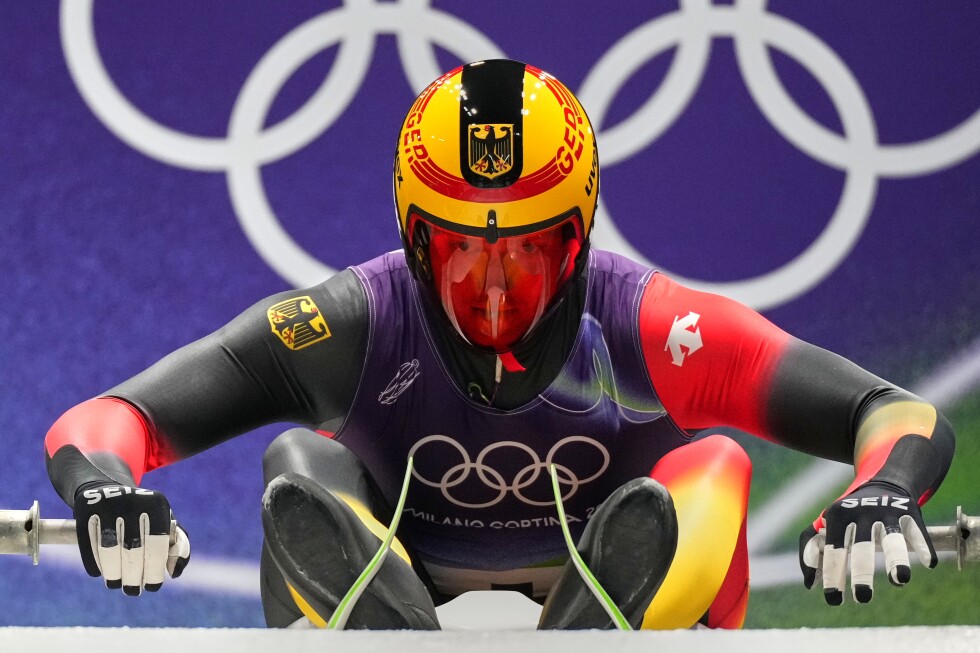
    CORTINA D’AMPEZZO, Italy — The men’s singles luge competition at the Winter Olympics has crystallized into an intense three-athlete battle for podium positions following Saturday’s opening heats. Germany’s Max Langenhan emerged as the frontrunner with a combined time of 1 minute, 45.826 seconds across his initial two runs, establishing a commanding position heading into Sunday’s decisive final runs.

    Austria’s Jonas Mueller sits closely behind in second place with a time of 1:45.988, while Italian favorite Dominik Fischnaller occupies third position at 1:46.124. The competition demonstrates remarkable concentration at the top, with no other competitor within half a second of Langenhan’s leading time.

    Notably absent from the immediate medal conversation are several pre-race favorites. Germany’s Felix Loch, a two-time Olympic champion and current World Cup leader, finds himself in a surprising eighth position. Similarly, Austria’s Wolfgang Kindl, the reigning Olympic silver medalist, sits seventh overall. Both athletes face significant challenges to climb into medal contention during Sunday’s final heats.

    Historical patterns suggest the current top three competitors hold substantial advantages. In all 16 previous Olympic men’s luge competitions, the eventual gold medalist has never been ranked lower than third after the initial two heats. Furthermore, in 10 of those competitions, the podium order remained unchanged from the halfway point to the final medal ceremony.

    For the American team, Jonny Gustafson occupies 11th position while Matthew Greiner sits 17th heading into Sunday’s concluding runs.

  • Cortina’s curling darling Stefania Constantini is the focus of Italian fans in bid to advance

    Cortina’s curling darling Stefania Constantini is the focus of Italian fans in bid to advance

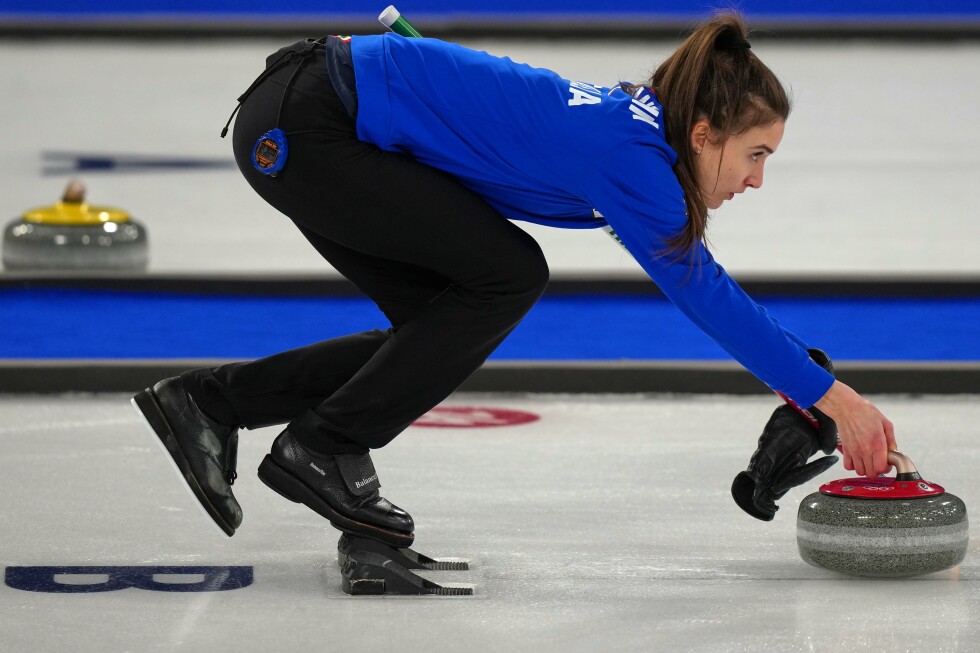
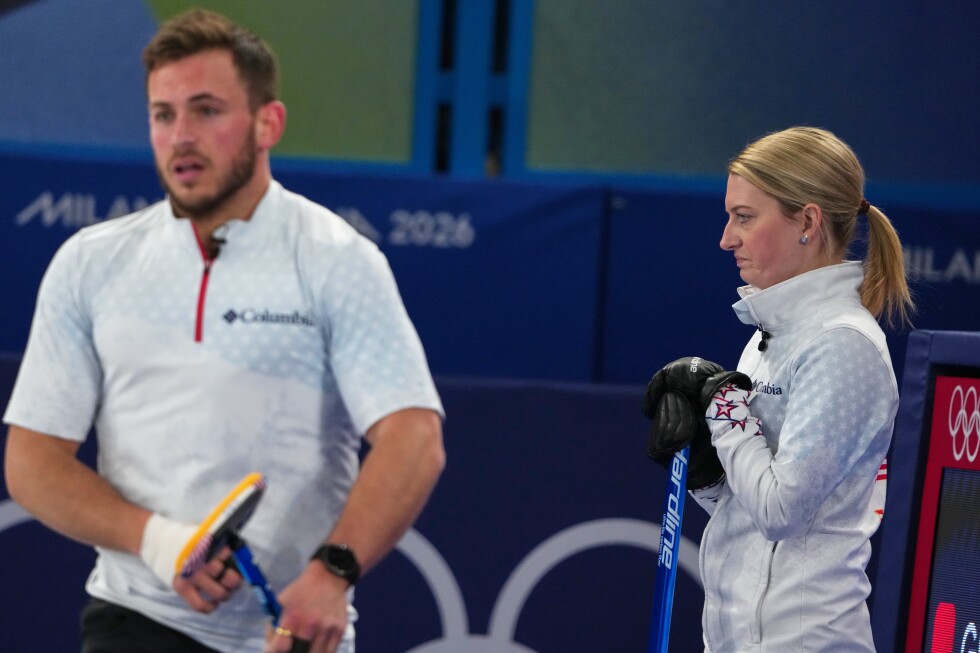
    CORTINA D’AMPEZZO (AP) — Amidst four simultaneous curling matches at the Cortina stadium, all local attention remains intensely focused on defending gold medalist Stefania Constantini. The 26-year-old native, distinguished by her high ponytail, has become the center of an electrifying atmosphere as she battles for advancement in the competition.

    The arena resonates with overwhelming Italian support as fans chant “Italia, Italia, Italia!” with such fervor that they drown out contingents from top curling nations like the United States and Great Britain. Spectators rhythmically pound the wooden barristers, creating reverberations that echo throughout the venue. A subtle gesture from Constantini triggers explosive cheers from the passionate crowd.

    Constantini’s journey began in this picturesque Tyrolean town, where she trained on courts nestled between the dramatic peaks of the Dolomites. Her historic gold medal performance with partner Amos Mosaner at Beijing 2022 positioned these Games as her opportunity to establish Italian dominance in the sport. However, recent setbacks against Sweden on Saturday and Canada the previous day have placed the duo outside the top four standings, requiring flawless performance in upcoming matches to secure playoff qualification.

    “Today we struggled somewhat to adapt from yesterday’s games to today’s conditions,” Constantini acknowledged post-match. Mosaner concurred, stating, “We must reset, avoid previous errors, and deliver our optimal performance tonight to position ourselves favorably for tomorrow.”

    Before her Olympic triumph, Constantini maintained employment as a sales associate at The North Face store on Corso Italia, a position she held until just one month before the Beijing Games. Their success has sparked unprecedented interest in curling throughout Italy, particularly in Cortina, which stands as the nation’s historical cradle for the sport. Notably, Mayor Gianluca Lorenzi, a former national team member and son of Italian curling’s founding father, underscores the town’s deep connection to the game.

    Despite mounting pressure, both athletes maintain that the high-stakes environment enhances rather than hinders their performance. “The crowd support is special and genuinely uplifting during competition,” Constantini remarked.

    The team faces crucial matches against Norway later Saturday, with subsequent games against Czechia and Great Britain scheduled for Sunday. Italian supporter Carla Pelosin, who traveled from Noale with the national flag painted on her face, expressed confidence: “They appeared slightly nervous today, but we maintain full belief in their capabilities for the coming matches. My message would be simply to give their utmost effort—the Italian people trust and believe in them completely.”

  • Speedskater Francesca Lollobrigida wins host Italy’s first gold medal of the Milan Cortina Olympics

    Speedskater Francesca Lollobrigida wins host Italy’s first gold medal of the Milan Cortina Olympics

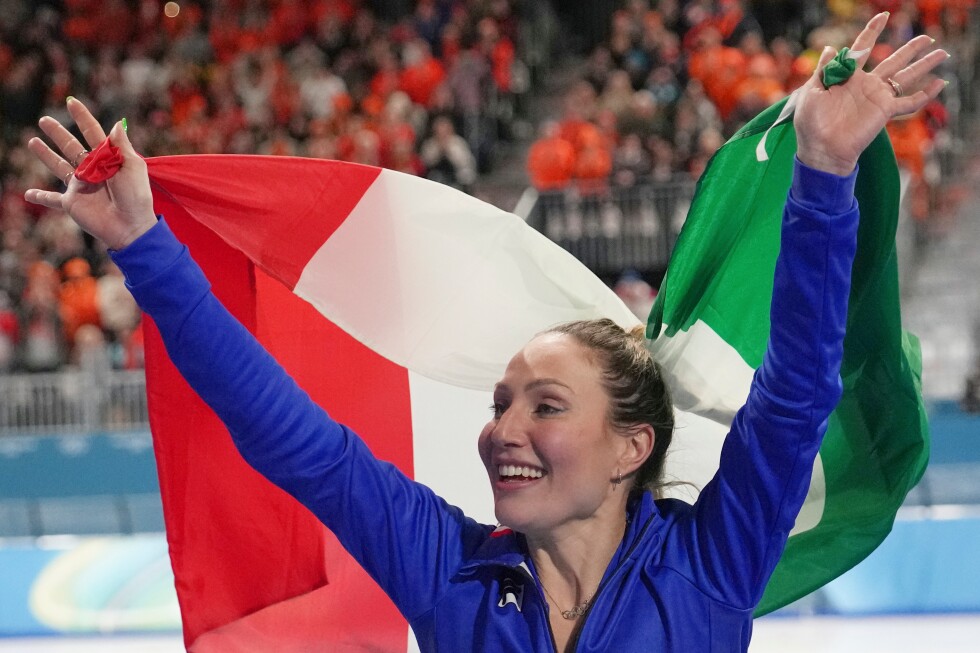
    In a spectacular display of athletic prowess and national pride, Italian speedskater Francesca Lollobrigida secured host nation Italy’s inaugural gold medal at the Milan Cortina Games with a record-breaking performance in the women’s 3,000 meters event on Saturday. The veteran athlete achieved this milestone on her 35th birthday, delivering an unforgettable moment for the roaring home crowd that rose to their feet in celebration.

    Lollobrigida completed the race in an Olympic record time of 3 minutes, 54.28 seconds, finishing more than two seconds ahead of Norwegian contender Ragne Wiklund who claimed silver. Canadian skater Valerie Maltais rounded out the podium with a bronze medal performance.

    The victory holds particular significance as it represents not only Lollobrigida’s first Olympic gold but also marks the first time an Italian woman has triumphed in speedskating at the Winter Games. The accomplished athlete, who balances motherhood with elite competition as parent to a two-year-old son, previously earned two medals at the Beijing Games four years ago—silver in the 3,000 meters and bronze in the mass start event.

    Hailing from Frascati, a picturesque hill town near Rome renowned for its white wine production, Lollobrigida carries a legacy of Italian excellence—her great aunt was the legendary 1950s and 60s film star Gina Lollobrigida.

    The emotional weight of the moment was palpable throughout the competition. During pre-race introductions, Lollobrigida received thunderous applause from patriotic spectators, responding with an enthusiastic smile and dual-arm wave before placing her hands over her heart in gratitude. Though initially trailing behind Maltais at the first checkpoint, the Italian champion steadily gained momentum, seemingly propelled by the vocal support from her compatriots, and delivered a powerful final lap with her arms swinging rhythmically behind her.

    Lollobrigida’s record-shattering time surpassed the previous Olympic benchmark set by Irene Schouten at the 2022 Beijing Games by an impressive 2.5 seconds. As subsequent skaters took to the ice, the emotional champion frequently covered her eyes with her hands, unable to watch the remaining competition that would determine her final standing.

  • Italy’s heroic defense stops Scotland’s last-gasp charge for Six Nations win

    Italy’s heroic defense stops Scotland’s last-gasp charge for Six Nations win

    In a dramatic Six Nations showdown at Rome’s rain-drenched Stadio Olimpico, Italy secured a monumental 18-15 victory against Scotland on Saturday, showcasing exceptional defensive resilience in the closing moments. The match culminated in a heart-stopping finale as Scotland mounted a 30-phase offensive assault that ultimately collapsed under Italy’s determined last-line defense.

    The Italian squad demonstrated remarkable tactical maturity from the opening whistle, establishing an early 12-0 advantage before torrential downpours transformed the pitch into a challenging aquatic battlefield. Despite Scotland’s attempts to capitalize on the adverse conditions, Italy maintained composure under pressure.

    Captain Michele Lamaro epitomized the team’s spirit, declaring post-match: ‘Absolutely incredible. The final defensive sequence demonstrates our profound commitment to each other, this jersey, and our nation. This performance truly represents our identity.’

    Italy’s strategic brilliance manifested through two first-half tries that exposed Scotland’s reconfigured back-three defense. Wing Louis Lynagh and center Tommaso Menoncello executed perfectly coordinated attacks, with fly-half Paolo Garbisi contributing crucial kicks despite some missed opportunities.

    Scotland’s challenges multiplied through persistent lineout malfunctions, losing five throws throughout the contest. Discipline further undermined their efforts, with hooker Ewan Ashman’s high tackle and George Turner’s yellow card compounding their difficulties.

    The visitors displayed late resurgence with Jack Dempsey’s first-half try and George Horne’s second-half score, narrowing the deficit to three points with twelve minutes remaining. However, Italy’s impregnable defense in the final moments secured their seventeenth Six Nations victory and ninth against Scotland.

    This triumph positions Italy to potentially avoid the tournament’s wooden spoon for an unprecedented third consecutive year, while Scotland faces urgent reassessment before hosting England next weekend.

  • Exclusive: Ex-PCB chief recalls the day India-Pakistan cricket collapsed

    Exclusive: Ex-PCB chief recalls the day India-Pakistan cricket collapsed

    The high-stakes world of international cricket faces its most significant political crisis in years as Pakistan’s government-backed boycott of the February 15 T20 World Cup match against India exposes deep fractures within the sport’s governance. The decision, taken in solidarity with Bangladesh after their removal from the tournament, threatens to derail cricket’s most lucrative rivalry that generates approximately $400 million per match.

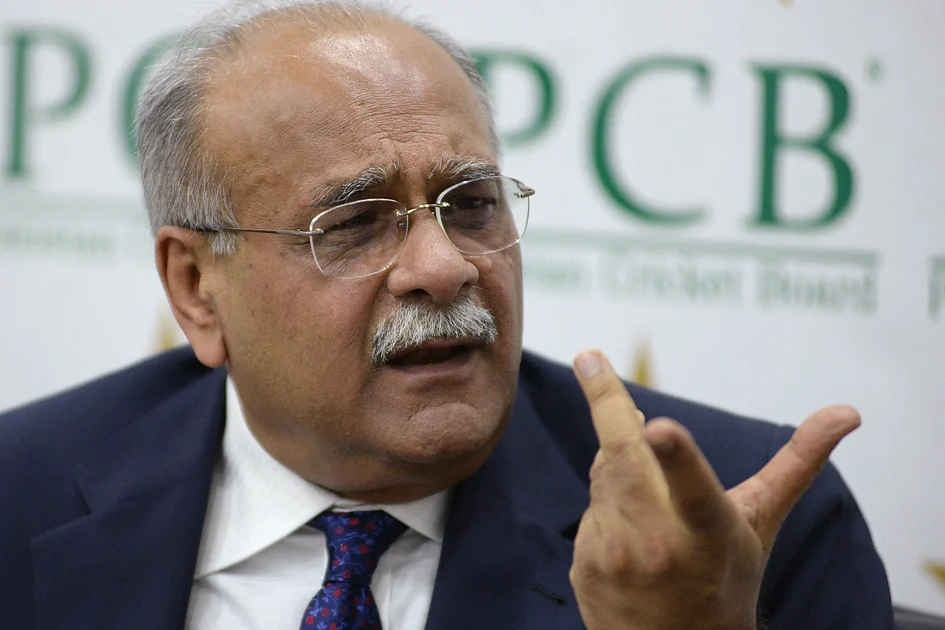
    Najam Sethi, former Pakistan Cricket Board chairman with three separate tenures, provided exclusive insight to Khaleej Times regarding the escalating confrontation between Pakistan and the International Cricket Council. According to Sethi, Pakistan’s protest stems from perceived inconsistent application of ICC regulations, particularly referencing the precedent set when India’s matches were relocated to Dubai during the 2025 Champions Trophy due to security concerns.

    The veteran administrator revealed startling behind-the-scenes details of cricket diplomacy, including a 2015 incident where Pakistani officials were allegedly humiliated during a trip to Mumbai. “They received us at the airport, brought us to the hotel, and asked us to wait,” Sethi recounted. “Three hours later, they told us the meeting had been cancelled and police were waiting outside to take us back to the airport.”

    The current standoff represents a dramatic escalation in cricket’s geopolitical tensions. Pakistan Prime Minister Shehbaz Sharif has publicly endorsed the boycott, characterizing it as a stance against unfair treatment. Sethi suggests informal backchannel negotiations are underway between ICC representatives and Pakistani officials, though he acknowledges the challenging dynamics given the Board of Control for Cricket in India’s considerable influence within international cricket.

    With the Olympics potentially welcoming cricket in 2028, Sethi warns that the sport’s governing body risks damaging its credibility through perceived political bias. “The Olympics will never tolerate a politicized ICC,” he emphasized, noting that the timing of this confrontation could jeopardize cricket’s Olympic aspirations.

    The situation remains fluid with February 15 looming as a critical deadline. Should Pakistan maintain their position and refuse to play India in potential knockout matches, the ICC faces unprecedented disciplinary decisions that could reshape international cricket’s power structure.

  • Canada, the world’s historic curling powerhouse, is feeling the pressure at Cortina

    Canada, the world’s historic curling powerhouse, is feeling the pressure at Cortina

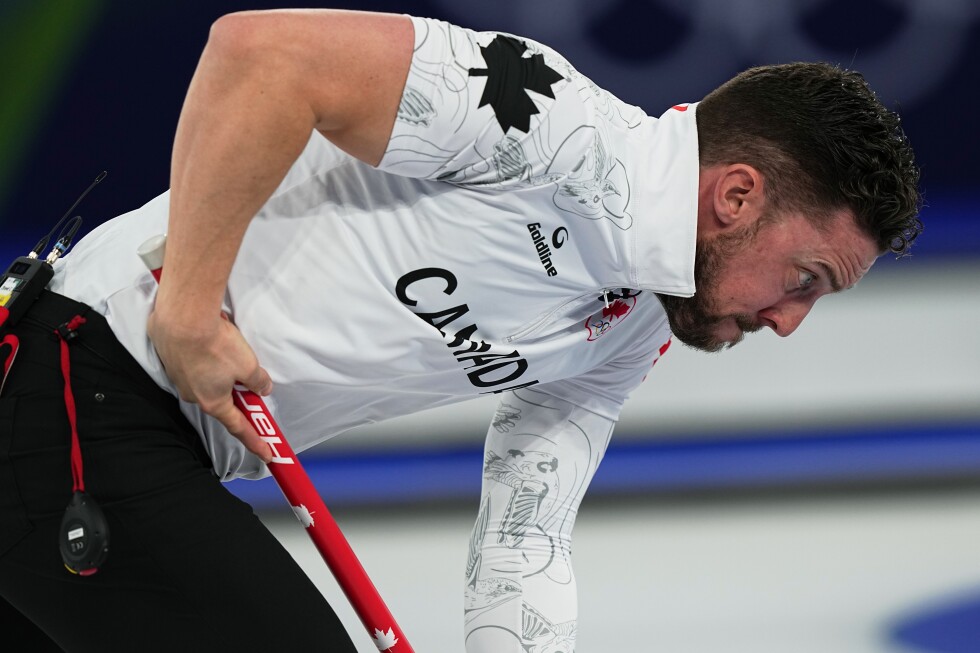
    CORTINA D’AMPEZZO, Italy — The Olympic curling arena witnessed a dramatic power shift on Saturday as Great Britain’s Bruce Mouat and Jennifer Dodds delivered a decisive blow to Canadian veterans Brett Gallant and Jocelyn Peterman. The match, characterized by Britain’s aggressive stone placement that systematically dismantled Canada’s strategic formations, represents more than just a round-robin defeat—it symbolizes the complete transformation of international curling competitiveness.

    This marked Canada’s second consecutive loss in the mixed doubles tournament, following an earlier defeat by the United States team. The back-to-back setbacks highlight the erosion of Canada’s historical dominance in a sport it once commanded. Olympic observers now recognize that the competitive landscape has undergone fundamental changes through recent Olympic cycles, with multiple nations developing world-class training programs.

    Devin Heroux, Canadian Broadcasting Corporation’s seasoned curling analyst, noted: “This outcome perfectly illustrates curling’s current global state. Canada long operated under the assumption that it produced the world’s finest curlers. The reality now is that not only has the international community caught up—they’ve arguably surpassed us.”

    Despite these losses, both teams remain likely to advance to the next round alongside the United States and Italy, with Britain now positioned strongly for qualification among the ten teams competing at the 2026 Milan Cortina Games.

    The British duo’s victory stems from years of dedicated training at Scotland’s National Curling Academy, established in 2017. Their partnership exemplifies the structured development programs that have produced formidable challengers to Canadian supremacy. Since the 2018 Pyeongchang Games—where Canada failed to medal in either four-person team event—the nation’s curling dominance has waned, managing only a single bronze across all disciplines in Beijing.

    Post-match discussions revealed another critical factor: rapidly changing ice conditions at Cortina’s curling center. Athletes noted significant alterations from previous days, with ice playing “up to two seconds faster”—a substantial variation that forced tactical adjustments. Gallant employed an automotive analogy: “It’s like taking a Honda Civic down the highway then jumping into a Ferrari.” He emphasized that while challenging, the conditions didn’t excuse the loss: “The team that adjusts better gains the advantage. They adapted quicker than we did.”

    His assessment was echoed by the victorious British pair. “We coped with it very well,” stated Dodds, while Mouat added: “We’re communicating effectively and now understand how the ice will behave for the remainder of the competition.”

    Heroux concluded that adaptation to Cortina’s volatile ice conditions would ultimately determine which team claims gold, marking a new era where flexibility and rapid adjustment have become as crucial as traditional curling skills.

  • Open Masters Games Abu Dhabi 2026: Meet couple who ‘never wins’ but travels world for sport

    Open Masters Games Abu Dhabi 2026: Meet couple who ‘never wins’ but travels world for sport

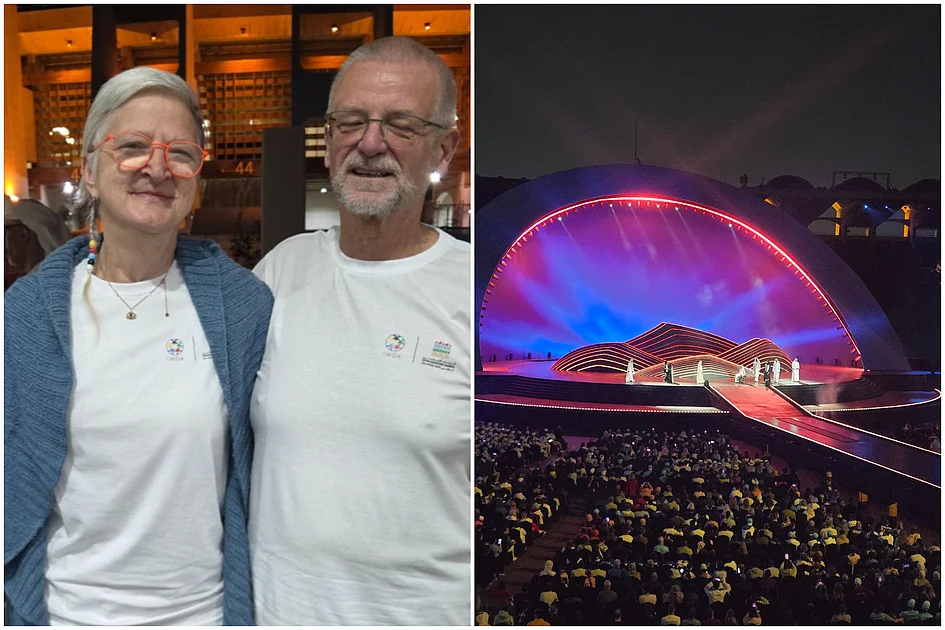
    ABU DHABI – While elite athletics often focus on podium finishes and medal counts, the Open Masters Games Abu Dhabi 2026 is showcasing a profoundly different competitive ethos: one where participation transcends victory and community outweighs conquest. This alternative sporting philosophy finds perfect embodiment in German archers Manfred and Maria Wirsing, whose global journey exemplifies the event’s core values.

    Since their inaugural Masters competition in Auckland (2017), the Wirsings have traversed continents not in pursuit of trophies but meaningful human connections. “We never win,” acknowledges 70-year-old Manfred with cheerful acceptance. “We try. We want to meet friends. Meeting people is what matters.” His wife Maria, a 62-year-old archery enthusiast for quarter-century, shares this perspective: “It’s a hobby. If you win, that’s good – but it’s not necessary.”

    Their story converged with thousands of other amateur athletes during Friday’s opening ceremony, where the couple experienced a novel honor – marching behind the archery flag despite their non-competitive status. For the Wirsings, this recognition symbolized something deeper than athletic achievement: validation of their decade-long commitment to global sporting fellowship.

    The ceremony itself marked a historic milestone as the first Open Masters Games hosted in the Middle East, featuring a spectacular fusion of visual effects, cultural storytelling, and live performances. Organizers introduced the concept of the “original athlete” – defined not by medals but by movement, resilience, and collective human endeavor. This narrative framework deliberately emphasized sport’s roots in daily life rather than elite performance.

    Among those embodying this spirit was Emirati athlete Azza Al Ghunaimi, selected to carry the International Masters Games flag. The 49-year-old runner from Abu Dhabi described her unexpected nomination as culminating years of dedication. “When I came for rehearsals and they called my name, I felt that all these years of hard work meant something,” she reflected, preparing for her upcoming half-marathon participation.

    Meanwhile, Lebanese swimmer Racha Kabbara (55) embraced both the honor and anxiety of marching before thousands. “They trained us how to walk, how to hold the flag,” she noted. “It’s not hard – but there is fear. Fear of being in front of all these people.” Kabbara’s ambitions extend far beyond these Games, with plans to attempt an Ironman triathlon at age 60.

    The scale of the event is monumental: over 21,000 participants from more than 100 nations, ranging from their 30s to 91 years old, competing across 38 sports until February 15. As UAE Minister of Sports Dr. Ahmad Belhoul Al Falasi emphasized, the Games represent a broader vision positioning sport as both lifestyle and unifying force.

    International Masters Games Association President Sergii Bubka highlighted the inspirational message sent by nonagenarian competitors: “The desire to move has no limits.”

    For the Wirsings – already planning future competitions in Kansai and New Zealand – the Abu Dhabi experience reinforces their enduring conviction. As Manfred observed while watching athletes from across the globe parade under stadium lights: “Abu Dhabi is new for us, but this community – it’s always the same spirit.” In an arena where simply participating constitutes victory, the Games continue redefining what it means to be an athlete at any age.