分类: sports

  • Idi Amin’s grandson disqualified from Commonwealth boxing bout

    Idi Amin’s grandson disqualified from Commonwealth boxing bout

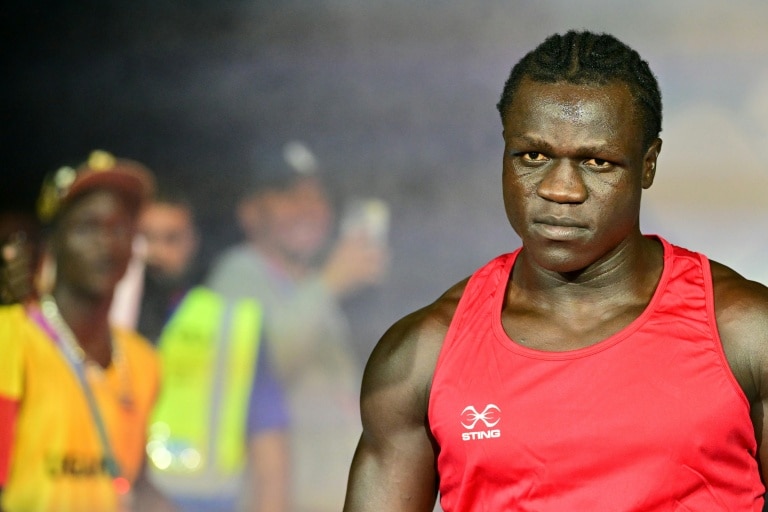
    The 2014 Glasgow Commonwealth Games has delivered a dramatic twist in men’s super-heavyweight boxing, ending the high-profile campaign of Aziz Abdul, grandson of former Ugandan leader Idi Amin, in unexpected disqualification on Wednesday.

    Aziz entered the Games carrying a symbolic nickname that echoed his grandfather’s notorious 1976 declaration where he named himself the “King of Scotland” — a comment that later inspired the Oscar-winning feature film *The Last King Of Scotland*. Ahead of his quarter-final bout, Aziz made headlines across the host nation when he stated his ambition to become the “new king of Scotland”, turning a routine boxing match into one of the most talked-about bouts of the tournament.

    Facing off against England’s Damar Thomas, the contest quickly turned tense and tempestuous. Aziz got off to a strong start in the opening round, landing three powerful sweeping left hooks that put Thomas on the back foot. However, a short, sharp left strike from Thomas left Aziz rattled, forcing the referee to issue a standing count that shifted the momentum of the fight firmly to his opponent.

    The second round saw Aziz lose control of his technique, swinging wildly at Thomas in a series of uncontrolled attacks. He was handed his first point deduction when he repeatedly struck Thomas in the face as the pair broke from a clinch. By the start of the final round, Aziz was already trailing on the judges’ scorecards, putting his gold medal bid in serious jeopardy.

    Midway through the final round, Aziz committed a clear foul that sealed his exit: he jerked his head upward to land an illegal headbutt on Thomas’s chin. The crowd in Glasgow reacted immediately, raining boos down on the Ugandan boxer as the referee handed out his third and final warning, issuing an immediate disqualification. Aziz was jeered out of the ring as his dream of a Commonwealth medal ended in disgrace.

    Speaking to reporters after the bout, an angry Aziz hit out at the referee’s decision, rejecting the outcome entirely. “This referee’s decision is not right and I am not happy,” he said. “Of course it’s unfair. When you watch the previous fights of England, their boxers create a lot of fouls.” The disqualification brings an early end to Aziz’s Commonwealth Games run, closing out one of the most dramatic storylines of this year’s boxing tournament.

  • ‘I thought I deserved to be playing’: Oryn Keeley lifts the lid on ‘emotional’ move to the Storm

    ‘I thought I deserved to be playing’: Oryn Keeley lifts the lid on ‘emotional’ move to the Storm

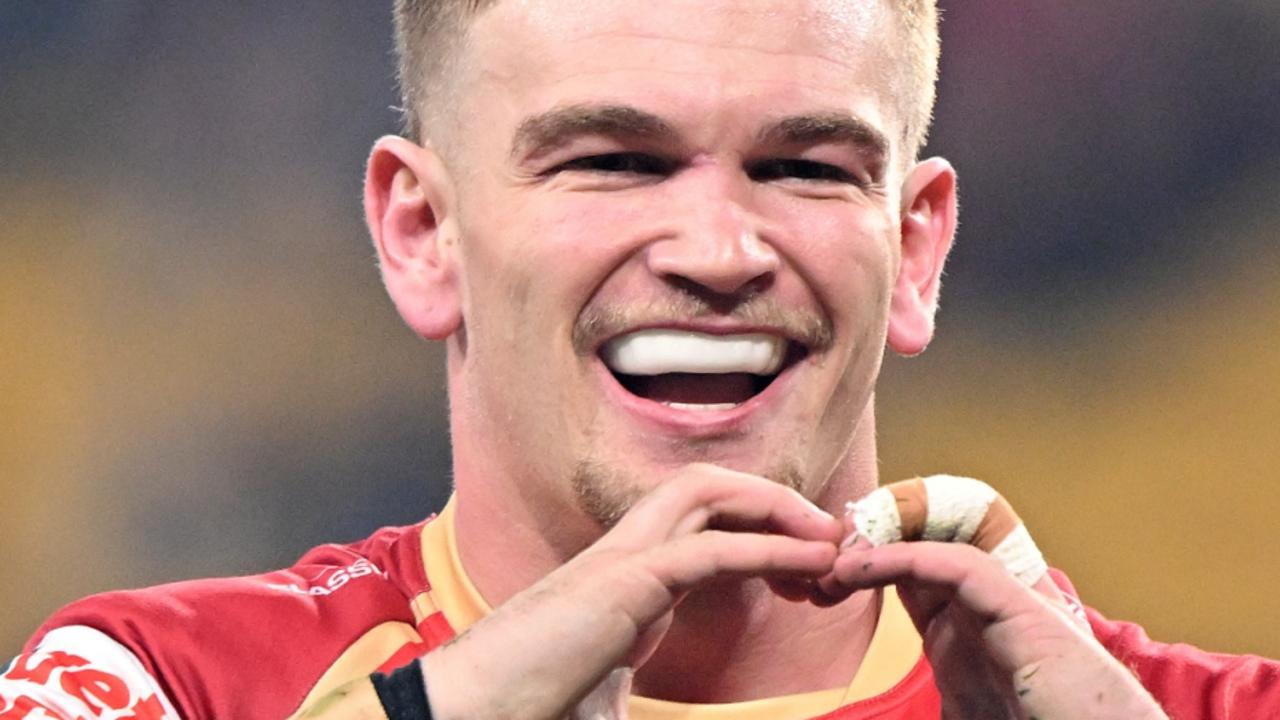
    For decades, the Melbourne Storm has built a reputation for turning promising fringe forwards into elite, household-name talents. Now, the club’s newest recruit, 23-year-old Oryn Keeley, is opening up about the emotional early relocation from the Brisbane-based Dolphins that brought him to Victoria, as he sets out to become the Storm’s next breakout star.

    Keeley originally signed a deal with the Storm at the end of 2025, with the expectation that he would complete the current NRL season with the Dolphins before making the move south. But limited game time at his former club changed those plans fast: the rising forward managed just six appearances for the Dolphins in 2026, four of which came off the bench, stuck behind established starters Kulikefu Finefeuiaki and Connelly Lemuelu. With the Storm battling a rash of injury problems in their forward pack, all stakeholders agreed to an early release that let Keeley make the switch immediately.

    The move wasn’t without its personal challenges. Keeley and his partner were just eight weeks into welcoming their first daughter when they packed up their life in Brisbane to head to Melbourne. His partner’s uncle even made the drive south to haul the couple’s car and Keeley’s beloved coffee machine – a key piece of kit he says matters even more after sampling Brisbane’s superior coffee beans, a quirk he jokes is an easy adjustment to make.

    “It’s definitely not easy when you’re 23 and our daughter was eight weeks at the time,” Keeley told NewsWire. “As a dad, it wasn’t easy, but having my partner trust what I needed was massive because she said that we need to be happy and I need to have a fair opportunity to play. That meant coming down here early. There were some tough conversations, but I’m very grateful that the Dolphins did release me because I’ve never been so happy in my life, and my family is very happy. It was very tough, but these tough times that I had to go through made me a better person and have made my family stronger. We know that the next challenge that comes up, we can defeat it. Whatever is thrown at us, we will deal with it.”

    What struck Keeley most in the transition was the overwhelming support the Storm provided before and during the move, a level of care that brought him to tears during his official jersey presentation ahead of his club debut against the Titans earlier this month, just days after arriving in Melbourne. So raw was his emotion that he asked his partner to wait outside the presentation to avoid being completely overwhelmed.

    “I was emotional that a great club like this wanted to bring a kid from Gosford down and give him an opportunity to play here,” he said. “It gives me goosebumps thinking about playing for this club. The faith that the club put into me is something they didn’t have to do, which is why I was a bit emotional when I looked at the jersey and saw my name on it. To have the backing of Craig [Storm coach Craig Bellamy] and the senior group to throw me in in my first week hit me in the face when I got up to speak. I always get emotional in those types of things, but that one was very emotional because it’s an honour to play at this club. I was like a little kid when I got up there.”

    Keeley’s signing was widely heralded as a major coup for the Storm, after a strong 2025 campaign that included a two-try man-of-the-match performance in the 2024 State Championship final. Stuck behind senior forwards at the Dolphins, the young back-rower jumped at the chance to join a club famous for developing edge forwards into world-class talent – a legacy that includes club greats Ryan Hoffman, Adam Blair, Tohu Harris and current star Eli Katoa, all of whom thrived in Melbourne’s system.

    “I thought I deserved to be playing now, but that wasn’t the case,” Keeley said. “They had lots of players there, so I thought I’d make the move early so I could learn the system so I could be ready next year and be aware of what’s required. It was a tough move, but it was what I needed to do for my football career and my family. As a young kid, I think everyone can agree that you’d watch Melbourne on a Friday night and you knew what you were in for. You look at the calibre of players they’ve produced, and it’s ridiculous.”

    Keeley, whose brother already supports the Storm, says he’s most excited to learn from Katoa, who he describes as the prototypical modern NRL back-rower. “I look at Eli Katoa and think what he’s done for the club already, so I can’t wait to go to battle with a player like him. It’s such a rich history here, so it’s exciting that I get to be a part of it. I think Eli is the best back-rower in the comp in terms of everything from how he gets up for the high ball, how he runs the ball and how tough he is. He’s the prototypical back-rower. That made me excited to come here and learn off him. You watch all of the back-rowers who have played here, and they all blossomed in the Storm system. For me to take my game to the next level, the best thing was for me to come here.”

    Keeley’s insights into the Storm’s culture came long before his signing, from former Storm legends Felise Kaufusi and the Bromwich brothers, who Keeley played alongside at the Dolphins. “The way they used to talk about this club, they put them on a pedestal,” he said. “If you want to become good and become great, that’s what Melbourne only accept. There’s a standard, and you don’t go below it. That made me excited that I could come down here and learn that and try to be like that every day. I think the way they hold themselves off the field – win, lose or draw – is consistent. They drill the same message into you all week and you’re expected to go out there and know what to do because of the messages you’ve received from the coaching staff.”

    This Friday night, Keeley will make his fourth appearance for the Storm, starting against the Canterbury Bulldogs, with the club facing a high-stakes run of fixtures: Melbourne’s record-breaking consecutive NRL finals streak will come to an end unless the club wins every one of its remaining matches this season. For Keeley, though, every game is just another step in a journey that’s already changed his career and his family’s future.
  • World Cup star Vozinha dons Spider-Man jersey. The nickname on his shirt for Chile club up for vote

    World Cup star Vozinha dons Spider-Man jersey. The nickname on his shirt for Chile club up for vote

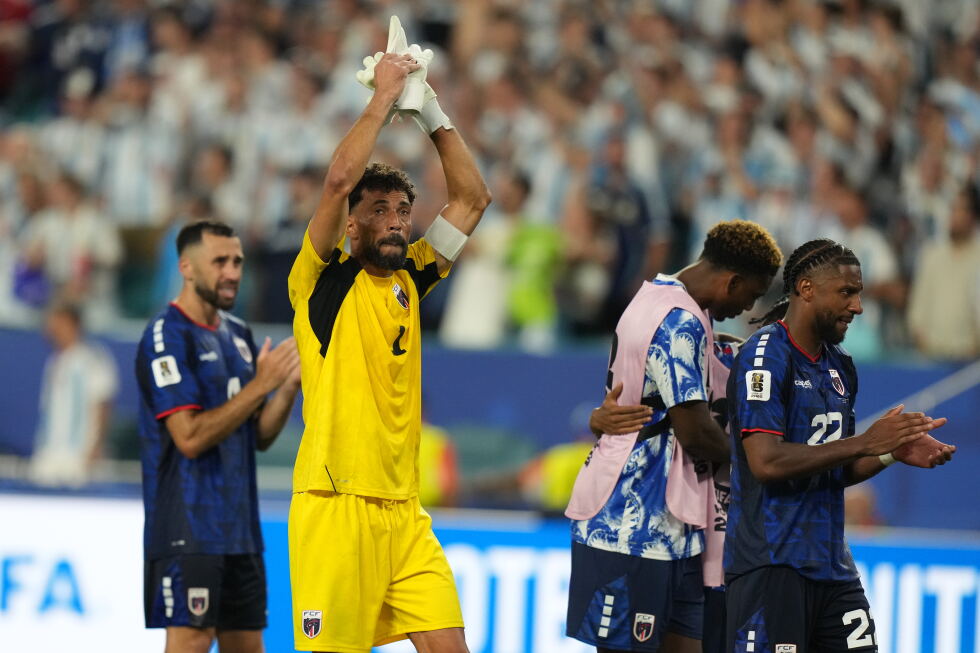
    Fresh off a breakout performance at the men’s World Cup that turned him from a little-known goalkeeper into a global sports personality, Cape Verde’s Vozinha is navigating unforeseen administrative delays that have pushed back his arrival at Chilean powerhouse club Colo Colo, even as he capitalizes on his skyrocketing fame to front a major Hollywood movie promotion.

    The 40-year-old shot stopper was originally slated to join the Santiago-based club — Chile’s most decorated and successful professional football side — by Wednesday, but the team confirmed this week that routine immigration and player registration paperwork has pushed his expected arrival to Thursday. Even with the delay, Vozinha stepped into the spotlight this week anyway, suiting up in Spider-Man cosplay to headline a Sony Pictures Brazil marketing campaign for the upcoming release *Spider-Man: Brand New Day*. Posting to his Instagram account, which has exploded from fewer than 50,000 followers ahead of the World Cup to 29.6 million today, Vozinha urged his massive new global audience to catch the upcoming film.

    The paperwork delay, however, is not the only challenge Colo Colo is rushing to resolve before Vozinha can take the pitch for his first competitive match. The most high-stakes issue centers on what name will appear on the back of his jersey: rules set by Chile’s National Association of Professional Football (ANFP) mandate that all registered players must use their legal surname on match kits, which would bar Vozinha from using the iconic nickname that made him a household name across the world.

    Vozinha’s real legal name is Josimar José Évora Dias, but the moniker “Vozinha” — which translates to “grandma” in Portuguese, a loving tribute to the grandmother who raised him — is central to both his personal identity and the global personal brand he has built following his World Cup success. Under current ANFP rules, “nicknames, appellations, or sobriquets” are explicitly prohibited from appearing on player jerseys in domestic competition. Non-compliance carries penalties: players receive an administrative yellow card, while their clubs can face fines of up to $875 USD per violation.

    To work around the regulation, Colo Colo has formally submitted a request for a special exemption to the ANFP Council of Presidents, a governing body made up of top executives from all of Chile’s top-flight professional clubs. The council is scheduled to hold a vote on the request this Friday, and the rules require a unanimous decision to grant the exemption for Vozinha to keep his famous nickname on his kit.

    A secondary unresolved issue is Vozinha’s jersey number, as all traditional goalkeeper numbers are already claimed by current squad members. Argentine starting goalkeeper Fernando de Paul currently holds the No. 1 shirt, the most common number for goalkeepers across global football.

    Vozinha’s arrival to Chilean football comes after a stunning World Cup run that cemented his status as one of the tournament’s biggest breakout stars. He backstopped first-time qualifier Cape Verde to a historic opening clean sheet against eventual tournament champion Spain, followed by a series of highlight-reel spectacular saves in a narrow 3-2 Round of 32 loss to Argentina.

    His transfer to Colo Colo has already sent shockwaves through Chilean football, a domestic league starved of international attention after Chile’s national team failed to qualify for its third consecutive World Cup, finishing dead last in South American qualifying. Vozinha’s signing is projected to dramatically raise the global profile of both Colo Colo and Chilean football as a whole, while unlocking major new commercial opportunities for the club.

    As Vozinha’s personal following has exploded, he has already been tapped as the face for multiple major advertising campaigns across global brands. The so-called “Vozinha effect” is already tangible for Colo Colo: in the weeks since announcing the signing, the club has gained nearly 70,000 new followers across its social media platforms, a large share of which come from international fans outside Chile.

    “The whole world is getting to know Colo Colo better,” long-time club supporter Héctor Hermosilla said. “The world’s cameras will be on Vozinha and that’s going to be good for the club.”

  • Victoria appoints Nicole Faltum as its WNCL captain, taking over from Sophie Molineux

    Victoria appoints Nicole Faltum as its WNCL captain, taking over from Sophie Molineux

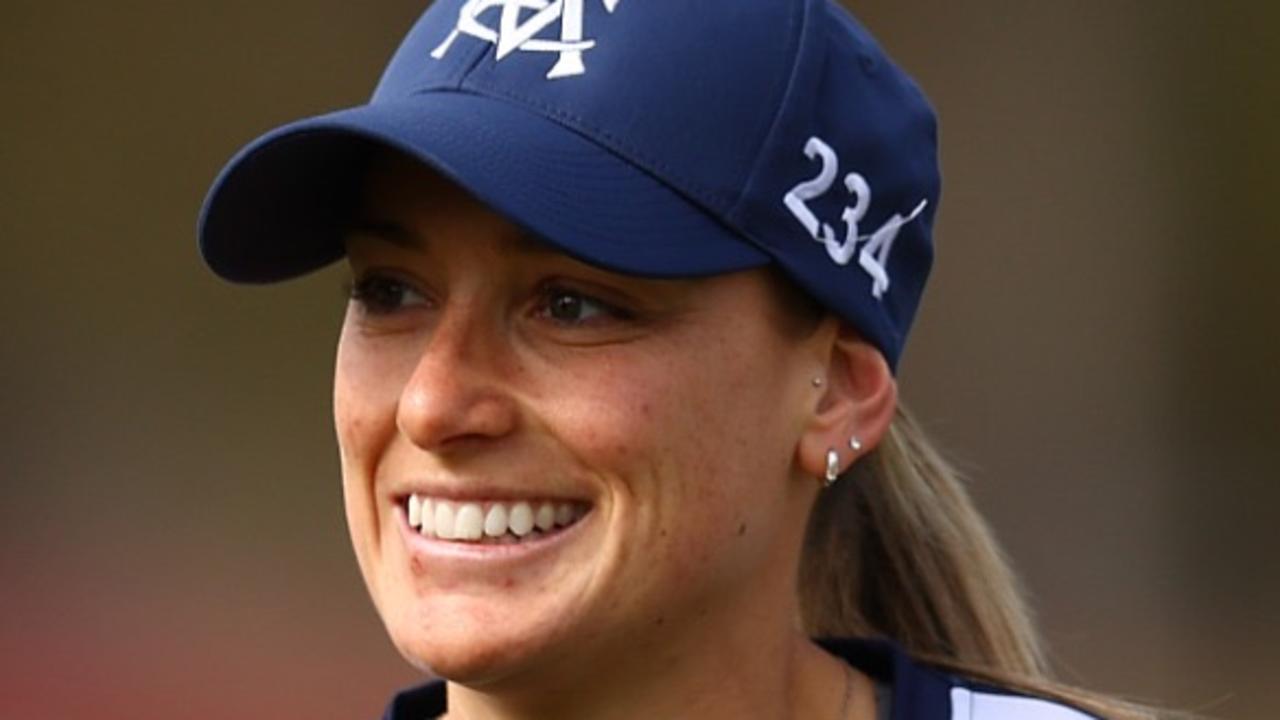
    After a winless, disappointing 2025-26 season that Victorian cricket fans are eager to put behind them, a new leadership era has begun for the state’s Women’s National Cricket League (WNCL) side. Nicole Faltum, the team’s veteran wicketkeeper, will be officially announced as the squad’s new skipper this Thursday, stepping into the role previously held by Australian national team champion Sophie Molineux.

    Even before her formal appointment, Faltum has already moved quickly to reset team culture and lay the groundwork for a turnaround, bringing a fresh, player-centric philosophy to the struggling side. In one of her first symbolic gestures as captain, Faltum created a blank team canvas emblazoned with every squad member’s initials and a sketch of the WNCL championship trophy, a visual tool she said she used to manifest a successful upcoming campaign that resonated strongly with her teammates.

    Faltum has already held extensive collaborative meetings with players and coaching staff, and says she has never seen the Victorian program more aligned on its core goals heading into a new season. Her leadership philosophy centers on three key pillars: authenticity, enjoyment, and relentless performance.

    “I made a point to be clear from the start about how I want to run things and shape this program,” Faltum explained. “One of my core priorities is encouraging every person in this group to be 100 percent authentic to who they are. We will have shared team values and standards, but there’s no one-size-fits-all way to contribute – that’s something I want every player and staff member to feel.”

    For Faltum, prioritizing fun and passion for the sport is non-negotiable, even at the elite level. “This is our job, and we are here to perform, but so many people would love to be in our position playing professional cricket,” she said. “We can’t lose sight of how lucky we are, and that joy has to come through in how we play.”

    That focus on culture does not come at the cost of ambition, Faltum emphasized: “There’s no hiding it – I want to win every single game we play. At the end of the day, everything we do revolves around performance, and that’s going to be our driving force.”

    Victoria’s disastrous previous campaign, which ended with the squad rooted at the bottom of the ladder without a single win, has given Faltum a clear starting point for improvement. She argues that many of last season’s struggles stemmed from gaps in cricket IQ and game awareness – areas she says are entirely teachable with intentional preparation.

    “People often joke that teams get accustomed to either winning or losing, and while that’s partly just a narrative, there’s a lot of truth to it too,” Faltum noted. “When we reflected on last season, most of our issues came down to decision-making and game awareness that we can actually work on. We’ve already made that a core focus of pre-season.”

    Faltum explained that the team’s pre-season work balances on-field skill development with off-field tactical learning: “Half of our work is hands-on skill work, but the other half is breaking down past matches in the meeting room. When you take the emotion and pressure of a live game out of it, even experienced players can learn new things about the game – that’s been really rewarding for all of us so far.”

    Beyond tactical preparation, Faltum has prioritized building personal connections with every member of the squad. Alongside the shared team canvas, she gifted each player a personalized towel embroidered with their initials, and wrote individual handwritten cards highlighting each player’s unique strengths and value to the team.

    The squad will head to Mildura next week for a pre-season training camp to finalize preparations, and will kick off their 2026-27 campaign under lights against South Australia on September 29. For Faltum and her side, the blank canvas of the new captaincy era offers the chance to build something special after a year to forget.

  • Boxer Abdul – grandson of dictator – disqualified for headbutt

    Boxer Abdul – grandson of dictator – disqualified for headbutt

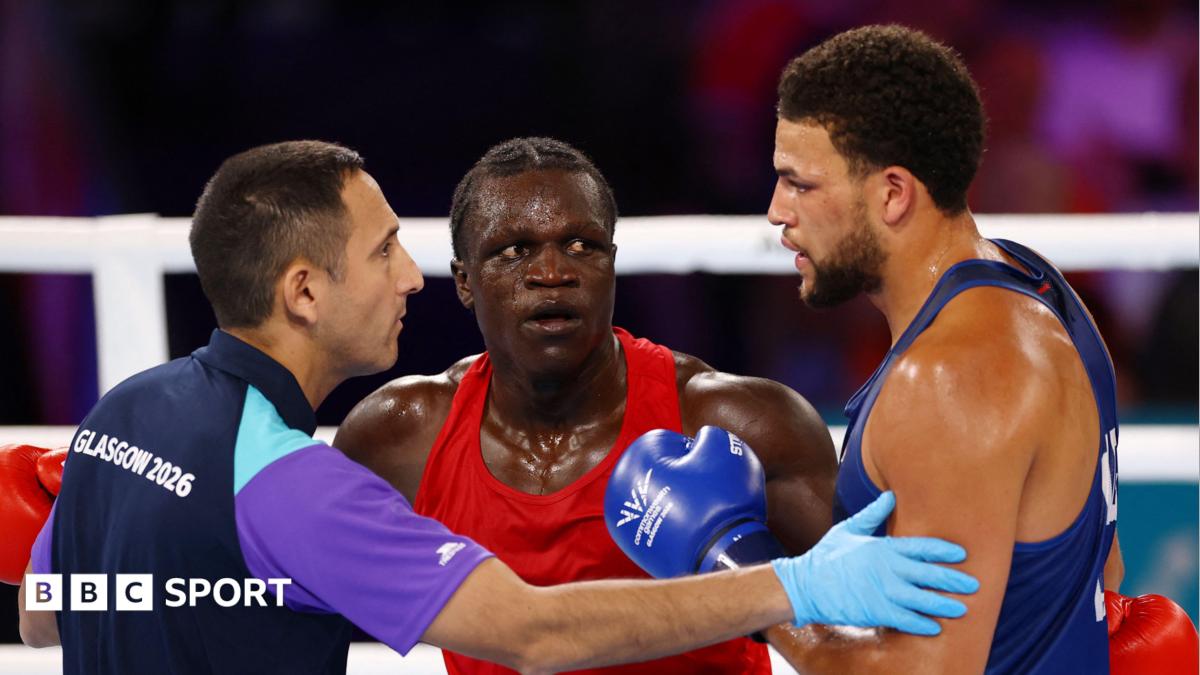
    The 2026 Commonwealth Games in Glasgow has been gripped by a boxing controversy following the disqualification of Ugandan super-heavyweight competitor Aziz Abdul, the grandson of former Ugandan dictator Idi Amin. The 25-year-old fighter was ejected from his third-round bout against England’s Damar Thomas after referees ruled he intentionally headbutted Thomas in the chin during a grappling exchange.

    Abdul had picked up two formal warnings for rule violations in the opening two rounds of the match, and was trailing on all three judges’ scorecards heading into the third round. The controversial disqualification handed Thomas an automatic walkover win, guaranteeing the English fighter at least a bronze medal, and ended Abdul’s bid to make history for his country: a win would have secured Uganda’s first Commonwealth boxing medal since the 1990 Auckland games.

    Speaking to BBC Sport immediately after the decision, Abdul rejected the referees’ call, claiming the head movement was accidental, and accused officials of systemic bias against him as a Black African athlete competing on British soil. He insisted Thomas had used illegal elbow strikes against him unpenalized, and that judges refused to count his clean, heavy landed punches before penalizing him for an accidental clash.

    “How can I headbutt someone? I would not. He was the person they wanted to win. He was the winner before the fight even started,” Abdul said. “I knew going in if I did not get a knockout, I could not win this fight. The decision is not right, I am not happy.”

    Abdul had previously drawn international attention ahead of the bout for echoing his grandfather’s infamous 1976 declaration, telling reporters he aimed to become the “new King of Scotland” during the games. The elder Amin, a one-time amateur boxer himself, was a controversial figure with a long-held fascination for Scotland, developed during his service in the King’s African Rifles in his 20s. After seizing power in a 1971 military coup, he led a brutal eight-year regime responsible for the deaths of an estimated 500,000 Ugandans, earning him the nickname “The Butcher of Uganda.”

    At the height of his rule, Amin regularly wore kilts and played bagpipes, and famously declared himself the “King of Scotland” in 1976, a moment that later became the core premise of the Oscar-winning 2006 drama *The Last King of Scotland*, starring Forest Whitaker as the dictator. Aziz Abdul, who never met his grandfather, has previously stated he draws inspiration from Amin, though he has declined to confirm whether that inspiration relates to Amin’s history as a boxer or his political rule. When asked if he was proud to be related to a figure of such a notorious, sinister reputation, Abdul declined to comment.

    Thomas, for his part, acknowledged the win came in unsatisfying fashion, saying it was “not the way” he wanted to advance in the tournament. “I can’t change what happened today but I can control how I box on Friday,” he added, referencing his upcoming semi-final bout. BBC Sport has reached out to both Commonwealth Games organizing officials and World Boxing for comment on Abdul’s allegations of bias, and had not received a response as of publication.

  • Fifa opens disciplinary proceedings against Argentina

    Fifa opens disciplinary proceedings against Argentina

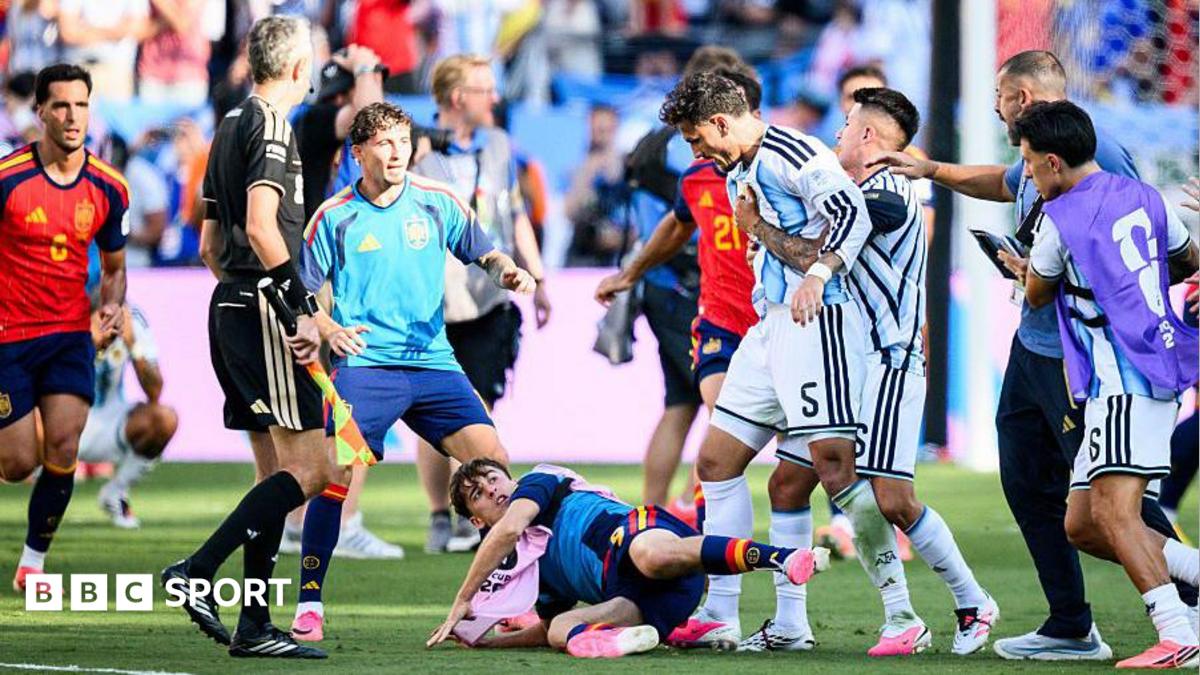
    In the wake of Argentina’s tense 1-0 2026 FIFA World Cup final defeat to Spain at the New York New Jersey Stadium, global football’s governing body has launched full disciplinary proceedings targeting the Argentinian Football Association (AFA) and multiple high-profile Argentine players and coaching staff for a string of alleged rule breaches across the tournament. The post-final confrontation, which erupted immediately after the final whistle when Argentine players and backroom personnel clashed with Spanish champions, has been at the center of FIFA’s inquiry, with a disciplinary and ethics prosecutor appointed just one week after the July final to examine the violent altercations.

    Following the prosecutor’s formal recommendation, FIFA is moving forward with assault investigations against three Argentine individuals: Napoli defender Nahuel Molina, who faces two separate assault counts; Paris Saint-Germain midfielder Leandro Paredes, who is charged with three counts of assault; and Argentine assistant manager Roberto Ayala, who faces one assault allegation. All assault charges fall under Article 14 of FIFA’s official disciplinary code. Molina also faces an additional separate charge of unsporting behavior under the same article, a breach that Argentine attacking midfielder Thiago Almada and Spanish star midfielder Gavi are also accused of committing in the aftermath of the final.

    Under FIFA’s existing disciplinary rules, unsporting conduct carries a minimum penalty of a one-match suspension for those found guilty, while assault convictions result in a minimum three-match ban. This investigation into post-final chaos is just one part of a wider set of disciplinary actions against the AFA, which is facing scrutiny for alleged misconduct spanning multiple matches throughout the 2026 World Cup tournament.

    The broader charges against the Argentine FA include violations of four separate FIFA code articles: Article 13, which bans using sports events for non-sporting political demonstrations; Article 13, covering team misconduct; Article 15, which prohibits discrimination and racist abuse; and Article 17, which outlines requirements for maintaining match order and security. The Article 17 breaches specifically relate to alleged off-field incidents including discriminatory chants and gestures from fans and personnel, delayed kickoff times, inappropriate public messages displayed by both the team and spectators, and multiple cases of spectators throwing projectiles onto the pitch.

    One of the most high-profile non-sporting demonstrations cited in the charges came after Argentina’s semi-final victory over England, when the squad displayed a banner supporting Argentina’s long-standing territorial claim to the Falkland Islands. The banner read “Las Malvinas son Argentinas,” translating to “The Falklands are Argentine.” FIFA first confirmed it was assessing reports of this banner incident on July 16, before opening the full collective disciplinary investigation into post-final violence on July 20.

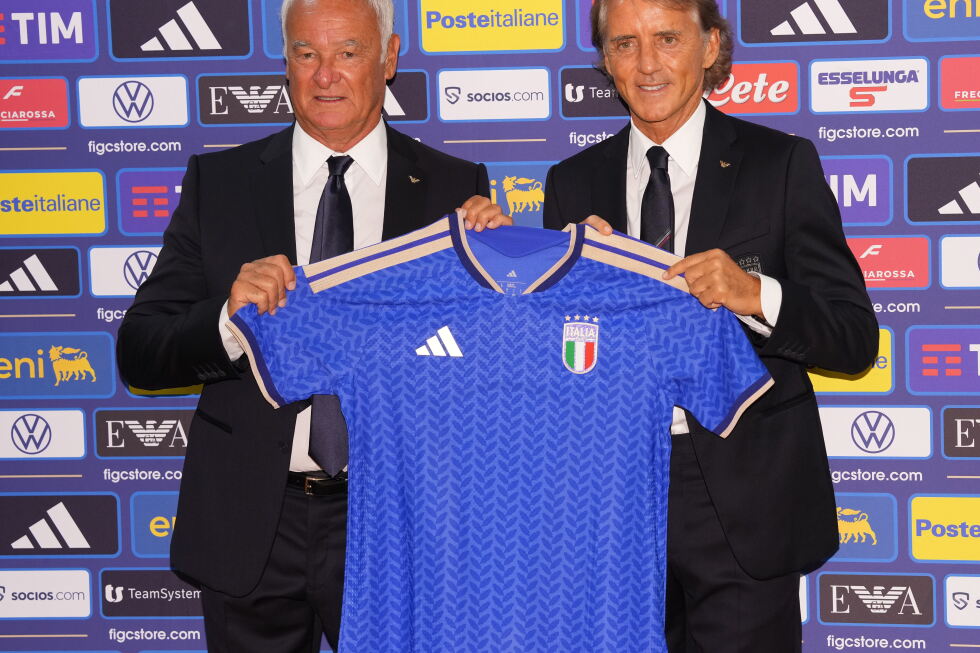
  • Roberto Mancini apologizes after being rehired to coach Italy 3 years after he left for Saudi Arabia

    Roberto Mancini apologizes after being rehired to coach Italy 3 years after he left for Saudi Arabia

    ROME — Less than three years after walking away from the Italy men’s national football team for a high-paying role with Saudi Arabia’s national side, legendary manager Roberto Mancini has issued a public apology as he steps back into the job he left, tasked with pulling the Azzurri out of one of the darkest streaks in their modern football history.

    Mancini’s return comes on the heels of a catastrophic qualifying run that has plunged Italian football into crisis. For the third consecutive World Cup cycle, Italy failed to secure a spot in the tournament’s main draw, a shocking slide for a nation with four World Cup titles to its name. The latest disappointment, a playoff defeat to Bosnia and Herzegovina earlier this year, triggered immediate resignations from both Italian Football Federation (FIGC) president Gabriele Gravina and incumbent head coach Gennaro Gattuso in April, opening up a sudden vacancy at the top of the national program.

    The 61-year-old manager is no stranger to success with the Azzurri. He led Italy to its second European Championship title in 2021, a historic triumph that lifted the nation after decades of underperformance on the continental stage. But just two years after that iconic win, Mancini sent shockwaves through Italian football when he abruptly resigned from his post in August 2023. Just 14 days later, he was unveiled as the head coach of Saudi Arabia’s national team, taking on a far more lucrative contract that left many Italian fans feeling betrayed.

    In his first public comments since announcing his return, Mancini owned his misstep, offering a heartfelt apology to fans and federation officials alike. “I’m very sorry,” he told reporters Wednesday. “It was like losing the woman of your life. And it means you did something that shouldn’t have been done. So I’m sorry, very sorry also for everything that happened over these last three years. … I’m going to try to bring the national team back where it belongs.”

    Mancini also acknowledged that poor communication with then-FIGC president Gravina was entirely his fault. Aware that many fans still hold resentment over his 2023 exit, he said he expects a mixed reception when he returns to the touchline for his first match back in charge, a Nations League matchup against Belgium scheduled for September 25 at Rome’s Stadio Olimpico.

    “I realize some people will be against me,” Mancini said. “I’m hoping the squad plays well enough that maybe people will forgive me.”

    Notably, Mancini was not the FIGC’s first choice to fill the vacant head coaching role. Both star club managers Carlo Ancelotti and Pep Guardiola turned down offers to take the job, and former Italian international Andrea Pirlo was removed from consideration amid political controversy tied to a proposed sponsorship deal with a Russian betting company. That string of rejections left the federation to turn to the only high-profile available candidate with a proven track record of winning with the Azzurri: the man who left just over a year prior.

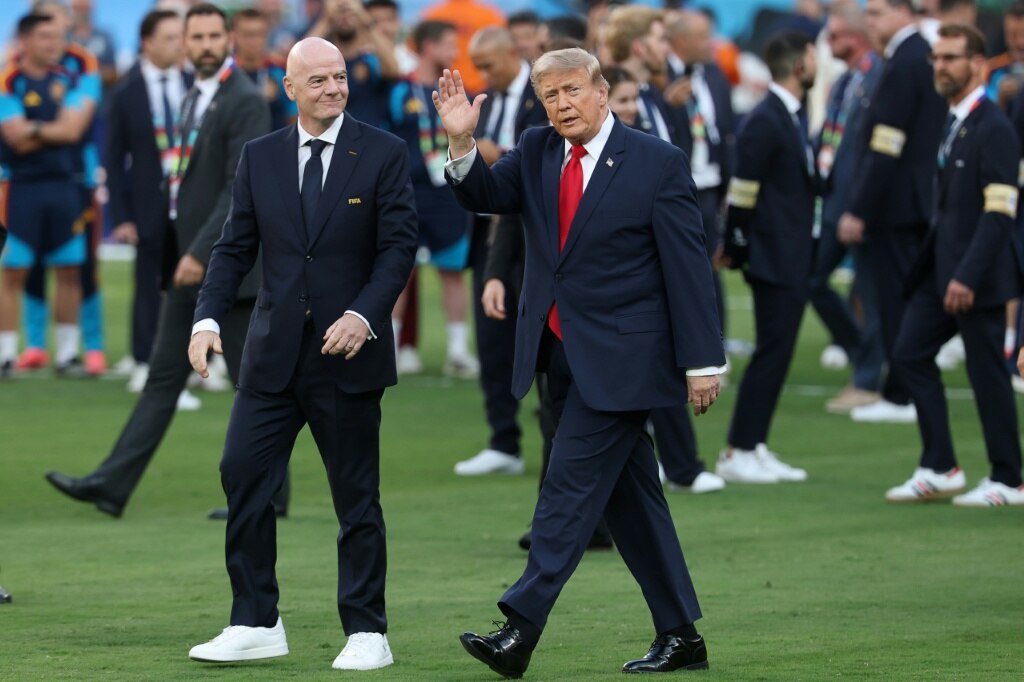
  • FIFA hit by furious backlash over plans to sell stake in competitions

    FIFA hit by furious backlash over plans to sell stake in competitions

    A wave of fierce criticism has swept across global football this week after FIFA unveiled plans to sell a minority stake in the commercial operations of the World Cup and other top tournaments through a newly created private subsidiary, FIFA Forward Enterprise (FFE). The proposal, announced Tuesday, would see global football’s governing body retain a majority controlling share of FFE, while targeting $4.2 billion in funding from carefully selected long-term investors purchasing non-controlling minority holdings by the end of 2024.

    Controversy deepened almost immediately after multiple media outlets reported that FIFA president Gianni Infantino had sent a private letter to all 211 FIFA member associations, offering each association up to $40 million in funding for the 2027-2030 competition cycle if they approved the plan before the September 19 deadline. Opponents quoted in The Times, which first broke the story, have already labeled the incentive package “pure bribery.”

    Critics across the global football ecosystem have lined up to reject the proposal, with European governing body UEFA emerging as the most vocal opponent. UEFA vice president Hans-Joachim Watzke told German outlet Kicker that “many in European football see FIFA’s plans as an outright attack on football. I share this view. A line has been crossed here.” According to France’s sports minister, UEFA will hold an emergency meeting Wednesday to discuss a coordinated response to the plan. In an official statement, UEFA argued: “The soul and governance of football are not assets to trade — especially with zero transparency as to who gains financially. None of us are the owners of football. It is not FIFA’s to sell.”

    The proposal has also drawn sharp rebuke from top global political and sports officials. European Union Sports Commissioner Glenn Micallef posted a clear message of opposition on social platform X, writing “Hands off our game.” Andy Burnham, the Mayor of the United Kingdom’s Greater Manchester region and a lifelong football fan, also condemned the proposal, saying “Football does not belong to investors. It belongs to the people who fill the stands and who stand on the touchline week in, week out, rain or shine.” CONCACAF, the governing body for North and Central American football, cited “deeply concerned by the lack of due process,” while the Asian Football Confederation says it is “disappointed” that it was not consulted before the plan was announced.

    Further questions have been raised about potential conflicts of interest and the background of interested investors. The Times reported that 56-year-old Infantino stands to personally benefit from the scheme by taking a leadership role as FFE commissioner after his current presidential term expires in 2031, a claim FIFA has denied. Early discussions with potential investors have already included Thrive Capital, an investment firm founded by Joshua Kushner — brother of Jared Kushner, former US President Donald Trump’s son-in-law — and a division of JPMorgan Chase, the US bank that infamously tried to finance the failed 2021 European Super League breakaway.

    FIFA has defended the plan in its official statements, emphasizing that it “would retain sole control of FFE and exclusive authority over football governance, competitions, match calendar, and all regulatory and sporting decisions.” The governing body projects FFE will carry an initial equity valuation of $20 billion, and added that small and low-income member associations would also be offered a one-off 0.1 percent stake worth $20 million, a sum that represents a major financial incentive for smaller national federations. For context, FIFA already projects record annual revenue topping $8 billion for 2026, after the first expanded 48-team World Cup, and has openly discussed expanding the tournament further to 64 teams in future cycles.

    Many senior football figures have warned the proposal poses an even greater threat to the future of global football than the European Super League. An unnamed senior football insider told The Times the plan is “potentially much worse than the European Super League,” as it would reshape the entire structure of the sport at every level across the world. This is not Infantino’s first attempt to secure large-scale private investment in FIFA competitions: a 2019 stakeholders’ committee rejected an Infantino-backed $25 billion private investment plan for an expanded Club World Cup, which included reported backing from Japan’s SoftBank and Saudi Arabia’s sovereign wealth fund. FIFA eventually pushed through an expansion of the Club World Cup to 32 teams starting in 2025 despite the earlier rejection.

    The Times speculates that if approved, FFE could create ongoing pressure to expand the World Cup and Club World Cup beyond their current size, and to stage the tournaments more frequently than the current four-year cycle. The plan still requires formal approval from FIFA’s 38-member ruling council and a majority vote of the 211 member associations, with FIFA set to present the full proposal to the council in the coming weeks.

  • F1 chief says season finale could shift to Europe if Qatar, Abu Dhabi races are affected by war

    F1 chief says season finale could shift to Europe if Qatar, Abu Dhabi races are affected by war

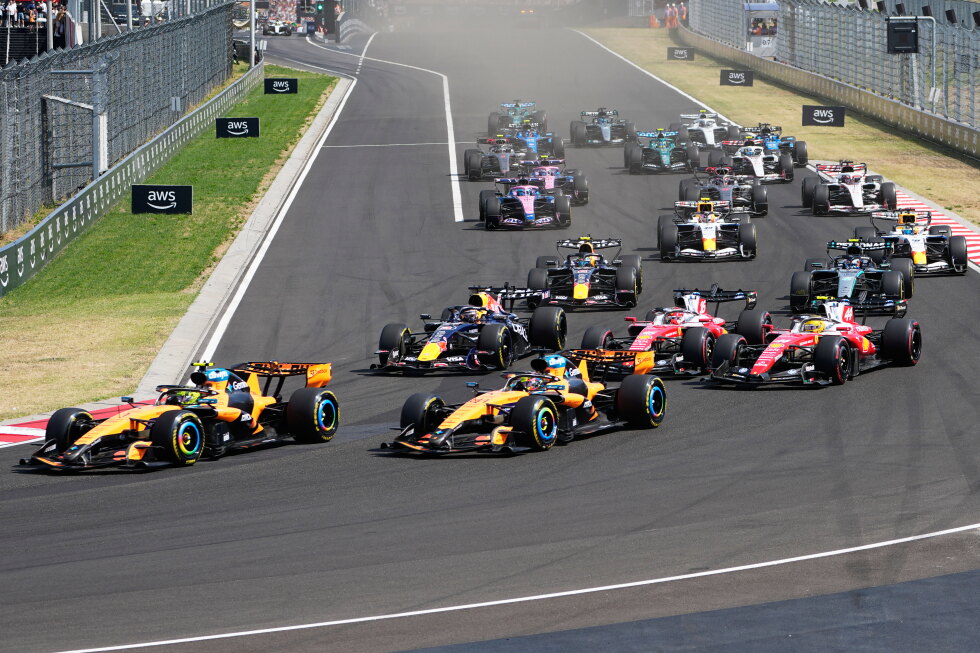
    Amid escalating geopolitical uncertainty in the Middle East, Formula 1 has prepared a backup plan that could see the 2025 world championship conclude on European soil if scheduled season-ending races in Qatar and Abu Dhabi are forced to be canceled, series CEO Stefano Domenicali has confirmed.

    Domenicali, speaking to Formula 1’s official media platform following the recent Hungarian Grand Prix, emphasized that as of now, both the Qatar and Abu Dhabi Grands Prix remain locked into the current calendar. No final decision on the fate of the two races, which are scheduled for November and December to close out the campaign, will be made until mid-September at the earliest.

    “If the situation will not be cleared the way that we believe it should be, before the middle of September, we will take the decision,” Domenicali said. “And in that respect, I just want confirm to you that if this will not be possible, that the end of the season would be in Europe.” Domenicali declined to share specific details of potential alternative European venues should the Middle East races be scrapped.

    This is not the first time Formula 1 has adjusted its calendar in response to Middle East geopolitical tension. Earlier in the season, the series canceled planned races in Bahrain and Saudi Arabia over safety concerns linked to regional conflict, rescheduling the Bahrain Grand Prix to take place at Sepang International Circuit in Malaysia on October 4.

    Looking ahead to the 2027 season, Domenicali noted that the planned 24-race calendar, which is set to be officially announced in the autumn, is progressing according to a standard schedule. Even so, the series has already begun developing alternate options in the event that the regional conflict remains unresolved by then. Regardless of any adjustments, Domenicali reaffirmed that Formula 1 remains committed to hosting 24 Grands Prix in 2027, matching the planned number of races for the upcoming season.

    The Hungarian Grand Prix marked the final event before Formula 1’s annual mid-season break. Racing is set to resume on August 23 with the Dutch Grand Prix at Zandvoort. In the drivers’ championship, rising young star Kimi Antonelli holds a commanding 50-point lead over seven-time world champion Lewis Hamilton as the series enters the break.

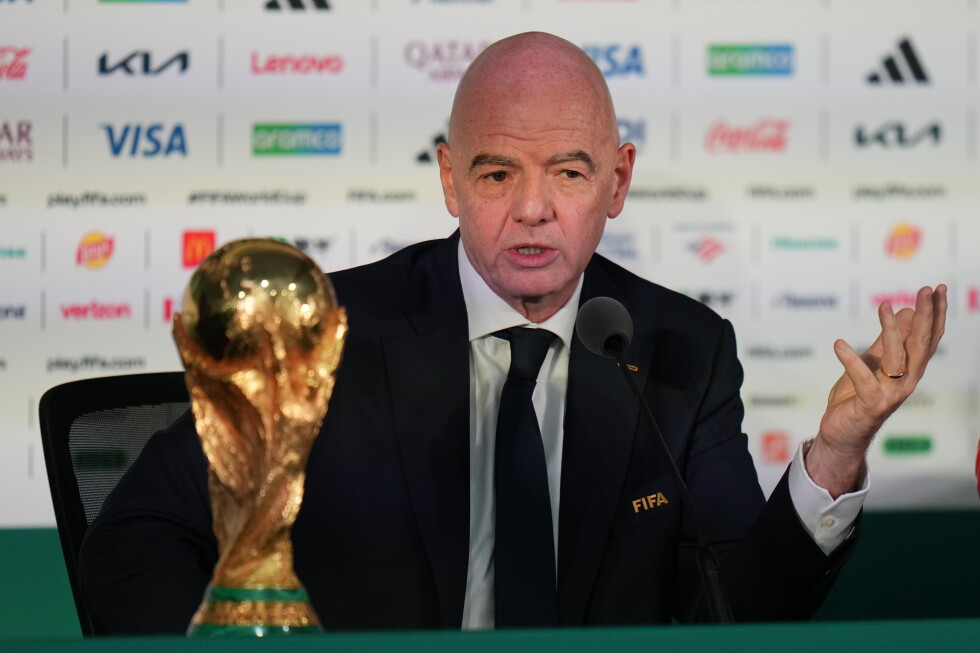
  • FIFA’s Infantino sets deadline for $20M offer to members in Kushner-backed World Cup investor plan

    FIFA’s Infantino sets deadline for $20M offer to members in Kushner-backed World Cup investor plan

    GENEVA — In a move that has plunged international soccer into turmoil, FIFA President Gianni Infantino has given the governing body’s 211 national member federations until September 19 to approve a groundbreaking and divisive proposal: selling a 20% stake in a newly created $20 billion FIFA subsidiary that would control the World Cup, Club World Cup and all of FIFA’s top competitions. The one-time $20 million payout promised to every approving federation is underwritten by Thrive Capital, the investment firm founded by Joshua Kushner — brother of Jared Kushner, former U.S. President Donald Trump’s son-in-law, who is listed as the anchor backer for the deal.

    In the confidential letter obtained by The Associated Press, Infantino framed the proposal as a once-in-a-generation, game-changing opportunity for FIFA’s global membership. “It is my duty and responsibility as FIFA president to present such game-changing opportunities to you, our members,” he wrote, adding that the initiative would unlock unprecedented capital to grow soccer across all member nations. If approved, the subsidiary, called FIFA Forward Enterprise, would bring on a pool of additional international investors, with global banking giant J.P. Morgan tapped to lead the fundraising process. The $20 million payout to each member would be disbursed over the four-year commercial cycle leading up to the 2030 men’s World Cup; if the plan fails, members will only receive the originally promised $10 million in funding over the same period.

    The proposal, which became public earlier this week, has triggered immediate and widespread pushback from every major regional governing body in global soccer. Europe’s UEFA, which operates the continent’s flagship competitions including the European Championship and UEFA Champions League, was the first to condemn the plan, arguing that the World Cup is not FIFA’s to sell. UEFA has already called an emergency online meeting for its 55 member federations this Thursday to coordinate a collective response.

    Concern has also spread to other continental confederations. The Confederation of North, Central America and Caribbean Association Football (CONCACAF) released a public statement Wednesday highlighting deep unease over the lack of transparent due process in the plan’s development. The Asian Football Confederation, based in Kuala Lumpur, added its voice to criticism, saying it was disappointed that such a high-stakes proposal became public before member confederations had the chance to review and debate the details internally.

    Regional governing bodies warn that the restructuring would create direct competition for their own elite competitions, as FIFA would likely increase the frequency of men’s and women’s World Cups and expanded Club World Cups to boost revenue for private investors, undercutting the value and audience share of existing continental events.

    Opposition has also extended to the highest levels of British politics, where the country is currently lined up to host the 2035 Women’s World Cup in a joint bid by England, Scotland, Wales and Ireland — a bid FIFA is expected to formally approve at a November virtual meeting. Andy Burnham, a lifelong soccer fan and prominent British political leader, publicly rejected the plan in an Instagram video message, saying “Football does not belong to investors. Once you have sold a piece of (the World Cup), you have sold out. Football belongs to the fans. It always has, and it always will.”

    This is not the first time Infantino has pushed an ambitious, controversial restructuring initiative during his 11-year tenure as FIFA president. Critics have long noted that Infantino has increasingly advanced major changes to global soccer without meaningful consultation with key stakeholders. Past proposals have included a FIFA Peace Prize and a plan to shift the men’s World Cup from a four-year cycle to a biennial event, both of which faced widespread pushback. This new plan also echoes the 2021 European Super League controversy, when widespread British political opposition — including threats of legislation from then-Prime Minister Boris Johnson — helped collapse the breakaway competition that threatened UEFA’s Champions League, a project that Infantino had quietly supported behind the scenes.