分类: sports

  • Late goal in a loss to Sweden may get Slovakia into the quarterfinals at the Olympics

    Late goal in a loss to Sweden may get Slovakia into the quarterfinals at the Olympics

    In a stunning turn of events at the Milan Winter Olympics, Slovakia secured advancement to the quarterfinals in men’s hockey despite suffering a 5-3 defeat against Sweden in Saturday’s preliminary round finale. The crucial moment came when Dalibor Dvorsky of the St. Louis Blues scored with just 39 seconds remaining, creating a tiebreaker scenario that ultimately favored Slovakia.

    The complex advancement mathematics hinged on Slovakia’s superior goal differential among three tied teams in Group B, contingent upon Finland’s expected victory over host Italy later that day. This unusual circumstance prompted Slovakia’s Juraj Slafkovsky, the reigning Olympic MVP who shares the tournament scoring lead with Canada’s Connor McDavid at six points each, to describe the outcome as “probably the best loss I ever had.”

    Dvorsky, who netted the critical power-play goal following a penalty against Sweden’s Lucas Raymond, echoed this sentiment, calling it “the best loss of my life.” The forward revealed their late-game strategy was straightforward: “We all know what we need to do on the ice. There was not too much tactics, right? At this point of the game, just try to get pucks to the net.”

    Meanwhile, Sweden faced disappointment despite their on-ice victory, having performed significantly better than in their previous 4-1 loss to archrival Finland. Coach Sam Hallam’s decision to pull goaltender Jacob Markstrom while leading by two goals in the final seconds—aiming for additional tiebreaker advantages—backfired as Sweden failed to score again. Alternate captain Victor Hedman called the outcome a “tough pill to swallow” but vowed the team would “regroup and be ready for our next challenge.”

    In other Olympic hockey action, Latvia delivered an upset victory over Germany with a 4-3 win, thanks to goals from Eduards Tralmaks and Renars Krastenbergs just over three minutes apart. Zemgus Girgensons of the Buffalo Sabres, one of ten NHL players on Latvia’s roster, expressed confidence in his team’s capabilities: “We’re a good team. We believed it. We came in today thinking we’re going to win.” Germany now faces a critical match against the United States on Sunday night.
  • Athletes travel on cruise ship to UAE’s iconic Sir Bani Yas Island with peacocks, dolphins

    Athletes travel on cruise ship to UAE’s iconic Sir Bani Yas Island with peacocks, dolphins

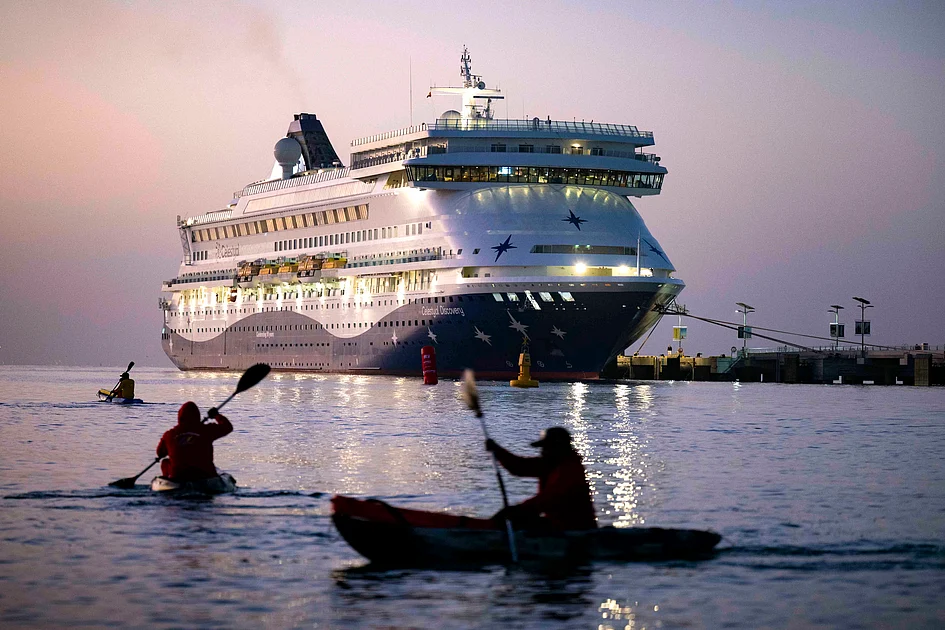
    In an unprecedented fusion of athletic competition and luxury travel, the United Arab Emirates has once again demonstrated its capacity for innovation by hosting the Challenge Sir Bani Yas event aboard a specially chartered cruise ship. This groundbreaking sporting spectacle transported over 4,800 participants representing 93 nationalities to the iconic Sir Bani Yas Island while providing a unique pre-race experience that blended world-class athletic preparation with vacation-style amenities.

    The three-night voyage across the Arabian Gulf transformed traditional race logistics by offering competitors immediate proximity to start lines while eliminating common travel inconveniences. Aboard the vessel, amateur athletes trained alongside Olympians and Iron Man champions, with professional triathletes conducting running drills on deck while mechanics performed bicycle maintenance. The ship featured specialized facilities including swim training machines, a fully-equipped gym, and race briefing sessions, creating a mobile athletic village unlike any other.

    Participants competed across multiple distance categories including the full 226km Iron Man, 113km middle-distance, and 51.5km Olympic triathlons. The island course itself presented a spectacular natural backdrop with 17,000 free-roaming animals including oryx, gazelles, and peacocks accompanying cyclists along the route. Dubai resident Christopher Van Der Wait, a seasoned triathlete with over 100 global competitions, declared it the most unique event he’d ever experienced, noting how the UAE consistently pushes boundaries in sporting innovation.

    The cruise format offered significant practical advantages beyond the novelty factor. Abu Dhabi resident Giovanni Dellomes highlighted the financial accessibility: “I knew I wouldn’t have to buy flight tickets or hotel accommodations, making it considerably more affordable than international competitions.” The simplified logistics of transporting sporting equipment proved equally valuable, with participants able to wheel bicycles directly on and off the vessel without weight restrictions or assembly requirements.

    Beyond the competitive aspect, the event successfully engaged families and spectators. Egyptian visitor Ebtehag Yassin attended with her husband and teenage sons, noting how the experience inspired her eldest to consider participating next year. The convergence of elite athletics and tourism infrastructure represents a new paradigm in event hosting, with Australian professional triathlete Belinda Granger confirming she’d never witnessed anything comparable in her 30-year career. This innovative approach to sporting events continues the UAE’s tradition of transforming ambitious concepts into reality, creating unforgettable experiences that redefine what’s possible in athletic competition and hospitality.

  • The samba-dancing skier making Brazil Olympic history

    The samba-dancing skier making Brazil Olympic history

    In an extraordinary display of athletic prowess and personal redemption, Lucas Pinheiro Braathen carved his name into Olympic history by securing Brazil’s inaugural Winter Games medal with a stunning giant slalom victory. The 25-year-old skier, competing in the green and yellow of his maternal heritage, delivered a masterful performance on Bormio’s challenging Stelvio piste amid deteriorating weather conditions.

    Pinheiro Braathen’s triumph over Swiss defending champion Marco Odermatt by 0.58 seconds represents more than just athletic achievement—it marks the first Winter Olympic medal ever won by any South American nation. The victory becomes particularly poignant given the athlete’s recent history: exactly one year after announcing his shock retirement from professional skiing, citing a loss of ‘joy of living,’ he returned to the sport with renewed purpose.

    The Brazilian-Norwegian skier established a commanding 0.95-second lead after the first run, maintaining his composure despite pressure from Odermatt’s aggressive second descent. His victory denied the four-time World Cup champion what many considered an inevitable gold medal, reshaping the alpine skiing hierarchy at the Milan-Cortina Games.

    Pinheiro Braathen’s journey to Olympic glory reflects a lifetime of cultural navigation. Born in Oslo to a Norwegian father and Brazilian mother, he spent his childhood oscillating between continents, moving homes 21 times before turning 22. Initially drawn to football and resistant to skiing, he eventually embraced the sport’s high-speed challenges while maintaining his Brazilian cultural identity.

    His flamboyant personality—evidenced by painted fingernails, samba celebrations, and fashion runway appearances—has brought unprecedented color to alpine skiing. After winning 12 World Cup medals for Norway, his decision to retire at 23 and subsequently return representing Brazil has become one of sports’ most compelling narratives of self-discovery.

    Following his historic victory, Pinheiro Braathen emphasized the importance of authenticity: ‘I hope I can inspire kids that despite what they wear, despite how they look, despite where they come from, they can follow their dreams and be who they really are. That is the real source of happiness in life.’

  • Brazil’s Lucas Pinheiro Braathen wins giant slalom, earns South America’s 1st medal at Winter Games

    Brazil’s Lucas Pinheiro Braathen wins giant slalom, earns South America’s 1st medal at Winter Games

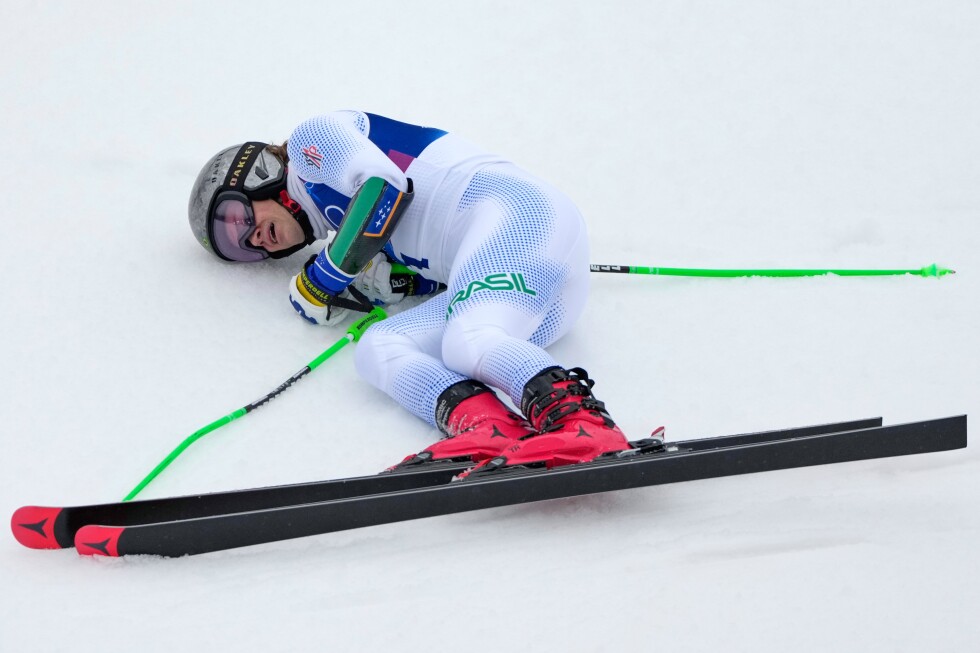
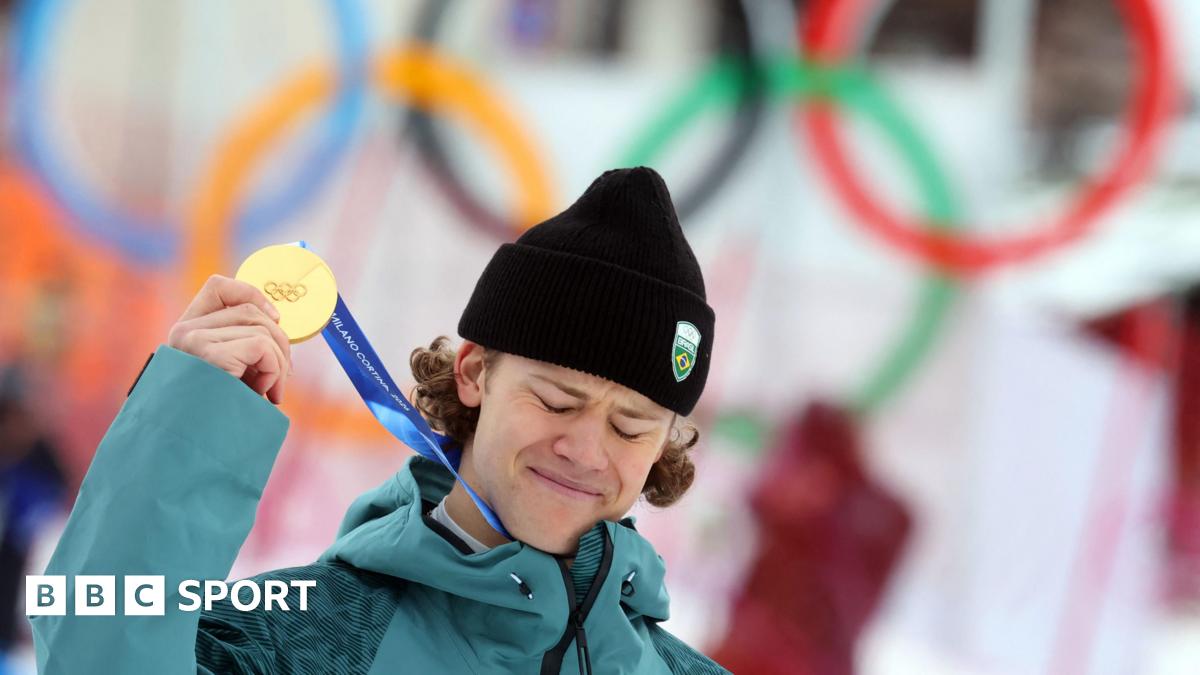
    In a historic moment for winter sports, Brazilian alpine skier Lucas Pinheiro Braathen captured the Olympic giant slalom gold medal on Saturday, delivering South America’s first-ever Winter Games medal. The 25-year-old athlete mastered the challenging Stelvio course in Bormio, Italy, overcoming falling snow and dense fog to finish with a combined two-run time of 2 minutes, 25 seconds.

    Pinheiro Braathen’s victory margin of 0.58 seconds secured his triumph over defending Olympic champion Marco Odermatt of Switzerland, who claimed silver. Odermatt’s teammate Loic Meillard completed the podium with bronze.

    The emotional champion collapsed onto the snow in celebration upon seeing his top-ranked position, later explaining his mindset during the decisive run: “I was pulling, pulling, always pulling, trying to find where to step, always trying to find the rhythm. I was skiing with my heart, and when you ski the way you are, anything is possible.”

    Pinheiro Braathen’s background reflects his unique journey—born to a Brazilian mother and Norwegian father, he initially competed for Norway before unexpectedly retiring prior to the 2023 season. His return to competitive skiing representing Brazil just one year later has culminated in this extraordinary achievement.

    The victory carries special significance during Brazil’s Carnival season, a connection highlighted by the skier’s helmet inscription “Vamos Dancar” (Let’s Dance) and his reputation as a samba-dancing, fun-loving competitor. Brazilian supporters at “Casa Brasil” in Milan erupted in celebration, with the venue playing both Queen’s “We Are The Champions” and traditional samba music.

    Brazilian President Luiz Inácio Lula da Silva recognized the achievement on social media, stating: “This unprecedented result shows Brazilian sport has no limits. It is the reflection of talent, dedication and continuous work to strengthen sport in every dimension.”

    The victory adds to Pinheiro Braathen’s growing legacy as a pioneer for Brazilian winter sports, having previously become the first Brazilian Alpine racer to reach a World Cup podium last year and securing the country’s first World Cup win this season.

  • South Africa hammers New Zealand by seven wickets at T20 World Cup. England beats Scotland

    South Africa hammers New Zealand by seven wickets at T20 World Cup. England beats Scotland

    In a spectacular display of cricketing prowess, South Africa delivered a commanding performance against New Zealand in their T20 World Cup encounter on Saturday. Captain Aiden Markram emerged as the undisputed hero, blasting an unbeaten 86 runs from just 44 deliveries to secure a comprehensive seven-wicket victory for the Proteas.

    The match witnessed South Africa’s clinical execution as they chased down New Zealand’s total of 175-7 with remarkable ease, achieving their target of 178-3 with 2.5 overs remaining. Markram’s explosive innings, featuring four sixes and eight boundaries, included the fastest half-century in South Africa’s T20 World Cup history, reaching 50 runs in merely 19 deliveries.

    Left-arm pacer Marco Jansen set the stage for South Africa’s dominance with an impressive bowling performance, claiming 4-40 in his four-over spell. His early breakthroughs dismantled New Zealand’s top order, reducing them to 64-4 within 6.4 overs. Despite a recovery effort from Daryl Mitchell and Mark Chapman, who contributed 74 runs, New Zealand struggled to maintain momentum against South Africa’s disciplined attack.

    The victory marks South Africa’s third consecutive win in Group D, solidifying their position as strong contenders for the next round. Meanwhile, New Zealand suffered their first tournament defeat and extended their winless streak against South Africa to five matches in T20 World Cup history.

    In other tournament developments, England revived their campaign with a crucial five-wicket triumph over Scotland in Kolkata. Tom Banton’s unbeaten 63 from 41 balls proved instrumental in England’s recovery after early setbacks. Ireland recorded their inaugural victory in Colombo, overwhelming Oman by 96 runs behind Lorcan Tucker’s spectacular 94 not out from 51 deliveries, posting the tournament’s highest score of 235-5.

  • Valentine’s Day at the Winter Olympics might look a little different, but it’s still special

    Valentine’s Day at the Winter Olympics might look a little different, but it’s still special

    MILAN CORTINA — Beyond the pursuit of medals and athletic glory, a different kind of warmth is defying the winter chill at the Olympic Games. The venues are serving as unexpected backdrops for romance, proposals, and celebrations of love, creating heartfelt narratives alongside the competitive drama.

    The atmosphere turned electric when Dutch speed skater Jutta Leerdam, fresh from setting an Olympic record in the 1000-meter race, shared an emotional moment with her fiancé, Jake Paul, in the stands. The couple, visibly moved to tears, exchanged handmade heart signs across the ice. In a similarly romantic gesture, downhill skiing champion Breezy Johnson was surprised with a marriage proposal from her longtime boyfriend near the finish line, surrounded by cheering members of the U.S. Ski Team.

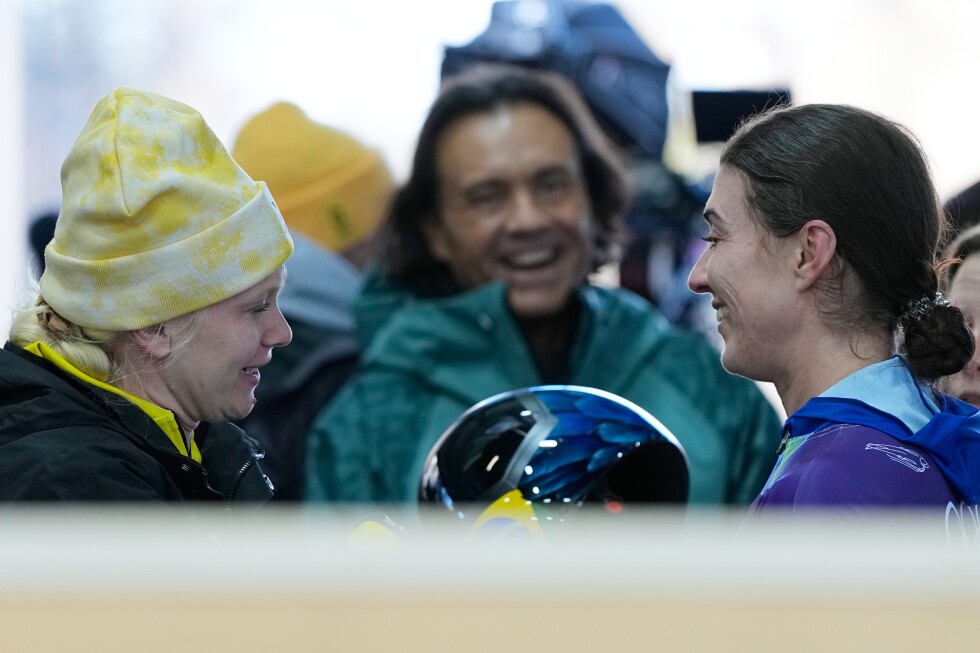
    For some athletes, Valentine’s Day coincides with the pinnacle of their sporting careers. Belgian skeleton racer Kim Meylemans and her wife, Brazil’s Nicole Rocha Silveira, spent the day preparing for the women’s skeleton finals rather than celebrating with a romantic dinner. The international couple, who represent their respective countries, told The Associated Press they had even forgone gift exchanges due to their intense focus on competition.

    Their love story blossomed during the pandemic, evolving from shared short-term rentals in 2019 to marriage in August 2023. In a remarkable coincidence, they had unknowingly purchased identical engagement rings and planned proposals for the same vacation in Brazil. The Olympic Committees accommodated their relationship by arranging shared housing in the Cortina Olympic village, where their room is divided between Belgian and Brazilian decorations.

    Their relationship carries particular significance in Italy, where same-sex marriage isn’t legally recognized. Rocha Silveira emphasized the importance of visibility, stating the Games provide a platform to “encourage and inspire people that they can be themselves.”

    The Olympic spirit of togetherness extends beyond athletes to volunteers like Lori and Curtis Brown, who are celebrating their 30+ years of marriage while working at the skating arena. Among the 18,000 volunteers in navy blue uniforms ensuring the smooth operation of the Games, the Browns hope to coordinate breaks for a shared Valentine’s dinner, calling it “the most special Valentine’s Day of our lives.”

    Canadian hockey players Laura Stacey and her wife, team captain Marie-Philip Poulin, faced Germany in quarterfinal competition on February 14th. Stacey reflected on their unique circumstance: “We’re pretty lucky. Most people don’t get to do what they love, chasing their dreams together.”

    The Games feature numerous other power couples, including U.S. alpine skiing star Mikaela Shiffrin engaged to Norway’s Aleksander Aamodt Kilde, married lugers from Latvia and the U.S., and American figure skaters Madison Chock and Evan Bates, who recently won silver medals. Curling has emerged as particularly couple-friendly, with several married pairs competing, including Norway’s Magnus Nedregotten and Kristin Skaslien, and Canada’s Jocelyn Peterman and Brett Gallant.

  • Two sailors are injured after a crash between New Zealand and France at a SailGP race

    Two sailors are injured after a crash between New Zealand and France at a SailGP race

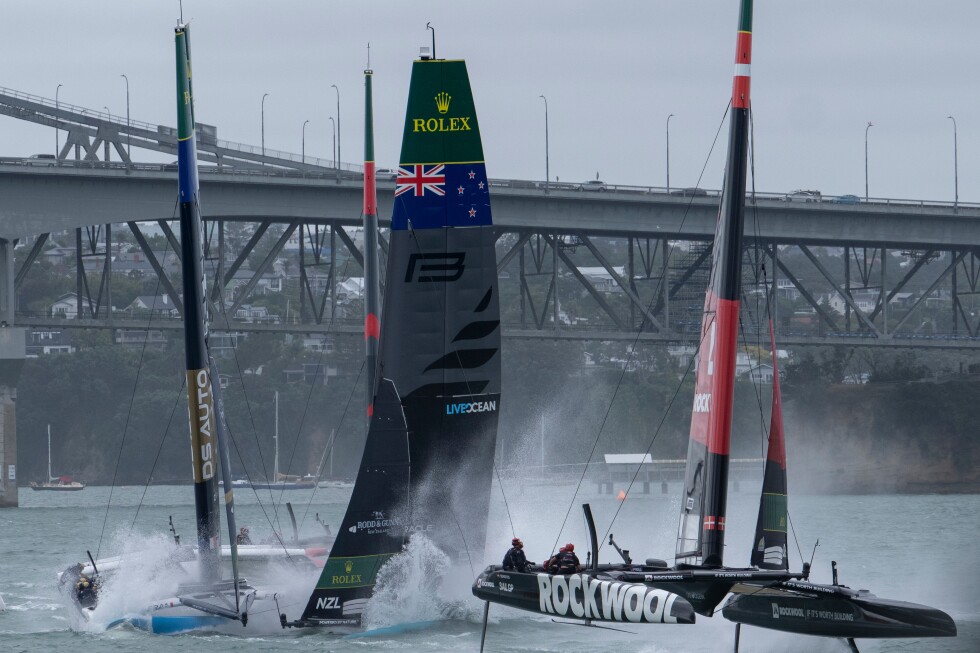
    AUCKLAND, New Zealand — The opening day of the SailGP championship in Auckland concluded abruptly on Saturday following a dramatic high-speed collision between teams from New Zealand and France, resulting in injuries to two sailors and significant damage to both vessels.

    The incident occurred during the third scheduled race of the day as the fleet of 13 identical F50 catamarans approached the first gate. Traveling at speeds approaching 90 kilometers per hour (56 mph), the New Zealand boat experienced a sudden loss of control, causing it to spin directly into the path of the French competitor.

    Television footage revealed the New Zealand vessel lifting and heeling at high velocity, which elevated its rudder out of the water and compromised steering capability. The French catamaran subsequently rode over the top of the New Zealand boat, leaving both craft severely damaged and temporarily locked together.

    Both injured sailors were transported to a local hospital where medical officials reported them as conscious and alert. Their identities and specific medical conditions remain undisclosed pending further evaluation.

    Race organizers immediately suspended all competition for the day to facilitate medical response and vessel recovery operations. This incident marks the second collision involving the New Zealand team in recent events, following a previous encounter with Switzerland during the season opener in Perth, Australia.

    The SailGP championship features technologically advanced 50-foot foiling catamarans capable of reaching speeds exceeding 100 kph (60 mph). Prior to the accident, Australia had claimed victory in the day’s first race while New Zealand triumphed in the second competition.

    Organizers have adjusted Sunday’s racing schedule to an earlier start time due to forecasted thunderstorms, with the completion of Saturday’s postponed races expected to be incorporated into the revised program.

  • Sabalenka, Swiatek withdraw from Dubai Duty Free Tennis Championships

    Sabalenka, Swiatek withdraw from Dubai Duty Free Tennis Championships

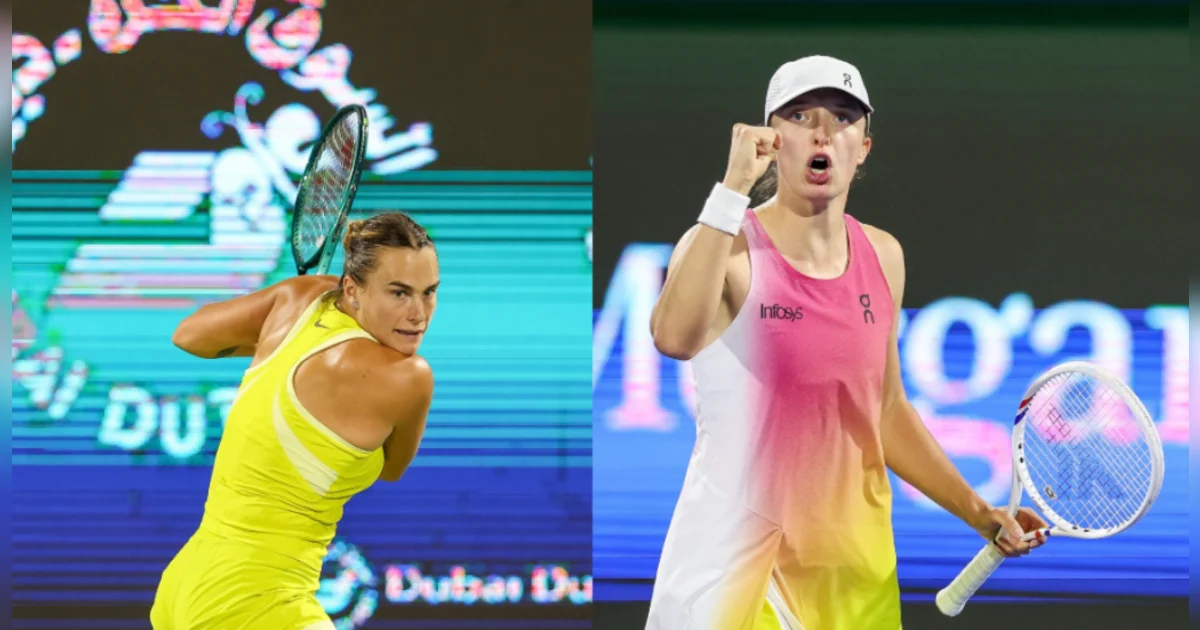
    In a significant blow to the upcoming Dubai Duty Free Tennis Championships, the world’s top two ranked players have announced their withdrawal from the prestigious WTA 1000 event. Aryna Sabalenka (World No. 1) and Iga Swiatek (World No. 2) will both be absent from the tournament commencing February 15th.

    Sabalenka, the four-time Grand Slam champion who recently reached her fourth Australian Open final, expressed deep regret over her decision. The Belarusian star has maintained a perfect attendance record at the Dubai event for the past nine consecutive years. ‘I’m really sorry I have to withdraw from Dubai,’ Sabalenka stated. ‘I have such a special connection with the tournament, the fans and the city. Unfortunately, I am not feeling 100 per cent. But I hope to be back next year and wish the tournament a great event.’

    World No. 2 Iga Swiatek, who reached the Dubai final in 2023, also withdrew citing scheduling changes. The Polish player announced, ‘I am sorry to announce that I will not be playing Dubai this year due to a change of schedule. I hope I will come back next year to experience the great tournament. See you guys in Indian Wells.’

    Tournament organizers expressed disappointment while extending their support to both athletes. An official statement read: ‘We are sorry that Aryna and Iga have both withdrawn from this year’s tournament. They both have huge amounts of followers here in Dubai, and we were looking forward to seeing them competing on our courts once again. We wish them continued success for the season and look forward to seeing them back in Dubai next year.’

    Despite these high-profile withdrawals, the 26th edition of the tournament still features a strong field with 16 of the top 20 and 33 of the top 40 ranked female players expected to compete. The women’s event from February 15-21 will be followed by Dubai’s ATP 500 men’s tournament from February 23-28.

  • Gasps and disbelief at Malinin’s home rink as Olympic dream falters

    Gasps and disbelief at Malinin’s home rink as Olympic dream falters

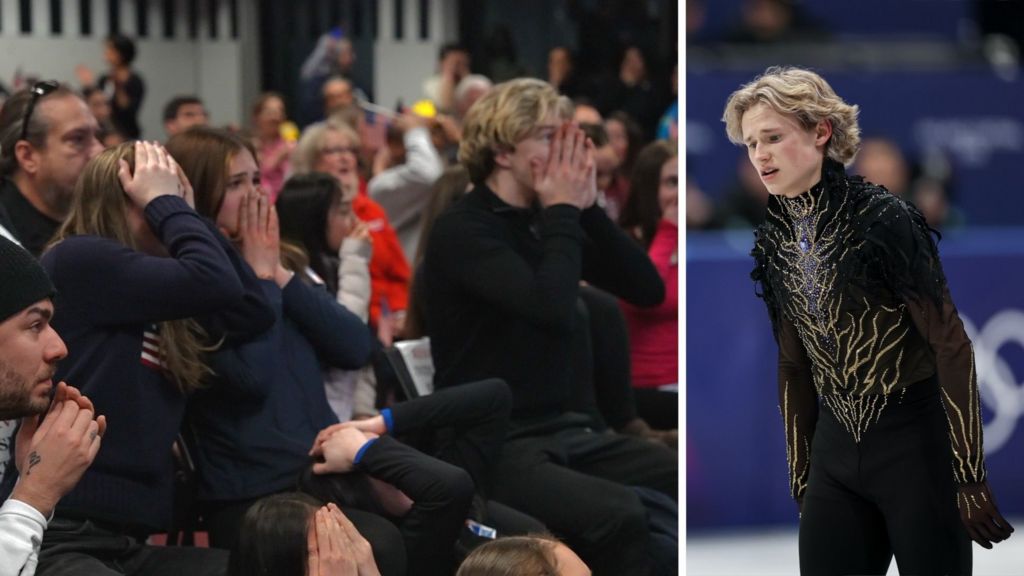
    A palpable atmosphere of shock and devastation descended upon the Virginia-based training rink of figure skating phenom Ilia Malinin, famously dubbed the ‘Quad God,’ during what was anticipated to be a victorious Olympic broadcast. The BBC, capturing the scene firsthand, documented the raw emotional collapse among Malinin’s most dedicated supporters—his closest friends, teammates, and coaches—as his performance at the Winter Games dramatically veered off its predicted golden course.

    The gathering, meticulously organized to celebrate an expected triumph, transformed instantaneously into a vigil of shared disbelief. The air, once buzzing with excited anticipation, was pierced by gasps and fell into a heavy silence as the competition unfolded contrary to all forecasts. This was not merely a competition loss; it was the shattering of a widely held certainty within his inner circle, a testament to the immense pressure and unpredictable nature of elite sports.

    Malinin, renowned for his unprecedented ability to land quadruple jumps, had carried the heavyweight of immense expectation into the games. The scene at his home rink serves as a powerful, microcosmic study of the immense psychological burden shouldered by athletes and the profound emotional investment of those who support them behind the scenes. The incident transcends a simple sports report, morphing into a human-interest story about resilience, expectation, and the fragile line between perceived destiny and competitive reality.

  • The two Chinese-American Olympians competing for rival superpowers

    The two Chinese-American Olympians competing for rival superpowers

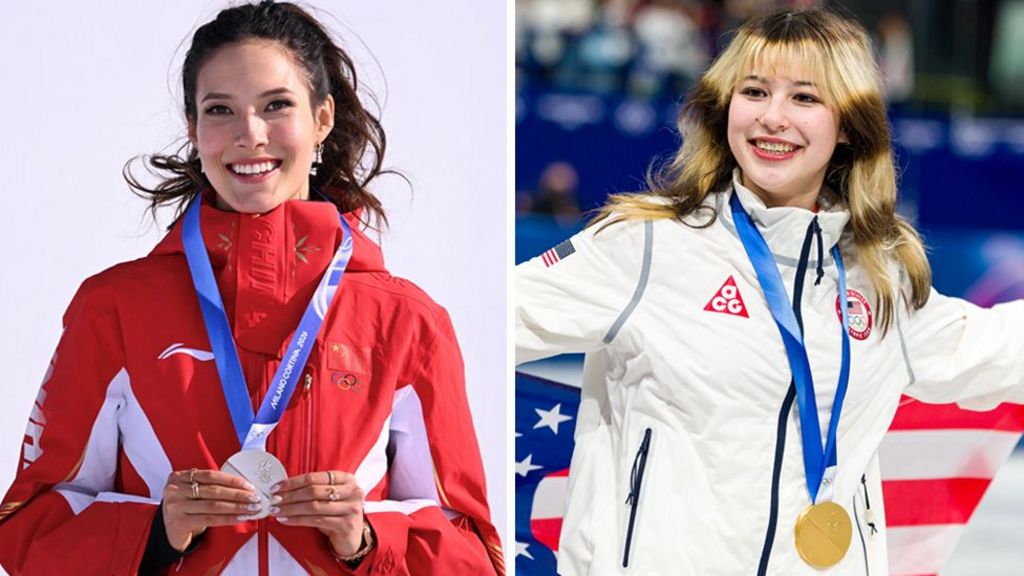
    The 2026 Winter Olympics in Milan have become the stage for an unexpected digital conflict centered around two American-born athletes of Chinese descent—freestyle skier Eileen Gu and figure skater Alysa Liu. Despite their parallel backgrounds as first-generation immigrants and champions in their respective sports, they have been cast as opposing symbols in a geopolitical narrative extending far beyond athletic competition.

    This ideological divide emerged when Gu, competing for China, expressed sympathy for US skier Hunter Hess after he faced criticism from former President Trump. Her comments ignited a firestorm among conservative commentators who labeled her a ‘traitor’ for representing China while enjoying US citizenship benefits. Simultaneously, Liu—competing for the US as the daughter of a political activist who fled China—has been celebrated as a patriot by these same voices.

    The controversy reveals deeper sociological dimensions beyond nationalism. Professor Yinan He of Lehigh University notes that ‘personal identity is increasingly centered on national loyalty in the public eye, diminishing tolerance for dual identity.’ Gu’s background—educated at elite institutions including Stanford—has led some to frame her choice as a ‘mercenary business decision’ rather than genuine cultural connection. Conversely, Liu’s family narrative of political dissent has positioned her as a symbol of democratic values.

    Chinese social media reflects the inverse perspective, where Gu is celebrated as the ‘Snow Princess’ and national icon while Liu receives minimal attention—with occasional comments questioning why anyone would ‘praise this anti-China person.’

    The athletes’ performance pressures have intensified under these conditions. Gu recently described feeling like she was ‘skiing with the weight of two countries on my shoulder’ after placing second in women’s slopestyle—a statement that further fueled criticism from those who argued she only represented one nation.

    This phenomenon exemplifies what Professor Stanley Thangaraj identifies as ‘the incredibly precarious social and political landscape that Asian Americans must navigate,’ where any political stance risks dislocating them from American identity. When Marvel actor Simu Liu voiced support for Gu, he immediately faced demands to ‘go back to China.’

    As the Games continue, the athletic achievements of both women have become secondary to their unwitting roles in a broader cultural confrontation between the world’s two superpowers.