分类: sports

  • Injured Madison Keys withdraws from French Open warmup tournament

    Injured Madison Keys withdraws from French Open warmup tournament

    Organizers of the Internationaux de Strasbourg, a key clay-court warm-up event for the French Open, announced Monday that American top player Madison Keys has pulled out of this year’s tournament due to a nagging left thigh injury.

    Ranked 19th in the world, Keys was not just any participant heading into this week’s competition in Strasbourg, France — she entered the event as its reigning 2024 singles champion, making her withdrawal a notable blow to the tournament’s star power. In a public statement confirming her exit, Keys explained that the choice to step back was made out of a strategic focus on getting fit in time for the year’s second Grand Slam tournament.

    “ I’ve decided it’s best to withdraw from Strasbourg to get healthy and ready to compete in Roland Garros,” Keys said.

    The 2025 French Open is set to kick off on May 24 at the iconic Roland Garros stadium in Paris, and Keys has a history of strong performances on the Paris clay. The American famously advanced all the way to the women’s singles semifinals of the clay-court Grand Slam back in 2018, cementing her reputation as a serious contender on the surface.

    Injury concerns around Keys emerged over the weekend, when she was forced to retire mid-match in the final of the Clarins Trophy on Sunday. At the time of the stoppage, Keys held a commanding 6-3, 3-3 lead over France’s home favorite Diane Parry, leaving her unable to claim that title as she was forced to prioritize recovery.

    The withdrawal leaves tournament organizers to adjust their draw, with a lucky loser or alternate set to take Keys’ place in the main draw as the event gets underway this week. For Keys and her team, the priority remains managing the minor thigh injury to avoid further setbacks ahead of the year’s most important clay-court championship.

  • Iran’s World Cup football team leaves for Turkey: media

    Iran’s World Cup football team leaves for Turkey: media

    As the 2026 FIFA World Cup co-hosted by the United States, Mexico and Canada draws near, Iran’s national men’s football team has embarked on the first leg of its journey to the tournament, departing for the Turkish coastal city of Antalya on Monday, according to local Iranian media reports. The trip is designed to serve two key purposes: finalize pre-tournament preparation through warm-up friendly matches, and complete long-delayed visa applications required to enter the U.S. for the global competition.

    The 22-player squad, all currently based at domestic Iranian clubs, traveled alongside full coaching staff, Iran’s Tasnim News Agency confirmed. While in Antalya, the team is scheduled to hold at least two friendly matches, with a fixture against The Gambia already locked in for May 29, per Sam Mehdizadeh, an Iranian-Canadian sports executive who arranges exhibition matches for the Iranian national side.

    Uncertainty has loomed over Iran’s participation for months, even after the team secured its place in the 48-nation tournament back in March 2025. The tension stems from a sharp escalation in hostilities between the U.S.-Israeli alliance and Iran dating back to February 28, when Washington launched a large-scale wave of offensive attacks against Tehran in what amounted to an open state of conflict. A ceasefire has paused active fighting for several weeks, but recent events have reignited fears of a return to violence: fresh drone strikes targeting Gulf nations over the weekend, paired with new inflammatory rhetoric from U.S. President Donald Trump, have further destabilized the already fragile security environment.

    Despite the geopolitical rift, top U.S. officials have repeatedly stated that Iranian players are welcome to compete in the tournament. FIFA has also reaffirmed that Iran’s participation will proceed as planned, rejecting a request from Iranian football authorities to relocate the team’s group stage matches to co-hosts Mexico or Canada. President Trump even publicly voiced support in late April, saying “I think let ‘em play.”

    Still, significant bureaucratic hurdles remain. As of this week, no U.S. visas have been issued to the Iranian delegation, Iranian Football Federation chief Mehdi Taj confirmed to local media Thursday. U.S. Secretary of State Marco Rubio has already signaled that complications could arise for non-playing members of the delegation, noting that potential issues center on figures the U.S. suspects of ties to the Islamic Revolutionary Guard Corps (IRGC), which Washington has formally designated a terrorist organization. Taj himself is a former IRGC member, a designation that has already created friction: last month, the entire Iranian federation delegation abandoned a planned trip to the FIFA Congress in Canada after what they described as degrading treatment from Canadian immigration officials, who flagged Taj’s ties to the IRGC, which Canada also lists as a terrorist group.

    Over the weekend, FIFA Secretary General Mattias Grafstrom held a high-stakes meeting with Iranian federation representatives in Turkey to work through outstanding logistics. Both sides characterized the discussion as constructive, offering a small glimmer of progress amid the ongoing uncertainty. If the delegation secures the required visas in time, Iran will set up its official pre-tournament base camp in Tucson, Arizona. The team is drawn into Group G, with its opening group stage match scheduled for June 15 against New Zealand in Los Angeles, followed by a second fixture against Belgium also in Los Angeles, and a final group game against Egypt in Seattle.

    The team held an official send-off ceremony in Tehran last week, but even as players depart for preparation, questions about whether they will ultimately be allowed to step onto the pitch at the World Cup continue to hang over the campaign.

  • The Flying Kiwis: No longer flightless, spreading football fandom at the World Cup

    The Flying Kiwis: No longer flightless, spreading football fandom at the World Cup

    WELLINGTON, New Zealand – When the New Zealand men’s national soccer team steps onto the field at the upcoming FIFA World Cup, one small, passionate contingent will stand out among the crowds, ready to cheer their side on with unapologetic, signature Kiwi spirit. Known as the Flying Kiwis, this ragtag, globally dispersed group of supporters has turned a lifelong love for the underdog national side into a movement that transcends sports, built on grassroots camaraderie and a deliberate, playful irony: the kiwi, the flightless native bird that gives all New Zealanders their nickname, can’t actually fly.

    The story of the Flying Kiwis begins back in 2009, during a do-or-die World Cup qualifying series against Bahrain for a spot in the 2010 South Africa tournament. After the first away leg finished in a goalless draw, New Zealand needed a victory on home soil to secure their place at the World Cup. It was in this high-stakes moment that Matt Fejos, then a university student who describes himself as not being a die-hard football fan at the time, decided to create something special for the side.

    Charging an entire block of tickets to his $1,000-limit credit card, Fejos gathered 32 of his friends, sourced custom banners, printed branded coveralls emblazoned with the new name “Flying Kiwis,” and packed out a section of the stadium waving New Zealand flags. That match, which ultimately secured New Zealand’s World Cup spot, became a foundational moment for football fandom in the country, Fejos says, and a memory that sticks with everyone who was there that day.

    From that small, spontaneous beginning, the group has grown far beyond that original group of university friends. As the original members scattered across the globe for work and life, they drew new supporters into the Flying Kiwis fold, building a network of fans that follows the All Whites – as the New Zealand men’s team is known – to matches both at home and in every corner of the world. For Fejos, who spent a decade living in the United Kingdom, a 2017 Confederations Cup trip to Russia drove home the deeper meaning of the group beyond matchday support. There, local Russian fans organized a friendly match between traveling Flying Kiwis and local supporters, an experience that showed Fejos how the group acts as informal ambassadors for their small island nation.

    “You’re doing it for your team, but actually in far away places you might be the first New Zealanders they’ve ever met, so you’re kind of representing your country,” Fejos explained. “To connect with the world through the global language of football is a beautiful thing and a beautiful way to travel.”

    Unlike large football-mad nations where generations of soccer fandom are woven into national culture, New Zealand’s biggest sporting spotlight has long been dominated by rugby. With no long-established homegrown traditions of organized soccer support to follow, Fejos and the Flying Kiwis set out to build their own brand of fandom. While their section is almost always far smaller than the opposing side’s packed fan bases, Fejos says that small size comes with an unexpected strength: unmatched unity.

    Heading into the World Cup, New Zealand enters as a clear underdog: ranked 85th globally, drawn into Group G alongside higher-ranked sides Belgium (9th), Iran (21st), and Egypt (29th). The All Whites will need every bit of support they can get, but Fejos says this current squad is far more prepared for the pressure than any previous New Zealand side. Today, a majority of the national team’s players compete in top European and global leagues, cutting their teeth in packed, high-pressure stadiums week in and week out.

    “There’s so much more belief among the New Zealand team because of where the players are playing,” Fejos said. “There’s so many more playing at a top, top standard and in these difficult environments, these really charged atmospheres with crazy passionate fans. So they’re used to playing under that pressure as well.”

    For the Flying Kiwis, their name and mascot carries a powerful metaphor that goes far beyond a playful joke about a flightless bird. Unlike ferocious national mascots such as eagles or lions that frame teams as dominant forces, the unassuming kiwi has become a symbol of defying the odds for the New Zealand side. Given the country’s geographic isolation, its young professional soccer ecosystem, and the lack of elite youth development academies compared to larger soccer nations, just qualifying for the World Cup is a historic achievement.

    “Sometimes it can seem a bit funny or deprecating but it’s a thing that means a lot,” Fejos said. “Despite that, I think it’s incredible for some of those New Zealand players to play in some of the best leagues of the world and to take it to the world at a World Cup. The metaphor means a lot, defying expectations overseas.”

    With most of the world writing the All Whites off before the tournament even begins, that underdog status is exactly what fuels the team and their fans. “People think of us as a rugby country, and probably as hobbits, but that allows us to go in with that underdog mentality, fearless,” Fejos said. “We want to stamp our mark and show them something different.”

  • AFL 2026: Collingwood legend Scott Pendlebury ahead of his record-breaking 433rd game

    AFL 2026: Collingwood legend Scott Pendlebury ahead of his record-breaking 433rd game

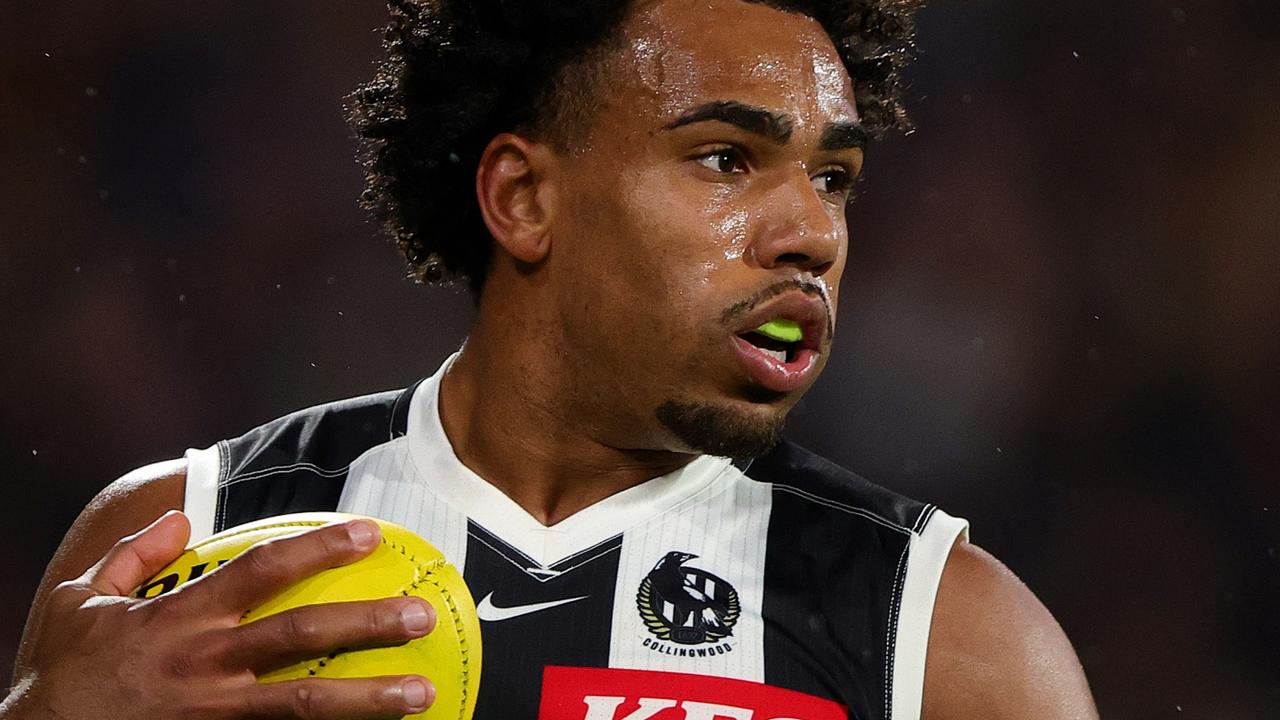
    As Collingwood Football Club icon Scott Pendlebury stands on the cusp of breaking the Australian Football League’s all-time games record this Saturday, the veteran midfielder says he is focused on sticking to his usual routine rather than getting swept up in the hype surrounding the unprecedented milestone.

    Pendlebury, who will notch his 433rd AFL appearance this weekend when Collingwood faces West Coast at a packed Melbourne Cricket Ground, acknowledged that the weeks-long lead-up to the record-breaking match has disrupted his consistent preparation rhythm. Still, the champion player confirmed he will pause to soak in the moment when he runs onto the ground, a habit he has cultivated throughout his decades-long career and shares as advice with young rising stars.

    “I think one thing I have always done, I appreciate the game for what it is,” Pendlebury told reporters on Monday. “Every week regardless if it’s this week or not, I always take a moment to look around at the stands, find my family, try and say g’day. I always say to the young guys that ever play their first game, one bit of advice from me has got nothing to do with the game because you’re good enough. But when you get out here for the first time, look around, take a moment, just to take it all in because it’s pretty cool you’re achieving your dream. I still like that myself, I still feel like I’m achieving my dream every time I get to come out here.”

    The 400-game club, which includes AFL legends Michael Tuck, Shaun Burgoyne, Brent Harvey, Dustin Fletcher and Kevin Bartlett, will welcome Pendlebury into its elite ranks with an unprecedented new mark when he takes the field Saturday. When asked about the milestone, Pendlebury added that he expects to wander the ground taking in the atmosphere before the match, saying “There will be a part where I come out here and probably look lost or whatever, but I’ll just be wandering and taking it all in.”

    Collingwood has faced public criticism in recent weeks over how it has managed Pendlebury’s milestone schedule. The club rested the star midfielder in two consecutive matches leading up to Saturday’s game, which resulted in a draw against Hawthorn and a one-kick loss to an opponent, leaving fans and analysts questioning the decision to bench their leader for those contests. But Pendlebury has thrown his full support behind the club’s planned timeline, noting he was never likely to play against the Hawks even without the milestone context.

    “It’s an interesting one, we planned out at the start of the year a schedule to manage me for the whole season,” Pendlebury explained. “I’ve spoken about this before, but we’ve taken the long view of getting through the whole season. I certainly didn’t plan to have an achilles injury round 3 or 4. There was no chance, it was funny, I think I seen somewhere that I was moving well before the Hawthorn game. If you had of seen my GPS and top speed, you would probably run faster than me that day. I am comfortable with where it sits and I am really looking forward to Saturday.”

    The milestone match will see Pendlebury wear a special gold number on his Collingwood guernsey to mark the historic occasion, with thousands of fans expected to pack the MCG to witness the record-breaking moment.

  • ‘Everest Man’ and ‘Mountain Queen’ break own records scaling world’s tallest peak

    ‘Everest Man’ and ‘Mountain Queen’ break own records scaling world’s tallest peak

    Two legendary Nepali Sherpa climbers have etched their names into mountaineering history once again, shattering their own world records for the most successful ascents of Mount Everest, the highest point on Earth at 8,849 meters above sea level.

    Fifty-six-year-old Kami Rita Sherpa, globally celebrated by the nickname “Everest Man”, notched his 32nd summit of the iconic peak on Sunday while working as a guide for commercial expedition group 14 Peaks Expedition. This achievement extends his unrivaled status as the mountaineer with the most Everest summits in history. Born into a multi-generational climbing family in Nepal’s Solukhumbu district, the region that hosts Mount Everest’s southern approach, Kami Rita first stood atop Everest in 1994. He has returned to the peak almost every year since, even summiting twice in some single climbing seasons. He first claimed the outright world record for most Everest ascents in 2018, when he reached the peak for the 22nd time, breaking a shared record he had held with two other veteran Nepali Sherpa climbers, both of whom have since retired from high-altitude expeditions.

    On the exact same day that Kami Rita set his new record, 52-year-old Lakpa Sherpa, known widely as the “Mountain Queen”, also broke her own existing record for the most Everest summits by a female climber, logging her 11th successful ascent of the mountain. Lakpa made history of her own back in 2000, when she became the first Nepali woman to both summit Everest and complete a safe descent back to base camp. Her extraordinary life, which includes her decades of high-altitude climbing and her experience raising children as a single mother, was the focus of a 2023 documentary that shares her “Mountain Queen” nickname.

    The record-breaking feats come amid what is already the busiest climbing season in Everest’s modern history. Nepal’s tourism department has issued a record-high number of climbing permits to foreign aspirants hoping to reach the peak this year, totaling almost 500. Unlike foreign climbers, Nepali guide staff do not need individual permits to join expeditions, meaning the total number of people attempting the ascent this year is far higher than the permit count alone.

    The busy season has been accompanied by unanticipated disruptions that have raised widespread safety concerns among the climbing community. A large unstable chunk of glacial ice broke off and blocked the traditional route from Nepal’s Base Camp to the upper slopes of the mountain earlier in the season, creating significant delays in opening the route for climbing. Many observers have warned that the combination of delayed route opening and an unprecedented number of climbers could lead to dangerous “traffic jams” in the high-altitude death zone near the summit, where prolonged exposure to low oxygen and freezing temperatures can quickly become fatal.

    Nepali official and political leaders have already issued public praise for the two record-setting climbers. Nepal’s Department of Tourism congratulated the pair on their “historic achievement”, and Prime Minister Balendra Shah also shared his congratulations via the social platform X. “Such historic success can only be achieved through unwavering courage, rigorous self-discipline, and honest dedication to one’s work,” Shah wrote of the pair’s accomplishment.

  • Who could be the 2026 World Cup’s breakout star?

    Who could be the 2026 World Cup’s breakout star?

    The FIFA World Cup has long been the ultimate launchpad for young football talent, turning promising prospects into household global names overnight. As the 2026 tournament co-hosted by the United States, Mexico and Canada approaches, AFP Sport has profiled five standout young players widely tipped to emerge as the competition’s next breakout superstar.

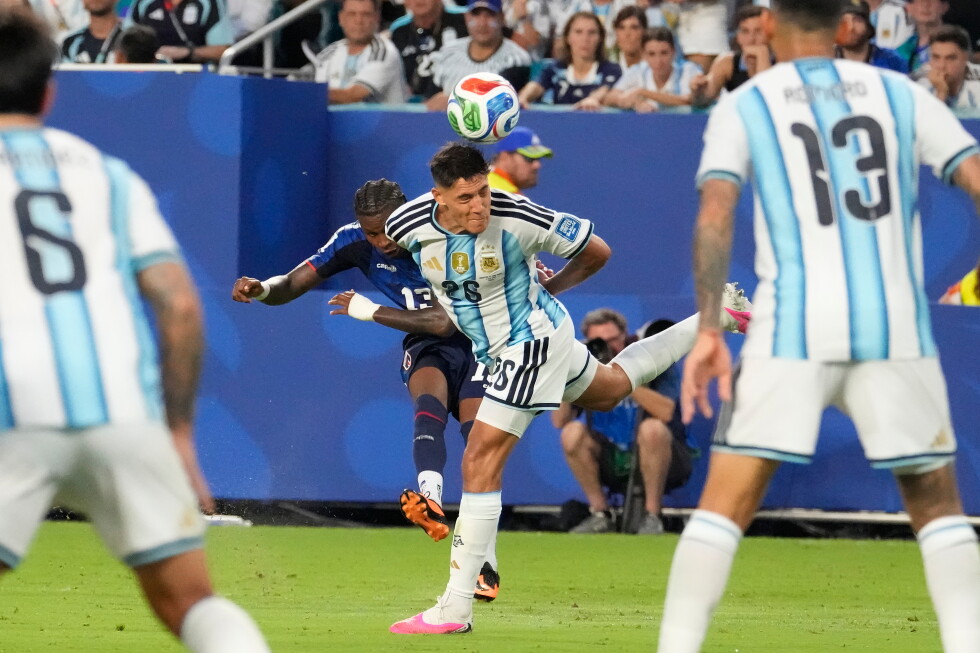
    First up is 21-year-old Nico Paz, a product of the Real Madrid academy who currently plies his trade at Italian side Como. Though born and raised in Spain, the son of former Argentina international Pablo Paz chose to represent the reigning World Cup champions. Over the past two seasons working under manager Cesc Fabregas at Como, Paz’s game has developed rapidly, with Real Madrid already preparing to trigger their buyback clause to bring the youngster back to the Spanish capital. Renowned for his polished technical skill and deadly long-range finishing, Paz has drawn attention from top clubs across Europe. For Argentina, he could step into a critical role: with coach Lionel Scaloni expected to manage 38-year-old Lionel Messi’s minutes carefully during the side’s title defense, Paz may face the high-pressure task of filling the legendary forward’s shoes.

    Next is 20-year-old France winger Desire Doue, who has already proven his quality on the biggest club stage. Last season, he claimed the man-of-the-match award and netted twice in Paris Saint-Germain’s Champions League final thumping of Inter Milan. The 2026 World Cup will mark his first appearance at a major senior international tournament, however. Doue faces stiff competition just to earn a starting spot in Didier Deschamps’ deep attacking corps, which already includes Kylian Mbappe, Ballon d’Or winner Ousmane Dembele and Bayern Munich’s Michael Olise. But he gave Deschamps a clear reminder of his potential in March, scoring his first two international goals during a 3-1 friendly win over Colombia.

    For hosts England, 21-year-old Nico O’Reilly has emerged as a potential breakout candidate after earning the trust of Pep Guardiola to become a regular starter at treble-winning Manchester City. Originally a goal-scoring midfielder, O’Reilly has been converted into an attacking left-back by Guardiola, who has leveraged his unique combination of height, pace and technical skill to create a dangerous offensive weapon from deep positions. His emergence could also solve a long-standing problem for England manager Thomas Tuchel: during the Three Lions’ run to the Euro 2024 final, the side spent most of the tournament without a fit natural left-back after Luke Shaw’s injury. Guardiola has been full of praise for the youngster’s rapid rise, saying: “What a player. He has made an incredible step up and he has had a lot of minutes, but he deserves it.”

    Brazil’s 19-year-old Endrick, one of the most hyped teenage prospects in the world, is also primed for a breakout. The prodigy made his Palmeiras debut at 16 and was signed by Real Madrid before he turned 18, and his chances of shining at the World Cup have been boosted by a successful loan spell at French side Lyon that has reignited his scoring form. Endrick made history two years ago when he scored the match-winning goal against Brazil at Wembley, becoming the Seleção’s youngest goalscorer since Ronaldo Nazário. After a slow start following his agreement to join Real Madrid, the forward has found his touch in front of goal since moving to Lyon in January 2026. Frequently compared to Brazilian legend Romario thanks to his low, powerful build, Endrick will be hoping to replicate the great’s 1994 World Cup success, when Romario scored five goals to lead Brazil to title on U.S. soil.

    Rounding out the list is Spain’s Pedri, the 23-year-old midfield playmaker who has already been hailed as the natural heir to Barcelona and Spain legend Xavi Hernandez. Pedri first announced himself to the world as an 18-year-old at Euro 2020, and was a key part of Spain’s Euro 2024 title run before a hamstring injury ruled him out of the semi-final and final matches. At the club level, Pedri has put his past fitness issues behind him under Barcelona manager Hansi Flick, starring in the side’s back-to-back La Liga title triumphs over the past two seasons. With a full bill of health heading into the 2026 World Cup, Pedri is widely expected to anchor Spain’s title challenge and cement his status as one of the world’s top midfielders.

  • Concussion class action against AFL and clubs by players set for 12-week trial in 2027

    Concussion class action against AFL and clubs by players set for 12-week trial in 2027

    A high-stakes class action lawsuit brought by former Australian Football League (AFL) players over long-term brain damage linked to repeated on-field and training concussions is on track for a landmark 12-week trial, set to commence in the second half of 2025.

    First launched in 2023 by Max Rooke, a former defender for the Geelong Cats who played 125 top-flight games for the club between 2002 and 2010, the legal action has already grown to include nearly 100 former players as participating claimants. Rooke serves as the lead plaintiff in the case, which was brought before Victorian Supreme Court Justice Andrew Keogh for a procedural hearing on Monday, where the trial timeline was formally set.

    Per the court’s scheduling order, the 12-week trial will get underway on July 26, 2025. Alongside the trial date, the court also scheduled a directions hearing focused on pre-trial mediation for September 30 this year, with a specialized expert conclave — a closed-door meeting where independent medical and industry specialists will discuss technical issues central to the case — also planned to take place ahead of the trial.

    In his claim, Rooke alleges he sustained permanent, life-altering brain damage from repeated concussion injuries sustained during his playing and training career. He further claims that both the league and his club failed to provide reasonable care after he suffered head impacts, and never adequately warned him of the long-term health risks associated with repeated concussions.

    The class action is not limited to Rooke and the current group of claimants. It is brought on behalf of all AFL players, their families, and their estates who played in the league at any point between 1985 and March 2023, and who have since developed permanent brain injuries stemming from in-game or training head impacts. The core allegation of the lawsuit is that the AFL as the governing body, and individual participating clubs, systematically failed to properly manage and mitigate the risk of concussion injuries for players over the 38-year period covered by the claim.

    The legal battle has already seen one major pre-trial ruling. In September 2023, Justice Keogh rejected an application by the AFL and Geelong Football Club to split the class action into hundreds of separate individual claims, a move that would have significantly delayed proceedings and increased legal costs for the plaintiffs. The league and the named clubs have maintained their defense against the claims throughout the procedural process.

  • AFL 2026: Melbourne forward Bayley Fritsch on contract talks, moments against Hawthorn and Steven King

    AFL 2026: Melbourne forward Bayley Fritsch on contract talks, moments against Hawthorn and Steven King

    As the Melbourne Demons mount an unexpected on-field resurgence under new head coach Steven King, star goalkicker Bayley Fritsch has opened up about progressing contract extension talks and his unshakable belief that his top AFL performances are still to come.

    The 29-year-old forward, currently in the final season of the contract he signed following his breakout 2021 campaign, confirmed that negotiations on a new deal to stay at the club have reached a productive phase. Fritsch, a left-footed sharpshooter, was dropped from the senior side last season but earned his place back after just one week out, and has since become a key fixture in the rejuvenated Demons line-up.

    For Fritsch, there is no question of continuing his career anywhere other than Melbourne. “It’s something that’s obviously playing out behind the scenes, I think we’re in good conversations with the club,” he told reporters. “I don’t see myself anywhere else. Hopefully, we can get something sorted pretty soon.”

    A late bloomer in professional AFL ranks, Fritsch was not drafted until he was 19, and he argues that late start means he still has plenty of high-quality playing years left in him. “I started pretty late, so I’d like to think I can play well into my 30s,” he explained. “I feel I’ve got a lot of good footy ahead of me. There’s still plenty of things to work on in my game and I think I’m still improving every year.”

    Fritsch’s mixed performance in the third quarter of Saturday’s clash against Hawthorn laid bare the fluctuating nature of his 2024 form so far. After pulling off a desperate match-winning tackle and nailing a long-range goal, he made a selfish call to shoot for goal again instead of playing a simple handball to an unmarked Latrelle Pickett. Looking back on the mistake, Fritsch admitted he let the roar of the 70,000-strong home crowd get the better of him. “If I had my time again, I would’ve heard him, I would’ve handballed it, but that’s footy,” he said.

    The Demons have emerged as one of the form teams of the 2024 season under first-year coach King, notching seven wins from their opening 10 matches with an attacking style of play that marks a stark shift from the club’s recent game plans. King has set his side an ambitious target: to become a must-watch “box office” team capable of scoring 100 points every week.

    Fritsch has heaped praise on the new coach, crediting King for instilling unwavering belief in the playing group from his first day in charge. “The sky is the limit,” Fritsch said. “That’s one thing Kingy said on day one: ‘If you don’t have an eye on the premiership, what’s the point of playing?’ It’s not saying we think we’re going to win the premiership, but you’ve got to have a goal and obviously that’s everyone’s goal. If you don’t have the goal to win the premiership coming into day one of pre-season, then I think you’re in the wrong mindset. We’ll keep taking it week by week, as cliche as it is, (and) keep working on our game, but I think we’re in a really good spot.”

  • England thumps France to seal an eighth straight Women’s Six Nations title and Grand Slam

    England thumps France to seal an eighth straight Women’s Six Nations title and Grand Slam

    BORDEAUX, France — In a highly anticipated showdown that packed the largest home crowd in French women’s rugby history, England delivered another masterclass of championship dominance to secure a record-extending eighth consecutive Women’s Six Nations title on Sunday. The red roses also claimed their fifth straight Grand Slam, capping off an undefeated tournament run with a convincing 43-28 win over a formidable host French side.

    Heading into the clash, all signs pointed to a tight, competitive match. France entered the final round of the tournament also unbeaten, riding a wave of home support and momentum that many experts predicted would end England’s multi-year stranglehold on the competition. What is more, England took the field with just six players who were part of their 2024 Rugby World Cup winning squad from last September, leading many to wonder if the relatively reshuffled lineup would be able to hold off the French challenge.

    But the young, refreshed English side quashed all doubts early, crossing the try line six times en route to the final score line. Fly-half Zoe Harrison was the standout performer of the match, her accurate right boot proving decisive in stretching England’s lead across the 80 minutes. Harrison slotted six out of seven attempted goalkicks on the day, closing out an extraordinary tournament with a total conversion rate of 29 successful kicks from just 31 attempts.

    The victory extends England’s unprecedented world record winning streak to 38 consecutive international matches. Since the start of 2019, the side has lost just one match across 69 total outings, a mark of consistency that is unmatched in elite women’s rugby. The side will not face another test of their winning run until September, when they are set to host second-ranked New Zealand and third-ranked Canada in the annual WXV tournament. Until then, England will hold their position as the undisputed dominant force in European women’s six nations rugby.

  • World champions England see off France to clinch another Women’s Six Nations

    World champions England see off France to clinch another Women’s Six Nations

    Reigning world champions England have cemented their dominance in European women’s rugby, securing an eighth consecutive Women’s Six Nations title and fifth straight Grand Slam after a hard-fought 43-28 away win against France in Bordeaux on Sunday. The victory stretched the Red Roses’ extraordinary unbeaten streak, which has now run for nearly four years across 38 consecutive test matches. Sunday’s title decider pitted two undefeated sides against one another, with France entering the clash boasting four wins from four matches just like their English visitors, setting up a much-anticipated battle for the championship crown.

    In a major show of England’s unrivaled depth across the squad, head coach John Mitchell was forced to leave more than a dozen first-team players sidelined for the final fixture, with absences stemming from pregnancy, injury, and retirement following the side’s 2024 World Cup triumph. France got off to a blistering start, putting together a spectacular full-field attacking move that saw scrum-half Pauline Bourdon Sansus cross the line for an opening try, which Carla Arbez converted to give the hosts an early 7-0 lead.

    England responded swiftly, however, with prop Sarah Bern powering over the line for a try converted by fly-half Zoe Harrison to level the scores in the 22nd minute. Seven minutes later, Red Roses captain Meg Jones launched a clever kick downfield from a loose ball, which bounced perfectly into the path of full-back Ellie Kildunne for England’s second try. Four minutes before halftime, a sharp cross-field attacking move ended with right wing Jess Breach extending England’s lead, and Kildunne grabbed her second try before the break to leave the visitors with a commanding 26-7 halftime advantage.

    An early second-half penalty from Harrison pushed England’s lead out to 22 points at 29-7, but France mounted a fierce comeback to claw their way back into the contest. Anais Grando crossed in the right corner for a try, before Bourdon Sansus caught England off guard with a sniping break from a close-range scrum to score under the posts on the hour mark. Arbez converted both tries to cut England’s lead to just eight points at 29-21 heading into the final quarter, setting up a tense finale.

    Breach put a stop to France’s comeback momentum in the 65th minute, when Kildunne delivered a perfectly timed pass to send the winger over for her second try. Harrison’s conversion restored England’s comfortable advantage at 36-21. France’s hopes of a late turnaround were further damaged when replacement scrum-half Alexandra Chambon was sent to the sin bin for a high tackle on Claudia Moloney-MacDonald, leaving the hosts down to 14 players for the final 10 minutes. England sealed the win with a sixth try from Amy Cokayne, who crossed on the blindside from a close-range line-out with two minutes remaining. Harrison added the extra points, and a late converted try from France’s Rose Bernadou on the final play of the game was not enough to alter the final result.

    In earlier kickoffs across the tournament, Ireland delivered a dominant performance to claim third place in the standings, routing Scotland 54-0 in their first ever stand-alone women’s Six Nations match at Dublin’s iconic Lansdowne Road. The Irish side ran in seven tries in a stunning first-half display, with No 8 Aoife Wafer crossing twice to put Ireland 47-0 up at the break. Scotland avoided a scoreless result with a late try from Aicha Sutcliffe on the final play, but the result marked a fourth defeat from five matches for the side in this year’s championship. “The first half was the best version of us and we were excellent,” Ireland coach Scott Bemand told the BBC after the match.

    In Cardiff, Italy ran in seven tries to secure a 43-24 win over Wales, which stretched Wales’ losing streak to a record nine consecutive test matches. Wales held a surprise 19-17 halftime lead, but Italy pulled clear after the break to claim a comfortable win. The result means Wales have finished bottom of the Women’s Six Nations table for the second consecutive year, after losing all five of their 2025 championship fixtures. For head coach Sean Jones, who took charge in January 2024, the defeat leaves him with just one win from 15 tests in charge, and he offered no excuses for the result post-match. “What I’ve just said to the players is that we’ve just got to be better,” he said.