分类: sports

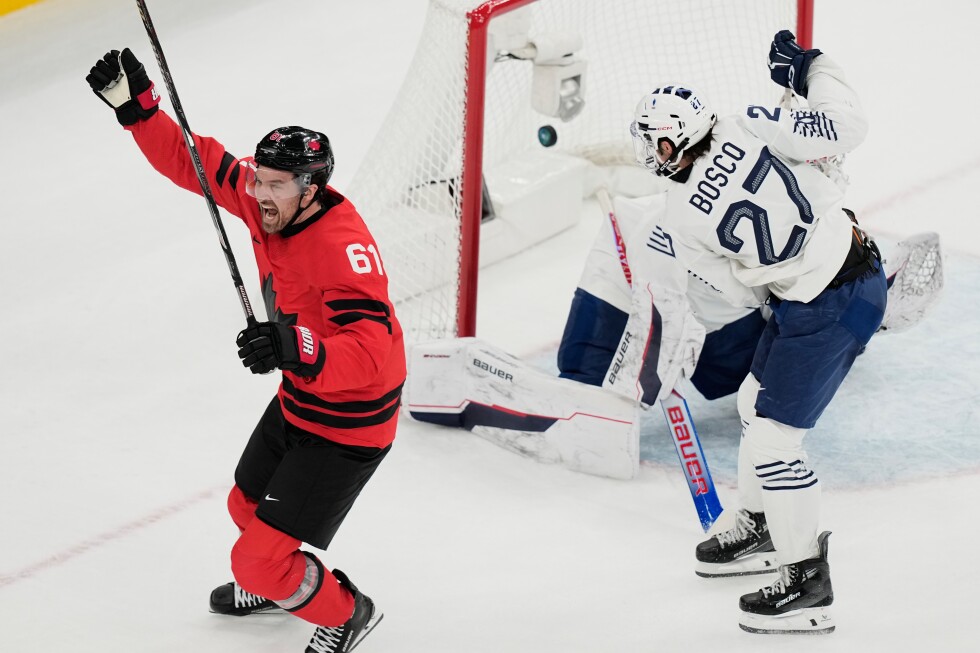
  • Canada cruises into the quarterfinals at the Olympics by routing France

    Canada cruises into the quarterfinals at the Olympics by routing France

    MILAN — Team Canada has concluded the Olympic preliminary round with an unblemished record, establishing themselves as the tournament’s dominant force heading into the knockout phase. Their commanding 10-2 victory over France on Sunday showcased both offensive firepower and team resilience, cementing their position as top seed.

    The Canadian squad demonstrated exceptional skill and coordination with Sidney Crosby and Connor McDavid each contributing one goal and two assists. The game, however, featured a moment of controversy when Tom Wilson engaged in a fight with the French player responsible for a forearm hit to Nathan MacKinnon’s face. Under international ice hockey regulations, Wilson received a game misconduct for fighting, while MacKinnon later returned to the ice.

    Canada’s statistical dominance throughout the group stage has been remarkable, outscoring opponents by 17 goals across three matches. Their performance places them securely in the top seeding position, with the United States requiring an improbable 10-goal victory against Germany to claim the top spot.

    Young talent Macklin Celebrini, Canada’s youngest player at 19, continued his impressive Olympic debut with two goals against France, bringing his tournament total to four goals. Mark Stone contributed a shorthanded goal with mere seconds remaining in the first period, adding two assists to his performance.

    In other Olympic hockey action, Switzerland secured a critical 4-3 overtime victory against Czechia despite the absence of injured winger Kevin Fiala. Captain Roman Josi led the Swiss team with an opening goal, while Dean Kukan scored the overtime winner. The emotional victory, achieved amid concerns about Fiala’s lower left leg injury that required surgical intervention, positions Switzerland favorably for the qualification playoffs.

    Team Canada now looks ahead to quarterfinal competition, likely facing either Czechia or Germany, with Jordan Binnington expected to maintain his position in goal despite conceding two goals against France.
  • Lisa Vittozzi secures Italy’s first Olympic gold medal in biathlon with pursuit win

    Lisa Vittozzi secures Italy’s first Olympic gold medal in biathlon with pursuit win

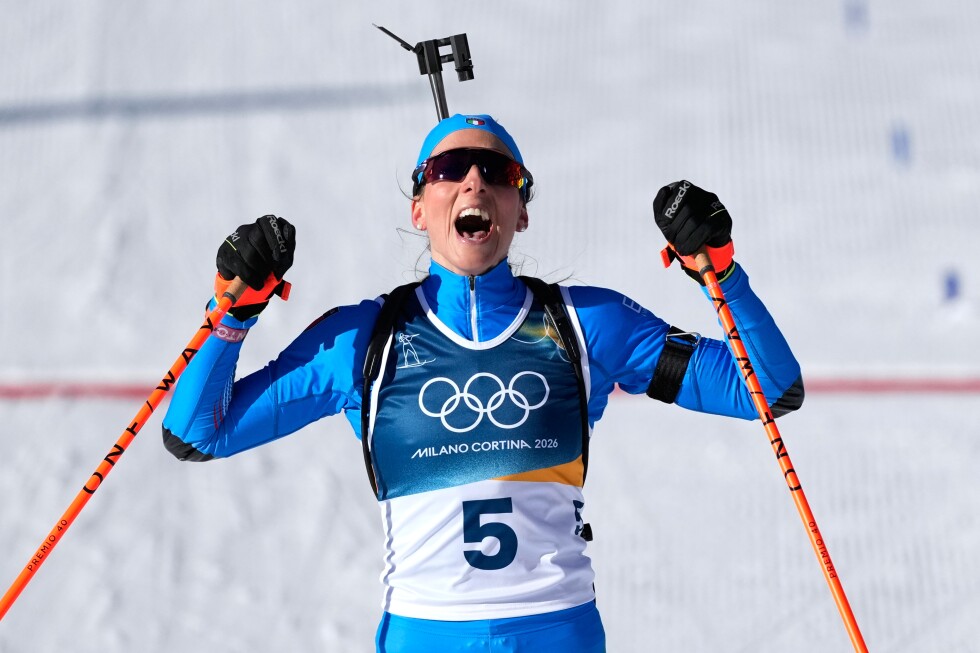
    In a stunning display of precision and athleticism, Italian biathlete Lisa Vittozzi captured the nation’s first-ever Olympic gold medal in the sport at the Milan Cortina Winter Games. The historic moment unfolded Sunday in the women’s 10-kilometer pursuit event, where Vittozzi delivered a flawless shooting performance, hitting all 20 targets with remarkable composure.

    Vittozzi crossed the finish line with a commanding time of 30 minutes and 11.8 seconds, triggering an emotional celebration before a roaring crowd of 20,000 spectators. The champion bowed, pumped her arms triumphantly, and collapsed into the snow in a moment of pure exhilaration, marking the culmination of an extraordinary personal journey.

    The victory represents a spectacular comeback for Vittozzi, who battled through a challenging previous season marred by a back injury and inconsistent shooting performances. Her path to Olympic glory required overcoming significant physical and mental hurdles, making her perfect performance particularly noteworthy.

    Norway’s Maren Kirkeeide claimed the silver medal, finishing 28.8 seconds behind the champion, while Finland’s Suvi Minkkinen secured bronze with a 34.3-second deficit. Notably, Minkkinen matched Vittozzi’s perfect shooting accuracy, hitting all 20 targets in her own impressive display.

    The event marked a significant shift in the Olympic biathlon landscape, breaking France’s previously unbroken podium streak. French contenders Oceane Michelon and Lou Jeanmonnot, who started in second and third positions respectively based on their sprint race results, fell out of medal contention due to shooting errors. Jeanmonnot missed three targets to finish fourth, while Michelon’s four misses placed her fifth overall.

    Biathlon pursuit competitions feature a unique format where athletes start according to their finishing times from the preceding sprint race, creating dynamic head-to-head competition. The sport’s distinctive penalty system requires competitors to ski a 150-meter penalty lap for each missed shot, adding strategic complexity to the physically demanding event.

  • Italy’s Winter Olympics dream: A record 22nd medal seals its best-ever Games

    Italy’s Winter Olympics dream: A record 22nd medal seals its best-ever Games

    MILAN — Italy has officially achieved its most successful Winter Olympics performance in history, surpassing all previous records with seven days of competition still remaining. The host nation’s extraordinary medal haul reached 22 on Sunday, eclipsing its previous benchmark of 20 medals established at the 1994 Lillehammer Games.

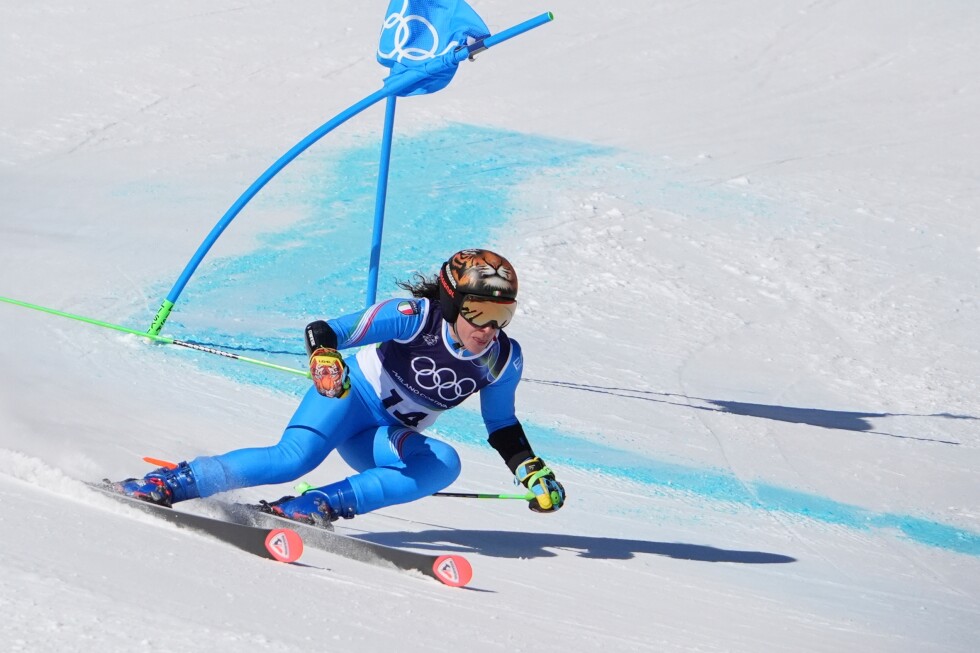
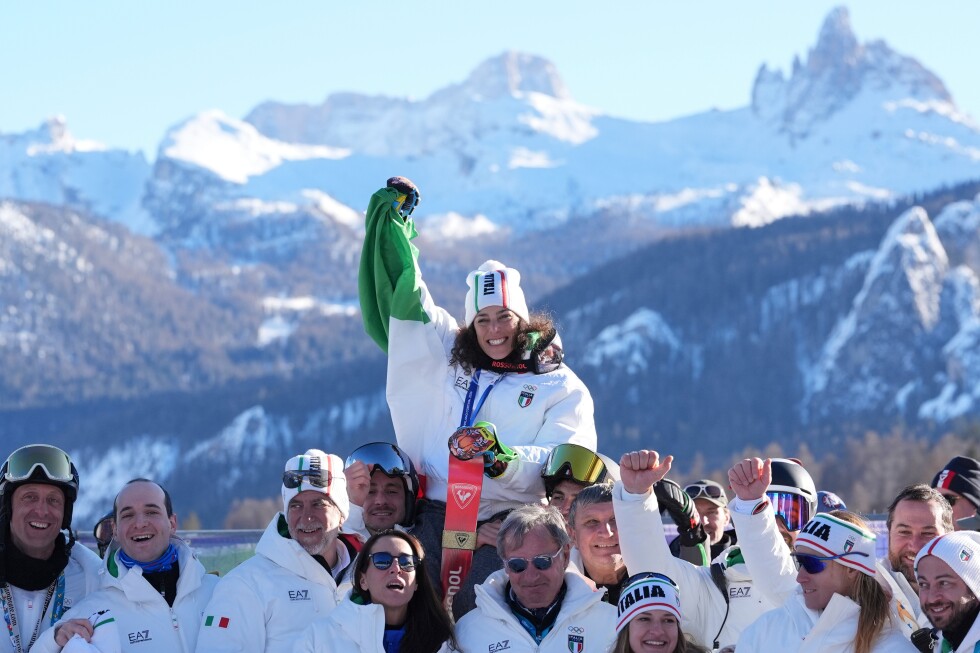
    The record-breaking day began with Italy’s cross-country team securing bronze in the men’s 4 x 7.5-kilometer relay. Shortly thereafter, Federica Brignone captured her second gold medal of the Games with a stunning victory in the giant slalom—a particularly remarkable achievement given her recent return to competition after recovering from a severe leg injury that involved multiple fractures.

    Within the hour, Michela Moioli and Lorenzo Sommariva contributed to the historic moment by earning silver in the mixed team snowboard cross, delivering Italy’s 21st medal and officially breaking the national record. The celebration continued as Lisa Vittozzi claimed gold in the 10-kilometer pursuit biathlon race shortly afterward.

    Italy’s current medal distribution stands at eight gold, four silver, and ten bronze medals—exceeding the pre-Games target of 19 medals set by Italian Olympic Committee president Luciano Buonfiglio.

    The nation’s performance represents a significant improvement over recent Olympic appearances. At the 2022 Beijing Winter Games, Italy won 17 medals, while the 2006 Turin Olympics as hosts yielded only 11 medals. Italy currently ranks among the top two nations in the medal table, a dramatic improvement from its fourth-place finish in Lillehammer behind Russia, Norway, and Germany.

    Early indications of Italy’s exceptional performance emerged on Day 3 of competition when the team collected six medals in 24 hours—a single-day national record. Local organizing committee president Giovanni Malagò emphasized the significance of Italy’s multidisciplinary success across sports where the nation had not traditionally been competitive.

    The emotional resonance of these achievements has been amplified by compelling athlete narratives. Brignone’s gold medal came after extensive rehabilitation, while short track speedskater Arianna Fontana earned her 12th and 13th Olympic medals, matching fencer Edoardo Mangiarotti’s longstanding record for most Olympic medals by an Italian athlete.

    International Olympic Committee President Kirsty Coventry praised Italy’s performance, noting: “Their stories of resilience and fight and everything good in humanity was really showcased. To do that at home, it’s so cool.”

  • Curling controversy widens amid higher surveillance as Britain accused of same infraction as Canada

    Curling controversy widens amid higher surveillance as Britain accused of same infraction as Canada

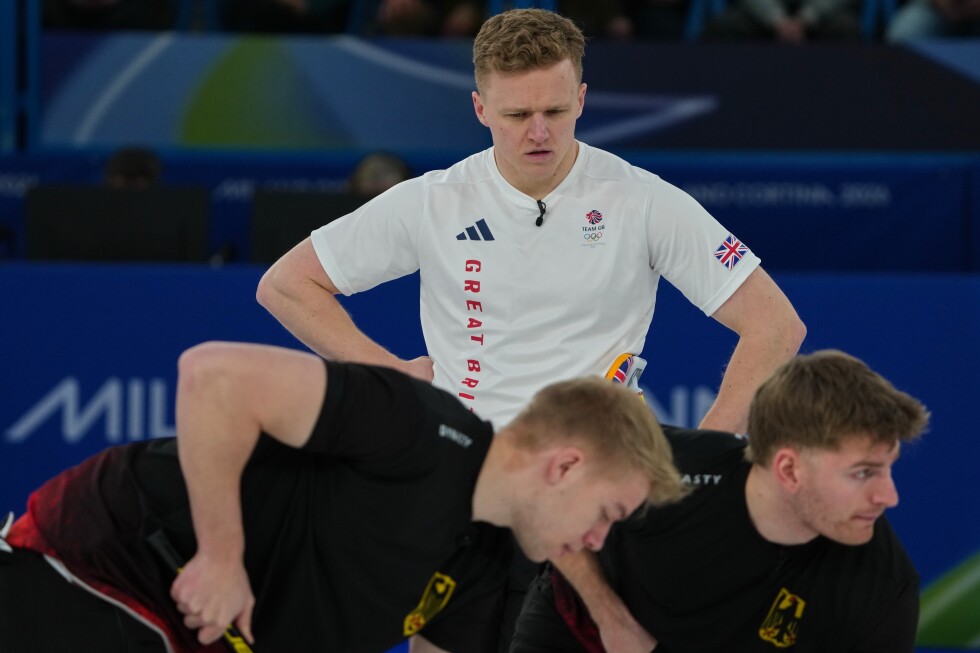
    CORTINA D’AMPEZZO — The ongoing officiating dispute in Olympic curling intensified Sunday when British curler Bobby Lammie became the latest athlete penalized for alleged rule violations during competition. During the ninth end of Britain’s round-robin match against Germany, officials determined Lammie had made illegal contact with his stone after release—a violation known as “double-touching”—resulting in the stone’s removal from play. Despite the controversy, the British team secured a decisive 9-4 victory.

    This incident marks the third such ruling in three days, following consecutive penalties against Canadian teams on Friday and Saturday. The initial controversy emerged when Swedish opponents raised allegations against the Canadian men’s team, with similar infractions called against the Canadian women’s team during their match against Switzerland the following day.

    In response to the growing dispute, World Curling announced enhanced monitoring measures beginning Saturday. The governing body assigned two dedicated officials to oversee the four simultaneous curling matches during each round, though acknowledged the impracticality of stationing umpires at every hog line—the critical zone where stones must be released.

    The organization maintains its position against utilizing video replay technology for officiating decisions, despite social media circulation of footage that appears to show the alleged violations. Questions regarding potential disproportionate surveillance of specific teams remain unanswered by tournament authorities.

    Until Sunday’s incident, the controversy had primarily involved Canadian athletes, who represent one of curling’s most passionate international fan bases. The repeated penalties have sparked debate about consistency in officiating and the need for technological assistance in determining infractions at the highest level of competition.

  • Why Alexandra Eala can recreate the Sania Mirza magic in Dubai

    Why Alexandra Eala can recreate the Sania Mirza magic in Dubai

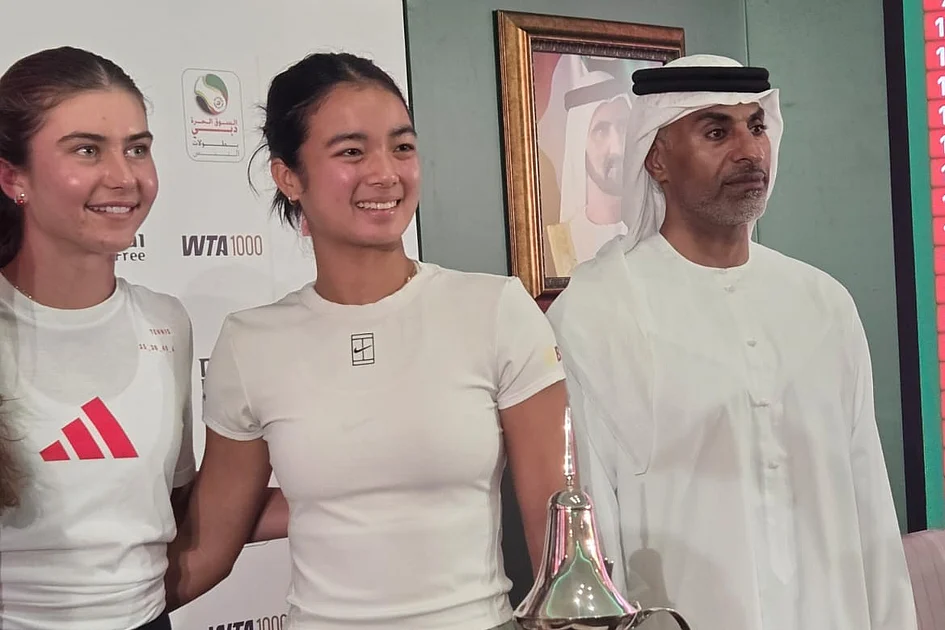
    Dubai’s tennis scene is poised to witness a remarkable resurgence of cultural sporting passion as Filipino phenom Alexandra Eala prepares for her debut at the Dubai Duty Free Tennis Championships. Tournament Director Salah Tahlak vividly recalls the electrifying atmosphere of 2005 when Indian superstar Sania Mirza captivated over 7,000 fans with her stunning victory against Russian Grand Slam champion Svetlana Kuznetsova.

    Two decades later, Tahlak anticipates comparable excitement surrounding Eala, who enters the tournament following an impressive quarterfinal appearance at the Mubadala Abu Dhabi Open. The 20-year-old sensation has been granted a prime-time Sunday slot against American player Hailey Baptiste, strategically scheduled to accommodate what organizers expect to be massive Filipino turnout.

    The demographic significance cannot be overstated: with approximately one million Filipino residents in the UAE and 3,000 Filipino staff members within Dubai Duty Free alone, Eala’s participation represents more than athletic competition—it symbolizes community representation and cultural pride. Her groundbreaking achievements as the Philippines’ highest-ranked tennis player (world number 40) have sparked a tennis revolution in a nation traditionally dominated by basketball.

    Eala’s influence transcends national boundaries, having recently attracted such significant attention at the Australian Open that former world number one Andy Roddick noted her impact on promoting tennis within Asian communities. The young athlete acknowledges the special significance of competing in Dubai, expressing anticipation for the supportive environment created by the substantial Filipino diaspora.

    This tournament appearance marks another milestone in Eala’s meteoric rise, having climbed nearly 100 ranking positions within twelve months while captivating audiences worldwide and reshaping sporting interests in her homeland.

  • Singapore ski racer Faiz Basha becomes 2nd athlete to represent tropical nation at a Winter Games

    Singapore ski racer Faiz Basha becomes 2nd athlete to represent tropical nation at a Winter Games

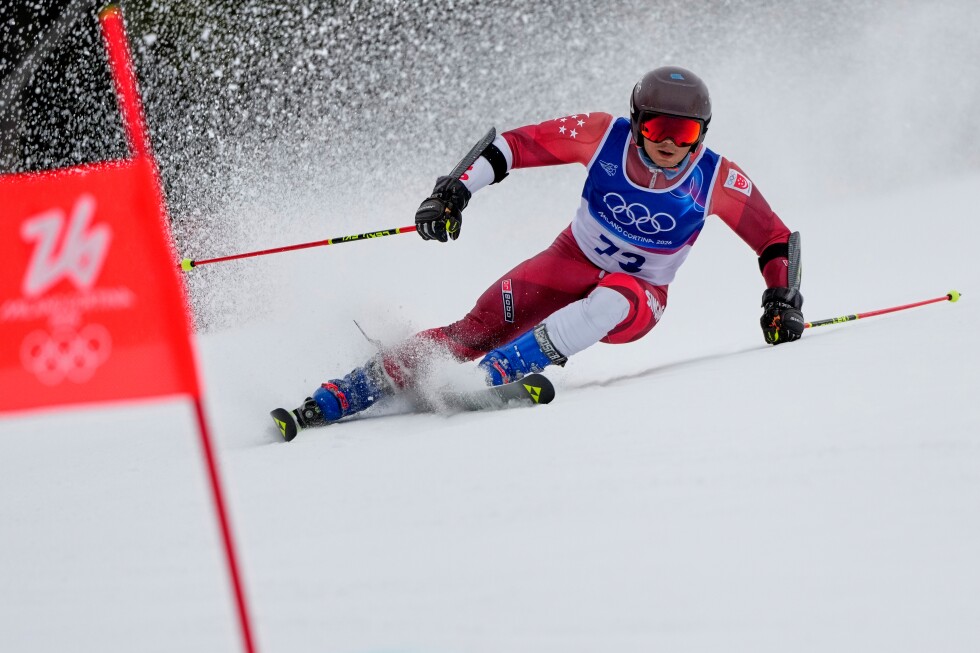
    BORMIO, Italy — In the world of alpine skiing where nations like Switzerland and Norway dominate, Faiz Basha represents an extraordinary anomaly. As Singapore’s second Winter Olympian in history, the 23-year-old skier carries the flag for a tropical nation where temperatures rarely dip below 30°C (86°F).

    Basha’s journey to the Milan Cortina Games began unexpectedly when his family relocated to Geneva during his father’s diplomatic service. Introduced to skiing by his mother who worked at a Swiss bank, Basha quickly developed a competitive passion for the slopes. “I didn’t like losing as a kid,” recalled Basha, whose full name is Faiz Basha Munwar Basha. “Whenever I had a bad race, I would be crying. But I kept improving.”

    His path diverged dramatically from conventional ski racing development when he returned to Singapore to fulfill mandatory military service. With no mountains available, Basha innovatively trained on inline skates through slalom courses set up on local promenades. “Inline skates helped me develop a skiing-on-rails mindset,” Basha explained. “When I returned to snow after national service, I actually improved.”

    The Olympian’s career nearly ended following a devastating super-G crash as a teenager that tore a hole in his intestine. The psychological aftermath proved particularly challenging. “My first training after the crash, I crashed three consecutive runs,” Basha remembered. “I told my mother I was done with skiing.”

    During his recovery hiatus, Basha channeled his analytical mind into redesigning Singapore’s Mass Rapid Transit (MRT) system map. His viral cartography project earned him an internship offer from the transportation department. Meanwhile, he pursued mechanical engineering studies at the University of Strathclyde in Glasgow.

    Basha joins a growing contingent of athletes from non-traditional winter sports nations making their mark at the Games. Eritrea’s Shannon Abeda, who finished 31.30 seconds behind giant slalom champion Lucas Pinheiro Braathen of Brazil, expressed similar pride in representation. “My friend asked me how much it took to get here, and I just started bawling,” Abeda shared.

    Nathan Tchibozo of Benin, who finished 48th in giant slalom, echoed the sentiment: “This shows that everything is possible. You have to believe in your dreams.”

    Though Basha recorded a DNF (did not finish) in his Olympic giant slalom debut after crashing, his perspective remains focused on broader objectives. “I know I’m still far from the top, but success means breaking new ground for Singapore,” Basha stated. “I’m content with what I’ve achieved in paving the way for future tropical climate athletes.”

  • India’s Hardik Pandya biggest threat to Pakistan, says Umar Gul ahead of T20 game

    India’s Hardik Pandya biggest threat to Pakistan, says Umar Gul ahead of T20 game

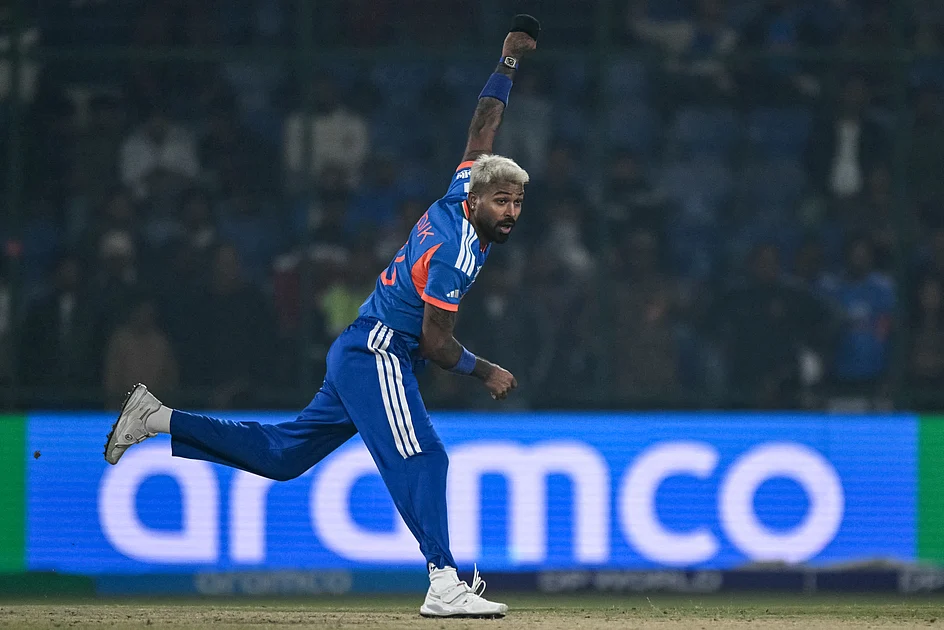
    As the cricketing world anticipates the high-voltage India-Pakistan clash in the T20 World Cup 2026, former Pakistani pace bowler Umar Gul has singled out Indian all-rounder Hardik Pandya as the most formidable threat to Pakistan’s ambitions. The much-awaited encounter is scheduled for Sunday at Colombo’s R Premadasa Stadium, where both teams will battle for supremacy in Group A.

    In an exclusive appearance on the Mr Cricket UAE podcast, Gul provided strategic insights into the upcoming contest. He characterized Pandya as exceptionally “calm, composed, and dangerous,” emphasizing that claiming his wicket would be absolutely crucial for Pakistan’s success. “His powerful ball-striking ability and intelligent shot selection truly distinguish him from other players,” Gul remarked, acknowledging Pandya’s match-winning potential.

    While Gul assessed the match as fundamentally balanced with “50-50 chances for both sides,” he suggested Pakistan might hold a slight advantage due to their familiarity with the conditions at R Premadasa Stadium. He noted that these high-stakes encounters typically carry “truckloads of pressure,” which could influence the final outcome.

    The former cricketer also expressed concerns about India’s middle-order performance, observing that it “hasn’t delivered as expected in the last two games.” This vulnerability, according to Gul, is something the Indian team must urgently address against formidable opponents.

    Regarding team selection, Gul speculated that India might include spinner Kuldeep Yadav, considering his impressive record against Pakistan and the Colombo pitch conditions. This move would potentially come at the expense of seamer Arshdeep Singh to maintain batting depth.

    On Pakistan’s internal selection debates, Gul advocated for maintaining consistency despite wicketkeeper-batter Usman Khan’s consecutive ducks in the tournament. “The team management should give another opportunity to Usman Khan. They trust him, and that’s why they prefer him over Nafay,” he stated, recommending against experimentation.

    The historical context heavily favors India, who dominate the T20 World Cup head-to-head record with seven victories against Pakistan’s solitary win. Both teams enter this contest undefeated in the tournament so far, with India leading Group A through superior Net Run Rate (+3.050 compared to Pakistan’s +0.932).

  • Italy’s Federica Brignone fastest after first run in women’s giant slalom. Shiffrin sits seventh

    Italy’s Federica Brignone fastest after first run in women’s giant slalom. Shiffrin sits seventh

    CORTINA D’AMPEZZO, Italy — Italian skiing sensation Federica Brignone has positioned herself for a potential second Olympic gold medal within a week after delivering a commanding performance in the first run of the women’s giant slalom at the Milan Cortina Olympics.

    The 35-year-old veteran, who captured the super-G title just days ago after a 16-year Olympic pursuit, demonstrated exceptional form on the challenging Dolomite Mountains course. Brignone completed the 51-gate run in 1:03.23, establishing a substantial lead over her closest competitors in a field of 76 elite skiers.

    This impressive showing comes less than a year after Brignone suffered a severe fracture to her left leg that required surgical intervention with multiple screws and left her immobilized for weeks. The 2023 world champion in giant slalom has made a remarkable recovery to reach peak form at these Games.

    German skier Lena Duerr trails Brignone by 0.34 seconds, while Italian teammate Sofia Goggia sits third, 0.46 seconds behind. A three-way tie for fourth place at 1:03.97 includes defending Olympic champion Sara Hector of Sweden, Norway’s Thea Louise Stjernesund, and Albania’s Lara Colturi.

    American star Mikaela Shiffrin, the 2018 Olympic champion in this event, finished her first run in seventh position, more than a second behind Brignone. Shiffrin is seeking her first Olympic medal in eight years and aims to rebound from a disappointing fourth-place finish in the combined event earlier in these Games.

    Brignone described her approach: “I tried to attack, to be clean and intelligent on the terrain changes and then toward the end, to anticipate the bumps. It was just a natural reaction for me. I had a proper run and it all came naturally to me.”

    Current World Cup giant slalom leader Julia Scheib of Austria, who sits eleventh after the first run, acknowledged Brignone’s dominance: “Perfect skiing. She likes the snow. I noticed and it was not a huge surprise.”

    Brignone’s four Olympic medals now tie the record for most by an Italian woman in alpine skiing history. With her stellar first run, she stands poised to add a second gold to her collection when competition concludes.

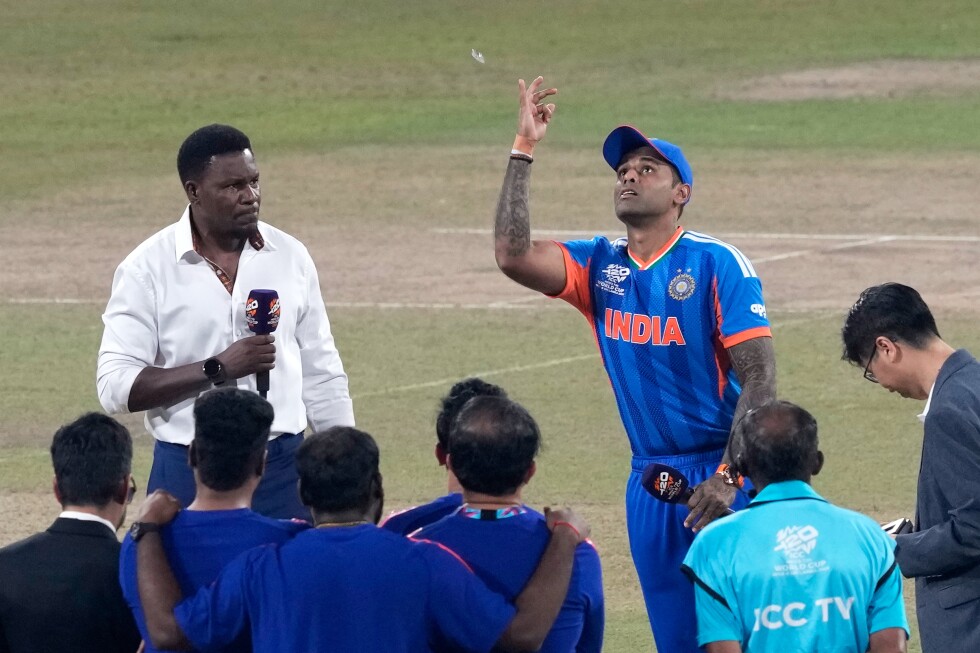
  • Pakistan wins toss and fields in marquee game against India at T20 World Cup. No handshakes again

    Pakistan wins toss and fields in marquee game against India at T20 World Cup. No handshakes again

    COLOMBO, Sri Lanka — The highly anticipated Twenty20 World Cup match between arch-rivals India and Pakistan commenced under a cloud of diplomatic strain, as team captains abstained from the traditional pre-match handshake ceremony on Sunday. Pakistan’s captain Salman Ali Agha won the toss and elected to field first in what marks the first encounter between these cricketing nations since last year’s contentious Asia Cup tournament in the United Arab Emirates.

    The absence of ceremonial handshakes has become an unsettling pattern since Indian batsman Suryakumar Yadav initially refused the gesture during the Asia Cup, a practice subsequently mirrored in women’s and Under-19 world cup matches. This development occurs against a backdrop of speculation that the International Cricket Council (ICC) had mediated the conflict after Pakistan threatened to boycott the tournament earlier this month.

    India fielded a full-strength lineup with the return of explosive opener Abhishek Sharma, who missed the previous match against Namibia due to stomach illness. The team strategy included deploying three specialist spin bowlers—including Kuldeep Yadav, who replaced seam bowler Arshdeep Singh—to adapt to the pitch conditions at R. Premadasa Stadium. Pakistan maintained an unchanged roster from their victory against the United States.

    Meanwhile, tournament developments saw West Indies secure their third consecutive Group C victory with a dominant nine-wicket win over Nepal, qualifying for the Super 8 stage. Fast bowler Jason Holder claimed 4-27 to restrict Nepal to 133-8 before captain Shai Hope’s unbeaten 61 guided the Caribbean team to victory in 15.2 overs.

    The United States kept their slim qualification hopes alive with a 31-run victory against Namibia in Chennai. Sanjay Krishnamurthi’s maiden T20 half-century (68 not out off 33 balls) and captain Monank Patel’s 52 powered the Americans to their tournament-high score of 199-4. Medium-pacer Shadley Van Schalkwyk took 2-30 to maintain his position as the tournament’s leading wicket-taker with 13 scalps.

    Despite these developments, all eyes remained fixed on Colombo where the marquee match began at 7 p.m. local time. Pakistan’s captain Agha stated beforehand that the decision to shake hands rested with the Indian players, while Indian skipper Suryakumar Yadav remained non-committal when questioned by reporters.

    The match almost didn’t occur after Pakistan’s government considered withdrawing following the ICC’s expulsion of Bangladesh from the World Cup for refusing to play in India due to security concerns. Pakistan ultimately agreed to participate after intensive negotiations with the ICC, preserving what represents a major revenue generator for the international cricket body.

    These tensions reflect deeper geopolitical conflicts that have prevented bilateral series between the nations for years. India hasn’t traveled to Pakistan since 2008, while Pakistan’s last visit to India was for the 2023 ODI World Cup. India maintains a dominant record against Pakistan in T20 matches, having won 12 of their 16 encounters and boasting a 6-1 record in T20 World Cup matches since the inaugural tournament in 2007.

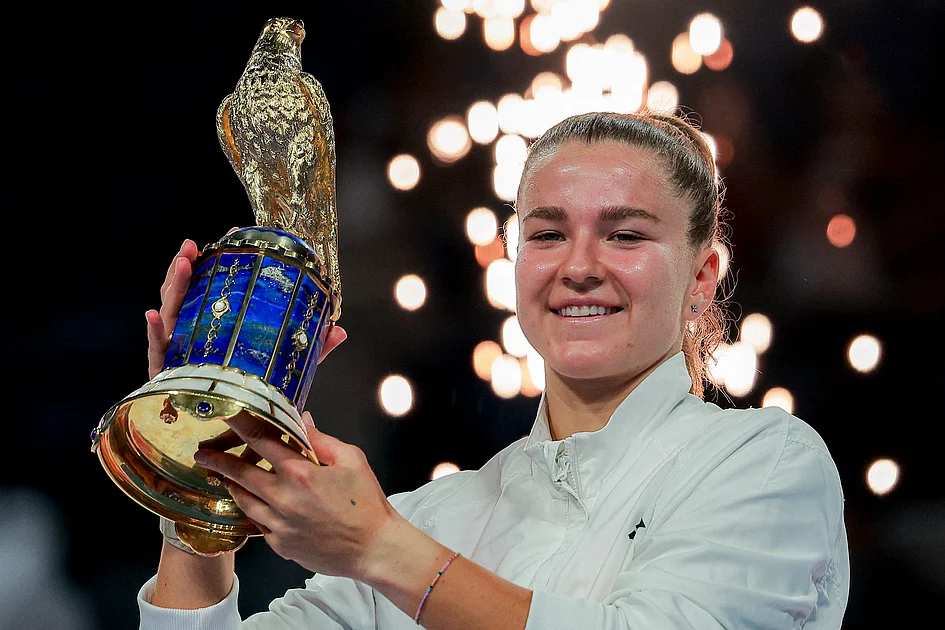
  • Muchova beats Mboko in Qatar Open final to end six-year title drought

    Muchova beats Mboko in Qatar Open final to end six-year title drought

    In a remarkable comeback story, Czech tennis star Karolina Muchova captured the Qatar Open championship on Saturday, defeating Canadian rising star Victoria Mboko 6-4, 7-5 in the final. The victory marks Muchova’s first WTA 1000 title and ends a prolonged six-year period without a tournament win on the professional circuit.

    The 29-year-old Muchova, who reached the French Open final in 2023, has faced significant challenges with multiple injuries throughout her career. Most notably, she was sidelined for ten months following a wrist injury in 2023 that threatened to derail her career entirely. Her previous title came at the Korea Open in September 2019, making this victory particularly meaningful after years of rehabilitation and determination.

    Throughout the match lasting one hour and thirty-four minutes, Muchova demonstrated strategic mastery by varying her rhythm and minimizing unforced errors against her younger opponent. The emotional significance of the moment was not lost on the champion, who expressed relief and joy at rediscovering the winning feeling after such an extended absence from the winner’s circle.

    Despite the loss, 19-year-old Mboko delivered an impressive performance throughout the tournament, defeating fifth seed Mirra Andreeva and second seed Elena Rybakina en route to the final. Her performance is expected to propel her into the world’s top-10 rankings for the first time, signaling the arrival of a new force in women’s tennis.