分类: sports

  • ‘Once in a lifetime opportunity’ – Kansas City readies for World Cup influx

    ‘Once in a lifetime opportunity’ – Kansas City readies for World Cup influx

    Tucked along the banks of the Missouri River, straddling the state line between Kansas and Missouri, the Kansas City metropolitan area stands as one of the smallest host cities for the 2026 FIFA World Cup, with a population of just 2.5 million. Though it does not rank among the 30 largest urban regions in the United States, this Midwestern hub punches far above its weight in the sporting world: it is home to the recently dominant Kansas City Chiefs NFL franchise, hosts the prestigious Big 12 college basketball tournament, and will take on a critical role in the planet’s biggest soccer tournament this summer.

    Kansas City will play host to six World Cup matches, including a round-of-32 fixture and a high-stakes quarter-final, and will serve as the training base for four competing nations: Algeria, defending champions Argentina, England, and the Netherlands. For long-time locals who have watched the region’s soccer culture grow from humble beginnings, this opportunity feels nothing short of historic.

    Héctor Solorio, a 26-year Kansas City resident and lifelong supporter of MLS side Sporting Kansas City, called the chance to welcome the world to his hometown a once-in-a-lifetime moment. “I never imagined the World Cup coming to my city,” he said, noting he is eager to prove Kansas City’s reputation as a globally recognized soccer city – even as he remains skeptical about the U.S. Men’s National Team’s tournament prospects. Fellow local Alejandro Cabero echoed that excitement, recalling how different the region’s soccer scene was when he first arrived: when the franchise, then called the KC Wizards, drew fewer than 3,000 fans to matches. “It’s amazing how far we’ve come,” he said.

    Local and tournament officials frame the 2026 World Cup as a transformative chance to showcase everything the Midwestern region has to offer beyond sports. “We’re a city that has always punched above our weight in barbecue, in African American music, in sports, in the warmth of our people,” Quinton Lucas, mayor of Kansas City, Missouri, told the BBC. “This summer is our chance to share that with the world on the biggest possible stage.”

    Anticipation has been building for months across the city, with locals already finalizing plans for match week. Solorio has secured a ticket to the opening group stage match between Argentina and Algeria on June 16, while Cabero – who owns a local empanada manufacturing business – is organizing a traditional Argentinian banderazo, a pre-game street celebration, the day before. He is preparing food for an estimated 600 attendees, but expects crowds as large as 10,000 fans to join the party.

    Beyond local fan events, organizers have rolled out large-scale preparations to welcome the expected influx of global visitors. Working in partnership with FIFA and officials from both Kansas and Missouri, KC 2026 organizers have planned a free, 18-day official fan festival at the National WWI Museum and Memorial, one of the city’s most iconic landmarks. The festival will feature live match broadcasts, community-led events, and neighborhood watch parties open to all attendees.

    To ensure small, locally owned businesses can capitalize on the surge in visitors, KC 2026 CEO Pam Kramer and her team launched the KC Game Plan initiative. The program provides a free playbook, available in both English and Spanish, that offers small business owners cyber security training, demographic data on projected visitors, and hospitality guidance, among other resources. “Our goal is to guarantee that when visitors arrive, they encounter Kansas City businesses that are ready to meet demand and confident in showcasing what makes them unique,” Kramer explained. For Cabero, that means crafting new empanada flavors inspired by the competing nations, including takes on paella, bratwurst, and shepherd’s pie, to welcome visiting fans.

    Over the past 15 years, the Kansas City metro has invested nearly $700 million into soccer-specific infrastructure, part of a long-term strategy to position the region as a major soccer destination. The recently renovated Berkley Riverfront esplanade, redeveloped in 2021 by Port KC and NWSL side KC Current, will serve as Argentina’s base during the tournament, and local leaders expect the presence of Lionel Messi and the world champions to deliver a major boost to the area’s economy, with increased foot traffic and sales for nearby local businesses. Port KC communications director Patrick Pierce projects that up to two million visitors will visit the riverfront in 2026, a surge driven largely by World Cup demand.

    Kansas City has also gone out of its way to welcome smaller, less high-profile nations competing in their first ever World Cup. Caribbean nation Curacao will play its group stage match against Ecuador in Kansas City on June 20, and will stay in the city for two nights during their historic tournament run. Curacao Football Federation president Gilbert Martina noted an unexpected cultural connection between the two regions: both share a deep love of jazz, with Curacao hosting the world-famous North Sea Jazz Festival. Martina added that the Midwestern values of resilience, community, and pride that define Kansas City are qualities that resonate deeply with the people of Curacao.

    For all the widespread excitement, not all locals share the confidence that Kansas City is fully prepared for the influx of fans and the economic and social impacts of the tournament. Local community leaders have raised three key concerns: a shortage of available hotel rooms, limited public transportation access to match venues for fans on the Kansas side of the Missouri River, and worries over increased immigration enforcement presence during the tournament.

    Most notably, Doug Langner, executive director of local homeless shelter Hope Faith and a lifelong soccer fan, warned that the city’s unhoused population of roughly 2,000 people could be pushed out of critical support systems. Many hotels that partner with the city to provide temporary housing for unhoused residents will be fully booked by traveling fans, he explained, leaving vulnerable populations without accommodation. With hundreds of millions of dollars invested in tournament infrastructure and security, Langner questioned why marginalized communities have not been prioritized to benefit from the event. “How do we connect the people who could use that bump the most to those opportunities?” he asked, adding that it remains unclear how working-class locals will share in the projected economic benefits of the tournament.

    While Mexico City will host the tournament’s opening match and New York will welcome fans for the final, Kansas City is poised to carve out its own unique place in the 2026 FIFA World Cup. The city’s challenge now is to deliver a world-class tournament that celebrates every competing nation, from global giants to first-time underdogs, while addressing the lingering concerns of local communities to ensure the tournament benefits all Kansas City residents.

  • Wood’s penalty gives Nottingham Forest a 1-0 win over Aston Villa in Europa League semifinal 1st leg

    Wood’s penalty gives Nottingham Forest a 1-0 win over Aston Villa in Europa League semifinal 1st leg

    In an all-English UEFA Europa League semifinal first leg clash on Thursday, a 71st-minute penalty from striker Chris Wood earned Nottingham Forest a narrow 1-0 win over Aston Villa at the City Ground, putting the historic English club one step closer to ending a 46-year wait for a continental competition final.

    The encounter pitted two sides with storied past European success against each other, both eager to recapture the glory that defined their legacy decades ago. Wood’s decisive spot kick left Aston Villa goalkeeper Emiliano Martínez with no chance to make a save, after referee ruled defender Lucas Digne handled the ball inside the box. Speaking to broadcaster TNT Sports after the full-time whistle, the New Zealand international struck a balanced tone about Forest’s position heading into the return leg. “It’s nice to have the advantage but going to Villa Park will be a tough game,” Wood said. “But we’ve done the job here at home and now hopefully we’ll build into next week.”

    The result stretches Forest’s current unbeaten run across all competitions to nine matches, an impressive run of form for a side balancing multiple high-stakes battles this season. Nuno Espírito Santo’s side (corrected from the original text’s attribution to Vítor Pereira, who does not manage Nottingham Forest) currently sit five points above the Premier League relegation zone, locked in a tense fight to avoid dropping to the English second division even as they chase European silverware. A unique quirk of UEFA’s competition rules creates a rare possible scenario: if Forest win the Europa League title but are relegated from the Premier League, they would still earn a spot in next season’s UEFA Champions League, the continent’s top club competition.

    For Forest, this run to the Europa League semifinal marks a full-circle moment for the club. It is their first appearance in a continental semifinal since 1984’s UEFA Cup, and their return to European competition after a 30-year absence, capping a remarkable rise after years spent outside the top flight. The club cemented its place in European history in the late 1970s and early 1980s, when it shocked the continent to win back-to-back European Cups – the predecessor to today’s Champions League – in 1979 and 1980. Aston Villa, the opposition, has its own European title pedigree: the club claimed the European Cup crown just two years after Forest’s second win, in 1982.

    Aston Villa, currently fifth in the Premier League, remains on track to qualify for next season’s Champions League through domestic league standing. Managed by Unai Emery – the most successful manager in Europa League history with four titles to his name (three with Sevilla and one with Villarreal), Villa will enter the return leg at their home ground Villa Park next Thursday with plenty of time to turn the tie around. Before that second leg, Forest faces a critical Premier League away test against Chelsea on Monday, as they continue to juggle domestic survival and European ambition.

    In the other Europa League semifinal played Thursday, Portuguese side Braga secured a dramatic 2-1 home win over Germany’s Freiburg, with substitute Mario Dorgeles scoring the winning goal deep into second-half stoppage time. The match held its own late drama: before Dorgeles’ winner, Freiburg goalkeeper Noah Atubolu kept the scores level with a diving save to his right to deny Rodrigo Zalazar’s penalty. Braga is targeting its first European final appearance since falling 1-0 to domestic rival Porto in the 2011 Europa League title match. The second leg of that tie will also be held next Thursday, with the Europa League final scheduled for May 20 in Istanbul, Turkey.

    Across in the UEFA Conference League, the third-tier European club competition, three more first leg semifinal matches kicked off Thursday. Ismaïla Sarr gave Crystal Palace a dream start just 60 seconds into their tie against Ukraine’s Shakhtar Donetsk, scoring the opening goal on the way to a 3-1 first leg win for the English side. Daichi Kamada and Jorgen Strand Larsen added further goals for Palace after Oleh Ocheretko had drawn Shakhtar level early on. Due to the ongoing Russian invasion of Ukraine, the match was hosted at a neutral venue in Krakow, Poland, with the return leg set for next Thursday at Palace’s home Selhurst Park in London.

    In the day’s other Conference League semifinal, Spain’s Rayo Vallecano claimed a 1-0 home win over France’s Strasbourg to take their first leg advantage. The Conference League final is scheduled for May 27 in Leipzig, Germany.

  • Joy as record-breaking runner Sawe returns home

    Joy as record-breaking runner Sawe returns home

    Thousands of cheering Kenyans have packed the streets of Sawe’s hometown to welcome back the man who made global athletic history: Sebastian Sawe, the first runner ever to complete a full marathon in less than two hours. The groundbreaking achievement, first reported by the BBC, has sent ripples of joy and national pride across the East African nation, long renowned as a breeding ground for world-class long-distance runners.

    Local communities held impromptu celebrations, with traditional dancing, flag-waving, and street parties marking the occasion. Government officials have also joined in the tributes, highlighting Sawe’s milestone as a testament to Kenya’s enduring legacy in distance running. For decades, Kenyan athletes have dominated global marathon and long-distance track events, but Sawe’s sub-two-hour finish breaks a barrier that many in the sport once considered biologically impossible for a human runner.

    Athletics experts across the globe have already hailed the run as one of the most transformative achievements in modern sports history, opening new conversations about the limits of human endurance. Back on home soil, Sawe has been greeted as a national hero, with young runners lining the routes of his homecoming procession to catch a glimpse of the trailblazer who redefined what the sport believes is possible.

  • Iran, World Cup loom over FIFA Congress

    Iran, World Cup loom over FIFA Congress

    Less than two months before the expanded 48-team 2026 FIFA World Cup kicks off across co-hosts Canada, Mexico and the United States, global football’s governing body is gathering for its 76th annual Congress in Vancouver, where a cascade of thorny political and logistical disputes are set to dominate discussions. Roughly 1,600 delegates from over 200 FIFA member associations have convened for the final major policy meeting ahead of the historic tournament, but the event has already been overshadowed by a high-profile diplomatic dispute involving Iran that has cast new doubt on the country’s participation this summer.

    The controversy erupted earlier this week when three senior officials from the Football Federation of the Islamic Republic of Iran (FFIRI), including FFIRI president Mehdi Taj — a former member of Iran’s Islamic Revolutionary Guard Corps (IRGC) — abruptly abandoned their trip to the Congress after landing in Toronto. Iranian state media reported the delegation flew back to Tehran immediately after what they described as insulting treatment from Canadian border agents. For its part, Canadian immigration officials reiterated their longstanding policy that IRGC-linked individuals are inadmissible to Canada, after the country formally designated the IRGC as a terrorist organization in 2024. “While we cannot comment on individual cases due to privacy laws, the government has been clear and consistent: IRGC officials are inadmissible to Canada and have no place in our country,” a Canadian immigration spokesperson said in a statement.

    This incident only adds to the already simmering uncertainty surrounding Iran’s World Cup participation. The country’s qualification status has been in question since the outbreak of regional conflict between Iran, Israel and the United States in late February. Last month, Iranian football officials floated a proposal to move Iran’s three scheduled group stage matches from the United States to Mexico to avoid entry issues, but FIFA president Gianni Infantino quickly rejected the request, telling AFP that Iran would compete “where they are supposed to be, according to the draw.” While U.S. Secretary of State Marco Rubio has confirmed that Iranian players will be welcome to enter the country for the tournament, he has also warned that any delegation members with confirmed ties to the IRGC may still be barred from entry.

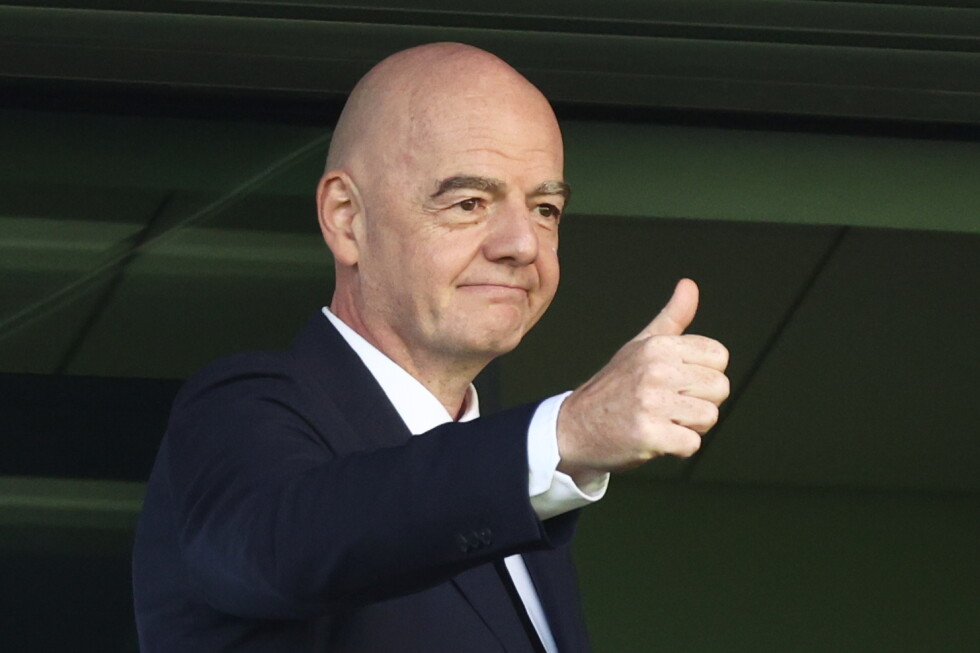
    Beyond the Iran dispute, Infantino himself is entering the Congress facing mounting scrutiny on multiple fronts. The FIFA chief has drawn widespread criticism over skyrocketing ticket prices for the 2026 World Cup and his publicly documented close personal friendship with U.S. President Donald Trump. In a move to appease discontent from participating national teams, FIFA announced earlier this week that it would increase total financial distributions to competing sides to nearly $900 million, a sharp jump from the $725 million initially announced last December. The adjustment came after multiple qualified nations warned they stood to lose money competing in the tournament, due to soaring travel, accommodation and operational costs across the three host countries.

    Human rights organizations are also pressing Infantino to address growing concerns over fan and journalist safety amid the Trump administration’s strict immigration policies. Amnesty International’s head of economic and social justice Steve Cockburn called on Infantino to deliver concrete assurances at the Congress, noting that “FIFA President Gianni Infantino has yet to publicly outline how fans, journalists and local communities will be safe from arbitrary detention, mass deportations and crackdowns on free expression. This FIFA Congress should be the moment he does so, and the global football community must receive more than empty platitudes.”

    Infantino is also facing growing pressure from European football federations to scrap the FIFA Peace Prize, a relatively new honor he awarded to Trump during the World Cup draw ceremony in Washington last December. Norwegian Football Association president Lise Klaveness publicly called for the award to be eliminated this week, saying “We don’t think it’s part of FIFA’s mandate to give such a prize.”

    Delegates are also expected to address the longstanding international ban on Russian football, imposed after Russia’s full-scale invasion of Ukraine in 2022. Infantino sparked controversy earlier this year when he publicly voiced support for lifting the ban, telling Britain’s Sky News that “This ban has not achieved anything, it has just created more frustration and hatred.” No formal vote on the issue has been scheduled, but the ongoing divide between member associations that support readmission and those that back maintaining the ban is expected to be a key topic of behind-the-scenes negotiations during the four-day gathering.

  • World snooker champion Zhao Xintong succumbs to ‘Crucible curse’

    World snooker champion Zhao Xintong succumbs to ‘Crucible curse’

    Sheffield’s iconic Crucible Theatre has once again cemented one of snooker’s most persistent jinxes, as reigning first-time world champion Zhao Xintong of China suffered a 13-10 quarter-final defeat at the hands of England’s Shaun Murphy on Wednesday, falling victim to the infamous ‘Crucible curse’.

    Zhao entered the 2025 tournament carrying historic momentum: last year, the 29-year-old became the first snooker player from China to lift the sport’s most prestigious trophy, defeating three-time world champion Mark Williams 18-12 in a landmark final. Yet Wednesday’s defeat extends the curse that has stood unbroken for 48 years: no first-time world champion has successfully defended their title since the tournament relocated to the Crucible in 1977.

    The match opened with Zhao storming to an early 3-0 lead over the 43-year-old Murphy, who has not claimed a world crown since his first win 21 years ago. But Murphy fought his way back into the best-of-25-frames contest, leveling the score at 8-8 before pulling ahead with a controlled 98 break. The Englishman closed out the win with a match-clinching 69 break, securing his spot in the tournament’s final four and moving just two wins away from a second world title.

    In a post-match interview, Zhao was generous in defeat, acknowledging Murphy’s dominant performance. ‘Shaun played really well, he gave me big pressure and played perfect snooker today,’ Zhao told the BBC. ‘He deserved to win. I felt some pressure as defending champion but I still felt alright. I tried to get better, but Shaun is a good player and he played very well so congratulations to him.’ Murphy, who earlier this week called Zhao ‘the best on the planet’, credited his opponent for raising his own game: ‘When you’re playing great players, which Zhao Xintong unquestionably is, it makes it straightforward for you.’

    While Zhao’s campaign has come to an early end, Chinese snooker still retains a strong presence in the semi-finals, thanks to 22-year-old rising star Wu Yize, who secured a 13-8 victory over Iran’s Hossein Vafaei to book his first ever World Championship semi-final berth. Wu will next face Northern Ireland’s Mark Allen in the one-table semi-final setting.

    After an early 4-4 split, Wu pulled away from Vafaei with extraordinary consistency, notching 12 breaks of 50 or more and showing incredible potting accuracy that left his opponent stunned. ‘The last session I finally found my rhythm which I’m really happy about,’ Wu said after the win. ‘It’s going to be my first time playing the one-table session so I feel I can do anything now.’ Vafaei, who upset world number one Judd Trump 13-12 in the previous round, compared Wu’s unflappable precision to playing against a video game. ‘The guy was potting from everywhere — I lost four or five frames out of nowhere… It was like playing against a Playstation you know? You are thinking, where can I put the cue ball?’ he said.

    In the day’s other quarter-final matches, Scottish veteran John Higgins, a four-time world champion, pulled off a remarkable comeback to defeat 2010 champion Neil Robertson of Australia 13-10, overturning an early 9-6 deficit. The 50-year-old Higgins, who will turn 51 next month, has already pulled off two dramatic comebacks this tournament, having rallied from 9-4 down to beat seven-time world champion Ronnie O’Sullivan 13-12 in the previous round. A tricky long red pot in the final frame allowed Higgins to close out the match, booking his semi-final against Murphy.

    Allen secured his spot in the semi-finals — his second in four years — with a 13-11 win over Barry Hawkins, capitalizing on a shocking late-match mistake from his opponent. With the match tied and heading for a deciding frame, Hawkins fluked a red ball and had a simple chance to hide the cue ball behind the pink to leave Allen in a difficult position. But Hawkins misjudged his shot entirely, leaving Allen an open opportunity to clinch the win and lock in his place in the final four.

  • ‘I did not expect it’: Kenya’s Sabastian Sawe welcomed home with jubilant celebrations

    ‘I did not expect it’: Kenya’s Sabastian Sawe welcomed home with jubilant celebrations

    Nairobi, Kenya – April 29, 2026 – The air at Jomo Kenyatta International Airport crackled with national pride and unbridled excitement on Wednesday, as Kenya’s Sebastian Sawe touched down on home soil just days after etching his name into the history books of long-distance running. The 31-year-old now holds the world marathon record, and made history as the first man ever to complete a marathon in under two hours in an official competitive event.

    Sawe crossed the finish line at the 2026 London Marathon this past Sunday with an official time of 1 hour, 59 minutes and 30 seconds, smashing the previous world record set by the late Kenyan great Kelvin Kiptum in 2023 by more than a full minute. Even by halfway through the elite race, Sawe was already on track for a historic finish, clocking 1:00:29 at the midpoint. In a display of extraordinary endurance that stunned running fans around the world, he completed the second half of the 42-kilometer course even faster, finishing the final 21 kilometers in just 59 minutes and 1 second.

    Wednesday’s homecoming celebration was a testament to how deeply Sawe’s achievement resonated across his home country. His plane, operated by national carrier Kenya Airways, was greeted with a ceremonial water cannon salute upon taxiing to the gate. Inside the terminal, a throng of journalists, fans, and government officials packed the space, with traditional dancers and musicians performing to welcome the record-holder home. Sawe’s parents traveled six hours from their rural home to be there to greet their son, joining hundreds of cheering supporters. Simeon Sawe, Sebastian’s father, shared ahead of the airport welcome that his son had long held fast to his dream of breaking the world record. “He used to tell me that one day, he was going to break the record. He was so determined and hopeful that he would,” Simeon Sawe said, adding that after the historic race, the family had celebrated so continuously that “my throat still hurts from all the cheering.”

    Addressing the gathered crowd at the airport, an emotional Sawe said he had been surprised by the scale of the welcome. “I am happy about this good day, that you came to celebrate with me, I did not expect it,” he told reporters and supporters. Just days after his landmark run, he told the BBC that he already felt ready for what comes next, and remains undefeated in the four marathons he has entered throughout his professional career. When asked about future goals, he said he is already targeting a competition this autumn, and believes he is capable of posting an even faster time in coming months.

    The achievement, widely described as the “holy grail” of marathon running, has been a source of national celebration across Kenya. In the coming days, Sawe is scheduled to meet with Kenyan President William Ruto to mark his historic accomplishment.

  • Kenya gives a hero’s welcome to marathon record breaker Sabastian Sawe

    Kenya gives a hero’s welcome to marathon record breaker Sabastian Sawe

    NAIROBI, Kenya — When the aircraft carrying Sabastian Sawe, the first marathon runner in history to crack the iconic two-hour mark, touched down at Nairobi’s Jomo Kenyatta International Airport on Wednesday, Kenya rolled out a celebratory welcome fit for a national hero, opening with a dramatic water cannon salute to greet the plane carrying its newly-minted sporting legend.

    Sawe, who etched his name into the record books at Sunday’s London Marathon with a winning time of 1 hour 59 minutes 30 seconds, was greeted on the tarmac by his proud parents and Kenyan Sports Minister Salim Mvurya. Mvurya lauded the athlete’s unprecedented achievement, framing the historic milestone as a triumph for the entire East African nation long renowned for producing world-class distance runners.

    This 30-second break below the once-unthinkable two-hour threshold smashed the previous men’s marathon world record by a staggering 65 seconds, a gap rarely seen in modern elite distance running. Before stepping off the plane, Sawe told the Associated Press he felt immense pride in pulling off what many in the sport had viewed as an impossible feat for generations. Far from resting on his laurels, the 2024 Valencia Marathon champion already has his sights set on more progress: he says he plans to push his limits even further to shave additional time off his own new record.

    Following his disembarkation, Sawe was adorned with a traditional handcrafted victory wreath woven from local twigs, a cultural honor marking his historic win. A troupe of traditional Kenyan dancers performed in his honor, singing songs celebrating his breakthrough before he entered a waiting luxury government vehicle for the procession into the city. Mvurya confirmed that the country will continue its celebrations with a formal national honoring event for Sawe on Thursday.

    In interviews with the AP, Sawe’s family opened up about seeing his natural running talent from his earliest childhood. His mother Emily Sawe recalled even noticing his unusual speed decades ago, when he would sprint around during childhood bath time. “He would run too fast. So, I would say to myself, this boy will shine for me one day,” she shared.

    His father, Simion Kiplagat Sawe, watched the historic London Marathon at his brother’s home, as his own television did not have a clear enough signal to broadcast the race live. He told reporters he was so overcome with emotion when his son pulled into the lead that he stepped outside before the finish line, and only watched the winning moment on a replay after the race. “I was so happy, extremely happy. We screamed so much that now it is hard to swallow anything,” he said.

    Sawe’s path to professional running began thanks to his uncle, Abraham Chepkirwok, an elite athlete who represented Uganda in the 800-meter event at the 2008 Beijing Olympic Games. Before making history in London, Sawe already notched a major win at the 2024 Valencia Marathon, where he finished with a time of 2:02:05, and entered Sunday’s London race as the defending champion. His father echoed Sawe’s own drive for continued improvement, noting that the athlete’s disciplined and determined mindset has been key to his success. “Even now, he still says that record was not enough; he wants to lower it further,” his father said.

  • African athletes need support and protection – Kebinatshipi

    African athletes need support and protection – Kebinatshipi

    Reigning men’s 400m world champion Collen Kebinatshipi, the first man from Botswana to claim global gold at the World Athletics Championships, is sounding the alarm over growing talent drain from African athletics, urging continental governing bodies to step up and support homegrown athletes to stop them from seeking citizenship transfers abroad.

    The conversation around athlete nationality switches has intensified this month after global governing body World Athletics blocked six African runners from moving their athletic allegiance to Turkey, following reports of what the organization described as “lucrative” unauthorized contract offers. Among the athletes affected are five Kenyan runners, including former women’s marathon world record holder Brigid Kosgei, and top Nigerian sprinter Favour Ofili. Ofili’s case drew particular public scrutiny after the 23-year-old was incorrectly omitted from the 2024 Paris Olympic 100m entry list due to an administrative mistake by Nigeria’s athletics federation, a misstep that many observers link to the athlete’s subsequent interest in moving abroad.

    Kebinatshipi, 22, says he understands why so many African athletes opt to switch nationalities. In an interview with BBC Sport Africa, the champion noted that many elite athletes on the continent face crippling financial and logistical barriers when preparing for major international competitions. “Spending sometimes can be a bit challenging,” he explained. “I think they are doing that because they want to go where they can cut costs and be properly supported.” His solution? Kebinatshipi says African federations must invest in better support structures that match international standards, arguing that consistent, high-quality backing is the most effective way to retain top talent at home.

    Unlike some other African nations, Botswana has so far avoided widespread talent outflow, in large part due to a historic run of global success that has built confidence among the country’s next generation of runners. Last year, Kebinatshipi claimed individual 400m gold at the World Athletics Championships in Tokyo, and alongside star sprinter Letsile Tebogo, Lee Bhekimpilo Eppie and Bayapo Ndori, also won 4x400m relay gold at the same event – making Botswana the first African nation ever to claim that world title. Tebogo followed that achievement with a stunning 200m gold at the 2024 Paris Olympics, cementing the country’s status as a new global sprint powerhouse.

    This weekend, Botswana will make more history as the first African country ever to host a senior World Athletics track event, the World Relays, on home soil. For Kebinatshipi, Botswana’s rapid ascent in sprinting didn’t happen by accident: he credits much of the sport’s transformation in the country to the legacy of compatriot Isaac Makwala, a decorated Commonwealth and Olympic medallist who has mentored a generation of young Botswana runners. “My role model from a young age has been Isaac,” Kebinatshipi said. “He has also been close to me and guiding me. That’s why I had that motivation and belief that I can also do this and be like him. He has always been assisting me with training, nutrition. I really appreciate the role he played on my career up until now.”

    Raised in a small village in southwestern Botswana, Kebinatshipi first discovered his love for running during his school years. After graduating high school, he made the tough decision to pause his academic studies to focus fully on training – a gamble that paid off when he crossed the finish line in 43.53 seconds to claim world gold in Tokyo seven months ago. The historic win earned Botswana a national public holiday declared by President Duma Boko, and turned the young champion into a national icon. “I don’t really like to over-celebrate my achievements,” he said modestly. “My life has changed a lot when it comes to me going shopping. Everyone will come to me taking pictures. For me to get in the shop and spend 10 minutes I have to allow an extra 30 minutes for pictures.”

    Kebinatshipi concedes that his world title came earlier than he ever planned: he narrowly missed out on the 400m Olympic final in Paris just months before his Tokyo win, and had originally targeted breaking national records and claiming global gold by the 2028 Los Angeles Olympics. “When it comes to the national record and winning gold on global stages, those were chats that were planned for the 2028 Olympics,” he explained. “We knew that it winning in Tokyo was just a bonus and we should go back to the drawing board and work for what we are aiming for, which is the 2028 Olympics.”

    He has already made a strong start to the 2026 season, clocking 44.55s in his opening 400m race and turning in an impressive performance over 100m at the Botswana national championships. Right now, all his focus is on delivering a strong result at the World Relays in front of a home crowd. “We want to make our people here proud. We are aiming to deliver our best,” he said. “We can’t get much into aiming for world records or producing fastest times early this season because we have a long season ahead. We want to come and produce, and that’s the only thing that we are aiming for now.”

    Beyond Botswana’s success, Kebinatshipi is celebrating a broader shift across African athletics: for decades, the continent has been synonymous with middle and long-distance dominance, but a new wave of sprinters from across the continent is changing global perceptions. Names like Tebogo, South Africa’s Akani Simbine, Kenya’s Ferdinand Omanyala and Ivory Coast’s Marie-Josee Ta Lou-Smith are leading the charge, and Kebinatshipi says this evolution is a huge win for African sport. “Africans have been known for long distance events, but now we challenge ourselves in everything,” he said. “That’s why we have a big pool of sprinters in Africa.”

  • Australia duo O’Connor and Perese to leave Tigers

    Australia duo O’Connor and Perese to leave Tigers

    English Premiership rugby union side Leicester Tigers has made a major roster announcement this week, confirming that experienced Australian international fly-half James O’Connor and fellow Wallabies back Izaia Perese will leave the club when the current 2025-26 season concludes.

    O’Connor, 35, returned to top-flight English rugby for his third stint in the league when he joined the Tigers last September, moving to the Welford Road-based side from New Zealand’s legendary Super Rugby franchise the Crusaders. Since his arrival, the veteran playmaker has featured in 10 matches across all competitions. His only try for the club to date came in the side’s dominant 66-14 Premiership Rugby Cup final victory over Exeter Chiefs last month, and he has added 18 points from the kicking tee across his six Premiership outings.

    Reflecting on his tenure with Leicester, O’Connor described his time at the club as an overwhelmingly positive experience. “This has been an awesome experience for me, and right now I’m keeping my focus firmly on the business end of this season, we still have important work to do before the campaign wraps up,” he said.

    Leicester interim head coach Geoff Parling paid tribute to O’Connor’s impact on the squad, highlighting the veteran’s intangible leadership qualities that have strengthened the team’s backline group. “James has been brilliant during his time with us, bringing a wealth of experience and a calming presence that has really benefited our younger backs,” Parling said. “He will continue to contribute massively as we push through the final stretch of the season, and his ideas and diligence in everything he does have been a real asset to our program.”

    For 28-year-old center Perese, the departure comes 18 months after he joined the club from Australia’s Super Rugby side the New South Wales Waratahs ahead of the 2024-25 campaign, having signed a multi-year contract upon his arrival. Perese has been a consistent scoring threat during his time at Leicester, crossing for 11 tries in 28 total appearances for the side. This season alone, he has notched five tries, three of which came in Premiership play.

    Like O’Connor, Perese stressed that he remains fully committed to helping the club achieve its remaining goals this season, before his exit. “I’ll miss this group of lads, and I’m really proud to have been able to call myself a Leicester Tigers player,” Perese said. “There’s still a job to be done though, and I’m fully committed to giving everything I have for what’s ahead. I’d also like to say a big thank you to all my coaches and the club’s support staff for everything they’ve done to help me develop during my time here.”

    Both players are set to feature for the Tigers in the remaining weeks of the current domestic season as the side competes for silverware and league position.

  • Zaragoza goalkeeper Andrada handed 12-match suspension for throwing punch in 2nd-tier game in Spain

    Zaragoza goalkeeper Andrada handed 12-match suspension for throwing punch in 2nd-tier game in Spain

    Two separate high-profile disciplinary incidents in Spanish men’s football have resulted in significant match bans for two professional players, drawing fresh attention to on-pitch conduct rules in the country’s second and top-tier competitions.

    The first incident unfolded in a recent Segunda División fixture between Zaragoza and Huesca, ending in drastic action against Zaragoza’s Argentine starting goalkeeper Esteban Andrada. With just minutes remaining on the clock, Huesca defender Jorge Pulido approached Andrada, prompting the goalkeeper to shove Pulido hard to the turf. Match officials issued Andrada a second yellow card for the aggressive shove, which resulted in an automatic red card and ejection from the game. Rather than leaving the pitch, Andrada pursued Pulido and landed a forceful punch to the defender’s face with his right hand, knocking Pulido to the ground immediately.

    The unprovoked attack sparked a full-scale brawl involving players and coaching staff from both clubs, bringing play to an extended halt. In the chaos of the melee, Huesca backup goalkeeper Dani Jiménez retaliated by punching Andrada, and he was also sent off. Following a disciplinary review, Spanish football authorities handed Andrada a 12-match suspension for the violent punch, plus an additional one-match ban linked to the red card he received prior to the attack. Jiménez received a four-match suspension for his role in the post-punch confrontation. Andrada has since issued a public apology for his outburst, and both clubs have the right to appeal the disciplinary rulings.

    In a separate incident in La Liga, first-division side Rayo Vallecano winger Isi Palazón received a seven-match suspension for unsportsmanlike conduct toward match officials. The suspension stems from an incident during a hotly contested 3-3 draw against Real Sociedad on Sunday. Palazón had already been substituted off the pitch and was on the Rayo bench when a controversial VAR decision altered the course of the game. Reviewing an earlier sequence of play, video officials overturned a correctly disallowed Rayo goal and instead awarded a penalty kick to Real Sociedad. The call enraged Palazón, who launched a harsh, aggressive tirade of complaints against the referee from the bench, resulting in an immediate red card and ejection.

    Disciplinary officials upheld the ejection and ruled Palazón’s conduct unacceptable, issuing the seven-match ban that will rule him out of most of Rayo’s coming fixtures. Both cases highlight the Spanish Football Federation’s ongoing crackdown on violent play and misconduct targeting match officials in domestic professional football.