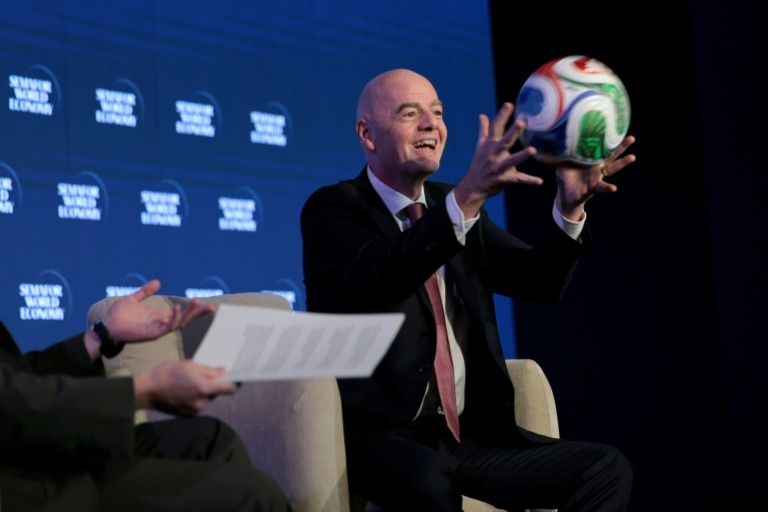
Less than two months before the expanded 48-team 2026 FIFA World Cup kicks off across co-hosts Canada, Mexico and the United States, global football’s governing body is gathering for its 76th annual Congress in Vancouver, where a cascade of thorny political and logistical disputes are set to dominate discussions. Roughly 1,600 delegates from over 200 FIFA member associations have convened for the final major policy meeting ahead of the historic tournament, but the event has already been overshadowed by a high-profile diplomatic dispute involving Iran that has cast new doubt on the country’s participation this summer.
The controversy erupted earlier this week when three senior officials from the Football Federation of the Islamic Republic of Iran (FFIRI), including FFIRI president Mehdi Taj — a former member of Iran’s Islamic Revolutionary Guard Corps (IRGC) — abruptly abandoned their trip to the Congress after landing in Toronto. Iranian state media reported the delegation flew back to Tehran immediately after what they described as insulting treatment from Canadian border agents. For its part, Canadian immigration officials reiterated their longstanding policy that IRGC-linked individuals are inadmissible to Canada, after the country formally designated the IRGC as a terrorist organization in 2024. “While we cannot comment on individual cases due to privacy laws, the government has been clear and consistent: IRGC officials are inadmissible to Canada and have no place in our country,” a Canadian immigration spokesperson said in a statement.
This incident only adds to the already simmering uncertainty surrounding Iran’s World Cup participation. The country’s qualification status has been in question since the outbreak of regional conflict between Iran, Israel and the United States in late February. Last month, Iranian football officials floated a proposal to move Iran’s three scheduled group stage matches from the United States to Mexico to avoid entry issues, but FIFA president Gianni Infantino quickly rejected the request, telling AFP that Iran would compete “where they are supposed to be, according to the draw.” While U.S. Secretary of State Marco Rubio has confirmed that Iranian players will be welcome to enter the country for the tournament, he has also warned that any delegation members with confirmed ties to the IRGC may still be barred from entry.
Beyond the Iran dispute, Infantino himself is entering the Congress facing mounting scrutiny on multiple fronts. The FIFA chief has drawn widespread criticism over skyrocketing ticket prices for the 2026 World Cup and his publicly documented close personal friendship with U.S. President Donald Trump. In a move to appease discontent from participating national teams, FIFA announced earlier this week that it would increase total financial distributions to competing sides to nearly $900 million, a sharp jump from the $725 million initially announced last December. The adjustment came after multiple qualified nations warned they stood to lose money competing in the tournament, due to soaring travel, accommodation and operational costs across the three host countries.
Human rights organizations are also pressing Infantino to address growing concerns over fan and journalist safety amid the Trump administration’s strict immigration policies. Amnesty International’s head of economic and social justice Steve Cockburn called on Infantino to deliver concrete assurances at the Congress, noting that “FIFA President Gianni Infantino has yet to publicly outline how fans, journalists and local communities will be safe from arbitrary detention, mass deportations and crackdowns on free expression. This FIFA Congress should be the moment he does so, and the global football community must receive more than empty platitudes.”
Infantino is also facing growing pressure from European football federations to scrap the FIFA Peace Prize, a relatively new honor he awarded to Trump during the World Cup draw ceremony in Washington last December. Norwegian Football Association president Lise Klaveness publicly called for the award to be eliminated this week, saying “We don’t think it’s part of FIFA’s mandate to give such a prize.”
Delegates are also expected to address the longstanding international ban on Russian football, imposed after Russia’s full-scale invasion of Ukraine in 2022. Infantino sparked controversy earlier this year when he publicly voiced support for lifting the ban, telling Britain’s Sky News that “This ban has not achieved anything, it has just created more frustration and hatred.” No formal vote on the issue has been scheduled, but the ongoing divide between member associations that support readmission and those that back maintaining the ban is expected to be a key topic of behind-the-scenes negotiations during the four-day gathering.