The biggest name in men’s rugby union delivered yet another iconic chapter of its most storied rivalry on Saturday, as world champion South Africa secured a 43-28 win over New Zealand in the fourth and final Test of their “Rugby’s Greatest Rivalry” series at Baltimore’s M&T Bank Stadium. The result locked in a 3-1 overall series win for the Springboks, whose physical forward power, bench depth and clinical finishing once again outmatched a resolute All Blacks side in front of a record-breaking American crowd.
When the series kicked off last month in Johannesburg, South Africa claimed an opening win, before New Zealand bounced back in the second Test to climb to the top of the global rugby world rankings – a result that stoked expectations the All Blacks could upend the existing hierarchy and level the series on neutral American soil. That narrative aligned with a fast start from New Zealand, which threatened to run away with the match in the opening 10 minutes. Just eight minutes after kickoff, the All Blacks’ signature fluid tiki-taka catch-pass game, executed with the backline holding deep width, outflanked South Africa’s aggressive blitz defense to put hooker Codie Taylor over for the opening try, converting to take an early 7-0 lead.
But the Springboks leaned into their signature strength: dominant close-quarters forward play that yielded points without the high-risk attacking sequences New Zealand used. With their pack winning scrum penalties and dominating collision after collision, center Damian de Allende burrowed over from short range for South Africa’s first try, before scrum-half Morne van den Berg threw a crisp dummy to evade All Blacks defender Sam Darry and score a second. By the 25th minute, the Springboks held a 17-7 advantage, with veteran enforcer Eben Etzebeth landing a bone-rattling tackle on returning fly-half Richie Mo’unga and number eight Jasper Wiese rampaging through open loose play. South Africa had chances to extend their lead further before halftime, but fly-half Sacha Feinberg-Mngomezulu missed an early long-range penalty, a drop goal attempt, and overcooked a kick to the corner that handed momentum back to the All Blacks.
New Zealand capitalized on those mistakes just before the break, grinding through 32 exhausting phases to set up a try for Will Jordan, the country’s all-time leading try scorer, who cut a perfect line off his wing to dive over the line. The conversion cut South Africa’s halftime lead to just four points, leaving the All Blacks on the cusp of squaring the series and taking home their half of the series’ innovate magnet-connected split trophy. That shared trophy, however, would go unneeded: South Africa took control of the match immediately after halftime to put the result out of reach.
Hooker Malcolm Marx rumbled over for a try from the back of a rolling maul just minutes after the restart, and three minutes later, lock Pieter-Steph du Toit barged over the line after a sharp blindside break from van denberg, who turned in a man-of-the-match performance. Ethan Blackadder crossed for an All Blacks try in the final quarter to cut the Springbok lead to eight points, but fatigue from the high intensity of the match and a grueling multi-game tour opened up space on the pitch for South Africa to press their advantage. After a Damian McKenzie break in the opposite direction created chaotic open space, winger Kurt-Lee Arendse sliced through to score, and four minutes later flanker Cameron Hanekom picked up a loose ball to touch down the try that sealed the victory. A late try from All Blacks replacement Beauden Barrett did nothing more than add a final footnote to the scoreline.
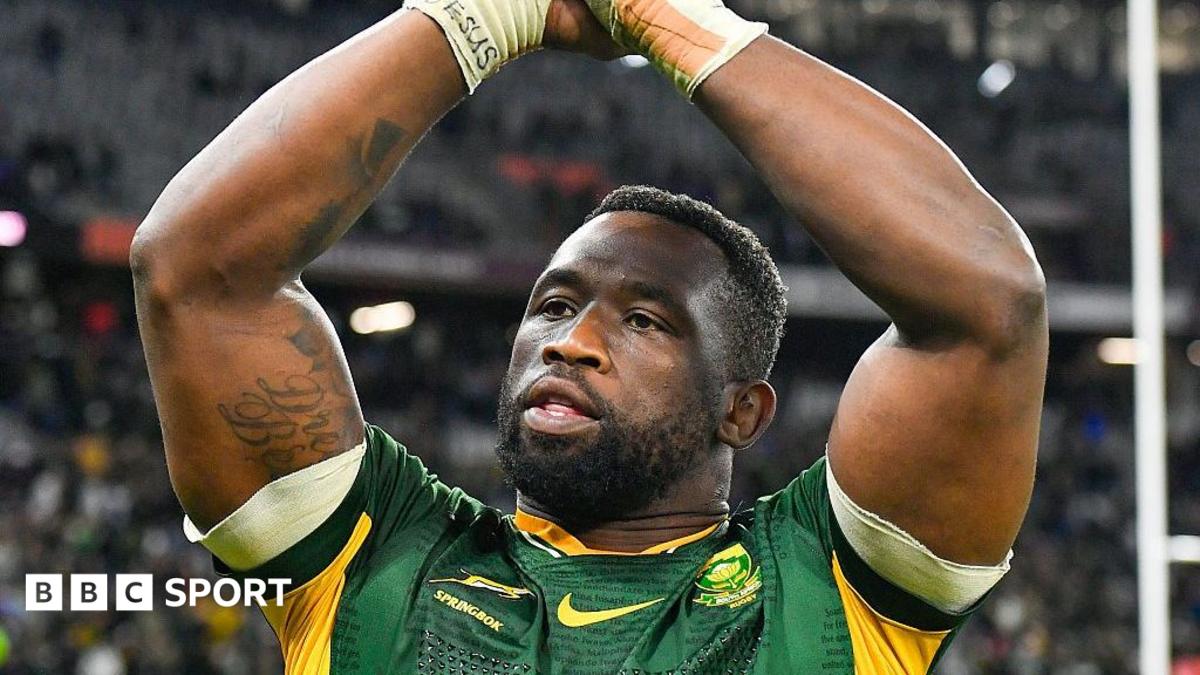
The match drew a near-capacity crowd of 68,173, the largest audience ever to attend a rugby union match in United States history, marking a successful landmark outing for the sport in the growing North American market. Beyond the commercial win for rugby, the four-match series also served as a critical pressure test for both sides ahead of the 2027 Rugby World Cup – a tournament the two nations have collectively won the last five editions of, making their form going into the next cycle closely watched by rugby fans around the world. Two-time World Cup winning captain Siya Kolisi, who led South Africa to victories in 2019 and 2023, featured in the starting lineup for the Springboks, as the side proved their depth and consistency once again, delivering on director of rugby Rassie Erasmus’ pre-series prediction of a Springbok series win.