分类: sports

  • Guardiola quit ‘100 times’ before leaving, says Man City chairman

    Guardiola quit ‘100 times’ before leaving, says Man City chairman

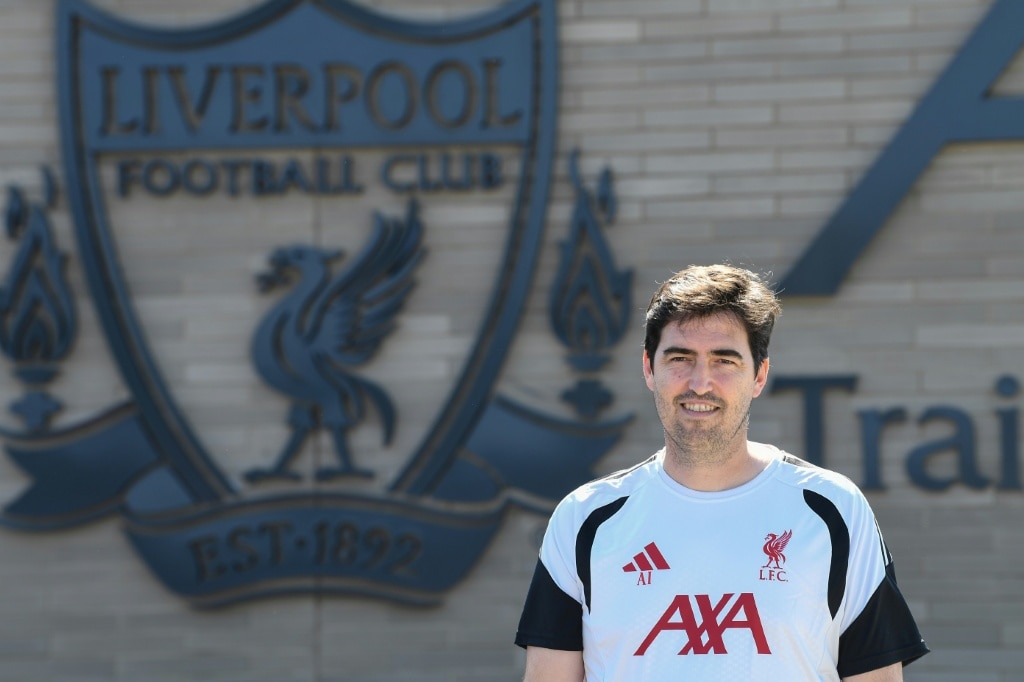
    In a revealing new interview with Manchester City’s official media channels, club chairman Khaldoon Al Mubarak has pulled back the curtain on Pep Guardiola’s decade-long tenure, disclosing that the legendary manager considered stepping down nearly 100 times during his spell at the Etihad Stadium before confirming his departure at the end of the 2024-25 season.

    Guardiola leaves the club this summer after a historic 10-year reign that cemented his status as one of the greatest managers in modern football, amassing 20 major trophies including six Premier League titles, one Champions League crown, and a domestic FA Cup and League Cup double in his final campaign at the helm. The 55-year-old Spaniard formally stepped down after acknowledging he no longer held the same level of energy required to push the club to new heights.

    While Guardiola’s trophy haul speaks to unparalleled success at Manchester City, Khaldoon opened up about the emotional toll that elite top-flight management takes, noting that the passionate Spaniard regularly raised the idea of resigning during the inevitable low points of his decade in charge. “Inevitably over these last 10 years we’ve had a lot of ups and some downs, and in the downs, he must have quit 100 times over these 10 years, just so you know, just for the record,” the chairman shared on Thursday.

    Khaldoon drew a parallel to the classic fable of The Boy Who Cried Wolf, explaining that Guardiola’s frequent resignation talks were rarely a serious intention to leave, and required a steady hand from the club’s leadership to navigate. “In the case of Pep, when he says ‘I quit’, it doesn’t mean he’s quitting. You don’t take it that seriously – you have to manage him,” he said. “Whenever he quits or whenever he thinks it’s time, I will always convince him to come back, until the time where I know it’s actually the real time – and we reached that. I knew it and that’s why I didn’t fight it.”

    The announcement of Guardiola’s exit came after back-to-back seasons without a Premier League title, with City finishing seven points adrift of 2024-25 champions Arsenal. This run of form has sparked widespread speculation that the club’s dominant era may be coming to an end, but Khaldoon pushed back firmly against those claims, asserting that the club is still far from its peak. “We are far from peaked. We are used to – because it’s in our DNA – winning. This is a club that is designed, built to win,” he said. “Obviously with the additions we’re going to make this summer, I am very confident. I think next year we’re going to come back very strong.”

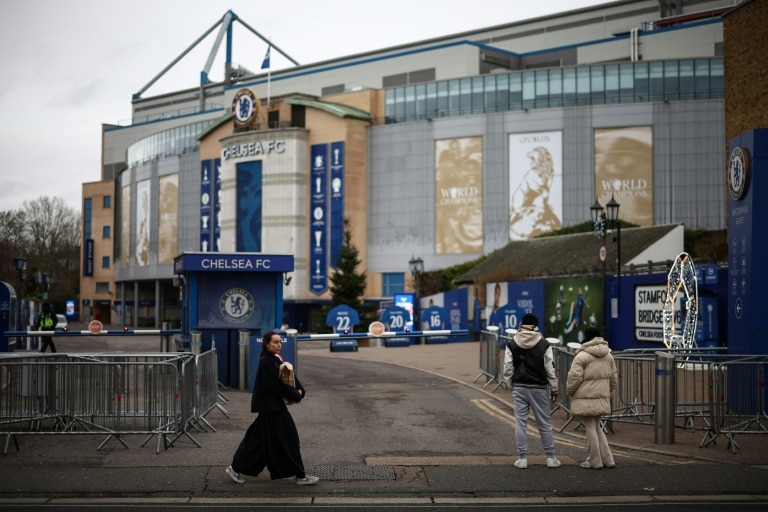
    As the club prepares to enter a new era, it is widely expected that former Chelsea manager and one-time Guardiola assistant Enzo Maresca will be named as the new head coach in the coming days. Maresca boasts an impressive resume, having lifted the UEFA Conference League and Club World Cup during his time at Chelsea, and gained first-hand experience of City’s playing philosophy during the 2022-23 season working alongside Guardiola.

    When questioned about the club’s succession process, Khaldoon emphasized that the hiring process had been thorough and methodical, with full alignment on the chosen candidate. “What I can say at the moment is we’ve gone through a very thoughtful and structured process and the team is convinced, I am convinced, that we will bring in the right manager for this club,” he said. “Just be patient with us. Very soon we’ll announce it and you will be very comfortable that we have selected and brought in the best manager possible.”

  • Argentina seeks a glorious end to the Messi era with another World Cup title

    Argentina seeks a glorious end to the Messi era with another World Cup title

    BUENOS AIRES, May 30 (AP) – For Argentina, the last time the United States welcomed the world’s biggest soccer tournament carried a bitter legacy that still resonates three decades later. In 1994, the country’s beloved icon Diego Maradona was sent home mid-tournament after testing positive for banned substances, never to step onto a World Cup pitch again. Argentina bowed out in the round of 16, closing a chapter the South American soccer powerhouse has never forgotten. Thirty-two years on, the 2026 World Cup – co-hosted by the U.S., Mexico and Canada – brings a new, redemptive chapter, centered on Lionel Messi, Maradona’s widely recognized heir, who is widely expected to wrap up his legendary international career when the final whistle blows on this tournament.

    Turning 39 this month, Messi is set to make his record sixth appearance at the World Cup, leading the defending champions in their quest for something no men’s national team has achieved in more than six decades: back-to-back World Cup titles. Only Brazil, which lifted the trophy in 1958 and 1962, has held the honor. If Argentina can retain the crown they won in Qatar 2022, the achievement would cement the widespread claim that Messi is the greatest men’s soccer player to ever step onto the pitch.

    Messi, who has spent more than 20 years playing at the top club level for Barcelona, Paris Saint-Germain and most recently Inter Miami, acknowledges his competitive fire has not faded, even as his career enters its final stretch. “I love playing football and I’m going to do it until I can’t anymore,” Messi said in a YouTube interview with Argentine broadcast journalist Joaquín “Pollo” Álvarez. “I’m competitive, I like to win at everything, I don’t even let my kids win at video games sometimes. It’s just my nature and what led me to achieve everything I have.”

    Yet age and a grueling career have left their mark, and fitness concerns have hung over the Argentine camp ahead of their opening group stage match. Just a week before the tournament kicks off, Messi is still recovering from a hamstring injury that forced him to be substituted early in Inter Miami’s final pre-tournament fixture on May 24. This week, the Argentina captain completed separate individual training sessions at the team’s Kansas City base camp, where the side has set up their pre-tournament camp.

    Messi is far from the only player dealing with fitness setbacks. “We all would have liked Messi to arrive without any problems, but that’s not the case. Not only him, most of the players aren’t fully recovered yet,” Argentina head coach Lionel Scaloni told DSports, a Latin American sports television network.

    Goalkeeper Emiliano Martínez, whose penalty-saving heroics carried Argentina to victory in two knockout shootouts in Qatar 2022 including the dramatic final against France, suffered a fractured ring finger on his right hand during this year’s Europa League final while playing for Premier League side Aston Villa. Star defender Cristian “Cuti” Romero of Tottenham Hotspur has been recovering from a knee injury picked up in mid-April, while right backs Nahuel Molina and Gonzalo Montiel, plus midfielder Leandro Paredes, are all managing ongoing muscle injuries.

    Despite the widespread fitness concerns, Scaloni has retained 17 of the 26 players who lifted the World Cup trophy in Qatar, betting on their proven championship chemistry over replacing underdone stars with fit newcomers. “Why change them if they don’t deserve that? We’ve always been honest with them. The players who are here today have shown us they want to be here. And secondly, their level hasn’t dropped,” Scaloni explained.

    Argentina, three-time World Cup champions with prior titles in 1978 and 1986, enter the 2026 tournament on a strong recent run: they claimed the Copa América title in 2024 and finished atop the South American CONMEBOL qualifying table. Atletico Madrid forward Julián Álvarez has emerged as a critical offensive weapon for Scaloni, with top European clubs including Barcelona, Arsenal and Paris Saint-Germain all reportedly pursuing his signature for the upcoming club season. Scaloni has also added three first-time World Cup debutants to the squad: midfielder Valentín Barco, who recently signed with Chelsea, young forward Nicolás Paz, a standout with Italy’s Como, and Juan Manuel López, the current top scorer for Brazilian Serie A side Palmeiras.

    The most notable absence from the 2022 championship squad is Ángel Di María, who retired from international soccer in 2024 after being instrumental to Argentina’s Qatar run alongside Messi. “It’s impossible to fill Di María’s shoes. He and Messi are irreplaceable,” Scaloni said.

    For his part, Messi has sought to temper expectations of a fairytale final triumph, acknowledging that other top contenders are in stronger form heading into the group stage. “We have to get excited, like Argentines always do, but we also have to know that there are other favorites ahead of us who are in better form,” he said.

    Already the record holder for most World Cup matches played with 26 appearances, Messi needs just four more goals to overtake Germany legend Miroslav Klose’s all-time record of 16 World Cup goals. While he has not formally announced his international retirement following the tournament, he dropped a clear hint last September, when he described a home qualifying match against Venezuela as his last competitive home fixture for Argentina.

    “It was very emotional, knowing this was my last competitive match here,” he said after playing at Buenos Aires’ Monumental Stadium. “I’ve been through a lot in this stadium — some great moments and some difficult ones — but it’s always special to play in front of our fans.”

    For Scaloni, the prospect of an Argentina side without Messi is a difficult one to process, echoing the sense of loss that followed Maradona’s exit from the global stage. “I like to think he’s going to keep playing because otherwise you get sad, like what happened with Diego (Maradona),” Scaloni told CONMEBOL’s official website. “They are players who have made history in football and thinking that they won’t play anymore doesn’t leave you at peace. I prefer to think about the present.”

    Argentina will kick off their Group J campaign against Algeria on June 16 in Kansas City, before facing Austria on June 22 and closing out group play against Jordan on June 27 in Arlington, Texas, just outside Dallas.

  • Australia bats first and brings on Connolly for third ODI against Pakistan

    Australia bats first and brings on Connolly for third ODI against Pakistan

    LAHORE, Pakistan — A decisive chapter in the Australia-Pakistan one-day international series got underway on Thursday, marked by pre-match tactical calls, an unchanged Pakistan lineup, and a short weather-related delay.

    After leveling the series with a solid 41-run victory over Pakistan at the same Lahore venue this past Tuesday, Australia head into the final do-or-die match with just one adjustment to their winning XI. Young all-rounder Cooper Connolly has earned a call-up to the starting lineup, replacing leg-spin bowler Tanveer Sangha. Australian captain Josh Inglis won the pre-match coin toss, and opted to send his side in to bat first, setting up a target for Pakistan to chase in the decider.

    Pakistan entered the match with an unchanged 12-player squad for the third consecutive ODI, sticking with the group that claimed a five-wicket win in the opening fixture of the series in Rawalpindi one week earlier. The side’s selection strategy is built around leveraging the Lahore pitch for its four-man spin attack, led by Abrar Ahmed, Arafat Minhas, Shadab Khan, and Salman Ali Agha. Pakistan captain Shaheen Shah Afridi will lead the unit as they aim to close out the series on home soil.

    Just minutes before the scheduled start, a sudden thunderstorm and passing rain shower swept through the venue, pushing back the first delivery by 15 minutes. Play eventually got underway as forecasted after the short interruption.

    Full Starting Lineups:
    Australia: Matthew Short, Alex Carey, Josh Inglis (captain), Matthew Renshaw, Marnus Labuschagne, Cameron Green, Cooper Connolly, Oliver Peake, Nathan Ellis, Matthew Kuhnemann, Adam Zampa.
    Pakistan: Sahibzada Farhan, Maaz Sadaqat, Babar Azam, Ghazi Ghori, Salman Ali Agha, Abdul Samad, Shadab Khan, Arafat Minhas, Shaheen Shah Afridi (captain), Haris Rauf, Abrar Ahmed.

  • Zverev heads up final four in men’s French Open semis

    Zverev heads up final four in men’s French Open semis

    The landscape of the 2025 French Open men’s singles draw has been turned upside down following stunning early exits of the tournament’s top title contenders, leaving Germany’s Alexander Zverev as the undisputed favorite to claim his first career Grand Slam trophy when the semi-finals kick off on Friday. Even as the 29-year-old second seed brushes off questions about favorite status, the weight of expectation sits firmly on his shoulders heading into his clash against 26th seed Jakub Mensik of the Czech Republic. The winner of that match will go on to face either Italy’s Flavio Cobolli or Matteo Arnaldi in Sunday’s Roland Garros final, completing an unexpected final four bracket.

    After world No. 1 Jannik Sinner and 24-time Grand Slam champion Novak Djokovic both departed the tournament far earlier than predicted, Zverev has emerged as the clear pick to end his run as one of tennis’s most high-profile nearly-men. The 2020 Olympic gold medalist has been in imperious form through the first two weeks of the clay-court major, dropping just one set across five matches to secure his place in the final four. His most recent victory, a straight-sets quarter-final win over rising Spanish teenager Rafael Jodar, took less than two and a half hours and served as further proof of his sharpness entering the semi-finals.

    Despite being the highest-ranked, most experienced and most decorated player remaining in the draw, Zverev says he is blocking out all noise about a potential first title and focusing solely on his upcoming opponent. “As I said before, I don’t particularly care about being the favourite,” Zverev told reporters after his quarter-final win. “I focus on next match, and I focus on the opponent as they cross the net, and that’s the only thing that I can control.”

    Standing between Zverev and a fourth Grand Slam final is 20-year-old Mensik, who is into the final four of a major for the first time in his young career. The 196cm serving powerhouse has already notched a career-defining title, upsetting Djokovic to win the 2024 Miami Open, and has fought through a tough draw to reach this stage at Roland Garros. His straight-sets quarter-final victory over Brazilian breakout star Joao Fonseca cemented his status as one of the most exciting young prospects on the ATP Tour, and he is not intimidated by the challenge of facing the tournament favorite. The pair have met once before this season, with Zverev claiming a tight three-set win on the clay of Madrid. “The match with Sascha in Madrid, of course, it was a close one. It was best-of-three,” Mensik noted. “Right now it’s a different situation… I would say bigger match, best-of-five. I’m excited for the challenge.”

    The second semi-final will make Grand Slam history, as it pits two Italian players against each other in the men’s draw for the first time ever. Pre-tournament predictions expected Italy’s top star Sinner to be in this position, but instead it is 10th seed Flavio Cobolli and unseeded Matteo Arnaldi who will contest an all-Italian semi-final for a spot in the final.

    Cobolli, ranked 10th in the world, booked his first ever Grand Slam semi-final spot with a tight victory over Canada’s fourth seed Felix Auger-Aliassime on Court Philippe Chatrier, and described the moment as a once-in-a-lifetime opportunity. “I felt like this is the chance of my life,” Cobolli said after the win. His opponent Arnaldi advanced to the semi-finals without hitting a shot in his quarter-final, as compatriot Matteo Berrettini was forced to withdraw due to injury. Currently ranked 104th in the world, Arnaldi is enjoying his best ever Grand Slam performance after returning from a recent injury layoff, and has spent more time on court than any other semi-finalist this fortnight. Despite the heavy workload, he says he has plenty of energy left for the match. “I have been playing a lot, but at the same time, I’m happy to be on court and to spend time on court, because I missed playing,” Arnaldi said. “I for sure have some energy left for the next matches.”

    The pair share a 1-1 head-to-head record, and their meeting on Friday will be a rematch of the 2024 French Open second round, where Cobolli claimed a four-set win. Cobolli says the historic semi-final is a win for Italian tennis regardless of who comes out on top. “For sure it will be another derby, but I think we have to be happy for Italian tennis,” Cobolli said. “Another Italian, apart from Sinner and Lorenzo (Musetti), are in the final this week. So we have to be happy, and we have to enjoy that match.”

  • Rain stops play at Lord’s with England 24-1 vs New Zealand in the first test

    Rain stops play at Lord’s with England 24-1 vs New Zealand in the first test

    The much-anticipated opening Test match of England’s home series against New Zealand at the iconic Lord’s Cricket Ground got off to a rain-interrupted start on Thursday, with barely any play completed before play was called off for the morning session. Just 45 minutes of game time and 10 full overs were possible before persistent rain forced the officials off the outfield, and an early lunch was declared one hour after play was initially halted.

    The only wicket to fall on the opening morning belonged to England debutant Emilio Gay, who made his first Test appearance just one year after featuring in Twenty20 internationals for Italy. Gay got his Test career off to a promising start: he claimed two driven boundaries off New Zealand fast bowler Kyle Jamieson early in his innings, including a wide full toss he dispatched to the rope, before he fell for eight runs. On 16-1, Gay edged a perfectly pitched delivery that nipped away from him to first slip, ending his knock and extending a worrying trend for the home side.

    When play was paused, England’s remaining batters had the side on 24-1: opening partner Ben Duckett was not out on 12, while fellow young batter Jacob Bethell had compiled four runs. Remarkably, that 24-run total after 10 overs marks England’s lowest opening session score since head coach Brendon McCullum took the reins in 2022, the same year he launched the team’s now-famous aggressive batting philosophy dubbed ‘Bazball’.

    Gay’s early wicket also extended another unwelcome pattern for England: the side has now lost an opening innings wicket within the first 10 overs in every Test since the opening Ashes match in Perth last November. That 2023-24 Ashes tour in Australia ended in a disappointing 4-1 series loss for England, a result that came after the side entered the campaign with high hopes of beating an injury-hit Australian squad, and has triggered significant critical backlash in the months since. This Lord’s Test is England’s first international match since that January series defeat down under.

    Over the past week, McCullum has publicly spoken about his side’s plan to refine their aggressive approach and play smarter, more strategic cricket moving forward. However, England’s plans suffered an early setback even before the first ball: captain Ben Stokes, celebrating his 35th birthday on Thursday, lost the coin toss, and New Zealand skipper Tom Latham immediately elected to bowl first. The Black Caps are fielding a rare full-strength fast bowling attack for the opening Test, a boost that Latham was keen to take advantage of on a fresh pitch expected to offer early movement.

    The bowling unit is particularly notable for the return of two key pacemen: Kyle Jamieson and Will O’Rourke, who have both recovered from long-term back injuries to play alongside each other in a Test match for the first time. Gay’s wicket was Jamieson’s first in Test cricket since February 2024, marking a successful return to international action for the tall seamer. Matt Henry leads the New Zealand attack, while Nathan Smith earned his place as the fourth seamer after claiming eight wickets against Ireland in a warm-up fixture in Belfast last week.

  • Heat experts warn Fifa of bottle ban health risk

    Heat experts warn Fifa of bottle ban health risk

    Just seven days before the 2026 Fifa World Cup kicks off on June 11, football’s global governing body has triggered widespread criticism with a sudden, late reversal of its stadium policy that prohibits fans from bringing reusable water bottles into match venues, a move public health and heat experts warn puts spectator well-being at severe risk amid forecast extreme tournament temperatures.

    The original, publicly released stadium code of conduct explicitly permitted empty, transparent reusable plastic bottles of up to one liter to be brought inside venues. In its policy update, Fifa framed the new blanket ban – which also covers personal cups, jars and cans – as a safety measure to reduce the risk of injury from thrown projectiles. “Fifa is committed to protecting the health and safety of all players, referees, fans, volunteers, and staff,” the organization said in a formal statement. It added that spectators would still be able to purchase water inside stadiums, with prices capped to match those charged at other major events held at the same venues, and that existing heat mitigation infrastructure, including misting stations, cooling tents, hydration points and portable fans across stadium grounds, would remain in place to manage high temperatures. To protect player welfare, Fifa has also already added one three-minute hydration break per half to all match schedules.

    But heat and health specialists have roundly condemned the last-minute U-turn, warning it exacerbates already documented gaps in the tournament’s heat safety planning. Back in May, a group of leading scientists issued an open letter warning that existing heat safety measures were inadequate, as forecast temperatures at 14 of the 16 host venues will exceed the threshold for dangerous heat exposure.

    Ollie Jay, a professor of heat and health at the University of Sydney who was one of the signatories of the May open letter, told reporters his greatest concern now centers on spectator rather than athlete welfare. “If you look at the athlete population, all of them are very fit,” Jay explained. “Whereas if you think about the spectators, you’ve got a broad range of different people that will be attending, from young kids to elderly people, people with chronic diseases, people taking different types of medications – all of which results in different levels of heat sensitivity. Your average spectator is probably going to be less resilient to the heat than these highly-conditioned professional athletes.”

    Jay added that many fans will already face accumulating heat exposure during their travel to stadiums, leaving them dehydrated even before they enter the venue. Once inside, packed seating, direct sunlight, high humidity and limited airflow can combine to create dangerous levels of heat stress that the body struggles to regulate. “Unless the cooling controls are really successful, I would imagine this decision [to ban water bottles in stadiums] will clearly heighten the risk of heat-related health incidents,” he warned.

    Dr Theodore Keeping, a researcher at Imperial College London and lead author of a World Weather Attribution study focused on heat safety at the 2026 World Cup, emphasized that accessible hydration is the most basic foundational protection against extreme heat. “Allowing fair and equitable access to hydration is a basic first defence against the extreme heat risks climate change is bringing to this World Cup,” Keeping said.

    Critics from fan groups and climate advocacy organizations have also raised sharp concerns about the policy change. The Free Lions England supporters’ group described the ban as a “strange, late change”, noting that it directly contradicts prior assurances Fifa gave to fan representatives that personal reusable bottles would be permitted. “In all of our discussions, free water availability in stadiums was a key one and we were assured by Fifa that this would be the case and that fans will have the ability to bring their own water bottle,” the group said in a statement posted to X. “Naturally, the immediate thought from supporters is this is just the latest money-grab. For how hot the stadiums will be, many in open air, just let fans bring a bottle if they want. We hope the water fountains in stadiums will still be free, hopefully you aren’t charged in the queue!”

    Andrew Simms, from the UK-based New Weather Institute, argued the ban is the latest in a pattern of reckless decision-making from Fifa that ignores basic duties of care to spectators, amid growing climate risks. “Is Fifa climate-trolling the game it’s meant to protect?” Simms said. “It is already staging the most polluting World Cup ever, sponsored by one of the world’s biggest climate-polluting oil companies, and has heat safety protocols heavily criticised by world leading health experts. Now making it even more difficult for fans to stay safe in a competition vulnerable to global heating seems to be a reckless rejection of Fifa’s duty of care.”

    The policy change arrives amid a broader wave of fan anger over the 2026 tournament, with spectators already complaining about what they describe as “extortionate” ticket prices and inflated public transport fares for traveling to matches. It is not the first time Fifa has implemented a reusable bottle ban at a World Cup – spectators were also barred from bringing personal bottles into venues during the 2022 tournament in Qatar.

  • Uneasy neighbours: Can three World Cup hosts put differences aside for a month?

    Uneasy neighbours: Can three World Cup hosts put differences aside for a month?

    The 2026 FIFA World Cup, the first men’s edition of the global tournament to be co-hosted across three separate nations, faces an unprecedented set of political and logistical challenges, as simmering tensions between the United States, Canada, and Mexico threaten to overshadow the historic continental sporting event. When the three national leaders joined FIFA President Gianni Infantino for the official tournament draw in Washington D.C. last December, the gathering was marked by friendly photo opportunities and public displays of unity. But behind the polished optics, long-running frictions over trade, immigration, security, and geopolitical strategy have created a fragile foundation for the 39-day cross-border competition, which will spread across 16 host cities spanning the entire North American continent.

  • Man City consider legal action after Haaland claim

    Man City consider legal action after Haaland claim

    As Real Madrid prepares to hold its first contested presidential election in two decades this Sunday, a bold pledge from an underdog candidate to pry two star players from English champions Manchester City has sparked a major cross-club controversy, putting transfer politics at the center of the club’s leadership race.

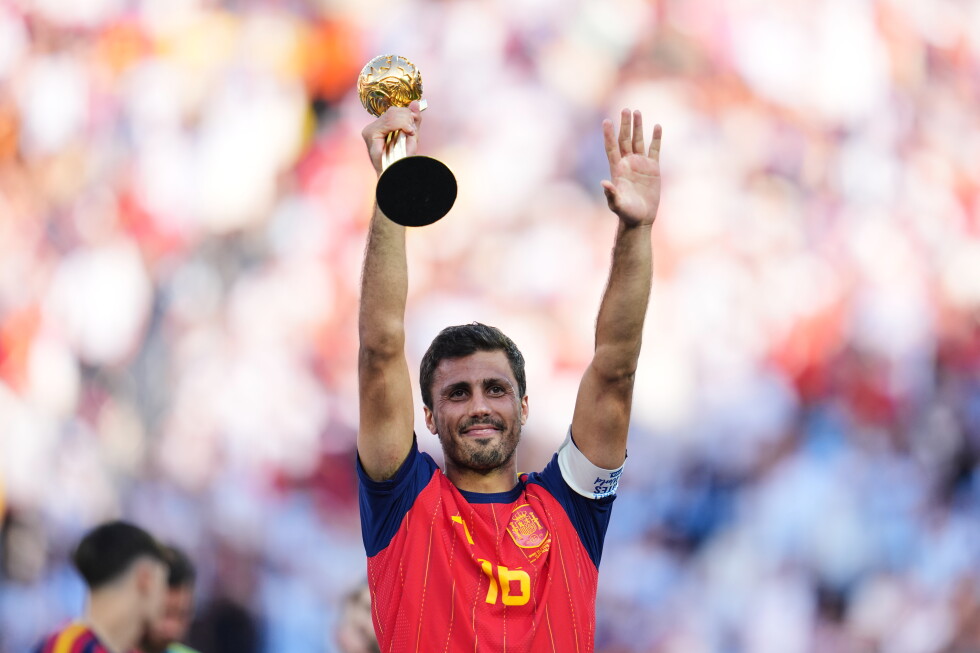
    Enrique Riquelme, a 37-year-old renewable energy tycoon who is challenging long-time incumbent Florentino Perez for the club’s top job, made headlines during a televised appearance Wednesday when he unveiled a Real Madrid jersey printed with star striker Erling Haaland’s name. Riquelme claimed Haaland, who scored twice against Real Madrid during their three Champions League matches last season, has a release clause in his City contract and wants to move to the Spanish capital, promising “if I become president, he will play for Real Madrid.” He followed that announcement with a second pledge to sign City’s star midfielder Rodri, adding “he is a great player, in a position where Madrid need to strengthen. We have spoken to his agent. We have to respect his club, but if I’m president he will play for Madrid. I will do everything possible.”

    The claims were immediately met with firm denials from all parties connected to Manchester City and Haaland. In a joint statement, Haaland’s father Alfie Inge Haaland and his agent Rafaela Pimenta called the rumors “all very entertaining but not true” and closed by wishing both candidates well in the election. Manchester City followed with an even stronger rebuke, confirming that no such release clause exists and that a transfer is completely out of the question. “The stories which have emerged from Spain regarding the future of Erling Haaland are untrue. There is no chance of this happening and there is no contractual clause to enable it,” the club said in its official statement. The Premier League side also confirmed it is evaluating legal options over the unauthorized use of Haaland’s image in Riquelme’s campaign stunt.

    The controversial transfer pledge comes as Riquelme wages an uphill campaign against Perez, who has led Real Madrid since 2009 and held the presidency for 20 years total without facing any challenger until this year’s vote. Riquelme launched his bid after two back-to-back trophy-less seasons for the La Liga giant, running on an aggressive populist platform that includes major fan perks: he has promised to build a dedicated member’s leisure complex near the club’s training ground with swimming pools, padel courts and a basketball arena, and pledged to cut annual membership fees by up to 50% if the club fails to win the Champions League next season. He has also publicly opposed Perez’s reported plan to hire Jose Mourinho as the next first-team manager, with his campaign hinting that former Liverpool boss Jurgen Klopp is his top target for the role.

    Perez, for his part, has framed his campaign around fixing last season’s underperformance and has dismissed Riquelme’s superstar transfer promises as economically unfeasible and unrealistic. The 79-year-old construction magnate and former city councilor has acknowledged the club’s underwhelming results in the last two seasons, blaming a congested schedule caused by the Club World Cup, which forced the team to skip pre-season preparation, and an unprecedented injury crisis that saw nearly 30 first-team players sidelined in the first half of the campaign. He has already reached pre-agreements to sign two high-profile defenders, Liverpool’s Ibrahima Konate and Inter Milan’s Denzel Dumfries, once he secures re-election, and pledged to end internal squad conflict that disrupted the second half of the most recent season.

    Rodri, the 29-year-old Spanish midfield star whose name has also been dragged into the election campaign, addressed the rumors last month, saying he will finalize his future plans after this summer’s World Cup. “When a player is approaching the final stage of his contract, it’s normal for names to be mentioned,” he said. “I’m very calm, I know exactly where I stand, and I’ll tell you that perhaps if there hadn’t been a World Cup, things might be different now.”

    Founded as a member-owned club, Real Madrid’s presidential election gives nearly 100,000 eligible voting members the chance to shape the future of one of the world’s most valuable sports franchises. Perez called the election early this year to shore up his mandate after growing fan discontent over on-field results at the Santiago Bernabeu, and he remains the heavy favorite to win another term, even as the race has devolved into repeated public attacks between the two camps. During Riquelme’s recent appearance on popular Spanish variety show *El Hormiguero*, Perez’s campaign bought ad time to formally announce Mourinho’s pending appointment and call for voters to back the incumbent.

    Club legends are split along the two campaigns: the majority of former stars, including Karim Benzema, Casemiro and Roberto Carlos, have lined up behind Perez, while former captains Iker Casillas and Fernando Hierro have backed Riquelme’s challenge. Perez first won the Real Madrid presidency in 2000 on a similar promise of signing global superstars, when his pledge to bring Barcelona icon Luis Figo to the club secured his upset victory over incumbent Lorenzo Sanz, launching the iconic ‘Galacticos’ era that saw the club sign Zinedine Zidane, Ronaldo, David Beckham and Michael Owen in consecutive summers. He resigned in 2006 amid poor results, but returned unopposed to the presidency in 2009, holding power ever since until this year’s challenge.

  • Nepali climber alive after six days missing on Everest

    Nepali climber alive after six days missing on Everest

    In an extraordinary story of survival that has stunned the global mountaineering community, a Nepali climbing guide declared lost and presumed dead after six days stranded on Mount Everest has been rescued alive, having crawled nearly the entire distance to Base Camp unaided, officials confirmed to AFP Thursday.

    Fifty-something Dawa Sherpa, a veteran guide widely known by the nickname “Hillary” in honor of legendary Everest pioneer Edmund Hillary, disappeared from the upper slopes of the world’s highest peak amid brutal weather conditions in the early hours of May 30. He was located Thursday morning near Base Camp by personnel from the Sagarmatha Pollution Control Committee (SPCC), a Nepali organization tasked with maintaining climbing routes and removing discarded waste from the mountain.

    “He was found by an SPCC team this morning close to base camp — he was crawling down,” Pemba Sherpa, a representative from 8K Expeditions, the company that coordinated the search and rescue operation, told reporters. A rescue helicopter airlifted the climber directly to Kathmandu, where an AFP on-site team observed him being carried from the aircraft on a stretcher and transferred to HAMS Hospital for treatment.

    Pemba Sherpa added that after consulting with attending physicians, the guide is conscious and only suffering from minor frostbite, with no other life-threatening injuries. His wife, Damu Sherpa, spoke from the hospital Thursday, describing her family’s overwhelming shock and joy at the miracle outcome. “We had given up all hope, we even began traditional death puja prayers for his soul yesterday,” she shared. “Hearing he was alive was more happiness than we ever dared to imagine.”

    The events that led to Dawa Sherpa being stranded began on the evening of May 29, when he guided former British Royal Marine and climber Chris Thrall to a successful summit of the 8,849-meter peak by approximately 5:00 pm. Before Dawa Sherpa went missing, Thrall had posted an Instagram tribute Wednesday mourning what he believed was his guide’s passing, calling him an “absolute gentle giant of a man and a true ‘tiger of the mountains’”.

    Thrall recounted that the pair began their descent from Camp Four, which sits roughly 7,950 meters above sea level just below the oxygen-starved “death zone,” on May 30. As they climbed down, Dawa Sherpa paused to rest, telling Thrall to continue ahead without him — a common occurrence between guides and clients on large expeditions. As Thrall moved down, he encountered a Polish climber in critical condition: the mountaineer had exhausted his supplementary oxygen, already developed frostbite, and was at high risk of deadly hypothermia.

    This season’s summit conditions were unusually harsh, Thrall explained: what is typically a five-day round trip to the summit stretched to 11 days for his team. Faced with an impossible choice, Thrall opted to assist the imperiled Polish climber, sharing his own oxygen supply as the pair descended. The trip that normally takes just two hours to Camp Three took 11 hours due to severe conditions, leaving Thrall unable to return for Dawa Sherpa.

    Search teams launched efforts to locate the missing guide immediately, but harsh weather and the timing of the expedition — one of the final permitted climbs of the spring season, when few other climbers remain on the mountain — left no trace of him until Thursday’s unexpected discovery. Five other climbers, two Indian mountaineers and three Nepali guides, have already lost their lives on Everest during the 2026 spring climbing season. Initial counts from Nepali authorities show that more than 1,000 climbers have summited the peak this season, making it the busiest climbing season in Everest’s history.

  • Knicks lead NBA Finals after late run beats Spurs

    Knicks lead NBA Finals after late run beats Spurs

    The opening clash of the 2026 NBA Finals delivered a dramatic turnaround for the ages, as the New York Knicks erased a 14-point third-quarter deficit to secure a 105-95 road win over the San Antonio Spurs on Wednesday.

    Led by veteran floor general Jalen Brunson, who poured in 13 of his game-high 30 points in the final frame, the Knicks closed out the contest with an unanswered 11-point run over the closing two minutes to pull away from the hosts. The victory marked New York’s 12th consecutive postseason win, tying the record for the second-longest winning streak in NBA playoff history — a mark that was previously set by the 1999 Spurs, the last team to defeat the Knicks in an NBA Finals matchup.

    This comeback is far from an anomaly for the 2023-2024 Knicks: Game 1 marked the fourth time this postseason that the team has rallied from a double-digit halftime deficit to claim victory. In the Eastern Conference Finals opener against the Cleveland Cavaliers, New York even overcame an even larger 22-point hole to kickstart their run to the Finals.

    Karl-Anthony Towns, the 2015 first overall pick who notched a double-double of 18 points and 12 rebounds in Game 1, credited New York’s passionate fanbase and the iconic grit of the city for the team’s repeated ability to fight back from big deficits. “It’s something that’s in the city, you feel that energy in the city. The grit, the grind, the hard work you’ve got to put in to make it in the city. I think we reflect our fans and their lifestyles and what it takes to make it in New York City, when we step on that court with the Knicks jersey,” Towns told reporters postgame.

    For the Spurs, the night was marked by an uncharacteristically off performance from generational rookie star Victor Wembanyama. While Wembanyama led the team in scoring with 21 points, he connected on just 6 of his 21 field goal attempts, struggling to find his rhythm against New York’s aggressive interior defense. The 7-foot-4 phenom remained unshaken by the underwhelming outing, noting his confidence in bouncing back in the next game. “We’ve been down in a series before – never in the Finals – but I’m not kicking myself about anything. I was bad, it’s not more complicated than that. I’m not worried in the slightest,” Wembanyama said.

    The best-of-seven championship series will remain in San Antonio for Game 2 on Friday, before the teams travel to New York to face off at Madison Square Garden for Game 3 on Monday. The Knicks are currently vying for their first NBA championship title in more than five decades, with their last title win coming all the way back in 1973.