The most-watched club football competition on the planet, the English Premier League, is set to kick off its 2026-27 campaign this Friday, bringing with it a wave of blockbuster summer transfers that will reshape the title race and the fortunes of top-flight clubs across the country. With unprecedented transfer fees changing hands and major rebuilding projects underway at some of the league’s biggest names, AFP Sport has highlighted five players whose performances this term are likely to make or break their new teams’ ambitions.
Leading the list of must-watch talents is 24-year-old England midfielder Morgan Rogers, who made the most expensive transfer in British football history when he joined Chelsea from Aston Villa for a staggering £117 million ($158 million). Brought in as the centerpiece of new manager Xabi Alonso’s rebuild of the Blues, who slumped to a disappointing 10th-place finish last season, Rogers carries massive expectations to live up to his record price tag. The midfielder arrives at Stamford Bridge on the back of a career-defining season, where he helped Aston Villa end a 30-year trophy drought by lifting the Europa League. His long-standing friendship with Chelsea star Cole Palmer, forged during their time together in Manchester City’s youth academy, is expected to smooth his transition to West London, but Alonso faces a tactical challenge to integrate two elite attacking midfielders who operate in similar areas of the pitch.
Just days after his £116 million transfer from Nottingham Forest made him the most expensive British player in history, 23-year-old Elliot Anderson saw that record snatched away by Rogers’ move to Chelsea. But Anderson’s challenge is no less daunting: he has been signed by Manchester City to fill the massive void left by the departures of midfield linchpins Rodri and Bernardo Silva. Rodri, Spain’s World Cup-winning holding midfielder, has moved to Barcelona, while Silva joined Real Madrid, leaving new City manager Enzo Maresca without two of the key pieces that delivered multiple domestic and European titles to the Etihad Stadium. Anderson earned his big-money move with his sharp game reading, silky distribution and cool under-pressure performances, which also won him his first senior England caps. Now he must justify the enormous outlay as City look to end a two-year trophy drought and dethrone reigning champions Arsenal.
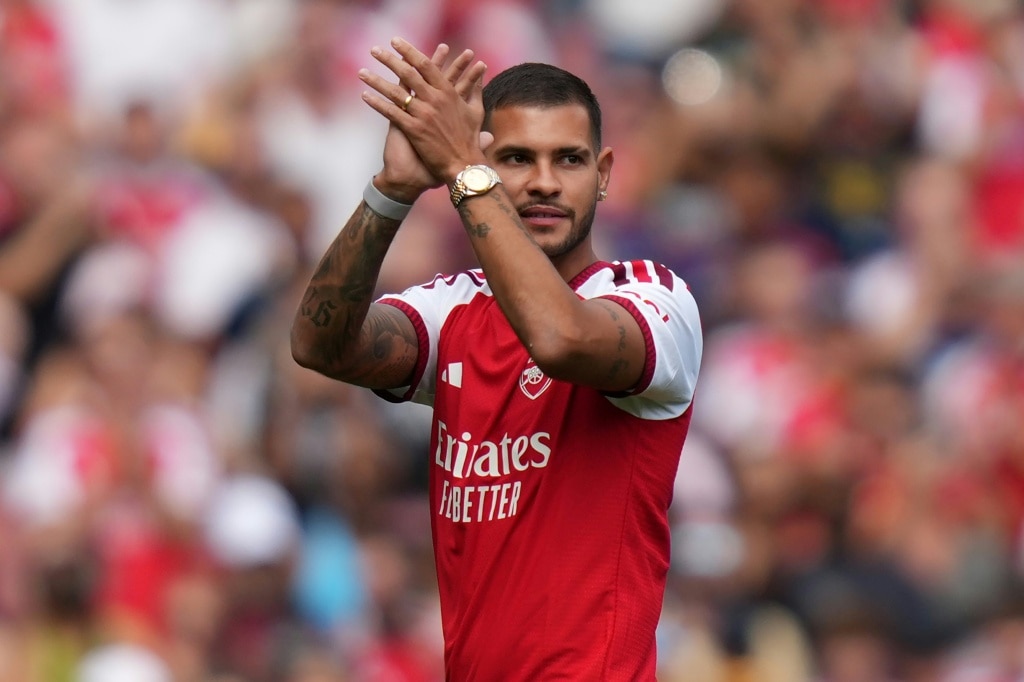
For title holders Arsenal, missing out on Rogers to Chelsea saw them pivot to a top-class alternative: Brazilian midfielder Bruno Guimaraes, signed from Newcastle United for £75 million. Guimaraes, who previously captained Newcastle, steps into an already deep and dangerous Gunners midfield alongside Declan Rice and Martin Odegaard, strengthening Mikel Arteta’s squad as they look to defend their Premier League crown. Arsenal captain Odegaard has praised the 26-year-old’s seamless integration into the group, saying: “Although we had some big fights with him in the past, he has just come in as a real natural part of the team. He can win the ball, he’s a fighter. But he also has so much quality and is calm on the ball.”
Over at North London rivals Tottenham Hotspur, Italian midfielder Sandro Tonali agreed to join the club in just 10 minutes of talks, becoming the Lilywhites’ record signing in the process. The 26-year-old was a key driving force behind Newcastle’s rise up the Premier League table before their disappointing dip in form last season, and he jumped at the chance to join Roberto De Zerbi’s ambitious rebuild of a Tottenham side that narrowly avoided relegation in May. Tonali acknowledged that the size of his transfer fee brings significant pressure, telling reporters: “When you are happy after a 10-minute chat, everything is perfect.”
Rounding out the list of players to watch is 21-year-old French defender Jeremy Jacquet, signed by Liverpool for £60 million from Rennes in a deal agreed back in the winter transfer window. Jacquet was brought in to address growing concerns over Liverpool’s aging, depleted backline, which struggled badly last season. Veteran captain Virgil van Dijk, now 35, no longer looks as unbeatable as he was during Liverpool’s title-winning runs, while key defensive partners Ibrahima Konate and Andrew Robertson have left the club for Real Madrid and Tottenham respectively. Jacquet is set to partner Van Dijk at the heart of the Liverpool defense, and the Dutch captain admits that building their understanding will take time. “It’s pretty clear that you need to form a connection together and that takes a bit of time,” Van Dijk said. “That’s absolutely normal, but hopefully we can get that going as quickly as possible.”