分类: sports

  • Why European backlash over Trump intervention won’t worry Infantino

    Why European backlash over Trump intervention won’t worry Infantino

    The 2026 FIFA World Cup co-hosted by the United States has been overshadowed by an unprecedented disciplinary decision that has sparked allegations of political interference, reignited long-simmering criticism of Gianni Infantino’s 10-year tenure as FIFA president, and thrown the governing body’s commitment to its own rules into question.

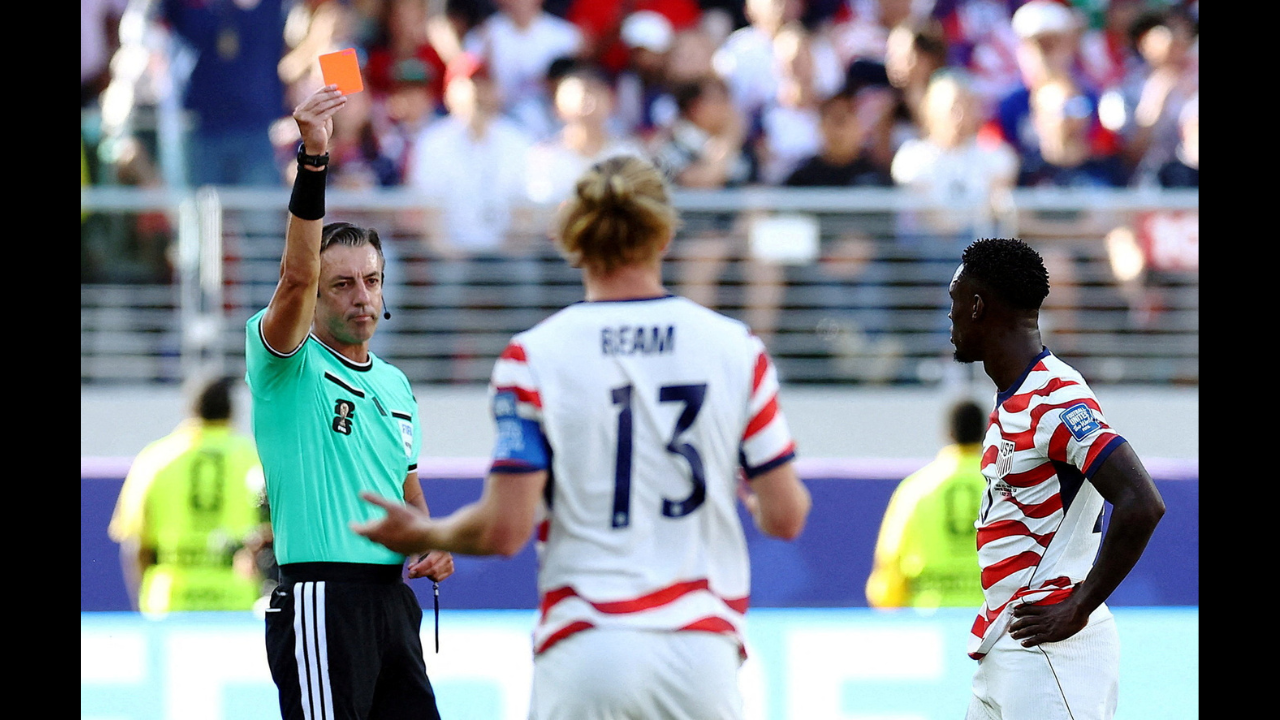
    The controversy centers on Folarin Balogun, the United States men’s national team star who has netted three goals to carry the co-hosts into the Round of 16 against Belgium. After receiving a red card in the team’s final group stage match against Bosnia-Herzegovina, standard FIFA tournament regulations explicitly prohibit appeals against straight red card suspensions, which would have ruled Balogun out of the decisive knockout tie. In a move never before seen in World Cup history, FIFA opted to overturn the suspension, clearing the star striker to play.

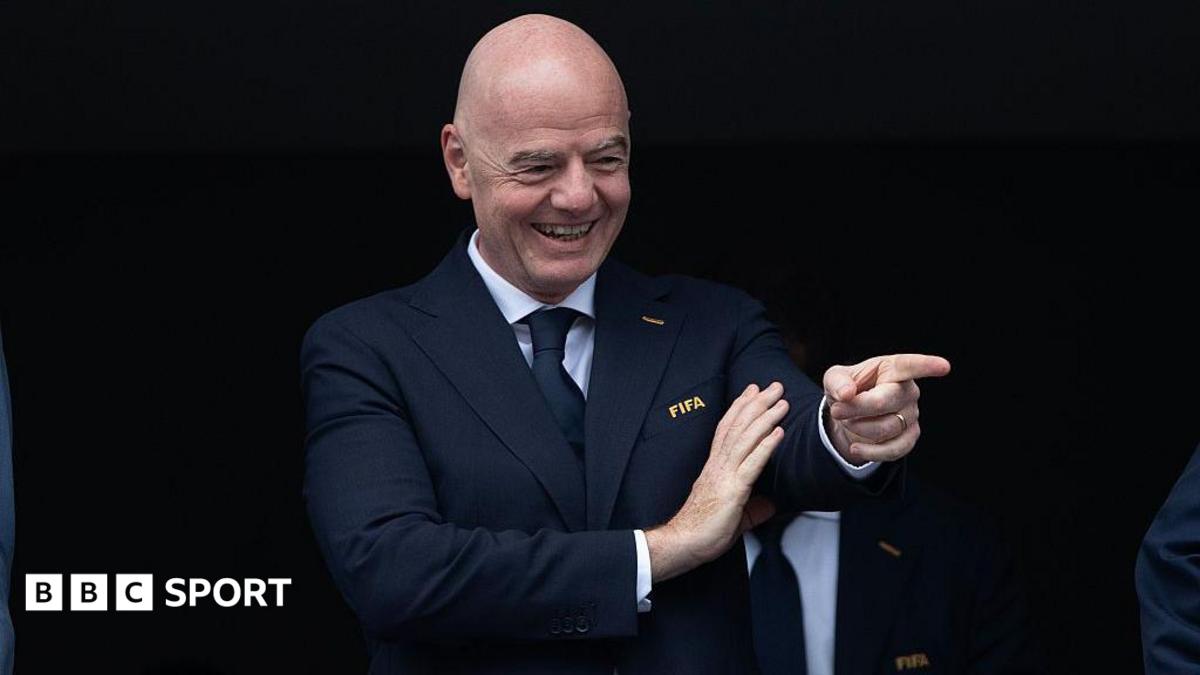
    More than 24 hours after the decision was finalized, FIFA released an 871-word statement that offered no clear explanation for the extraordinary reversal. The missing context was quickly filled by one of the most powerful figures in global politics: U.S. President Donald Trump confirmed publicly that he personally intervened with Infantino to push for a review of the suspension. “I’m the one that got them to do it,” Trump stated, though he pushed back against claims he directly ordered Infantino to scrap the ban, saying he only requested a formal review.

    The revelation of presidential intervention has sent shockwaves through the global football community. In the U.S., public debate has framed the ruling as a correction of an unfair outcome, arguing that Balogun’s ejection from the group stage match already served as sufficient punishment – a view Trump explicitly echoed. But across the sport, critics warn the decision sets a dangerous precedent that undermines the core integrity of football governance. Infantino has repeatedly rejected claims of political meddling, insisting FIFA’s independent disciplinary committee made the final call without outside pressure. Yet the appearance of favoritism is unavoidable: the ruling benefits the tournament co-host, led by a sitting president who has publicly described Infantino as a close personal friend. For many observers, the overturned suspension felt indistinguishable from a political pardon, not a neutral disciplinary ruling.

    Former Liverpool manager Jurgen Klopp summed up the widespread anger: “If Donald Trump and Gianni Infantino really sorted this out between themselves, it is madness; it calls everything into question.” Sepp Blatter, Infantino’s disgraced predecessor who was forced to resign in 2016 amid a sweeping corruption scandal, even took the unusual step of condemning the move, writing on social media: “Football must never become a playground for political power.”

    UEFA, European football’s governing body, has issued an official rebuke calling the decision “unprecedented, incomprehensible and unjustifiable” and accusing FIFA of having “crossed a red line” – the latest flashpoint in a growing rift between the two bodies. Friction between UEFA and Infantino dates back years: in May 2025, UEFA president Aleksander Ceferin led a walkout of European delegates at the FIFA Congress after Infantino arrived more than two hours late following a diplomatic tour of the Middle East alongside Trump. The European body has also openly criticized FIFA’s inflated World Cup ticket prices, contrasting them with the much lower pricing planned for Euro 2028, and recently highlighted its support for Somali referee Omar Artan – who was denied entry to the U.S. for the tournament by American immigration officials – by inviting him to officiate the 2026 UEFA Super Cup. When asked about Artan’s situation earlier this year, Infantino drew widespread condemnation for his dismissive response, telling reporters to “chill, relax.”

    The Balogun controversy is far from an isolated incident during Infantino’s tenure, which has grown increasingly polarizing since he took office in 2016. Critics have pointed to a long string of contentious decisions: the creation of the FIFA Peace Prize, which was awarded to Trump during the World Cup draw, has sparked accusations that Infantino violated FIFA’s rules on political neutrality. Human rights campaign group FairSquare filed an ethics complaint over the award last December, and when no action was taken, 50 Members of the European Parliament submitted a second open letter demanding an investigation – a request that has also gone unanswered. FIFA has been criticized for the controversial 2030 and 2034 World Cup hosting allocation, which handed the 2034 tournament to Saudi Arabia without competitive bidding following a decision to split the 2030 edition across three continents, drawing criticism over the kingdom’s well-documented human rights concerns. Even the expanded Club World Cup, a flagship Infantino initiative, has been condemned by global player union FIFPRO as being created “without dialogue, sensitivity, and respect” for athlete welfare. The recent last-minute fiasco over a planned kick-off time change for the England-Mexico Round of 16 tie, which saw FIFA reverse course after five hours of confusion while pretending the initial change never happened, has further underscored claims of a lack of transparency and organizational competence within FIFA.

    For many, the Balogun decision feels like the latest in a pattern of unaccountable decision-making that has eroded trust in FIFA’s leadership. With Infantino up for re-election next year, many have wondered if this latest controversy could finally threaten his grip on the presidency. But a closer look at the political math within FIFA makes an upset extremely unlikely.

    Infantino’s support base stems from his signature FIFA Forward programme, which directs billions in funding to football development projects in smaller and lower-income member associations, and the expanded 48-team World Cup format that added 16 new qualification spots – 13 of which went to confederations outside of Europe’s wealthy football ecosystem. While the expanded format has drawn criticism, it has given long-underrepresented nations such as Cape Verde, Curacao, Jordan and Uzbekistan their first-ever shots at World Cup qualification, turning Infantino into a popular figure among the vast majority of FIFA’s 211 member associations, each of which holds one vote in presidential elections.

    To win re-election, a candidate needs 106 votes. Already, the 10 member nations of CONMEBOL (South America) have pledged their full support. The 54 members of the Confederation of African Football (CAF) have followed with a unanimous endorsement, and the 47 members of the Asian Football Confederation (AFC) have also backed Infantino. Combined, those pledges add up to 111 votes – enough to secure re-election even before counting support from other confederations.

    UEFA, which represents European football, may be openly opposed to Infantino’s leadership, but European football is financially self-sustaining, while most of the rest of the global game depends on the revenue FIFA generates from tournaments like the World Cup – revenue that funds the development projects that have cemented Infantino’s support. Even with the firestorm over the Balogun decision, Infantino’s path to a fourth term as FIFA president remains unobstructed, leaving critics to question what the controversy means for the future of football governance.
  • A stoic Cristiano Ronaldo exits last World Cup with ‘clear conscience’ after Portugal loses to Spain

    A stoic Cristiano Ronaldo exits last World Cup with ‘clear conscience’ after Portugal loses to Spain

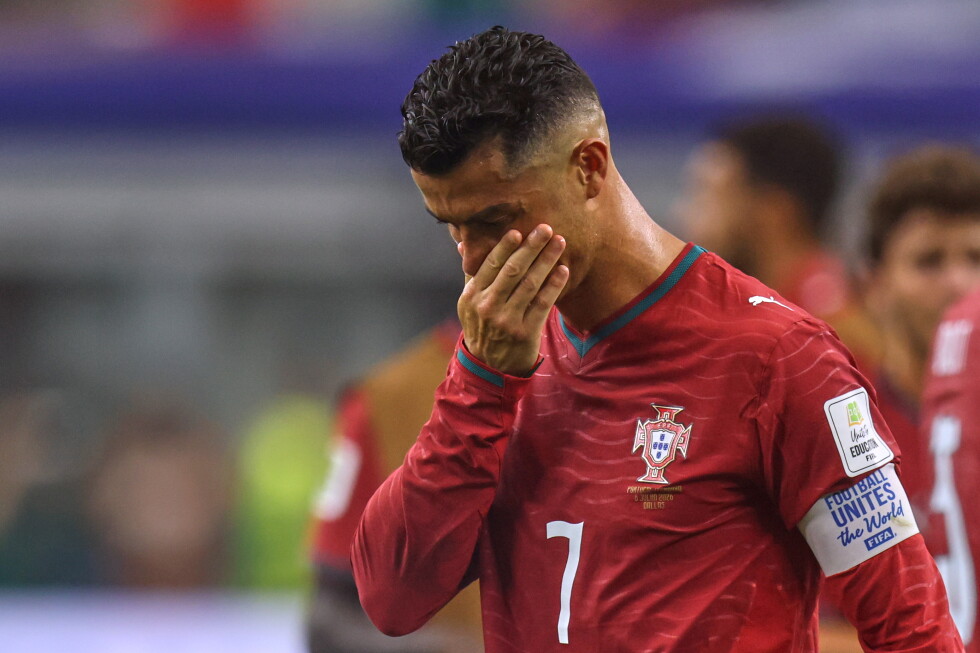
    ARLINGTON, Texas — For soccer legend Cristiano Ronaldo, the final chapter of his unprecedented World Cup journey ended not with celebration, but quiet stoicism Monday. The 41-year-old Portuguese icon walked off the field following his team’s 1-0 round-of-16 defeat to neighboring rival Spain, offering only a brief wave to the cheering crowd and barely showing the emotion he later acknowledged feeling.

    After the final whistle, Ronaldo briefly raised his right hand to shield his eyes, opening up about his disappointment. “Sad — it’s normal after being eliminated like this,” he told reporters. This tournament marked the sixth and final World Cup appearance of Ronaldo’s storied career, a milestone no other men’s player has reached in modern tournament history.

    Reflecting on his decades of contributions to Portugal’s national side, Ronaldo made clear he had no regrets about his effort on the sport’s biggest global stage. “I’ve given everything, I’ve given my best, and I leave with a clear conscience,” he said. “This is soccer, this is life for a soccer player. Sometimes you win and sometimes you lose.”

    Ahead of the knockout clash with Spain, Ronaldo had shared he hoped to extend his tournament run and savor every remaining moment. Even before the match, however, he confirmed what he repeated after the loss: this four-year cycle tournament would be his last. Throughout his World Cup career, the furthest Ronaldo ever led Portugal was a semifinal finish during his tournament debut in 2006, a result that remains the country’s deepest World Cup run to date.

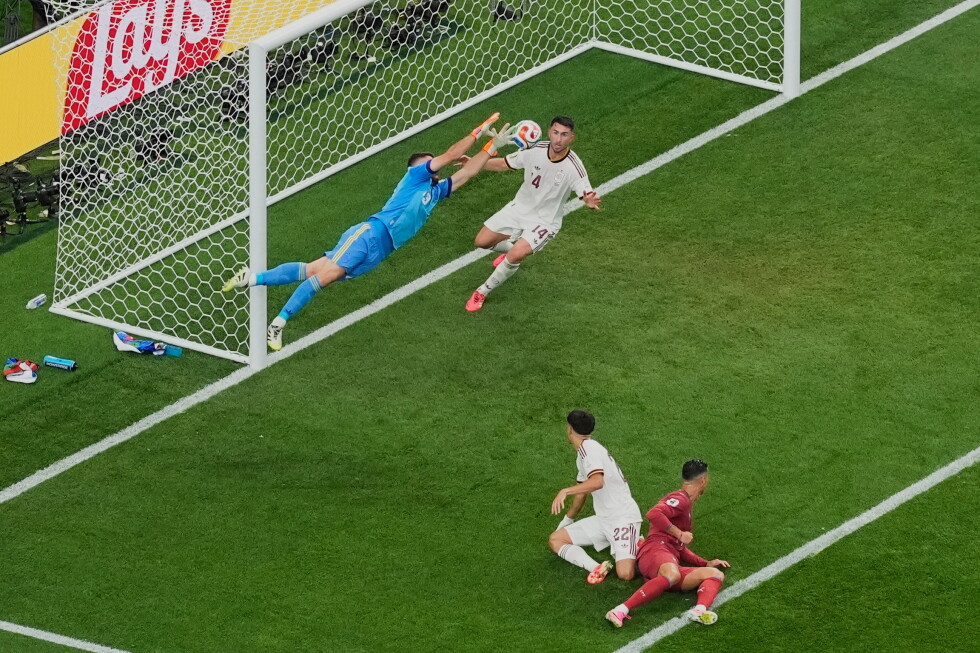
    The match itself held a near-miss that could have shifted the momentum for Portugal. In the first half, Ronaldo had a potential goal stopped by an extraordinary leaping save from Spain’s record-setting goalkeeper Unai Simón. The chance came after teammate João Félix’s header bounced off Simón’s shoulder, leaving Ronaldo to launch a right-footed backward strike. Simón, still airborne, managed to reach back and secure the ball with both hands — one of three shots Ronaldo took, two of which landed on target.

    As for what comes next in his legendary career, Ronaldo said he would not rush into any decisions. “Yes, it was my last World Cup, but everything else I’ll have time to think about, to be with my family, and not make any decision hot-headed and move on with life,” he explained.

    Portugal’s head coach Roberto Martínez was quick to praise Ronaldo’s unparalleled legacy and leadership, framing the forward as a generational talent that deserves global celebration. “He is an example, a role model to follow. This is somebody that we need to celebrate. We’re talking about a football icon,” Martínez said in translated comments. “There aren’t too many Cristiano Ronaldos out there. I think we need to thank him. His dream was to win the World Cup and he did this as an amazing example in the locker room.”

    Under Ronaldo’s leadership, Portugal has claimed its first-ever major international titles: the 2016 UEFA European Championship, followed by UEFA Nations League trophies in 2019 and 2025. He leaves the World Cup holding a string of unprecedented records: he is the only player to score in five consecutive World Cups, and sits as the all-time leading goalscorer in men’s international soccer with 146 career goals across national team matches. He notched three goals in this 2026 tournament, bringing his total career World Cup goals to 11 — a mark that ties him for ninth on the all-time leaderboard.

    Monday’s exit bookended a historic World Cup rivalry with Spain that began eight years ago, when 33-year-old Ronaldo scored a stunning group-stage hat trick to secure a 3-3 draw against the Spanish side, a match still widely regarded as one of the greatest in World Cup history. That performance made him the oldest player to record a World Cup hat trick, a record that stood until 38-year-old Lionel Messi scored three for Argentina in a June 2026 group-stage win over Algeria.

  • Spain sets World Cup record with 6th clean sheet in a row and keeper Simón extends scoreless mark

    Spain sets World Cup record with 6th clean sheet in a row and keeper Simón extends scoreless mark

    ARLINGTON, Texas — The 2026 FIFA World Cup delivered another chapter of historic soccer achievement on Monday, as Spain cemented its place in international tournament record books with a sixth straight clean sheet and a tense 1-0 knockout-stage victory over Portugal. This milestone broke a three-way tie that had stood for decades, with Spain moving ahead of Italy’s 1990 side and Switzerland’s 2006-2010 squad for the longest consecutive run of World Cup matches without conceding a single goal.

    Spain’s defensive streak first began back in the 2022 Qatar World Cup, when the squad held Morocco scoreless through 120 minutes of regulation and extra time in a round-of-16 clash, ending in a goalless draw before Morocco advanced via penalty shootout. When Spain kicked off its 2026 group stage campaign, the team earned an unexpected 0-0 draw against underdog Cape Verde, a result that would kick off a dominant run of defensive form: four straight shutout victories that carried La Roja through to the tournament’s quarterfinals.
    Leading the historic defensive charge is starting goalkeeper Unai Simón, who stretched his personal record of consecutive scoreless minutes to an incredible 609 minutes – a mark that far outpaces the previous 517-minute record set by Italian legend Walter Zenga, who set the original benchmark during Italy’s 1990 home World Cup run with five straight clean sheets. Simón first surpassed Zenga’s record earlier last week, during Spain’s 3-0 knockout-stage opening win over Austria, a match where the Austrian side failed to register a single shot on target.

    Simón’s shutout streak actually traces back to the final group stage match of the 2022 Qatar World Cup, a 2-1 loss to Japan where the keeper’s scoreless run began after conceding the second goal of the match. Entering Monday’s high-stakes clash with Portugal, Simón had only needed to make four total saves across the entire 2026 tournament, but the star keeper was called into action twice in the first half by Portuguese icon Cristiano Ronaldo – both stops preserving Spain’s clean sheet and historic streak.
    The second of those two saves will go down as one of the most memorable highlights of the tournament: a spectacular diving stop where Simón, still airborne after launching himself to intercept the shot, reached back to secure the ball with both hands. The opportunity came after Portuguese defender Jose Sa’s header deflected off the shoulder of the 29-year-old Athletic Bilbao shot-stopper, leaving Ronaldo with an open look at goal that Simón somehow turned away.

    The late 1-0 winning goal from Mikel Merino not only sent Spain through to the World Cup quarterfinals, but also brought an end to Ronaldo’s unprecedented run of six consecutive World Cup appearances spanning from his 2006 debut, closing the book on one of the most legendary international careers in soccer history.

  • Mbappé condemns Paraguayan senator over racist remarks after World Cup match

    Mbappé condemns Paraguayan senator over racist remarks after World Cup match

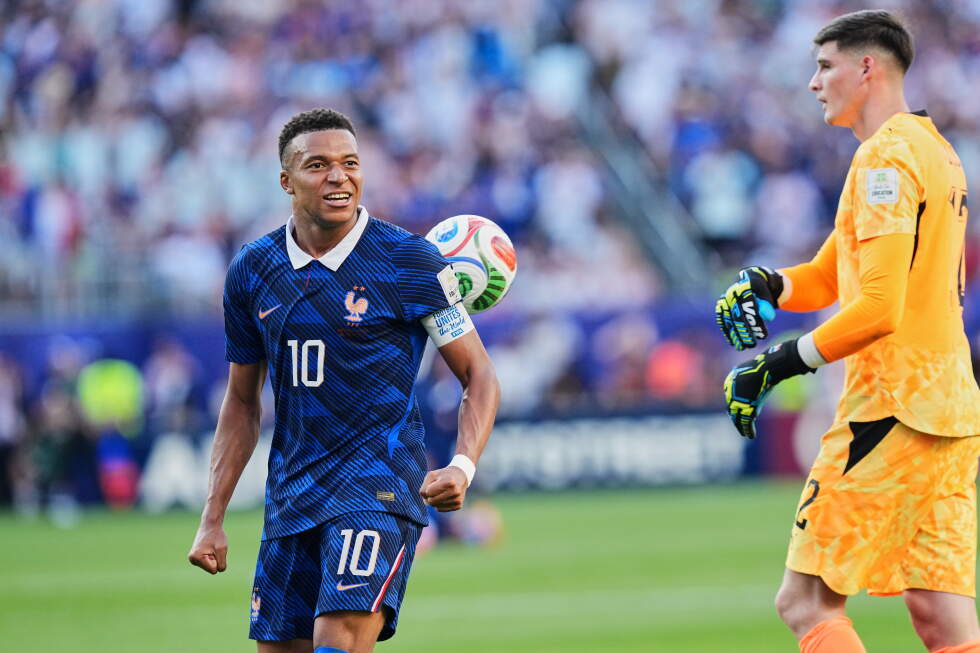
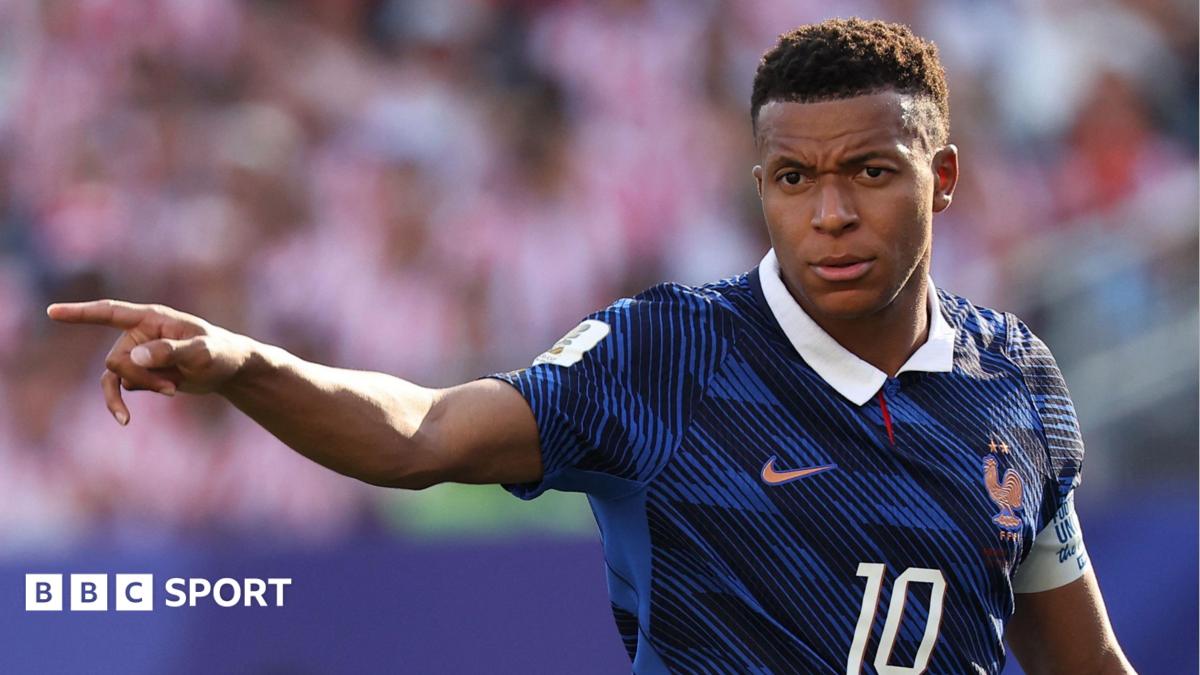
    In the wake of a controversial 2026 World Cup round of 16 match that saw France defeat Paraguay to secure a spot in the quarterfinals, a firestorm of global condemnation has erupted after a sitting Paraguayan senator made virulently racist comments targeting French captain Kylian Mbappé. Mbappé hit back at the lawmaker on Monday, delivering a scathing public rebuke that has drawn widespread international attention.

    Celeste Amarilla, a senator representing Paraguay’s Liberal Radical Party, launched the racist attack on social media platform X shortly after Mbappé converted a match-winning penalty to secure France’s 1-0 win over Paraguay on Saturday. Her comments mocked the 25-year-old’s racial origins, childhood upbringing, educational background and physical appearance, in a post that quickly spread across global social media.

    Mbappé did not stay silent in the face of the attack, posting a blunt response on his own X account that has been shared more than a million times as of Monday evening. He labeled Amarilla a “despicable woman” unfit to hold a seat in Paraguay’s national congress, noting that her reckless, openly bigoted comments had already overshadowed the historic World Cup run that the Paraguayan national team put together in this tournament.

    “Through your recklessness and your brazen racism, the entire world has already forgotten the journey and the historic effort that your players accomplished during this World Cup,” Mbappé wrote.

    Officials from both Paraguay and France have lined up to condemn Amarilla’s remarks, separating her views from official national positions. By mid-Monday, the Paraguayan government released an official statement disavowing the senator’s comments, saying they directly contradict the core values of peaceful coexistence and respect for human dignity that the South American nation officially upholds. The statement emphasized that Amarilla’s words do not represent the views of either the Paraguayan government or the Paraguayan people.

    France’s top governing body for football, the French Football Federation (FFF), also issued a formal denunciation, calling Amarilla’s comments “utterly abhorrent” and “unacceptable.” The organization confirmed it would be referring the incident to French prosecutors for formal review. FFF president Philippe Diallo also extended condemnation to a second incident of anti-French racist rhetoric from former Paraguayan football star José Luis Chilavert, who referred to the entire French national squad as “a squad from Africa” ahead of Saturday’s match. Diallo noted that Chilavert, once a widely respected top goalkeeper, had now “fallen into disgrace” for his bigoted comments.

    Marina Ferrari, France’s sports minister, also publicly expressed outrage over the incident, voicing unwavering support for Mbappé and the French national team. “By targeting Kylian Mbappé, the senator is attacking everything our captain embodies and everything our country stands for: liberty, equality and fraternity,” Ferrari wrote on X.

    France’s assistant national team coach Guy Stéphan also added his voice to the chorus of condemnation on Monday, summing up the widespread reaction in three sharp words: “In three words, it’s indignant, abject, scandalous.”

    As of Monday evening, The Associated Press has reached out to Amarilla via her social media channels to request a response to the widespread condemnation, but has not yet received a reply. France is set to continue its World Cup campaign this Thursday, when it will face Morocco in the tournament’s quarterfinal round.

  • Mikel Merino’s late goal sends Spain to quarterfinals and ends Cristiano Ronaldo’s World Cup career

    Mikel Merino’s late goal sends Spain to quarterfinals and ends Cristiano Ronaldo’s World Cup career

    ARLINGTON, Texas — A last-gasp goal from substitute Mikel Merino in the first minute of second-half stoppage time handed Spain a dramatic 1-0 round-of-16 victory over Iberian rivals Portugal at the 2026 FIFA World Cup on Monday, bringing an end to Cristiano Ronaldo’s legendary career on soccer’s biggest global stage.

    The game-changing sequence unfolded after Merino was brought down by a Portuguese defender, drawing a foul call. As Portugal’s playmaker Bernardo Silva contested the referee’s decision with officials, Merino stayed alert, quickly played the ball back into open play, sprinted toward the penalty area, and slotted a calm finish past Portuguese goalkeeper Diogo Costa after receiving a perfectly weighted pass from Ferran Torres.

    The result pushes Spain through to the World Cup quarterfinals for the first time since the Spanish side lifted their only World Cup trophy in South Africa 2010. La Roja will face off against the winner of the round-of-16 clash between the United States and Belgium this Friday in Inglewood, California, for a spot in the tournament’s final four.

    For 41-year-old Ronaldo, the defeat marks the close of an unprecedented World Cup journey that spanned six consecutive tournaments, dating back to his 2006 debut. The all-time leading men’s international goalscorer with 146 goals across 233 national team appearances entered the match chasing history: he was aiming to guide Portugal to back-to-back World Cup quarterfinals for the first time in the nation’s history.

    Merino’s storybook match is already one of the tournament’s most surprising narratives. The Arsenal midfielder, who played a key role in the Gunners’ first Premier League title win in more than two decades earlier this season, only entered the round-of-16 clash in the 85th minute. A series of injury issues that disrupted his club campaign had left his spot in Spain’s World Cup squad in doubt just weeks before the tournament kicked off.

    Monday’s tightly contested clash between the neighboring Iberian rivals was a stark contrast to their unforgettable 2018 World Cup group stage opener, widely regarded as one of the greatest World Cup matches in modern history. That eight years ago contest ended in a thrilling 3-3 draw, highlighted by Ronaldo’s only World Cup hat-trick at the senior international level.

    This time around, Spain’s suffocating defense and in-form goalkeeper Unai Simón kept Portugal’s star front line quiet for the full 90-plus minutes. Ronaldo, who notched three goals across Portugal’s run to the knockout stage, only mustered one clear goalscoring chance: a deft backheel flick in the 37th minute, after a deflected header from Joao Felix fell into his path. The attempt bounced softly enough for Simón to recover and make the game-saving grab, extending the keeper’s historic World Cup scoreless streak to 609 minutes. With the clean sheet, Spain also set a new tournament record, becoming the first nation ever to record six consecutive shutouts at a single men’s World Cup.

    Portugal threw everything forward in search of an equalizer during eight minutes of second-half stoppage time, with Silva coming closest to leveling the score when his late header drifted just over the crossbar. The outcome adds another chapter to the two nations’ World Cup rivalry: 16 years ago in South Africa, Spain also eliminated Portugal 1-0 in the round of 16, on their way to lifting the trophy. Monday’s result also reverses the outcome of last year’s UEFA Nations League final, a back-and-forth 2-2 draw that Portugal won on penalties, played almost exactly one year before this World Cup knockout clash.

  • World Cup 2026: Fifa ‘crossed a red line’ after decision to overturn ban for US striker’s red card

    World Cup 2026: Fifa ‘crossed a red line’ after decision to overturn ban for US striker’s red card

    The global football community has been thrown into uproar after Fifa’s stunning weekend announcement that U.S. striker Folarin Balogun will be cleared to compete in the United States’ upcoming World Cup match against Belgium, defying the standard automatic one-match suspension that follows a straight red card. Balogun received his sending-off during the U.S.’s previous fixture against Bosnia and Herzegovina, a punishment that under normal tournament rules would automatically bench him for the next round.

    Historically, overturning a straight red card suspension is almost unheard of: Fifa’s official disciplinary code explicitly prohibits appeals for immediate red card dismissals, and only one similar exception has ever been recorded, dating back to 1962 when automatic suspensions were not yet codified in tournament rules. This unprecedented decision comes after days of high-level lobbying from senior U.S. officials, according to reporting from American news outlet Politico. Within minutes of Balogun’s red card being issued, White House and U.S. soccer leadership launched a coordinated push to reverse the call: Andrew Giuliani, executive director of the White House Fifa World Cup Task Force, joined by U.S. Commerce Secretary Howard Lutnick and senior United States Soccer Federation officials, spent four days lobbying Fifa leadership to change the ruling. Multiple reports have also confirmed that former U.S. President Donald Trump made personal phone calls directly to Fifa President Gianni Infantino to press for the suspension to be lifted.

    Fifa has defended its reversal by citing Article 27 of its disciplinary framework, a bylaw that grants the governing body broad authority to suspend any pre-existing disciplinary measures. But the move has drawn fierce condemnation from football governing bodies, current and former leaders, pundits and fans worldwide, who universally accuse Fifa of caving to political pressure and granting preferential treatment to the U.S. tournament host.

    The Belgian Football Association, whose team stands to directly lose out from the decision, issued an official statement saying it was “astonished” by the ruling, noting that it directly contradicts core provisions of the World Cup’s disciplinary code that mandate automatic one-match suspensions for red card recipients. Though Belgium was granted the right to appeal the decision on Monday, it was given only a matter of hours on the same day to submit its challenge, a timeline critics have called intentionally restrictive.

    European football governing body Uefa also released a scathing rebuke of the decision, saying Fifa had “crossed a red line.” In its official statement, Uefa emphasized that football’s integrity depends on consistent, enforceable rules, noting that the automatic one-match suspension for a red card is not a discretionary call: “When the certainty of rules is no longer guaranteed by its guardians, the integrity of the game is at stake and the credibility of a competition is undermined,” the statement read.

    Criticism has also poured in from across the football and political spheres on social media, with many figures highlighting the glaring double standard of Fifa’s decision. Former Fifa President Sepp Blatter weighed in on X, writing, “Red cards are not overturned by political phone calls. They are overturned by rules, evidence and independent bodies… Football must never become a playground for political power.” Analysts and fans have also pointed out that Fifa has previously suspended entire national federations, including Nepal’s, for government interference in football operations — a policy that appears to have been set aside for the U.S. this time.

    Many social media users have also called out perceived favoritism toward the host nation. A Reddit commentator noted that the rarity of red card reversals has long acted as a level playing field for all teams, so making an exception for the U.S. can only be interpreted as preferential treatment. Former professional footballer Yannick Bolasie drew attention to double standards across global confederations, writing, “All I’ll say is if this was AFCON and they let a man play after he got a red card, the nonsense being said would be crazy.”

    Even some American commentators and fans have acknowledged the problematic nature of the decision. Political commentator and former Obama administration spokesperson Tommy Vietor noted, “As a fan, I am obviously overjoyed that Balogun will get to play,” but added that “it will make the rest of the world feel like the tournament was rigged.”

    The controversy has also spilled over into broader political critiques of the Trump administration. One social media commentator highlighted that Trump recently attempted to eliminate birthright citizenship at the U.S. Supreme Court — the very policy that grants Balogun, born in the United States, his American citizenship and eligibility to play for the U.S. national team. Geopolitical analyst Bruno Macaes further connected the decision to broader questions of Fifa’s political ethics, referencing ongoing global criticism of Fifa’s decision to allow Israel’s football association to remain in international competition despite accusations of genocide in Gaza.

    Trump, for his part, praised Fifa’s ruling in a post on his Truth Social platform. British media personality Piers Morgan has called the incident “the biggest story, and potential scandal, of the World Cup.” Middle East Eye has reached out to both the White House and Fifa for additional comment on the reports of political lobbying and the controversial reversal.

  • Alexandra Eala provides a ‘ray of hope’ for the Philippines despite Wimbledon exit

    Alexandra Eala provides a ‘ray of hope’ for the Philippines despite Wimbledon exit

    LONDON — For 21-year-old Filipina tennis star Alexandra Eala, the 2025 Wimbledon Championships ended one round short of her first Grand Slam quarterfinal berth, but her historic run at the sport’s most prestigious grass-court tournament has already cemented her status as a trailblazer for Philippine tennis and a source of national pride.

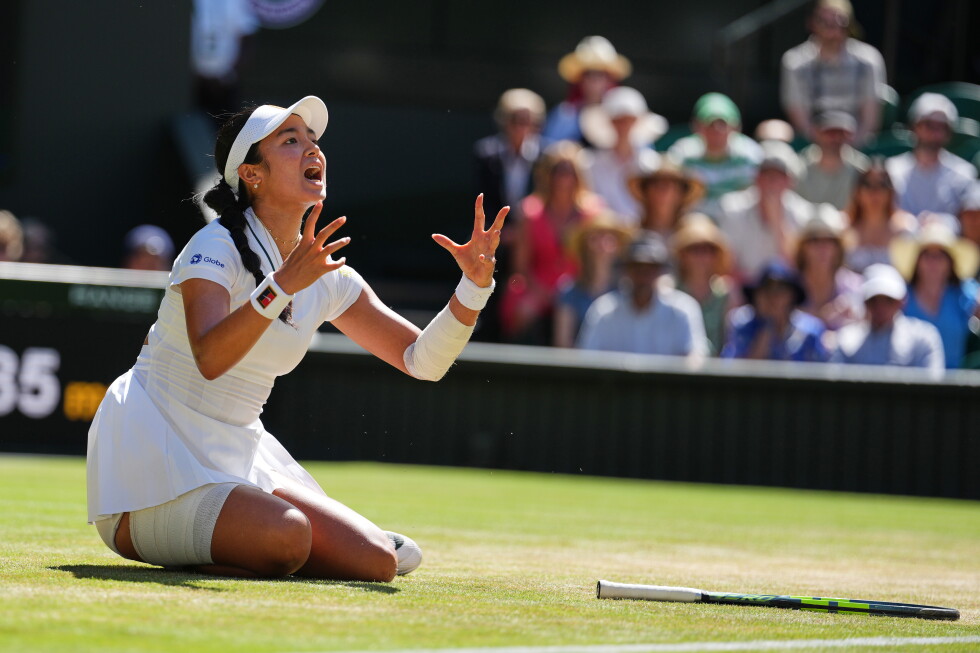
    Eala’s Cinderella run at the All England Club delivered one of the tournament’s biggest upsets earlier in the draw, when she ousted defending champion Iga Swiatek in an electrifying third-round clash. Her run came to a close on Monday on Centre Court, however, as Italy’s Jasmine Paolini outlasted her in a tense three-set battle, 6-4, 4-6, 6-3.

    The result did little to dim the celebration of Eala’s achievement among Filipino fans, who packed watch parties across her home country and turned out in force to cheer her on in London. For the global Filipino community, Eala’s breakthrough transcends the final scoreboard.

    “She’s like a ray of hope for the Philippines,” Roberto Ocampo Jr., a London-based Filipino nurse and tennis fan who attended Eala’s match against Paolini, told reporters. “Especially at her age. She made history. That’s one thing that we can tell to the next generation.”

    As the Women’s Tennis Association confirmed, Eala’s run to the fourth round marks a historic first for Philippine tennis: she is the first player from the country to reach the last 16 of a Grand Slam singles tournament in the Open Era. This milestone comes just one year after Eala suffered a first-round exit in her 2024 Wimbledon debut, highlighting her rapid rise through the professional ranks.

    A left-handed player who trained during her teenage years at Spain’s renowned Rafael Nadal Tennis Academy, Eala has drawn inspiration from other legendary Filipino athletes who paved the way for her success. Early in the tournament, she recalled growing up watching boxing icon Manny Pacquiao, whose bouts turned into national holidays across the Philippines, where communities would gather to watch and employers would give workers time off to cheer him on.

    She also name-checked two other modern Filipino sporting greats as inspiration: weightlifter Hidilyn Diaz, the country’s first Olympic gold medalist, and gymnast Carlos Yulo, who won two Olympic gold medals at the 2024 Paris Games and returned home to a hero’s welcome with pledges of cash, property and other national honors.

    Like many Filipino sports fans, Ocampo hopes Eala’s breakthrough will open new doors for young aspiring tennis players across the Philippines, where access to the sport remains limited for many low-income communities. “This kind of sport (many) are not privileged enough to hold a tennis racket,” Ocampo said. “There’s so many kids back home, they have the talent. They need the opportunity.”

    Off the court, Eala’s star power has grown exponentially during the tournament. She met Catherine, Princess of Wales, and posed for a widely shared photo with the royal patron of the All England Lawn Tennis Club. A viral action shot of Eala diving to reach a wide shot during her upset win over Swiatek has even been memed across social media, with fans editing a superhero cape onto the young star to dub her “Super Eala.” The Philippine Embassy in the United Kingdom has closely tracked her progress throughout the tournament, sharing regular updates and public messages of congratulations to her on official channels.

    Eala herself has framed the historic run as a key step in her long-term career, rather than a final destination. Reflecting on her loss to Paolini, she acknowledged that uncharacteristic issues with her serve held her back on the day, but framed the result as a normal part of professional sport.

    “I understand that’s part of the job. I don’t think I’m going to be playing the best tennis of my life every single day,” Eala said. “But I have days like that. Everyone has days where they don’t play their best tennis.”

    The 21-year-old, who notched her first big WTA breakthrough earlier this year by reaching the semifinals of the 2025 Miami Open, said she leaves Wimbledon proud of her performance and focused on continuing her upward trajectory. “I’m really proud of how I handled things. I just have to kind of move forward and continue with my progress.”

    Eala has long said she hopes to serve as a role model for young kids across the Philippines who dream of competing in professional tennis, and her 2025 Wimbledon run has already turned that goal into reality for a new generation of aspiring athletes.

  • Mbappe condemns racist posts from Paraguay senator

    Mbappe condemns racist posts from Paraguay senator

    In the wake of Paraguay’s last-16 World Cup exit at the hands of France, a firestorm of controversy has erupted over targeted racist remarks against French superstar forward Kylian Mbappe, drawing sharp condemnation from both the player and the French Football Federation (FFF).

    Celeste Amarilla, a senator representing Paraguay’s Liberal Radical Party, took to social platform X to share mocking comments about Mbappe’s ethnic origin and educational background after France secured a narrow victory over the South American side. Mbappe, who scored the winning penalty in the match to punch France’s ticket to the quarter-finals, delivered a blistering public rebuke of the senator’s words.

    Calling Amarilla a despicable figure completely unfit for public office, Mbappe emphasized that the senator does not represent the values of Paraguay itself — a nation whose players fought with honor and passion across the entire 2026 FIFA World Cup tournament. He argued that Amarilla’s reckless, open racism has overshadowed the historic achievements of the Paraguayan squad, turning global attention instead to the bigoted comments of an incompetent politician who has tarnished her country’s global reputation. Mbappe made clear he would not stand by to allow hatred and racism to spread unchallenged on the world stage.

    The FFF has echoed Mbappe’s condemnation, announcing it will move forward with filing criminal charges against Amarilla, describing her remarks as utterly abhorrent and unacceptable. In an official statement, the governing body stressed that such comments are both criminal and morally reprehensible, requiring legal prosecution regardless of jurisdiction. The FFF has formally referred the matter to public prosecutors to initiate legal proceedings, noting that these racist insults target not just Mbappe, but the entire French nation represented by the national team. “These remarks bring shame upon those who make them and those who disseminate them,” the statement added.

    Mbappe’s decisive penalty against Paraguay capped another strong tournament performance for the French forward, who entered the quarter-final stage of the 2026 World Cup tied as the tournament’s leading goal scorer with seven goals, level alongside Argentina’s Lionel Messi and Norway’s Erling Haaland. France was set to face Morocco in their quarter-final fixture in Boston just four days after the knockout win over Paraguay.

    Amarilla’s comments are not an isolated incident, either: ahead of the France-Paraguay tie, former Paraguay goalkeeper Jose Luis Chilavert drew widespread criticism for his own racist comment, claiming the Paraguayan side was facing “a squad from Africa.” That remark also drew a fierce response from FFF president Philippe Diallo, who labeled Chilavert a disgrace to the sport. “I condemn in the strongest possible terms the racist remarks made by Jose Luis Chilavert against the French national team, which undermine the values of respect, fraternity, and diversity in our football,” Diallo said. “If he was once a great goalkeeper, this man has now fallen into disgrace.”

  • Greaves bats West Indies back into 2nd test against Sri Lanka on day 4

    Greaves bats West Indies back into 2nd test against Sri Lanka on day 4

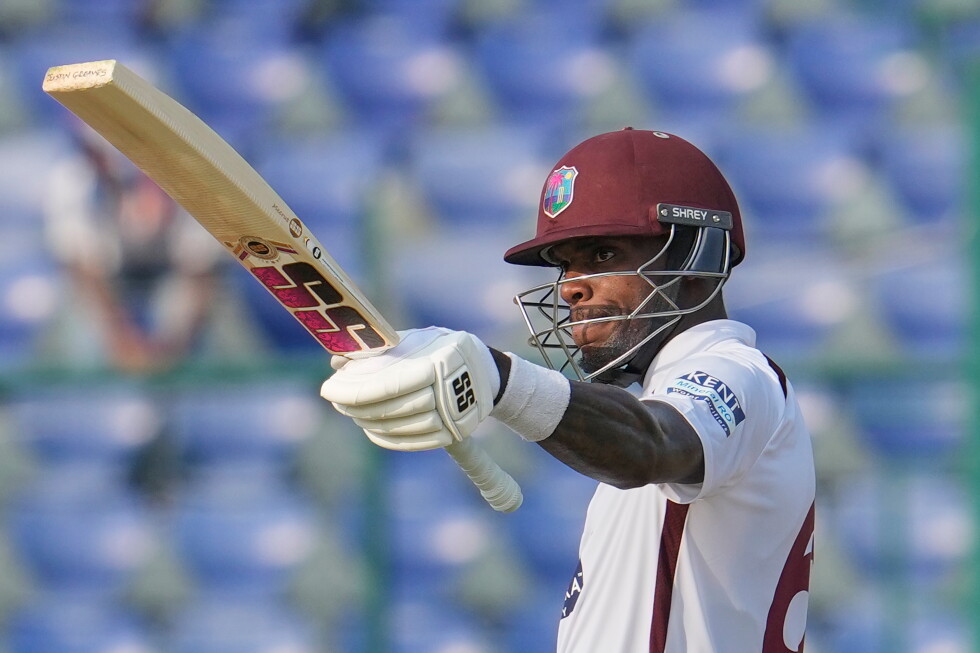
    On a slow, run-friendly pitch at North Sound in Antigua, a dogged, record-building innings from all-rounder Justin Greaves has positioned the West Indies men’s test cricket team on the brink of a milestone: their first test series victory in four years. With one full day of play remaining in the second and final match of the series, the home side holds all the momentum heading into the final session, thanks to Greaves’ 325-ball marathon that yielded 180 runs.

    Resuming on Day 4 at 318-4, with Greaves already sitting on 85 overnight, the West Indies batters set about erasing the sizable first-innings deficit Sri Lanka had built after declaring at 549-9. The defining moment of the day came from a fifth-wicket stand that echoed one of the pair’s prior career-defining performances: Greaves and Shai Hope put together a 242-run partnership, dragging the West Indies from a precarious 144-4 to a comfortable 386-5. This collaboration mirrored the 196-run stand the two put together against New Zealand in December 2024, when Greaves hit an unbeaten 202 and Hope scored 140 to salvage a draw.

    Hope, who missed the first test of the series after picking up a shoulder injury in pre-match training, went on to notch his third century in five test matches, finishing with 112 off 199 balls. His knock included 10 boundaries, and he confidently handled both Sri Lanka’s pace attack and spin spearhead Prabath Jayasuriya, using clever footwork to neutralize the spinner’s threat. He survived a dropped review early in the day, when Sri Lanka’s appeal for a caught behind off Milan Rathnayake was turned down by the on-field umpire, and the touring side opted not to challenge the call. His innings ended in bizarre fashion close to the lunch break: attempting to pad away a length ball from left-arm spinner Sonal Dinusha down the leg side, Hope stepped outside his crease and missed the ball. Though wicketkeeper Kusal Mendis fumbled the catch, the ball ricocheted off his gloves onto the stumps, and Hope was ruled stumped.

    After Hope’s dismissal, Greaves continued to anchor the innings, shepherding the West Indies lower order to add 113 runs for the final five wickets. The right-handed batter eventually fell as the last man out, with the West Indies all out for 499, cutting Sri Lanka’s first-innings lead to just 50 runs. The innings marked Greaves’ third test century, and the second-highest score of his international test career, as he brought up his hundred off 201 balls on Antiguan soil.

    Sri Lanka’s bowlers never let up pressure through the day, relying heavily on disciplined short-pitch bowling to restrict run flow. Pace bowler Asitha Fernando claimed his third career five-wicket test haul, finishing with figures of 5-130 off 40 overs, while Jayasuriya chipped in with 3-131.

    By stumps on Day 4, Sri Lanka had navigated early wickets to reach 92-2 in their second innings. The touring side lost first-innings centurion Lahiru Udara for a four-ball duck and opener Nishan Fernando for 20, before Dinesh Chandimal (40 not out) and Kamindu Mendis (30 not out) put together an unbroken 60-run partnership to close out play. That result pushed Sri Lanka’s overall lead to 142 runs with one day of cricket remaining.

    Through the final 22 overs of Day 4, Sri Lanka scored at a rate of more than four runs per over, a pace they will need to maintain if they hope to set a defendable total and force a victory on a pitch that is expected to deteriorate on the final day. Only 21 wickets have fallen across the first four days, with 1,140 total runs scored, making conditions heavily favorable to batters and the home side, which already holds a 1-0 series lead after winning the opening test by an innings and 217 runs.

    A draw in the second test would be enough for the West Indies to claim their first World Test Championship series win since beating Bangladesh in the Caribbean in 2022, ending a four-year drought without a test series victory.

  • ‘It’s a very sad day’ – Mexican fans react to loss to England

    ‘It’s a very sad day’ – Mexican fans react to loss to England

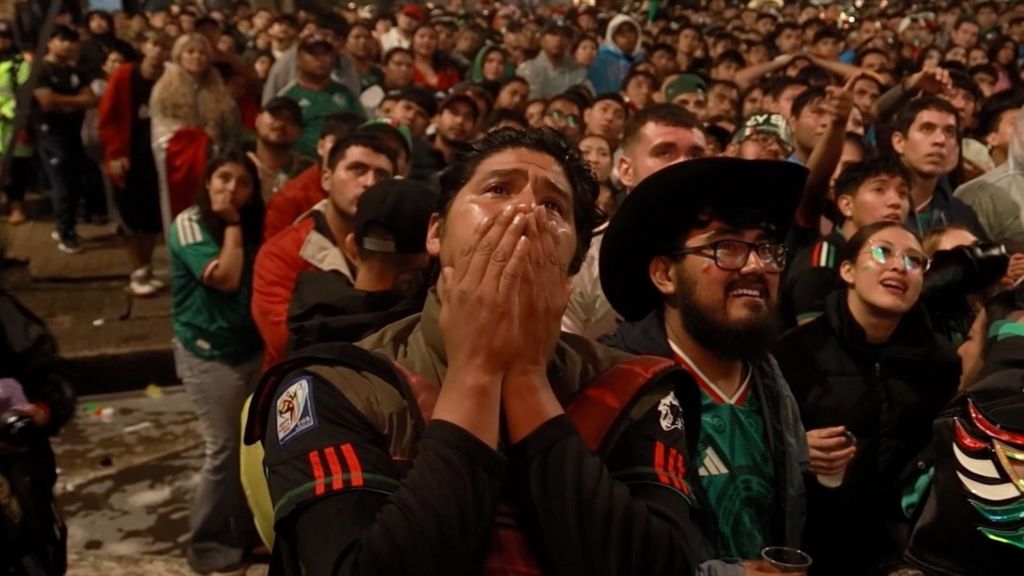
    Mexico’s 202x FIFA World Cup journey came to a devastating close in front of a heartbroken home crowd in Mexico City, as the national side fell to a narrow 3-2 defeat against England. For supporters who filled the stadium with chants, colors, and unwavering hope throughout the tournament, the final whistle marked the end of a dream that had captivated the entire nation.\n\nFrom the opening kickoff, the match delivered relentless drama: both teams traded attacking blows, with Mexico mounting a fierce late comeback that came agonizingly short of forcing extra time. When the referee blew the final whistle, silence fell over sections of the stands before fans began to applaud their team’s effort, even through tears of disappointment.\n\nSpeaking to reporters outside the stadium after the match, multiple supporters described the result as a devastating blow. “It’s a very sad day for all of us,” one long-time fan told journalists, echoing the sentiment shared by thousands across the country. “We poured everything into supporting this team, and we believed we could pull off the win today. It’s hard to accept that our run is over.”\n\nDespite the heartbreak, many fans acknowledged the pride they felt in the national team’s performance throughout the tournament, highlighting the fighting spirit the squad showed until the final second of the match. Street gatherings that had been planned for a potential victory fizzled into quiet conversations, as fans processed the loss and looked ahead to the next edition of international football’s biggest competition.