分类: society

  • Thailand PM visits aftermath of deadly Bangkok bar fire

    Thailand PM visits aftermath of deadly Bangkok bar fire

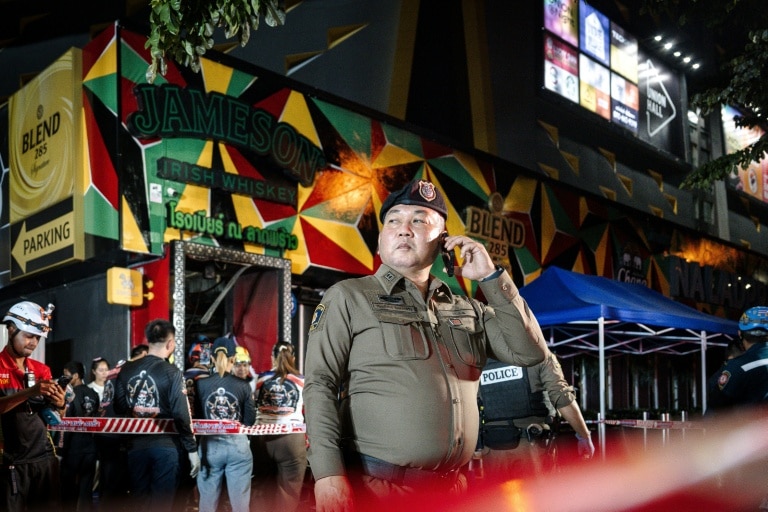
    A devastating fire that tore through a popular pub in central Thailand’s capital Bangkok in the early hours of Monday has left the nation in shock, prompting the country’s top leader to travel directly to the scene to assess the destruction and meet with first responders. Local time just after midnight, witnesses and emergency crews reported the sudden blaze breaking out at the venue, which was crowded with late-night patrons when the fire ignited.

    Captured camera footage from the area in the hours after the fire was contained paints a grim picture of the aftermath: blackened exterior walls, shattered windows, and a gutted interior that stands as a reminder of the rapid spread of the blaze that emergency workers battled to bring under control. As rescue teams continue to comb through the wreckage to confirm casualty numbers and investigate the cause of the fire, Thailand’s Prime Minister did not delay in visiting the site, where he received briefings from local officials about the response effort and the next steps for the investigation.

    The incident has already drawn widespread attention across the country, raising new questions about fire safety protocols for entertainment venues in densely populated urban areas of Thailand. Local law enforcement and fire safety agencies have launched a formal probe to determine what sparked the fire, whether it originated from an electrical fault, a cooking accident, or another source, and whether the venue failed to meet mandatory safety standards that could have prevented the high death toll.

  • Massive fire in Bangkok bar kills at least 27

    Massive fire in Bangkok bar kills at least 27

    A devastating fast-spreading fire that tore through a popular bar-restaurant on the outskirts of Bangkok, Thailand, late Sunday has left at least 27 people dead and dozens more injured, senior Thai officials have confirmed. The blaze, which erupted shortly before 10 p.m. local time, triggered chaotic scenes as panicked patrons rushed for exits, with eyewitness footage verified by Agence France-Presse (AFP) showing flames pouring from the venue’s entrance and fleeing guests, some with their clothing already alight.

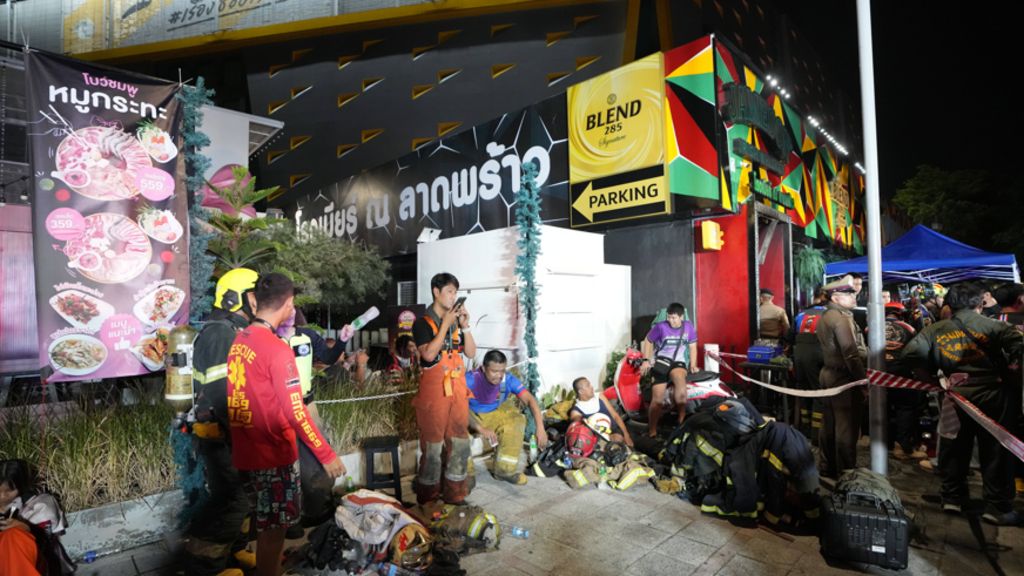
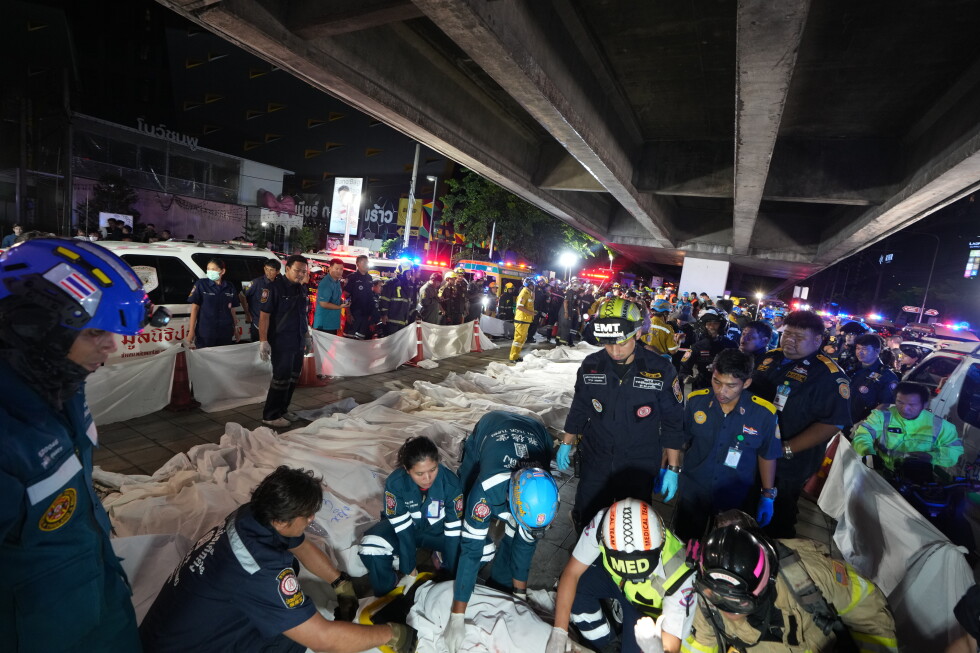
    By early Monday morning, when emergency responders brought the fire under control, first responders and AFP correspondents on scene counted 27 black body bags lined up outside the Rong Beer Na Lat Phrao venue, while more than 130 emergency personnel worked to clear the site and assist survivors. In a media briefing shortly after the blaze, Bangkok Governor Chadchart Sittipunt explained that the fire spread rapidly to the building’s ceiling, and toxic smoke inhalation is believed to be the leading cause of death for most victims. As of Monday, 63 injured people remain hospitalized, 22 of whom are in critical condition, and official investigations into the cause and any safety failures have been launched.

    Chadchart added that multiple victims were found clustered near the venue’s secondary fire exit, leading investigators to suspect that exit was blocked by obstructions that prevented trapped guests from escaping. For many trapped inside, the panic of the rapid spread only worsened the outcome, Thai Prime Minister Anutin Charnvirakul told reporters during his early Monday visit to the disaster site.

    “Most of the victims ran to the back, to toilets with no exit. It could be because of panic because there was fire and smoke in the restaurant,” the prime minister said, confirming the 27-death toll that has been verified by both national and local Thai police. According to accounts from musicians performing at the venue that night, the incident began when smoke started billowing from a faulty circuit breaker near the stage, followed by a total power cut and a small explosion.

    One eyewitness, Laotian tourist Kan Kutirat, who was drinking alone at the venue when the fire broke out, told AFP he noticed smoke near the stage before chaos erupted. “I heard loud screaming from a lot of people inside — chaos happened,” he said. He managed to escape the building and helped carry an injured woman out to safety, but shared his grief in a public Facebook post after the incident: “I could only get one person out. I tried my best. I’m sorry.” Kan added that the traumatic experience has left haunting images that he cannot shake: “I never experienced anything like this before. The images are still stuck in my mind.”

    Hours after the fire was contained, an AFP tour of the damaged venue showed beer bottles and stools still arranged at tables, now covered in a layer of white ash, with all of the bar’s windows blown out by the force of the early explosion. The acrid smell of burnt plastic lingered across the cordoned-off site, where local residents and friends of those missing gathered behind police tape, many still in their nightwear, waiting for updates.

    The tragedy has once again drawn attention to longstanding concerns over lax enforcement of health and safety regulations at entertainment venues across Thailand. This is not the first fatal nightclub fire to hit the country in recent decades: in 2009, a blaze at Bangkok’s Santika Club during a New Year’s Eve celebration killed 67 people and injured more than 200, and a 2022 fire at the Mountain B nightclub in eastern Chonburi province claimed 25 lives.

  • Several people killed in Chile after car driven by navy officer crashes into an open-air market

    Several people killed in Chile after car driven by navy officer crashes into an open-air market

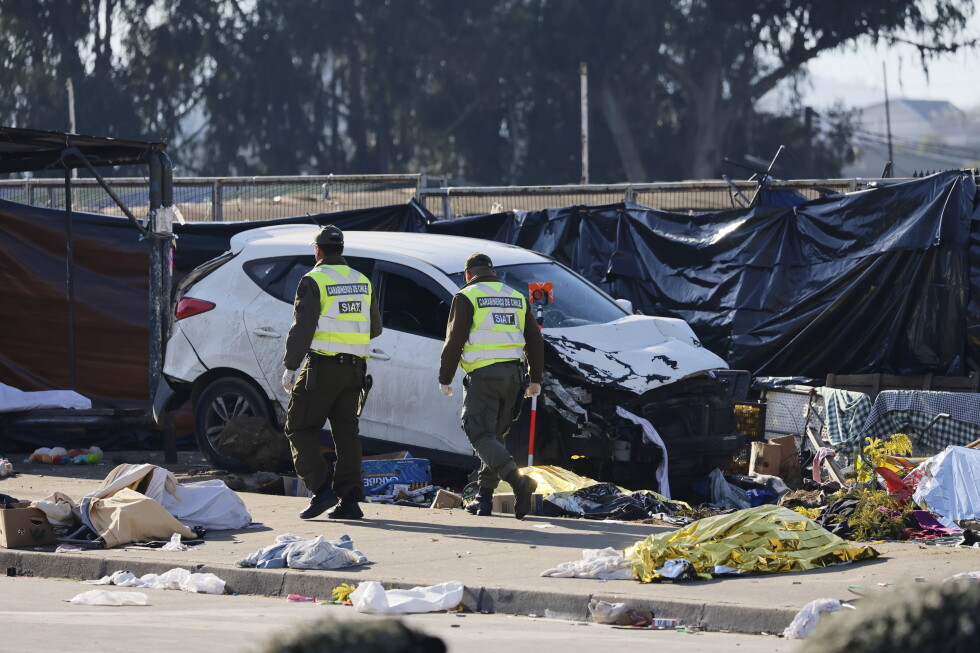
    On a crowded Sunday in the popular Chilean coastal resort city of Vina del Mar, a devastating traffic incident left the nation in mourning: an off-duty Chilean Navy member driving a private vehicle plowed into the city’s iconic Caupolican open-air market, leaving multiple people dead and dozens more injured. The Chilean Navy confirmed the crash in an official statement shortly after the incident unfolded, confirming the driver’s affiliation with the service.

    Security camera footage shared widely across social media captured the harrowing moment the vehicle crashed through crowded market stalls, while subsequent clips showed onlookers chasing and shouting at the driver as authorities transported him to a nearby police vehicle for processing. The Navy’s initial statement confirmed the crash caused multiple fatalities and a range of injuries among those affected, and said the branch was fully cooperating with local law enforcement and government investigators to unpack the full sequence of events leading to the tragedy. While official Navy communications did not release an exact fatality count early on, local Chilean media outlets have reported at least six people were killed in the incident.

    Medical officials at Vina del Mar’s Gustavo Fricke Hospital confirmed that five injured people — including two infants — were admitted for treatment of traumatic injuries that are not considered life-threatening. Two additional injured people were treated and released from the facility shortly after the crash. Emergency first responders including local police, fire crews, and paramedics provided on-site triage and treatment to dozens of affected market-goers. “At this stage of the evaluation, they are stable and out of life-threatening danger, but of course they are still awaiting the completion of all the examinations required in these cases,” said Denise Cataldo, the hospital’s deputy director, in a press briefing.

    Interior Undersecretary Máximo Pavez confirmed that the driver, who remains the only person detained in connection with the incident, tested negative for alcohol consumption in a mandatory breathalyzer test. Vina del Mar Police Prefect Col. Jorge Guaita told reporters that the driver claims he has no memory of the incident, and that the root cause of the crash remains undetermined as of Sunday evening.

    Initial witness accounts paint a clearer picture of the incident’s sequence: Col. Guaita shared that witness statements confirm the vehicle was traveling in the correct traffic lane at a high rate of speed before mounting the adjacent sidewalk and spinning out of control. “Fortunately, the bus stop brought it to a halt. Otherwise, it might have continued forward and caused even more damage,” Guaita told reporters. Other witnesses told local media the driver may have lost control after a minor prior collision with another vehicle.

    Chilean President José Antonio Kast shared his reaction to the tragedy on the social platform X, writing that the incident had plunged “the entire country in mourning.” Kast also confirmed that all state institutions were coordinating to support affected families and clarify full accountability for the crash: “All state institutions are working to assist those affected and to establish with complete clarity the responsibilities for this painful event,” he said.

    The Caupolican open-air market, where the crash occurred, is a longstanding weekly fixture in Vina del Mar, operating every Thursday and Sunday on the city’s upper outskirts. The market hosts more than 1,000 registered stalls alongside hundreds of informal vendors in surrounding blocks, and regularly draws large crowds of both local residents and tourists visiting the coastal city.

  • At least 27 killed in Bangkok bar fire, Thai media report

    At least 27 killed in Bangkok bar fire, Thai media report

    A devastating overnight fire tore through a popular bar in central Bangkok early Friday, leaving at least 27 people dead and multiple others hospitalized, according to local Thai media reports.

    Emergency responders were dispatched to the entertainment venue shortly after midnight, when witnesses first reported flames spreading rapidly through the building. When firefighters arrived at the scene, they encountered dozens of panicked patrons scrambling to escape through the establishment’s smoke-choked, flame-covered main entrance, with many suffering from smoke inhalation and minor burns during their exit.

    Unverified user-shared footage circulating on social media captures the intensity of the blaze, with thick orange flames billowing out of the bar’s front entrance. The video shows one woman stumble and fall to the pavement just outside the venue before she manages to regain her footing and flee to safety.

    Thai Prime Minister Anutin Charnvirakul traveled to the fire site to coordinate response efforts and speak with reporters. During his on-site press briefing, Anutin confirmed the current death toll of 27 and noted that injured survivors had been transported to nearby hospitals for urgent treatment. The prime minister emphasized that authorities have launched a full investigation into the origin and cause of the fire, and no official conclusions have been reached at this early stage.

    This is an ongoing developing news story, and additional details and updates will be released as more information becomes available to the public.

  • Fire breaks out at a pub in Bangkok, killing at least 27 people, officials say

    Fire breaks out at a pub in Bangkok, killing at least 27 people, officials say

    In the early hours of Monday, a massive out-of-control fire tore through a popular pub in northern Bangkok, leaving at least 27 people dead and multiple others injured, Thai officials confirmed. Emergency responders were alerted to the blaze at the Na Ladprao pub shortly after midnight, according to rescue authorities.

    Graphic footage shared publicly by first responders captures the full scale of the disaster: towering orange flames roar from the venue’s front entrance, sending thick, toxic plumes of black smoke billowing into the night sky, while panicked patrons scramble to escape the rapidly spreading inferno.

    It took firefighting crews approximately 30 minutes to fully contain the blaze and secure the site. Post-fire images from the scene reveal a gutted interior, with charred furniture, blackened walls, and extensive structural damage throughout the venue.

    Thai Prime Minister Anutin Charnvirakul traveled to the disaster site shortly after the fire was contained to speak with reporters and coordinate response efforts. He confirmed the death toll of 27, noting that multiple injured victims have been transported to nearby hospitals for urgent medical care. As of Monday, the exact cause of the fire remains under official investigation.

    The Prime Minister shared preliminary details from an on-site witness: a musician who was performing on stage during the fire told investigators he first noticed smoke emanating from a circuit breaker positioned near the stage moments before the venue lost all power. Seconds later, an explosion rang out, and dense smoke rapidly filled every section of the pub, trapping dozens of people inside.

    Anutin added that most of the fatalities were recovered from the pub’s rear restrooms, where many people had fled in a desperate attempt to escape the smoke and flames.

    This tragedy marks the latest in a series of deadly venue fires in Thailand that have raised ongoing questions about public safety and fire code enforcement in the country. In 2022, a fire at another music pub in eastern Thailand killed 14 people. The deadliest such incident in modern Thai history dates back to New Year’s Eve 2009, when an indoor fireworks display sparked a massive blaze at Bangkok’s Santika nightclub, killing 66 people and injuring more than 200 others.

  • Brothers who ran 33 marathons to spotlight dementia spend a day in the Royal Box at Wimbledon

    Brothers who ran 33 marathons to spotlight dementia spend a day in the Royal Box at Wimbledon

    For two British brothers facing a near-certain future of neurodegeneration, a dream invitation to Wimbledon’s iconic Royal Box was more than a VIP experience — it was a chance to build tangible, lasting memories that their loved ones will cherish long after symptoms of their genetic condition set in. Thirty-one-year-old Jordan Adams and 25-year-old Cian Adams carry a rare MAPT gene mutation that gives them a 99.9% chance of developing frontotemporal dementia (FTD), a cruel, incurable brain disease that already claimed their mother Geraldine at 52 in 2016, and has killed 12 members of their mother’s Irish family.

  • David Willey, esteemed BBC foreign correspondent, dies aged 93

    David Willey, esteemed BBC foreign correspondent, dies aged 93

    Pioneering British journalist David Willey, whose more than 50-year career as a BBC foreign correspondent spanned global conflicts, historic diplomatic milestones and five papal reigns, has died of heart failure at his adopted home in Italy at the age of 93.

    Willey’s career in international news began shortly after World War II, when he joined Reuters as a trainee. One of his earliest and most consequential assignments came in 1957, when he witnessed the signing of the Treaty of Rome – the foundational agreement that created the European Economic Community, the precursor to the modern European Union. Writing on the 50th anniversary of the historic accord in 2007, Willey recalled the atmosphere inside the frescoed Roman hall where the document was signed, noting the unexpected presence of a single red-hatted Vatican cardinal among crowds of politicians, civic leaders and journalists.

    After cutting his teeth at Reuters, Willey launched his freelance career with a posting to Algeria before joining the BBC full-time as East Africa correspondent in 1964. Over the following decades, he filed on-the-ground reports from some of the most high-profile global beats of the 20th century: he covered the height of the Vietnam War from Southeast Asia, and was one of the few Western journalists to report from post-revolution China. But it was his decades-long tenure as the BBC’s Vatican correspondent in Rome that cemented his legacy as one of the most authoritative journalistic voices on the Catholic Church.

    Over his decades in Rome, Willey covered the tenures of five popes, from the mid-20th century through the 2020s. One of his most high-profile assignments was the 1981 assassination attempt on Pope John Paul II, which he covered as it unfolded. He shared a 2002 flight from Bulgaria to Rome with John Paul II, and in 2016, he presented Pope Francis with a copy of his full-length book *The Promise of Francis: The Man, the Pope, and the Challenge of Change* during a private audience. Even after turning 90, Willey continued working: following the death of Pope Francis last year, he published a widely read reflection on the institutional shifts the Vatican underwent during Francis’ papacy, and met newly elected Pope Leo shortly after his appointment.

    In that 2025 reflection, Willey marveled at the span of his own life and career, writing: “I have suddenly realised with something of shock that I am already not only four years older than the late Pope Francis, but that my own life now extends through no fewer than eight successive papal reigns.” He also recalled the early days of Vatican reporting in the 1950s, when journalists relied on underground connections to advance access to papal texts. He described one Easter Sunday morning, when he traveled by bus to a café opposite Vatican City’s main workers’ entrance to secretly pick up a smuggled copy of an important papal speech from a corrupt Vatican insider.

    Colleagues across the industry have remembered Willey not just for his journalistic rigor and institutional expertise, but for his mentorship of younger reporters. Mark Lowen, a current BBC correspondent and presenter who began his own Rome posting in 2019, wrote that Willey was “an incredible authority on the Vatican, reporting and travelling with five Popes, and was so kind, giving me insight and encouragement when I started.”

    For his decades of contributions to international broadcast journalism, Willey was awarded an OBE (Officer of the Order of the British Empire). He remained a sharp incisive analyst and generous mentor to emerging journalists until his death, leaving behind a decades-long legacy of accurate, insightful reporting on some of the most important global and religious events of the modern era.

  • At least two killed in Toronto street festival shooting

    At least two killed in Toronto street festival shooting

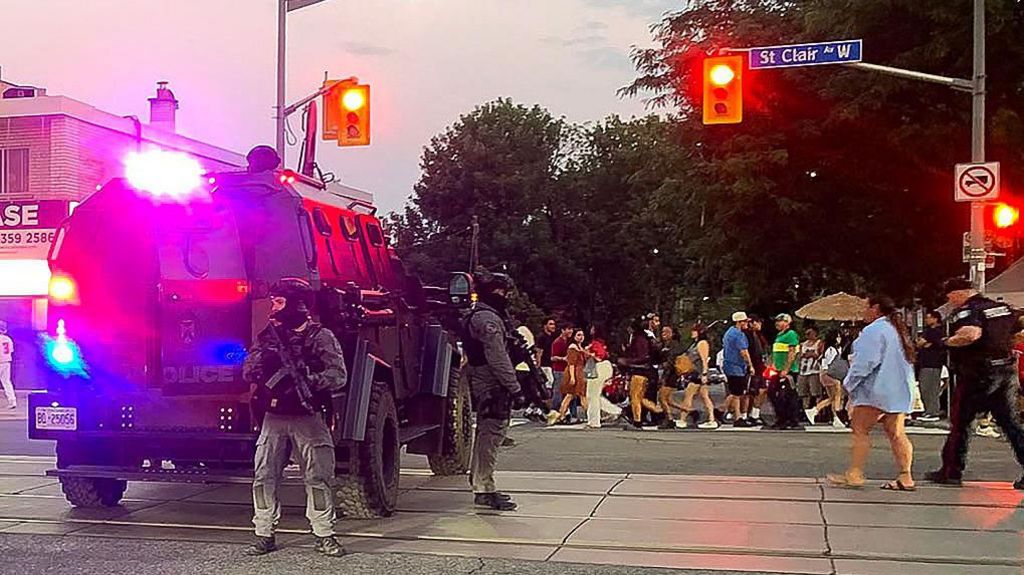
    A deadly shooting has left at least two people dead and six others injured after gunfire erupted at a crowded street festival in midtown Toronto, Canada, law enforcement officials confirmed. The incident unfolded on Sunday evening local time, triggering a large emergency response that locked down the busy commercial corridor and sent attendees fleeing for safety.

    Toronto Police first received emergency calls reporting an active shooter on St. Clair Avenue just after 8:12 p.m. local time, which corresponds to 1:12 a.m. BST Monday. At the time of the attack, the thoroughfare was hosting Salsa on St. Clair, the city’s beloved 22nd annual Latin cultural festival that draws thousands of attendees each year to enjoy live music, open-air dance performances, and food from local vendors.

    When first responders arrived at the scene, they located six people with gunshot wounds. Two of those victims were pronounced dead at the site of the shooting, police confirmed in an initial statement. By early Monday, authorities had secured the perimeter of the attack site and maintained a heavy visible police presence in the area, urging local residents and visitors to avoid the zone to allow for ongoing investigation.

    As of the latest update, no suspects have been taken into custody, and investigators have not released details on a potential motive for the violence. St. Clair Avenue, the location of the festival, is a popular midtown corridor lined with local shops, cafes, and restaurants that was closed to traffic for the two-day celebration that was scheduled to run from July 11 to July 12.

    This is a developing breaking news story, and additional details about the victims, suspect search, and investigation will be published as more information becomes available. Readers can access real-time updates via the BBC News mobile application or by following the official @BBCBreaking account on X for the latest alerts.

  • Muslim judge in India faces death threats after convicting ‘cow vigilantes’

    Muslim judge in India faces death threats after convicting ‘cow vigilantes’

    A Muslim judge in central India has been subjected to widespread online religious abuse, death threats and rape threats after issuing a life imprisonment verdict against 14 Hindu cow vigilantes convicted of a 2022 mob lynching. The targeted attacks have sparked national outrage over threats to judicial independence and the growing influence of communal rhetoric in the country’s legal system.

    On June 12, Tabassum Khan, additional district and sessions judge in Madhya Pradesh state, delivered a guilty verdict on 14 men on charges including murder, attempted murder, rioting and wrongful confinement. The case stems from a fatal 2022 attack: 50-year-old Nazir Ahmad, a Muslim man, was intercepted by a mob of self-proclaimed ‘gau rakshaks’ (cow protectors) while transporting cattle at night. The mob dragged Ahmad and two companions from their vehicle, beat them brutally with sticks and rods over suspicions of cow smuggling. Ahmad died from his injuries, while his surviving companions testified to the violence in court. In her ruling, Khan explicitly categorized the killing as a clear act of mob lynching.

    Almost immediately after the verdict was announced, unrest erupted. Family members of the convicted men gathered outside the courtroom to protest the ruling, blocking police convoys transporting the defendants to jail and claiming the men were wrongfully punished for ‘protecting cows’. What began as in-person protest quickly escalated into a coordinated online campaign of religiously charged hate targeting Khan personally.

    Multiple videos shared across social media platforms feature Hindu right-wing influencers hurling communal slurs at Khan, issuing violent threats including public calls for her rape and murder. One video even threatened widespread bloodshed across India if the convicted men were not released within 10 days. As of this reporting, many of these threatening videos remain publicly accessible, having amassed thousands of likes and shares, with the perpetrators’ identities and social media accounts clearly visible in the content.

    Mainstream right-wing media figures have also amplified the backlash. A leading anchor with Sudarshan News, a prominent right-wing Hindi news outlet, publicly expressed solidarity with the convicted men’s families, claiming the men had sacrificed everything to protect cows and urging viewers to mobilize in protest. Several major cow protection advocacy groups and Hindutva organizations have held large public demonstrations against the verdict across multiple states. On June 22, the Gau Raksha Parishad held a protest in Punjab where demonstrators burned an effigy of Khan and assaulted it in effigy. Three days later, the Rashtriya Bajrang Dal organized a parallel protest in Uttar Pradesh, demanding the immediate release of all 14 convicted men.

    Critics across India’s legal community have emphasized that the attacks on Khan are not rooted in legitimate criticism of her legal reasoning, but are exclusively rooted in religious bigotry targeting her Muslim identity. Retired Supreme Court judge Markandey Katju highlighted this dangerous trend in a public post on X, noting that protesters and online abusers have sought to delegitimize Khan’s authority solely by reducing her professional identity to her religion.

    “Her Muslim identity became the principal basis upon which the legitimacy of the judgement was questioned. This represented a dangerous inversion of justice. Judicial decisions are meant to be evaluated through legal reasoning, not through the religious identity of the individual delivering them,” Katju wrote. In subsequent comments, Katju shared that Khan had reached out to him to say the relentless abuse had left her traumatized, leading her to question whether she had done something wrong by upholding the law.

    Leading Indian judicial bodies have rallied to Khan’s defense, condemning the threats as an attack on the foundation of democratic governance. The Supreme Court Advocates-on-Record Association (SCAORA) and the Supreme Court Bar Association (SCBA) have both issued formal statements denouncing the harassment and calling for immediate legal action against the perpetrators. Vikas Singh, president of the SCBA, told reporters that threats against sitting judges represent an existential threat to democracy itself.

    “If we allow this to happen, no judge will be able to dispense justice. In a democracy, a judge must be able to perform their duty without fear or favour,” Singh said.

    Local law enforcement officials confirmed that they have registered a criminal case under relevant sections of the Indian Penal Code, with two arrests made so far in connection with the threats. State cyber cells are currently tracing all individuals who have shared the inflammatory videos and are conducting ongoing monitoring of social media platforms to remove additional hateful content.

    Still, prominent legal advocates argue that authorities have not done enough to guarantee Khan’s safety. Senior Supreme Court advocate Sanjay Hegde pointed to a recent precedent involving another targeted judge to argue that equal protection must be extended regardless of judicial rank. In 2024, former Bombay High Court judge Gautam Patel and his family received constant threats for more than 10 months after delivering a verdict in a Muslim community succession dispute. After three judicial organizations filed a public interest litigation, the Bombay High Court ordered the Maharashtra government to provide enhanced security to Patel, ordered the Mumbai police commissioner to supervise the investigation and demanded regular status updates.

    “If a retired judge of a high court deserves state protection and judicial supervision of his case, so does a serving sessions judge in a district court. The principle cannot bend to rank. It cannot bend to religion. It cannot bend to the political weather around a particular verdict,” Hegde wrote in a piece for legal news outlet Live Law.

    In recent weeks, the Madhya Pradesh High Court has stepped in to escalate the response, ordering senior state officials to submit a formal explanation of the steps they have taken to protect Khan and identify the organizers of the hate campaign. The court has also issued a formal order requiring Khan’s enhanced police protection to continue indefinitely. The case has reignited longstanding national debates over the violence of cow vigilantism, the targeting of Muslim public figures, and the protection of judicial independence in an increasingly polarized political climate.

  • How men with female surnames are standing up to ridicule in Kenya

    How men with female surnames are standing up to ridicule in Kenya

    Across Kenya, a centuries-old naming convention is facing a quiet but transformative shift, as a growing number of Kenyan men — particularly from the country’s largest ethnic group, the Kikuyu — are rejecting the tradition of inheriting their father’s first name as a surname to instead claim their mother’s name as their own. This departure from social norm has sparked fierce public debate, drawing both acclaim as a marker of shifting gender dynamics and criticism that frames it as a threat to traditional ideas of masculinity.

    For generations, Kenyan naming customs dictated that children take their father’s given name as their family name, while women who married often adopted their husband’s first name as their own surname. Women who choose to keep their mother’s name rarely face the same level of public scrutiny that men with maternal surnames encounter. Many men who bear their mother’s name report facing ridicule, stigma, and unfair social judgment, even as the practice grows more visible in public life, including among the country’s political and cultural leadership.

    John Njũgũna Wanjikũ, a Kenyan member of parliament who was raised by a single mother and has carried his mother’s name since birth, goes by the common Kikuyu nickname “Ka-Wanjikũ” — literally translated as “child of Wanjikũ” — after first winning office in 2021. He is one of a growing number of prominent public figures who openly bear maternal surnames, a sight that would have been extremely rare just a few decades ago.

    Veteran Kenyan benga musician Peter Kĩgia was one of the earliest public figures to break the naming norm decades ago, when he adopted his mother’s name for his public identity. Now in his 60s, Kĩgia performs and records under the stage name Kĩgia wa Esther, meaning “Kĩgia, son of Esther”, and even named his record label Wa Esther Productions. “When you take your mother’s name, it means you love and respect her,” he told the BBC. Today, his choice has become a trend in Kenya’s music industry, with dozens of younger male artists following his lead — street posters across the capital Nairobi advertise performers like Waithaka wa Jane and 90K Ka Msoh, all of whom use their mother’s name publicly, even if they retain their paternal surname for formal legal purposes.

    For journalist Simon Macharia Wangũi, the choice to adopt his mother’s name as an official surname was a deliberate, deeply personal decision. Raised mostly by his grandmother after his mother’s death in 2003 when he was just 12 years old, Wangũi had no official surname until he applied for a birth certificate in his final year of high school. With his father absent for almost his entire life — a man he says he has “only heard rumours of his existence” — Wangũi saw no reason to claim a paternal name. “Why give somebody credit where it does not exist?” he asks. Though he acknowledges bearing a maternal surname has brought moments of “identity crisis”, Wangũi says he remains proud of his choice, and notes that success despite social stigma often leads others to view the choice as a mark of resilience.

    Still, the stigma attached to male maternal surnames has taken a toll on many who bear them. Broadcaster Evans Kibe Waceke, who himself carries a maternal surname, explains that common social stereotypes frame children raised by single mothers as inherently “undisciplined” and lacking “certain morals”. The national debate over the practice erupted into public view two years ago, after prominent motivational speaker Robert Burale claimed that adopting a mother’s surname undermined men’s masculinity. His comments prompted TV personality Fred Mũitĩrĩri to go public with his own experience, revealing that he ultimately chose to drop his maternal surname and use only his first names due to years of bullying and shame. “Do you know how embarrassing it is for a boy to be called out, in a room full of kids, [with] a girl’s name?” he wrote on Facebook, adding that the constant harassment contributed to depression when he was 23 years old.

    Cultural experts point to shifting social realities as the core driver behind the growing popularity of maternal surnames. Young Kikuyu cultural commentator Wairimũ Mũkũrũ, who has a large following on social media, notes that the trend has grown alongside a sharp increase in single-mother households across the country. Traditionally, even children born to unmarried mothers would be given a surname from a male relative — most commonly the mother’s eldest brother, who would step into a paternal role. But Mũkũrũ explains that male relatives often refuse to share their surname, because granting a child the name also gives them legal rights to inherit family property.

    Mũgwe wa Njũhĩ, an official with the Kikuyu cultural organization Kiama Kĩa Ma, confirms this dynamic, saying male relatives often avoid granting their names to children of single mothers to prevent future inheritance disputes. But he also pushes back against criticism of maternal surnames, pointing to Kikuyu cultural origins that are rooted in matrilineal lineage. According to Kikuyu myth, the community traces its origins to the 10 daughters of Gikũyũ and Mũmbi, the founding couple of the Kikuyu people. Kikuyu clans are even named after these 10 daughters, meaning the community has long aligned itself with female lineage. “I am Mũmbũi by clan [derived from Wambũi, one of the daughters]. We have always aligned ourselves with women, from the very beginning,” he says. Veteran musician Kĩgia wa Esther adds that critics from outside the Kikuyu community often misunderstand the cultural context of the practice.

    University of Nairobi lecturer George Gathigi, an expert on Kikuyu social issues, explains that informal identification by mother’s name is not a new practice — it was once common in large polygamous families, where children from different mothers would be identified by their mother’s name to avoid confusion, since Kikuyu culture traditionally draws from a small pool of family first names. Even the iconic late Kenyan author Ngũgĩ wa Thiong’o, whose father had four wives, wrote in his memoir that he was known informally as Ngũgĩ wa Wanjikũ — after his mother — during his childhood. What is new, Gathigi says, is the formal adoption of maternal surnames as legal identities.

    Gathigi argues that the formalization of this trend reflects the growing economic and social power of Kenyan women, especially in households where fathers have abandoned their parental responsibilities. As women increasingly take on roles that were traditionally reserved for men, stepping into both parental roles in single-parent households, children are choosing to honor that contribution by claiming their mother’s name. Still, not all observers frame the shift as positive: Gathigi himself says he sees the normalization of maternal surnames as a “bad thing” that reflects the breakdown of traditional family structures, a sentiment shared by critics across the country. Conservative voices have gone as far as calling the practice “a yoke around men’s necks” and an effort to “womanise the Kikuyu man and make him weak”.

    Despite the ongoing backlash and social stigma, men who have chosen to claim their mother’s name say the choice brings a sense of meaning and identity that outweighs the criticism. For many, it is not just an act of personal honoring, but a quiet re-shaping of centuries-old culture to fit the changing realities of modern Kenyan life.