分类: society

  • Macao pension transfers to Guangdong accounts now operational

    Macao pension transfers to Guangdong accounts now operational

    A landmark milestone for cross-border social security connectivity between Macao and Guangdong province was achieved on Tuesday, when the first successful transfer of Macao’s central provident fund to a mainland Chinese bank account in Guangdong was completed. The transaction follows the formal rollout of an upgraded pension transfer initiative based in the Guangdong-Macao In-depth Cooperation Zone in Hengqin.

    This launch comes just one week after the Hengqin cooperation zone rolled out a parallel service enabling cross-border transfers of Macao disability benefits on July 14. Combined, the two new services have established a fully functional one-stop direct transfer channel that covers every category of Macao’s social security and livelihood-related funds, according to an official statement released by the cooperation zone administration.

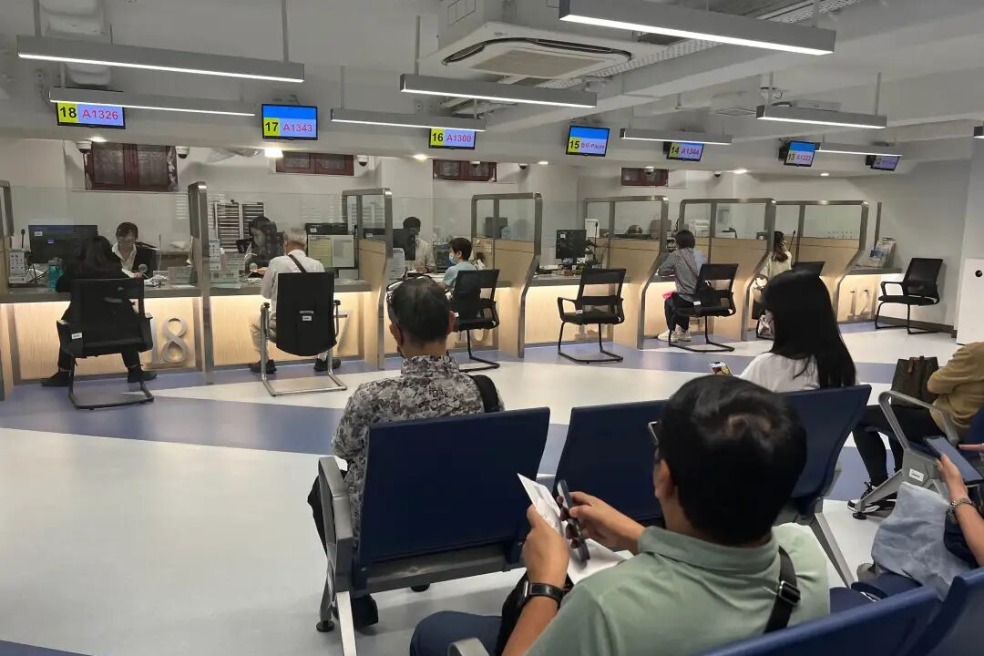
    The new scheme is designed explicitly to ease financial access for Macao residents who have chosen to reside in Guangdong province. Under the streamlined framework, eligible users only need to complete a single registration process. Once registered, all qualifying fund payments are automatically transferred to the user’s Guangdong-based bank account on an ongoing basis, with no service fees charged for the cross-border transfers.

    One of the first beneficiaries of the new system is Xu, a Macao resident and native of Yangjiang, Guangdong, who returned to his home province to retire after a career in traditional Chinese medicine research. Xu explained that the new policy has eliminated the most significant logistical headache he faced in retirement. Prior to the launch of this cross-border channel, Xu was required to travel back to Macao in person to collect his pension and central provident fund payments.

    “I am not familiar with online cross-border procedures, and the constant trips back and forth consumed a great deal of my time and energy,” Xu said. Under the updated arrangement, Xu completed just one single account registration in Macao, and all future payments are now automatically routed to his account at a local branch of the Industrial and Commercial Bank of China in Guangdong. “No more traveling back and forth between the two regions,” he added. “This is a tangible, visible dividend brought by the Guangdong-Hong Kong-Macao Greater Bay Area’s development for us Macao residents living on the mainland.”

    The fully operational transfer channel marks a key step forward in integrating livelihood services across the Greater Bay Area, addressing longstanding inconveniences for thousands of Macao residents who have retired or settled across the border in Guangdong.
  • Wreckage of Pan Am plane that shaped aviation safety found 74 years on

    Wreckage of Pan Am plane that shaped aviation safety found 74 years on

    Seventy-four years after a Pan American Airways Douglas DC-4 plunged into the Atlantic Ocean off Puerto Rico, marine explorers have officially confirmed the discovery of the aircraft’s wreckage — a find that pulls a pivotal, largely forgotten event in aviation safety history back into public focus.

    On April 11, 1952, the aircraft, nicknamed the Clipper Endeavor, suffered multiple engine failures just minutes after departing for New York, forcing its pilot to execute a risky emergency water landing. Though all passengers and crew survived the initial impact, chaos unfolded as the plane sank rapidly: onboard travelers could not quickly locate life vests and emergency rafts. When the disaster concluded, only 17 of the 69 people onboard survived, leaving 52 dead.

    In the decades that followed, this tragedy would reshape global commercial aviation forever. The confusion and loss of life that followed the water landing acted as a critical catalyst for sweeping safety reforms that remain standard across the industry today. Most notably, regulators introduced mandates for pre-flight safety briefings on all commercial flights, requiring cabin crew to walk passengers through exit locations, life vest placement, and emergency procedures before every departure. The disaster also pushed for requirements for better-placed, more accessible flotation equipment on all passenger aircraft.

    The expedition that uncovered the wreckage was led by the Air/Sea Heritage Foundation, in partnership with Discovery Channel’s *Expedition Unknown* and a coalition of other exploration and history organizations. The project had been years in the making: Russ Matthews, president of the Air/Sea Heritage Foundation and a maritime historian and explorer, first became fascinated by the story in 2019, after encountering a luggage tag from the doomed flight that had washed up on a Florida shore. Struck that such an impactful event had faded from public memory, Matthews began reconstructing the plane’s final minutes using archived records from the Civil Aeronautics Board, the predecessor to the U.S. Federal Aviation Administration.

    A key breakthrough came when researchers uncovered long-buried records from a public hearing held in Puerto Rico after the crash, including a hand-drawn map created by U.S. Air Force pilots who witnessed the 1952 ditching. Cross-referencing that map with contemporary weather data and historical accident reports allowed the team to narrow their search to just 10 square nautical miles of seabed, roughly 610 meters (2,000 feet) below the ocean surface. An initial search attempt in 2024 was called off due to dangerous poor sea conditions, but the team committed to returning before the 75th anniversary of the crash in 2027.

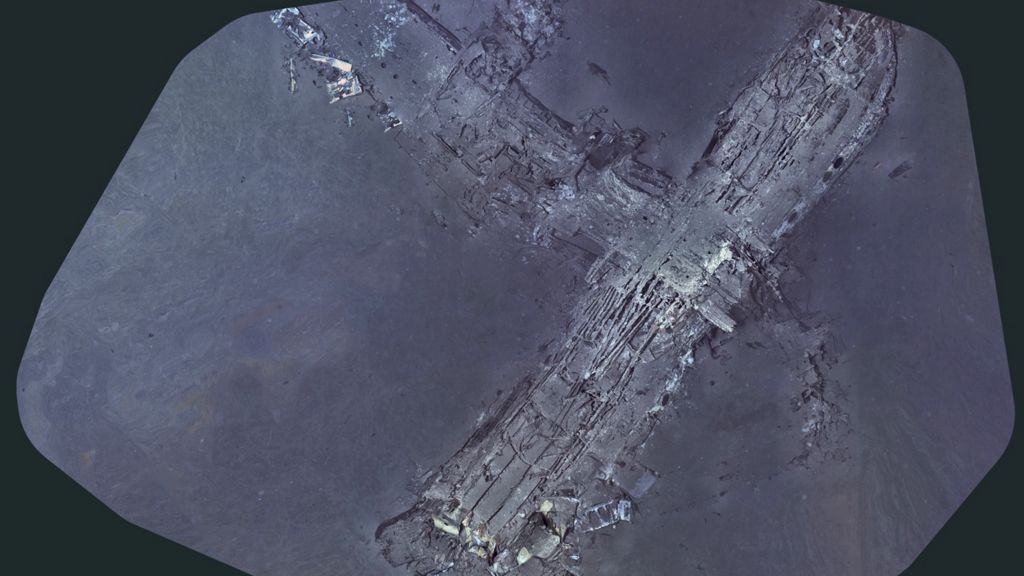
    That determination paid off in early June, when an autonomous sonar-equipped drone deployed by the team detected the wreckage during its very first pass over the target search area. The plane had broken into two large sections on the seafloor, but a subsequent high-resolution photographic survey confirmed the wreck’s identity: the iconic Pan Am logo and the plane’s name, Clipper Endeavor, remain clearly visible on the intact fuselage.

    “We are all stunned and elated by this discovery, yet also humbled to remember what happened in that place so long ago,” Matthews said in an official statement following the confirmation. Josh Gates, host of *Expedition Unknown*, who was on the expedition’s support vessel when the wreckage first appeared on sonar screens, echoed that mix of excitement and reverence. “Every time you step onboard an airplane today, you are safer because of what happened to Clipper Endeavor and her passengers three-quarters of a century ago,” Gates noted.

    Beyond recovering a lost piece of aviation history, exploration teams say the successful discovery of the Clipper Endeavor offers new hope for future searches for other lost ocean plane wrecks — most notably Malaysia Airlines Flight 370, which disappeared in 2014 with 239 people onboard and has never been located despite multiple large-scale search operations in the southern Indian Ocean.

    The full story of the expedition and discovery will be featured in a special autumn episode of *Expedition Unknown* on the Discovery Channel.

  • Further infant remains uncovered at former mother-and-baby home

    Further infant remains uncovered at former mother-and-baby home

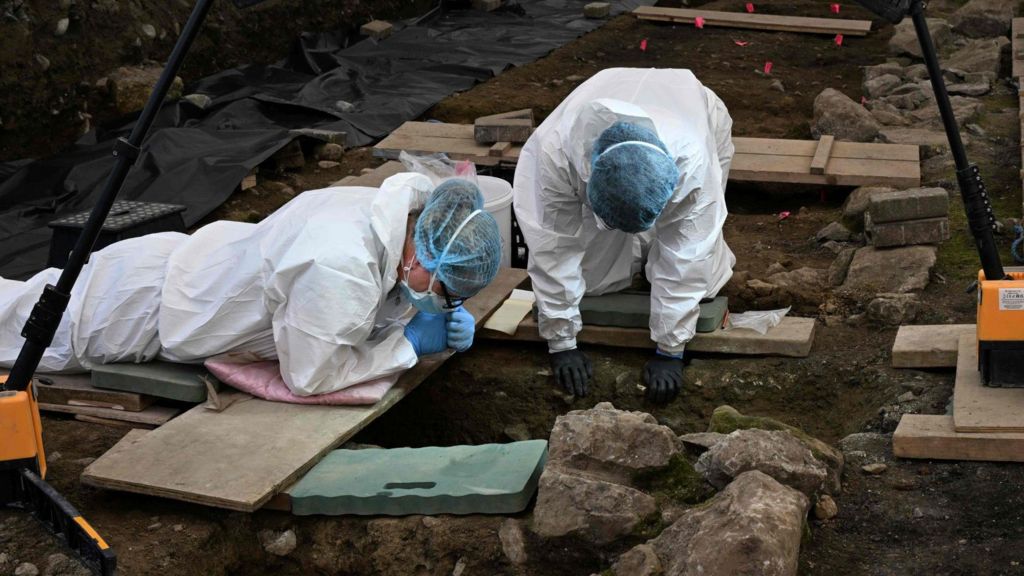
    A decades-long chapter of Irish historical injustice continues to unfold as archaeological teams working at the site of a defunct mother-and-baby institution in Tuam, County Galway, have recovered 22 additional sets of infant remains. This latest discovery pushes the total number of infant bodies recovered at the former facility to 99, according to the latest official update from the excavation oversight body.

    The home, which was established to house unmarried mothers and their children, operated from 1925 through 1961. Its existence and the grim fate of hundreds of infants who died within its walls only captured global public attention in 2014, when local historian Catherine Corless made a chilling discovery: official records listed 796 death certificates for children and infants who died at the institution, but no formal documentation existed to show where the bodies had been buried.

    The current full excavation work launched one year ago, and this latest update covers findings from a six-week window ending July 15 of this year. The 22 newly recovered remains were found inside coffins in a section of the site’s southwestern edge, an area mapped in historical archives as an official burial ground.

    All recovered remains are now being transported to a purpose-built mortuary and analytical laboratory in Toghermore, near Tuam. The facility was specifically outfitted for this project by the Office of the Director of Authorised Intervention, Tuam (ODAIT), the government-aligned agency leading the excavation work.

    Per ODAIT’s official statement, a team of specialist experts will undertake a rigorous process to clean, preserve, and analyze each set of remains. The core goal of this work is to reconstruct key details about each infant’s short life and death, including their approximate age and biological sex. Advanced analytical techniques will be used, including medical radiology and high-resolution 3D scanning to document the remains in detail.

    These forensic details are expected to help narrow the pool of possible matching identities, bringing researchers closer to the goal of connecting each set of remains to a name documented in historical death records. To support this identification effort, 62 family members with ties to infants who died at the home have already donated DNA samples for cross-referencing.

    Not all sections of the site have been fully excavated yet: work has not commenced in the area of the existing memorial garden, where preliminary investigations in 2017 uncovered large quantities of human remains in hidden underground septic chambers.

    Historically, the Tuam institution was owned by Galway County Council and managed by the Bon Secours Sisters, a Catholic religious order. The order has previously issued a formal public apology, acknowledging that the children and infants who died at the home were “buried in a disrespectful and unacceptable way.” It has also contributed €2.5 million (£2.14 million) to cover the costs of the excavation and forensic work. Galway County Council similarly issued a public apology in 2021 following the release of an official inquiry report, saying it “failed mothers and children” held at the institution.

    Excavation work at the site is scheduled to continue through 2027, with additional years of follow-up forensic analysis and identification work expected to be completed after fieldwork concludes.

  • Mansion owned by father of gambling tycoon Ed Craven goes up in flames

    Mansion owned by father of gambling tycoon Ed Craven goes up in flames

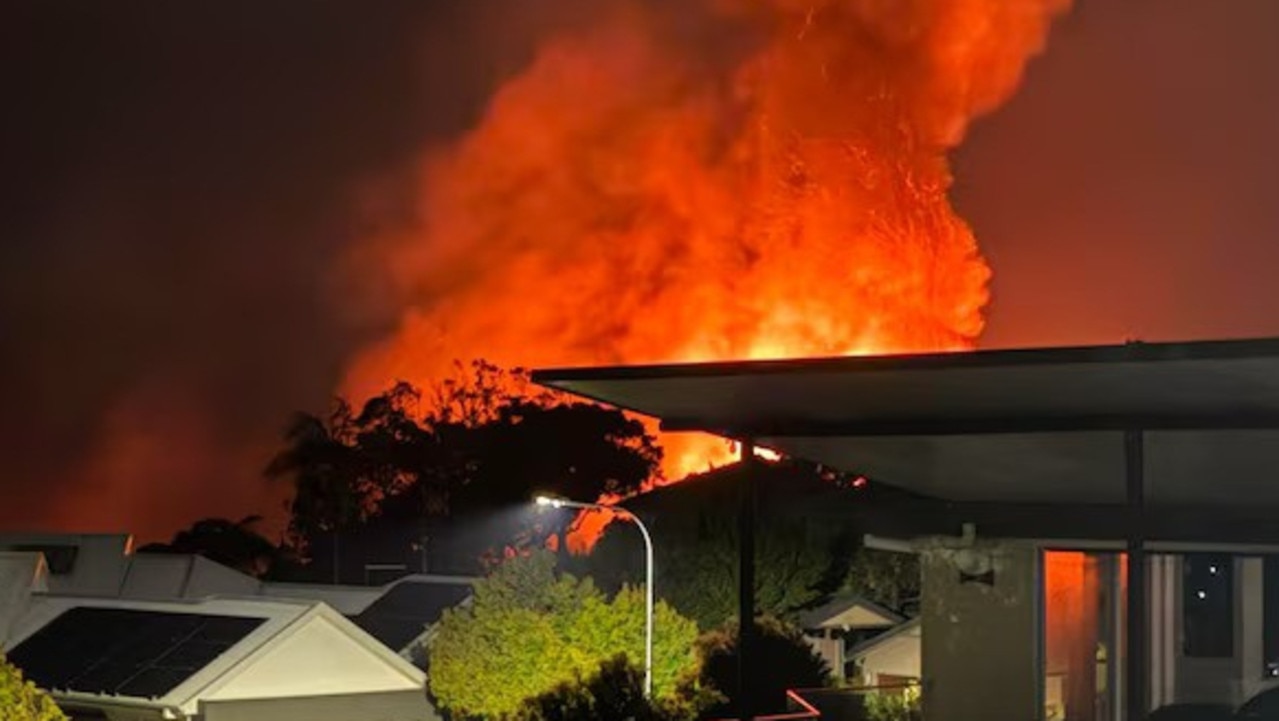
    A multimillion-dollar beachfront estate in New South Wales, owned by the father of Australian online gambling billionaire Ed Craven, has been completely destroyed by a suspicious fire, coming just two weeks after local officials approved a major $30 million redevelopment plan for the property. The 15-bedroom, 15-bathroom Sapphire Beach mansion, located on a sprawling 1.8-hectare block with exclusive access to a private beach stretch in the small coastal community of Korora, caught fire twice within hours on Tuesday, emergency services confirmed.

    Coffs Harbour Fire and Rescue first responded to the scene at 5:40 p.m. after reports of smoke billowing from the vacant building, extinguishing what crews initially described as a small, contained blaze. But less than seven hours later, shortly before midnight, multiple emergency calls from nearby residents brought firefighters back to the property, after the fire unexpectedly re-ignited and spread rapidly through the unoccupied structure.

    The property has a high-profile ownership history: it was originally developed and owned by Australian mining magnate Nathan Tinkler, who listed it for sale at an asking price of $30 million before Jamie Craven, father of 30-something billionaire Ed Craven, purchased the estate in an all-cash $16 million deal in early 2024. Even at a discount to Tinkler’s original asking price, the sale marked the most expensive transaction the suburb has ever seen — the home’s price tag was more than four times higher than the second-most expensive property ever sold in the area.

    Earlier in June, Coffs Harbour City Council formally approved Jamie Craven’s $29.7 million redevelopment proposal, which would have demolished the existing mansion to make way for a custom two-story luxury residence, complete with two in-ground swimming pools and a 300-millimeter deep reflection pool. Construction had not yet begun at the time of the fire, leaving the property abandoned and unoccupied.

    NSW Police confirmed in a statement Wednesday that no injuries have been reported from the incident, as the home had been empty since the sale was finalized. Investigators from the Coffs/Clarence Police District have launched a formal probe into the blaze, which is currently being treated as suspicious. Local media reports from nearby residents note that vandalism has become an increasingly common issue for empty homes in the area, and police have emphasized there is no suggestion at this time that the Craven family has any connection to the fire.

    The devastating loss comes as a major surprise to the local coastal community, where the high-profile purchase and redevelopment plan had drawn significant public attention in recent months.

  • Modelling scout linked to Epstein found dead in Paris suburbs

    Modelling scout linked to Epstein found dead in Paris suburbs

    A 69-year-old modelling scout with deep documented connections to the deceased convicted sex trafficker Jeffrey Epstein has been found dead at his residence in the Paris region, French law enforcement officials have confirmed. Daniel Siad was discovered at his home in Colombes, a quiet northwest suburb of the French capital, on Monday, according to a formal statement from the Nanterre prosecutor’s office shared with the BBC.

    Following the recovery of Siad’s body, local authorities have launched a full investigation to pinpoint the exact cause of his death, with a scheduled autopsy planned to gather critical forensic evidence, the prosecutor’s office added.

    Siad’s connections to Epstein have been a focal point of ongoing scrutiny in the wake of Epstein’s crimes, with thousands of mentions of Siad’s name appearing in the trove of Epstein-related court documents unsealed and released to the public by the U.S. government. Siad had long maintained that he had no awareness of the dangerous criminal activity Epstein was engaged in, a stance he held through the years of growing public attention to his ties with the convicted offender.

    One of Epstein’s accusers, who spoke to the BBC on condition of anonymity under the pseudonym Anya, previously alleged that Siad was the person who first introduced her to Epstein, placing him directly at the center of the network that enabled Epstein’s sex trafficking scheme.

    Ahead of a BBC investigative report published on July 18, Siad’s legal representative confirmed that Siad would not be making any public statements or responding to media queries. That marked a continuation of his long-held position denying any knowledge of Epstein’s harmful, illegal conduct before Epstein’s arrest and death in 2019.

  • Family including seven children make miraculous escape from Sydney house blaze

    Family including seven children make miraculous escape from Sydney house blaze

    In the early hours of Wednesday, a catastrophic fire sparked by an exploding second-hand electric bicycle gutted a suburban family home in Sydney’s west, leaving the property completely destroyed but ending in a miraculous story of survival for all nine residents. The blaze broke out just after midnight at a residence on Harlow Avenue in Hebersham, igniting when the pre-owned e-bike suffered a catastrophic failure while connected to a charger.

    Witnesses who lived in the neighborhood described a terrifying sequence of events, starting with a deafening explosive bang that echoed through the quiet street, followed by a series of smaller secondary blasts. Within minutes, flames raced through the building’s structure, engulfing the entire home in intense heat and thick black smoke. Dramatic footage captured from the scene shows towering flames pouring from the home’s roof, windows, and exterior walls, turning the two-story property into an inferno as the nine family members — two parents and seven children — fled for their lives with only seconds to escape.

    Fire and Rescue NSW Acting Superintendent Peter Murray, who responded to the emergency call alongside dozens of local firefighters, confirmed that the blaze spread with unusual speed and intensity. “It was a very intense fire,” Murray told local outlet 9News, adding that crews arrived to find the structure already fully engulfed. Despite the rapid spread of the flames, every member of the family managed to evacuate before the fire reached critical sections of the home, escaping without a single injury.

    A family member spoke to reporters after the fire, expressing profound relief that all seven children made it out safely. “I think we were all pretty lucky that nobody was hurt … lucky to get all the kids out,” they said. Investigators from Fire and Rescue NSW have ruled out suspicious activity, confirming that the fire was directly caused by the exploding second-hand e-bike. What was a routine overnight charging session turned into a devastating event that left the home a charred, gutted shell, with nearly all of the family’s possessions destroyed in the blaze. The incident has renewed public discussion about fire safety risks associated with second-hand e-bikes and unregulated lithium-ion battery devices, which have been linked to a rising number of residential fires across Australia in recent years.

  • Mixed reviews as Japan urges men to wear shorts to work

    Mixed reviews as Japan urges men to wear shorts to work

    A new government-backed initiative encouraging Japanese men to adopt shorts as acceptable office attire has ignited sharp public discussion, with commentators split sharply over the policy’s goals and unintended implications.

    The push to relax formal workplace dress codes for male employees has drawn praise from a subset of observers, who frame the shift as a long-overdue step toward more casual, comfortable working conditions. Supporters argue that ditching rigid, heavy trousers for breathable shorts can boost employee morale and even cut down on energy consumption by reducing the need for overcooling office spaces during warm summer months, aligning with broader national efforts to promote work-life balance and energy efficiency.

    However, the policy has faced significant criticism from those who point out a glaring gender disparity baked into the new guidelines. Critics highlight that while men are being explicitly encouraged to embrace lighter, more casual lower-body wear, women still face unspoken strict requirements: any female employee who chooses to bare part of her legs in the office is still expected to wear full tights to adhere to traditional standards of professional appearance. This double standard has led many detractors to argue that the reform is incomplete at best, and actively unfair to women workers at worst.

    The split reaction underscores broader, ongoing conversations about gender equality and evolving workplace norms in Japan, where traditional expectations around professional dress and gendered behavior have been slow to shift in many sectors. What was framed as a small, progressive change to office culture has instead become a flashpoint for discussions about how workplace reform must address systemic gender inequities to be meaningful.

  • NSW school worker faces court child and animal abuse material allegations

    NSW school worker faces court child and animal abuse material allegations

    A 24-year-old school employee from New South Wales, Australia has been denied bail after facing court on five serious charges linked to the possession of graphic child and animal abuse material. Aaron Neal Hatch, who works at a school located in the Bourke Shire region, was arrested during a coordinated police operation on Tuesday morning around 11 a.m., law enforcement officials confirmed. Immediately following his arrest at the school, investigators executed a search warrant at a residential property in the same local area, where they seized multiple digital devices that police allege contain the prohibited illegal material. The five charges brought against Hatch break down into two counts of possessing child abuse material, two counts of possessing animal sexual abuse material, and one additional count of possession of animal crush material – content depicting the intentional killing of animals for exploitative purposes. Hatch made his first court appearance at the Bail Division Local Court on Wednesday, where magistrates rejected his application for release on bail. NSW Police said the arrests and charges were the result of tips received earlier this month, as part of an ongoing statewide investigation called Strike Force Trawler. The special task force, run by the NSW Police Sex Crime Squad, targets the online sexual abuse and exploitation of children distributed via internet platforms and digital telecommunications devices. According to official police records, Strike Force Trawler investigators first received a report in July 2024 flagging potential child abuse material tied to an account holder in northern New South Wales, which ultimately led investigators to Hatch. The accused is scheduled to next appear at Bourke Local Court for a follow-up hearing in September. The case has sparked concern among local communities, as the accused held a direct position of trust working at a regional school. Police have not yet released additional details about the specific school where Hatch was employed, nor have they confirmed whether any ongoing risks to students at the facility have been identified as part of the investigation.

  • Tunnel collapse in India kills 12 workers

    Tunnel collapse in India kills 12 workers

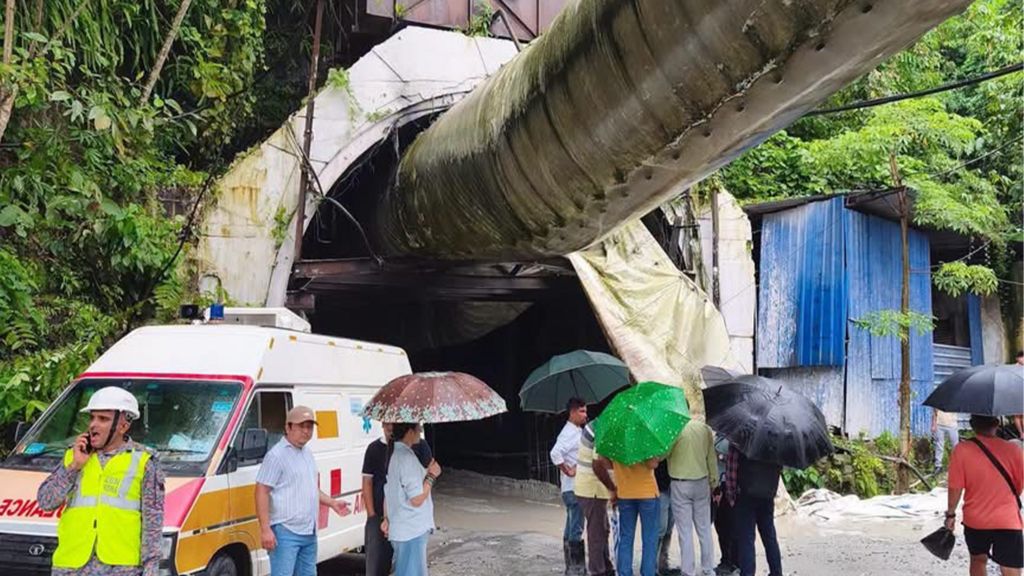
    A catastrophic construction accident has left at least 12 workers dead and 13 others trapped deep underground after a methane-fueled gas explosion triggered a partial collapse of an under-construction hydropower tunnel in India’s Himalayan northeastern state of Sikkim, official authorities have confirmed. As of Wednesday, multi-agency rescue operations have entered their third day, with teams focusing their efforts on a 200-meter target zone inside the tunnel where remaining trapped workers are believed to be located.

    The incident unfolded on Monday around 1.5 kilometers (0.9 miles) inside the tunnel, which is being developed as part of a major hydropower project by state-owned utility National Hydroelectric Power Corporation (NHPC). Designed to divert water from the nearby Teesta River to feed the hydropower plant’s turbines, the project is a key infrastructure initiative for the mountainous state.

    In an official statement following the accident, NHPC confirmed the blast was caused by a sudden outburst of methane gas naturally trapped within surrounding rock formations. The explosion generated thick toxic fumes that have complicated rescue efforts, a conclusion echoed by the Sikkim state government, which formally attributes the incident to methane gas combustion. A senior government official explained that methane naturally accumulates in underground rock formations; when tunneling work releases the gas into the confined space of the tunnel, even a small spark or other ignition source can trigger a catastrophic explosion or ignition.

    At the time of the blast, 27 workers were spread across different work sections inside the tunnel. Only two workers managed to escape immediately after the explosion, leaving 25 trapped. “Of the 25 people who were trapped, we have recovered 12 bodies so far, and teams are working to locate the 13 other men,” Sonam D Bhutia, Superintendent of Police of Sikkim, told the BBC in an interview Wednesday morning. So far, authorities have confirmed the identities of seven of the deceased: one victim was a resident of Sikkim, while the remaining six identified victims are migrant workers from neighboring Indian states of West Bengal, Uttarakhand and Assam. Official confirmation of the exact cause of death for each victim will be released following full post-mortem examinations, according to authorities.

    National Disaster Response Force (NDRF) officer Mohsen Shahedi told Indian news agency ANI that search and rescue teams are currently concentrating their operations on a specific 200-meter stretch of the tunnel, where modeling and on-site data suggest the remaining trapped workers are most likely located. In response to the disaster, Sikkim Chief Minister Prem Singh Tamang has ordered the formation of a specialized independent investigation team to probe the root causes of the incident. “We have engaged a team of experts to find out what exactly happened and how. We will take action on the basis of the findings,” Tamang told reporters following the disaster.

  • Cops make wild find hidden beneath shed in Penfield Gardens

    Cops make wild find hidden beneath shed in Penfield Gardens

    In a startling and unusual drug bust, law enforcement in South Australia has uncovered a clandestine cannabis growing operation hidden deep beneath a rural shed, leading to charges against two individuals in their 30s who are now set to appear in court.

    The unconventional discovery unfolded when officers executed a search warrant on a private property located in Penfield Gardens, a semi-rural community roughly 40 kilometers north of Adelaide. What started as a routine targeted search quickly took an unexpected turn when investigators uncovered a purpose-built secret underground bunker, carefully concealed beneath the property’s existing outbuilding shed.

    Inside the hidden underground facility, police documented a sophisticated hydroponic growing setup that housed 26 mature cannabis plants, alongside a large stash of processed cannabis. In total, authorities seized approximately 24 kilograms of dried cannabis, which is estimated to have a high street value for illegal distribution.

    Following the seizure, a 38-year-old man from the nearby town of Hewett was taken into custody. He faces four distinct charges: trafficking a large quantity of a controlled drug, cultivating a commercial quantity of a controlled cannabis plant, possession of unauthorized drug manufacturing equipment, and illegal diversion of electricity to power the hidden growing operation. The man has been released on bail and is scheduled to make his first court appearance at the Elizabeth Magistrates Court on September 2.

    In a connected investigation, police executed a second search warrant at a separate property in Korunye, where a 38-year-old woman was identified as a co-conspirator. She has been reported for the same four criminal offenses and will appear in court at a later date, which is yet to be finalized.

    In addition to the drug seizure, law enforcement also impounded a range of high-value assets linked to the alleged operation from the Penfield Gardens site. These assets include a Ram Laramie pickup truck, a utility trailer, a recreational caravan, a personal watercraft Seadoo, and an excavator, indicating that the operation was a large-scale, well-funded criminal enterprise.

    South Australian police have confirmed that investigations into the illegal network are still ongoing, and additional charges or arrests may be forthcoming as the case progresses.