分类: society

  • ‘We are resilient’: As San Diego’s Muslim community reels from mosque shooting, it refuses to be intimidated

    ‘We are resilient’: As San Diego’s Muslim community reels from mosque shooting, it refuses to be intimidated

    On a Monday morning in mid-May 2026, a quiet residential neighborhood in San Diego’s Clairemont area was shattered by an act of ideological violence that would ripple across the entire United States. Two teenage gunmen opened fire at the Islamic Center of San Diego – a sprawling community hub that houses the region’s second-largest mosque and a thriving primary school – leaving three people dead and sending shockwaves of grief through California’s Muslim community.

    The attack unfolded just before noon local time, when parents across the area received urgent WhatsApp alerts notifying them of an active shooter on campus. For Nawal Al-Nouri, whose seven-year-old daughter was in class at the center’s school, the news felt impossible to process. “It completely didn’t hit me that it was an active shooter the way they had described it. I was definitely in a state of shock, and pretty frozen at home,” she recalled to the BBC. Her husband Omar, a vascular surgeon based in nearby La Jolla, raced to the center after getting the same alert, where he was met by a massive, coordinated law enforcement response that left him both overwhelmed and reassured.

    When police closed in on the suspects’ vehicle in the residential neighborhood, the violence reached its horrific conclusion: one teen shot his accomplice before turning the gun on himself. The three victims were identified as Amin Abdullah, the center’s security guard; Nadir Awad, a beloved local shopkeeper who called 911 during the attack; and Mansour Kaziha, husband of a teacher at the on-site school. Investigators later confirmed the attack was premeditated, driven by what officials describe as “broad hatred” that radicalized the 17- and 18-year-old suspects online. A manifesto recovered from the pair contained virulently Islamophobic, anti-semitic and misogynistic rhetoric, and law enforcement seized 30 guns and a crossbow from three local residences linked to the teens. San Diego Mayor Todd Gloria confirmed the attack is being formally investigated as a white-supremacist hate crime.

    Against the devastating loss, a wave of solidarity emerged from across the state and nation. Just four days after the shooting, thousands of people of all faiths and backgrounds traveled to San Diego to attend a public funeral prayer, gathering to stand in solidarity with the Muslim community and honor the lives of the three slain men. Separate burial services were held on May 21 at La Vista Memorial Park in National City, following a community vigil the night before that drew hundreds of mourners to a nearby neighborhood park.

    For many parents who survived the attack, the trauma remains raw. Omar Al-Nouri, who was reunited with his daughter Maya five hours after the shooting, says he cannot shake the terrifying image of what could have happened. “I just had a vision in my mind of the shooters going into the school and encountering my child or another child, I just can’t get that vision out of my head,” he said. Dr. Muhammad Rahman, a local resident whose two children were on the playground during the shooting, called the moment devastating but credited God’s mercy with sparing the school’s students. Emergency protocols, trained staff and coordinated first responder response are credited with saving the 140 children and staff on campus during the attack.

    Abdullah, the center’s security guard, has already been hailed as a hero by community members: he confronted the gunmen and initiated lockdown procedures that many believe prevented far greater loss of life. His daughter Hawaa Abdullah, speaking to reporters surrounded by her seven siblings, said her father would want the community to remain united. “He wants all of us to be better, regardless of who we are, what we identify as,” she said. “He wants us to be better, and that’s exactly what I, my family, and I hope every single other person here strives to do every single day – make this world a better place.”

    Community leaders say while they are horrified by the attack, they cannot claim it came as a complete surprise. Abdullah Tahiri, president of the Muslim Leadership Council of San Diego, blamed the attack on a years-long pattern of normalized anti-Muslim rhetoric in mainstream American politics. “When figures in the highest halls of the government dehumanise Muslims, paint our institutions as threats, and treat our community with suspicion, they lay the groundwork for real-world violence we witnessed,” he told reporters. Imam Taha Hassane, director of the Islamic Center of San Diego, added that while the center had long received low-level hate messages and harassment from passersby, the scale of violence was still unimaginable. “I know what’s going on in the world. I have seen shootings taking place in houses of worship, schools, malls. But happening here? It never came through my mind,” he said.

    Despite the trauma, community members across San Diego say they will not be intimidated by the hate attack. The mosque reopened for daily prayers just two days after the shooting, and leaders emphasize the center will continue its work serving people of all backgrounds across the region. “We will mourn, we will heal, and we will continue to stand strong, rooted in justice, dignity and an unwavering support and faith in our religious traditions,” Tahiri said. Dr. Saad Eldegewi, another imam at the center, added: “Hate speech leads to hate crimes. Hate speech leads to terrorism, extremism and we are here to fight all that in all legal ways. In all peaceful ways.”

    Today, the center’s school semester – which was nearly complete when the attack happened – has ended early, and the administration building, playgrounds and other sections of the complex remain closed to the public as investigations continue. A makeshift memorial lined with flowers from local neighbors lines the sidewalk outside the center’s gates, and uniformed police continue to patrol the surrounding neighborhood. As the community mourns its three lost members, many are calling for national change to address the root causes of gun violence and hate-fueled extremism, clinging to solidarity as a source of strength in the wake of unthinkable tragedy.

  • An Indian bride dies. Rival claims of murder and suicide set off media frenzy

    An Indian bride dies. Rival claims of murder and suicide set off media frenzy

    In a country where thousands of young women lose their lives annually to dowry-related violence, most such cases fade into obscurity. But the sudden death of 33-year-old model and former beauty queen Twisha Sharma in the central Indian city of Bhopal on May 12 has detonated a national media firestorm, turning a tragic domestic case into a flashpoint for long-simmering anger over India’s persistent dowry culture.

    Warning: This report contains details that some readers may find distressing.

    Just five months after Sharma married Bhopal-based lawyer Samarth Singh, she was found dead in the home she shared with her new husband and his family. Sharma’s relatives have leveled damning accusations against Singh and his mother, Giribala Singh, a retired high court judge. The family alleges the pair subjected Twisha to repeated physical and psychological torture over unmet dowry demands, and ultimately killed her.

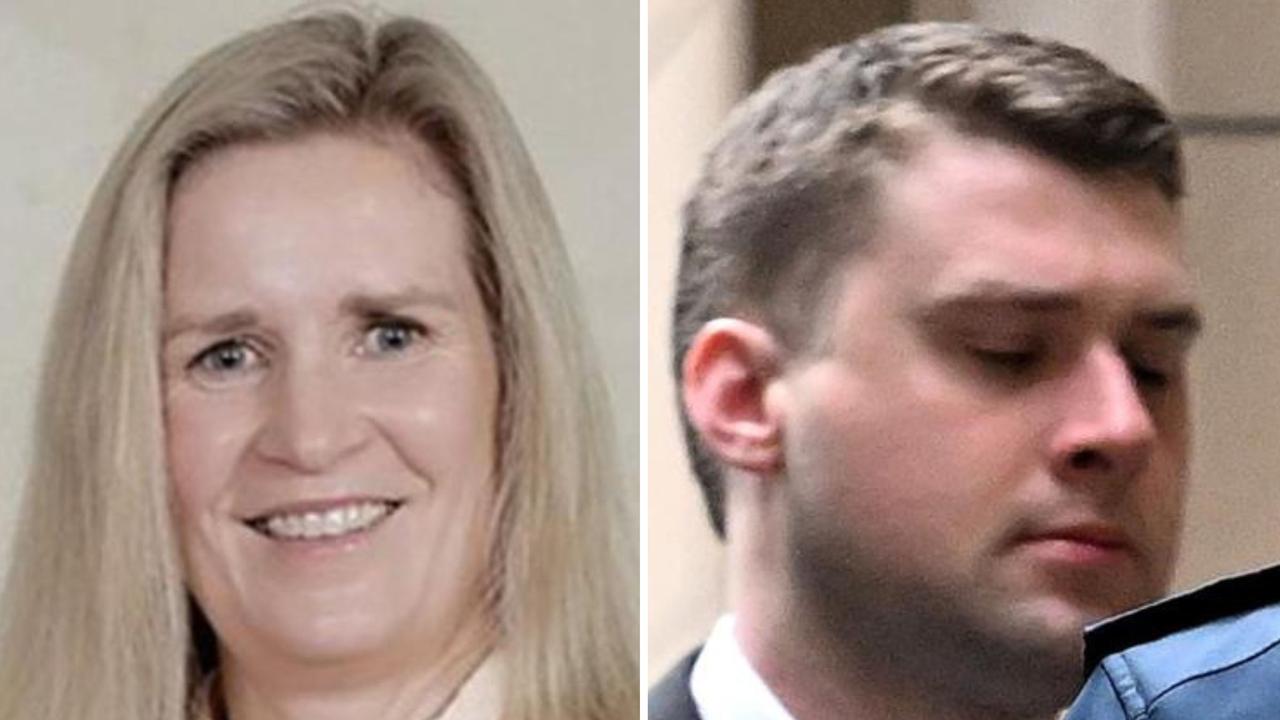
    Giribala Singh has forcefully denied all claims, dismissing the allegations as entirely baseless. She has countered that Twisha struggled with untreated mental health conditions and died by suicide. Law enforcement have confirmed they have filed formal dowry death charges against both Singhs and are working to determine whether Twisha’s death was a homicide or suicide.

    The investigation has been complicated by Samarth Singh’s disappearance. Authorities have issued a nationwide lookout notice to prevent him from fleeing India, and announced a cash reward for any tip that leads to his arrest. A Bhopal court granted anticipatory bail to Giribala Singh earlier this month, but rejected bail for Samarth and ordered him to surrender by May 23.

    Speaking to reporters, Giribala Singh claimed she has no knowledge of her son’s whereabouts, but said he intends to file a new bail application with the state high court and will surrender if that request is also denied. She claimed her son has been advised to lay low amid widespread public anger, arguing that he would face mob violence if he appeared in public. “Our son has lost the person he loved most, his life partner, and we cannot even grieve openly – everyone has turned against us,” she said in an interview with digital platform Mojo Story.

    Twisha’s family has refused to cremate her body amid their fight for transparency. The initial autopsy report, reviewed by the BBC, recorded cause of death as hanging, but also noted multiple injuries sustained before Twisha’s death. The family has demanded a second independent post-mortem examination; while a court rejected that request, it ordered authorities to preserve the body to prevent decomposition. An Instagram page calling for “Justice for Twisha Sharma” has gained tens of thousands of followers, amplifying public pressure for a full, transparent investigation.

    What makes this case unusual, and has driven its relentless media coverage, is the profile of both the victim and the accused. A multi-talented public figure, Twisha won the Miss Pune beauty pageant in 2012, went on to feature in national advertising campaigns, and appeared in a Telugu-language feature film before transitioning to a career in corporate marketing. Friends and family describe her as a vibrant, ambitious, and generous woman who met Samarth Singh on a dating app in 2024. The pair married in December 2025, with wedding photos showing a smiling, happy newlywed couple.

    Yet tensions erupted almost immediately after the wedding, according to the Sharma family. Though they provided a dowry as demanded, the Singhs repeatedly taunted the couple that the gift did not meet their social standards – a claim Giribala Singh denies. While giving and receiving dowry has been banned in India for more than 60 years, the practice remains deeply entrenched in marriage customs across much of the country.

    The friction escalated dramatically in April, when Twisha discovered she was pregnant, her family says. They allege that Samarth and Giribala questioned Twisha’s character, claimed the child was not Samarth’s, and forced her to undergo an abortion in the first week of May. Giribala Singh has rejected this account, asserting that Twisha herself requested the procedure because she was not ready to have children.

    Twisha’s family has released what they say are private WhatsApp messages from Twisha sent in her final weeks, in which she described her life with the Singhs as “a living hell.” The last contact the Sharmas had with their daughter came on the night of May 12, when Twisha called her father via WhatsApp at 9:41 p.m. local time. Twisha’s father, Navnidhi Sharma, told BBC Hindi that Twisha was speaking with his wife when the call suddenly cut out. For 20 minutes, repeated calls to Twisha’s phone went unanswered, until Giribala Singh finally picked up and told the family “she is no more.”

    The Sharmas have questioned why the Singhs did not contact police immediately after Twisha’s death, noting that as a retired judge, Giribala Singh would certainly be aware of standard protocol for unexpected deaths. Giribala Singh has responded that the delay occurred because the family’s first priority was rushing Twisha to the hospital to try to save her life.

    Giribala Singh has also drawn widespread public backlash for her public comments about Twisha, in which she brought up the late model’s mental health and described her as “liberal” – a term she clarified to mean promiscuous during one interview. The remarks sparked national outrage, with many activists and commentators calling for her bail to be revoked and for her immediate arrest. Twisha’s father called the comments a deliberate campaign to defame his daughter and distract from the family’s accusations.

    Criticism has also extended to law enforcement, with the Sharma family alleging multiple major lapses in the ongoing investigation. Earlier this week, Bhopal Police Commissioner Sanjay Kumar acknowledged to the BBC that procedural missteps had occurred, but stood by the preliminary finding that the case is a suicide, based on the initial autopsy and current investigative work. Navnidhi Sharma has rejected both the autopsy findings and the police conclusion, insisting his daughter was murdered and claiming that powerful, well-connected figures are working to derail the inquiry.

    The case has now drawn involvement from the highest levels of state government. Madhya Pradesh Chief Minister Mohan Yadav has announced he will request a formal probe by India’s federal Central Bureau of Investigation, and has given the Sharma family a public assurance that the state government will support their quest for answers.

    For Navnidhi Sharma, the fight is non-negotiable. “My daughter was wronged while she was alive, and now there are efforts to deny her justice even after her death,” he said. “We will not rest until we get the justice she deserves.”

  • ‘Why was this young life taken away?’: Protests after Dublin city death

    ‘Why was this young life taken away?’: Protests after Dublin city death

    A wave of raw grief and public outcry has swept through central Dublin after the tragic death of a young man, Yves Sakila, prompted hundreds of local residents and community activists to gather in protest and honor his memory. The incident, which unfolded in the heart of the Irish capital, has left communities reeling, with attendees gathering to question how such senseless loss of the young life has sparked demands for greater action on street safety and more transparent investigations into the circumstances surrounding his passing.

    Protesters carried placards bearing messages demanding justice, the question: “Why was this young life taken away?” became the central rallying cry of the demonstration, which brought together people from multiple local communities to stand in solidarity with Sakila’s family, who have yet to receive full clarity on social media to express their condolences, with many calling for urgent answers as Dublin’s law enforcement agencies have launched a full probe into what led to the fatal incident.

    The gathering was largely peaceful, with participants holding a moment of silence to honor Sakila’s life rather than just to protest. Community leaders speaking at the event highlighted growing concerns over urban safety in the city, which has seen a string of high-profile violent incidents in recent months, and called on national and local authorities to implement new measures to prevent more young lives from being lost to violence.

    Local law enforcement confirmed they are continuing to interview witnesses and collect evidence to establish the full sequence of events that led to Sakila’s death. As the investigation continues, the community remains united in their calls for justice and their demand for make Dublin’s streets safer for all residents.

  • Man jailed for fatal Boxing Day hit-and-run

    Man jailed for fatal Boxing Day hit-and-run

    A tragic hit-and-run collision near Blanchardstown Shopping Centre in west Dublin, Republic of Ireland, has claimed the lives of a married couple, leading to a five-year prison sentence for the 46-year-old driver responsible. John Halpin, a resident of Whitestown Avenue in Blanchardstown, entered guilty pleas to three counts: dangerous driving resulting in the deaths of Anthony Hogg, 39, and Georgina Hogg Moore, 38, failing to stop after the crash, and fleeing the accident scene despite knowing he had caused serious injury to multiple people.

    Halpin’s partner, 35-year-old Nicole Fallon, who shares the same address, also pleaded guilty to the charge of impeding Halpin’s arrest by law enforcement. In handing down her sentence, Judge Martin Nolan issued a three-year suspended sentence, ruling that the court must take into account the severe impact that imprisoning Fallon would have on the four children she shares with Halpin, according to reporting from Irish national broadcaster RTÉ.

    The couple’s 17-year-old daughter, Becky Joy Hogg, who was walking alongside her parents at the time of the December 26, 2024 crash, delivered a harrowing victim impact statement to the court. She recalled that her parents had been heading out for a rare evening date, while she was planning to meet friends in the same general direction. The trio decided to walk together, with Becky walking ahead of her parents, who she described as looking visibly happy and content in that moment.

    Becky told the court she heard her mother’s scream before she fully processed what was happening, when the vehicle struck the crossing. She turned to see her father lying on the concrete, bleeding severely from his injuries. Initially, she thought the screaming she heard next came from her mother, but quickly realized both of her parents had been struck by the car. Georgina was dragged underneath the vehicle and was pronounced dead at the scene of the crash, while Anthony later passed away from his injuries while receiving treatment at hospital. Becky herself suffered non-fatal injuries to her hip and ankle in the collision.

    Detective Alan Murphy told the court that the three family members were crossing the road at a marked pedestrian crossing when the light for pedestrians was green, confirming they had the right of way. Witnesses who saw the crash recalled hearing the screech of car tyres, and observed the vehicle speeding away from the scene immediately, with no skid marks left on the road to indicate Halpin had attempted to emergency brake before impact.

    Forensic specialists who investigated the crash determined that Halpin had been driving at approximately 85 kilometers per hour (around 52 miles per hour) in an area with a posted speed limit of 60 kilometers per hour (37 miles per hour), meaning he was traveling well above the legal speed limit when the collision occurred.

    When Irish police (known locally as gardaí) first attended the address where Halpin’s car was registered, they were met by Fallon, who told officers she had no idea where Halpin was and claimed he had not returned home all day. Investigators later learned that Halpin had in fact fled back to the house immediately after the crash, and Fallon quickly moved his car to a different nearby housing estate, along with hiding Halpin’s jacket and two mobile phones to obstruct the investigation.

    Halpin eventually turned himself in to gardaí later that same night. During questioning, he told investigators he could not explain his actions or why he chose to leave the scene. The court heard that at the time of the crash, Halpin and Fallon’s eight-month-old infant was being treated in hospital, and the couple had been taking turns staying with the baby at the medical facility. Halpin told gardaí he was returning from the hospital that evening, and claimed he was exhausted from the stressful situation, and had not seen the green pedestrian crossing light. He told officers he might have been adjusting the radio or air conditioning controls when the crash happened.

    Tests confirmed Halpin was not intoxicated at the time of the crash, and no evidence was found to indicate he was using his mobile phone while driving. The court was also told that Halpin has a total of 33 previous criminal convictions, including charges for drug possession and multiple prior road traffic offenses, including previous convictions for drink driving and driving without valid insurance.

    In his sentencing remarks, Judge Nolan noted that all drivers recognize that accidental mistakes can happen behind the wheel, but courts are required to weigh aggravating factors when determining appropriate sentences for fatal collisions. The judge confirmed that Halpin did not intend to kill the couple, but emphasized that he should have seen the crossing pedestrians. The road was straight, the area was fully lit by streetlights, and the Hoggs had a clear green pedestrian signal to cross.

    Judge Nolan identified Halpin’s excessive speed and his decision to flee the scene, when he must have known he had hit people, as key aggravating factors in the case. For Fallon, the judge confirmed that her actions of lying to gardaí and moving Halpin’s vehicle to hide evidence clearly impeded the official investigation into the fatal crash.

  • Charges dismissed against official at school where 6-year-old shot teacher

    Charges dismissed against official at school where 6-year-old shot teacher

    A high-profile legal case tied to one of the most shocking juvenile shooting incidents in recent U.S. history has come to a dramatic conclusion, as a Virginia circuit court judge has thrown out all criminal charges against a former school administrator. The case stems from a January 2023 shooting at Richneck Elementary School in Newport News, where a 6-year-old first-grade student opened fire on his teacher, Abigail Zwerner, during regular class hours.

    The defendant in the case, Ebony Parker, the former assistant principal of the school, had faced eight felony counts including child abuse and disregard for human life. Prosecutors had argued that Parker failed to act on multiple explicit warnings that the young student had brought a gun onto campus, a lapse they claimed directly enabled the shooting.

    Parker’s defense team pushed back aggressively against the allegations, arguing that the commonwealth of Virginia had failed to meet its burden of proof to secure a conviction. On Thursday, Circuit Court Judge Rebecca Robinson sided with the defense, ruling that the prosecution had not established a viable case against Parker and dismissing every count on the indictment.

    Court footage captured an emotional reaction from Parker, who rested her head on the defense table and broke down in tears as the ruling was read aloud. In her remarks from the bench, Judge Robinson acknowledged the gravity of the incident that sparked the case, saying, “What happened that day was awful.”

    The shooting itself left Zwerner with severe, life-altering injuries: the single bullet fired by the student passed through her hand before lodging in her chest, requiring emergency surgery and extensive long-term medical care. The child, who was too young to be charged with criminal offenses under Virginia law, has since been removed from the public school system and placed into ongoing intervention services.

    Separately, the child’s mother, 26-year-old Deja Taylor, has already served a jail sentence connected to the attack. She pleaded guilty to a federal firearm charge and a state drug charge, after authorities confirmed the gun used by her son was owned by Taylor and stored unsecured in her home.

  • Vanessa Trump, former wife of Donald Trump Jr, diagnosed with breast cancer

    Vanessa Trump, former wife of Donald Trump Jr, diagnosed with breast cancer

    Vanessa Trump, the former spouse of Donald Trump Jr. – eldest son of United States President Donald Trump – has publicly revealed that she has received a breast cancer diagnosis, sharing the news via her personal social media account.

    In an Instagram post published Wednesday, Vanessa acknowledged that a cancer diagnosis is never an outcome anyone anticipates, confirming that she is currently collaborating closely with her medical care team to develop a tailored treatment strategy. She added that she already completed an initial medical procedure earlier this week, and respectfully asked the public and media to grant her privacy as she redirects her energy to prioritizing her health and working toward a full recovery.

    A former model by profession, Vanessa first met Donald Trump Jr. in the early 2000s through a deliberate introduction by the current U.S. president. In a 2006 interview with The New York Times, she recalled the chance meeting at a fashion show: Donald Trump Sr. approached her with his son and said, “Hi, I’m Donald Trump. I wanted to introduce you to my son Donald Trump Jr.” The pair went on to marry at Mar-a-Lago, Donald Trump’s private Florida estate, in 2005. During their marriage, they welcomed five children, whose ages currently span from 11 to 19 years old. The couple separated in 2018. Most recently, Vanessa made headlines last year when she and professional golf legend Tiger Woods confirmed they were in a romantic relationship.

    Despite the unexpected health challenge, Vanessa maintained a resolute, hopeful tone in her announcement. “I am staying focused and hopeful while surrounded by the love and support of my family, my kids, and those closest to me,” she wrote. “Thank you for your kindness and support it truly means more than I can express.”

    Within hours of her post going live, hundreds of messages of encouragement and well-wishes flooded the comment section, including a public note of support from Ivanka Trump, the U.S. president’s eldest daughter and Vanessa’s former sister-in-law. “Praying for your continued strength and a swift recovery. Love you mama,” Ivanka wrote.

    Among the couple’s five children, their eldest 19-year-old daughter Kai Trump has carved out a notable public profile of her own, boasting a large following on social media and making frequent public appearances alongside her grandfather at the White House.

  • No winners announced in Thursday night’s Powerball draw as massive prize jackpotted to $60m

    No winners announced in Thursday night’s Powerball draw as massive prize jackpotted to $60m

    For the fourth straight week, Australia’s beloved Powerball lottery has failed to produce a Division One grand prize winner, sending the top jackpot surging to a massive $60 million ahead of the next draw.

    The previous draw, held Thursday evening, carried a Division One prize of $40 million, and no ticket matched the full winning combination to claim the top reward. This rolling over of the unclaimed grand prize means that when the next draw is held next Thursday, hopeful ticketholders across the country will compete for a $60 million windfall that ranks as the second largest lottery jackpot offered anywhere in Australia in 2026.

    While the top prize went unclaimed, the draw did deliver life-changing windfalls for lower-tier winners. Two lucky Division Two winners, who matched all seven main numbers but not the Powerball, each walked away with a six-figure payout of $369,858.25. One of the winning Division Two tickets was purchased in New South Wales, and the other was bought in South Australia.

    In addition to the Division Two winners, the Thursday draw also awarded 59 Division Three winners, each taking home a payout of $15,507. The jackpot has not been claimed by a Division One ticketholder since April 23, marking a full month of consecutive rollovers that have steadily grown the prize pool to its current record-sized value.

    The official winning numbers drawn on Thursday, ordered numerically, were 1, 13, 15, 16, 29, 32, and 34, with the Powerball number being 6, according to official data released by The Lott, the organization that manages the national lottery game. Lotteries officials have noted that the upcoming $60 million jackpot is one of the most anticipated draws of the year, with a surge in ticket sales already expected as hopeful players across the country try their luck at claiming the massive prize.

  • Watch: Moment car explodes into massive fireball in NYC

    Watch: Moment car explodes into massive fireball in NYC

    A shocking piece of footage has spread rapidly across social media platforms this week, capturing the heart-stopping instant when a car erupted into a giant fireball in the middle of a New York City street. The dramatic viral clip, which has been viewed millions of times since it was first uploaded to the internet, paints a vivid picture of chaos unfolding in one of the world’s busiest urban centers. In the footage, intense orange flames quickly consume the vehicle before thick, plumes of jet-black smoke billow upward, completely shrouding the surrounding roadway and obscuring nearby buildings from view. Pedestrians and nearby motorists are reported to have fled the area immediately as the explosion sent waves of heat across the block, with local emergency dispatchers receiving a flood of 911 calls within seconds of the blast. As of the latest updates, the cause of the explosion remains under investigation by city authorities, who have not yet released additional details regarding potential injuries, property damage, or the circumstances that led to the vehicle catching fire and detonating. The rapid spread of the user-generated content across digital platforms underscores how quickly unexpected, dramatic events in major cities capture global public attention in the age of social media, turning a routine day in New York City into a viral news event viewed by audiences around the world.

  • How protesters are set for Ireland’s parliament over Yves Sakila’s ‘disturbing’ death

    How protesters are set for Ireland’s parliament over Yves Sakila’s ‘disturbing’ death

    A 35-year-old Congolese-Irish man Yves Sakila has died following his detainment by private security guards over an alleged shoplifting incident in central Dublin, sparking widespread public outrage, demands for independent investigation, and planned mass protests outside Ireland’s national parliament this Thursday.

    The fatal encounter unfolded shortly after 5 p.m. local time last Friday outside Arnotts, one of Dublin’s most iconic department stores on Henry Street. According to official details from Gardaí, Ireland’s national police service, security personnel held Sakila in connection with the alleged theft, during which an 82-year-old bystander sustained serious injuries as Sakila allegedly attempted to flee the scene. The older man was transported to a local hospital for non-life-threatening injuries and remains in recovery as of this week.

    During the detainment, Sakila lost consciousness, and urgent medical response teams transferred him to Dublin’s Mater Hospital, where he was pronounced dead shortly after arrival. Born in the Democratic Republic of Congo, Sakila had grown up in Galway and Dublin, building deep ties to Irish communities across the country.

    Graphic mobile phone footage of the incident has circulated widely across social media platforms in recent days. The recording shows multiple security personnel restraining Sakila while he was held face-down on the public sidewalk. Irish anti-racism advocates have described the video as deeply troubling, with the Irish Network Against Racism (INAR) saying the incident bears clear hallmarks of excessive use of force by security staff.

    INAR’s leadership emphasized that the death of a Black man in this context has sparked extreme anxiety among Ireland’s ethnic minority populations, and that a full, unflinching probe is necessary to preserve community trust in the country’s criminal justice system.

    Dr. Ebun Joseph, Ireland’s Special Rapporteur on Racism and Racial Equality, echoed those calls, noting that the viral footage has caused profound distress, fear, and anger across Black and minority ethnic communities across Ireland. In an official letter obtained by BBC News NI, addressed to Gardaí, Justice Minister Jim O’Callaghan, and national police ombudsman body Fiosrú, Joseph wrote that the visible disproportionate and unnecessary force used during Sakila’s restraint raises urgent, serious questions that demand comprehensive, independent examination.

    The case has already been referred to Fiosrú for independent oversight, while Gardaí confirm that their wide-ranging probe into all circumstances surrounding the incident remains ongoing, with no significant new updates to share as of Wednesday.

    In a public statement, a representative for Arnotts department store expressed deep sorrow over Sakila’s passing, extending heartfelt condolences to his family, friends, and the entire Congolese community in Ireland. “No loss of life should ever be the outcome of a retail security incident,” the spokesperson said, adding that the retailer recognizes the deep hurt and public concern this tragedy has caused. Arnotts is fully cooperating with ongoing law enforcement investigations and conducting an internal full review of its partnership with the private security firm that provides on-site protection for the store. The retailer declined to offer further comment while the probe is active, saying it remains committed to seeing all facts of the case fully established.

    Community response to the death has grown rapidly over the past week. On Tuesday afternoon, dozens of mourners gathered for a candlelit vigil outside the Henry Street store, singing hymns and offering prayers for Sakila. Among the attendees was Walter Kabangu, former vice president of the Congolese Community in Ireland and a former schoolmate of Sakila. Kabangu told local media that watching the viral footage of his friend’s final moments was incredibly traumatic.

    “It’s mostly shocking, just seeing the images and seeing someone you used to see back in school in your younger days and then seeing them have such a demise,” Kabangu said. “It’s just a very sad situation that has taken place and something that I find quite regrettable and something that shouldn’t have taken place. This tragedy has impacted our entire community, and it is a devastating, shocking moment for all Congolese people in Ireland.”

    Laure Zoya, a community organizer, told national broadcaster RTÉ that the video and witness testimonies have deeply shocked and traumatized Congolese, African, and Black communities across Ireland and around the world. “Many people are disturbed by the level of force shown during the restraint and are demanding full clarity regarding the circumstances that led to Mr Sakila becoming unresponsive,” Zoya said.

    Chris Kibiadi, a Dublin resident who knew Sakila personally, told RTÉ: “It could happen to me, it could happen to you. It’s not a black or white issue, it’s a matter of basic justice. We need justice for our brother. I keep saying my brother, because I knew him.”

    Political leaders across Ireland’s partisan spectrum have offered condolences to Sakila’s family and backed calls for a full investigation. Taoiseach and Prime Minister Micheál Martin said he extended his deepest sympathies to the Sakila family and the wider Congolese community. “The situation will have to be thoroughly investigated, and needs to be thoroughly investigated,” Martin said. “I don’t want to prejudice the outcome of that investigation but I think a lot of people are clearly very concerned about what has transpired here.”

    Justice Minister Jim O’Callaghan has also confirmed that a thorough Garda investigation is required, while Social Democrats leader Holly Cairns called the circulating social media video deeply concerning, and reiterated that only a full, comprehensive probe into all events can answer outstanding public questions. Organizers say Thursday’s protest outside Leinster House, Ireland’s parliament building, will be the largest public demonstration to date, calling for transparency and accountability over Sakila’s death.

  • Sacred hall housing ‘eternal flame’ in Japan destroyed by fire

    Sacred hall housing ‘eternal flame’ in Japan destroyed by fire

    A devastating blaze has reduced a sacred Japanese hall that housed a famed, centuries-old “eternal flame” to rubble, marking a tragic loss for the country’s cultural and religious heritage. According to official reports cited by The Japan Times, temple administrators acted swiftly after the fire broke out, successfully relocating the revered flame to an alternative, secure site before the structure collapsed. Local authorities have launched a full investigation into the cause of the inferno, with initial assessments pointing to an accident related to the flame’s maintenance as the most likely origin of the blaze. The hall, which held deep spiritual significance for generations of worshippers and was a popular cultural site for visitors from across the country, stood for decades as a physical link to Japan’s long-standing religious traditions. Local community leaders have expressed shock and grief at the destruction, while temple officials have already begun preliminary discussions about potential restoration efforts to honor the site’s legacy. Though the loss of the historic structure has saddened many, the successful rescue of the legendary flame has been greeted with a small measure of relief by those who oversee the religious site.