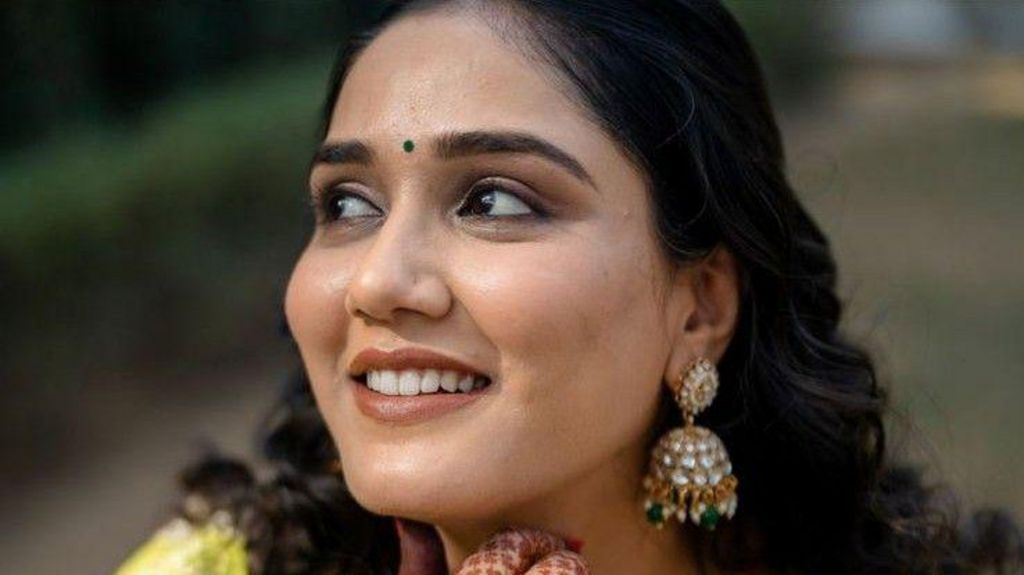
In a country where thousands of young women lose their lives annually to dowry-related violence, most such cases fade into obscurity. But the sudden death of 33-year-old model and former beauty queen Twisha Sharma in the central Indian city of Bhopal on May 12 has detonated a national media firestorm, turning a tragic domestic case into a flashpoint for long-simmering anger over India’s persistent dowry culture.
Warning: This report contains details that some readers may find distressing.
Just five months after Sharma married Bhopal-based lawyer Samarth Singh, she was found dead in the home she shared with her new husband and his family. Sharma’s relatives have leveled damning accusations against Singh and his mother, Giribala Singh, a retired high court judge. The family alleges the pair subjected Twisha to repeated physical and psychological torture over unmet dowry demands, and ultimately killed her.
Giribala Singh has forcefully denied all claims, dismissing the allegations as entirely baseless. She has countered that Twisha struggled with untreated mental health conditions and died by suicide. Law enforcement have confirmed they have filed formal dowry death charges against both Singhs and are working to determine whether Twisha’s death was a homicide or suicide.
The investigation has been complicated by Samarth Singh’s disappearance. Authorities have issued a nationwide lookout notice to prevent him from fleeing India, and announced a cash reward for any tip that leads to his arrest. A Bhopal court granted anticipatory bail to Giribala Singh earlier this month, but rejected bail for Samarth and ordered him to surrender by May 23.
Speaking to reporters, Giribala Singh claimed she has no knowledge of her son’s whereabouts, but said he intends to file a new bail application with the state high court and will surrender if that request is also denied. She claimed her son has been advised to lay low amid widespread public anger, arguing that he would face mob violence if he appeared in public. “Our son has lost the person he loved most, his life partner, and we cannot even grieve openly – everyone has turned against us,” she said in an interview with digital platform Mojo Story.
Twisha’s family has refused to cremate her body amid their fight for transparency. The initial autopsy report, reviewed by the BBC, recorded cause of death as hanging, but also noted multiple injuries sustained before Twisha’s death. The family has demanded a second independent post-mortem examination; while a court rejected that request, it ordered authorities to preserve the body to prevent decomposition. An Instagram page calling for “Justice for Twisha Sharma” has gained tens of thousands of followers, amplifying public pressure for a full, transparent investigation.
What makes this case unusual, and has driven its relentless media coverage, is the profile of both the victim and the accused. A multi-talented public figure, Twisha won the Miss Pune beauty pageant in 2012, went on to feature in national advertising campaigns, and appeared in a Telugu-language feature film before transitioning to a career in corporate marketing. Friends and family describe her as a vibrant, ambitious, and generous woman who met Samarth Singh on a dating app in 2024. The pair married in December 2025, with wedding photos showing a smiling, happy newlywed couple.
Yet tensions erupted almost immediately after the wedding, according to the Sharma family. Though they provided a dowry as demanded, the Singhs repeatedly taunted the couple that the gift did not meet their social standards – a claim Giribala Singh denies. While giving and receiving dowry has been banned in India for more than 60 years, the practice remains deeply entrenched in marriage customs across much of the country.
The friction escalated dramatically in April, when Twisha discovered she was pregnant, her family says. They allege that Samarth and Giribala questioned Twisha’s character, claimed the child was not Samarth’s, and forced her to undergo an abortion in the first week of May. Giribala Singh has rejected this account, asserting that Twisha herself requested the procedure because she was not ready to have children.
Twisha’s family has released what they say are private WhatsApp messages from Twisha sent in her final weeks, in which she described her life with the Singhs as “a living hell.” The last contact the Sharmas had with their daughter came on the night of May 12, when Twisha called her father via WhatsApp at 9:41 p.m. local time. Twisha’s father, Navnidhi Sharma, told BBC Hindi that Twisha was speaking with his wife when the call suddenly cut out. For 20 minutes, repeated calls to Twisha’s phone went unanswered, until Giribala Singh finally picked up and told the family “she is no more.”
The Sharmas have questioned why the Singhs did not contact police immediately after Twisha’s death, noting that as a retired judge, Giribala Singh would certainly be aware of standard protocol for unexpected deaths. Giribala Singh has responded that the delay occurred because the family’s first priority was rushing Twisha to the hospital to try to save her life.
Giribala Singh has also drawn widespread public backlash for her public comments about Twisha, in which she brought up the late model’s mental health and described her as “liberal” – a term she clarified to mean promiscuous during one interview. The remarks sparked national outrage, with many activists and commentators calling for her bail to be revoked and for her immediate arrest. Twisha’s father called the comments a deliberate campaign to defame his daughter and distract from the family’s accusations.
Criticism has also extended to law enforcement, with the Sharma family alleging multiple major lapses in the ongoing investigation. Earlier this week, Bhopal Police Commissioner Sanjay Kumar acknowledged to the BBC that procedural missteps had occurred, but stood by the preliminary finding that the case is a suicide, based on the initial autopsy and current investigative work. Navnidhi Sharma has rejected both the autopsy findings and the police conclusion, insisting his daughter was murdered and claiming that powerful, well-connected figures are working to derail the inquiry.
The case has now drawn involvement from the highest levels of state government. Madhya Pradesh Chief Minister Mohan Yadav has announced he will request a formal probe by India’s federal Central Bureau of Investigation, and has given the Sharma family a public assurance that the state government will support their quest for answers.
For Navnidhi Sharma, the fight is non-negotiable. “My daughter was wronged while she was alive, and now there are efforts to deny her justice even after her death,” he said. “We will not rest until we get the justice she deserves.”