分类: society

  • State coroner Liberty Sanger to begin inquests into Dezi Freeman and slain police officers on Monday

    State coroner Liberty Sanger to begin inquests into Dezi Freeman and slain police officers on Monday

    Next week will mark the formal start of long-awaited coronial inquests examining three linked deaths: two police officers gunned down while executing a warrant, and their killer, Dezi Freeman, who was shot dead by officers following a seven-month manhunt across the Victoria-New South Wales border region.

    The deadly incident unfolded on August 26 last year, when a team of Victoria Police officers arrived at Freeman’s rural property in Porepunkah, north-eastern Victoria, to serve an arrest warrant over historical sexual offence allegations. The 56-year-old, a self-identified “sovereign citizen” previously known under the name Desmond Filby, had a long record of open hostility toward law enforcement and the Australian judicial system. When officers entered the property, he opened fire, killing 59-year-old Detective Leading Constable Neal Thompson and 35-year-old Senior Constable Vadim de Waart-Hottart. A third member of the police team was left with life-threatening injuries.

    In the immediate aftermath of the shooting, Freeman fled the scene into the dense bushland of Mount Buffalo. An experienced outdoorsman with extensive knowledge of the local terrain, he evaded the massive manhunt launched by Victoria Police for seven months. Authorities offered a AU$1 million reward for any information that would lead to his capture on September 6, as the search expanded across state borders.

    It was not until March 30 this year that Freeman was located, hiding in an abandoned shipping container on a rural property in Thologolong, roughly 200 kilometres northeast of his original Porepunkah home and just kilometres from the NSW border. After a multi-hour standoff with tactical police, Freeman was shot dead by officers.

    Since Freeman’s death, Victoria Police has launched an additional line of inquiry into whether the fugitive received outside assistance from any sympathizers during his seven months on the run, a question the coronial inquest is expected to explore in depth.

    The Coroners Court of Victoria has scheduled separate initial hearings for Monday, with a morning session dedicated to the two slain officers and an afternoon hearing held for Freeman’s death. State Coroner Liberty Sanger will oversee the proceedings, and a court spokesperson confirmed that the first session will lay out the foundational framework for the independent investigations.

    “Judge Liberty Sanger will confirm the Victoria Police member assigned to be the coroner’s investigator in each respective coronial investigation and establish a timeline for delivery of the coronial briefs of evidence,” the spokesperson said.

    Under Victorian law, coroners are tasked with independently examining all circumstances surrounding a death, and can make formal recommendations to change policies or practices if they identify gaps that contributed to the fatal outcome, in order to prevent similar tragedies in the future.

    Speaking shortly after Freeman was shot dead in March, Victoria’s Chief Police Commissioner Mike Bush defended the tactical response, saying that officers had gone to great lengths to avoid a fatal outcome. “We tried everything possible, every tactical option that we have, to encourage the deceased to end this in a safe and peaceful manner,” Bush said. “He was given every opportunity to resolve this peacefully, and those opportunities weren’t taken.”

  • Coal mine gas explosion in China kills 8 and leaves dozens trapped underground

    Coal mine gas explosion in China kills 8 and leaves dozens trapped underground

    BEIJING – A devastating gas explosion at a coal mine in northern China’s major coal-producing region of Shanxi has claimed at least eight lives and left 38 workers trapped deep underground, Chinese state media confirmed Saturday.

    The emergency incident unfolded Friday evening at the Liushenyu coal mine, located in Changzhi city. At the time of the blast, a total of 247 miners were working below the surface, China’s official Xinhua News Agency reported. By early hours Saturday, rescue teams had successfully evacuated 201 workers to safety, but dozens remained unaccounted for, according to the report.

    Authorities have not yet determined what triggered the explosion, and an official investigation into the root cause of the accident is currently underway, Xinhua added.

    Chinese President Xi Jinping has issued urgent instructions calling for an all-out, unreserved rescue effort to reach the trapped workers. Beyond rescue operations, the president ordered a full probe into the disaster and that any parties found responsible for the incident be held legally accountable, per Xinhua’s report.

    Shanxi holds a central role in China’s domestic coal industry. Spanning an area larger than the entire nation of Greece and home to roughly 34 million residents, the province hosts thousands of mining operations and employs hundreds of thousands of coal workers. Last year alone, Shanxi produced 1.3 billion tons of coal, which accounts for nearly one-third of China’s total annual coal output, cementing its position as the country’s top coal-producing region.

  • More than 40,000 Californians evacuated due to chemical tank leak

    More than 40,000 Californians evacuated due to chemical tank leak

    A major emergency is unfolding in Southern California after a toxic chemical leak at a local aerospace manufacturing facility forced the evacuation of more than 40,000 residents, with authorities warning of catastrophic failure risks that could lead to an explosion or widespread contamination. The incident centers on a storage tank holding approximately 7,000 gallons of methyl methacrylate, a highly volatile, flammable chemical commonly used in industrial plastic production, located at the Garden Grove site in Orange County.

    Orange County Fire Authority (OCFA) first issued mandatory evacuation orders for neighborhoods surrounding the facility on Thursday afternoon, after monitoring systems detected an abnormal rise in temperature inside the affected tank. Officials later confirmed that the compromised tank had suffered a cooling system failure, one of three chemical storage tanks operating at the plant. The evacuation zone has since been expanded as emergency teams work to contain the leak, while investigations into the root cause of the incident remain ongoing.

    During a Friday afternoon press briefing, OCFA Chief Craig Covey outlined the two severe potential outcomes facing first responders. The first scenario involves total structural failure of the tank, which would release large volumes of hazardous material into the surrounding residential and commercial areas. The second, more dangerous outcome is a thermal runaway reaction that could trigger an explosion, which would in turn endanger the other two adjacent tanks storing additional fuel and chemical products.

    Covey emphasized that the evacuation is not an unnecessary precaution, stressing that “this thing is going to fail, and we don’t know when.” Emergency crews including specialized hazmat teams and industrial chemical experts are currently working to develop a strategy to depressurize the damaged tank and minimize public exposure to the toxic substance. As of Friday, the fire chief reported that response teams have already made progress halting further temperature increases in the compromised tank, a critical step to reducing the risk of an immediate disaster.

    Evacuation orders will remain in full effect while authorities work to mitigate the leak and resolve the emergency permanently. OCFA has set up multiple emergency evacuation centers to house displaced residents, and activated a public information hotline to answer questions from affected community members. Officials have also issued a request for the public to refrain from calling in to offer unsolicited response suggestions, to keep phone lines open for residents needing emergency assistance.

  • She was killed by her stalker. Could social media companies have saved her?

    She was killed by her stalker. Could social media companies have saved her?

    The brutal, premeditated murder of 43-year-old Kristil Krug, a married mother of three from Colorado, has sparked urgent legal reform across the United States – and drawn global attention to gaps in how tech companies respond to law enforcement requests in stalking and domestic violence cases.

    Krug’s nightmare began in autumn 2023, when unsolicited, increasingly menacing text messages and emails flooded her devices. The sender claimed to be her ex-boyfriend, and the relentless harassment left her trapped in a constant state of fear. Terrified for her safety, Krug turned to local police, who immediately submitted legal warrants to Google and major mobile providers seeking information to unmask her online tormentor.

    For weeks, however, the tech companies failed to respond to the request. No leads emerged to identify the stalker, and by December 2023, Krug was so frightened that she carried a handgun for self-defense even on routine trips. That changed on a December morning, shortly after she dropped her three children at school. When she pulled into her home garage and stepped out of her car, her attacker ambushed her from behind. He fatally fractured her skull and stabbed her in the heart before she could react.

    It was only when Krug’s husband requested a routine wellness check several hours later that her body was found. With the investigation now elevated to a homicide, police expedited their warrant demands, and within hours, a shocking truth emerged: the stalker was not an unknown ex-boyfriend. It was Kristil’s own husband, Daniel Krug, who had orchestrated the entire harassment campaign to cover his premeditated plan to kill her.

    Daniel Krug was convicted of stalking, murder, and criminal impersonation last April, and sentenced to life in prison. For Krug’s family, the verdict brought little closure – they were left grappling with the avoidable nature of her death. If tech companies had responded to the initial warrant in a timely manner, the stalker’s identity would have been uncovered long before the attack, they argue.

    “I’m confident that she would have been alive today,” said Rebecca Ivanoff, Krug’s cousin and a former domestic violence prosecutor based in Oregon. “She would have been able to put a safety plan in place, and he never would have had the opportunity to attack her the way he did.”

    Determined to prevent other families from suffering the same devastating loss, Ivanoff, Krug’s parents, and their extended supporters launched a campaign to change state laws. Their core demand was simple: establish mandatory legal deadlines requiring communications and social media companies to respond rapidly to law enforcement warrants in stalking and domestic violence emergencies.

    To their surprise, the proposal received widespread bipartisan support from law enforcement and lawmakers alike, who universally agreed the reform was a common-sense necessity. On May 1, Oregon became the first U.S. state to pass the legislation, dubbed Kristil’s Law. The new statute mandates that social media platforms comply with relevant warrants within 72 hours, and traditional communications providers within five business days. Before the law passed, there were no binding rules for response timelines, and no consequences for delayed replies.

    Krug’s family is now pushing to pass the same law in Colorado, Kristil’s home state, as well as in other U.S. states and at the federal level. For Krug’s mother, Linda Grimsrud, the passage of the law in Oregon has given new meaning to her daughter’s death. “This at least helps me have a belief that I don’t have to look at her death as just another meaningless statistic … that she’s just another victim of domestic violence,” Grimsrud said. She added that learning the law had passed felt as meaningful as hearing the guilty verdict in Daniel Krug’s trial – and that the family’s work is far from over.

    Legal and gender violence experts say the issues that prompted Kristil’s Law extend far beyond U.S. borders. Professor Asher Flynn, of the ARC Centre of Excellence for the Elimination of Violence Against Women at Australia’s Monash University, noted that many other countries face the same regulatory gaps. In Australia, for example, there is no statutory requirement for tech companies to meet response deadlines, and while police can request expedited disclosures for life-threatening cases, the process is entirely discretionary, requiring officers to explicitly frame a case as urgent to move it forward.

    “This means that cases may only be escalated to emergency response mechanisms once risk has clearly intensified, rather than at earlier stages of stalking or coercive control,” Flynn explained.

    Nicole Westmarland, a criminology professor and director of Durham University’s Centre for Research into Violence and Abuse in the U.K., added that modern stalking has undergone a profound shift in the digital age. Nearly all stalking now involves some form of technology-facilitated abuse, making it a growing global public health problem that law enforcement has struggled to address. “We used to talk about technology-facilitated violence and abuse; I think that’s almost not a useful term anymore, because … it’s practically all technology-facilitated,” she said. “So it’s a massive swing.”

    In Oregon, the bill’s lead sponsor, Republican Representative Kevin Mannix – who wrote the state’s original anti-stalking law in 1995 – said he immediately recognized the urgent need for reform after learning of Krug’s case. Before Kristil’s Law, he explained, the typical processing time for law enforcement warrants at tech companies averaged six weeks, handled on a first-come, first-served basis with no priority for life-threatening cases.

    “It became clear that, in Kristil’s situation, had the communications companies provided their information immediately, she probably would not have been murdered,” Mannix said. “And so looking at that, we realised we needed a special category of warrant which is dedicated to domestic violence and stalking situations.” Mannix negotiated directly with communications companies to craft the bill, which was structured to only apply to high-risk domestic violence and stalking cases, rather than creating broad new requirements for all warrant requests. Companies ultimately supported the targeted approach.

    Requests for comment from Google and the mobile providers that received the original warrant in Krug’s case went unanswered. In prior public statements, Google has noted that it receives a massive volume of law enforcement requests daily, and maintains a 24/7 team dedicated to handling emergency requests.

    The new law has sparked ongoing debate about balancing individual digital privacy and personal safety, a point Grimsrud acknowledged. “It’s a tough topic, right, because it does deal with … freedom of speech and your rights and your freedoms,” she said. “But I just don’t feel that, especially in this age of technology … people should be able to hide.”

    Meg Garvin, executive director of the National Crime Victim Law Institute, called Kristil’s Law a clear step forward, but expressed frustration that regulatory reform was needed to close a gap that should never have existed. She hopes the law serves as a wake-up call for tech companies and legislatures across the country. “Jurisdictions that don’t have it, corporations in those jurisdictions should take a hard look at themselves and say: Why wouldn’t we automatically prioritise information requests that involve risks to persons?” she said.

    Today, Grimsrud and Krug’s father continue their advocacy work: they are lobbying Colorado lawmakers to pass Kristil’s Law during the 2027 legislative session, while also helping care for Krug’s three children, now aged 17, 13, and 11. Grimsrud said her daughter, a former dancer with a biochemical engineering degree, a sharp intellect, and a beloved sense of humor, who was always fiercely protective of her family, would support the work they are doing.

    “She would be proud of the fact that we can … try to make someone else’s family not go through such suffering, or at least make some small ripple in the pool,” Grimsrud said. “I just feel really strongly that she’s there and wanting to see us succeed … if she can do some good for other families, I know that she’d be proud of that.”

  • Sixteen injured in shipyard explosion on NYC’s Staten Island

    Sixteen injured in shipyard explosion on NYC’s Staten Island

    A devastating incident unfolded at a Staten Island shipyard in New York City on Friday, when a fire on a moored barge escalated into a damaging explosion that left 16 people injured, multiple first responders among the casualties. The New York City Fire Department (FDNY) confirmed that three individuals – two firefighters and one civilian – are in serious condition after being urgently transported to area medical facilities for treatment. Alongside the three critical cases, 11 other firefighters and two emergency services personnel also sustained injuries in the event, FDNY officials added.

    Emergency dispatchers received the first report of a fire and trapped workers at the dockside site at approximately 3:30 p.m. local time, according to official records. Around 50 minutes after the initial blaze was reported, a sudden explosion tore through the barge, forcing incident commanders to call in additional emergency resources to the scene, which is located on Staten Island – a New York City borough accessible via ferry from Manhattan, positioned southwest of the borough.

    Joanne Mariano, a representative from FDNY’s press office, told the Associated Press that two workers were initially reported trapped in a confined space on the vessel as fire spread through the structure. When first responders arrived to tackle the emergency, they pinpointed the origin of the fire in the basement of a metal outbuilding at the dock.

    As of Friday, investigators have not yet determined the root cause of the fire and subsequent explosion. Local officials have also warned residents and commuters that the incident response will lead to extended road closures and significant traffic disruptions in the surrounding area in the coming hours.

  • ‘The mosque always felt like a safe space’: San Diego’s Muslims reel after deadly shooting

    ‘The mosque always felt like a safe space’: San Diego’s Muslims reel after deadly shooting

    A brutal mass shooting at the Islamic Center of San Diego, the largest Muslim place of worship in San Diego County, has claimed three lives and left the region’s Muslim community in profound grief, simmering anger, and shattered sense of safety. The attack, which investigators have classified as a bias-fueled hate crime, has sparked widespread criticism of local leaders who community members say ignored years of repeated warnings about surging Islamophobia across the United States.

    The violence unfolded shortly before midday prayers on a Monday, when two armed gunmen opened fire outside the mosque grounds. Killed in the attack were 51-year-old Amin Abdullah, 57-year-old Nadir Awad, and 78-year-old Mansour Kaziha, who was known to the community by the affectionate nickname Abu Ezz. The 140 children who attend the on-site mosque school were protected from further harm thanks to rapid action: Abdullah, who served as a security volunteer at the center, triggered an emergency lockdown that prevented the gunmen from accessing the full building. Community members have since honored the three victims as heroes, who all rushed toward danger to shield fellow worshippers and young people inside.

    Osama Shabaik, a San Diego attorney and long-time regular attendee of the mosque, described the disbelieving shock that gripped him when he learned of the deaths. “We’ve had so many times where someone has driven by the masjid fired a BB gun – throwing something at the masjid, just a lot of incidents like that,” he explained to reporters. “Then my wife called me, and she’s like ‘did you see the news? Amin is dead’. I kinda just stopped in my tracks.” Shabaik remembered each victim warmly: Abdullah always greeted everyone with a wide smile, Kaziha served as a beloved mentor and unofficial caretaker for the mosque for decades, and Awad selflessly ran toward the gunfire after hearing shots from his nearby home, an act that saved multiple lives.

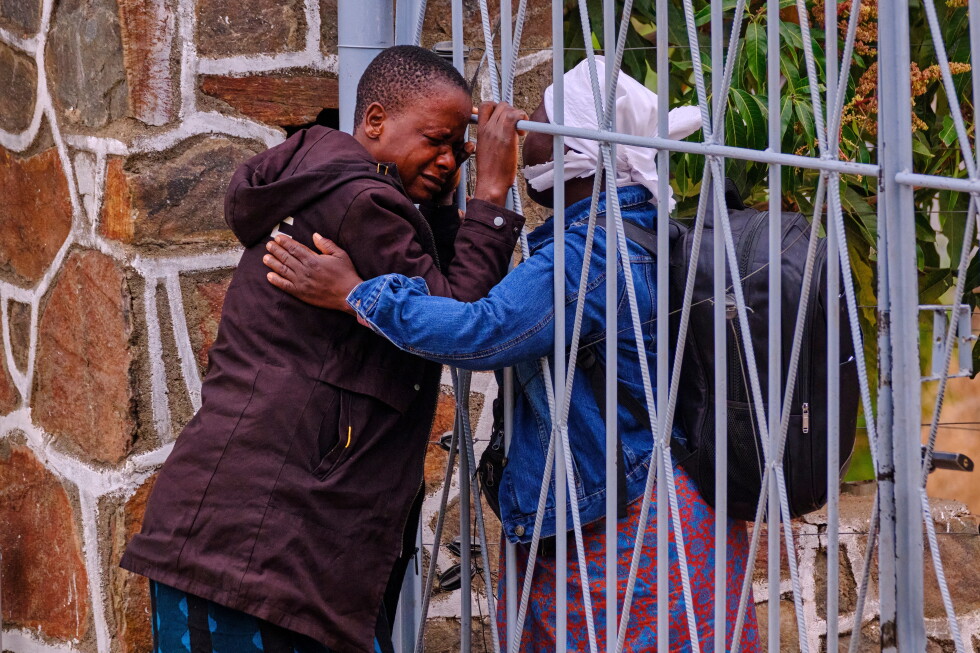
    Two days after the attack, more than 2,000 people from across California and the United States gathered at the mosque for funeral prayers to honor the three men who gave their lives to protect their community.

    Investigators from local police and the FBI have confirmed the attackers were radicalized by extremist ideology. Evidence collected after the shooting shows the pair were influenced by neo-Nazi propaganda and drew inspiration from previous anti-Muslim massacres, including the 2019 Christchurch mosque attack that killed 51 worshippers in New Zealand.

    Community leaders say this deadly attack is the tragic culmination of a sharp national rise in anti-Muslim and anti-Arab hate incidents that began with the start of Israel’s military campaign in Gaza. The Council on American-Islamic Relations (CAIR), the nation’s largest Muslim civil rights organization, has documented at least 8,658 reported cases of Islamophobia and anti-Arab discrimination across the U.S. since the start of 2024.

    For years, and particularly over the last three years of escalating anti-Palestinian hostility, Muslim organizers in San Diego have repeatedly reached out to local elected officials, university administrators, and law enforcement to flag the growing risk of violence. But those warnings, community members say, were largely dismissed.

    Much of the community’s anger is directed at San Diego Mayor Todd Gloria, a vocal supporter of Israel who has publicly condemned pro-Palestinian protests and aligned closely with anti-Muslim Zionist groups. When Gloria visited the mosque shortly after the shooting to announce increased police patrols, he was met with furious pushback from local residents. When the mayor bailed on a scheduled meeting with Muslim community leaders immediately after the October 7 attacks last year, residents say that neglect proved deadly.

    “Right after October 7, he bailed on our meeting last minute… and then had the audacity to show up on the day of the shooting,” said Samar Ismail, a graduate student at the University of California San Diego and community organizer. Shabaik echoed that criticism, saying: “Mayor Gloria is not someone that I would welcome into our Muslim spaces. He is someone who turned his back on the Muslim community years ago, and he turned his back on the issues that affect us.”

    Beyond elected officials, community members are also questioning whether law enforcement missed clear warning signs that could have prevented the attack. Police have confirmed that one of the suspects’ mothers contacted authorities hours before the shooting to warn that her son was suicidal and had access to firearms. Shabaik also confirmed that community members were aware of threatening public posts made by one of the gunmen, Cain Clark, on the social platform Discord more than a month before the attack, where he shared photos of the same firearm and bulletproof vest he used in the shooting. Shabaik added that a member of the public had already alerted the FBI to Clark’s activity ahead of the attack, though federal authorities have not confirmed whether they acted on that tip.

    For San Diego’s Muslim community, the attack has destroyed the safe haven the mosque represented for generations. For long-time attendees who grew up facing anti-Muslim bigotry in the U.S., the center had long been a space to escape that hostility. “We always grew up knowing that there’s a target on our back, the mosque always felt like a safe space from that,” Shabaik said. Ismail, who described the Islamic Center as her “second home,” added that the “illusion of safety has been shattered. Fear has now exacerbated within the community.”

  • Residents wade through flood waters and submerged cars in New York City

    Residents wade through flood waters and submerged cars in New York City

    Residents across New York City have been forced to navigate waist-deep floodwaters that have swallowed entire streets and submerged dozens of parked vehicles, after an extreme weather event dumped record-breaking volumes of rain across the five boroughs. In the wake of the disaster, Mayor Zohran Mamdani confirmed that the unprecedented intensity of the rainfall overwhelmed the city’s aging municipal sewer system, leaving the infrastructure unable to handle the rapid accumulation of standing water across dense residential and commercial neighborhoods. Dozens of residential properties have already reported significant flood damage, with basements and ground-floor units completely inundated, displacing dozens of households and prompting emergency response teams to deploy swift water rescue assets to hard-hit areas. Local transportation networks have also been disrupted, with flooded arterial roads and subway entrances forcing temporary closures and snarling morning commute traffic across the city. The event has reignited public debate over the state of New York City’s aging stormwater management infrastructure, with climate advocates pointing to the disaster as evidence of the urgent need for infrastructure upgrades to address increasingly frequent extreme weather events driven by climate change.

  • Blaze tears through Donegal warehouse

    Blaze tears through Donegal warehouse

    A devastating out-of-control fire has swept through a commercial warehouse in Donegal Town, destroying the premises of long-standing local family enterprise Cherrymore Kitchens & Bedrooms. Emergency response teams rushed to the scene at the height of the blaze, mobilizing a total of 58 firefighters to contain the spread of the inferno and prevent it from extending to surrounding residential and commercial properties. The large size of the warehouse and the combustible construction and inventory materials on site turned the fire into a major operation, requiring multiple fire crews from across the region to coordinate their response. As of initial reports, no casualties have been confirmed, but the business, which has served the local community for years with custom kitchen and bedroom solutions, has suffered extensive damage to its facility and stock. Local residents have expressed shock at the incident, with many already starting to organize support for the family behind the brand as they begin to assess the damage and plan their next steps. Investigators are expected to launch a full probe into the cause of the blaze in the coming days.

  • A senior Buddhist monk accused of child sexual abuse is released on bail in Sri Lanka

    A senior Buddhist monk accused of child sexual abuse is released on bail in Sri Lanka

    COLOMBO, Sri Lanka – A Sri Lankan court has granted bail to a prominent senior Buddhist monk arrested earlier this month on charges of sexually abusing a 14-year-old minor, a decision that has ignited fierce public discussion across the majority-Buddhist island nation. Seventy-one-year-old Rev. Pallegama Hemarathana, who has publicly denied all allegations against him, was taken into custody alongside the victim’s mother, who faces charges of assisting the monk in the alleged abuse. The pair were both released on bail Friday by a court in Anuradhapura, Sri Lanka’s ancient cultural heartland.

    Prior to his release, the high-profile cleric had avoided pre-trial detention in a standard correctional facility after claiming urgent medical concerns, instead completing his required custody period at a local hospital. Hemarathana holds significant standing in Sri Lanka’s Buddhist community: he serves as the custodian of eight major ancient Buddhist pilgrimage sites in Anuradhapura, locations that draw devout Buddhist visitors from across the globe.

    With more than 70 percent of Sri Lanka’s 22 million residents identifying as Buddhist, monastic figures wield outsized influence over the country’s political and social spheres. The allegations against Hemarathana have split public opinion, with passionate arguments emerging both in defense of the monk and in support of holding him accountable under the law.

    When the accused was brought to the Anuradhapura court for Friday’s bail hearing, women’s rights advocacy group Women for Freedom organized a silent demonstration outside the courthouse to demand justice for the minor victim. Hemamali Abeyratne, a representative of the group, criticized the widespread societal and institutional bias that has favored the accused monk over the young victim.

    “As a community, we have to ask ourselves whether we are delivering real justice to this child,” Abeyratne stated. She emphasized that the status of the accused should never impact the pursuit of justice, noting, “The question is not whether the accused is a monk, a school principal or an ordinary member of society, but only whether justice prevails. We know that a child can become a victim in the hands of any member of this society.”

    Legal representatives for the monk have pushed back against the accusations and the calls for extended pre-trial detention, claiming that non-governmental organizations and women’s rights groups hold pre-existing bias against the high-profile cleric. Mahesh Kotuwella, an attorney on Hemarathana’s legal team, alleged that civil society and what he called “anti-Buddhist groups” are actively working to sow social unrest and secure a longer detention period for the monk. The case is scheduled to return to court for further proceedings next month.

  • What to know about the death of a Congolese man in Ireland

    What to know about the death of a Congolese man in Ireland

    DUBLIN, Ireland — Hundreds of activists and community members across Ireland are demanding a full, transparent investigation into the death of 35-year-old Yves Sakila, a Congolese man who died after being detained by private security guards outside one of Dublin’s most iconic retail locations.

    The incident, which took place on May 15 outside Arnotts — Ireland’s oldest and largest department store located in central Dublin — has drawn nationwide outrage after disturbing surveillance footage of the encounter emerged, with activists drawing sharp parallels between Sakila’s death and the 2020 murder of George Floyd at the hands of Minneapolis police, a case that sparked a global reckoning over systemic anti-Black racism and excessive use of force.

    According to law enforcement reports, security guards suspected Sakila of shoplifting a bottle of perfume from the store. When he attempted to flee, he knocked over an 80-year-old pedestrian, who was later hospitalized for treatment of his injuries. Sakila was eventually caught and pinned to the sidewalk by multiple guards, and footage of the incident reviewed by the Irish Network Against Racism (INAR) shows him struggling and crying out in distress for nearly five minutes before he lost consciousness. The advocacy group confirmed that the video shows a man in a gray suit kneeling directly on Sakila’s neck during the restraint, a detail that has amplified public anger over the incident. When Gardaí (Irish police) arrived at the scene, Sakila was already unresponsive, and he was pronounced dead shortly after being transported to a nearby hospital.

    Sakila, who moved to Ireland from the Democratic Republic of Congo as a teenager, had lived in the country for more than 20 years. Though he once worked in the technology sector, he had experienced homelessness in recent years and struggled with substance abuse, according to his family’s attorney. Childhood acquaintances remember him as a warm, grounded member of Ireland’s Congolese community. “Yves Sakila was a man who did not deserve to die,” said Suzie Tansia, a representative of Congolese Community Ireland, speaking at Thursday’s demonstration. “He was a human being, like you and I. He was somebody’s son, and that could have been any one of us.”

    Irish anti-racism organizers have raised urgent alarm over the circumstances of Sakila’s death. “We are very concerned that this case appears to have the hallmarks of a case of excessive use of force,” said Shane O’Curry, INAR’s director. “The death of a Black man in such circumstances is extremely worrying, and we urge the authorities to thoroughly investigate all of the circumstances leading to this man’s death, in order to ensure minority ethnic community confidence in the criminal justice system.” Arnotts has issued a statement saying it is “deeply saddened” by Sakila’s passing, and announced it is conducting an internal review of its privately contracted security services while cooperating fully with the ongoing police investigation.

    Two separate probes are currently underway into the incident. Irish Prime Minister Micheál Martin has publicly called for a comprehensive, unbiased investigation, extending his condolences to Sakila’s family and the wider Congolese community in Ireland. “My deepest sympathies go out to his family, and to the wider Congolese community,” Martin said. “I don’t want to prejudice the outcome of that investigation but I think a lot of people are clearly very concerned about what has transpired here.” Gardaí are leading the criminal investigation into Sakila’s death, while Ireland’s police ombudsman has launched a separate internal probe into the actions of responding officers. Initial reports indicate the first officers on scene handcuffed Sakila before realizing he was unresponsive and beginning cardiopulmonary resuscitation. An autopsy has been completed, but law enforcement has declined to release the official cause of death for operational reasons, leaving Sakila’s family frustrated by the lack of publicly available information, according to their legal representation. Police have issued a public call for any witnesses to the incident to come forward to assist with the investigation.

    In the week following Sakila’s death, community members have organized multiple gatherings to honor his life and demand action. A quiet vigil was held outside Arnotts on Tuesday, drawing dozens of attendees, and hundreds of protesters gathered peacefully outside Ireland’s Parliament on Thursday to call for systemic change. Protesters carried signs reading “Black lives matter here too” and chanted slogans including “Justice for Yves, dignity for all” and “No justice, no peace.” Ahead of the protest, the Black Coalition Ireland held a formal press conference to outline five core demands: a fully transparent investigation into Sakila’s death, mandatory anti-racism training for all Irish law enforcement, new legislation limiting excessive force during civilian detentions, an end to anti-minority demonizing rhetoric targeting ethnic communities, and guaranteed equal treatment under the law for all Irish residents, not just on paper. “We are demanding this because our lives matter,” said Yemi Adenuga, a Meath County councilor and coalition spokeswoman. “It would be sad to see this happen again on the streets of Dublin.”