分类: society

  • 3 killed after passenger van hits an elephant in a Ugandan national park

    3 killed after passenger van hits an elephant in a Ugandan national park

    A devastating collision between a passenger van and a wild elephant at Murchison Falls National Park in Uganda has left three people dead and four others hospitalized with serious injuries, national police confirmed in an official briefing this week.

    The fatal accident unfolded Sunday along a paved roadway that cuts directly through the popular protected wildlife reserve, according to the statement released by police Monday. The vehicle was carrying a group of staff members from the Uganda Revenue Authority, who were en route from a city in northern Uganda back to the country’s capital, Kampala.

    Per the police account, after the van made impact with the elephant, the driver was unable to maintain control of the vehicle, leading to additional devastating damage and casualties. In the wake of the crash, law enforcement has issued a public safety advisory urging all motorists to practice heightened vigilance when traveling through national parks and other designated wildlife protection zones, where unexpected animal crossings remain a persistent risk.

    Graphic footage captured at the crash site shows traumatized survivors trapped in the wrecked van screaming and calling for emergency assistance, while the injured elephant can be seen frantically attempting to stand up in a thicket of brush a short distance from the road. As of Tuesday, authorities have not released a formal update on whether the elephant survived its injuries from the collision.

    While deadly vehicle collisions between passenger vehicles and large wildlife remain uncommon in Uganda’s protected park systems, the incident has brought renewed attention to the growing human-wildlife conflict that conservation organizations have long flagged as a critical challenge. As more infrastructure is built through and around protected habitats to support human travel and economic activity, overlapping spaces for people and wild animals create frequent, often deadly points of conflict that demand targeted policy and safety interventions.

    Conservationists note that balancing the expansion of access to park lands for tourism and local transit with protections for both human communities and resident wildlife remains an ongoing priority for Uganda’s environmental management agencies, as the country works to preserve its rich biodiversity while supporting economic development across the region.

  • Watch: Light drones fall into water after malfunction in Sydney show

    Watch: Light drones fall into water after malfunction in Sydney show

    A technical failure disrupted a highly anticipated winter light display over one of Sydney’s most iconic waterfront spots this week, sending scores of unmanned aerial vehicles crashing into the water below. The incident unfolded at Darling Harbour, a central tourist and recreational hub that draws thousands of visitors annually for seasonal cultural events. Organizers had planned the drone display as a centerpiece of the city’s winter light festival, with the craft programmed to create intricate, glowing patterns across the evening sky for attendees gathered along the shore. Unexpected system errors triggered a widespread malfunction that affected nearly 90 of the drones, causing the unmanned devices to lose stability mid-flight and drop into the harbor. No injuries to bystanders or damage to nearby waterfront infrastructure have been reported in the wake of the incident, local event officials confirmed. Organizers have launched an investigation into the root cause of the malfunction, reviewing pre-flight system checks and in-air operational data to determine what led to the mass failure. The incident has sparked informal discussion among event technologists about safety protocols for large-scale drone light displays, which have grown in popularity as an innovative alternative to traditional fireworks across major cities in recent years.

  • Gisèle Pelicot ‘deeply shocked’ by decision not to jail boys in rape case

    Gisèle Pelicot ‘deeply shocked’ by decision not to jail boys in rape case

    A high-profile French rape survivor has spoken out against a controversial UK court decision that spared three teenage boys from custodial sentences for the repeated rape of two underage girls in southern England, calling the outcome a failure of justice for victims of sexual violence.

    The attacks unfolded in two separate incidents in Fordingbridge, Hampshire, between November 2024 and January 2025. Two 14-year-old boys carried out rapes against a 14-year-old and a 15-year-old girl, while a third 13-year-old boy was convicted of aiding and abetting the second assault. In a shocking detail that amplified the gravity of the crimes, the perpetrators recorded video of the attacks and shared the footage across social media platforms. The case has already sparked urgent questions about the responsibility of big tech firms in preventing the spread of abusive content.

    At Southampton Crown Court, Judge Nicholas Rowland handed down Youth Rehabilitation Orders (YROs) rather than custodial placements, arguing that the offenders’ young ages meant avoiding permanent criminalization was a priority. The two 14-year-olds (now 15) received three-year YROs with 180 days of intensive supervision, along with 10-year restraining orders and three-month curfews. The 13-year-old (now 14) was sentenced to an 18-month YRO for his role in the second attack. Judge Rowland acknowledged the extreme severity of the crimes, noting that the recording of the assaults made them even more abhorrent, but stood by his decision to spare the teens from youth detention.

    Following the ruling, the UK Attorney General Lord Richard Hermer announced he would launch a formal review of the sentences, with 28 days to determine if the outcome is unduly lenient and should be referred to the Court of Appeal for reconsideration. Prime Minister Keir Starmer has also publicly labeled the case “appalling” and praised the two victims for their “extraordinary bravery” in coming forward amid such heinous circumstances.

    Now, 73-year-old Gisèle Pelicot, a veteran campaigner for sexual assault survivors who became a global symbol of courage after waiving anonymity in France’s largest ever mass rape trial, has spoken out about the UK ruling. In an interview with BBC Breakfast, Pelicot said she was “deeply shocked” that the offenders were allowed to walk free, while their victims carry lifelong trauma that will never fully heal.

    Pelicot’s own experience of abuse made headlines around the world: her husband Dominique Pelicot drugged her into unconsciousness for years and invited dozens of stranger to rape her, in a case that rocked France. Dominique Pelicot was ultimately sentenced to 20 years in prison, and Gisèle Pelicot has since dedicated herself to encouraging other survivors to speak out about their experiences.

    In the Fordingbridge case, one of the victims, now 16, described the non-custodial sentence as like a “rock straight in my face” and a mere “slap on the wrist” for the crimes committed against her. She told the BBC’s *Sunday with Laura Kuenssberg* that she and her family are pushing for the sentences to be changed, questioning why she endured the trauma of reliving the attack during trial if no significant punishment would be imposed.

    Pelicot said she salutes the incredible strength and courage of this victim for choosing to speak publicly about her abuse, adding that she hopes her own high-profile story helped give the young survivor the confidence to come forward. “Rape is a crime and justice has an essential role,” Pelicot said. “It’s there to, in fact, name the crimes, to recognise the suffering of victims, and to remember that in fact they must not remain unpunished.”

    She also called on national governments and large technology companies to step up their efforts to protect survivors of sexual violence, particularly amid the growing trend of perpetrators sharing abusive content of their attacks online that causes ongoing harm to victims long after the initial assault.

  • Ibrahim Benbrika, son of terror leader, pleads guilty to robbery and assault of man ‘lured’ to park

    Ibrahim Benbrika, son of terror leader, pleads guilty to robbery and assault of man ‘lured’ to park

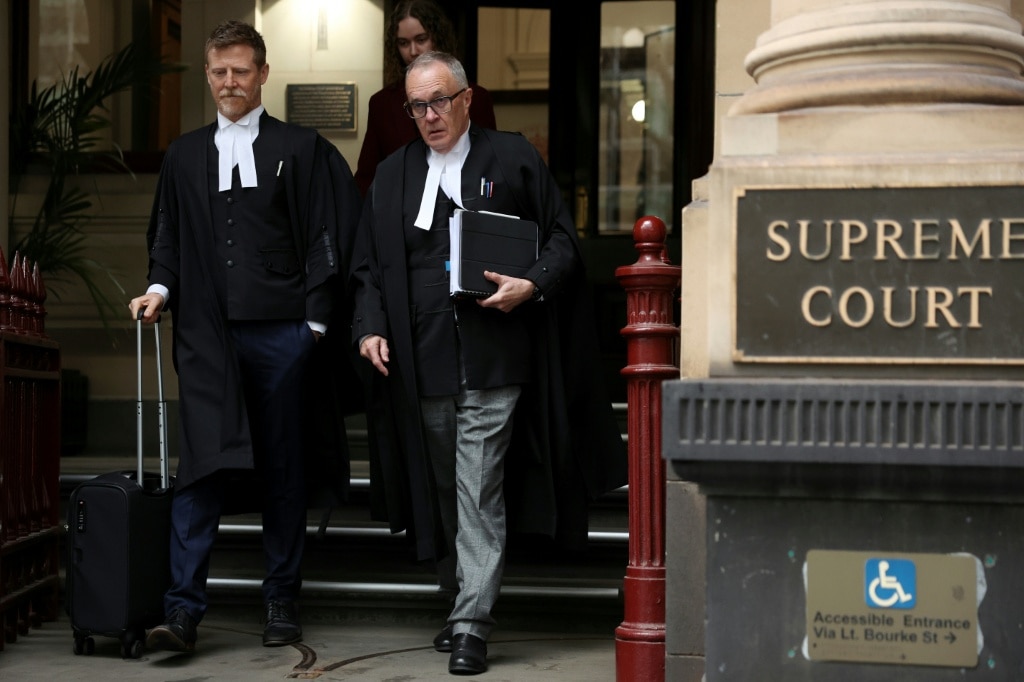
    In a sudden development at Melbourne Magistrates’ Court on Tuesday, Ibrahim Benbrika – the 26-year-old son of notorious convicted Australian terrorist leader Abdul Nacer Benbrika – entered guilty pleas alongside two co-accused to charges of robbery, common assault, and illegal controlled weapon possession, wrapping up a hearing that had been scheduled to span two days.

    Benbrika’s co-offenders, 24-year-old Michel El-Chikhani and 24-year-old Oways Afaneh, also confirmed their guilty pleas in court before magistrate James FitzGerald. Prosecutor Michael Roper laid out the details of the Crown’s carefully compiled case against the three men, outlining how the elaborate scheme unfolded from September 2024 onward.

    According to Roper’s account, the 43-year-old victim, who had no prior connection to any of the three defendants, initiated conversations on Facebook with a profile operating under the name “Holly”. Over the course of several months, the pair exchanged messages discussing an agreement for sex in exchange for money, eventually arranging a meeting at an isolated Melbourne nature reserve around 11 p.m. on January 24 this year.

    When the victim arrived at the pre-arranged site, he was not met by “Holly”. Instead, Benbrika, El-Chikhani and Afaneh emerged, clad entirely in black and wearing balaclavas to conceal their identities. The trio immediately knocked the victim to the ground, delivering repeated punches and kicks while demanding his mobile phone and cash. Court documents and evidence presented during the hearing detailed particularly threatening moments: Benbrika was captured on video pressing a sheathed knife against the victim’s head, while El-Chikhani held a sharp hunting knife directly to the man’s throat at one point during the attack.

    After subduing the victim, Benbrika dragged him in a headlock back to his own vehicle. There, El-Chikhani used the victim’s own phone to complete an unauthorized bank transfer of $250 to the group. In addition to the stolen cash, the trio also took two of the victim’s mobile phones, his official identity documents, and a portable battery pack before fleeing the scene. The victim managed to flag down a passing motorist for help and was subsequently transported to a local hospital for treatment of his injuries.

    Roper emphasized the premeditated nature of the attack, telling the court: “This was a planned luring of a victim to a place that they’re alone at night. They are confronted by three armed men and terrorised.” Digital evidence recovered from the defendants’ phones corroborated the prosecution’s account: investigators found Snapchat clips recording segments of the assault stored on both Afaneh and Benbrika’s devices. Another video, recovered from the devices, captures the three men sitting around a kitchen table after the attack discussing their actions, with one referencing the idea of “catching pedophiles”.

    Defense lawyer Veronika Drago, representing Benbrika, told the court that this offhand comment provides critical context for the entire incident, a detail she says was omitted from the prosecution’s initial summary. Drago explained that the “Holly” Facebook profile listed the account holder as an underage minor, leading the three men to frame their actions as a vigilante attempt to apprehend a child predator. “These are three young and very foolish men,” Drago told the court, adding that the ongoing notoriety of Benbrika’s father has cast a shadow over every aspect of her client’s life, from persistent bullying during his school years to his current placement in a protective custody unit while awaiting sentencing.

    Abdul Nacer Benbrika, Ibrahim’s father, is one of Australia’s most high-profile convicted terrorists. He was sentenced to 15 years in prison in 2009 for leading a domestic terror cell plotting attacks both within Australia and abroad. He completed his original custodial sentence in November 2020, but remained in detention under continuing detention orders until his release in December 2023, after serving 18 years total behind bars.

    Despite pushback from the prosecution, magistrate FitzGerald ruled that the case would remain within the jurisdiction of the Magistrates’ Court, rather than being elevated to the higher County Court for a plea hearing. FitzGerald noted that there was insufficient evidence before the court to confirm whether the trio had planned the attack over three months, or only became aware of the planned rendezvous shortly before the meeting. Still, he acknowledged the severity of the offense, calling it a “very aggressive attack on a person in the middle of the night” that must have been terrifying for the victim. All three defendants are scheduled to return to court on Wednesday for a scheduled pre-sentence hearing.

  • Starbucks Korea reveals series of mishaps leading to ‘Tank Day’ campaign

    Starbucks Korea reveals series of mishaps leading to ‘Tank Day’ campaign

    In a highly anticipated public press conference held in Seoul this Tuesday, the South Korean licensee of Starbucks, Shinsegae Group, laid bare a cascade of systemic errors and oversights that led to the widely condemned ‘Tank Day’ promotional campaign, a misstep that has roiled the country and caused severe reputational and financial damage to the coffee giant’s local operations.

    The controversial campaign, which launched a line of insulated ‘tank tumbler’ cups under the ‘Tank Day’ branding, was deliberately scheduled to launch on May 18 — the annual national anniversary of the 1980 Gwangju Pro-Democracy Uprising, where hundreds of unarmed civilians were killed in a violent military crackdown ordered by the then-ruling government. Official records confirm 165 civilians were killed during the crackdown, 65 remain unaccounted for, and 376 more died from injuries sustained in the uprising, though many South Koreans maintain the actual death toll is far higher.

    The promotional name and timing immediately triggered widespread public fury across South Korea, as observers drew a direct parallel between the ‘tank’ branding and the military tanks deployed to crush the pro-democracy movement. What followed was a sharp drop in consumer sales, a nationwide call for a public boycott, and the immediate dismissal of Starbucks Korea’s chief executive, Son Jung-hyun.

    During Tuesday’s press briefing, Shinsegae executive Jeon Sang-jin presented the findings of the company’s internal investigation, which uncovered a pattern of reckless prioritization of speed over due diligence that extended from the campaign’s planning through its approval process. Jeon revealed that the marketing team relied entirely on artificial intelligence to generate campaign concepts, and the team members claimed the May 18 anniversary never registered as a problematic date during the ideation phase. ‘Those involved denied any intentional wrongdoing,’ Jeon stated, adding that the team only recognized the harm of the campaign after widespread public backlash erupted.

    The investigation also uncovered extreme negligence during the approval stage: of the seven senior officials required to sign off on the campaign, multiple approved the proposal as a routine administrative task without even opening the email attachment containing the campaign design and full details. Additionally, the mandatory legal team review that had been standard for all previous marketing campaigns was completely skipped for this promotion.

    Three of the five marketing team members working on the campaign have refused to surrender their mobile devices for independent forensic investigation, citing personal privacy rights, leaving open questions about whether the team intentionally moved forward with the AI-generated concept despite any implicit red flags. The internal probe confirmed the company has failed to build sufficient social and historical sensitivity across its teams, a systemic shortcoming that goes far beyond individual employee error.

    South Korean President Lee Jae Myung has already publicly condemned the campaign as ‘inhumane and disgraceful’, and local law enforcement has launched a separate criminal investigation. If investigators find evidence that the campaign was intentionally created to mock or trivialize the Gwangju Uprising, those responsible could face criminal charges in addition to termination from the company.

    Shinsegae Group Chairman Chung Yong-jin opened the press conference with a deep public bow, issuing a direct apology to the bereaved families of Gwangju uprising victims and accepting full accountability for the incident. ‘I will make no excuses. I take full responsibility for this matter,’ Chung said, before declining to take questions from assembled reporters.

  • Dozens of drones crash into Sydney harbour after light show glitch

    Dozens of drones crash into Sydney harbour after light show glitch

    One of the Southern Hemisphere’s most anticipated annual cultural events, Vivid Sydney, hit an unexpected snag on the evening of Monday 25 May local time, when nearly 90 drones plummeted from the night sky over Darling Harbour during the festival’s popular Star-Bound aerial display. Witness footage captured the dozens of unmanned devices tumbling out of formation, with many splashing into the waters of Cockle Bay just a short distance from gathered onlookers, leaving crowds confused by the sudden disruption to the programmed light show. The incident has already forced the cancellation of two scheduled performances, with the future of the remaining 20 planned drone shows still under review. The UK-based drone production company Skymagic, which designed and operates the 1,000-drone display, has pinpointed the root of the failure: an unanticipated shift in radio frequency conditions that occurred after the drones had already taken off. According to a company spokesperson, the frequency change disrupted positional accuracy for affected devices, triggering their pre-programmed failsafe landing protocols that sent them descending into the harbour and surrounding marina areas. Skymagic was quick to emphasize that no drones fell outside the designated safety boundaries set for the performance, meaning no bystanders were injured in the incident. That claim did little to soften the shock of witnesses, however. Robert, a worker at the Darling Harbour waterfront, told Australian public broadcaster ABC that the sound of crashing drones was audible even from 10 to 20 meters away. “You could hear them physically crash and smash onto the cement marina,” he explained. Representatives for Vivid Sydney, the three-week long festival that draws hundreds of thousands of locals and tourists to Sydney Harbour and central Sydney every year, issued a formal apology for the disruption. “We apologize for the disappointment and inconvenience caused to attendees,” the spokesperson said, adding that the decision to cancel upcoming performances aligned with the event’s standard safety protocols. Festival organizers have confirmed that Skymagic will partner with relevant Australian government agencies to conduct a full technical review of the incident. No decision will be made on whether to resume the remaining drone performances until the assessment is complete. The Star-Bound drone display was scheduled to run over 11 nights, with 22 total shows planned as a key attraction for the 2026 festival. This year marks only the second time Vivid Sydney has included drone shows in its official lineup: the festival first introduced aerial drone displays in 2024, drawing massive crowds, but opted to cancel all drone shows in 2025 over public safety concerns related to overcrowding. First launched in 2009, Vivid Sydney brands itself as the Southern Hemisphere’s largest combined festival of light, music, ideas and food. The event’s core attraction is a free 6.5-kilometer walking trail dotted with 43 large-scale light installations, including iconic light projections mapped onto the sails of the Sydney Opera House. Annually, thousands of visitors from across Australia and around the world travel to Sydney to attend the three-week winter festival.

  • South Korean Starbucks boss apologizes for ad campaign that evoked massacre

    South Korean Starbucks boss apologizes for ad campaign that evoked massacre

    In the wake of widespread national fury over a tone-deaf promotional campaign that many South Koreans view as a deliberate mockery of victims of the 1980 Gwangju pro-democracy military crackdown, Shinsegae Group chairman Chung Yong-jin — the majority stakeholder in Starbucks’ South Korean operation — has issued his second public apology in just two weeks. The Tuesday televised address saw Chung bow three times, openly begging forgiveness from both the bereaved families of activists killed under the country’s former military dictatorship and the South Korean public at large.

    The controversy ignited when Starbucks Korea launched a marketing push for its extra-large “tank” branded tumblers, scheduling the promotion for May 18 — the annual anniversary of the 1980 Gwangju Democratic Uprising. That historic pro-democracy protest was brutally crushed by military forces deployed by the authoritarian government, which used tanks, attack helicopters, and live fire to suppress the movement, leaving hundreds dead or injured. The campaign compounded the insult with the slogan “Thwack it on the table!” — a phrase widely recognized as a reference to the infamous 1987 police cover-up of the torture death of student activist Park Jong-chol, where officers falsely claimed Park collapsed and died after investigators “hit the desk with a thwack” during interrogation.

    Public backlash was immediate and overwhelming. Within hours of the promotion going live, Shinsegae pulled the campaign and terminated the contract of Starbucks Korea’s chief executive. South Korean police have also launched a formal criminal investigation, prompted by formal complaints filed by Gwangju victim families. A growing national movement has called for widespread boycotts of Starbucks locations across the country, drawing condemnation from top South Korean government officials. Interior and Safety Minister Yoon Ho-jung announced that Starbucks products would no longer be purchased or used for any official government events, labeling the chain’s actions “anti-historical behavior.” South Korean President Lee Jae Myung further amplified the criticism in a post on X last week, calling the campaign “inhumane and disgraceful behavior by cheap profiteers who deny the values of the South Korean community, basic human rights and democracy.”

    During his address, Chung acknowledged the profound pain and anger the misjudged campaign had caused across the country, stating, “I take it very seriously the fact that many people felt deep pain and anger because of Starbucks Korea’s inappropriate marketing campaign.” He also urged the public not to direct frustration at frontline Starbucks store employees, emphasizing that full responsibility rests solely with corporate leadership. As of Tuesday, no major disruptive incidents at retail locations had been reported.

    Chung first issued a formal apology on May 19, where he acknowledged the campaign had caused “deep pain to the victims and bereaved families of the May 18 Democratization Movement as well as to the public.” Senior Shinsegae executive Jeon Sangjin told reporters this week that the company’s week-long internal review has not yet found conclusive proof that Starbucks Korea marketing staff intended to mock the pro-democracy movement, an accusation the employees involved have repeatedly denied. However, Jeon confirmed that a number of employees refused management demands to hand over their personal smartphones for internal investigation. The company says it will wait for the results of the official police inquiry, and any employee found to have intentionally ridiculed the Gwangju victims will face immediate termination.

    To contextualize the deep national sensitivity around the May 18 anniversary: the 1980 Gwangju crackdown took place just months after General Chun Doo-hwan seized control of the country in a 1979 military coup. Official South Korean government records place the confirmed death toll from the crackdown at roughly 200, but pro-democracy activists and Gwangju victim advocates have long maintained that the actual number of people killed was far higher. Chun’s authoritarian regime also imprisoned tens of thousands of political dissidents under the guise of rooting out “social evils.” The widespread public anger over Chun’s dictatorship ultimately culminated in mass nationwide pro-democracy protests in 1987, forcing the regime to approve a constitutional revision that established direct presidential elections — a turning point widely recognized as the foundation of South Korea’s modern democratic system.

  • Cleaning the chakras of Ecuador’s cats and dogs

    Cleaning the chakras of Ecuador’s cats and dogs

    In the bustling San Francisco market of Quito, Ecuador’s highland capital, a centuries-old Andean spiritual tradition is adapting to meet a modern, 21st-century need. Traditional local healers known as curanderas have carved out a unique new niche, offering energy cleansing rituals called limpias to the furry companions of anxious, doting pet owners.

    What began as a practice to clear physical, emotional, and spiritual blockages for human clients now extends to dogs, cats, rabbits, and even farm animals across the country. For devotees of the ritual, the treatment works to unblock blocked energy centers, or chakras, in animals, just as it does for people. Healers use a blend of ancestral tools: fragrant wild-harvested medicinal herbs, purifying smoke, raw farm eggs, and sacred Amazonian seeds to draw out negative energy and fend off harmful spiritual influences.

    Fifth-generation healer Nancy Correa comes from a long line of female curanderas, and she says her pet cleansing services have grown steadily in popularity in recent years. When 1-year-old golden retriever Lucas arrived at her stall after a frightening run-in with a neighborhood cat left him withdrawn and anxious, Correa pulled together a bundle of wild amaranth, rue, nettle, and eucalyptus to rub over his fur. She selects these specific herbs, she explains, because they grow wild in mountain ravines, absorbing the pure combined energy of water, air, and Andean sunshine.

    Lucas’s owner Ximena Tixi, a 49-year-old Quito architect, says she has already seen dramatic improvements after just two cleansing sessions. “He’s more active now, and he no longer carries that fear he had after the encounter,” she told Agence France-Presse. By the time Lucas showed up for his third session, he trotted willingly into Correa’s stall, his tail wagging with no sign of his earlier anxiety.

    A short walk away at the same market, fellow healer Amparo Lugmana recently led a cleansing ritual for her own 4-year-old mixed-breed dog Copito, who had been listless and “feeling down” for weeks. Lugmana rubbed rose petals, a raw egg, and healing herbs over Copito’s thick white curly fur, before finishing the ritual by tying a necklace of Amazonian huayroro seeds around his neck — a traditional charm meant to ward off negative energy and evil spirits.

    Lugmana is no stranger to treating animal clients: she has worked on cats, rabbits, and even ships post-treatment cleansing kits to rural areas for owners of cows and chickens that have stopped producing milk or eggs. The cost of a pet limpia ranges from just $5 to $10, depending on the size of the animal, making the ancient ritual accessible to many local pet owners.

    For Quito’s pet parents, the practice offers a low-cost, culturally rooted alternative to modern behavioral interventions for anxious or withdrawn pets, filling a gap between standard veterinary care and holistic wellness that resonates with Ecuador’s deep Andean cultural heritage.

  • Wave of child abuse cases shakes schools in Paris

    Wave of child abuse cases shakes schools in Paris

    A landmark sexual abuse trial is set to open Tuesday in Paris, marking the highest-profile legal proceeding in a year-long crisis that has thrown the French capital’s early childhood education system into chaos and sparked widespread parental fury. The defendant, a part-time after-school aide known locally as an animateur, stands accused of sexual misconduct against five young students at Alphonse Baudin Junior School in Paris’ 11th arrondissement.

    The case is just the first of multiple upcoming legal actions tied to a sprawling investigation into abuse allegations involving non-teaching child care staff across the city. Three additional trials are scheduled to begin over the summer, with a verdict expected in a fourth case heard earlier this month, and investigators have confirmed ongoing inquiries at nearly 100 Parisian crèches, kindergartens and primary schools. The allegations range from inappropriate verbal behavior and physical aggression to severe sexual abuse of young children. As recently as last week, police carried out a coordinated raid on three schools in the 7th arrondissement, detaining 16 people and filing formal sexual misconduct charges against three.

    For parents across Paris, the crisis has shattered trust in the city’s child care system. Many have openly criticized Paris City Hall, which directly employs the roughly 15,000 animateurs working across city schools, for dismissing early complaints and failing to address systemic vulnerabilities. One parent, speaking to the BBC, shared the harrowing experience that led his family to uncover the allegations in the upcoming trial. Back in April 2025, after another parent reported their child had been assaulted, he and his wife questioned their four-year-old daughter. When asked if the defendant had touched her, the girl confirmed he had given her inappropriate cuddles, then demonstrated the contact by stroking her own back in an unusual, disturbing manner — a revelation that confirmed the parents’ worst fears.

    Advocacy groups say the root of the crisis lies in deeply flawed hiring and training practices for animateurs, who are responsible for supervising children during lunch breaks and after-school programs, where they lead recreational, arts and sports activities. Elisabeth Guthmann, co-founder of SOS-Périscolaire, an advocacy group founded in 2021 to push for safer after-school care, explained that poor pay and lax hiring standards have created a high-risk system. Most roles require only a basic child care certification to be hired, and pressure to fill vacancies is often so intense that even this minimal requirement is frequently set aside. Guthmann cited one alarming example at a 16th arrondissement primary school, where four animateurs allegedly organized a child fight club, forcing pupils to brawl while other children stood by cheering.

    The crisis has also exposed deep divisions between parents demanding accountability and the animateurs themselves, many of whom say they now face unfair, widespread suspicion that has turned into professional discrimination. Last week, dozens of aides staged a strike to demand better working conditions and fair treatment amid the wave of allegations. Union representative Carla Bonnet argued that while serious abuse claims must be investigated, not all parental reports are well-founded, and city leaders have abandoned neutrality in favor of rushing to action. Rémi, a working after-school assistant, told reporters that “Working with children today, at the drop of a hat you can be accused of absolutely anything,” adding that city officials have failed to support staff amid the panic.

    Newly elected Paris Mayor Emmanuel Grégoire has moved quickly to address public anger, announcing a sweeping overhaul of the hiring and oversight system backed by a €20 million investment in training and monitoring. Under new rules, any animateur facing a formal abuse complaint will be automatically suspended pending investigation, and nearly 80 aides have already been suspended since the start of 2026. Grégoire Ensel, a representative of national parental advocacy group FCPE, said the crisis was entirely predictable: “When you have a system in which workers aren’t properly paid or trained or monitored, and where there’s no money or proper procedures for raising the alert, it’s not surprising that things get out of control.”

    While the scandal has been concentrated in Paris, child protection activists warn that identical systemic weaknesses exist in school systems across France, raising fears that the scope of abuse could be far broader than currently known. For affected families, the trial opening this week represents a long-awaited step toward accountability, even as many continue to demand deeper change to protect children.

  • Teenager who died during day out at beach will be ‘sadly missed’

    Teenager who died during day out at beach will be ‘sadly missed’

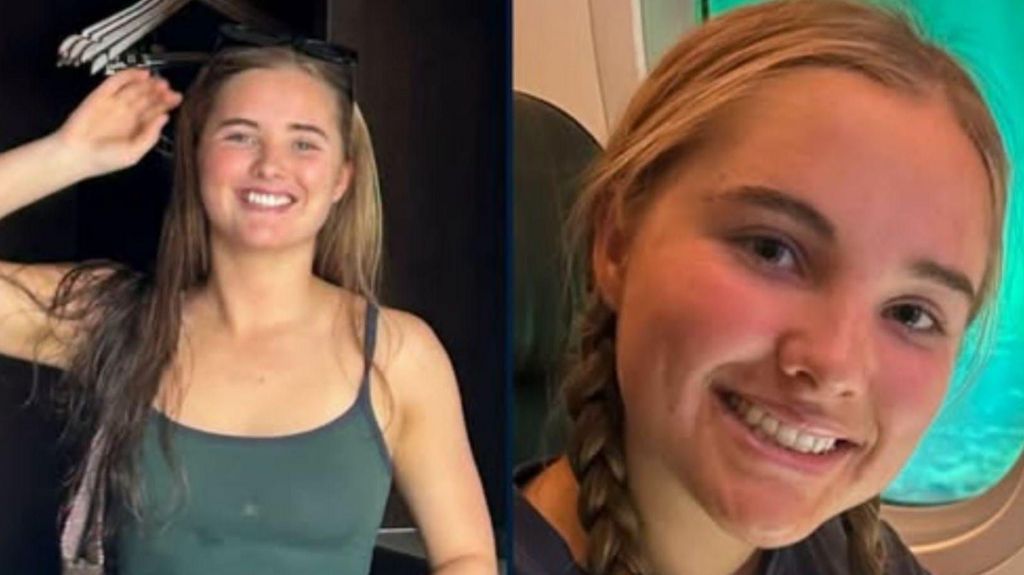
    A devastating coastal tragedy has rocked a tight-knit Irish community after a 15-year-old girl from Ballymun lost her life during a recreational trip to a popular County Dublin beach on Sunday.

    Abbie Carmody-Pepper had traveled to Burrow Beach alongside a group of friends for a casual day out when she disappeared after entering the water for a swim. Emergency services launched an urgent multi-agency search operation to locate the missing teen, with personnel from An Garda Síochána (the Republic of Ireland’s national police force), the Irish Coast Guard, and the Howth division of the Royal National Lifeboat Institution (RNLI) all joining the effort. Eventually, search teams recovered Abbie’s body from the coastal waters.

    Local Dublin City Councillor Gavin Pepper, who confirmed the teen’s identification to the public, revealed he is a distant relative of Abbie, calling the loss even more personally devastating. “I was shocked and saddened to hear of the passing of Abbie Pepper in a tragic accident in Sutton yesterday,” he said in a public statement. “It was even more heartbreaking to find out we are related.”

    Councillor Pepper shared that Abbie’s parents have extended their gratitude to the broader community for the outpouring of sympathy and support they have received in this devastating period. He also requested that the public respect the family’s need for privacy as they process their grief and mourn the loss of their daughter.

    Representatives from the RNLI, which provided on-site emergency casualty care as part of the search and recovery operation, also released a statement expressing their condolences. “The thoughts of everyone in the organisation is with the young girl’s family and friends,” the spokesperson said.

    Local funeral home Rom Massey & Sons, which is handling Abbie’s arrangements, also paid tribute to the teen, noting she will be deeply mourned by all who knew her. “Abbie will be sadly missed by her heartbroken family… school pals, relatives, neighbours and friends,” the firm said in a statement shared publicly.

    The tragedy has left the local community in mourning, with tributes continuing to pour in for the young teen.