分类: society

  • Japan executes a man convicted of setting fire that killed 5 at a pachinko parlor in Osaka

    Japan executes a man convicted of setting fire that killed 5 at a pachinko parlor in Osaka

    TOKYO – In a move that reignites long-simmering debate over capital punishment in Japan, the country executed a 58-year-old man convicted of a deadly 2009 arson attack on an Osaka pachinko parlor on Friday. This hanging marks the first execution carried out by Prime Minister Sanae Takaichi’s newly formed government, coming at a time when international condemnation and domestic demands for transparency and abolition of the death penalty are rising rapidly.

    According to Justice Minister Hiroshi Hiraguchi, the condemned man, Sunao Takami, was put to death by hanging earlier the same day. Hiraguchi detailed the horrific circumstances of Takami’s crime at a post-execution press conference: in 2009, Takami spread gasoline throughout the crowded gaming facility before igniting it with a lit match. The resulting inferno engulfed the entire building, leaving five people dead and 10 others with injuries that have left permanent physical and psychological scars. “This attack caused extremely severe harm and spread profound shock and fear across Japanese society,” Hiraguchi stated. “The victims who lost their lives must have endured unimaginable pain and terror in their final moments, and the survivors are forced to live with the long-term consequences of their injuries to this day.” After what he described as careful and exhaustive deliberation, Hiraguchi said he approved the execution order.

    Takami’s legal journey had concluded nearly a decade before his execution: the Osaka District Court convicted him of murder, attempted murder, and arson, and sentenced him to death in 2011. All subsequent appeals, including his final appeal to Japan’s highest court, were rejected in 2006 when the Supreme Court upheld the lower court’s death sentence. Following Friday’s execution, Hiraguchi confirmed that 100 inmates currently remain on Japan’s death row, 43 of whom are pursuing retrials for their convictions.

    Japan has long faced sharp criticism from the international community over its retention and use of capital punishment. A large majority of countries around the world have formally abolished the death penalty, and among the Group of Seven leading industrialized economies, only Japan and the United States still carry out executions.

    Domestic pressure for reform has grown significantly since the 2024 acquittal of Iwao Hakamada, who held the distinction of being the world’s longest-serving death row inmate after spending nearly 60 years in prison before his conviction was overturned. Critics have repeatedly called for either full abolition of the death penalty or sweeping reforms to increase transparency around execution procedures.

    Unlike many countries that still use capital punishment, Japan conducts all executions in complete secrecy. Inmates are not notified that their execution will take place until the morning they are hanged, a practice that human rights groups have condemned as cruel and unnecessary. While Japan introduced limited reforms in 2007 that require public disclosure of the names of executed inmates and basic details of their crimes, transparency around the process remains far lower than international human rights standards demand.

    When asked about calls for greater disclosure, Hiraguchi said the government has no plans to revise current practices. He claimed that releasing additional information about death row inmates and upcoming executions would cause unnecessary psychological distress to those awaiting their sentences.

    Friday’s execution was carried out during a parliamentary recess, a timing that critics have denounced as a deliberate tactic to avoid public scrutiny and open debate over the government’s capital punishment policy. Hiraguchi rejected these claims, saying the scheduling was not intentional.

    This execution is the first carried out by Takaichi’s administration. Japan’s most recent prior execution took place in June 2025, when the country put to death the man known as the “Twitter killer”, who was convicted of killing and dismembering nine victims in his suburban Tokyo apartment in 2017.

    While Japan retains one of the lowest overall crime rates in the developed world, it has seen a small number of high-profile mass killing incidents in recent decades that have hardened public support for retaining capital punishment among segments of the population, even as reform movements gain traction.
  • Ater ‘Elia’ Good death: Omar Omar, 20, granted bail after murder charge dropped

    Ater ‘Elia’ Good death: Omar Omar, 20, granted bail after murder charge dropped

    A 20-year-old man linked to an alleged Melbourne youth gang has walked free on bail after prosecutors withdrew a murder charge connected to the fatal New Year period drive-by shooting of a 16-year-old boy, the Victorian Supreme Court has confirmed.

    The fatal incident that sparked the latest court proceedings unfolded shortly after midnight on January 3, when Ater “Eila” Good was gunned down on a street near Fitzroy Police Station, in Melbourne’s inner-northeast. The shooting was alleged by authorities to be a retaliatory attack, coming just days after a New Year’s Eve double machete stabbing in nearby Carlton.

    According to police allegations, the violence is rooted in ongoing tension between two youth groups: the Fitzroy-based 6z gang, which Good was allegedly associated with, and the Heidelberg-based H-Town Boys. Police claim 6z affiliates carried out the Carlton stabbing against two H-Town Boys-linked individuals, leading to the retaliatory killing of Good. In the weeks after Good’s death, four young men alleged to have ties to H-Town Boys were formally charged with his murder.

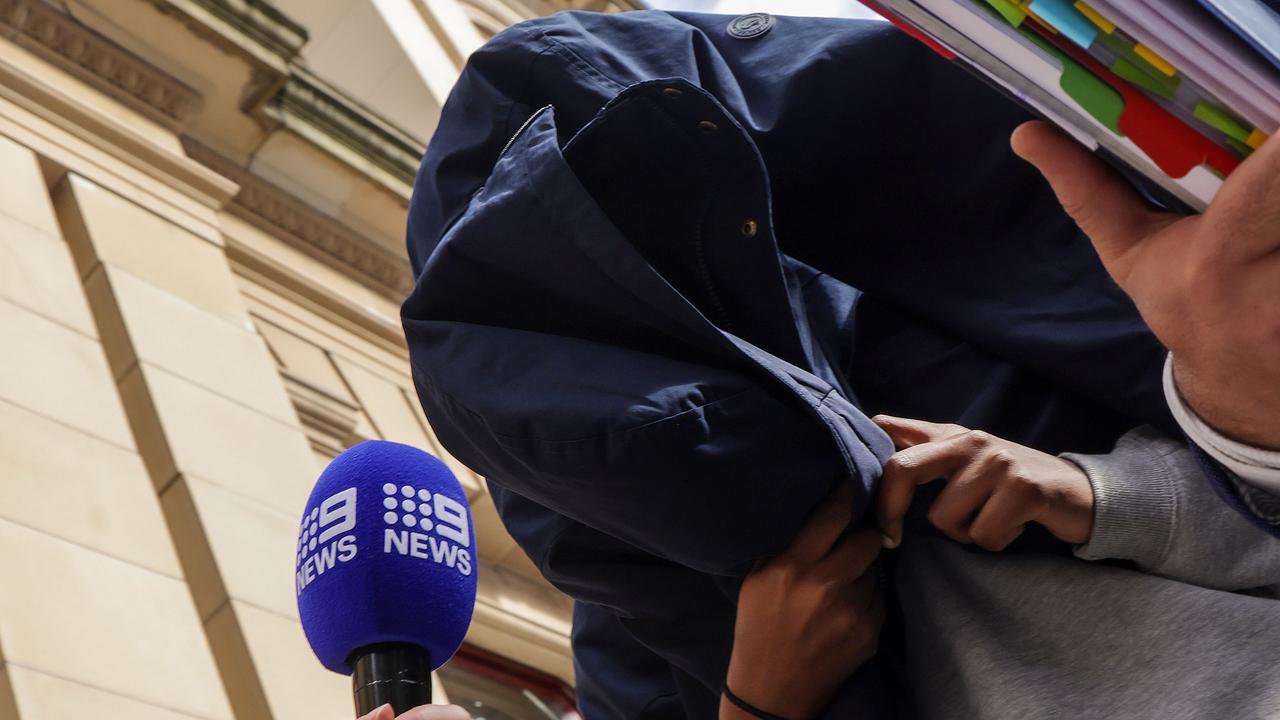
    On Friday, that case took a sudden turn when Omar Omar, 20, learned his murder charge had been withdrawn the previous day. In its place, prosecutors now accuse Omar of assisting the shooters after the fatal attack took place. Specific allegations against Omar include that he granted access to a car park in his apartment building for the vehicle used in the shooting, and that he has proven communications and photographed connections to other people linked to the alleged gang.

    Crown prosecutor Nadia Kaddeche argued against bail for Omar, telling the court the prosecution could not yet outline the exact details of how Omar is alleged to have aided the killers following the shooting, due to the recent charge adjustment. She centered her opposition to release on Omar’s purported connections to H-Town Boys.

    Presiding Justice Rita Incerti publicly rebuked the Office of Public Prosecutions for the lack of clarity in the case, noting the prosecution had failed to provide even a basic level of detail to let the court assess the strength of its current case. “It’s not satisfactory, what you’re telling this court is we can’t even give an indication,” Incerti said during the hearing.

    Omar’s legal team pushed back strongly against the prosecution’s framing of the case. Felicity Gerry KC, Omar’s barrister, urged the court to treat the labeling of the H-Town Boys as a criminal gang with significant caution. She told the court the group is simply a collection of young people of Somali heritage who live in the Heidelberg area, arguing that labeling it a formal criminal gang is an overreach. “It’s a huge step, in our submission, to suggest he is associated with a gang … there are live questions whether there is a gang at all,” Gerry said. “The whole basis for the Crown’s opposition to bail is certainly speculative and mislabelling the young people of Heidelberg.”

    Gerry added that evidence only shows Omar had casual contact with individuals linked to the alleged group, pointing out that her client has no prior criminal convictions, has a supportive family ready to monitor him, and already has a pending job offer with a local house painting business.

    The judge noted that longstanding tit-for-tat violence between the two groups dates back to the 2022 death of Khalid Mahat, but ruled that at this stage of proceedings, it was impossible to judge whether the prosecution’s current case against Omar is strong or weak. Granting bail, Incerti remarked that she had seen many young people like Omar caught up in damaging circumstances through her decades on the bench, telling Omar: “This is your chance, your opportunity and only you are responsible for what you do.”

    Following the ruling, Omar was seen embracing emotional family members as he left custody Friday afternoon. Three other co-accused – Shakib Abdul Kadir, Abdijalil Warsame and Sella Rabih – still face murder charges over Good’s killing. All four defendants are scheduled to next appear at the Melbourne Magistrates’ Court in November, and none have entered pleas to the charges against them.

  • Australian hiker’s body recovered as officials apologise for misreporting she was alive

    Australian hiker’s body recovered as officials apologise for misreporting she was alive

    A devastating communication error has shaken New South Wales, Australia, after 18-year-old experienced hiker Lily Hooper, who went missing while trekking in the state’s Southern Highlands, was incorrectly reported to have been found alive – a mistake that left her family briefly clinging to false hope before the tragic truth was revealed.

    Hooper, an experienced outdoor explorer, was first reported missing a week prior to the error, sparking one of the state’s largest recent land search operations. Over eight consecutive days, roughly 1,000 emergency personnel, police officers, and community volunteers combed the rugged, remote bushland of Nattai National Park, located southwest of Sydney, to locate the missing teenager.

    On Thursday, the incident took a chaotic turn when NSW Premier Chris Minns told a state parliamentary hearing that search crews had recovered Hooper alive, noting she had only half a bottle of water left after eight days lost in the bush. The news spread rapidly across Australian media outlets, bringing sudden, short-lived relief to Hooper’s loved ones and the community that had rallied to support the search. But within 30 minutes, Minns issued a urgent correction, confirming that what had been found was Hooper’s body, and that she had been deceased.

    By Friday, officials confirmed Hooper’s remains had been airlifted out of the remote national park to allow for official processing. A police spokesperson told media that a post-mortem examination will be carried out in the coming days to formally confirm identification and establish an official cause of death.

    In the wake of the painful error, both Premier Minns and NSW Police Commissioner Mal Lanyon have issued formal public apologies to the Hooper family, with Minns saying he intends to deliver a personal apology directly to the family in a private conversation.

    “The government, myself – we’re profoundly sorry,” Minns said in public remarks Friday.

    Lanyon acknowledged that large-scale search operations in remote, disconnected terrain create significant communication challenges, and said the misclassification of Hooper’s condition should never have happened. “Tragically, her condition was miscommunicated, and for that I apologise,” he stated. He added that NSW Police will launch a full review of existing search communication protocols to update policies and ensure such a painful mistake cannot be repeated in the future, with the goal of creating “foolproof” processes.

    NSW State Emergency Services Commissioner Mike Wassing explained that search teams often use coded language over public radio communications during large operations, to protect sensitive information from being heard by family members, volunteers and other civilians participating in the search. Wassing noted that codes are sometimes linked to seemingly mundane details, such as “bottles of water,” though he stopped short of confirming the exact root cause of the error, which remains the subject of an active administrative investigation.

    The miscommunication created a brief, cruel window where Hooper’s parents believed their daughter was alive, before the correction came through. The mistake has prompted widespread discussion about communication protocols during large emergency searches, and the need to balance operational security with the emotional needs of affected families.

  • British rapper Yung Filly to face retrial on rape charges in Australia

    British rapper Yung Filly to face retrial on rape charges in Australia

    British social media personality and rapper Yung Filly, whose legal name is Andres Felipe Valencia Barrientos, will undergo a new trial for three unresolved rape charges in Australia, following a jury verdict that acquitted him on multiple sexual assault counts but failed to reach a unanimous decision on the remaining charges. The 31-year-old creator, who rose to fame through his YouTube content, was first accused of a series of violent sexual offenses against a fan following a 2024 performance at a Perth nightclub. The allegations date back to an incident in the performer’s hotel room, where the accuser, a 20-year-old fan, told the court the pair initially engaged in consensual sexual activity before Barrientos allegedly became violent, continuing sexual contact after she repeatedly asked him to stop. Barrientos has maintained his innocence across all 10 charges brought against him. During his first trial last month, the Perth jury delivered not guilty verdicts on six of the counts: three charges of sexual penetration without consent, one count of common assault, and one count of strangulation. The jury did find Barrientos guilty on two counts of assault occasioning bodily harm. Sentencing for these convictions has been delayed until the conclusion of his upcoming retrial. Barrientos is scheduled to appear before a Western Australian court again on 27 August for a hearing to consider an application to modify his current bail conditions. As of this update, no official date has been set for the new trial. This is an ongoing developing story, with new details expected to be released in the coming days. Readers can access real-time updates through the BBC News mobile application or by following the official @BBCBreaking account on the social platform X for the latest alerts.

  • Bali jails Swiss tourist for insulting sacred Day of Silence

    Bali jails Swiss tourist for insulting sacred Day of Silence

    Bali, Indonesia’s world-famous holiday island, has long drawn millions of international visitors drawn to its lush coastlines, vibrant culture, and warm hospitality. But a recent legal ruling has put a sharp spotlight on the growing tensions between surging post-pandemic tourism and respect for local Balinese religious traditions: a 26-year-old Swiss national has been sentenced to 12 months in prison for insulting one of the island’s most sacred annual observances, Nyepi, the Day of Silence.

    The incident dates back to March of this year, when Nyepi fell on March 19. Nyepi is a foundational Hindu holiday for Balinese communities, marking the start of a new Saka year. Unlike most major cultural festivals that bring crowds and celebration, Nyepi is defined by complete quiet: for 24 hours, the entire island shuts down. Normally crowded beaches stand completely empty, the international airport halts all operations, public entertainment is banned, internet access is restricted, and even voluntary cuts to electricity use are widely observed. All people on the island — regardless of their personal religion or citizenship — are required to stay home and observe the day of silence, with locals stocking up on groceries in advance to avoid leaving their residences.

    Against this backdrop, Luzian Andrin Zgraggen, the Swiss tourist, deliberately violated the movement ban to walk along one of Bali’s normally busy empty beaches. He recorded a video of his outing, shared it to his Instagram account with profane captions, and described the quiet, empty scene as “crazy”. The video quickly spread across local social media platforms, sparking immediate and widespread outrage among Balinese communities. Zgraggen was taken into custody by local authorities shortly after the video went viral, and the clip was later removed from the platform.

    During his trial, Zgraggen testified that he did not fully grasp the scope and cultural significance of Nyepi’s restrictions, and insisted he never intended to offend Balinese people or their religious beliefs. “I deeply regret what I did, I apologise to the Balinese people,” he told the court, according to reporting from the Associated Press.

    However, presiding judges rejected that mitigation in their ruling, affirming that Zgraggen’s actions had caused measurable harm. “What the defendant did offended the Balinese people, hurt their faith and provoked public outrage,” the judge stated in the verdict.

    This case is not an isolated incident. In past years, a small number of foreign tourists have been detained or deported for breaking Nyepi’s rules, but this one-year prison sentence marks a notably strict penalty that underscores Bali’s growing commitment to enforcing respect for local culture. In the years following the global COVID-19 pandemic, Bali’s tourism sector has rebounded dramatically: in 2025, the island welcomed a record-breaking seven million international visitors, surpassing pre-pandemic numbers and bringing a major boost to the local economy.

    Yet that rapid rebound has come with a growing set of challenges. A steady stream of unruly behavior by foreign visitors has frustrated local residents and strained authorities, with incidents ranging from offensive acts at sacred religious sites to the creation of unregulated, exclusive tourist enclaves that sideline local communities, to widespread flouting of local traffic laws. In response, Bali’s government has already pledged to ramp up scrutiny of foreign visitors and enforce stricter penalties for any behavior that disrespects local norms and laws, in an effort to balance the economic benefits of mass tourism with protection of the island’s unique cultural and religious heritage.

  • ‘Hot new baby’: Pedophile former Catholic priest’s vile texts revealed

    ‘Hot new baby’: Pedophile former Catholic priest’s vile texts revealed

    A 79-year-old former Catholic priest has been handed a six-and-a-half-year prison sentence with a three-year non-parole period after pleading guilty to 11 serious child abuse offences, in a case that has drawn harsh condemnation from a New South Wales District Court judge for the predatory harm inflicted on vulnerable children.

    Guy Norman Hartcher’s string of crimes came to light in late 2024 during an undercover police sting operated by the NSW Child Exploitation Sex Crimes Squad. Hartcher, who had retired from the priesthood after suffering an acquired brain injury in 2002, was caught when he began communicating online with an officer posing as a 14-year-old boy going by the name Ben, who claimed to be almost 15 years old.

    Over the course of 2024, court documents revealed Hartcher used mainstream messaging apps to discuss child sexual activity with contacts both across Australia and internationally. He transmitted and received hundreds of pieces of child abuse material (CAM), including 32 graphic images of children aged between five and 15, alongside exploitative videos. In one particularly vile message revealed in court, Hartcher wrote, “I’m looking for a hot new baby”, and in another exchange he responded to a photo of an exposed underage girl with the crude message, “f**k baby you are so hot”. The court also heard Hartcher had offered to pay a child $50 to meet him for a sexual encounter.

    As the online relationship with the undercover officer progressed, Hartcher agreed to meet the fake 14-year-old on December 23, 2024, at a location in Pendle Hill, in Greater Western Sydney. When law enforcement approached his vehicle upon arrival, Hartcher immediately acknowledged he knew his contact was underage, telling officers, “I thought I was meeting this fellow, Ben, who I met online. I knew he was underage and I’m assuming he is not here, and I’m assuming he is you.”

    During sentencing proceedings on Friday, Judge Phillip Mahony SC described Hartcher’s actions as exceptionally harmful, labeling the offending “pernicious” and marked by “callous and predatory conduct towards the most vulnerable people in the community.” The judge emphasized that the distribution and collection of child abuse material is never a victimless crime, noting that every piece of CAM is created through the exploitation and abuse of children. Many of the explicit and graphic text messages Hartcher sent are too distressing to be released to the public.

    In his defense, Hartcher’s legal team cited a 2002 brain injury and subsequent age-related intellectual decline as contributing factors to his offending. A court-ordered sentencing assessment report found Hartcher claimed his actions were driven by a search for “sexual resurrection”, and he described his planned meeting as “dangerously stupid”, claiming he only intended to talk and maintained it was “all fantasy”. Judge Mahony accepted that Hartcher experiences genuine shame for his crimes and acknowledged that his brain injury and declining cognition impaired his judgment, but ruled that these mitigating factors do not excuse the “significant depravity” of his actions, adding that Hartcher had “a clear interest in pedophilia”.

    Hartcher will be eligible for parole in August 2029, and will remain on the national child sex offender register for 15 years following his release. After the sentence was handed down, he was escorted out of the courtroom by corrective services officers.

  • Watch: Fishermen rescued after five days adrift in cool box

    Watch: Fishermen rescued after five days adrift in cool box

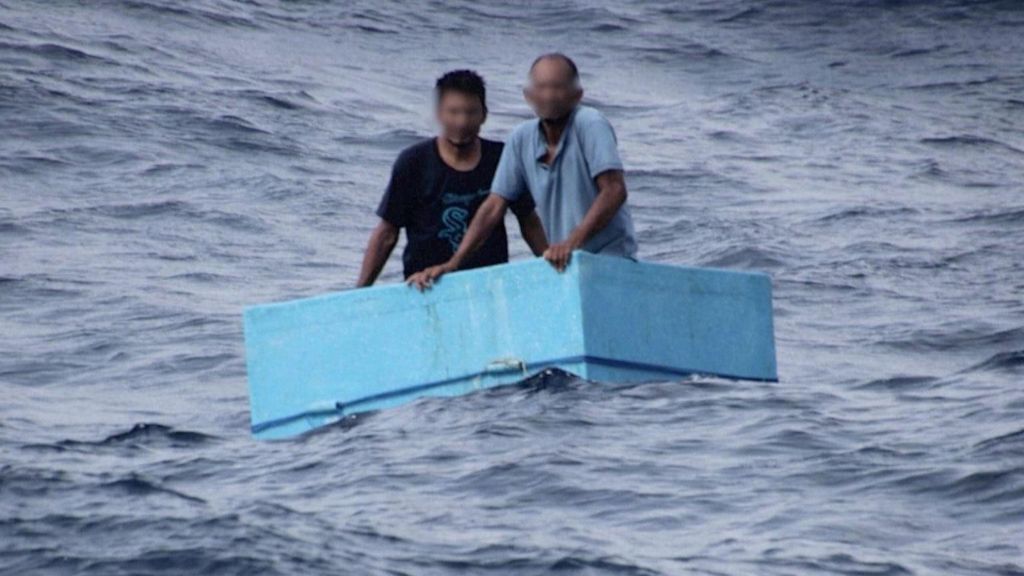
    A dramatic maritime rescue operation has concluded with the safe recovery of two fishermen who spent five days adrift in a makeshift cool box vessel off Mexico’s Pacific coastline, according to Mexican maritime authorities. The pair, a 53-year-old adult and a 32-year-old younger man, first lost all scheduled communication with their home fishing cooperative on August 14, when they were operating roughly 75 nautical miles from the Mexican shore. When the fishermen failed to return to port at their expected time and did not check in via radio as required, cooperative leaders raised the alarm with search and rescue teams, who launched an extensive sweep of the offshore area where the men had been working.

    Search crews faced challenging conditions over the five-day search period, scanning vast stretches of open ocean before finally locating the two men clinging to their small cool box craft, which they had used to stay afloat after their original fishing vessel experienced catastrophic failure. The details of what caused their initial vessel to sink or become disabled have not yet been released by authorities, but initial reports indicate the men survived on limited stored water and the cool sea temperatures helped prevent severe dehydration during their drift. Once located, rescuers pulled the pair from the water and transferred them to a medical facility for evaluation, where they are reported to be in stable condition with only minor exposure-related ailments.

    The incident has drawn attention to the risks that small-scale commercial fishermen face along Mexico’s long coastline, where many operate small vessels far from shore with limited emergency communication equipment. Local fishing cooperatives have announced they will review their safety check-in protocols in the wake of the rescue to prevent future prolonged search events for missing crews.

  • Dozens dead after boat capsizes in north-western Nigeria

    Dozens dead after boat capsizes in north-western Nigeria

    A devastating maritime accident has left at least 46 people dead after a passenger boat capsized in Nigeria’s northwestern Sokoto State, marking another deadly entry in the country’s long history of fatal waterway incidents. Local authorities confirm that the vessel was carrying more than 70 passengers, a majority of whom were children, and search efforts to locate remaining missing people are still ongoing in the remote affected area.

    Ahmad Rufai, spokesperson for the Sokoto State Police, confirmed to the BBC on Thursday that 46 bodies have been recovered near the Gorau community in Gorony Local Government Area. Sixteen passengers were pulled from the water alive, but 15 people remain unaccounted for as of the latest update. Rufai noted that the accident site sits in a hard-to-access region, so security forces and emergency response teams have been dispatched to the location to support search and recovery operations.

    A witness who spoke to Reuters shared that the children on board were traveling alongside farm owners and agricultural laborers en route to rice harvest fields. The witness added that they saw roughly 50 bodies prepared for burial, wrapped in mats and traditional woven cloth, arranged outside the local community mosque awaiting funeral rites.

    Ezekiel Manzo, spokesperson for Nigeria’s National Emergency Management Agency (Nema), echoed the challenge of the site’s remoteness, confirming that emergency teams had already deployed to Gorau to lead the response effort.

    Fatal boat accidents are an all-too-common occurrence across Nigeria, a pattern experts and officials attribute to consistent overcrowding of vessels, poorly maintained aging wooden craft, and widespread failure to enforce existing water safety regulations. This latest disaster follows a string of similar deadly incidents across the country in recent months: just one month prior, five people drowned when a boat overturned in neighboring Jigawa State. In January of this year, 26 people lost their lives when a boat carrying farmers and fishermen capsized traveling between Jigawa and Yobe States. In December 2024, rescue workers recovered 54 bodies from the River Niger after a vessel carrying potentially more than 200 passengers overturned.

    Nigerian authorities have previously outlined a set of targeted measures to reduce preventable deaths on the country’s waterways, including mandating safer boat construction, requiring accessible life jackets for all passengers, systematic dredging of high-traffic waterways, posting dedicated safety guards at major jetties and terminals, and enforcing requirements that all boat operators hold formal training and valid operating licenses. However, infrastructure gaps and limited regulatory capacity have left most of these recommendations unimplemented or unevenly enforced across rural areas.

    For millions of Nigerians, especially those living in rural and riverine communities, waterways serve as a critical primary transportation route. Many rural villages are situated along riverbanks, while widespread poor road conditions and a chronic lack of bridge infrastructure make overland travel impractical or impossible for most daily trips. Wooden vessels remain the default option for moving people and goods to markets, neighboring communities, and work sites including agricultural plots like the rice fields where this latest group was heading.

  • ICE arrests captain in New York Harbor boat accident that killed mother and infant

    ICE arrests captain in New York Harbor boat accident that killed mother and infant

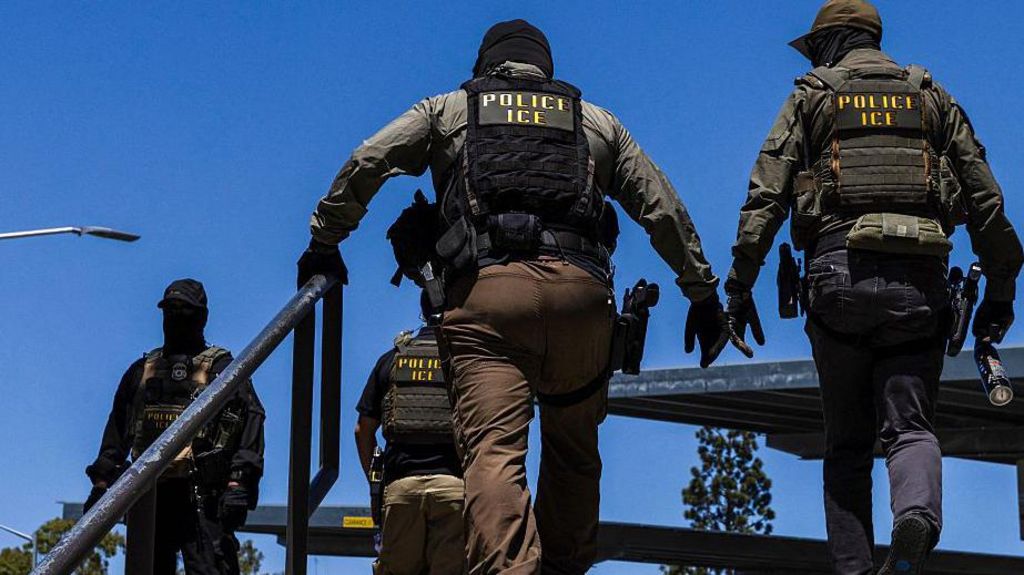
    A fatal boating disaster near one of New York’s most iconic landmarks has taken an unexpected turn, as the captain of the overturned vessel has been taken into federal immigration custody over charges of illegal entry into the United States. The August 8 incident, which unfolded just off the coast near the Statue of Liberty, left two people dead — a 27-year-old mother and her 5-month-old infant daughter — after the overloaded boat capsized and threw all 14 passengers and crew into the rough harbor waters.

    Forty-six-year-old Manuel Hernandez, the captain of the vessel, was first taken into police custody shortly after the accident, where he faced criminal charges of reckless endangerment that resulted in the two deaths. A federal criminal complaint adds two additional counts of misconduct and neglect by a ship officer that led to death, with each count carrying a maximum penalty of 10 years behind bars. Following his initial arrest, Hernandez was released on bail, but immigration officials have now taken him back into custody after uncovering his irregular immigration status.

    According to U.S. immigration authorities, Hernandez entered the country illegally from El Salvador and intentionally provided false information about his citizenship to border patrol agents during his entry. Department of Homeland Security Secretary Markwayne Mullin confirmed in an official statement that after Hernandez resolves his pending criminal charges for the boating incident, authorities will move forward with expedited deportation proceedings to remove him from the country. “Once he faces justice for his crimes, we will make sure that he is swiftly removed from our country,” Mullin said.

    The BBC has reached out to Hernandez’s legal representative to request a statement on the immigration charges and new detention, but no response has been received as of yet. A preliminary investigation conducted by the U.S. Coast Guard confirmed key safety failures that contributed to the disaster: the small vessel was carrying far more passengers than its rated capacity, and there were no properly sized life jackets available for the infant on board. All 12 other passengers on the boat were rescued from the harbor shortly after the capsizing, with no other fatalities reported.

    Hernandez will remain in Immigration and Customs Enforcement (ICE) custody for the duration of his upcoming criminal trial, closing a loop that left immigration advocates and local observers questioning how an unauthorized individual was able to operate an unregulated passenger vessel in one of the nation’s busiest harbors.

  • TikTok declines invite to discuss dangerous driving videos

    TikTok declines invite to discuss dangerous driving videos

    A devastating tragedy that killed five teenagers and injured four other people in a wrong-way motorway crash in Ireland has sparked a major political standoff between social media giant TikTok and Irish parliamentary leaders, after the platform refused to appear at a hearing to discuss the spread of reckless driving content online. The deadly incident unfolded in the early hours of Sunday morning on a motorway in County Kildare, where five young people lost their lives when their vehicle traveled the wrong direction and collided. The victims have been formally identified as Joe Carthy from Athy, County Kildare, Alex McCarthy from Carlow, Kamil Pustkowski from Limerick, Jeremy O’Brien, and Jack Kennedy. Tusla, Ireland’s national child and family agency, confirmed Thursday that one of the deceased teenagers was currently in its care at the time of the crash, while two others were previously known to the agency. Four additional people, three adult women and a 7-year-old boy, were also hurt in the collision, with two of the women sustaining critical injuries and the remaining woman and child facing serious harm. In the wake of the crash, Irish lawmakers raised urgent alarms over the circulation of user-posted videos showing dangerous wrong-way driving on TikTok, leading Oireachtas Committee on Media chair Alan Kelly, a Labour Party Teachta Dála, to formally invite TikTok officials to attend a public hearing next month to address the spread of content that glorifies illegal and irresponsible activity. Ireland’s national media regulator, Coimisiún na Meán, has also launched its own separate probe, formally requesting TikTok to detail how it has addressed the spread of risky reckless driving content on its platform. In response to the parliamentary invitation, TikTok’s head of public policy Susan Margaret wrote a letter, seen by Irish public broadcaster RTÉ, explaining that the platform could not attend the upcoming public session due to the two ongoing official investigations led by Irish police (An Garda Síochána) and Coimisiún na Meán. The company added that it would not be appropriate for TikTok to be the only social media platform called to testify, noting that the same problematic content can be found on other platforms and messaging services that have not received invitations to attend the hearing. TikTok also reaffirmed its previous statement that it has already taken action to remove content related to the crash and any accounts that violate the platform’s community guidelines. But committee chair Alan Kelly has rejected TikTok’s justifications, describing the platform’s decision to decline the invitation as deeply disappointing and entirely unacceptable given the severity of the tragedy under review. He called the reference to ongoing police investigations a distraction, and said he has no objection to inviting other social media platforms alongside TikTok if the company requests it. Kelly framed the refusal as an insult to the Irish public, and called on TikTok to reverse its decision immediately. In the aftermath of the crash, Tusla has activated its full support protocol for those affected by the tragedy. The agency confirmed that its staff have maintained continuous contact with the families of the deceased, and are working closely with An Garda Síochána as investigations proceed. “Our thoughts are with all of those who have been affected by this tragic incident,” a Tusla spokesperson said, noting that the incident has created an extremely traumatic period for families, local communities, agency staff, and everyone connected to the crash. Tusla is coordinating with the Children and Young People’s Services Committee and local partner organizations to ensure all necessary emotional and practical support is available to everyone impacted by the crash. Per standard protocol for child deaths and serious incidents, the agency confirmed it will share all required records with the independent National Review Panel, which conducts impartial reviews of fatal incidents involving children under the care of Irish child welfare services.