
Two tornadoes have made landfall across the U.S. Northeast, touching down in parts of New York and Delaware as a powerful system of severe thunderstorms unleashes heavy precipitation across the entire Mid-Atlantic region. Meteorological agencies confirmed the twisters formed after a surge of unstable, moisture-laden air moved through the area, triggering the severe weather event that has disrupted local communities. The intense storms accompanying the tornadoes have dropped torrential rain across wide swathes of the Mid-Atlantic, bringing risks of flash flooding, downed power lines, and travel disruptions for local residents. Emergency management teams have been deployed across affected areas to assess damage, respond to calls for assistance, and issue updated safety guidance for residents who remain in the path of lingering storm activity. Authorities have urged the public to stay tuned to official weather alerts, avoid flooded roadways, and seek shelter immediately if new severe weather warnings are issued in their areas. As of the latest updates, no major casualties have been reported, but assessment teams are still working to survey the full extent of structural damage and infrastructure impacts from the tornadoes and accompanying rainfall.
分类: society
-

How Penn State students ran an alleged cocaine ring – until it all fell apart
A sprawling, sophisticated cocaine trafficking ring operated out of Penn State University’s fraternity system has been dismantled by Pennsylvania law enforcement, with 13 current and former students — including an alleged ringleader once lauded for his commitment to high moral standards — facing criminal charges.
The alleged leader of the enterprise is 24-year-old Agostino Abbatiello, a Sigma Chi fraternity member and graduate of a prestigious all-boys Catholic high school on New York’s Long Island. During his time in high school, Abbatiello identified himself as a “life coach” and was said to uphold the institution’s core moral principle: doing the right thing even when no one is watching. That reputation has now been completely upended by the felony charges against him.
Prosecutors outline that what began as small-scale personal drug sharing among fraternity brothers evolved into a large-scale trafficking operation by the fall of 2024. According to court documents, Abbatiello initially sourced cocaine through a connection established by fellow Sigma Chi member Lars Zeepvat. When that supply chain dried up, he built a new larger-scale pipeline from his New York hometown, shifting from personal use to running a for-profit distribution network.
Zeepvat and other co-conspirators soon began coordinating large drug purchases, court filings state. Two Delta Upsilon fraternity members, Mohammed Huraibi and Thomas Robinson, partnered to expand retail sales from the Delta Upsilon chapter house in 2023, prosecutors allege. As demand grew, the ring exploited fraternity pledging processes: prospective new members were forced to cut and package cocaine into half-gram sale portions as part of their initiation into the fraternity networks, rather than facing the traditional dangerous drinking challenges associated with many hazing scandals.
The operation unraveled after a confidential informant flagged that Robinson — operating under the nickname “T-Rob” — was selling cocaine from the Delta Upsilon house, accepting payments via Venmo under his real name. Under detective supervision, the informant completed multiple controlled buys from Robinson, leading to a raid on his fraternity room in December 2024. When officers entered, Robinson reportedly believed the incident was a fraternity prank and resisted compliance, prompting police to use a Taser on him. During the raid, law enforcement seized 220 grams of marijuana, a loaded handgun, ammunition, and assorted drug paraphernalia. After his arrest, Robinson named Abbatiello as his primary supplier, opening the door for the full investigation into the entire network.
Abbatiello faces multiple felony charges including drug possession with intent to deliver and criminal conspiracy. He failed to appear for his August 17 arraignment but turned himself in to state police the following day. Zeepvat, Huraibi, and Robinson also face felony charges, while most of the other 13 suspects face misdemeanor counts. As of this reporting, legal representatives for Abbatiello, Zeepvat, Huraibi, and Robinson have not responded to requests for comment on the allegations.
Penn State University officials have expressed shock at the scope of the alleged criminal activity. “Criminal activity, including hazing, such as this has no place at our institution, and we will co-operate with law enforcement in any way we can,” said Andrea Dowhower, the university’s vice president for student affairs, in an official statement. Penn State has placed the Delta Upsilon chapter on interim suspension. The Sigma Chi chapter operates outside of university oversight, but national Sigma Chi leadership has suspended the charged members and placed the chapter on interim suspension, calling the alleged conduct “an egregious violation of our values.” National Delta Upsilon leadership said it is working closely with the university and investigators, adding that all suspects linked to the chapter have “either been expelled, suspended or resigned.”
Pennsylvania Attorney General Dave Sunday emphasized the severity of the criminal enterprise during the announcement of charges. “There was nothing junior or childlike about this type of conduct,” Sunday said. “This was an upper-level trafficking organisation for this region in Pennsylvania.” Sunday added that all major figures in the ring are now in custody, and the case will move forward to preliminary hearings in the coming weeks, with all defendants guaranteed due process under the law.
-
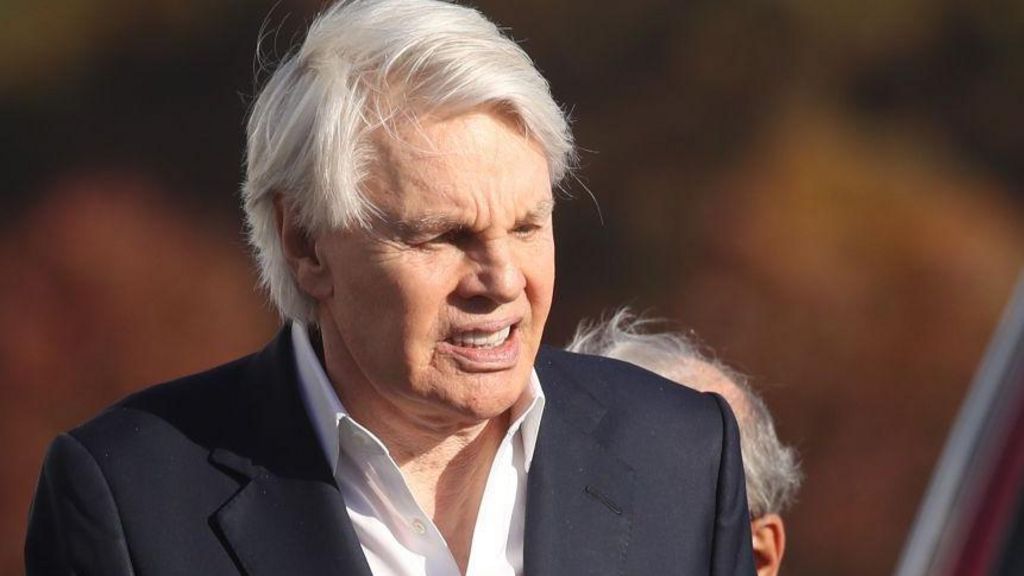
Ex-Abercrombie & Fitch chief fit to stand trial in sex trafficking case, judge says
In a major reversal of a 2023 court ruling, a U.S. federal judge has cleared the way for former Abercrombie & Fitch chief executive Mike Jeffries to face trial on multiple felony sex trafficking and interstate prostitution charges, finding ample evidence that the 81-year-old defendant retains the cognitive capacity to participate in legal proceedings.
Last year, a previous court assessment had deemed Jeffries mentally unfit to stand trial, citing diagnoses of dementia and late-onset Alzheimer’s disease that raised questions about his ability to understand the charges against him. However, following an extensive review of Jeffries’ medical documentation and more than 21 hours of audio recordings captured across 109 of his personal phone calls, U.S. District Judge Nusrat Choudhury concluded that the defendant meets the legal standard for trial competence.
In a 150-plus-page ruling, Judge Choudhury highlighted the phone recordings as particularly compelling evidence of Jeffries’ cognitive ability. ‘On the calls, Jeffries is a fluent conversational partner and shows that he has the ability to learn new information auditorily,’ Choudhury wrote. ‘Jeffries clearly possesses a rational and factual understanding of the proceedings to adjudicate his criminal charges.’
While Choudhury emphasized that Jeffries is competent to proceed without qualification, the court has approved targeted accommodations to account for the former CEO’s age and documented mild cognitive impairments. Court sessions will be held only between 1 p.m. and 5 p.m. daily, allowing Jeffries to use the morning to review trial transcripts and consult with his legal team on the previous day’s developments. The trial schedule will also include at least two or three 15-minute breaks each session, and both the prosecution and defense will be required to provide full daily transcripts for Jeffries to review ahead of the next court day.
Jeffries is one of three defendants named in an October 2024 indictment, which also charges his partner Matthew Smith, 62, and alleged middleman James Jacobson, 73, with operating a transnational sex trafficking ring that dates back to Jeffries’ tenure leading Abercrombie & Fitch. All three defendants have entered not guilty pleas to the charges, which include more than a dozen counts of sex trafficking in violation of federal interstate prostitution laws. A conviction on the top charges carries a maximum sentence of life imprisonment.
The criminal case emerged after a 2023 investigative report and ongoing podcast series by the BBC uncovered the alleged operation, which prosecutors say involved the trio scouting young men for sexual exploitation across the globe for decades while Jeffries led the major retail brand. Jeffries’ trial is currently scheduled to open in federal court on October 26.
-

From Zuckerberg to Irons – why do the wealthy buy Irish castles?
In recent weeks, news that Meta CEO Mark Zuckerberg has acquired the historic Strancally Castle in Ireland’s County Waterford has reignited public curiosity about a long-running trend: the consistent flow of high-net-worth and celebrity buyers snapping up ancient castles across the Irish island.
Zuckerberg is far from the first prominent name to join the ranks of Irish castle owners. Decades before his purchase, Oscar-winning actor Jeremy Irons bought Kilcoe Castle in County Cork, launching a multi-decade renovation project after he grew tired of constant acting work in the late 1990s. American media billionaire John Malone owns the expansive Castlemartin House and Estate in County Kildare, while author and filmmaker Christy Cashman holds the deed to County Kildare’s Kilkea Castle. Even Hollywood star Dominic West, famous for his role in *The Crown*, and his wife Catherine FitzGerald own Glin Castle in County Limerick, adding another A-lister to the list.
For Zuckerberg, practical considerations play a clear role in the purchase. Meta has maintained its international headquarters in Ireland for years, and a spokesperson for the executive confirmed that he and his family are eager to become stewards of the historic property and spend regular time in the country.
To understand why so many wealthy people are drawn to Irish castles, experts point to a mix of historical, cultural, and practical factors. First, the unique heritage of these structures traces back more than 800 years. Dr. Colin Breen, an archaeology and landscape management scholar at Ulster University, explains that Irish castles first emerged in the 12th century with the arrival of Anglo-Norman invaders, who built the fortifications to secure and control the colonial lands they seized. “They were built to intimidate, but they were also an expression of power and presence,” Breen notes, marking a permanent, radical shift in Irish architectural history. Today, that deep layered history is a core part of their appeal.
Since the 20th century, Breen explains, wealthy international buyers — particularly Americans — have been drawn to castles as a way to connect to an idealized vision of Irish history and heritage. Josh Pim, associate director of the residential and country estates team at global property firm Savills, echoes this observation, noting that many American buyers have Irish ancestral roots that make owning a piece of the country’s historic landscape particularly meaningful. “There’s a rarity and architectural significance and history to these castles,” Pim says, adding that the appeal stretches far beyond the U.S., with strong demand from wealthy buyers across the globe.
Helen Cassidy, an auctioneer who specializes in castle sales, describes a widespread “thirst” for these properties among international buyers, many of whom become deeply attached to the unique story and character of individual castles once they learn their history. Beyond the romantic appeal of heritage, Pim points out that large Irish castle estates also offer something highly sought after by ultra-wealthy buyers: unmatched privacy and security, thanks to the vast tracts of land that typically come with the properties.
Yet the trend also raises legitimate concerns among experts. Breen points out that the growing tendency for new owners to close off large estates to the public creates two key problems. First, it blocks public access to land that could be managed to support climate change adaptation and ecological conservation efforts. Second, he argues, castles hold a complicated, important place in Irish collective memory: for generations, they were visible symbols of colonial division and inequality, and locking them away entirely severs their connection to local communities. “They have a responsibility by buying into these places, these places cannot become billionaire ideals,” Breen stresses.
That said, Breen also leaves room for positive outcomes: if new owners work openly with Irish heritage authorities and local communities, their investment and stewardship can help preserve these important historic sites for future generations. Beyond preservation, status also remains a quiet driver of demand today. Breen explains that as feudalism gave way to early capitalism, castles evolved from defensive fortifications into status symbols, where wealthy families displayed their social standing through ownership of these grand historic properties. In many ways, the modern trend follows the same pattern: owning a one-of-a-kind Irish castle remains a powerful marker of wealth and influence for today’s global elite.
Local authorities have welcomed Zuckerberg’s purchase, however. A spokesperson for Waterford City and County Council noted that the news is both welcome and unsurprising, given the unrivaled natural beauty of the Blackwater Valley where Strancally Castle is located. “We hope that Mr Zuckerberg and his family fully enjoy all that Waterford has to offer,” the spokesperson said.
-
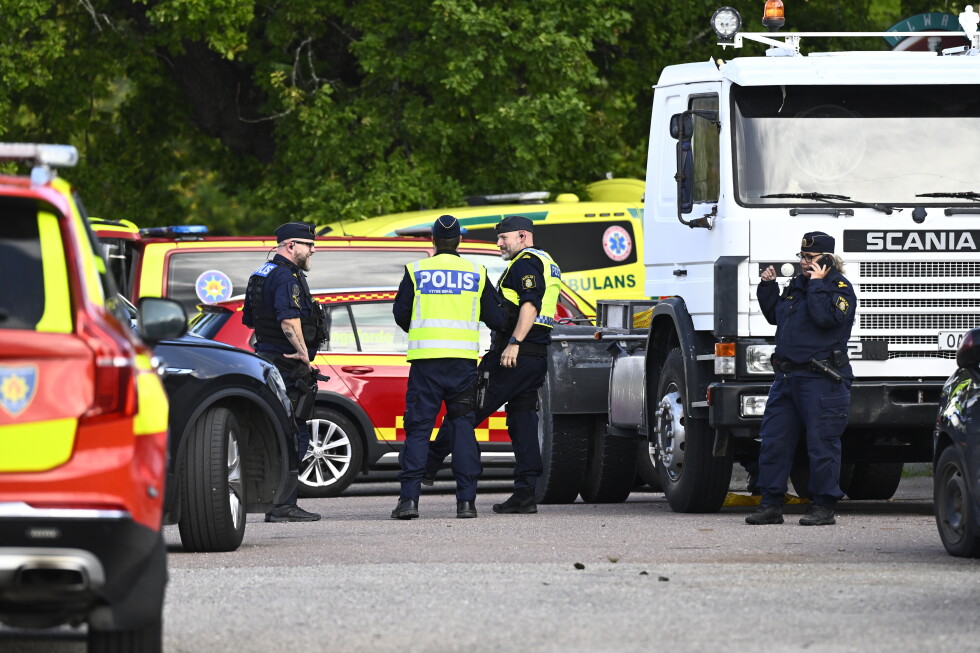
An 18-year-old with a sword attacks a school in Sweden, leaving 1 dead
A violent attack at a central Swedish secondary school has left one person dead and two minors with severe injuries, triggering a large emergency response and an ongoing criminal investigation, law enforcement and local officials confirmed Friday.
The incident unfolded shortly after noon at Brinell School, located in Fagersta — a small town around 100 miles northwest of Sweden’s capital Stockholm. At the time of the attack, regular classes were in session for the campus’ 400 to 500 enrolled students.
Speaking at a official press briefing shortly after the incident, local police chief Tommy Alriksson confirmed that the 18-year-old male suspect was taken into custody minutes after first responders arrived. Authorities confirmed that shots were discharged by responding officers during the arrest, but the suspect was not harmed in the encounter. He is currently in police custody and has not required hospital treatment.
As of Friday evening, investigators have not confirmed a possible motive for the attack, and have ruled out the presence of additional attackers. “We have no reason at this time to believe that there are multiple perpetrators,” Alriksson stated, adding that the full investigation is still in its early stages.
Sweden’s national police force confirmed that investigators have already completed two targeted house searches connected to the suspect, and plan to interview dozens of witnesses over the coming days. Alriksson noted that investigators would not release additional details about the case at this stage to avoid compromising witness testimony.
According to Sweden’s national news agency TT, the two seriously injured victims are male minors between the ages of 12 and 17, matching the age range of students at the secondary school. Officials have not released any identifying information about the deceased victim as of Friday evening.
Following the attack, a wide perimeter around Brinell School was cordoned off by law enforcement, and all nearby campuses were placed under immediate lockdown as a precaution. Roadblocks were also set up on major access routes around Fagersta to support the response effort.
Swedish Prime Minister Ulf Kristersson addressed the attack in a post on the X social media platform Friday afternoon, noting that the violence came just days after the end of the country’s summer school break. “We do not yet know what lies behind the act, but we know that the police are working very intensively,” Kristersson wrote. “Our thoughts are with all those affected.”
Local authorities have activated emergency support systems for the community: the Fagersta municipal government opened a crisis support center at a nearby sports arena, where affected students, family members, and staff can access mental health support and practical assistance. The Vastmanland County government confirmed that emergency services including police, fire crews, and medical personnel remain on site to support response and care efforts.
This report includes contributions from Associated Press writer Sylvia Hui based in London.
-
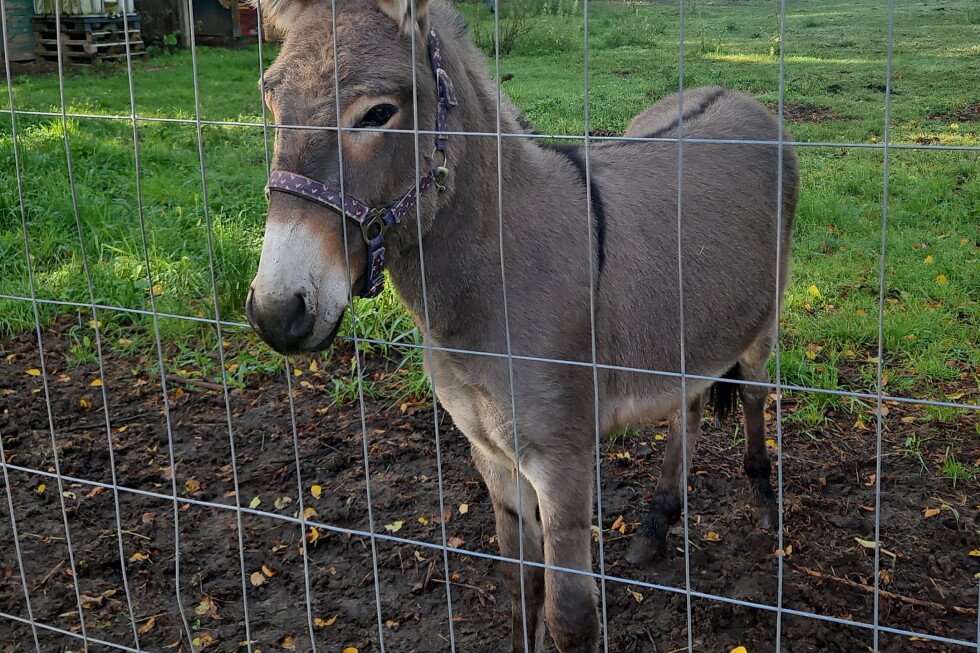
3 injured after donkey jumps into a van, kicking and biting, in northern Germany
BERLIN – A chaotic roadside incident unfolded in northern Germany on Friday when a loose donkey named Freddy launched a sudden aggressive attack on two motorists, leaving three people injured before the animal’s owner stepped in to stop the outburst.
Local law enforcement from Cuxhaven, a coastal German city where the encounter took place just south of the town limits, confirmed the unusual sequence of events in an official public statement. The trouble began when members of the public spotted Freddy the donkey and a companion horse wandering freely through a busy roundabout in Holssel, a small community located in the area.
Concerned about the safety risks of having large unrestrained animals on a major traffic intersection, two motorists made the decision to step in and attempt to contain the stray donkey. But their intervention was met with an unprovoked hostile reaction: according to police accounts, Freddy immediately became extremely aggressive, and in an unexpected move, leaped directly into the motorists’ parked van. Once inside the vehicle, the animal lashed out, striking and biting the two drivers.
A 33-year-old local woman who saw the attack unfolding rushed over to help subdue the out-of-control equine, but she too was caught in Freddy’s aggression. Following the incident, emergency responders transported the woman to a local hospital for mandatory medical care, while the two original motorists only walked away with minor cuts and bruises that did not require extended hospital treatment.
To date, authorities have not been able to pinpoint what triggered the donkey’s sudden violent outburst. Investigators with Cuxhaven police note that the root cause of Freddy’s aggressive behavior remains undetermined, with no final conclusions released as of the latest update.
-
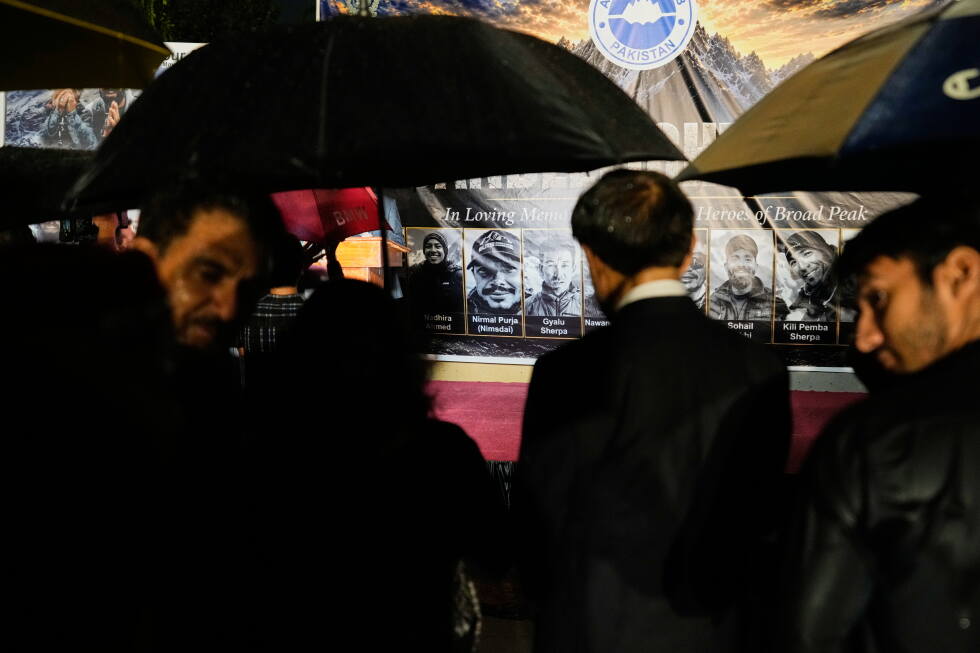
Remains found of American mountain climber who died in an avalanche on Pakistan’s Broad Peak
Nearly two months after a catastrophic avalanche swept away an international mountaineering expedition on Pakistan’s Broad Peak, search operations have concluded with the recovery of the last missing climber, 39-year-old American mountaineer Mallory Geis. Pakistan Alpine Club president Irfan Arshad Khan confirmed Friday that a crew of local volunteer searchers located Geis’ remains, bringing closure to the massive search operation launched after the July 31 incident that claimed the lives of all 10 members of the expedition.
Geis, a resident of San Antonio, Texas, had embarked on the Broad Peak expedition as her first attempt to summit one of the world’s 14 peaks over 8,000 meters, which stands at 26,247 feet above sea level. Earlier this year, she shared her ambitious life shift on social media: she had closed her local Pilates studio to step into what she called “a giant leap of faith into the unknown to see where life goes.” She added at the time that she suspected her future would hold “lots of helmets, harnesses, and crampons,” leaning fully into her passion for high-altitude climbing.
In the weeks following the avalanche, Geis’ family released a public statement honoring her memory, describing her as “a bright light who was loved deeply by family and friends.”
The ill-fated expedition was led by Nirmal Purja, a Nepal-born former British Army soldier better known to the climbing community as Nims Dai. Purja earned global fame for his groundbreaking 2019 achievement of scaling all 14 of the world’s 8,000-meter peaks in a record-breaking 189 days, a feat that was later chronicled in the popular Netflix documentary *14 Peaks: Nothing Is Impossible*. Purja’s speed record was ultimately broken by another climber in 2023.
High-altitude climbing expeditions in northern Pakistan’s Karakoram Range, where Broad Peak is located, carry inherently high risk. Avalanches, falling ice and rock, severe altitude sickness, and rapidly shifting weather patterns make fatal accidents a common occurrence for climbing teams operating in the region.
-

Erin Holland and Ben Cutting welcome baby daughter after difficult five-year journey
For celebrity couple Erin Holland, a well-known model and television presenter, and Ben Cutting, an Australian professional cricketer, a years-long battle against infertility has ended in joy, as the pair have welcomed their first child, a baby girl. The happy news of their daughter’s arrival on August 18 was shared with fans and followers via the couple’s joint Instagram account, where Holland posted a series of soft black-and-white photographs capturing the intimate first moments of their new life as a family of three.
In her heartfelt caption accompanying the photos, Holland summed up the years of heartache and uncertainty that preceded her daughter’s birth, writing, “All of a sudden, it all makes sense. It was always you.” The announcement quickly flooded with messages of congratulations from across the Australian media and sports industries, including warm notes from Holland’s colleagues at Channel 7. Kylie Gillies, co-host of the network’s top-rated *The Morning Show*, called the birth “beautiful news,” while television personality and former veterinarian Dr Chris Brown added, “How special. Congrats you guys. The best news.”
What makes this birth particularly meaningful is the extraordinary path the couple walked to reach this moment. Since their 2021 wedding, Holland and Cutting have been open about their devastating fertility struggles, choosing to speak out to normalize experiences that many couples still hide. In total, the pair endured four devastating miscarriages, one life-threatening ectopic pregnancy, 20 rounds of in vitro fertilization (IVF) treatment, five egg collection procedures, and seven embryo transfer attempts. Five full years of ongoing treatment passed before they received the positive pregnancy news they had chased for so long.
In a podcast interview earlier this year in May, Holland opened up about the emotional toll of repeated disappointment, explaining how the simple joy many expecting parents take for granted is slowly stripped away after multiple losses. “I think the hard part about infertility and pregnancy loss is that beautiful naivety of just seeing a double line on a pregnancy test is robbed from you,” she explained. “Because the first time you do it, it’s elation, it’s so exciting. Then the second time you do it, you’re cautiously excited. By the third and the fourth time, you think it’s catfishing you.”
When Cutting announced the pregnancy three months before their daughter’s birth, he paid tribute to his wife’s resilience through years of physical and emotional strain. “Countless disappointments, hormones, surgeries … lead to this one,” he wrote on Instagram at the time. “I don’t know how she pushed through.”
In a 2022 interview with Channel 7, Holland reflected on how the IVF process upended her expectations of what building a family would look like. “As someone who went in just wanting to freeze embryos until the time was ‘right’, I’ve grappled with the confusing feelings of the loss of any ‘normality’ of this process, feeling like the universe was telling me I’m not meant to be a mother,” she said. Despite years of setbacks, Holland never abandoned her hope of building a family with Cutting, a perseverance that has now rewarded her with the daughter she long dreamed of.
-

Five missing after fire in Swiss Alpine town
A devastating overnight fire has completely destroyed a mixed-use building combining a restaurant and residential apartments in the Swiss Alpine town of Thusis, leaving five people unaccounted for and eight others injured, regional law enforcement confirmed Friday.
Graubünden Cantonal Police, the leading authority on the incident, reported that emergency services received the first alert about the blaze shortly after midnight local time, which corresponds to 22:00 GMT on Thursday. Initial on-site assessments have traced the origin of the fire to the building’s second floor, though investigators have not yet determined what sparked the incident. The official investigation into the cause is being conducted jointly by cantonal police and the local public prosecutor’s office.
Nearly 100 firefighters from across the region were deployed to battle the fast-spreading inferno. First responders faced significant structural complications during the operation: the building’s main stairwell collapsed early in the response effort, forcing crews to use a crane to access and open the collapsed roof to extinguish remaining hotspots.
Of the 14 people who managed to escape the burning structure before it was completely destroyed, eight required medical attention for fire-related injuries. According to police, the injuries range in severity: two people are in serious condition, two have moderate wounds, and four suffered minor injuries. All injured individuals have been transported to hospitals across multiple regions, including facilities in Chur, Thusis, Ilanz, and Zurich for treatment.
Thusis is located within Graubünden, also widely known by its alternative name Grisons, which sits in eastern Switzerland. The region is one of the country’s most popular holiday destinations, drawing visitors year-round for world-class winter skiing and snowboarding, as well as summer hiking, mountain climbing, and other outdoor nature activities.
As of the latest update, search and rescue teams continue to comb through the charred rubble of the building to locate the five missing residents and visitors.
-
Man arrested after woman found injured in Ferntree Gully home dies
A grim incident has unfolded in Melbourne’s southeastern suburbs, leaving a woman dead after she was discovered with serious injuries at a local residential property, and a man believed to know her is now in police custody. Emergency and law enforcement personnel were dispatched to the address on Ferntree Gully Road shortly before 10 a.m. on Friday, following reports of a medical emergency at the home. When officers arrived, they located the injured woman and immediately began administering cardiopulmonary resuscitation (CPR) in a desperate attempt to save her life. Despite the quick, skilled efforts of the first responders on scene, the woman could not be revived and was pronounced dead at the property. Within hours of the discovery, a 45-year-old man from Ferntree Gully was taken into custody by police close to the site of the incident. Investigators confirmed that the man and the deceased woman are known to one another, and he is currently undergoing formal questioning in relation to the woman’s death. Members of Victoria Police’s Homicide Squad have been called in to lead the investigation, and the squad’s detectives are now conducting a detailed forensic and evidentiary examination of the home to piece together the circumstances leading up to the woman’s death. Police have issued a public call for information, asking any member of the community who was in the area of Ferntree Gully Road on Friday morning, or who has details relevant to the incident that could assist the investigation, to contact Crime Stoppers immediately to share what they know. The investigation remains active and ongoing, with further updates expected as detectives work through the evidence.