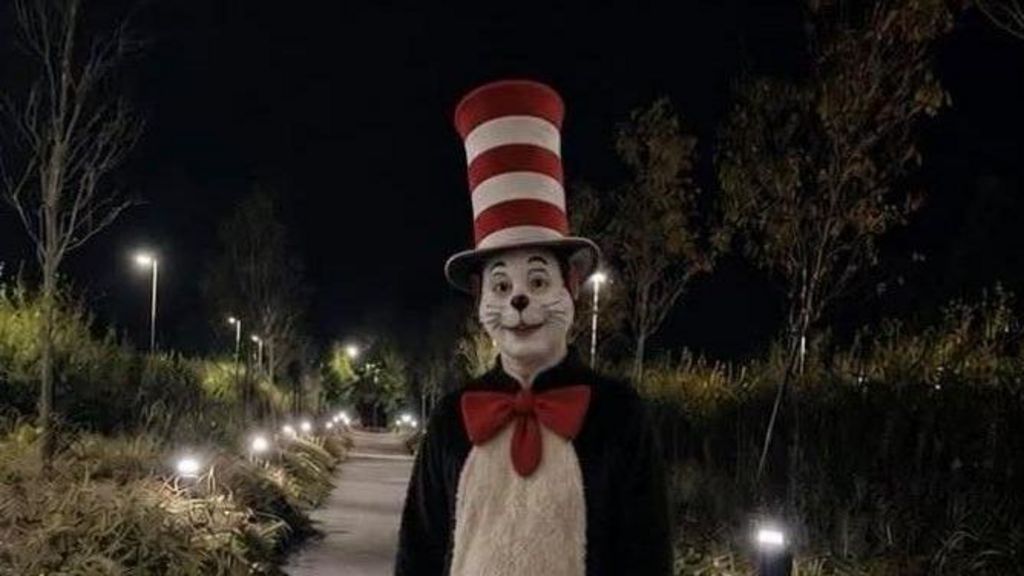
What started as a quirky online post about an aging vintage film costume has exploded into a viral social media phenomenon that has left teenagers across the United Kingdom and Ireland spooked, and pushed law enforcement to step in and calm widespread panic.
The beloved Dr. Seuss children’s book character The Cat in the Hat, a staple of childhood reading for generations, has been reimagined as a menacing, urban legend-style figure in a wave of AI-generated images and user-posted clips that have flooded TikTok and other social platforms in recent weeks. For millions of young social media users, the once-fictional character now feels like a real threat that could lurk around any dark street corner.
Sixteen-year-old Skye, one of many teens shaken by the trend, recalled a terrifying sleepover experience that ended with her calling her mother for an emergency pickup. “It was 3 a.m. and everyone was watching these Cat in the Hat videos,” she explained. “When I walked down my friend’s driveway afterward, I was completely convinced he was going to jump out at me. I was too scared to stay.”
A quick scroll through TikTok confirms how widespread the trend has become: dozens of new accounts created in the past month post regular content of the life-sized character, showing an unblinking figure in the iconic tattered red-and-white striped hat and faded black-and-white fur suit. One of the earliest viral clips, captioned “Help, what do I do?”, has racked up more than 14.6 million views in just three weeks.
Wild conspiracy theories have flourished in the comment sections of these posts. Some viewers have questioned why the costume looks taxidermied, while others have pushed the outlandish false claim that Mike Myers — who played the character in the 2003 live-action *The Cat in the Hat* film — is actually trapped inside the roaming costume. Other posts go even further, adding geotags and threatening captions such as “Kent, I’m coming — lock your doors” that stoke panic across different regions of the UK.
Much of the early alarm centered on Ireland’s Limerick and Wexford counties, where shaky, AI-generated clips purporting to show the character wandering after-dark residential streets spread like wildfire. Local Gardaí were quick to debunk the sightings, confirming the images were entirely artificial, but their statements did little to slow the spread of the hoax. Unsubstantiated claims quickly began circulating that the costumed figure was linked to violent assaults, with no evidence to back up the dangerous rumors.
The panic has even spilled into Scotland, where one 14-year-old teen named Lily received a fake invitation to a “meet and greet” with the Cat in the Hat in remote woodland near the small border town of Galashiels. Her mother quickly shut down the idea, horrified at the risk of her child venturing into an isolated area to meet a stranger.
Law enforcement across the UK has been forced to issue repeated statements to debunk the growing hoax. South Yorkshire Police was among the forces forced to respond after false posts claiming a “killer Cat in the Hat” was on the loose gained hundreds of thousands of views. One fake post even impersonated a non-existent “Yorkshire Police” force to claim officers were taking the alleged sighting seriously.
In a playful but firm statement, a South Yorkshire Police spokesperson urged social media users to verify the source of any policing updates they see online: “If you do see posts online providing policing updates and advice, please check that they are from an official policing account. The cat is not out of the bag on this one… Please don’t believe everything you read on social media.”
The origins of the current viral trend trace back to an August 8 post from pop culture outlet DiscussingFilm, which shared news that the original 2003 *Cat in the Hat* film costume was going up for auction through entertainment memorabilia retailer Propstore. That post alone has gained 10 million views, with hundreds of commenters describing the aged, dilapidated costume as “nightmare fuel” and “genuinely haunting.”
The tattered, worn costume is set to go up for auction alongside 1,399 other film and TV memorabilia lots this Wednesday, with an estimated selling price between $12,000 and $24,000 (£17,500). The aged condition of the original costume, which shows clear signs of decades of disrepair, gave internet users the eerie starting point for the hoax.
While many social media users have joined the trend for lighthearted fun — with creators posting comedic clips of police chasing Cat in the Hat impersonators, dancers in costume performing to Beyoncé, and even jokes poking fun at the panic — the trend has left many teens genuinely scared. “I was already afraid of him when I was little,” shared 16-year-old Ellie from the Scottish Borders. “Now it feels like he’s actually come to life to haunt me.”
Observers have drawn parallels between the Cat in the Hat hoax and the 2018 “Momo Challenge”, a widespread digital urban legend that caused widespread panic among parents and young people, even as fact-checkers found no evidence of the trend causing actual harm. Scottish mother Emily warned that the trend creates unnecessary risk beyond the immediate fear: “I’m not worried about my own daughters, but there could be people with bad intentions who might take advantage of this trend to manipulate teenagers.”
As of now, all evidence confirms that there is no real roaming Cat in the Hat: the trend is a rapidly evolving online story built from an auctioned vintage costume, amateur costume wearers, AI-generated content, and unsubstantiated social media posts. Whether the trend began as a harmless joke or a deliberate attempt to frighten audiences, police across the UK and Ireland are echoing consistent safety advice for social media users: always pause before sharing viral content, verify claims against official sources, never accept invitations to meet strangers in isolated, late-night locations, and treat unsourced online rumors with caution.
The viral Cat in the Hat panic serves as a fresh reminder of how quickly online viral fear can cross over into the real world, impacting daily life and prompting official intervention across two countries.