分类: society

  • Mark Ludbrook: Wheelchair-bound killer jailed for 19 years for murder of Autumn Baker

    Mark Ludbrook: Wheelchair-bound killer jailed for 19 years for murder of Autumn Baker

    A shocking case of drug-fueled violence has concluded in an Australian court, with a 54-year-old disabled man handed a 19-year prison term for the murder of his friend, triggered by a little-known emerging synthetic drug. The Victorian Supreme Court handed down the sentence to Mark Graham Ludbrook on Thursday morning, nearly 18 months after the fatal stabbing of 40-year-old Autumn Baker at Ludbrook’s home in Point Cook, southwest Melbourne, on August 3, 2023.

    Ludbrook, who relies on a wheelchair due to transverse myelitis, a rare neurological disorder that causes chronic pain, had a long history of self-medicating with illegally obtained ketamine to manage his discomfort. On the day of the killing, he had exhausted his supply of ketamine, and turned to an alternative drug his dealer marketed as a ketamine equivalent: a new synthetic compound called PCE. Court documents confirm PCE first emerged as an illicit street drug in Australian communities in 2022, and little is publicly known about its short- and long-term effects on human behavior and cognition. On that day, Ludbrook consumed a double dose of PCE, which rapidly triggered extreme and erratic psychological changes.

    Baker, a close friend of Ludbrook’s, had visited his home that afternoon to check on him after he had recently gone through a painful relationship breakup. What she encountered was unrecognizable from the man she knew: for the first time in years, Ludbrook was able to walk, but he was completely naked, muttering to himself and interacting with a daisy bush in his backyard. Earlier in the day, witnesses described his behavior as unnervingly manic: he carried money on his body, rambled about saving animals and people, and carried himself with the over-the-top energy of a game show host, completely out of touch with reality.

    The situation quickly escalated from bizarre to tragic. After displaying erratic behavior for some time, Ludbrook grabbed a 13-centimeter serrated kitchen knife, retreated to his bedroom, and began stabbing himself in the abdomen. Baker and Ludbrook’s full-time carer, Amber Davidson, rushed in to stop him. When Davidson stepped out of the room to call Australia’s emergency line (triple-0), Ludbrook turned the weapon on Baker, killing her. Police later found Baker’s body in Ludbrook’s bedroom.

    Ludbrook pleaded not guilty to murder at his February trial, arguing that the drug had completely stripped him of control over his actions, and that he could not be held criminally responsible for his behavior. Justice James Gorton, who presided over the case and sentencing, acknowledged in his ruling that the violent outburst was completely out of character for Ludbrook, and that his capacity to distinguish right from wrong was severely impaired by the PCE he ingested that morning. “Your bizarre and violent behaviour that day was unusual … and took place as a consequence of your ingestion of PCE,” Justice Gorton stated in court. Even so, the court imposed a 19-year prison term, with Ludbrook becoming eligible for parole after serving 14 years of his sentence. The case has drawn new attention to the risks of unregulated emerging synthetic drugs, which often carry unknown and extreme side effects for users and pose growing public safety risks across Australia.


  • German tourist wins payout after losing sun lounger race

    German tourist wins payout after losing sun lounger race

    For millions of vacationers chasing sun and relaxation by the pool, the frustrating ritual of the ‘dawn dash’ for unreserved sun loungers is a familiar holiday headache. Now, that common travel grievance has resulted in a landmark legal ruling, after a German tourist secured a court-ordered refund of more than €980 (£850) over his ruined sunbathing access on a Greek island getaway.

    The unnamed tourist traveled to the popular Aegean island of Kos with his wife and two children on a package holiday in 2024, paying a total of €7,186 (£6,211) for the trip. What should have been a relaxing family break quickly turned into a daily battle for poolside space, he told the court. Even when the family rose as early as 6 a.m. to claim a spot, all usable sun loungers were already blocked off by other guests who reserved them with towels, leaving the tourist to spend 20 minutes every day hunting for free space. His children were even forced to lie on the hard ground when no loungers could be found, he added.

    Frustrated by the unaddressed issue, the tourist launched a legal case against his tour operator, arguing the company failed to uphold its obligations to guests. In his claim, he emphasized that the resort already had an official ban on towel-based sunbed reservations, but the tour operator did nothing to enforce the rule or intervene to stop guests from misappropriating loungers.

    After hearing the case, judges at the Hanover District Court ruled in the tourist’s favor, finding the package holiday experience was legally ‘defective’ and the family was owed a larger compensation payout. The tour operator had already issued a partial refund of €350 (£302) before the trial, but the court ordered an additional payout, bringing the total refund to €986.70 (£852.89).

    In their ruling, the judges acknowledged that the travel company did not directly manage the hotel’s facilities and could not guarantee every guest access to a sunbed at any time of day. Even so, they confirmed the operator had a clear contractual obligation to ensure a reasonable organizational system was in place to maintain a fair ratio of sunbeds to registered guests, a requirement the company failed to meet.

    The ‘sunbed wars’ phenomenon is far from an isolated issue at Mediterranean resorts, with thousands of tourists sharing their frustrations about the practice every year. In 2023, viral social media videos showed extreme measures taken by holidaymakers in Tenerife, where some guests slept overnight on sun loungers to hold onto their poolside spots for the following day.

    Faced with widespread frustration over the issue, travel and hospitality operators have trialed different solutions to curb unauthorized reservations. Major tour operator Thomas Cook, for example, now offers guests the option to pre-book poolside sun loungers for an extra fee to eliminate informal last-minute scrambling. In some regions of Spain, local authorities have introduced strict penalties, threatening tourists with fines of up to €250 if they reserve a lounger with a towel then leave the spot unused for hours at a time.

  • French professor investigated for awarding himself fake prize

    French professor investigated for awarding himself fake prize

    A years-long academic hoax involving a completely fabricated prestigious prize has shaken the French higher education system, leaving a veteran scholar under criminal investigation and suspended from his longtime position. Florent Montaclair, who taught for two decades at a university in Besançon, eastern France, stands accused of inventing a Nobel-equivalent award in philology — the study of language through historical texts — and then awarding the top honor to himself to bolster his professional credentials.

    The elaborate scheme dates back to 2015, when local press in Besançon published a story touting Montaclair as a finalist for the Nobel Prize. By the end of that year, reports claimed he had claimed the Gold Medal of Philology, a fictional award tied to a fake governing body: the International Society of Philology. In June 2016, the self-styled laureate held an official award ceremony at France’s National Assembly in Paris, an event attended by sitting government ministers and even Nobel Prize winners. Later that same year, Montaclair expanded his hoax by presenting an honorary version of his fake medal to 88-year-old legendary American linguist and philosopher Noam Chomsky at a public event in Brussels, with footage of the ceremony still accessible online.

    The fake International Society of Philology even maintains a public website that lists supposed prize winners dating all the way back to 1967, including iconic Italian writer Umberto Eco. Observers have since noted that the unpolished, low-budget design of the site should have raised red flags early on. Beyond the invented prize and society, Montaclair also added a falsified academic credential to his resume: a doctorate in French literature and grammar from an institution called the University of Philology and Education in Lewes, Delaware. Public records confirm no such university has ever existed.

    The hoax went undetected in France for years, even after it was exposed in 2019. That year, after Montaclair named Romanian philologist Eugen Simion as the next Gold Medal recipient, the announcement triggered a firestorm of interest in Romania, where skeptical local journalists launched an investigation that quickly uncovered the entire fraud. Despite the revelation, the truth never spread to French academic circles, and Montaclair continued teaching at his university for several more years.

    The full scope of the fraud only came to light last year, when Montaclair was scheduled to lead an academic panel on disinformation and fake news. A colleague, recalling the old rumors from Romania, flagged the issue to university leadership, prompting an official probe. When French law enforcement searched Montaclair’s home in February of this year, the scholar immediately acknowledged the hoax, investigators report. He told officers he had personally ordered the gold medal from a Paris-based jeweller just weeks before the 2016 ceremony, paying just €250 (approximately £215) for the award.

    In his defense, Montaclair has denied the fraud amounts to criminal conduct. He claims the invented award was simply a failed attempt to establish a new academic distinction, not a con. He also notes that the local media that originally covered his “Nobel shortlist” nomination were responsible for framing the fake award as a Nobel-equivalent honor, rather than making that claim himself.

    Investigators from the Besançon public prosecutor’s office are currently examining whether the fake credentials helped Montaclair advance his academic career or gain unfair professional or financial benefits. Prosecutor Paul-Edouard Lallois, who is leading the probe, called the affair “such an unlikely tale, it could be out of a film.” If investigators cannot prove the hoax resulted in illegal gain, prosecuting Montaclair on criminal charges may prove impossible. Currently, Montaclair has been suspended without restriction from his university position, pending the outcome of the ongoing investigation.

  • Bus and oil tanker collide in Indonesia, killing at least 16 people

    Bus and oil tanker collide in Indonesia, killing at least 16 people

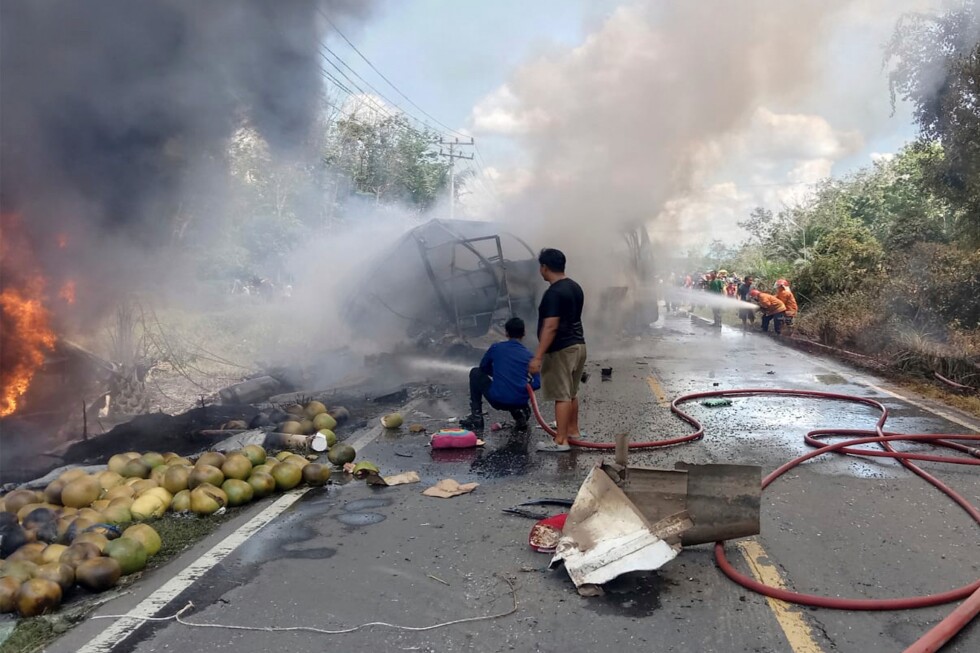
    On a midday Wednesday in Indonesia’s Sumatra island, a devastating highway collision between a passenger intercity bus and a fuel tanker has left at least 16 people dead and four others injured, local disaster management officials confirmed. The crash unfolded on the Trans-Sumatra Highway in North Musi Rawas regency, South Sumatra province, as the bus traveling from Lubuklinggau city in South Sumatra to the neighboring city of Jambi carried roughly 20 passengers when it veered into the opposite lane and struck the oncoming tanker.

    Preliminary investigations, shared by Mugono, a local disaster agency official who goes by a single name consistent with common Indonesian naming conventions, point to a sudden mechanical emergency just moments before impact. According to initial findings, the bus began emitting sparks, prompting the driver to swerve right off the bus’s original travel lane in an attempt to prevent an on-board fire. That evasive maneuver put the bus directly in the path of the speeding oncoming tanker, leaving the tanker’s driver no time to react to avoid a catastrophic head-on crash.

    The extreme force of the collision ignited an intense blaze that quickly engulfed both the bus and the tanker, trapping dozens of people inside the burning vehicles. All fatalities died from burns sustained in the fire: the count of the dead includes the bus driver, 13 bus passengers, and the tanker’s driver and assistant. Among the four survivors pulled from the wreckage, three suffered critical burn injuries while the fourth sustained only minor harm, and all four were immediately transported to a nearby local health clinic for emergency care.

    Authorities have not yet finalized the total death toll, as officials are still working to trace the bus’s full passenger manifest and cross-check data to confirm how many people were on board at the time of the crash. Visual documentation released by Indonesia’s National Search and Rescue Agency captures the scale of the disaster: thick black plumes of smoke billow into the sky above roaring orange flames as firefighters work to extinguish the blaze. After the fire was contained, the highway was left strewn with twisted, charred metal wreckage from both destroyed vehicles.

    Rescue teams composed of disaster management personnel, local traffic police, and other first responders worked to evacuate victims and clear the crash site, but the operation faced significant complications. Multiple victims remained pinned under the wreckage, slowing recovery efforts and causing major traffic disruptions along the busy Trans-Sumatra Highway.

    This fatal collision is far from an isolated incident: deadly road and transit accidents are an all-too-common occurrence across Indonesia, a pattern widely attributed to underfunded road infrastructure and widespread lax vehicle and driver safety standards. Just one week prior to this Sumatra crash, another deadly transit incident near Jakarta, the nation’s capital, claimed 15 lives. In that earlier crash, a long-distance passenger train hit a broken-down taxi stranded on the tracks, then collided with a stopped commuter train near a suburban station. All 15 fatalities were women, all seated in the commuter train’s women-only rear carriage.

  • Moment former FedEx driver sentenced to death for killing Athena Strand

    Moment former FedEx driver sentenced to death for killing Athena Strand

    A high-profile child murder case has come to a dramatic conclusion, as a former FedEx delivery driver has been formally sentenced to death for the fatal killing of 7-year-old Athena Strand. The sentencing hearing, held in a packed courtroom, saw grieving family members speak publicly about the irreversible damage the young girl’s death has left on their tight-knit community and every person who loved her. In raw, emotional testimony before the court, the victim’s uncle addressed the court directly, stating that Athena’s murder has taken an irreplaceable piece of the soul from every single member of her family and circle of loved ones. The case, which drew widespread public attention across the nation after Strand’s disappearance in 2022, sparked renewed conversations about personal safety for children in residential areas and background check protocols for delivery workers interacting with the public. Throughout the legal proceedings, prosecutors laid out overwhelming evidence linking the former driver to the abduction and killing of the young girl, leading a jury to return a guilty verdict that cleared the way for the capital punishment sentence handed down this week. While capital punishment remains a divisive issue in the United States, the brutality of the crime and the young age of the victim has led many local residents to express support for the sentence. Family members have stated they hope the final ruling will bring a small measure of closure after months of overwhelming grief, even as they acknowledge no sentence can bring their beloved Athena back.

  • Former FedEx driver sentenced to death for killing seven-year-old Texas girl

    Former FedEx driver sentenced to death for killing seven-year-old Texas girl

    More than two and a half years after 7-year-old Athena Strand was abducted and killed while her Christmas gift was being delivered to her North Texas home, her family has received a final legal ruling in the case that has shaken the nation. On Tuesday, a Texas jury handed down a death sentence to 25-year-old Tanner Horner, the former delivery driver who admitted to the brutal capital crime. The guilty plea from Horner came earlier this year, as his trial got underway, where he formally confessed to charges of capital murder and aggravated kidnapping. The weeks-long sentencing phase concluded with jurors selecting the harshest available punishment over the alternative of life imprisonment without the possibility of parole.

    The details of the crime that emerged during court proceedings have added to the collective horror surrounding the case. On November 30, 2022, Horner arrived at the Strand family’s property near Fort Worth to drop off the little girl’s holiday gift: a box of Barbie dolls. Instead of completing the delivery, he kidnapped Athena, and two days later, her body was discovered just a short distance from her home. During the sentencing trial, jurors were forced to listen to a disturbing audio recording capturing the young victim’s final moments inside Horner’s delivery van, a piece of evidence that underscored the brutality of the crime. When the death sentence was read aloud by the judge, court video footage captured Horner showing absolutely no visible reaction to the verdict. He is scheduled to be executed via lethal injection at a date yet to be confirmed, in the early morning hours before sunrise.

    In the moments after the verdict was announced, Athena’s uncle, Elijah Strand, addressed the perpetrator directly in court, laying bare the irreversible damage his actions caused the entire family. “There are no words that truly capture the devastation that Tanner Horner caused us and our family,” he told reporters outside the courthouse. Speaking directly to Horner during proceedings, he added: “You destroyed a family. You will feel the wrath of God.” He emphasized that the family will forever honor Athena’s memory while Horner will be forgotten, saying: “I want you to know that you are nothing. You are a footnote in Athena’s story. Her name will forever be remembered, her name will forever be celebrated, and everyone will forget you.”

    Beyond the criminal case, a separate civil lawsuit has been filed by the Strand family against Horner, global delivery giant FedEx, and Big TopSpin Inc., the independent logistics contractor that hired Horner to complete deliveries for FedEx. The suit alleges that both companies failed to complete a required background check on Horner before putting him behind the wheel for residential deliveries, a negligent act that the family argues allowed the crime to occur. In the immediate aftermath of the 2022 murder, a FedEx spokesperson told U.S. media outlets that the company was aware of the pending litigation and extended its sympathies to the grieving family, saying “Our thoughts remain with the family of Athena Strand in the wake of this tragedy.” The BBC has reached out to FedEx for an updated statement following Tuesday’s sentencing, while Big TopSpin Inc. has not responded to multiple requests for comment and has not issued any public statement on the case since the murder.

  • Orphaned baby hippo to be hand-reared by keepers at Kenya sanctuary

    Orphaned baby hippo to be hand-reared by keepers at Kenya sanctuary

    Over the weekend, a moving and dramatic wildlife rescue operation unfolded on the shores of a Kenyan lake, where rescuers intervened to save a newborn hippo calf that had been left stranded next to its mother’s deceased body.

    The tiny calf, now named Bumpy, is estimated to be only a few days old, having lost his mother under circumstances that conservation teams are still clarifying. Initial investigations from the Kenya Wildlife Service (KWS) suggest the mother hippo may have died of natural causes. But experts from the Sheldrick Wildlife Trust (SWT), the conservation charity that now cares for Bumpy, have put forward another plausible explanation: hippo society regularly sees infanticide by competing males, and the mother may have lost her life in a territorial battle while defending her vulnerable calf.

    By the time conservation teams arrived at the scene, the mother hippo’s body had already been decomposing for more than 24 hours. Extracting the unweaned calf from the water presented unexpected logistical hurdles. The distressed newborn refused to leave his mother’s side, clinging tightly to her corpse even as rescuers approached. Faced with this difficult situation, the KWS team made the painful decision to use the decomposing body as an anchor to safely reach and retrieve Bumpy, a choice that prioritized saving the calf’s life despite the emotional weight of the decision.

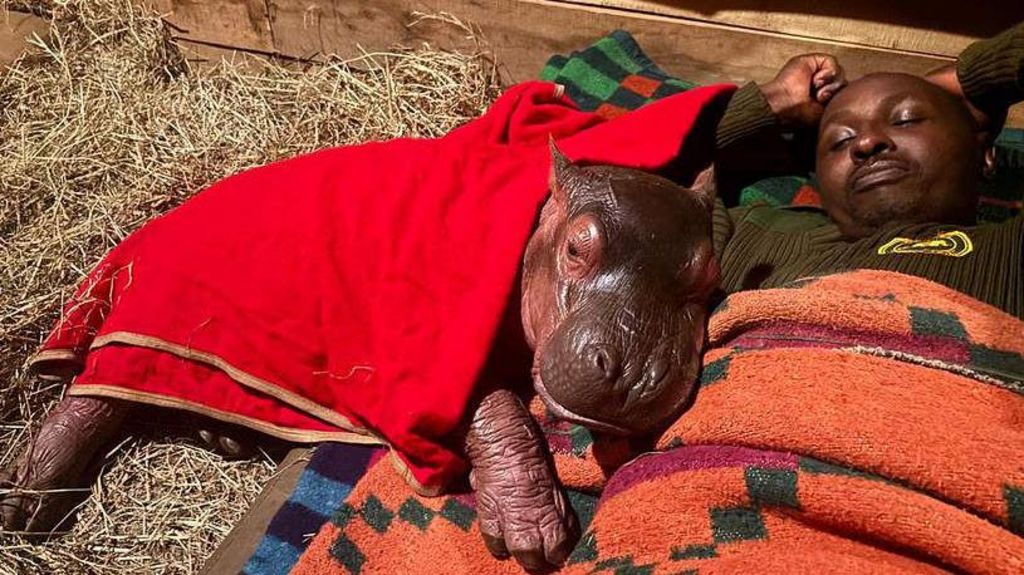
    After the rescue was completed, Bumpy was first transported to a specialized wildlife nursery in Nairobi, Kenya’s capital. For his first night in human care, keepers wrapped him in a soft blanket and provided him with regular milk feedings, catering to the tiny calf’s every need. SWT teams noted that from the moment he arrived, Bumpy was clearly starved for comfort and social connection, and has stayed nearly glued to his assigned keepers ever since.

    Soon after his initial stabilization, Bumpy was airlifted via helicopter to SWT’s Kaluku Wildlife Sanctuary, located near Tsavo East National Park. This protected facility is designed to raise orphaned wildlife until they are old enough and strong enough to be released back into their natural wild habitat. At his new home, Bumpy spends most of his days submerged in a calm pool along the Athi River, but he is never left alone. A keeper stays with him around the clock, whether joining him in the cool water or staying beside him on the riverbank. According to sanctuary updates, Bumpy is an inherently affectionate young hippo, and he is most content when curled up on or pressed against his caretakers, a bond that has been captured in heartwarming shared photos.

    Bumpy is not the only young orphaned hippo at Kaluku Sanctuary; he joins another calf that is almost a year old, though the two are currently housed in separate enclosures as they acclimate to their surroundings. Both animals are on track to be released into the wild once they reach full maturity, where they will join existing wild hippo populations. Wildlife experts explain that in their natural habitat, hippo calves stay closely bonded to their mothers for multiple years, nursing for at least 12 months and remaining dependent until they reach sexual maturity, making Bumpy’s early orphanhood an especially challenging situation.

    The Sheldrick Wildlife Trust, the organization leading Bumpy’s care, was founded in 1977 and has earned global recognition for its work rescuing and rehabilitating orphaned elephants and rhinos, successfully reintegrating hundreds of animals back into wild African ecosystems. This rescue of Bumpy is part of the trust’s expanded work protecting vulnerable native wildlife across Kenya, giving newborn animals that would otherwise not survive a second chance at life in the wild.

  • ADL reports a sharp drop in US antisemitic incidents in 2025, driven by a steep fall on campuses

    ADL reports a sharp drop in US antisemitic incidents in 2025, driven by a steep fall on campuses

    WASHINGTON — A new annual audit released Wednesday by the Anti-Defamation League (ADL) has found that the total number of antisemitic incidents across the United States fell sharply in 2025, marking the first decline in five years. The decrease was led by a dramatic 66% drop in incidents on U.S. college campuses, a shift that came after widespread pro-Palestinian protests in 2024 and subsequent administrative pressure from the White House under the Donald Trump administration.

    The organization’s 2025 audit counted 6,274 total incidents of antisemitic assault, harassment, and vandalism nationwide, a 33% pullback from 2024’s all-time record of 9,354 incidents. On college campuses alone, the numbers dropped even more steeply: after recording 1,694 antisemitic incidents in 2024, when pro-Palestinian and anti-Zionist protests spread across campuses amid the ongoing Israel-Hamas war in Gaza, that figure fell to just 583 in 2025. The decline followed coordinated action from hundreds of colleges and universities, which implemented new protest restrictions and policy changes under pressure from the Trump administration and advocacy from the ADL.

    When broken down by state, New York recorded the highest number of total antisemitic incidents in 2025 at 1,160, followed by California with 817 and New Jersey with 687.

    Even with the overall drop in incidents, the report confirms that 2025 was one of the most violent years on record for Jewish communities in the U.S. The audit counted 203 physical assaults, a new annual high, and three separate fatal attacks targeting Jewish people. These included a May shooting outside Washington D.C.’s Capital Jewish Museum that killed two people, and a June firebombing attack at a hostage awareness event in Boulder, Colorado that left an 82-year-old Jewish woman dead from her injuries.

    Speaking to the Associated Press, ADL CEO and National Director Jonathan Greenblatt emphasized that even the reduced 2025 numbers remain far above pre-war baseline levels. “Numbers that would have shocked us five years ago are now our floor,” Greenblatt said. “People are being murdered because of antisemitism on American soil, and thousands more are threatened.” He added that while any reduction in antisemitic harm is a welcome development, the current moment does not allow for complacency: even with the 66% drop, campus antisemitic incidents remain nearly four times higher than they were in 2021, before the outbreak of the Israel-Hamas war.

    The shifting share of Israel-linked antisemitic incidents reflects the changing landscape of hate speech and bias over the past two years. In 2024, 58% of all recorded antisemitic incidents were tied to criticism of Israel or Zionism, marking the first time since the annual audit launched in 1979 that Israel-related incidents made up a majority of total cases. That share fell to 45% in 2025, with the ADL recording an overall 67% drop in anti-Israel rallies that crossed into antisemitic rhetoric, and an 83% drop on campuses specifically.

    The ADL’s counting methodology has long remained at the center of a fierce, ongoing debate about where to draw the line between legitimate criticism of Israeli policy and antisemitic hate speech. The organization says it explicitly distinguishes between general criticism of Israeli government policy and antisemitic speech, but classifies vilification of Zionism — the ideological movement supporting a Jewish state in Israel — as a form of antisemitism. This framing has drawn criticism from a range of groups, including some Jewish and anti-Zionist activists, who argue the ADL’s criteria are overly broad and penalize protected political speech.

    Aryeh Tuchman, a former head of the ADL’s Center on Extremism who now directs the Nexus Center for Antisemitism, which promotes a more nuanced definition of antisemitism, noted that the ADL’s approach grows from legitimate concern for the safety of American Jewish communities, but that disagreement over the framework is valid. “There are a lot of people who would disagree with that. … It’s important that there be room for multiple approaches,” Tuchman said.

    In response to pressure from the ADL and the Trump administration on college campuses, the Council on American-Islamic Relations (CAIR) launched its Unhostile Campus Campaign, which advocates for protecting free speech and academic freedom for pro-Palestinian students, faculty, and staff. In CAIR’s recent reporting, the group named Columbia University, the City University of New York, and the University of Michigan as the schools it considers most hostile to pro-Palestinian viewpoints.

    The ADL’s new report comes amid a global surge in concern over rising antisemitism tied to the Israel-Hamas war. In the United Kingdom, Prime Minister Keir Starmer has called for stricter action against antisemitic chants at pro-Palestinian protests, after two Jewish men were stabbed in London in a recent attack. Senior British law enforcement officials have called the current moment the greatest ongoing threat to British Jewish communities in modern history, blaming social media platforms for normalizing antisemitic rhetoric. The UK has also seen a string of recent attacks targeting Jewish sites, including multiple arson attempts at London synagogues, and has raised its national terror threat level in response.

    In Australia, a national public inquiry into antisemitism is currently hearing testimony from Jewish communities after a December 2024 mass shooting at a Hanukkah celebration on Bondi Beach that killed 15 people. Witnesses have described growing fear and vulnerability amid a sharp nationwide rise in antisemitic incidents that dates back to the outbreak of the Israel-Hamas war in October 2023.

    A recent analysis from Tel Aviv University confirms that 2025 was the deadliest year for antisemitic attacks globally since 1994, when a bombing at a Jewish community center in Buenos Aires, Argentina killed 85 people. Combined, fatal attacks in the U.S., UK, and Australia claimed 20 lives in 2025, the highest annual death toll from antisemitic violence in more than three decades.

  • $44k fines for dogs left in hot cars in biggest update to NSW animal cruelty laws in 45 years

    $44k fines for dogs left in hot cars in biggest update to NSW animal cruelty laws in 45 years

    New South Wales (NSW), Australia is set to introduce the most sweeping overhaul of its animal cruelty legislation in 45 years, a reform package that introduces steep new penalties for high-risk pet care negligence, bans controversial training equipment, and cracks down on the linked criminal activity of dog fighting.

    The Prevention of Cruelty to Animals (Enforcement and Operational Powers) Bill 2026 will be tabled before the NSW state parliament on Thursday, following years of extensive parliamentary inquiries, public consultation that drew more than 7,000 community submissions, and collaborative negotiations with major animal welfare groups and agricultural stakeholders. If passed, the bill will mark the most significant expansion of animal protection standards in the state since 1981, creating new illegal offences, raising outdated penalties to match modern community expectations, and closing regulatory gaps that have long hampered law enforcement action against animal abusers.

    One of the most high-profile new rules establishes a clear offence for leaving dogs in dangerously overheated environments: it will be illegal to leave a dog confined in a vehicle without sufficient cooling or ventilation for longer than 10 minutes when outdoor temperatures climb above 28 degrees Celsius. The same ban applies to dogs left unsecured on the open tray of a utility vehicle under identical hot conditions. Anyone convicted of this offence will face a maximum fine of AU$44,000, one of the heaviest penalties for this form of animal neglect in the country.

    Additional key animal welfare updates include a full ban on the possession and use of painful prong collars for dog training, and a new mandatory requirement that all sheep undergoing mulesing must receive appropriate pain relief, regardless of the animal’s age. The reforms also grant new operational powers to animal welfare inspectors, allowing them to administer sedation or emergency pain relief to animals experiencing immediate acute suffering, a change designed to prevent unnecessary prolonged pain during intervention operations.

    NSW Agriculture Minister Tara Moriarty explained that the new legislation delivers on a key election commitment made by the state’s Labor government to upgrade outdated animal protection rules. “Over the past three years, our government has pushed forward common-sense animal welfare reforms, from banning commercial puppy farms to increasing core funding for RSPCA NSW and the Animal Welfare League, to barring people convicted of animal cruelty from owning or working with animals,” Moriarty said. “This legislative update continues that work: it strengthens protections for vulnerable animals, closes loopholes that have frustrated enforcement efforts for years, and brings NSW into alignment with other Australian jurisdictions on core animal welfare standards.”

    Moriarty added that the extensive co-design process with all stakeholders has produced a balanced, practical framework that reflects public values. “This broad consultation gives me confidence that the changes we are introducing are practical, enforceable, and aligned with what the community and everyday people want to see for animal welfare in our state,” she said.

    A central focus of the reform package is a major crackdown on illegal dog fighting, an activity that law enforcement has repeatedly linked to broader organised criminal networks. The bill strengthens existing animal fighting offences by explicitly outlawing the manufacture, transportation, and possession of specialized equipment designed for dog fighting. It also expands the scope of prohibited activities to cover training animals for fighting, breeding or selling animals for fighting, and even attending pre-fight preparation events, activities that were previously unregulated under state law. The maximum penalty for dog fighting offences will also be increased, rising to a AU$110,000 fine, two years of imprisonment, or both penalties for convicted offenders.

  • Child protection workers stood down after alleged murder of Australian girl

    Child protection workers stood down after alleged murder of Australian girl

    A devastating tragedy in central Australia has sparked systemic scrutiny of child protection services and widespread community unrest, after a 5-year-old Aboriginal girl, who is publicly identified as Kumanjayi Little Baby out of respect for Indigenous cultural mourning protocols, was allegedly murdered in Australia’s Northern Territory (NT).

    In compliance with longstanding traditions of many Aboriginal and Torres Strait Islander communities, the child’s real name is not being used: cultural norms hold that sharing the name or likeness of a deceased loved one during the mourning period can disturb their spirit, so a pseudonym was adopted with community approval. A warning has also been issued to Indigenous readers noting this story references a person who has recently died.

    Kumanjayi Little Baby, a non-verbal child, was last seen put to bed just before midnight on Anzac Day at Old Timers Camp, a government-managed Aboriginal town camp on the outskirts of Alice Springs that provides accommodation for Indigenous people visiting the regional center. She was reported missing several hours later, triggering a large multi-agency search across the surrounding region. Her body was discovered 5 kilometers from the camp on April 30, five days after she disappeared.

    Police have taken 47-year-old Jefferson Lewis into custody, charging him with murder. Lewis was attacked by community members immediately after his arrest, and was initially treated at an Alice Springs hospital before being transferred to Darwin for his own safety. The arrest sparked violent unrest outside the hospital, with a full riot breaking out that led police to detain five additional people in connection with the violence. In a move to de-escalate tensions, a senior Indigenous elder and family member, Robin Granites, has publicly called for calm, urging the community to prioritize “sorry business” — the traditional collective period of mourning for the deceased.

    In response to mounting anger over systemic failures, NT Child Protection Minister Robyn Cahill ordered an urgent review of the child protection system’s handling of Kumanjayi Little Baby’s case shortly after she was reported missing. Initially, Cahill told media, departmental officials assessed that “it was not a situation of concern,” per reporting from the Australian Broadcasting Corporation. But Cahill pushed for a deeper inquiry to examine how child protection protocols were followed in the lead-up to the child’s disappearance and death.

    “I can’t go into the detail of what was in that brief but suffice it to say that we had to investigate how those processes had been executed,” Cahill told reporters this week. As a result of the preliminary review, three frontline child protection workers have been formally stood down from their active duties. Cahill clarified the decision to suspend the workers was made by the NT child protection department, not ministerial office.

    The suspension came after The Australian newspaper published a report revealing that six separate welfare concerns about Kumanjayi Little Baby had been filed with authorities in the weeks before her murder. The alerts were submitted by a family relative and staff at a local domestic violence shelter, all raising serious red flags about the child’s safety in her living environment.

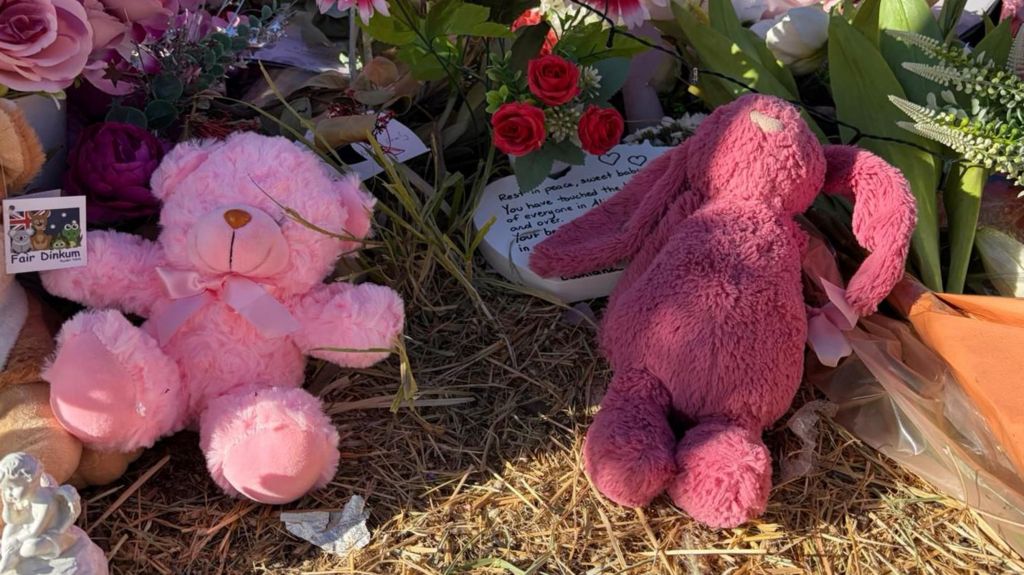
    Across the country, community-led vigils will be held Thursday evening to honor Kumanjayi Little Baby, with public gatherings open to all attendees planned in Alice Springs and every major Australian capital city, as calls grow for a full independent inquiry into what systemic gaps allowed the tragedy to occur.