分类: society

  • The race against time to find eagles escaped from Dollywood

    The race against time to find eagles escaped from Dollywood

    A multi-day, community-wide search is underway across East Tennessee’s Smoky Mountains to track down three non-releasable bald eagles that escaped one of the nation’s most respected raptor sanctuaries after a severe storm damaged their enclosure. The breakout, which occurred two weeks prior to the ongoing search, has highlighted the decades-long conservation success story built by country music icon Dolly Parton and the American Eagle Foundation (AEF) at Dollywood, the Pigeon Forge theme park Parton co-owns.

    The incident unfolded when a powerful storm toppled a 100-year-old deciduous tree directly through the netting of the sanctuary’s main enclosure, allowing the three eagles—Rockland, Caesar, and Wesley—to slip away. Unlike the 185 bald eagles the sanctuary has successfully rehabilitated and released into the wild over the past 35 years, all three escapees have permanent disabilities that leave them unable to survive independently in the wild. Rockland lives with a displaced wing that limits his flight range, Wesley has a chronic shoulder injury that restricts movement, and all three have grown accustomed to human care, leaving them ill-equipped to forage for food or avoid natural hazards on their own.

    Immediately after the escape, the AEF issued a public call for sightings, asking community members to watch for the birds’ unique colored leg bands: orange for both Rockland and Caesar, and black for Wesley, the only female of the three. The response was overwhelming, with tips pouring in from as far away as Indiana, Virginia, and Georgia, though the most credible reports have placed the birds within the Smoky Mountains region. Last weekend, search teams successfully recovered Caesar after a local tip led them to a rural pasture, where an experienced avian specialist was able to capture the exhausted bird.

    The search for Rockland intensified the following day, with teams of law enforcement officers, AEF executives, and avian specialists trekking through mountain terrain for hours in pursuit of the injured bird. Sightings carried teams from a downtown hotel to a residential neighborhood across town, but Rockland managed to elude capture twice, soaring away before teams could approach. “The advantage those little stinkers have, that we don’t, is they can take off,” one search member wryly noted of the evasive raptor. As of the latest update, both Rockland and Wesley remain at large, with search crews continuing to follow every credible tip.

    The escape has pulled back the curtain on a 35-year conservation partnership that transformed bald eagle protection in the United States. The Dollywood Eagle Mountain Sanctuary, which opened in 1991, is now the world’s largest sanctuary for non-releasable bald eagles, welcoming more than 3 million park visitors annually for educational programming and daily flying demonstrations. The partnership grew out of a promise AEF chairman James Rogers made decades earlier, after spotting a rare bald eagle on a fishing trip in Florida when the species was still listed as endangered. “I made a silent promise that I would do what I could to keep the bird from becoming extinct, so future generations could see them,” Rogers recalled.

    Rogers, a longtime musician who wrote the 1973 eagle conservation anthem *Fly, Eagle, Fly*, approached Parton with the idea for the sanctuary, and she immediately embraced the project. “I don’t think it ever would have happened if she hadn’t supported it,” Rogers said. “She thought it was a beautiful idea, because it was pure Americana. The eagle isn’t a Republican or a Democrat—it’s our national symbol.” Parton’s longstanding ties to eagle conservation include being honored by the federal government in 2003 for her work, and she even named her 31st studio album *Eagle When She Flies* the year the sanctuary opened.

    Decades of conservation work, paired with national environmental protections like the Clean Water Act and restrictions on the pesticide DDT—once the leading cause of bald eagle population decline, thanks to severe eggshell thinning—led to the bald eagle being removed from the endangered species list in 2007. Wildlife biologists call the recovery of the bald eagle one of the nation’s most underappreciated conservation success stories. “It takes decades for environmental protections to show population-level results, but now we’re seeing bald eagles return to landscapes where they’d disappeared,” explained Michael Patrick Ward, a wildlife biology professor at the University of Illinois Urbana-Champaign. “Every released eagle that goes on to breed for 15 or 20 years makes a huge difference.”

    Even as the search for the two remaining eagles continues, AEF CEO Lori Moore says the incident has brought an unexpected silver lining: it has gotten ordinary citizens looking up at the sky, engaging with conservation, and uniting around a common goal. “In a time that our country is a little divided, having something—even if it’s just looking for our national symbol—to unite us all, you can tell people are doing it from the heart,” Moore said. “They are genuinely concerned, as we are. That part of it has been incredibly heartwarming for us.” Many members of the public reported being excited just to spot any bald eagle during their search, with one man contacting the foundation with a cracking voice to say he had never seen a bald eagle in the wild before.

    Search teams remain hopeful that they will recover Rockland and Wesley safe and sound, with Rogers saying the entire team is on edge waiting for the next credible tip. “It just makes you want to cry because you’re afraid he’s going to tangle with something he shouldn’t and get hurt,” Rogers said of Rockland. “Any time we get a truly viable lead, the excitement gets really high—adrenaline starts flowing, because we know we might have a chance to bring our bird home.”
  • Missing hiker killed in possible bear attack in Montana

    Missing hiker killed in possible bear attack in Montana

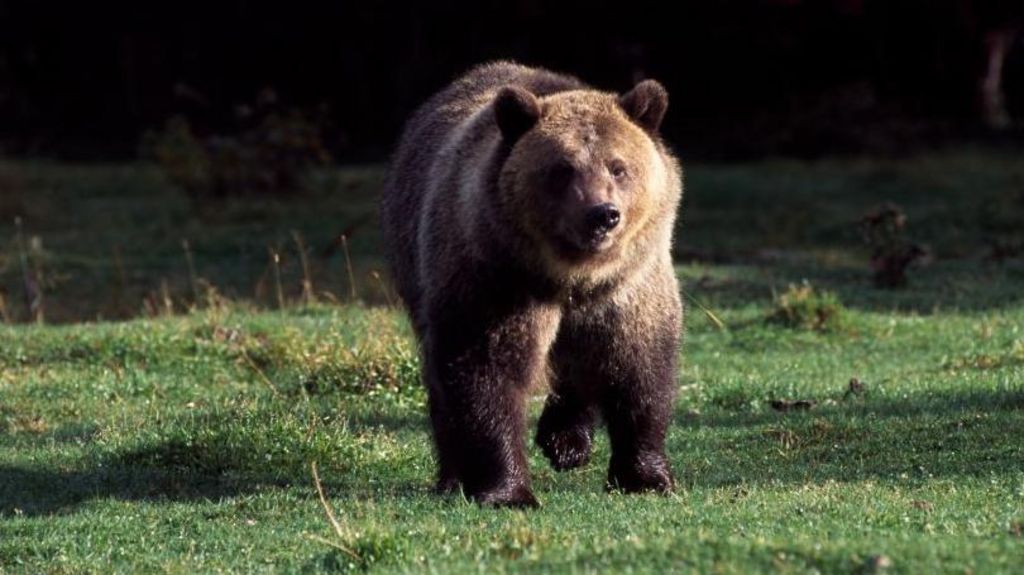
    A deadly bear attack has claimed the life of a 33-year-old hiker in Glacier National Park, Montana, marking the first fatal bear-caused human death in the region in nearly three decades, park officials have confirmed.

    Anthony Pollio, a visitor from Fort Lauderdale, Florida, was reported missing after starting a hike in the park on Sunday. Multiple search and rescue teams launched an extensive search operation across the rugged backcountry, and on Wednesday, crews located Pollio’s remains in a remote, heavily forested section of the park. Park investigators confirmed that the injuries found on the remains match patterns consistent with a fatal bear encounter.

    In response to the incident, the National Park Service has immediately closed the section of trail where the body was discovered to reduce the risk of further bear-human conflicts, while wildlife specialists work to locate and assess the animal involved in the attack.

    Glacier National Park has long been labeled “bear country”—it hosts a large, robust population of grizzly (brown) bears, alongside a widespread population of black bears that roam the park’s 1 million-plus acres of wilderness. Before this incident, the last bear-caused injury in the park dated back to August 2025, and the previous fatal bear attack occurred all the way back in 1998 in the park’s Two Medicine Valley.

    While fatal bear attacks remain extremely rare across the United States, wildlife experts warn that shifting human activity is increasing risk in popular outdoor recreation areas. As residential development and expanded campgrounds encroach on bear habitats, easy access to human food sources has led more bears to lose their innate fear of humans, growing bolder in interactions that can turn deadly.

    Data from the Journal of Wildlife Management underscores the rarity of these events: between 1900 and 2009, only 63 fatal black bear attacks were recorded across all of North America. This incident comes just days after a separate bear attack at nearby Yellowstone National Park—spanning Wyoming, Montana, and Idaho—left two other hikers injured on Monday, drawing renewed attention to bear safety protocols for backcountry users across the Northern Rockies.

  • Video of man throwing rock at seal in Hawaii sparks anger

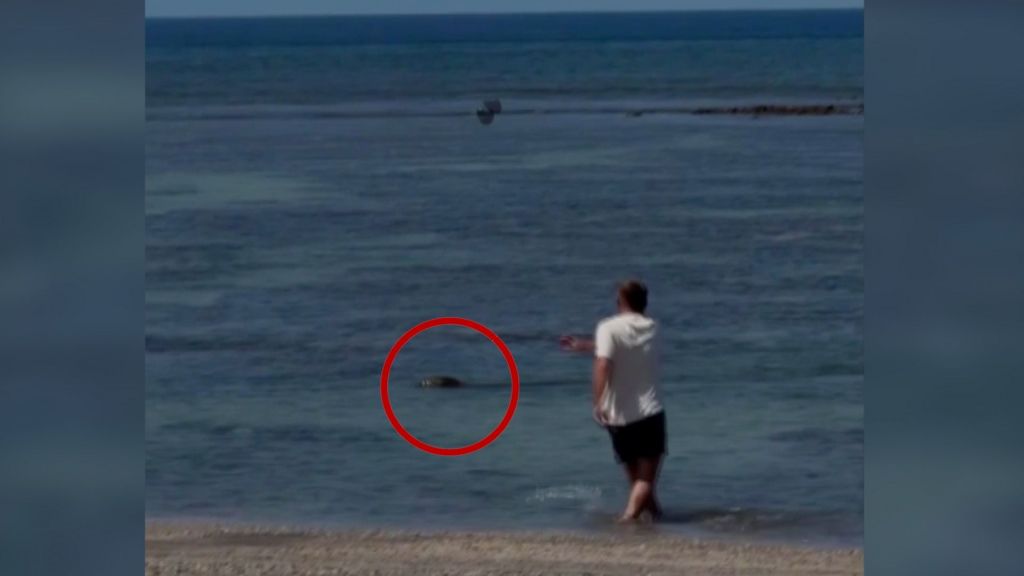
    Video of man throwing rock at seal in Hawaii sparks anger

    A disturbing video that emerged recently has ignited widespread anger across social media and conservation communities, showing an unidentified man throwing a large rock at a Hawaiian monk seal off the coast of Hawaii. What makes this incident particularly alarming is the protected status of the species: the Hawaiian monk seal is currently classified as one of the most endangered marine mammals on the planet, with fewer than 1,600 individuals remaining in the wild.

    Decades of conservation efforts have been invested in bringing the species back from the brink of extinction, and both federal and state authorities in the United States have put strict legal protections in place to safeguard these animals. Under the U.S. Endangered Species Act and Hawaii state law, intentionally disturbing, harming, or killing a Hawaiian monk seal carries severe consequences. Convicted offenders can face substantial fines that reach tens of thousands of dollars, and in more serious cases, may even receive criminal penalties including misdemeanor charges and potential jail time.

    Conservation groups have condemned the act as a senseless attack on a vulnerable species, and members of the public have quickly shared the video across platforms, calling for authorities to identify and hold the perpetrator accountable. Many ocean and wildlife advocates have used the incident to renew calls for greater public education about the importance of protecting Hawaii’s unique marine ecosystem, highlighting how human interference continues to threaten the slow recovery of the monk seal population.

  • ‘Scapegoating’: Iran’s Bahais feel brunt of crackdown

    ‘Scapegoating’: Iran’s Bahais feel brunt of crackdown

    When Iranian security agents arrived at Peyvand Naimi’s workplace in Kerman on January 8, the 30-year-old member of Iran’s persecuted Bahai religious community had no idea what horrors awaited him behind bars. Accused of involvement in the killing of three Basij militia members the previous night, Naimi’s case already falls apart on basic timeline: he was taken into custody that afternoon, hours before the attack he is alleged to have carried out.

    Decades of systematic discrimination had already closed doors for Naimi: barred from university and competitive swimming teams despite his natural talent for the sport, he had long adapted to life as a target of state-sanctioned prejudice because of his faith. Today, he is one of at least 77 Bahais arrested across Iran since nationwide anti-government protests erupted in January, in what community leaders describe as the harshest wave of repression against the group since the immediate aftermath of the 1979 Islamic Revolution.

    Originating in 19th-century Persia, the Bahai Faith is the largest non-Muslim religious minority in Iran, with an estimated 300,000 followers nationwide. The Islamic republic has never formally recognized the faith, branding its adherents as heretics and repeatedly leveling unsubstantiated accusations that they act as Israeli spies – a baseless claim rooted in the location of the faith’s global spiritual center in Haifa, Israel, which was established decades before the founding of the modern Israeli state. Community advocates say this scapegoating follows a predictable pattern: whenever Iran faces internal unrest or external regional tensions, authorities turn to blaming Bahais to deflect public anger.

    “This is an escalation against the Bahai that we have not witnessed in decades,” Simin Fahandej, the Bahai International Community (BIC) representative to the United Nations, told AFP in an interview. Fahandej confirmed that arrests have continued steadily through the ongoing Israel-Hamas war and intensified sharply after the 12-day Iran-Israel conflict in June 2025. What makes this crackdown different from past waves of repression, she explained, is the state’s deliberate use of tortured, forced confessions broadcast on state media to spread hate speech and legitimize further persecution of the community.

    Amnesty International has corroborated these accounts, confirming that a coordinated state-led campaign of incitement, disinformation, discrimination and violence has targeted Bahais since the June 2025 cross-border war, with repeated false claims that the community serves as Israeli spies and collaborators.

    For Naimi and other detainees, the abuse in custody has been brutal. According to his close relative, who spoke to AFP on condition of anonymity out of fear for family safety inside Iran, Naimi was beaten repeatedly over five days, endured two mock executions with his hands and feet bound, was tied to a wall for extended periods, deprived of food, and forced to appear in a televised coerced confession. During a brief, monitored phone call to his parents, he told them, “If they execute me do not be sad, my soul will be free of the cage of my body.” Later, during a family visit, he reaffirmed his innocence: “I have done nothing wrong, I have not committed any crime and I will not confess.” As of yet, Naimi has not been formally charged or granted a trial.

    Naimi’s 29-year-old cousin Borna was arrested in early March and has faced identical abuse, including at least two mock executions and electric shocks that left severe burns on his feet, BIC reports confirm.

    The crackdown has swept up Bahai communities across the country, from southeastern Kerman province to the southern city of Shiraz. Roya Basiri, a Canadian resident whose brother, sister-in-law, and 25-year-old sister-in-law Mahsa Sotoudeh were all arrested in late March and early April, described the arbitrary nature of the raids. When Revolutionary Guards agents arrived at Mahsa’s family home and demanded to see an arrest warrant, Basiri told AFP, agents responded bluntly: “We are the warrant.” The agents searched the home, seized all electronic devices, then lured Mahsa back to the house by using her mother’s phone, arresting her at the door in front of her distraught parents. While Basiri’s brother has since been released on bail, Mahsa and Mandana Sotoudeh remain in detention.

    In late April, three Bahai women – one of whom is pregnant – from the southeastern town of Rafsanjan were ordered to begin serving existing prison sentences on vague charges of spreading “propaganda” against the Iranian government. Another Bahai detainee, 30-year-old Venus Hosseininejad, who was arrested in January in Kerman and forced to give a televised false confession, was recently released on bail; while she still faces pending charges, BIC confirmed she is not currently at risk of execution, despite recent claims made by former U.S. president Donald Trump on social media.

    Thirteen men already have been executed across Iran on charges linked to the January protests, a wave of punishment that human rights activists say is designed to instill mass fear amid rising tensions with the United States and Israel. For Iran’s Bahai community, the current crackdown represents a dangerous acceleration of a decades-long campaign of persecution, with community members once again being made to pay the price for state instability, advocates say.

  • Police called to a hostage situation at a bank in western Germany

    Police called to a hostage situation at a bank in western Germany

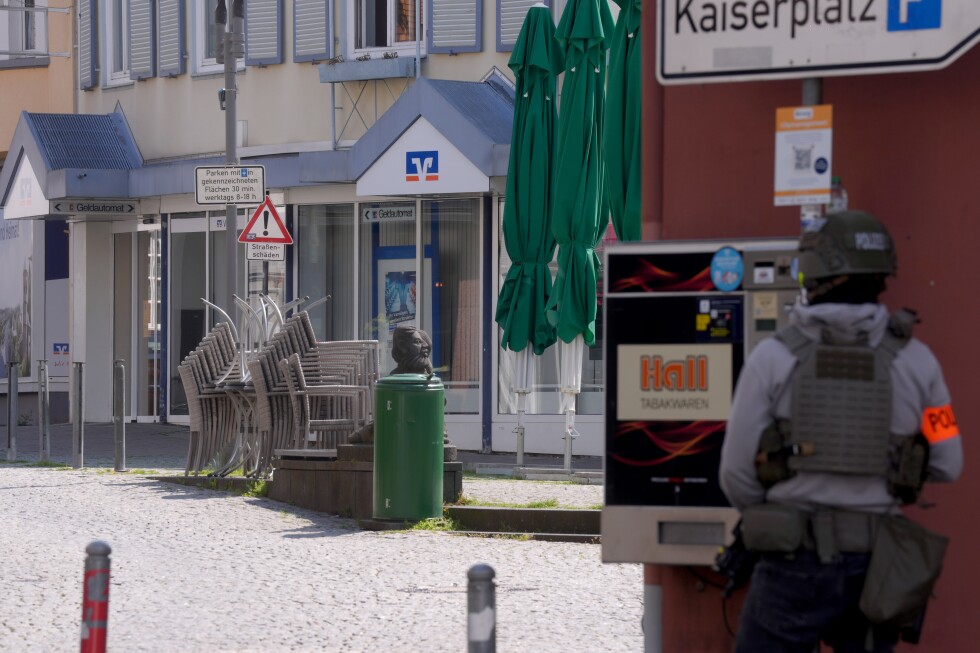
    BERLIN – A tense hostage situation unfolded Friday at a community bank branch in a small western German town, prompting local law enforcement to deploy a large response to the incident, official authorities confirmed this week.

    The drama began just after 9 a.m. local time, when regional police received an emergency call reporting the unfolding crisis at a local branch of Volksbank, located in Sinzig. This quiet town, home to roughly 17,000 residents, sits in the scenic Rhine Valley roughly 15 kilometers south of the larger city of Koblenz.

    By late Friday morning, law enforcement officials updated the public on the developing situation, confirming they believe multiple armed perpetrators are involved in the incident, and that multiple people are being held against their will inside the bank branch. Among those confirmed as captives is the driver of an armored cash transport van that was making a routine delivery to the financial institution when the incident began.

    In an official update posted to the department’s social media channels, police characterized the ongoing situation as “static,” meaning no significant changes to the standoff had occurred in the hours after the initial response. Authorities have since established a wide security cordon around the bank building to isolate the incident and prevent harm to bystanders. As of the latest official statement, police confirmed there is no detectable threat to members of the public staying outside of this secured perimeter.

  • Pope celebrates first anniversary of election with visit to Pompeii to pray at shrine

    Pope celebrates first anniversary of election with visit to Pompeii to pray at shrine

    POMPEII, Italy – On the first anniversary of his historic election as the first American-born pope, Pope Leo XIV traveled to the ancient Roman city of Pompeii on Friday to mark the occasion with quiet prayer and commemoration of a beloved Marian feast day that aligned perfectly with the start of his pontificate.

    Flying by helicopter to the archaeological hub near Naples, the pontificate dedicated his full day visit to honoring the Feast of Our Lady of Pompeii, a date that also carries historic meaning for the global Catholic Church: it was on this same day in 1876 that the cornerstone was laid for the city’s iconic sanctuary dedicated to the Virgin Mary.

    Nestled steps away from the ongoing excavations of Pompeii, the Roman town that was entirely buried under volcanic ash and gas when Mount Vesuvius erupted in 79 AD, the sanctuary draws a different crowd than the ancient ruins that welcome millions of tourists annually. For decades, it has been a major pilgrimage site for Catholics, particularly those devoted to the rosary prayer tradition.

    Standing before crowds of gathered faithful ahead of celebrating Mass inside the sanctuary, Pope Leo shared his reflections on the meaningful occasion, saying, “What a beautiful day, how many blessings the Lord wanted to give to all of us. I feel I am the first blessed to be able to come here to the sanctuary of the Madonna on the day of her feast and on this anniversary.”

    This Pompeii pilgrimage marks the opening of a months-long series of day trips Pope Leo will take across the Italian peninsula over the coming weeks. The journey comes as the Bishop of Rome, who hails from the United States as former Cardinal Robert Prevost, deepens his connection to the Italian national church he serves as its symbolic head.

    The pope’s pontificate was literally launched with a prayer centered on this very feast day. On the night of his election, when he first stepped out onto the loggia of St. Peter’s Basilica to be introduced to the world, Pope Leo immediately referenced the Feast of Our Lady of Pompeii before leading crowds gathered in St. Peter’s Square in a public prayer for his new papacy. That night, he emphasized Mary’s constant presence for believers, saying, “Mary, the mother of Christ, always wants to walk at our side, to remain close to us, to help us with her intercession and her love.” He asked the crowd to join him in praying for grace for his new mission, for the global church, and for peace across the world.

    The Pompeii sanctuary is forever tied to St. Bartolo Longo, the founder who built the basilica and is widely venerated across Italy for his lifelong charitable outreach to orphans, prisoners, and other marginalized communities. In a full-circle moment for the site, the late Pope Francis approved the miracle required for Longo’s canonization from his hospital room just weeks before Francis’s death, and Pope Leo formally canonized Longo as a saint last October.

    Pope Leo opened his visit on Friday by meeting with sick and disabled people supported by a charitable center affiliated with the sanctuary, a site that was named a pontifical basilica in 1901 by Pope Leo XIII, the current pope’s namesake. In his opening remarks, he retraced Longo’s work in the region, recalling that when Longo first arrived in the Pompeii valley, “he found a land plagued by great poverty, inhabited by a few very poor farmers, and ravaged by malaria and bandits.”

    Yet despite the harsh conditions, Longo “was able to see, however, the face of Christ in everyone: in the great and the small, and especially in the orphans and the children of prisoners, to whom he made the beating of God’s heart felt through his tenderness,” the pope added.

    Thousands of cheering Italian faithful lined the pope’s route, with many reporting they had waited since the middle of the night to catch a glimpse of the new pontiff. Many attendees made clear they were paying close attention to the recent public disagreement between Pope Leo and U.S. President Donald Trump over the escalating conflict in Iran, and they expressed strong approval of the pope’s response.

    “He doesn’t let anyone intimidate him. Look at the recent issues with Trump,” said Rita Borriello, a resident of nearby Torre del Greco. After Trump publicly criticized the pope, Leo “simply answered, ‘I preach the Gospel’. I see him as a very humble pope, very close to us, a pope who entered in our hearts.”

    Reporter Nicole Winfield contributed reporting from Rome. This coverage of religion comes via the Associated Press’s collaboration with The Conversation US, with funding provided by Lilly Endowment Inc. The AP retains full editorial responsibility for all content.

  • Japan confirms year’s first fatal bear attack, two more suspected

    Japan confirms year’s first fatal bear attack, two more suspected

    Just months after Japan recorded its deadliest year on record for human-bear conflicts, the East Asian nation has officially confirmed its first fatal bear attack of 2026, with two additional suspicious deaths under investigation that experts link to hungry bears emerging from winter hibernation. The 2025 crisis, which saw a staggering 13 fatal bear attacks and more than 200 injured people—more than double the previous annual record of six deaths—sparked national alarm, forcing the Japanese government to deploy military troops to assist with trapping and culling aggressive animals that wandered deep into human-populated areas. Incidents ranged from bears roaming near schools and breaking into residential homes to rampaging through supermarket aisles and wandering through popular hot spring resort districts, bringing the long-simmering human-wildlife conflict to the forefront of national public discourse.

    According to Japan’s Ministry of the Environment, the first confirmed fatality of 2026 was a 55-year-old woman whose body was discovered on April 21 in Iwate Prefecture, a rural region in northern Japan’s Tohoku area. Police confirmed to AFP that two additional sets of human remains have been recovered this week: one found Thursday in another part of Iwate, and a second recovered Tuesday in a Yamagata Prefecture forest. While police have not officially ruled on the cause of death, local media and wildlife experts have linked both deaths to bear attacks.

    Public broadcaster NHK identified one of the two deceased as 69-year-old Chiyoko Kumagai, who went missing after traveling to a mountain forest to harvest edible wild plants, a popular seasonal activity in rural Japan. After launching a large search operation Thursday around the forest where Kumagai’s parked car was found, rescuers located her body shortly after 8 a.m. local time. NHK reported that Kumagai suffered extensive claw injuries to her face and head consistent with a bear attack, and local officials confirmed that licensed hunters would begin increased patrols of the high-risk area starting Friday.

    Wildlife scientists have traced the steady rise in bear conflicts across Japan to a combination of interconnected environmental and demographic shifts. A 2025 Japanese government survey found that the national brown bear population has doubled over the past 30 years to roughly 12,000 individuals, while the population of Asian black bears—responsible for the vast majority of attacks on humans, and common across most of Honshu, Japan’s largest main island—has grown to 42,000. Experts note that warming temperatures have boosted food supplies for bears, including acorns, deer, and wild boar, creating ideal conditions for population growth even as rural human populations decline.

    This population boom has created what experts describe as “overcrowding” in Japan’s mountainous regions, which cover roughly 80 percent of the country’s total land area. Overcrowding forces younger, bolder bears to stray beyond mountain boundaries into rural villages and towns, where many quickly develop a taste for easy access to farmed crops and cultivated fruits such as persimmons. Compounding this issue, a poor acorn and nut harvest in 2025 pushed large numbers of bears out of the mountains and into populated areas in search of food, leading to last year’s record number of conflicts. Depopulation and population aging in rural Japan have also left large swathes of former farmland abandoned, creating extra habitat for bears and expanding their range closer to remaining human settlements.

    While 2026 forecasts for natural bear food sources are more favorable, local media reports show that bear sightings this spring have already hit record levels as animals emerge hungry from hibernation. The Yomiuri Shimbun reported that the number of confirmed sightings in April across Miyagi, Akita, and Fukushima prefectures was roughly four times higher than the same period in 2025. Koji Yamazaki, one of Japan’s leading bear experts and director of the Ibaraki Nature Museum, warned that Tohoku region residents must remain vigilant through the spring, despite his prediction that 2026 will ultimately see fewer conflicts than 2025’s historic high.

    “I’m not sure yet why we’re seeing this kind of unprecedented damage so early in the spring,” Yamazaki told AFP. “Given that all the incidents have occurred relatively close to settlements and the bodies have been severely damaged, I suspect a bear has eaten them.” Yamazaki added that the Tohoku region has one of the densest bear populations in the country, following 20 years of consistent population growth, and that abandoned land from depopulation and aging has only worsened the overlap between bear territory and human communities. For context, brown bears— which can grow to more than 500 kilograms and run faster than the average human—are limited almost exclusively to Hokkaido, Japan’s northernmost main island, while smaller black bears are widespread across Honshu and linked to most deadly attacks.

  • Caged and fed ‘cookies’: Rescuing Armenia’s captive bears

    Caged and fed ‘cookies’: Rescuing Armenia’s captive bears

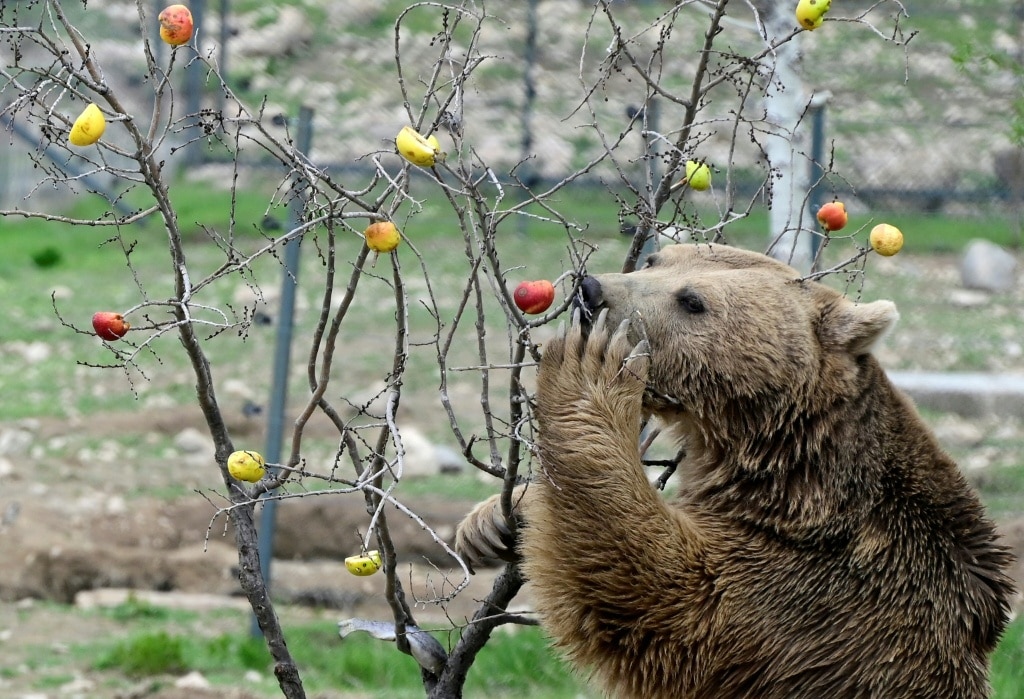
    High in the misty Caucasus highlands of Armenia, three Syrian brown bears — Nairi, Aram, and their young cub Lola — now roam spacious, natural mountain enclosures, digging dens and foraging for fresh produce that mimics their wild diet. It is a stark contrast to the life they escaped just over a year ago: confined to a cramped three-meter cage in the heart of Armenia’s capital Yerevan, forced to sit in their own waste and fed a steady diet of sugary junk food. For these three bears, the rescue was a life-changing second chance, but conservationists warn that as many as 20 more bears remain trapped in inhumane captivity across the country, held as luxury status symbols by the nation’s wealthy elite.

    The problem of captive wild predators in Armenia is not a new one, rooted in long-standing patterns of illegal wildlife trafficking and elite trophy collecting that have persisted since the collapse of the Soviet Union. Strategically positioned at the crossroads of Asia and Europe, Armenia has become a key transit and destination hub for illegal wildlife trafficking, according to global crime research. A 2023 Global Organized Crime Index report identifies persistent demand for rare and dangerous wild animals among the country’s ultra-wealthy, where owning large predators has become a display of power and social status.

    High-profile cases have brought the issue into public view for decades. In 2015, an Armenian member of parliament drew widespread international criticism after publicly acknowledging he kept six endangered Siberian tigers on his private property. The crisis reached a breaking point in 2016, when a private zoo owned by a businessman in the northern city of Gyumri collapsed into insolvency, leaving dozens of caged animals — including lions and bears — to starve to death behind locked gates.

    Today, the Frontline for the rescue mission is run by the Foundation for the Preservation of Wildlife and Cultural Assets (FPWC), a local non-profit that operates Armenia’s only dedicated bear rehabilitation center on a remote mountainside an hour outside Yerevan. Rescuers have documented appalling conditions across the country’s unregulated captive sites: bears are confined to tiny concrete cages at hotels, private backyards, and even roadside petrol stations, denied access to natural sunlight and the ability to hibernate, a critical biological need for the species. Many suffer from severe health issues caused by inappropriate diets, with widespread rotting teeth resulting from being fed cookies, sugary snacks, and even Coca-Cola by their untrained owners.

    “It became clear the moment we mapped the scale of the crisis that we needed a dedicated rescue and rehabilitation space,” explained Tsovinar Hovhannisyan, FPWC’s conservation manager. The three bears Nairi, Aram and Lola were among the most high-profile rescue operations the group has ever completed. Their owner refused to hand the animals over, claiming the bears were “happy” living with him and accusing rescuers of threatening their lives. The team waited more than eight hours in heavy rain for a court order to enter the property and seize the animals. When they finally entered the cage, Hovhannisyan recalled, the space was caked in layers of filth and reeked of waste: “It was horrible, those are memories I will not forget.”

    Now, with Armenia scheduled to host a major UN COP summit on biodiversity this October, the FPWC team is racing against time to rescue the remaining 20 known captive bears across the country. But the mission faces a critical barrier: the rehabilitation center is already at maximum capacity, home to 32 bears that can never be released back into the wild after a lifetime of captivity left them unable to hunt. The organization is currently fundraising to expand its enclosures to accommodate more rescued animals.

    Wealthy owners often see large predators like bears as a bragging right, says FPWC communications manager Ani Poghosyan. “It is a status symbol for them. Something to brag about, especially owning a big predator — it is a way to prove their power and masculinity.” Even when owners initially agree to surrender the animals, many change their mind at the last minute, leaving rescuers empty-handed after traveling to remote properties.

    For the bears that do make it to the center, the team works to recreate as wild an environment as possible. Enclosures are large enough for the animals to roam, dig their own winter dens, and climb trees, and staff provide live prey to encourage natural foraging behaviors. After years trapped in tiny cages, many newly rescued bears are initially afraid to explore the full space of their new enclosures, used to being confined to a few square meters. But over time, most begin to exhibit natural behaviors, including hibernation, something they were never able to do in their former cages.

    While the bears will never be able to survive in the wild, the center’s mission is simple: give them the chance to live out the rest of their lives as bears. “They need to dig, they need to climb, they need to smell wild plants and feel free,” said Narine Piloyan, the center’s coordinator. “They need to feel that they are wild.”

  • Ethiopian woman’s joy at rare quintuplets after 12 years trying for a baby

    Ethiopian woman’s joy at rare quintuplets after 12 years trying for a baby

    After 12 years of hoping and praying for a child, a 35-year-old Ethiopian woman has made medical history with an extremely rare birth: a set of naturally conceived quintuplets, all born healthy in the country’s Harari Regional State.

    Bedriya Adem, a subsistence farmer from the region, described herself and her husband as overjoyed by the unexpected gift of five babies four boys and one girl at once. For more than a decade, Bedriya navigated the social stigma of infertility in her community, enduring years of emotional and psychological pain even as her husband reassured her that his child from a previous marriage was enough to complete their family. “Deep inside I was suffering, as the entire village questioned my inability to give birth,” she shared in an interview with the BBC. “I spent 12 years in pain, hiding myself, and praying constantly for children at last, my prayers were answered.”

    The historic delivery took place via Caesarean section on a Tuesday evening at Harari’s Hiwot Fana Specialised Hospital, where both mother and the newborns remain under routine observation for continued good health. Dr Mohammed Nur Abdulahi, the hospital’s medical director, confirmed that all five infants are in full health, weighing between 1.3 and 1.4 kilograms each. Medical guidelines note that newborns weighing more than one kilogram have a very high probability of surviving and growing into healthy children, a benchmark all five of Bedriya’s babies meet.

    What makes the birth even more extraordinary is that Bedriya conceived without any reproductive assistance like in vitro fertilization, a procedure not available at Hiwot Fana Specialised Hospital. IVF is widely known to increase the risk of multiple births when multiple embryos are transferred to the uterus, but naturally conceived quintuplets are a one-in-55-million event, according to global fertility data.

    In a surprising twist, Bedriya was only expecting four babies throughout her prenatal care, which she received consistently from the hospital’s medical team. It was only at the time of delivery that the medical team discovered a fifth baby the healthy little girl the couple have named Nazira, alongside her four brothers Naif, Ammar, Munzir, and Ansar. The couple have dubbed their five new arrivals the “five blessings”, a nod to their long wait and joyful surprise.

    While Bedriya acknowledges that her new role as a mother of five will bring financial challenges as a low-income subsistence farmer, she says she remains optimistic about the future. “I believe Allah will provide, through the support of my community and the government,” she said. For the first-time mother, the years of pain and stigma she endured now feel like a distant, unwanted memory, replaced by the overwhelming joy of welcoming the family she spent 12 years dreaming of.

  • The death toll from an explosion at a fireworks plant in China rises to 37

    The death toll from an explosion at a fireworks plant in China rises to 37

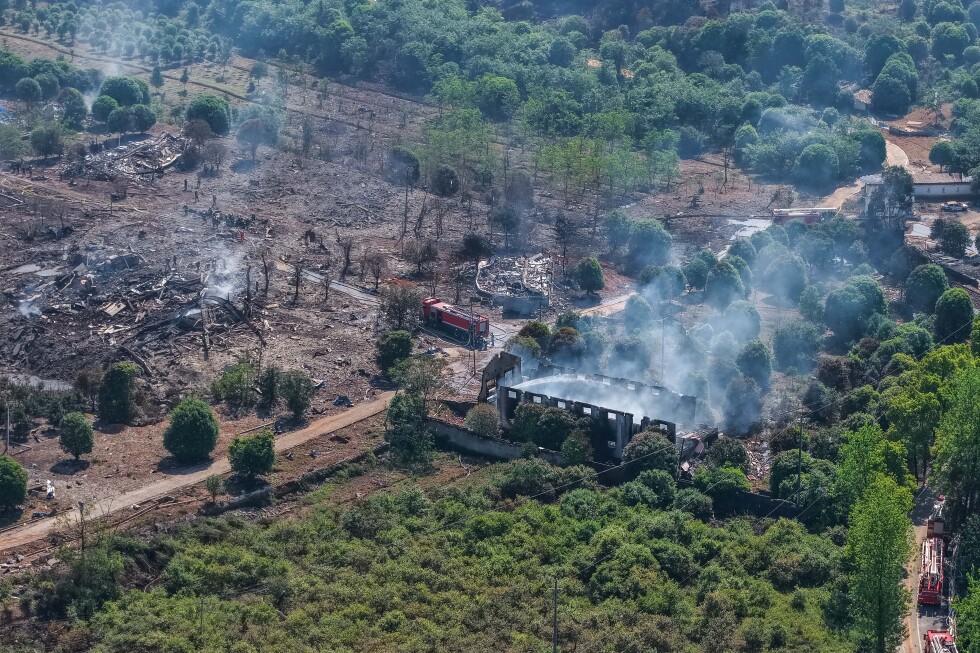
    BEIJING – In an updated official report released Friday by Chinese state media, the fatalities from a massive explosion at a central Chinese fireworks manufacturing facility earlier this week have climbed to 37. According to China’s national news agency Xinhua, local disaster response teams confirm one additional person is still unaccounted for following the blast, which took place Monday at a plant operated in Liuyang, a county-level city under the administration of Changsha, the capital of Hunan province.

    Initial emergency assessments put the number of injured survivors at more than 60, though no updated injury count has been released publicly as of Friday. Investigations into the root cause of the explosion remain ongoing, authorities confirmed, and a temporary moratorium on all fireworks production operations has been imposed across the surrounding region to allow for safety inspections.

    The affected facility is run by Huasheng Fireworks Manufacturing and Display Co., according to state-run newspaper China Daily. Liuyang, the location of the plant, is widely recognized as China’s leading fireworks production hub, with a centuries-long legacy tied to the industry. Historical records from Guinness World Records trace the earliest formally documented firework — the traditional Chinese firecracker — back to Li Tian, a Tang Dynasty (618–907 CE) monk who resided in the Liuyang area.

    Friday’s updated death toll marks the latest major deadly incident involving fireworks in China this year. Back in February, two separate fatal explosions at fireworks retail outlets occurred during the lead-up to the Lunar New Year holiday, a period when demand for celebratory fireworks typically surges across the country.