分类: society

  • Connecting cities, changing lives

    Connecting cities, changing lives

    In the heart of Beijing, Hou Qingjuan meticulously packs gifts and children’s clothing for her regular journey home—a routine made possible by China’s transformative high-speed rail network. Her destination: Liaocheng in Shandong Province, where her young son awaits reunions that have evolved from rare occasions to regular occurrences.

    Just seven years ago, Hou’s pilgrimage home involved six grueling hours aboard slow-moving ‘green trains,’ with total travel time consuming entire days. The psychological burden of separation from her children nearly drove her to abandon her Beijing career entirely. ‘The cumulative effect of station transfers and extended travel made the journey overwhelming,’ Hou recalls. ‘I constantly contemplated leaving the capital to return home permanently.’

    The transportation revolution arrived in late 2019 with upgraded rail services that slashed travel time to 3.5 hours at approximately 60 yuan ($8). By 2024, further infrastructure advancements reduced the fastest journeys to just 2.5 hours—democratizing mobility for millions of Chinese citizens.

    ‘This transformation redefined my possibilities,’ Hou explains. ‘Home visits transitioned from meticulously planned expeditions to spontaneous opportunities during free time.’ The enhanced connectivity prompted her to maintain her Beijing career while actively participating in her children’s upbringing—a balance previously unimaginable.

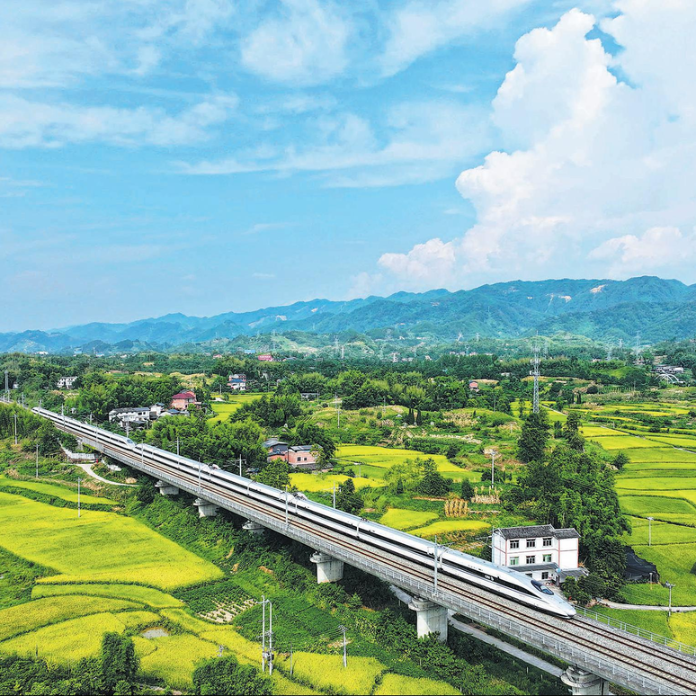
    Hou’s experience mirrors a national phenomenon where accelerated rail infrastructure is reshaping socioeconomic patterns across China. The Zhengzhou-Chongqing high-speed railway, captured in recent imagery cutting through golden fields against clear skies, symbolizes this new era of interconnected urban centers and revitalized regional communities.

    This transportation network evolution has fundamentally altered how citizens approach work-life balance, family dynamics, and geographic mobility—proving that infrastructure investment transcends concrete and steel to directly impact human relationships and life choices.

  • World’s longest expressway tunnel opens to traffic, crossing Tianshan Mountains

    World’s longest expressway tunnel opens to traffic, crossing Tianshan Mountains

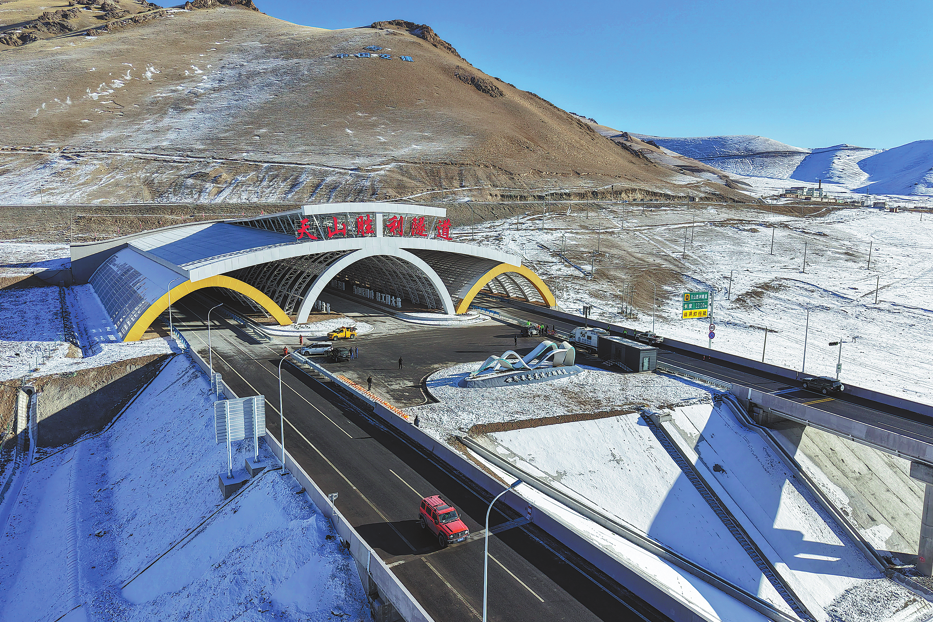
    China has officially opened the world’s longest expressway tunnel, marking a monumental achievement in infrastructure engineering. The Tianshan Shengli Tunnel, stretching 22.13 kilometers through the formidable Tianshan Mountains in Xinjiang Uygur Autonomous Region, began operations on December 27, 2025, as the centerpiece of a newly completed 324.7-kilometer expressway connecting regional capital Urumqi with Yuli county.

    This engineering marvel transforms what was previously a treacherous several-hour mountain crossing into a smooth 20-minute journey. The Urumqi-Yuli Expressway dramatically reduces travel time between Urumqi and Korla from seven hours to just three and a half, while effectively bridging northern and southern Xinjiang for the first time with high-speed connectivity.

    Construction of the $6.66 billion project commenced in April 2020 under extreme conditions. Engineers from China Communications Construction Co faced formidable challenges including altitudes nearing 3,000 meters, temperatures plunging to -42°C, high seismic activity, and complex geological fault zones. The tunnel reaches its deepest point at 1,112 meters beneath the mountain ridge, while its longest shaft descends over 700 meters—setting a new world record.

    The project incorporated cutting-edge technologies and innovative solutions in ultra-long tunnel surveying, design, construction techniques, and intelligent safety systems. These advancements establish new global standards for tunnel engineering in extreme environments.

    Beyond its technical achievements, the expressway serves as a critical transportation artery linking major domestic routes including the G7 Beijing-Urumqi Expressway and G30 Lianyungang-Horgos Expressway. It further connects to international trade corridors such as the New Eurasian Land Bridge and China-Central Asia-West Asia Economic Corridor.

    The infrastructure development specifically enhances connectivity within the China (Xinjiang) Pilot Free Trade Zone, reducing logistics costs and accelerating the flow of energy, manufactured goods, and agricultural products across the region. Environmental considerations were prioritized throughout construction, with dedicated wildlife passages, herder underpasses, and special protective measures implemented for water-source protection zones and national forest parks along the route.

    Initial access is currently granted to public vehicles excluding medium and heavy-duty trucks, with formal trial operations scheduled to commence on January 1, 2026.

  • Is the Australian Dream move still alive?

    Is the Australian Dream move still alive?

    The phenomenon of young Britons migrating to Australia in pursuit of improved living standards has become increasingly prevalent, with many viewing the move as a solution to their problems. This trend, humorously referenced by the phrase “Who isn’t in Australia?” in some British communities, reflects a growing exodus of youth seeking enhanced opportunities abroad.

    Chanel Buckland, a 28-year-old special needs teacher from Blackwood, Wales, exemplifies this migration pattern. Having relocated to Melbourne three years ago, she now navigates the complex process of obtaining Australian sponsorship. Her experience reveals both the attractions and challenges of such transitions. “The ease of living here is remarkable,” Chanel notes, highlighting superior work-life balance, more generous leave policies (approximately four weeks annual leave plus 13-14 public holidays), and employers who prioritize employee wellbeing.

    The historical context of this migration dates to post-World War II era and the “Ten Pound Poms” program of the 1950s, which promised Britons housing, employment prospects, and improved quality of life. Recent data from the Australian Bureau of Statistics indicates migrant arrivals from the UK reached a decade high in 2024, with 39,580 individuals arriving from various British territories alongside 10,661 Irish migrants.

    Migration agent Mark Welch attributes this surge to pent-up demand following Brexit compounded by COVID-19 travel restrictions. He clarifies that while construction, education, and healthcare sectors actively seek workers, visa eligibility varies significantly by location. Most applicants require trade qualifications, diplomas, or degrees, with citizenship generally requiring applicants under 45 years old, though exceptions exist for academics, scientists, regional medical practitioners, and high-earners exceeding A$183,000 annually.

    Despite the attractions, the reality often proves more complex than Instagram portrayals suggest. Chanel acknowledges underestimating the challenges: “I had to start everything from scratch” – from establishing banking arrangements to building new social networks. The emotional toll includes strained connections with home, where “people have their own lives without me.”

    The experience varies considerably among migrants. Rosie Scott, 34, returned to Kent after five years in Perth, despite describing Australia as “the best place in world.” As a dental nurse, she earned nearly double her UK salary, enabling mortgage payments in Kent while covering Perth rent and travel expenses. Yet she ultimately prioritized proximity to family and friends.

    Amelia Sewell, 25, found profound cultural enrichment in Townsville, north Queensland, working with Torres Strait Islander communities. “Australia gives you opportunity to connect with people whose path you’d never have crossed,” she observes, noting she never envisions returning to Cardiff.

    Conversely, Emily Southwell, 29, endured two “unbelievably difficult” years in Sydney’s Bondi area. Working in marketing, she experienced “constant uncertainty” regarding employment and visas, describing feelings of discrimination and lack of cultural diversity. She believes “Australians often looked after Australians” due to strict immigration laws, finding the UK more naturally diverse and accepting. Her return to London felt like a “breakup,” requiring social media detox to avoid being “triggered” by her former life.

    Despite divergent outcomes, all expressed no regrets about their Australian experiences. As Emily concluded: “Moving to Australia changed me more as a person than anything I’ve ever done,” highlighting the transformative personal growth regardless of ultimate settlement decisions.

  • A massive crash on a highway in Japan kills 1 person and injures 26 as the holiday season starts

    A massive crash on a highway in Japan kills 1 person and injures 26 as the holiday season starts

    A catastrophic chain-reaction collision involving over 50 vehicles unfolded on a snow-covered expressway in Japan during the peak holiday travel period, resulting in one fatality and multiple injuries. The incident occurred Friday evening on the Kan-etsu Expressway near Minakami, approximately 100 miles northwest of Tokyo, as heavy snow warnings were active across the region.

    According to Gunma prefectural highway police, the sequence of events began with an initial collision between two commercial trucks that blocked traffic lanes. Subsequent vehicles traveling on the ice-glazed roadway proved unable to stop safely, leading to a massive pileup that extended across the highway. The situation escalated dramatically when a fire broke out at the rear of the collision zone, engulfing more than a dozen automobiles in flames. While the conflagration was eventually extinguished after approximately seven hours, numerous vehicles were completely destroyed by the intense fire.

    The human toll included a 77-year-old Tokyo woman who succumbed to her injuries. Among the 26 injured persons transported for medical treatment, five were reported to be in serious condition. Authorities confirmed no additional injuries resulted from the fire itself.

    The timing of the accident coincided with the beginning of Japan’s year-end and New Year holiday migration, when millions traditionally travel to visit family. Sections of the critical transportation artery remained closed indefinitely as emergency crews conducted rescue operations, police investigations, and the complex removal of wreckage from the accident scene.

  • Quiz of the Year 2025, Part 3: What Instagram caption did Taylor Swift use to announce her engagement?

    Quiz of the Year 2025, Part 3: What Instagram caption did Taylor Swift use to announce her engagement?

    As the seasonal transition from summer to autumn unfolded, several significant events captured global attention. In Australia, Erin Patterson faced murder charges following a fatal incident where three relatives succumbed to poisoning after consuming toxic mushrooms at a lunch gathering. Concurrently, the United Kingdom endured severe weather conditions as Storm Floris unleashed its fury across the region. In medical advancements, researchers achieved a breakthrough by discovering a potential treatment for Huntington’s disease, offering new hope for patients worldwide.

    The BBC’s seasonal news quiz challenges readers to test their recollection of these and other noteworthy events that occurred between July and September. This installment represents the third segment of a comprehensive four-part Christmas quiz series, featuring 52 questions corresponding to each week of the year. Participants who missed the initial January-March and April-June segments are encouraged to attempt those quizzes as well. The final installment covering October through December will be published tomorrow, compiled by quiz master Ben Fell. Additional quizzes from the archives remain available for those seeking further intellectual engagement.

  • Dubai Metro to run non-stop for 43 hours as RTA announces New Year’s Eve road closures

    Dubai Metro to run non-stop for 43 hours as RTA announces New Year’s Eve road closures

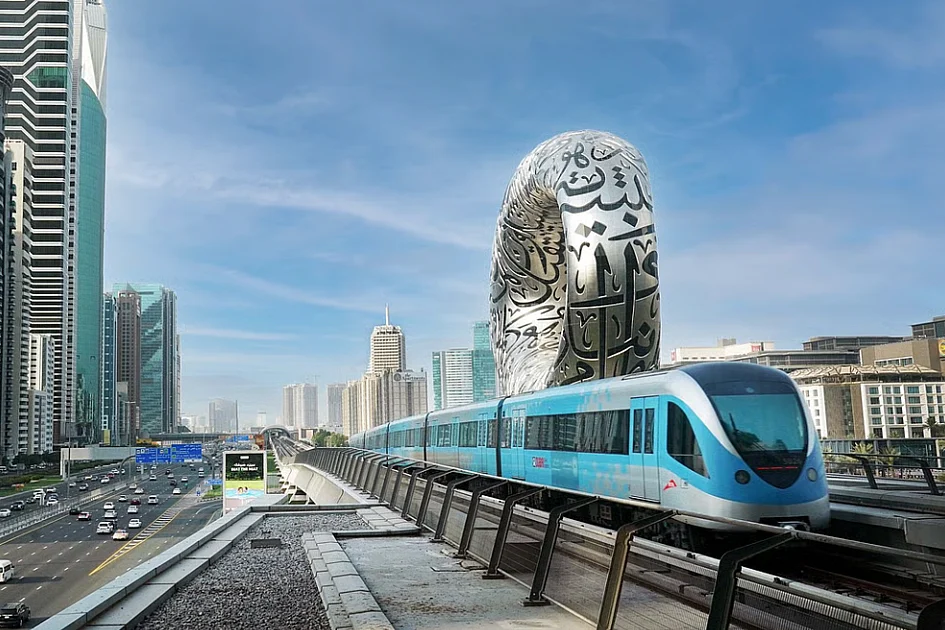
    Dubai’s transportation infrastructure is undergoing massive enhancements to accommodate the anticipated millions of revelers during New Year’s Eve 2025-2026 celebrations. The Roads and Transport Authority (RTA) has unveiled an unprecedented operational plan featuring continuous 43-hour metro services alongside extensive road closure measures.

    The Dubai Metro’s Red and Green Lines will maintain non-stop operations from 5:00 AM on December 31, 2025, through 11:59 PM on January 1, 2026. Complementing this extended service, the Dubai Tram will operate continuously from 6:00 AM on December 31 until 1:00 AM on January 2, 2026, creating a comprehensive public transportation network throughout the celebration period.

    Strategic road closures will be implemented through a phased approach, commencing at 4:00 PM on New Year’s Eve and progressively expanding until 11:00 PM. The comprehensive closure strategy affects key arteries including Al Asayel Street, Mohammed bin Rashid Boulevard, Burj Khalifa Street, Financial Centre Roads, Al Mustaqbal Street, Al Sukook Street, and sections of Sheikh Zayed Road.

    Hussain Al Banna, CEO of RTA’s Traffic and Roads Agency, emphasized the authority’s comprehensive preparedness through coordination with the Events Security Committee and strategic partners. Advanced technological systems including centralized traffic signal control and smart variable message signs will provide real-time updates on road conditions and alternative routes throughout the celebration areas.

    The Unified Control Center will host joint operational teams from RTA, Dubai Police, Civil Defence, and Dubai Ambulance Services, utilizing sophisticated technologies like the iTraffic system and big data analytics to monitor conditions and predict traffic volumes for informed decision-making.

    Enhanced parking infrastructure includes approximately 20,000 spaces in the Burj Khalifa area supplemented by an additional 8,000 spaces at metro stations. Overflow parking facilities at Al Wasl Club and Al Kifaf will provide supplementary capacity.

    Transportation resources have been substantially augmented with over 14,000 taxis, more than 18,000 limousine and luxury vehicles, and exceeding 1,300 buses deployed across the metropolitan area. More than 5,500 RTA personnel will be stationed throughout the city alongside ten control centers and 26 traffic diversion vehicles.

    This extensive preparation reflects growing public transport utilization during New Year’s celebrations, with passenger numbers increasing from 2.29 million in 2024 to over 2.5 million in 2025, demonstrating the effectiveness of Dubai’s integrated traffic management strategy.

  • Saudi: Identity of officer who broke suicide fall at Masjid Al Haram revealed

    Saudi: Identity of officer who broke suicide fall at Masjid Al Haram revealed

    Saudi authorities have publicly identified the security officer who sustained injuries while preventing a suicide attempt at Islam’s holiest site. Rayan bin Saeed Al-Asiri, a member of the Special Force for the Security of the Grand Mosque, intervened when a man attempted to jump from an upper floor of Masjid Al Haram in Makkah on Thursday.

    The Ministry of Interior confirmed the incident involved an individual attempting ‘to take his own life’ before security personnel intervened. During the rescue operation, Officer Al-Asiri suffered injuries while physically breaking the man’s fall, potentially saving the individual from fatal consequences.

    In a significant recognition of his bravery, Saudi Minister of Interior Prince Abdulaziz bin Saud bin Naif bin Abdulaziz personally called Officer Al-Asiri during his hospital recovery. The minister praised the officer’s exceptional courage, dedication, and high level of vigilance, emphasizing that his actions transcended mere professional duty.

    Prince Abdulaziz characterized Al-Asiri’s intervention as ‘a humane and noble stance that represents the highest meanings of sacrifice and selflessness.’ He further noted that the officer’s conduct exemplifies the core values upheld by all Saudi security personnel in serving both religious and national interests, while demonstrating exceptional readiness and professional competence in handling emergency situations within the sacred premises.

    The minister concluded the conversation with prayers for Al-Asiri’s swift recovery and expressed hope for his prompt return to duty, enabling him to continue serving visitors to the Grand Mosque. Images shared by Inside the Haramain showed the officer recovering in his hospital bed, accompanied by captions wishing for his quick recovery and divine acceptance of his efforts.

  • Her husband’s kidnapping became Malaysia’s biggest mystery. Then came a stunning confession

    Her husband’s kidnapping became Malaysia’s biggest mystery. Then came a stunning confession

    In an unprecedented legal ruling, Malaysia’s High Court has delivered a watershed verdict holding state authorities responsible for the enforced disappearance of Pastor Raymond Koh, ending a nearly decade-long pursuit for justice by his wife Susanna Liew. The court determined that the elite Special Branch police unit orchestrated Koh’s 2017 abduction, marking the first judicial acknowledgment of state involvement in such a case in Malaysian history.

    The case dates back to February 13, 2017, when Koh was forcibly taken by masked operatives in a meticulously coordinated daylight operation captured on CCTV. The footage, which subsequently went viral, showed multiple SUVs and motorcycles intercepting the 63-year-old pastor’s vehicle before he was dragged from his car and driven away.

    Two independent investigations—by Malaysia’s human rights commission and a government task force—later revealed that religious motivations underpinned the abduction. Authorities allegedly perceived Koh’s Christian activities as threatening to Malaysia’s majority Islamic faith. The investigations identified a specific senior police official with “extreme views” against religious minorities as a primary person of interest.

    The breakthrough emerged in 2018 when a police sergeant confessed to families of both Koh and another missing activist, Amri Che Mat, that the Special Branch had orchestrated both disappearances. This testimony, despite later retraction, was deemed credible by investigators.

    The court has ordered substantial compensation, including accumulating daily payments of 10,000 ringgit (£1,830) until Koh’s whereabouts are revealed—totaling over 32 million ringgit to date. While the government has appealed the verdict, citing “financial obligations” and “universal justice,” no police officials have faced criminal charges, with one reportedly receiving promotion since the abduction.

    Liew, who received the International Women of Courage award from the U.S. State Department in 2020, has transitioned from pastor’s wife to prominent activist against enforced disappearances. Despite personal trauma and family depression resulting from the ordeal, she has remarkably forgiven the perpetrators while continuing to demand institutional accountability and truth regarding her husband’s fate.

  • Fake Grand Egyptian Museum ticket website shut down, Ministry warns public

    Fake Grand Egyptian Museum ticket website shut down, Ministry warns public

    Egyptian authorities have successfully dismantled a counterfeit website falsely advertising ticket sales for the Grand Egyptian Museum (GEM), according to an official announcement from the Ministry of Tourism and Heritage. The fraudulent platform, which emerged recently, was promptly identified and reported to museum administrators who initiated immediate legal proceedings.

    The National Agency for Regulation of Communications, alongside other relevant governmental bodies, was notified of the illicit operation, resulting in the complete shutdown of the deceptive website. This coordinated effort highlights Egypt’s strengthened cybersecurity measures to protect both domestic and international visitors from digital fraud schemes.

    Tourism Minister Sharif Fathi addressed the public regarding the incident, emphasizing the critical need for vigilance in today’s increasingly sophisticated digital environment. He advised all potential visitors to rigorously verify the authenticity of websites before proceeding with any financial transactions or sharing personal data. Minister Fathi specifically cautioned against unauthorized platforms that might attempt to mimic official government or cultural institution websites.

    Dr. Ahmed Ghanim, Executive President of the Grand Egyptian Museum, reaffirmed that gem.com remains the exclusive authorized platform for all legitimate ticket purchases. He detailed the museum’s proactive digital surveillance strategy, which involves continuous monitoring of internet activity to detect and neutralize fraudulent entities claiming association with the prestigious institution. Dr. Ghanim confirmed that the administration maintains a zero-tolerance policy toward such scams and pursues maximum legal penalties against perpetrators.

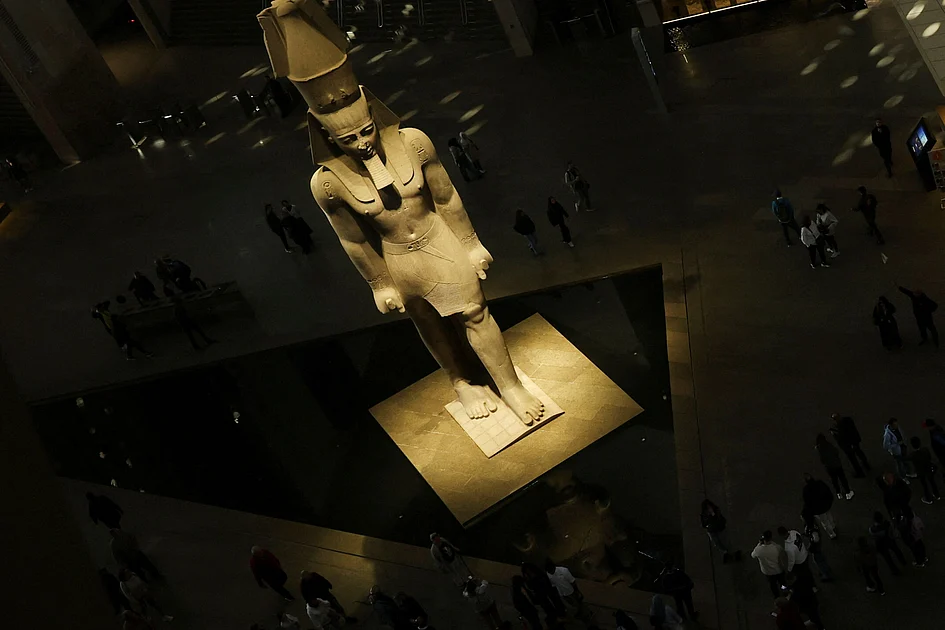
    The Grand Egyptian Museum, one of the world’s most anticipated cultural institutions, represents a significant investment in Egypt’s cultural heritage and tourism infrastructure. This incident marks the latest in a series of attempts to exploit the museum’s global popularity through digital deception. Authorities have indicated that similar monitoring operations are ongoing to prevent future occurrences that could undermine visitor confidence and financial security.

  • Beijing community leads the way in grassroots governance

    Beijing community leads the way in grassroots governance

    The Xiaoguan sub-district in Beijing’s Chaoyang district has emerged as a national model for effective grassroots governance through its innovative problem-solving systems. This community recently showcased its administrative achievements during an annual ceremony that highlighted China’s ongoing modernization of urban governance structures.

    Central to Xiaoguan’s success is its pioneering ‘Swift Response to Public Complaints’ mechanism, which has fundamentally transformed how governmental departments interface with residents. This streamlined system serves as a critical conduit between authorities and citizens, enabling efficient resolution of community concerns through optimized bureaucratic processes.

    Throughout 2025, this mechanism facilitated the resolution of more than 6,700 public appeals according to local officials. These addressed matters spanned diverse areas including daily livelihood challenges and essential community facility enhancements. The systematic approach to problem-solving has substantially elevated residents’ quality of life while strengthening their sense of civic satisfaction.

    The sub-district’s governance model demonstrates how people-centered administrative frameworks can effectively support high-quality urban development. Experts and policymakers recently convened to discuss Xiaoguan’s development pathways as part of broader strategic planning for the upcoming 15th Five-Year Plan period, examining how its successful approaches might inform national governance modernization efforts.

    This case study illustrates the practical implementation of China’s governance philosophy that prioritizes citizen needs while maintaining administrative efficiency. The district’s achievements provide valuable insights into how localized innovation can drive meaningful improvements in public service delivery and community welfare.