分类: society

  • New Year holiday projected to see over 2m daily trips

    New Year holiday projected to see over 2m daily trips

    China’s National Immigration Administration has projected a significant surge in cross-border travel during the upcoming New Year holiday period, forecasting more than 2.1 million daily inbound and outbound trips. This represents a substantial 22.4 percent increase compared to the same period last year, signaling a robust recovery in cross-border mobility.

    The holiday period, spanning from Thursday to Saturday, is expected to witness its passenger flow peak on Wednesday evening and throughout Thursday. This travel boom is largely attributed to the successful implementation of newly introduced immigration management measures that have enhanced customs clearance efficiency and facilitated smoother border transitions.

    Major international airports across China are preparing for heavy traffic volumes. Shanghai Pudong International Airport is anticipated to handle approximately 97,000 daily passengers, followed by Guangzhou Baiyun International Airport with 53,000, and Beijing Capital International Airport with 43,000. Chengdu Tianfu International Airport and Shenzhen Baoan International Airport are projected to process 19,000 and 18,000 passengers daily respectively.

    Additionally, the administration highlighted that numerous large-scale events scheduled throughout Guangdong, Hong Kong, and Macao will contribute to increased traffic at land ports connecting these regions. To manage the anticipated surge, border control authorities nationwide have been directed to implement enhanced measures including real-time travel flow updates, intensified guidance services, and extended operating hours at key ports. These initiatives aim to maintain waiting times for Chinese citizens within 30 minutes during peak clearance periods.


  • Video: One killed after two helicopters collide midair in New Jersey

    Video: One killed after two helicopters collide midair in New Jersey

    Federal authorities have initiated a comprehensive investigation following a devastating midair collision between two helicopters in southern New Jersey that resulted in one fatality and critical injuries. The tragic incident occurred Sunday morning at approximately 11:25 AM local time near Hammonton Municipal Airport, involving an Enstrom F-28A and an Enstrom 280C aircraft.

    According to the Federal Aviation Administration, both helicopters were operating with only pilots aboard when they collided in flight over Hammonton. The aircraft subsequently crashed in an open field, prompting immediate emergency response from local fire departments and medical teams. Hammonton Fire Department Chief Sean Macri confirmed that first responders executed a rapid rescue operation, airlifting both victims to a nearby trauma center for emergency treatment.

    Preliminary reports indicate one pilot sustained critical injuries during the impact, while the other victim experienced possible cardiac arrest during transport via ambulance. Authorities later confirmed one individual succumbed to injuries sustained in the crash.

    The National Transportation Safety Board has assumed leadership of the investigation, deploying specialized investigators to document the crash site and recover wreckage. The agency announced it will examine multiple factors including flight track data, aircraft maintenance records, air traffic control communications, and witness testimonies. All recovered components will be transferred to secure facilities for detailed technical evaluation.

    New Jersey Senator Cory Booker expressed profound concern regarding the incident, stating his office has established direct communication with federal investigators to monitor developments. In an official statement posted on social media platform X, Senator Booker described the crash as ‘horrifying and tragic’ while extending condolences to affected families and individuals.

  • India top court orders ex-lawmaker to stay in jail over rape

    India top court orders ex-lawmaker to stay in jail over rape

    India’s judicial system witnessed dramatic developments as the Supreme Court intervened to suspend a controversial bail order for convicted rapist and former politician Kuldeep Singh Sengar. The ruling temporarily blocks Sengar’s potential release while the court examines legal arguments regarding his status as a public servant.

    Sengar, previously affiliated with the ruling Bharatiya Janata Party (BJP), received life imprisonment in 2019 under the Protection of Children from Sexual Offences (Pocso) Act for raping a 17-year-old girl in Uttar Pradesh’s Unnao district. The case represents one of India’s most notorious sexual violence incidents in recent years.

    The legal controversy emerged when the Delhi High Court unexpectedly suspended Sengar’s sentence last week, granting conditional bail based on a technical interpretation of the Pocso Act. The court accepted defense arguments that Sengar’s legislative position didn’t qualify him as a ‘public servant’ under the law’s definition of ‘aggravated assault,’ which mandates stricter punishment for authority figures.

    This decision triggered immediate public outcry, with the survivor and her mother leading protests at Delhi’s India Gate monument. The victim expressed grave concerns for her safety should Sengar regain freedom, highlighting the complex history of intimidation surrounding the case.

    The case’s background reveals a pattern of alleged intimidation and violence. Months before Sengar’s conviction, the survivor experienced a suspicious car accident that killed two relatives and injured her lawyer. Her father previously died in prison after being arrested on weapons charges following allegations that Sengar’s associates assaulted him.

    The Central Bureau of Investigation (CBI), which originally investigated the case, challenged the bail decision before the Supreme Court. Prosecutors argued that elected legislators inherently hold ‘constitutional positions of trust and authority,’ qualifying them as public servants under aggravated assault provisions.

    Chief Justice Surya Kant’s bench acknowledged the unusual nature of staying a bail order without hearing the convict but cited ‘peculiar facts and circumstances’ given Sengar’s additional ten-year sentence for culpable homicide in the death of the survivor’s father. The Supreme Court will now conduct a comprehensive review of the legal interpretation that prompted the controversial bail decision.

  • Death sparks discussion on solo living

    Death sparks discussion on solo living

    A recent tragedy in Shanghai has catalyzed nationwide discourse on end-of-life arrangements for China’s expanding population of solo dwellers. The case involves a 46-year-old unmarried woman, identified only as Jiang, who passed away in December following a cerebral hemorrhage. With no immediate family, spouse, or children, and having lost both parents, her situation presented authorities with significant challenges in locating next-of-kin for critical medical decisions and funeral arrangements.

    The Hongkou District Civil Affairs Bureau was appointed as Jiang’s estate administrator on December 24th by a local court after determining she had no legal heirs and left neither a will nor support agreement. Under China’s Civil Code, such estates become state or collective property designated for public welfare purposes, with civil affairs departments typically serving as administrators.

    This case illuminates profound demographic shifts within Chinese society. National census data reveals single-person households have more than doubled from 58 million in 2010 to 125 million in 2020, now representing over one-quarter of all households. Projections from the Beike Research Institute indicate China’s solo-living population could reach 150-200 million by 2030, with adults aged 20-39 living alone expected to surge from 18 million in 2010 to 40-70 million within the next decade.

    Legal expert Gao Mingyue of the Shanghai Bar Association emphasized to Legal Weekly that “the right to life encompasses dignity in death,” noting that while estate administrators have obligations regarding funeral dignity, specific standards require clarification through national legislation.

    The funeral industry reports increasing cases involving individuals with limited social connections. Shi Hui, general manager of Shanghai-based BDR Funeral Services with 13 years of experience, notes that community committees typically arrange basic ceremonies using affordable 1,000-yuan ($142) funeral packages for those without family. Shi observes that traditional taboos often prevent earlier funeral planning, advocating that “death needs to be rehearsed through advance planning and preparation.”

    Concurrently, estate planning awareness is growing nationally. The China Will Registration Center’s 2024 white paper reports providing consultations to over 570,000 people and registering 357,512 wills. Notably, the average age of will-makers has dropped from 77.43 to 67.71 years. Among unmarried individuals registering wills, over 80% were under 60 and predominantly well-educated, with 8% choosing charitable donations for their assets.

  • Young Africans find hope in farming as urban life becomes too expensive

    Young Africans find hope in farming as urban life becomes too expensive

    Across Senegal’s sun-scorched farmlands, a remarkable socioeconomic shift is underway as educated young professionals abandon unfulfilled urban aspirations to embrace agricultural entrepreneurship. Filly Mangassa, 33, exemplifies this trend—after obtaining a master’s degree in criminology and struggling with Dakar’s prohibitive living costs and scarce employment opportunities, he has returned to his ancestral vocation with transformative results.

    This movement challenges deep-rooted perceptions that historically relegated farming to low-status occupation across Africa. While initial family reactions often reflected disappointment, tangible economic outcomes are rapidly changing attitudes. Mangassa now generates approximately $3,500 annual profit from his 32-acre diversified farm—significantly exceeding Senegal’s average yearly income of $2,500.

    Structural economic realities drive this agricultural renaissance. Africa represents the world’s fastest-urbanizing region with cities expanding at 3.5% annually, creating unsustainable cost-of-living pressures. The World Bank notes that housing and grocery expenses in major African metros now rival European cities despite dramatically lower median wages. Simultaneously, the African Development Bank reports only 3 million formal jobs emerge annually against 10-12 million young entrants into the workforce.

    International initiatives actively support this transition. The World Food Program’s agricultural entrepreneurship project, operational from 2023 through 2027, has already assisted approximately 380,000 young Africans across eight nations. In Senegal alone, over 61,000 participants received support with more than 80% establishing operational farms. The program specifically addresses critical barriers including land acquisition complexities, financing limitations, and technical training deficiencies.

    Beyond economic implications, this agricultural movement carries profound social consequences. Senegal’s government explicitly promotes farming as an alternative to dangerous migration routes—the nation serves as a primary departure point for Atlantic crossings to Europe. Testimonials like Adama Sane’s reveal how agricultural opportunities literally save lives: “If I had stayed in my construction job, I would have tried crossing the ocean sooner or later.”

    The transformation extends beyond individual livelihoods to address continental food security challenges exacerbated by climate change and funding reductions. Agricultural economist Ibrahima Hathie observes that young farmers increasingly focus on high-value crops enhanced by technology, potentially increasing local production and reducing staple food prices.

    As Mangassa now employs three returned migrants who abandoned their European aspirations, his story encapsulates a broader paradigm shift: “I wanted to show them that there are opportunities for young people here.” This sentiment reflects a growing recognition that agriculture may hold the key to sustainable development across Africa.

  • Fire in nursing home kills 16 in Indonesia

    Fire in nursing home kills 16 in Indonesia

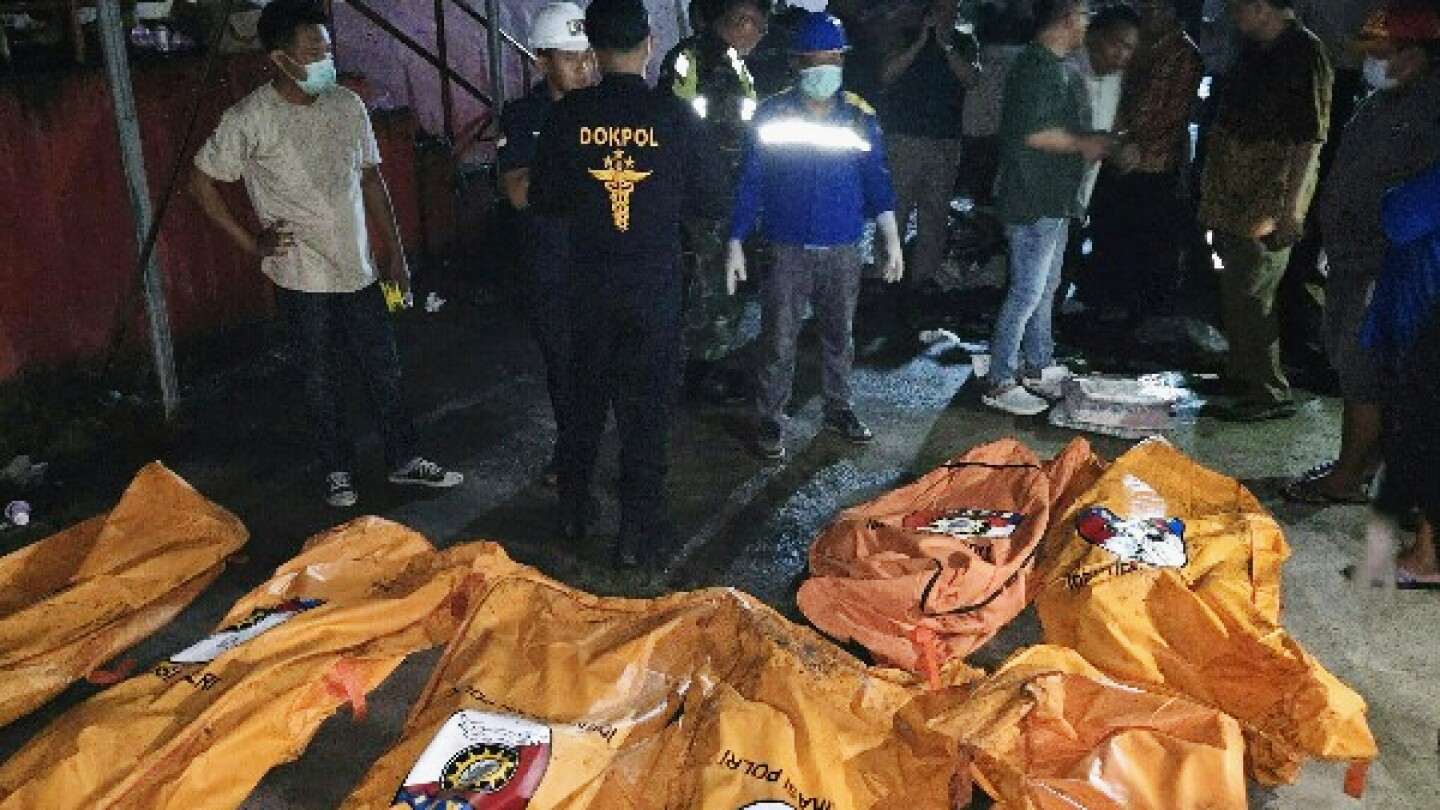
    A devastating fire erupted at the Damai retirement home in Manado, North Sulawesi, on Sunday evening, resulting in one of Indonesia’s deadliest recent tragedies. Local authorities confirmed sixteen fatalities and three injuries after flames rapidly consumed the facility housing elderly residents.

    The inferno began approximately at 20:30 local time (12:30 GMT), with emergency services responding immediately to distress calls. According to Jimmy Rotinsulu, chief of Manado’s fire and rescue agency, numerous victims were discovered inside their rooms, likely resting when the fire initiated. The blaze was successfully extinguished by 21:30 (13:30 GMT), though the damage proved catastrophic.

    Eyewitness Steven Mokodompit, residing near the nursing home, described hearing an explosion and desperate cries for help upon arriving around 20:00. ‘Within merely five minutes, the fire had completely engulfed the building,’ he recounted to Detikcom. Mokodompit and other brave responders improvised rescue efforts using stacked tables and ladders to evacuate residents through the building’s rear.

    Authorities face significant challenges in identifying victims due to the severe condition of remains, described as largely ‘unrecognizable.’ Police have launched a comprehensive investigation into the fire’s origin, suspected to have started in the kitchen area. Families of potential victims are urgently requested to contact designated hospitals for identification procedures.

    This incident highlights ongoing fire safety concerns in Indonesian residential facilities, coming just weeks after a Jakarta office building fire claimed 22 lives. The frequency of such tragedies underscores critical needs for enhanced emergency protocols and infrastructure safeguards across the nation’s aging care institutions.

  • Fire at Indonesian retirement home kills 16 residents

    Fire at Indonesian retirement home kills 16 residents

    A devastating fire engulfed a retirement facility in Manado, North Sulawesi Province, Indonesia, on Sunday evening, resulting in one of the deadliest nursing home tragedies in recent memory. The inferno broke out approximately at 8 p.m. local time while elderly residents were asleep, creating a rapidly escalating emergency situation.

    According to official statements from North Sulawesi police spokesperson Alamsyah Hasibuan, the catastrophe claimed sixteen lives with fifteen victims perishing from severe burns and one remaining physically intact. Emergency response teams faced significant challenges in containing the blaze, with firefighting crews deploying six trucks that required over two hours to fully extinguish the flames after nearby residents first alerted authorities.

    The human toll extended beyond the fatalities, with fifteen survivors receiving urgent medical treatment at nearby hospitals in Manado City. Courageous neighbors initially attempted rescue operations before professional responders arrived, managing to save several occupants from the smoke-filled single-story structure.

    Television footage captured the horrifying scene of intense flames illuminating the night sky with an ominous orange glow while thick smoke blanketed the area. The aftermath revealed rows of body bags arranged outside the charred facility as forensic teams began the meticulous identification process at the police hospital with family assistance.

    While preliminary police reports suggested an electrical malfunction as the potential ignition source, investigators have maintained that the official cause remains undetermined and subject to ongoing examination. The tragedy has raised urgent questions about fire safety protocols in Indonesia’s elderly care facilities, prompting calls for enhanced emergency preparedness standards nationwide.

  • Bondi hero says he wanted to stop gunman killing innocent people

    Bondi hero says he wanted to stop gunman killing innocent people

    In a remarkable act of bravery that captured global attention, Sydney shopkeeper Ahmed al Ahmed has been officially recognized as a national hero after confronting and disarming one of the gunmen responsible for Australia’s deadliest mass shooting since 1996. The incident occurred on December 14th during a Hanukkah celebration at Bondi Beach, where fifteen attendees lost their lives and forty others sustained injuries in what authorities have declared a terrorist attack targeting the Jewish community.

    Ahmed al Ahmed, a Syrian-born Australian citizen and father of two, described the profound internal conviction that drove his actions during an exclusive interview with CBS News. “Emotionally, I felt a power in my body, my brain,” Ahmed recounted. “I don’t want to see people killed in front of me, I don’t want to see blood. That’s my soul asking me to do that.”

    Verified footage shows Ahmed tackling 50-year-old Sajid Akram from behind and wrestling away his long-arm firearm during the attack. “I hold him with my right hand and start saying a word to warn him – ‘drop your gun, stop doing what you’re doing’,” Ahmed explained of his split-second decision-making process.

    The heroic intervention came at significant personal cost. Ahmed was shot multiple times in the shoulder by the second alleged gunman—Akram’s son Naveed—requiring at least three surgical procedures during his hospitalization. Despite his injuries, Ahmed expressed that while his actions saved “lots of people,” he still felt profound sorrow “for the lost.”

    Australia’s political leadership has unanimously praised Ahmed’s courage. Prime Minister Anthony Albanese visited the shopkeeper in hospital, describing him as “the best of our country,” while New South Wales Premier Chris Minns called him a “real-life hero.” The public response has been equally overwhelming, with tens of thousands of community members contributing to a A$2.5 million (£1.24 million; $1.7 million) recognition fund presented to Ahmed during his recovery.

    According to his parents, who spoke with BBC Arabic, their son was “driven by his sentiment, conscience and humanity.” The younger Akram has since been charged with 59 offenses including 15 counts of murder and one count of committing a terrorist attack, while his father was shot dead by responding police officers.

  • Families of Bondi Beach victims demand more federal action on antisemitism and security failures

    Families of Bondi Beach victims demand more federal action on antisemitism and security failures

    MELBOURNE, Australia — Grieving families of the Bondi Beach massacre victims have issued a forceful appeal to the Australian government, demanding a comprehensive federal investigation into both security failures and escalating antisemitism following the nation’s deadliest mass shooting in over three decades.

    Seventeen affected families addressed an open letter to Prime Minister Anthony Albanese on Monday, calling for the establishment of a royal commission—Australia’s most powerful investigative mechanism—to examine critical questions surrounding the December 14 attack. The horrific incident saw two assailants open fire at a Hanukkah celebration, leaving 15 dead and 40 wounded in what authorities describe as an Islamic State-inspired terrorist act.

    The families’ plea specifically seeks answers regarding ignored warning signs, the unchecked growth of antisemitic rhetoric and Islamic extremism, and necessary protective measures for all Australians. This appeal gains urgency against the backdrop of rising antisemitism since the onset of the Israel-Hamas conflict in 2023.

    Prime Minister Albanese, while expressing profound sympathy for the victims’ families, maintains resistance to the royal commission proposal. Instead, he has appointed retired senior official Dennis Richardson to lead a security-focused inquiry examining procedural and legislative failures. This review, expected to conclude by April 2025, will receive federal cooperation with New South Wales’ state-level investigation—an approach families deem insufficient for addressing what they term a ‘national crisis.’

    In response to the tragedy, Sydney has implemented unprecedented security measures for public gatherings. New Year’s Eve celebrations at Bondi Beach have been canceled, while Sydney Harbour’s iconic fireworks display will feature highly visible armed police presence. New South Wales Premier Chris Minns confirmed discussions regarding military support for civic security, describing the attack as ‘the worst terrorism event’ in state and national history.

    Amid the tragedy, stories of heroism have emerged. Prime Minister Albanese announced plans for a national bravery award honoring both civilians and first responders. Particularly celebrated is Ahmed al Ahmed, a Syrian-Australian shopkeeper who disarmed one attacker despite sustaining injuries. His actions inspired a global fundraising campaign exceeding AU$2.5 million and a Melbourne street art tribute celebrating his ‘True Blue’ Australian spirit.

  • Five-year-old boy dies after getting caught in Japan ski travelator

    Five-year-old boy dies after getting caught in Japan ski travelator

    A tragic incident at a Hokkaido ski resort has resulted in the death of a five-year-old boy, raising serious concerns about equipment safety protocols. Hinata Goto was vacationing with his family at Asarigawa Onsen Ski Resort in Otaru when the accident occurred on Sunday morning.

    According to police reports, the child fell while attempting to disembark from a 30-meter travelator that connects the resort’s parking area to the ski slopes. His right arm became entangled in the machinery’s mechanisms, triggering a desperate rescue operation. Despite the travelator being equipped with an automatic safety system designed to detect obstructions and halt operations, the safety features failed to activate during the incident.

    The emergency stop was ultimately triggered manually by the boy’s mother, but not before severe damage had been occurred. Rescue personnel spent approximately 40 minutes dismantling sections of the equipment to extricate the unconscious child. He was subsequently transported to a medical facility where he was pronounced dead.

    Resort management confirmed that the safety mechanism had been functioning properly earlier that day, adding complexity to the investigation. The travelator, installed six years ago, features a 60-centimeter width and notably lacks protective handrails—a design element that has drawn criticism from regular visitors who reported previous instances of instability while using the equipment.

    Local authorities have launched a comprehensive investigation into potential professional negligence regarding both manufacturing standards and maintenance procedures. The resort’s representatives have issued a formal apology and committed to implementing preventive measures to avoid future tragedies.

    This incident casts a shadow over Hokkaido’s reputation as Japan’s premier ski destination, which attracts millions of winter sports enthusiasts annually. The case highlights critical questions about safety standards in tourist facilities and the responsibility of recreational venues to ensure visitor protection.