
One of Australia’s busiest regional air travel hubs was thrown into chaos on Thursday, when two unexpected everyday items sparked a full-scale bomb alert that suspended domestic flight operations for nearly half a day. Avalon Airport, the second-busiest air gateway in the state of Victoria located 31 miles southwest of central Melbourne, was placed under partial lockdown after security screening staff flagged a suspicious piece of checked baggage just before 6 a.m. local time, which equals 8 p.m. GMT on the previous day. Emergency protocols were immediately activated, with local law enforcement and bomb disposal units dispatched to the scene to investigate the potential threat. International flight schedules remained unaffected throughout the incident, but all domestic operations were paused as a precaution, leading to widespread cancellations and delays for thousands of passengers. After a thorough examination by the bomb squad, the suspicious package was found to contain nothing more dangerous than a laser hair removal device and an insulated hot chocolate container, a far cry from the explosive device authorities had prepared for. The owner of the baggage, a Melbourne resident, was taken into custody for questioning immediately after the discovery, but was eventually released without any criminal charges, Victoria Police confirmed. According to Acting Inspector Nick Uebergang of Victoria Police, the uncooperative behavior of the baggage owner extended the duration of the security lockdown. “The person who had the bag wasn’t too cooperative with us to start off with, which made things a little bit difficult. They probably could have averted things and we could have got out of here a little bit quicker,” Uebergang told reporters. Full operations at the airport resumed approximately four hours after the initial alert was raised. In a statement following the incident, an Avalon Airport spokesperson emphasized that the rapid, by-the-book response to the potential threat highlighted the effectiveness of the facility’s security protocols. “This response demonstrates the vigilance of the screening and security processes, and precautionary measures were taken immediately to ensure the safety of passengers, staff and the broader community,” the spokesperson said. Many passengers caught up in the sudden lockdown shared their chaotic experiences with local media outlets. One traveler who arrived at the airport around 7 a.m. told ABC Radio Melbourne, “We arrived at the airport around 7am and they had just put up the closure. No one sort of knew what was going on. We knew something was fairly significant because there were a lot of police cars and other sort of cars going into the airport.” Manjeet Singh, who was scheduled to board a flight to Brisbane, said he was directed to wait in the airport carpark with no basic amenities provided during the lockdown. “There’s no arrangements, no bathroom, no toilet, no beverages, no nothing,” he told local newspaper The Age. As Victoria’s second busiest aviation hub, Avalon Airport is a key base for budget airline Jetstar, a Qantas subsidiary that operates both domestic and international services from the facility. By the time the airport reopened, two domestic services – one incoming flight from Sydney and one outgoing flight to Sydney – had already been cancelled, with multiple other domestic routes facing lengthy delays. No injuries or actual security threats were reported during the incident.
分类: society
-

Rashed Ateem: Man accused of groping women in Melbourne’s CBD faces court
A 36-year-old man facing multiple charges connected to a string of groping and threats targeting women in central Melbourne has been publicly identified during a court hearing. Rashed Ateem appeared before Melbourne Magistrates Court on Thursday, where he answered to two counts of sexual assault and two additional counts of assaulting police officers.
The alleged incidents date back to the afternoon of March 3, when authorities say Ateem carried out a series of unprovoked attacks on multiple women in Melbourne’s Central Business District. Police received emergency triple-0 calls around 5:30 p.m. that day reporting a man randomly assaulting passersby near the iconic Flinders Street steps, with some of the attacks described as sexually motivated.
Officers quickly located the suspect on Bourke Street and took him into custody. But the arrest did not proceed smoothly: police allege Ateem spat at responding officers and physically assaulted them during the apprehension. The violence left a senior police constable with injuries serious enough to require transport to a local hospital for medical treatment.
During Thursday’s initial hearing, Ateem’s legal team requested an adjournment of the case. Magistrate Gerard Lethbridge granted the request, scheduling the next court appearance for June 1. As Ateem exited the court building following the hearing, he was photographed smiling toward assembled media outlets.
The string of random alleged attacks in one of Melbourne’s busiest tourist and commercial hubs has raised ongoing community concerns about public safety in the city’s central district, with police continuing to urge any potential additional victims to come forward to assist with the investigation.
-

‘Horrid situation:’ Western Australia mouse plague reaches epic proportions
A small regional town in Western Australia’s Mid West region is currently in the grips of an unprecedented mouse plague that has upended daily life for every resident and business owner, leaving them locked in a relentless daily battle against the invasive rodents.
Morawa Shire President Karen Chappel described the ongoing crisis as nothing short of horrifying, noting that communities have grown exhausted from the constant cycle of containment and cleanup. “Every single day, we are picking up carcasses, setting traps, laying bait, and cleaning up the mess the mice leave behind,” Chappel explained in an interview. “You finish clearing the bodies from your home or shop, dispose of them, and get ready to do the exact same thing the next morning. On top of that, there is the constant, cloying stench of mice—both living rodents and decaying carcasses—that never goes away.”
The infestation poses severe public health risks, prompting local leaders to urge residents to maintain strict hygiene protocols that echo the precautions many adopted during the COVID-19 pandemic. “We’re telling people to wash their hands constantly, carry hand sanitiser, and stay vigilant, because these rodents carry a host of dangerous diseases,” Chappel said. She went on to detail just how pervasive the infestation has become: mice have been found nesting in beds, over a dozen rodents poured out of a resident’s oven when opened, they chew through books, gnaw at vehicle wiring, and build nests inside household appliances from washing machines to air conditioners. Beyond the filth, residents face costly damage, forced to repair or replace destroyed appliances and personal property that the mice have ruined. “The psychological weight of this crisis on our community is enormous,” Chappel added.
This outbreak is not an isolated event. Last month, agricultural scientists issued an urgent warning that the growing mouse plague could destroy up to $1 billion worth of grain crops across Western Australia if swift action was not taken. Surveys of cropping regions across the Mid West, Wheatbelt, and Goldfields-Esperance have found up to 4,000 mouse burrows per hectare, with some paddocks hosting as many as 8,000 individual mice per hectare. As rodents have exhausted food sources in agricultural areas, they have migrated into nearby regional towns, turning a rural agricultural crisis into an urban public health emergency. In response, the Western Australian Department of Health has issued an official public health alert for Morawa and surrounding communities, advising residents on how to safely handle dead mice and secure their homes to protect their families.
Steve Henry, a research officer with Australia’s national science agency CSIRO, visited the affected region in March and confirmed the outbreak has worsened dramatically in the months since. “The footage farmers are sending me now is identical to what we saw during the 2021 mouse plague in New South Wales—this is a severe, devastating outbreak by any measure,” Henry said. The 2021 NSW outbreak caused an estimated $660 million in direct economic damage, a figure that does not account for the profound psychological harm inflicted on affected communities. Unlike natural disasters such as drought or heatwaves, where people can find shelter inside their homes, a mouse plague invades every corner of daily life. “These mice get into your food cupboards, your clothing, your linen, they run across your bed while you are sleeping,” Henry explained. “There is no escape from them inside your own home.”
In a major policy shift to address the crisis, the Australian Pesticides and Veterinary Medicines Authority this week approved an application from Grain Producers Australia to allow the use of a stronger, more concentrated mouse bait. The new formulation uses the same active toxin as existing bait, but delivers a lethal dose in every individual grain, which researchers expect will improve kill rates. Still, Henry cautioned that the stronger bait is not a permanent solution to the crisis. “It’s extremely difficult to wipe out an outbreak of this size with bait alone, just because there are so many mice spread across such a huge area,” he said. “The 50-gram formulation is more effective than the 25-gram version we had before, but when there is so much alternative food available for mice across the landscape, it won’t solve the problem entirely. It will, however, reduce localised damage to crops and residential areas.”
Jamie Appleton, who operates the Morawa Roadhouse, explained that the current mouse population explosion was fueled by ideal breeding conditions: this year has produced one of the best grain harvests on record, giving the mice an abundant food supply and mild weather that has allowed their numbers to grow unchecked. Like many local business owners, Appleton now spends an extra hour every day deep cleaning his store to remove mouse waste and carcasses. Though he has spent hundreds of dollars on bait and has kept most of his stock protected, he says the entire community is at breaking point. “People are just over this,” he said. “I’m lucky enough that I can afford to replace damaged items, but a lot of people in this town can’t. This constant stress is unbearable. Imagine coming home to find your pantry food is all ruined, your bedding is destroyed, and you have young kids to care for. This is an intrusion no one should have to deal with.” Local residents are now pinning their hopes on a cold snap, which they hope will kill off much of the mouse population and bring a much-needed end to the crisis.
-

Commander-in-beef: Bangladesh’s ‘Donald Trump’ buffalo wins fans
An unusual new internet sensation has captured the attention of millions in Bangladesh: a 700-kilogram albino buffalo, nicknamed “Donald Trump” for his striking golden-blond mane that echoes the former U.S. president’s iconic hairstyle, has become an overnight social media star — even as he is scheduled to be sacrificed for the upcoming Eid al-Adha holiday.
The rare buffalo lives on a family farm owned by 38-year-old Zia Uddin Mridha in Narayanganj, a small district just outside Bangladesh’s capital Dhaka. Mridha told reporters it was his younger brother who gave the buffalo its distinctive name, pointing to the animal’s thick, flowing blond coat that sits neatly between his large curved horns, bearing an uncanny resemblance to Trump’s signature hairstyle.
Since going viral on social media at the start of May, the four-year-old buffalo has drawn a nonstop stream of curious visitors, from local onlookers and social media fans to groups of excited children, all eager to catch a glimpse and snap a photo with the rare animal. Mridha said the constant attention has been overwhelming: the stress of large daily crowds has caused the buffalo to lose weight, forcing the farm to impose limited visiting hours. Still, the starstruck public continues to gather outside the farm gates, many traveling hours by boat or road to see the viral celebrity. One visitor, 30-year-old businessman Faisal Ahmed, traveled with five relatives to see the buffalo, noting his 10-year-old nephew took an hour-long boat trip just to get a look. “Truly, the features are similar between the buffalo and President Donald Trump,” Ahmed told Agence France-Presse.
To keep the buffalo comfortable amid the warm South Asian spring weather, farm workers bathe him up to four times a day, brushing his blond mane with a pink brush to keep his signature combover neat. Mridha emphasizes that any similarities between the buffalo and the former American president end at the hair.
Livestock department officials confirm pure albino buffalo are extremely rare: their distinctive pale white-pink coat and light hair come from a genetic condition that prevents the production of melanin, the pigment that gives animals their typical dark skin and fur coloring.
Bangladesh, a Muslim-majority South Asian nation of 170 million people, is gearing up for Eid al-Adha, the Islamic Feast of the Sacrifice, which is celebrated later this month. The holiday commemorates the Prophet Ibrahim’s willingness to sacrifice his son to obey God, and tradition calls for religious Muslim families to sacrifice a livestock animal, sharing a portion of the meat with poor communities. This year, an estimated 12 million livestock including goats, sheep, cows and buffalo are expected to be slaughtered across the country, providing one of the few annual opportunities for low-income Bangladeshi families to eat meat.
“Donald Trump” is not the only named buffalo on Mridha’s farm: other bulls have playful nicknames matching their personalities or looks, from Tufan (meaning “storm” in Bengali) for an aggressive bull, to Fat Boy for the largest animal and Sweet Boy for the gentle member of the herd. Another golden-haired bull was named after Brazilian football star Neymar, thanks to his dyed-style bleached blond cut.
Mridha, who has cared for the viral albino buffalo for more than a year, says he has grown attached to the animal, who currently munches fodder calmly in his pen. Despite the animal’s newfound national fame, Mridha says he will honor the tradition of Eid al-Adha. “I am going to miss Donald Trump, but that is the core spirit of Eid al-Adha — making a sacrifice,” he said.
-

Photographer charged with stealing camera of Bondi shooting victim after attack
In the aftermath of the devastating December 14 mass shooting at Bondi Beach that left 15 people dead, two shocking new criminal cases have unfolded in Australia, drawing widespread public attention. The first case centers on a 35-year-old working photographer who was present at the fatal Hanukkah event targeted by two gunmen. New South Wales Police allege that the man stole professional camera equipment belonging to Peter Meagher, one of the attack’s victims who was a retired police officer and working photojournalist at the time of the shooting. Meagher was killed in the gunfire, and the accused is said to have pawned the stolen gear just days after the attack. Authorities carried out a raid on the suspect’s western Sydney home on Wednesday, where they recovered the stolen camera along with additional items including handcuffs and multiple personal electronic devices. The 35-year-old was taken into custody and formally charged, before being granted strict conditional bail. He is scheduled to make his next court appearance next month. The case is a disturbing development in the wake of the tragedy, which has already shaken Australian communities. In a separate, equally startling case connected to the Bondi Beach attack, two brothers of Ahmed Al Ahmed — the Syrian-Australian shop owner widely hailed as a hero for his actions during the shooting — have been hit with criminal charges over alleged threats and extortion. During the attack, Ahmed rushed to stop one of the gunmen, identified as Sajid Akram, tackling him to the ground and successfully wresting a firearm away from the attacker. For his brave actions, Ahmed was shot multiple times, and he has since undergone multiple reconstructive surgeries on his wounded arm. His courageous intervention earned national acclaim, and a public fundraiser was launched to support his recovery that ultimately raised more than AU$2.5 million, equal to roughly $1.8 million USD or £1.2 million GBP. Following the attack, Ahmed’s two brothers, Hozifa al Ahmed and Sameh al Ahmed, relocated to Australia from overseas and moved into his home, according to court documents filed by prosecutors. Tensions between the siblings eventually deteriorated, prompting Ahmed to move out and relocate to a separate property. Earlier this month, Ahmed lodged an official police report, claiming his brothers had threatened him to force him to hand over a share of the public donation funds. Court documents outline detailed threatening phone calls the brothers are alleged to have made on May 7. During his call, Hozifa reportedly told Ahmed: “I will put your head under my boot, break your other arm, and smash your face. We will only leave if you give us $100,000 each.” Shortly after the first call, Sameh contacted Ahmed with an identical demand, stating: “If you want peace of mind and to be safe, you will give us $100,000 each.” The two brothers appeared in court this Wednesday to face charges of using a carriage service to harass and offend. Both have entered not guilty pleas, and their next court date is scheduled for July. Interim apprehended domestic violence orders have been issued against the pair, requiring them to stay away from Ahmed at all times. In the days after the attack, Australian Prime Minister Anthony Albanese personally visited Ahmed in hospital to recognize his bravery and offer the government’s support. Both cases are now working their way through the New South Wales court system, as the community continues to grapple with the aftermath of the deadliest mass shooting in Australia in recent years.
-
India has food safety laws. So why can’t it guarantee safe food?
In the sun-dappled kitchen of 55-year-old Nirmal Rao in New Delhi, India, a quiet shift in daily routine is unfolding that mirrors a growing trend across the country’s urban centers. As she lays boiled turmeric out to dry in the afternoon light, then grinds yesterday’s cured batch into a fine golden powder in her countertop mixer, Rao acknowledges this labor-intensive work is not what she envisioned for her retirement years. “We shouldn’t have to do this,” she says, tucking the finished bright yellow spice into a glass jar, “But you cannot trust what’s being sold in the markets anymore.”
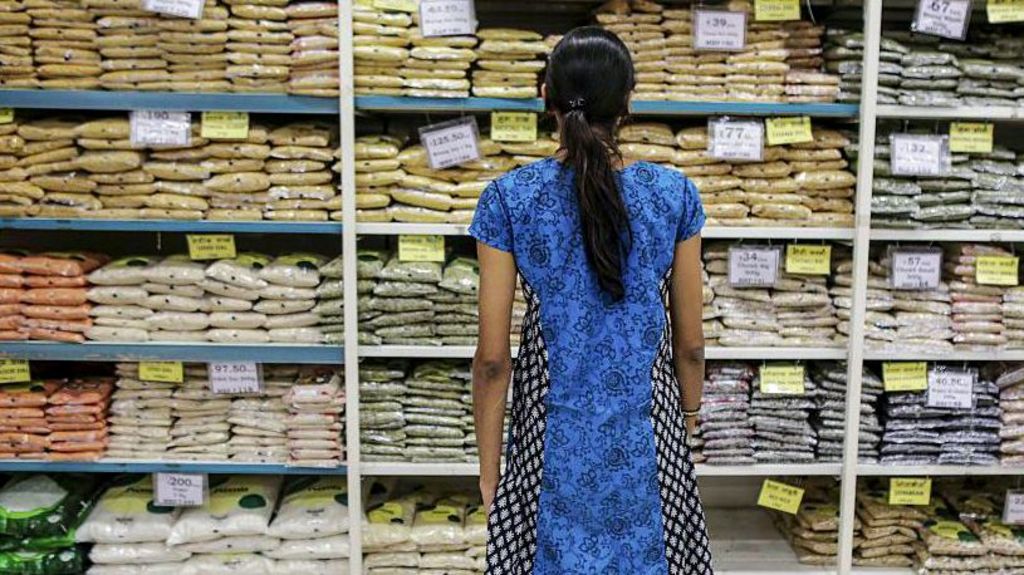
Rao is far from alone in this choice. Across India’s cities, a growing number of middle-class households are converting their domestic kitchens into small-scale food processing hubs: hand-grinding whole spices, crafting homemade paneer (Indian cottage cheese), and sourcing unprocessed grain directly from regional farms. What began as a niche hobby for food enthusiasts has evolved into a mass consumer response driven not by nostalgia for traditional cooking, but by deep-seated distrust of the country’s commercial food supply.
Official government data underscores the foundation of this anxiety: between 2022 and 2025, roughly one in six food samples collected by regulators failed to meet India’s national food safety standards. Over that same period, authorities revoked more than 1,100 operating licenses from food businesses for violations. Failed tests cover a spectrum of issues, ranging from inadequate hygiene and incorrect labeling to dangerous contamination and intentional adulteration, a practice where unethical producers cut high-quality ingredients with cheap, often harmful substitutes to boost profits.
Just last month, for example, food safety officials in Hyderabad seized over 3,000 kilograms of adulterated tea powder, according to local outlet The Indian Express. The seized product had been laced with synthetic coloring, low-cost jaggery juice, and expired tea leaves to mimic the appearance and weight of premium product before being sold to unsuspecting consumers.
While food adulteration is not a new challenge in India, a perfect storm of systemic gaps has amplified the current crisis of trust. The country’s massive informal food sector, which employs millions and supplies most of the food consumed by low- and middle-income households, operates far outside consistent regulatory oversight. At the same time, social media platforms spread warnings of food safety scandals at a speed that outpaces official responses, amplifying public anxiety faster than regulators can issue clarifications or corrections. Where adulteration once meant small-time offenses like diluting milk or adding pebbles to bulk grain, modern raids regularly uncover far more dangerous tampering: milk spiked with detergent, and spices colored with toxic synthetic dyes.
India has put in place a modern legal framework to address food safety: the Food Safety and Standards Authority of India (FSSAI), established by a 2006 law, replaced a fragmented patchwork of outdated local regulations to create unified rules for food production, storage, transportation, and sale. Every operation from large multinational food brands to neighborhood street vendors is required to hold an FSSAI license, and trained food safety officers are tasked with conducting inspections, collecting test samples, and investigating consumer complaints.
Pawan Agarwal, former chief executive of FSSAI, notes that India’s regulatory framework is “among the most modern food safety laws in the world” with clear, rigorous standards for legal food sales. But in practice, the system only acts after harm has already occurred. “Bigger companies are expected to test products before they go to market – but most of the food economy does not work that way,” Agarwal explains. “Food products are often tested only after complaints emerge or suspicions are raised. By then, adulterated goods may already have moved across cities or states.”
Another major challenge comes from the widespread sale of unpackaged, loose food items – including cooking oil, flour, and spices – sold without formal branding or standardized packaging across millions of small neighborhood outlets. These unlabeled products leave almost no paper trail, making it nearly impossible for regulators to trace unsafe goods back to their source or track where they have been distributed, according to industry experts.
The food testing system itself carries structural flaws, adds Saurabh Arora, managing director of Auriga Research, one of India’s leading independent food testing laboratories. Current rules require food businesses to submit product samples for safety testing only once every six to 12 months, a system that is widely manipulated by unethical operators. “They often make sure the tested batch meets standards – even if other batches produced at the same facility may not,” Arora explains.
Compounding these gaps is a crippling shortage of enforcement personnel. In Maharashtra, one of India’s largest and most economically developed states, fewer than 500 food safety officers are responsible for overseeing thousands of registered food businesses and millions of informal vendors, says Sanjay Indani, a food safety expert who has previously consulted for FSSAI. “It is nearly impossible to oversee everything,” Indani notes. “How can such few numbers [of officers] hold people accountable?”
Unlike developed economies such as Italy and the United Kingdom, which rely on tightly documented, digitized supply chains to trace and recall contaminated products in days, tracking a single bad batch in India can take weeks – and in many cases, never happens at all. The severity of the crisis has even reached the country’s top official bodies: last month, India’s National Human Rights Commission held a special high-level meeting on food safety, where participating officials warned that contaminated products can spread across entire regions before regulators can even identify the threat, much less remove it from store shelves.
For consumers, the systemic failure has led to two overlapping grassroots responses. For households with higher disposable incomes, many are opting to pay steep premiums for food they see as more trustworthy. Tiash De, a 29-year-old Mumbai resident, says fear of adulteration has pushed her to prioritize higher-cost branded products even when they strain her monthly budget. “I tend to go for bigger brands, even though they are costly and strain my budget, but in my head I am sure they are not adulterated,” she says. She also pays a 50% premium for a farm-to-home milk delivery service, a cost she says is worth the peace of mind it brings.
This growing demand for trusted, transparent food is driving rapid industry growth: Dr. Meenakshi Singh, chief scientist at the Council of Scientific and Industrial Research (CSIR), projects that India’s organic food market will reach $10.81 billion by 2033, as more consumers prioritize safety over low prices.
Medical experts warn that the hidden harm of regular exposure to adulterated food extends far beyond acute food poisoning. Unlike sudden bouts of foodborne illness that trigger immediate medical attention, repeated consumption of contaminated or substandard ingredients can cause chronic, long-term health damage that takes years to emerge. “In the short term, people may experience digestive issues, headaches or fatigue,” explains Rinkesh Kumar Bansal, chief of gastroenterology at a Fortis Hospital near New Delhi. “Over time, it can contribute to liver and kidney damage, hormonal problems and a higher risk of chronic disease.”
Industry experts point out that the current wave of public panic is not driven by a sudden spike in actual adulteration cases, but by the rapid spread of information online. “Food adulteration has not suddenly increased, but information about it now spreads rapidly because of social media,” former FSSAI chief Agarwal explains. “We are sensitive about the food we eat and it is very personal to us, so any such news immediately has our attention.”
Despite the systemic challenges, many experts see reason for long-term improvement, arguing that growing consumer awareness will ultimately force industry and regulatory change. “As awareness grows and people start demanding safer food, businesses will have no choice but to deliver,” Agarwal says. He points to one emerging positive shift: FSSAI now regularly publishes public guidance on how consumers can test for common adulterants at home, a transparency practice he says is rare among food regulators around the world.
Arora, the testing lab director, adds that lasting change will require a shift in cultural mindset as much as regulatory reform. “There has to be a sense of ownership from the manufacturer all the way to the consumer,” he says. “In India, the mindset often becomes – as long as I am not consuming it myself, it is someone else’s problem. Regulation alone cannot solve that.”
Back in her New Delhi kitchen, where shelves once lined with store-bought spice packets now hold jars of her homemade blends, Nirmal Rao sums up the frustration of ordinary consumers caught in the gaps of the system. She admits that hand-processing spices is time-consuming and impractical, especially for younger households where both adults work full-time. But for millions of Indians, it is the only choice they feel they have: “If even basic food cannot be trusted, what are ordinary people supposed to do?”
-

Moment Cybertruck driver intentionally drives into Texas lake
A bizarre incident unfolded at a Texas lake over the weekend when a Tesla Cybertruck driver deliberately steered their electric pickup into the water, prompting a swift emergency response and leading to the driver’s arrest. Local law enforcement confirmed that the driver was attempting to test the vehicle’s advertised “wade mode”—a feature designed to allow the truck to traverse shallow flooded or waterlogged terrain—when they made the decision to enter the open lake. First responder teams, including local rescue divers and water recovery crews, were dispatched to the scene near the shoreline, where they successfully pulled the partially submerged electric vehicle from the water hours after the incident. No injuries were reported in the event, but the reckless act has raised new questions about how owners interpret and test the off-road capabilities of modern electric pickup trucks. Police have not yet released details on potential charges the driver will face, but they confirmed the suspect was taken into custody immediately following the recovery operation. Local park officials also noted that the incident caused minor disruption to public recreation access to the shoreline for several hours while recovery work was underway.
-

Tesla Cybertruck driver arrested after driving into lake to use ‘wade mode’, police say
A bizarre incident at a popular North Texas recreation spot has resulted in an arrest after a man deliberately submerged his Tesla Cybertruck in Grapevine Lake to test the electric pickup’s advertised off-road wading capability. The Grapevine Police Department reported that first responders were dispatched to the lakeshore on Monday following reports of a submerged, abandoned vehicle that had become trapped after taking on significant water. The driver and any passengers had fled the scene before officers arrived, leaving the partially flooded Cybertruck stuck near the south shoreline.
Tesla’s official owner documentation for the angular stainless-steel pickup explicitly names wade mode as a feature designed to let drivers traverse shallow bodies of water like creeks and small rivers, with a rated maximum depth of 32 inches (81.5 centimeters) measured from the base of the vehicle’s tires. According to police statements, the driver admitted to intentionally entering the lake solely to test out this factory-included feature, despite the area of the lake where he entered being closed to vehicle traffic. After the truck filled with water and became immobilized, he and his companions left it half-submerged for emergency crews to extract.
The recovery operation required joint work between Grapevine police and the Grapevine Fire Department’s specialized water rescue team, who pulled the damaged electric vehicle from the shallow near-shore waters. In addition to the charge of operating a vehicle in a closed section of the lake, the driver faces multiple misdemeanor citations for violations of state water safety equipment regulations. Law enforcement has emphasized that even though the Cybertruck is engineered to handle limited shallow water crossings, testing that capability in a public lake carries both legal and life-safety risks under Texas state law.
“We wouldn’t encourage willingly driving your vehicle into the water,” Grapevine Police Department spokesperson Katharina Gamboa told CBS News, the US partner of the BBC. “Not only that, it’s a safety concern, but it’s also a legal concern as well.”
First unveiled to public fanfare in 2019, Tesla’s futuristic Cybertruck — built with ultra-hard 30X cold-rolled stainless steel marketed as bullet-resistant against small arms fire — only began full customer deliveries in 2023. Tesla’s owner manual includes clear warnings that go beyond just depth limits: the manufacturer explicitly warns drivers against attempting to cross deep, fast-moving water such as rapids or flood-swollen channels, and notes that it is the driver’s sole responsibility to confirm water depth before attempting any crossing. Critically, the automaker also specifies that any damage or water intrusion caused by driving the vehicle through bodies of water is not covered under the vehicle’s factory warranty, leaving owners liable for all repair costs if something goes wrong.
-

Sorry, Arsenal fans, but a public holiday for you in Botswana is fake news
In the wake of Arsenal’s long-awaited first Premier League title triumph in 22 years, Arsenal supporters across southern Africa’s Botswana were briefly sent into a frenzy of celebration last week, after a forged official government notice circulated online claiming the country would declare a special public holiday to honor the club’s historic win. But the excitement quickly fizzled out when Botswana’s national government stepped forward to debunk the document, confirming that the announcement was entirely fabricated.
The counterfeit statement, which bore convincing official markings including the Republic of Botswana’s national coat of arms and an official stamp purportedly from the president’s office, claimed that President Duma Boko had approved the midweek holiday to recognize Arsenal fans’ “passion, loyalty and unwavering support” for the club. It declared Wednesday would be a paid day off for all public sector workers who supported the London-based side.
Botswana’s government quickly moved to shut down the rumor, sharing a screenshot of the forged notice on its official X (formerly Twitter) account, overlaid with large red text reading “FAKE”. In a accompanying post, authorities made the matter clear: “No, there is no holiday for Arsenal fans.”
Even before the official debunking, sharp-eyed football fans had spotted inconsistencies in the forged document that raised red flags. The fake notice was dated May 17, a Sunday — two full days before Arsenal’s title win was actually confirmed. The club secured the championship only last Tuesday, when their closest title contender Manchester City dropped points in a 1-1 draw against Bournemouth.
The bizarre incident has sparked playful speculation across social media, with one X user joking that the prank was almost certainly orchestrated by a supporter of Manchester United, Arsenal’s long-time domestic rival, as a lighthearted trick to upset Arsenal’s fanbase in Botswana.
-

Police officer catches baby dropped from window of burning home
Dramatic body-worn camera footage has captured a pulse-pounding act of bravery that unfolded during a devastating residential fire, where a quick-thinking police officer saved an infant’s life by catching the child after it was dropped from an upper-floor window of the burning building. The incident, which unfolded in real time as first responders raced against the clock to contain the blaze and evacuate trapped residents, has been hailed as a striking example of the split-second courage that law enforcement officers display in emergency situations. As smoke billowed from the scorched structure and flames licked at the home’s exterior, people trapped inside faced growing danger that left them with no safe route through the building’s stairwells or entryways. Desperate to save the young child, one person inside made the agonizing decision to lower and then drop the infant from the window, trusting that waiting first responders below would be able to catch them before the child hit the ground. The officer, who had positioned himself directly below the window moments earlier, reacted without hesitation, reaching up to secure the baby in his arms before the child could fall. Body cam footage released by the department chronicles the entire chaotic scene, from the roar of the fire and the shouts of emergency personnel to the split-second catch that ended with the infant safe in the officer’s arms. Neither the baby nor the officer suffered serious injuries in the incident, according to official updates. Multiple crews worked to extinguish the fire, and all residents of the home were eventually evacuated, with only minor injuries reported among other occupants. Investigators are still working to determine the cause of the blaze that destroyed the residence. This event has drawn widespread praise for the officer’s calm under pressure, with community members and law enforcement leadership highlighting his quick reflexes and willingness to put himself in harm’s way to save a vulnerable life.