A years-long investigation into one of Ireland’s most tragic chapters of institutional abuse has marked a grim new milestone, as archaeological teams working at the site of the former Tuam mother-and-baby home in County Galway have recovered eight additional sets of infant remains, pushing the total number of bodies recovered to 77. The update, published in the latest progress report from the Office of the Director of Authorised Intervention, Tuam (ODAIT), the government-appointed body leading the excavation that launched in July 2025, covers fieldwork conducted across April and May 2026.
The newly recovered remains were found in intact coffins in an area along the site’s western edge. Historical records have long labeled this patch of land a burial ground, but no above-ground markers were ever placed to indicate the presence of graves below the surface. Beyond the 77 full sets of remains recovered to date, manual test excavations have also uncovered what lead experts describe as compelling evidence pointing to additional unmarked graves sized for children or infants, suggesting far more remains will be uncovered as work progresses.
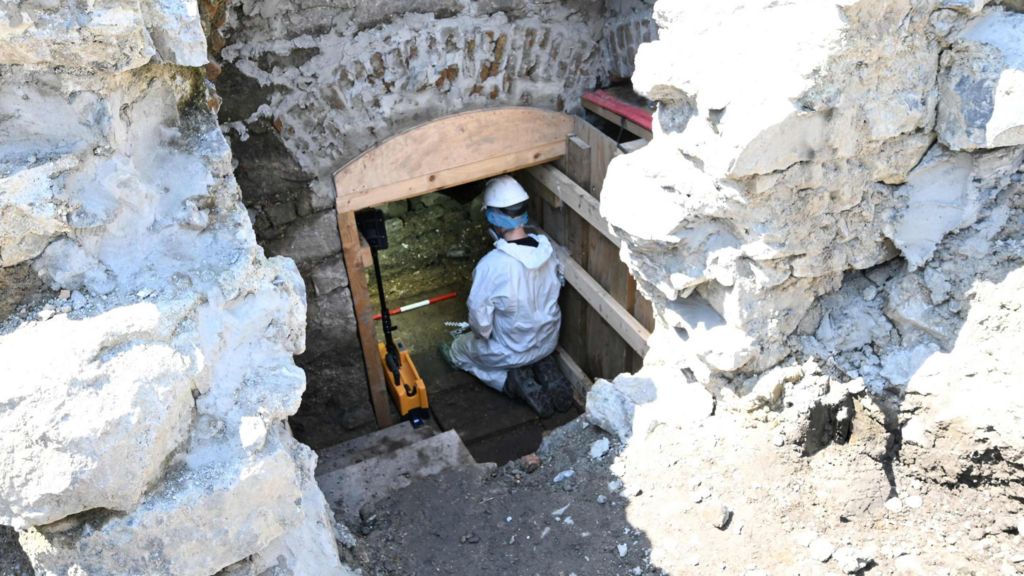
Excavation teams have also begun moving into a long-unexamined subterranean vaulted structure on the site. Initial geological and historical analysis indicates this structure was originally built as part of a wastewater management system for a 19th-century workhouse that operated on the land between 1841 and 1918, decades before the mother-and-baby home opened. ODAIT has confirmed it remains unclear whether this drainage system was still in active use during the home’s 36 years of operation from 1925 to 1961. Alongside the full sets of infant remains, teams have also recovered scattered isolated bones from both adult and infant individuals that are not associated with the already cataloged burials. Forensic scientists are currently conducting radiocarbon and contextual testing to determine whether these remains date back to the home’s operational period or originate from the earlier workhouse era.
One of the site’s most high-profile areas of interest, the existing memorial garden where 2017 preliminary investigations detected large quantities of human remains in underground chambers, has not yet undergone full excavation. ODAIT is proceeding with careful planning to avoid disturbing the existing memorial before full scientific excavation begins there.
To support the critical work of identifying the recovered remains, ODAIT has been collecting DNA samples from living relatives of people who were resident at the Tuam home. The agency has added 22 new family samples to its database in recent months, bringing the total number of reference samples to 55. ODAIT teams have even traveled across the diaspora, meeting with family members and Irish community organizations in the United States, United Kingdom, and Canada to collect these samples, as many former residents and their descendants emigrated from Ireland in the decades after the home closed.
The Tuam mother-and-baby home was operated by the Bon Secours Sisters, a Roman Catholic religious order, on land owned by Galway County Council, and was built specifically to house unmarried pregnant women and their children. The site first captured global public attention in 2014, when local independent historian Catherine Corless made a groundbreaking discovery: she found official death records for 796 children and infants who died at the institution between 1925 and 1961, but could find no official documentation of where those bodies were buried.
In the years following the public revelation of the mass unmarked burials, both institutional custodians of the home have issued formal apologies. The Bon Secours Sisters acknowledged that the children and infants interred at the site were buried in a “disrespectful and unacceptable way” and have contributed €2.5 million (£2.14 million) to cover the costs of the excavation. Galway County Council also issued a public apology in 2021 following the release of the official national inquiry report, admitting it failed in its duty to protect the vulnerable mothers and children housed at the site.
Excavation work at the Tuam site is scheduled to continue through 2027, with forensic identification, archival research, and follow-up scientific work expected to take several additional years to complete.