分类: society

  • A secularism law some women say makes them feel like ‘outsiders’ heads to Canada’s top court

    A secularism law some women say makes them feel like ‘outsiders’ heads to Canada’s top court

    Quebec’s controversial secularism legislation, known as Bill 21, is undergoing a pivotal constitutional review at Canada’s Supreme Court this week amid mounting evidence of its profound impact on religious minorities. The four-day hearing represents a critical juncture for a law that has reshaped the professional landscape for visibly religious public sector employees since its implementation in 2019.

    The legislation prohibits public servants in positions of authority—including teachers, police officers, and judges—from wearing religious symbols while performing official duties. While the provincial government maintains the law promotes state neutrality and secularism (laïcité), affected communities describe it as institutionalized discrimination that has forced career changes, provincial migration, and profound personal distress.

    Lisa Robicheau, a 41-year-old single mother and hijab-wearing support worker for students with disabilities, exemplifies the law’s human toll. Though currently exempt due to her pre-law employment status, she describes living under constant anxiety about her professional future. “I’ve spent the majority of my life here, but it never feels like home,” she told the BBC. “I am constantly being treated like an outsider.” This sentiment has driven her to pursue university education with hopes of securing alternative employment or leaving Quebec entirely.

    Research conducted by York University’s Nadia Hasan reveals disturbing trends: 73% of Muslim women surveyed reported Bill 21 affected their job prospects, with over half experiencing workplace prejudice and similar numbers considering provincial relocation. The law has inadvertently fostered social segregation by pushing religious minorities toward community-specific employment within Muslim businesses and private institutions.

    The constitutional challenge, brought by thirteen appellants including civil liberties organizations and school boards, questions both the law’s validity and the controversial “notwithstanding clause” used to enact it. This constitutional provision allows provinces to temporarily override certain charter rights, including religious freedom and equality protections.

    Historical context illuminates Quebec’s unique relationship with religion. The province’s 1960 Quiet Revolution dramatically secularized public institutions that were once dominated by Catholic clergy. Recent decades have seen growing tensions between preserving French-Canadian identity and accommodating religious diversity, with debates increasingly mirroring France’s strict secularism model.

    The current government seeks to expand the law’s reach to include all public school staff and daycare workers while banning prayer in public spaces—measures supported by majority polling but criticized as further marginalizing religious communities. Whatever the Supreme Court’s ruling, Bill 21 has already fundamentally altered Quebec’s social fabric and raised urgent questions about religious freedom in pluralistic societies.

  • Police shoot man in Logan who allegedly threatened them with knife

    Police shoot man in Logan who allegedly threatened them with knife

    In a tense overnight incident at Logan Central’s suburban shopping precinct, Queensland Police officers were compelled to use lethal force against a 27-year-old man allegedly brandishing a knife and making threats. The confrontation escalated when the individual reportedly advanced toward law enforcement personnel while armed with the weapon.

    Following the discharge of police firearms, the suspect sustained serious injuries. Officers promptly administered critical first aid at the scene before emergency services transported the man to Princess Alexandra Hospital for urgent medical treatment. Medical authorities have confirmed the individual is currently in stable condition.

    The Queensland Police Service has established a comprehensive crime scene perimeter, assuring local residents and business operators that all immediate threats to public safety have been neutralized. The Ethical Standards Command has initiated a formal investigation into the circumstances surrounding the officer-involved shooting, operating under the independent oversight of the Crime and Corruption Commission to ensure transparent and impartial proceedings.

    This incident marks another critical episode in Australia’s ongoing discussions regarding police response protocols to armed confrontations and the complex balance between public protection and appropriate force escalation in volatile situations.

  • Sleep competition opens in Dongping National Forest Park

    Sleep competition opens in Dongping National Forest Park

    Shanghai’s Chongming Island became an unexpected arena for competitive slumber this weekend as Dongping National Forest Park launched its innovative sleep-in-forest competition. The event, strategically timed to coincide with World Sleep Day, welcomed 43 inaugural participants who traded urban noise for the therapeutic sounds of nature in pursuit of restorative sleep and financial rewards.

    The competition, which will recur weekly on Saturdays through April 26th with additional sessions on May 2nd and 3rd, operates from 9:00 AM to 7:20 PM. Participants aren’t required to actually sleep—they can simply lie still with eyes closed, making the event accessible to those who struggle with sleep performance anxiety.

    Scientific evaluation forms the cornerstone of the competition. Professional sleep monitoring devices meticulously track multiple sleep quality metrics including sleep latency (time taken to fall asleep), total sleep duration, percentage of deep sleep achieved, and sleep continuity throughout the monitoring period. This data-driven approach ensures objective assessment rather than subjective judgment.

    Organizers designed the event specifically to provide urban residents respite from their high-pressure lifestyles. The competition welcomes healthy individuals aged 18 to 50, offering them an officially sanctioned opportunity to disconnect from digital devices and reconnect with nature’s circadian rhythms amidst one of Shanghai’s most cherished green spaces.

  • Forest sleep challenge held on Shanghai’s Chongming Island

    Forest sleep challenge held on Shanghai’s Chongming Island

    Dongping National Forest Park on Chongming Island became the unlikely venue for an unconventional wellness event on March 21, as Shanghai hosted its inaugural Forest Sleep Challenge. The unique competition brought together 43 participants who competed not for speed or strength, but for the quality of their slumber beneath the canopy of trees.

    The event, designed to highlight the critical importance of healthy sleep patterns, offered substantial cash incentives reaching up to 3,000 yuan for those demonstrating exceptional sleep quality. Participants reclined on individual mattresses arranged across the park’s grassy clearings, bathed in natural sunlight while advanced sleep tracking technology monitored their physiological data in real-time.

    Competition rules established strict parameters for the seven-hour duration. Contestants were required to remain within designated sleeping areas, with any body part extending beyond one-third of the mattress resulting in immediate disqualification. The regulations prohibited rising from the mattress for any reason, including bathroom breaks, maintaining a continuous sleep monitoring environment throughout the challenge.

    The innovative event represents a growing public health initiative addressing sleep quality concerns in urban populations. By combining competitive elements with wellness education, organizers created an engaging platform to discuss sleep science while encouraging participants to reconnect with nature’s restorative benefits.

  • Did Australia’s under-16s social media ban work?

    Did Australia’s under-16s social media ban work?

    Australia’s groundbreaking legislation prohibiting social media access for users under 16 has undergone its first significant evaluation three months post-implementation. The world-first regulatory measure, designed to protect minors from digital harm, has generated complex reactions among its intended beneficiaries.

    Teenagers across Australia report diverse experiences with the restrictive policy. Some acknowledge unexpected benefits including reduced screen time and decreased exposure to cyberbullying, while others describe sophisticated circumvention methods and increased social isolation. The technological enforcement mechanisms, primarily relying on age verification protocols, have demonstrated both successes and vulnerabilities in practical application.

    Digital privacy advocates have raised concerns about data collection requirements, noting that stringent age verification processes often necessitate sharing sensitive personal information. Meanwhile, mental health professionals observe mixed outcomes, with some adolescents experiencing reduced anxiety while others report feeling disconnected from peer networks and support systems.

    The Australian government’s radical approach represents the most aggressive attempt globally to regulate minors’ digital interactions. Early implementation data suggests variable compliance rates across different platforms, with major social media companies employing divergent adaptation strategies. Educational institutions report navigating new challenges in digital literacy instruction while balancing compliance requirements.

    This policy experiment continues to evolve as stakeholders assess its broader societal implications, potentially establishing precedents for other nations considering similar protective measures for young digital citizens.

  • Dragon dance carnival opens in Qinhuangdao

    Dragon dance carnival opens in Qinhuangdao

    QINHUANGDAO – The coastal city of Qinhuangdao in Hebei province became a vibrant epicenter of traditional Chinese culture as it launched the 2026 National Dragon Dance Carnival on March 20. The three-day cultural extravaganza, set against the historic backdrop of Shanhaiguan Pass’s Laolongtou (Old Dragon’s Head) where the Great Wall meets the Bohai Sea, celebrates the ancient Longtaitou Festival marking spring’s arrival.

    Twenty-six meticulously choreographed dragon dance troupes from eleven provincial-level regions across China converged at this symbolic location, transforming the historic site into a dynamic arena of cultural performance. The event features competitive dragon dance exhibitions, immersive cultural heritage demonstrations, and an extensive culinary festival showcasing regional delicacies from participating provinces.

    Beyond the visual spectacle, attendees engaged in traditional customs including the symbolic ‘dragon head touching’ ritual believed to impart good fortune throughout the coming year. Complementary haircut services were provided to honor the festival’s tradition of grooming renewal, while digital integration emerged through live-streamed shopping events offering specialized travel packages and cultural merchandise.

    The strategic timing coincides with the Longtaitou Festival (Dragon Head Raising Day), observed annually on the second day of the second lunar month, which symbolizes the awakening of the dragon—a traditional harbinger of spring rains and agricultural prosperity in Chinese cosmology. This cultural convergence at the Great Wall’s eastern terminus represents both preservation of intangible cultural heritage and innovative approaches to cultural tourism promotion.

  • Officials say 14 were killed in fire at South Korean auto parts plant

    Officials say 14 were killed in fire at South Korean auto parts plant

    A catastrophic industrial fire has resulted in significant casualties at an automotive components manufacturing facility in Daejeon, South Korea. Emergency crews have now concluded recovery operations, confirming 14 fatalities and at least 59 injuries following Friday’s devastating blaze.

    The tragedy unfolded at the Anjun Industrial complex where emergency services responded to reports of an explosion and subsequent fire at approximately 1:18 PM local time. Fire Chief Nam Deuk-woo of Daedeok district reported that the intensity of the explosion and rapid spread of flames initially prevented rescue teams from entering the compromised structure due to collapse concerns.

    Advanced technological solutions including unmanned firefighting robots were deployed to cool the superheated framework and conduct preliminary safety assessments before human teams could begin the perilous search operation. The recovery effort revealed that nine victims perished in a third-floor area believed to be a recreational facility, while three others were located near a second-floor water reservoir.

    President Lee Jae Myung visited the disaster site Saturday, meeting with grieving families and emphasizing the critical need for structural stabilization during ongoing investigative operations. The incident prompted an massive emergency response involving over 500 personnel from fire, police, and medical services, alongside specialized equipment including aerial support and robotic fire suppression units.

    Authorities have confirmed the removal of more than 100 kilograms of highly reactive chemical compounds from the disaster site, though the precise ignition cause remains under active investigation. Medical officials report that injuries ranged from smoke inhalation to traumatic injuries sustained from emergency escapes, with several victims requiring surgical intervention for fractures and related trauma.

  • Iconic landmark of Uzbek culture rises up in Tashkent

    Iconic landmark of Uzbek culture rises up in Tashkent

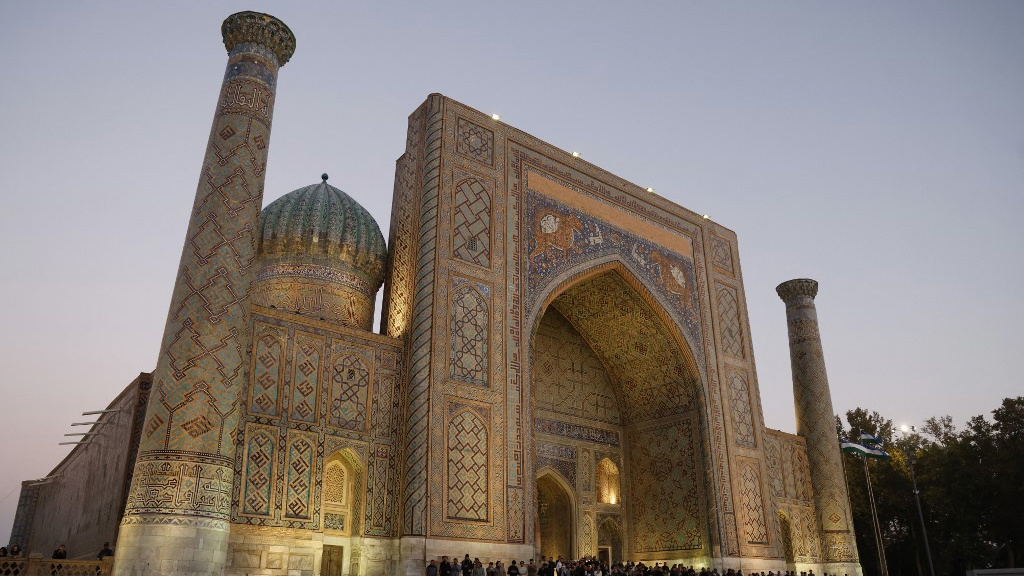
    Tashkent has unveiled a transformative cultural institution that seamlessly blends historical preservation with cutting-edge technology. The Center for Islamic Civilization, inaugurated in March 2026, represents Uzbekistan’s most ambitious cultural undertaking in decades, earning recognition from CNN as a premier tourist destination and architectural marvel.

    Designed with meticulous attention to Timurid-era architectural traditions, the 10-hectare complex features a striking 65-meter azure dome and four golden gates symbolizing national unity. The structure incorporates calligraphic inscriptions from the Quran while integrating modern technological solutions that create an immersive visitor experience.

    The center revolutionizes traditional museum concepts through innovative exhibits like the Wall of Civilizations—a massive multimedia installation demonstrating humanity’s continuous intellectual progress. Advanced technologies including virtual reality, artificial intelligence, and holograms bring ninth-century manuscripts and ancient observatories to life. The facility also houses the Time Capsule interactive project, allowing visitors to leave messages for future generations, and the 1001 Inventions Laboratory designed to spark children’s interest in engineering and natural sciences.

    The institution functions as both research hub and public educational space, featuring an extensive second-floor library containing over one million volumes. The surrounding grounds adhere to contemporary urban planning and environmental sustainability standards, creating an accessible cultural zone for residents and international visitors alike.

    President Shavkat Mirziyoyev initiated the project in 2017, personally overseeing its development and recommending the incorporation of scientific projects from more than 2,000 researchers. The center has attracted international acclaim, including placement on the Prix Versailles list of ‘world’s most beautiful museums of 2026’ and praise from UNESCO Director-General Khaled El-Enany, who recognized it as a ‘unique civilizational complex’ integrating next-generation museum technology with advanced research infrastructure.

    The center has also facilitated strengthened cultural diplomacy, hosting presidents from five Central Asian countries and supporting the repatriation of Uzbekistan’s cultural heritage scattered abroad. Its opening coincides with deepening Uzbekistan-China relations, particularly in tourism, with visitor numbers tripling following the 2025 visa-free policy implementation and Uzbekistan Tourism Year celebrations.

  • Louise Minchin taken to hospital with frostbite during Artic challenge

    Louise Minchin taken to hospital with frostbite during Artic challenge

    BBC presenter Louise Minchin has been hospitalized after developing frostbite during an extreme Arctic cycling expedition in Canada’s Northwestern Territories. The 57-year-old journalist was participating in the Inuvik Weekend Warrior Fat Bike Challenge—a three-day, 300-mile (483km) race across frozen rivers and remote Arctic wilderness—to raise funds for the Duke of Edinburgh’s Award.

    Minchin and her teammate, Guinness World Record endurance athlete Mimi Anderson, 61, were forced to abandon the challenge just 14 hours into the event after encountering life-threatening conditions. Despite extensive preparation for sub-zero temperatures, they faced wind chills plummeting to -36°C (-33°F), with ambient temperatures reaching -40°C (-40°F).

    The broadcaster announced their withdrawal on Friday evening, noting that the team had completed approximately 140 kilometers before determining that continuing would pose ‘a huge risk.’ Minchin shared updates from her hospital bed via Instagram, stating: ‘We are out of the race but we are safe, warm and being well looked after. Turns out we were right to stop. We both have frostbite.’

    Medical authorities indicate that frostbite can develop within minutes under such extreme conditions, particularly affecting extremities like fingers and toes. Symptoms progress from numbness and skin discoloration to severe tissue damage if exposure continues.

    Fellow television personalities, including Susanna Reid and Helen Skelton, have expressed support and admiration for the attempt. Minchin and Anderson remain hospitalized but are reported to be ‘in good spirits’ while receiving treatment.

  • Shanghai island hosts sleep-in-forest competition

    Shanghai island hosts sleep-in-forest competition

    In an innovative celebration of World Sleep Day, Shanghai’s Chongming Island launched a unique sleep competition within the lush confines of Dongping National Forest Park. The inaugural event welcomed 50 participants who immersed themselves in the park’s pristine environment, competing for cash rewards through the simple act of sleeping.

    The competition, scheduled to run on Saturdays through April 26 plus May 2-3 from 9:00 AM to 7:20 PM, employs sophisticated sleep monitoring technology to objectively evaluate participants’ sleep quality. Professional devices track multiple sleep metrics including sleep latency, total sleep duration, deep sleep percentage, and sleep continuity to determine winners.

    Organizers have implemented a comprehensive monitoring system that collects real-time physiological data including heart rates and sleep patterns, with results displayed simultaneously on large screens at the venue. The competition structure offers a 3,000 yuan ($435) prize for the highest sleep score and 2,000 yuan for the fastest to fall asleep. Additionally, all rule-compliant participants who complete the challenge share a 10,000 yuan prize pool.

    Designed to provide urban residents respite from their hectic lifestyles, the event welcomes healthy individuals aged 18-50. Notably, actual sleep isn’t mandatory—participants may simply rest with eyes closed while remaining still. All competitors must remain lying on provided standard mattresses throughout the event, with body movements restricted to prevent more than one-third of the body extending beyond the mattress surface. Significant movements including sitting up, standing, or leaving the bed immediately terminate the challenge.

    Strict rules prohibit conversation, disruptive behavior, and consumption of any food or beverages except water. Electronic devices including phones and tablets, along with other entertainment equipment, are expressly forbidden during the competition.

    The novel concept has generated substantial public interest with active registration and significant social media attention. Embracing the theme of ‘lung cleansing and quality sleep,’ organizers aim to leverage Chongming Island’s exceptional natural resources to provide participants with profound physical and mental relaxation. As China’s third-largest island, Chongming represents Shanghai’s ecological crown jewel—boasting the municipality’s optimal air quality, most extensive green spaces, richest biodiversity, and approximately 28% of the city’s forest resources.