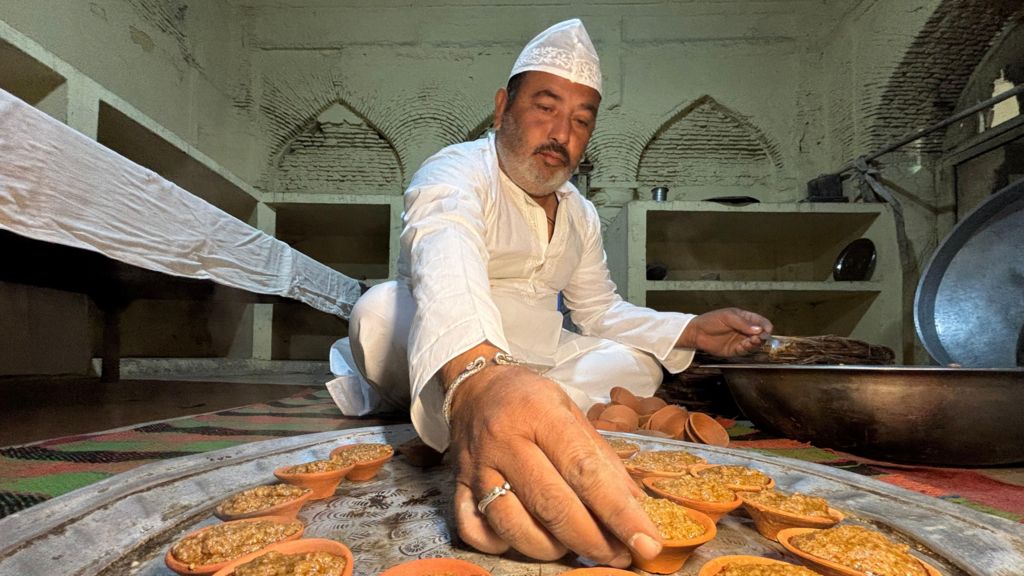
In the heart of Lucknow, Uttar Pradesh, a remarkable preservation project is breathing new life into a nearly two-century-old royal kitchen that continues to serve thousands despite its historical significance. Originally constructed in 1837 by Muhammad Ali Shah, the last ruler of the Awadh kingdom, this culinary landmark represents an enduring legacy of communal generosity that has outlived the monarchy itself.
The kitchen, nestled within the Chota Imambara complex, stands as a testament to architectural ingenuity and cultural continuity. What makes this restoration extraordinary is the Archaeological Survey of India’s commitment to historical accuracy, employing traditional Mughal-era construction methods. Artisans are recreating authentic lime-based mortar—soaked for a month and mixed with wood apple pulp, black gram, natural gum (gond), jaggery, and red brick dust—while using period-appropriate ‘lakhauri’ bricks to maintain structural authenticity.
Beyond architectural preservation, the kitchen maintains its original purpose of serving meals to the community. During Ramadan and Muharram, it feeds approximately 700 people daily through a coupon system, with meals distributed to 16 local mosques. The menus, meticulously detailed in Muhammad Ali Shah’s will nearly two centuries ago, continue to dictate portion sizes and dish specifications—from meat curries and kebabs during Ramadan to vegetarian offerings during Muharram’s initial mourning days.
The restoration, scheduled for completion by March, addresses concerning structural decay while preserving intricate wall carvings and iconic brickwork. Funded through a unique historical endowment—originally 3.6 million rupees given to the East India Company in 1839 with the stipulation that interest would maintain Awadh monuments—the kitchen now operates under the Hussainabad Trust using the same financial mechanism.
For descendants of the Awadh royalty and longtime community members like 80-year-old Syed Haider Raza, the kitchen represents living history. ‘The spirit of the place is still the same,’ Raza observes, ‘It feels as if the food is still being sent by Muhammad Ali Shah.’ This project demonstrates how functional preservation can maintain both physical structures and the cultural traditions they embody.