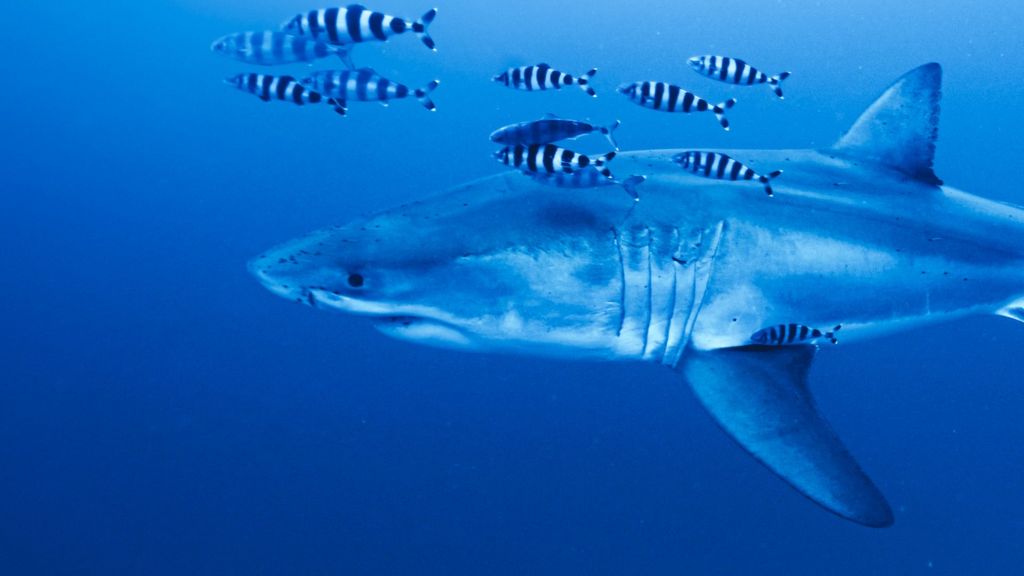
In a remarkable and unexpected encounter that has marine biologists buzzing, a volunteer diver has shared unprecedented footage of an endangered great white shark spotted in the Mediterranean Sea, between the coastlines of Tunisia and Sicily. The diver, who asked not to be named, recalled experiencing intense shaking as he came face-to-face with the massive predator, an encounter that most divers only ever dream of. Great white sharks are rarely documented in this part of the Mediterranean, making the new footage a significant contribution to marine ecological research. Sightings of the species have dropped sharply across the globe in recent decades due to overfishing, habitat degradation, and accidental bycatch, leading to their classification as an endangered species by major conservation organizations. Marine researchers say this rare documentation offers a critical new clue about the species’ range and potential habitats in the Mediterranean, a body of water that has long been understudied when it comes to large predatory sharks. Conservation teams are now hopeful that this sighting will highlight the need for stronger protections for marine biodiversity in the region, and help scientists better understand how endangered shark populations are adapting to changing ocean conditions.
分类: science
-

A sari for Mars: Outfit worn by Indian ‘rocket woman’ at US museum
A garment deeply tied to one of India’s most groundbreaking space milestones is now a featured exhibit at one of the world’s most prestigious science museums, bringing the story of women in global space exploration to tens of thousands of annual visitors.
Nandini Harinath, a leading Indian space scientist who served as Deputy Operations Director for the Mangalyaan mission—India’s first ever attempt to place a spacecraft in Martian orbit—donned a vibrant red and blue silk sari, a gift from her father, on what she calls the most critical day of the entire project. That day, 1 December 2013, Harinath and her team at the Indian Space Research Organisation (ISRO) gathered in the mission control room to execute the trans-Mars injection maneuver, pushing the Mangalyaan probe out of Earth’s orbit and onto its 300-month journey to the Red Planet. In a 2016 interview, Harinath described the moment as a do-or-die juncture: every decision the team made that day would determine whether the years of work that went into the mission would end in success or failure. To Harinath, saris have always been her go-to attire for major professional moments and events where she represents India’s space program, making this silk piece the natural choice for the mission’s most high-stakes day.
Mangalyaan successfully entered Martian orbit in September 2014, cementing India’s place in history as just the fourth national or geopolitical entity to accomplish the feat. When a photograph of sari-clad women from ISRO celebrating the mission’s success went viral across global social media, it upended long-held stereotypes that framed aerospace engineering and space science as male-dominated fields in India. While ISRO later clarified that the women pictured were administrative staff, the agency also emphasized that multiple female scientists, including Harinath, held core roles on the mission and were present in the control room for the critical injection maneuver.
That viral image caught the attention of Matt Shindell, curator of space history at the Smithsonian’s National Air and Space Museum in Washington, D.C., who found the story of India’s “Rocket Women” deeply compelling. In 2020, Shindell reached out to Harinath via email to discuss adding an artifact tied to the Mangalyaan mission to the Smithsonian’s collections. After discussing what object could best capture the spirit of the mission and Harinath’s role in it, the pair settled on the iconic sari she wore that day in 2013.
Once the sari and its matching blue blouse arrived at the museum, a textile conservator even turned to YouTube tutorials to learn how to properly drape the traditional garment for display on a museum mannequin. Shindell draws a parallel between Harinath’s sari and another iconic artifact in the museum’s collection: the flight vest worn by NASA Flight Control Chief Gene Kranz during the 1970 Apollo 13 mission, when he led the emergency operations that brought the imperiled crew safely back to Earth. Both garments are tangible reminders of the human decision-makers who stood at the center of historic space milestones, rather than just the technology that made those milestones possible.
While the Smithsonian already holds a small number of Indian artifacts in its collections, most are tied to India’s air force or commercial aviation industry, and the museum counts a 2007 commemorative silver tray ISRO presented to science fiction author Arthur C. Clarke for his 90th birthday among its existing ISRO-related holdings. Harinath’s sari marks the first artifact from India added to the museum’s interplanetary science collection, and it is also the first sari of any kind in the museum’s permanent holdings.
Today, the sari is on display in the museum’s “Futures in Space” gallery, positioned directly alongside the iconic blue t-shirt worn by Sally Ride when she became the first American woman to travel to space on the 1983 Space Shuttle mission. The exhibit is also surrounded by space-themed toys, games, and movie posters, all curated to engage visitors with recent developments in space exploration and spark conversation about the future of human activity beyond Earth.
Shindell explains that the “Futures in Space” exhibit is designed to prompt visitors to grapple with core questions about modern space exploration: Who gets to participate in space travel? What drives nations and individuals to explore beyond our planet? What will we do once we reach other celestial bodies? For Shindell, Harinath’s sari answers these questions in two powerful ways. First, it stands as a symbol of national pride for India and the remarkable success of the country’s growing, cost-effective space program. Second, it carries a deeply personal, inspiring story that Shindell hopes will encourage more young women around the world to pursue careers in science, technology, engineering, and math. The exhibit includes an interactive touchscreen that allows visitors to learn more about Harinath, the Mangalyaan mission, and the role of women in global space exploration.
Shindell says he is delighted by the public response to the new addition, calling the sari a fantastic asset to the museum’s collection that brings a fresh, important perspective to the story of modern space exploration.
-
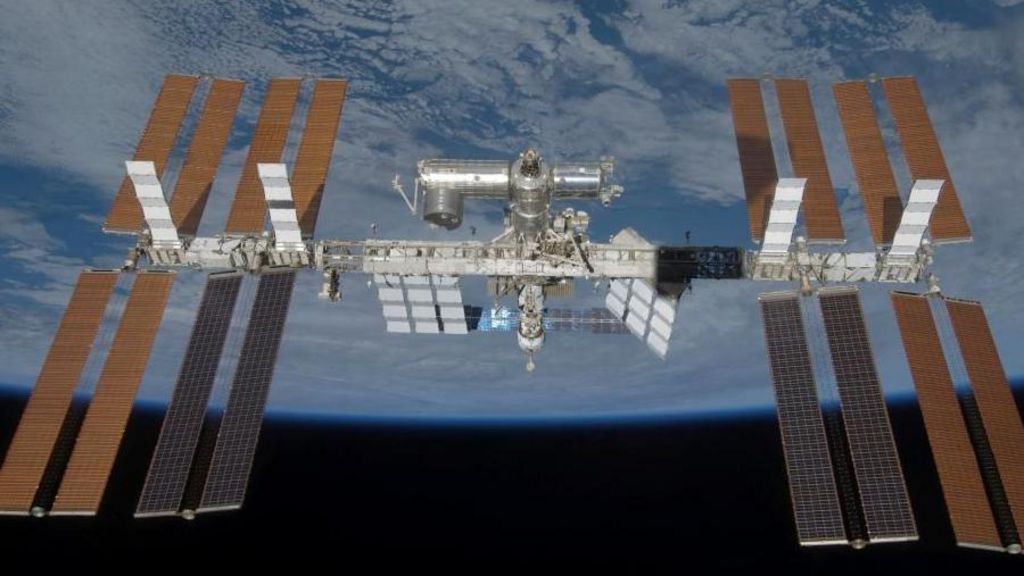
Astronauts return to ISS after sheltering during air leak repair attempt
A sudden acceleration in an ongoing air leak on the International Space Station (ISS) triggered emergency shelter protocols Friday, sending five of the outpost’s seven crew members to a docked SpaceX Dragon capsule as two Russian cosmonauts attempted targeted repairs on the affected Russian segment of the station.
The leak, located in the PrK transfer tunnel connecting to Russia’s Zvezda service module, has been a persistent issue for the orbital complex for roughly six years, caused by gradual cracking that has flared up and been patched intermittently. A new development emerged last month, however, following the docking of a new Russian cargo vessel: Roscosmos, Russia’s national space agency, detected a faster rate of pressure drop in the tunnel, indicating the leak had worsened. That prompted mission teams to schedule a more extensive repair operation Friday to address the problem permanently, rather than relying on temporary fixes.
Friday afternoon, the two Russian crew members, station commander Sergey Kud-Sverchkov and flight engineer Sergei Mikaev, began preparations to access the crack using a saw. The approach sparked concern from NASA mission control in Houston, which ordered five of the seven-person ISS crew to move to the docked SpaceX Dragon capsule Freedom, their designated emergency lifeboat, as a precaution. The five astronauts — Jessica Meir, Jack Hathaway, Chris Williams of NASA, Sophie Adenot of the European Space Agency, and Andrey Fedyaev of Roscosmos, all of whom arrived at the station in February — were instructed to don their spacesuits and stand by for a potential emergency undocking and return to Earth. Unlike many spacecraft that only ferry crew to and from the station, docked crew capsules remain permanently attached as lifeboats, ready to depart for Earth within minutes if the station faces an irreparable catastrophic threat. Kud-Sverchkov and Mikaev retained their own escape route via the separately docked Soyuz MS-28 crew capsule.
Within hours of the shelter order being issued, Roscosmos directed its cosmonauts to pause the repair work, and NASA subsequently lifted the safe-haven protocol. In a public statement posted to the social platform X, NASA spokeswoman Bethany Stevens confirmed: “Given this development, Nasa has instructed the crew members inside the Dragon spacecraft to end the safe haven procedures and return to planned operations aboard the International Space Station.”
Russian state news agency Tass, citing official comments from Roscosmos, reported that at no point during the incident did the leak or repair attempt pose a threat to the safety of the crew or the ISS’s critical onboard systems.
The ISS, the largest human-made object ever placed in orbit, stretches roughly the length of an American football field. It has been continuously occupied and operated by a multinational consortium led by the United States and Russia since 1998, with additional partners including Canada, Japan, and 11 European nations through the European Space Agency. The long-running orbital outpost has weathered a series of incremental structural issues over its decades in operation, including the recurring cracking in the Zvezda module that first emerged six years ago.
-
EU invests in ocean monitoring as US cuts funding
As climate change accelerates ocean warming and amplifies extreme weather events worldwide, and the Trump administration moves forward with deep cuts to a critical U.S. ocean observation program, the European Union is stepping into the gap with a €92 million ($107 million) investment to expand its international ocean monitoring network. Named OceanEye, the new initiative was announced Wednesday by European Commission President Ursula von der Leyen, who said the funding will position the EU at the forefront of global efforts to map and study Earth’s largely underexplored oceans.
Oceans cover more than 70% of the planet’s surface, underpinning global life systems by producing half the world’s oxygen and absorbing roughly 30% of human-caused carbon dioxide emissions. But decades of greenhouse gas emissions have pushed ocean temperatures to record highs, with warming accelerating faster in recent decades than at any point in modern recorded history. This warming has supercharged tropical cyclones, extended drought conditions, bleached and killed 50% of the world’s coral reefs, and pushed thousands of marine species toward extinction — threats compounded by overfishing and industrial ocean pollution. Scientific projections warn that climate change will continue to increase the intensity of heatwaves and severe storms across Europe in the coming decades, making accurate ocean data more critical than ever for disaster preparedness and mitigation.
Systematic, continuous ocean monitoring is the foundation of effective marine protection: it maps existing ecosystem damage, identifies emerging threats, and provides the empirical data needed to craft evidence-based regulations to halt biodiversity loss. “This is about using science and good governance to understand our ocean and secure our future,” von der Leyen emphasized in her announcement of the initiative.
The EU’s investment comes at a moment of growing gap in global ocean observation capacity. In May of this year, the Trump administration signaled plans to eliminate funding for the U.S. Ocean Observatories Initiative, a 10-year-old network of more than 900 fixed and mobile ocean sensors that cost $386 million to build. Funded by the U.S. National Science Foundation, the initiative has collected free, real-time ocean data on everything from circulation patterns to marine ecosystem shifts, climate change trends and extreme weather activity. That open-source data has supported more than 500 peer-reviewed scientific studies, and the project was originally scheduled to operate for another 15 to 20 years before the funding cuts were proposed.
Prior to the U.S. funding announcement, global ocean observation efforts were coordinated through the UN-affiliated Global Ocean Observing System, with the United States historically collecting more than half of all global ocean observation data, Europe contributing roughly 25%, and the remainder coming from Japan, Australia, India and China. EU officials and ocean scientists say the funding gap created by U.S. cuts makes increased European investment an urgent priority.
“Europe needs to do more,” explained Pierre-Yves Le Traon, oceanographer and scientific director of Toulouse-based Mercator Ocean International. Under the OceanEye plan, the EU has set an ambitious target to take responsibility for 35% of global ocean monitoring by 2035, and to become the world’s leading provider of standardized “ocean intelligence” data for researchers, governments and private industries.
Ocean observation data powers far more than just climate research. Data collected by underwater drones, robotic sensors and orbiting ocean-focused satellites is shared with shipping companies, commercial fisheries, emergency disaster response agencies, and research institutions. Mercator Ocean International is currently building the Digital Twin Ocean, a real-time interactive virtual reality replica of the world’s oceans that relies entirely on continuous observational input to model changes. Le Traon noted that this data is critical not just for climate adaptation, but for a wide range of coastal and maritime sectors including aquaculture, Arctic shipping, coastal tourism, agriculture, and even maritime security operations. “Knowledge is essential if we want to manage the ocean,” Le Traon said. “We really have to be very active for the monitoring and protecting of the ocean because the ocean matters to everyone: for life at sea, for life on Earth.”
Odran Corcoran, a policy advisor for the marine conservation non-profit Oceana, added that systematic observation is particularly critical to filling gaps in existing scientific knowledge that hold back effective policy. Only by collecting consistent data from the deep ocean — which remains one of the least understood environments on Earth — can lawmakers craft evidence-based regulations for sustainable fisheries management, marine protected area expansion, and marine ecosystem restoration projects. “Europe does not just need more ocean data; it needs data that closes biodiversity and seabed knowledge gaps,” Corcoran said.
Funding from the OceanEye initiative will go toward two core priorities: supporting private sector innovation incubators for ocean monitoring technology, and expanding the capacity of existing international coordination bodies including the Global Ocean Observing System. Of the EU’s 27 member states, 22 have coastal territories bordering the Baltic Sea, Atlantic Ocean, Black Sea and Mediterranean Sea. France holds the bloc’s largest network of ocean science institutions and the most extensive maritime boundaries, stretching from Réunion in the South Pacific to Saint Martin in the Caribbean to the Scattered Islands in the Indian Ocean.
This reporting is supported by a grant from the Walton Family Foundation, with The Associated Press retaining full editorial control over all content.
-
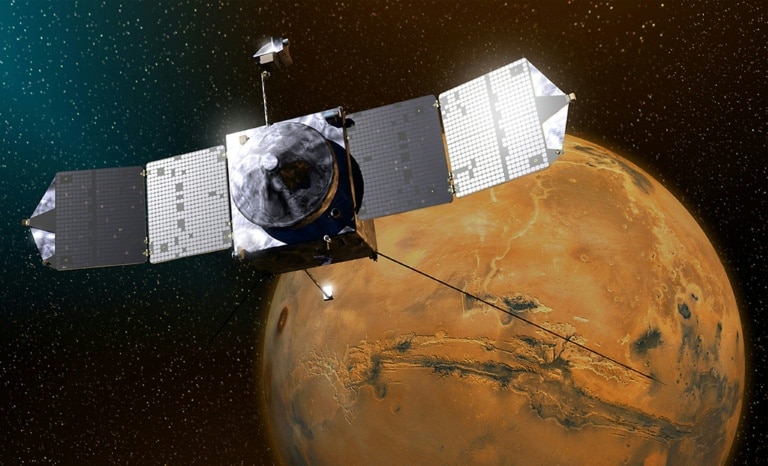
NASA ends mission after loss of Mars probe
After six months of uninterrupted silence from its pioneering Mars explorer, NASA announced Wednesday that it is formally ending the Mars Atmosphere and Volatile Evolution (MAVEN) mission, a groundbreaking deep space initiative that reshaped scientific understanding of the red planet.
Launched and inserted into Martian orbit in 2014, MAVEN was originally designed to complete its scientific objectives in just one to two years. Against all expectations, the hardy spacecraft far outlived its projected lifespan, continuing to deliver groundbreaking data for more than a full decade until it suddenly lost contact with mission control on Earth in December 2025.
While NASA officials confirm the probe is believed to remain in stable orbit around Mars, repeated attempts to reestablish communications have failed, forcing the agency to accept the loss of the vehicle. The US space agency also confirmed it will launch a full investigation into what caused the communications outage and eventual loss of the spacecraft.
Over its 11 years of operation, MAVEN delivered transformative insights into Martian atmospheric science that have redefined the field. Astrophysics professor Shannon Curry, who has been part of the MAVEN science team since its early days, called it the “best Mars mission ever” in comments to reporters Wednesday. The probe’s core contribution was unpacking the complex process of atmospheric escape—the gradual leakage of gaseous compounds from a planet’s atmosphere into outer space.
Curry emphasized that thanks to MAVEN’s data collection, scientists now hold a more comprehensive understanding of atmospheric escape on Mars than on any other planet in the solar system, including our own Earth. “Mars serves as an incredible natural laboratory for understanding rocky planet atmosphere,” she added, noting that the mission’s findings will benefit planetary science research for decades to come.
Tiffany Morgan, head of NASA’s exploration programs, echoed that assessment, noting that MAVEN’s work “profoundly advanced our understanding of Mars’s atmosphere, climate history, and habitability.” Beyond its core scientific mission, MAVEN also played a critical practical role, functioning as a reliable communications relay between Earth and the rovers and landers NASA has deployed to the Martian surface. That role will now be taken over by other active Mars orbiters currently operating around the planet.
-
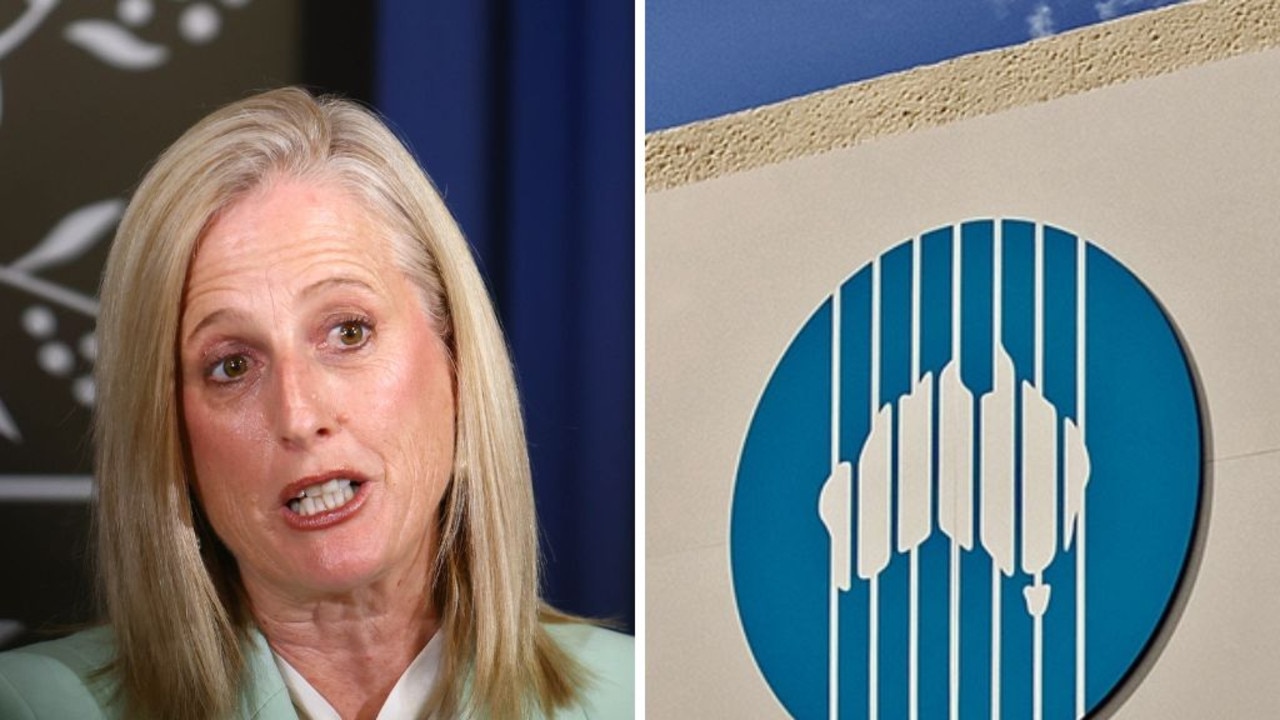
Another 151 research positions axed at CSIRO despite $387M federal budget boost
Australia’s national scientific research powerhouse, the Commonwealth Scientific and Industrial Research Organisation (CSIRO), has eliminated 151 frontline roles focused on environmental and health research, a move that has sparked widespread concern across the country’s scientific community even as the agency frames the cuts as a critical step toward long-term financial stability.
The latest round of layoffs, carried out over just several days, includes 92 positions from CSIRO’s Environment Research Unit and an additional 59 roles across the organisation’s health and biosecurity teams. These cuts form part of a broader restructuring initiative announced late last year that is set to eliminate as many as 350 research positions in total. Union data from the CSIRO Staff Association shows that the agency has cut a staggering 1,150 roles since the start of 2024, marking one of the most rapid periods of downsizing in the organisation’s modern history.
What makes the cuts particularly notable is that they come just months after the Australian federal government committed a $387.4 million, four-year funding injection to CSIRO, revealed in the 2024 May federal budget. Finance and Public Service Minister Katy Gallagher explained that the funding package was intended to provide the agency with the long-term operational stability it needed to continue delivering critical research and plan for future challenges. However, Gallagher acknowledged that the government could not guarantee no further jobs would be lost, noting that CSIRO operates as an independent statutory body with an autonomous board that makes its own strategic decisions, a framework the government fully supports. She added that the federal government remains confident the funding package will put CSIRO on a sustainable financial footing moving forward.
CSIRO leadership has defended the restructuring, pointing to deep-seated structural financial challenges that have built up over decades. Senior executives revealed last year that the organisation faces persistent long-term sustainability issues, with public funding failing to keep pace with the rising operational costs of running a world-class modern scientific agency. The agency estimates it requires up to $135 million in additional annual funding over the next decade just to maintain its current operations and capabilities.
To address this gap, CSIRO has opted to drastically narrow its research focus, deprioritizing projects that lack critical scale and reallocating resources to high-growth, high-impact advanced technology sectors including artificial intelligence, renewable energy, and robotics. “CSIRO has made strategic choices to evolve our research, to focus efforts where we can deliver the greatest national impact following a comprehensive review of our research portfolio,” a CSIRO spokesperson said. “To achieve this sharpened focus, we need to deprioritise areas where we lack the required scale to achieve significant impact or areas where others in the ecosystem are better placed to deliver.”
The 59 health and biosecurity roles eliminated in this round are a direct result of a departmental merger that combined the existing Health and Biosecurity unit with the Animal Health Laboratory to form a new, consolidated Biosecurity Research Unit. While CSIRO has stated that the merged unit will strengthen cross-sector expertise across animal, human, and plant health without compromising the critical diagnostic capabilities of the Australian Centre for Disease Preparedness, leading scientific industry bodies have raised serious alarms about the long-term consequences of the cuts.
Ryan Winn, chief executive of Science and Technology Australia, described the layoffs as another major blow to Australia’s domestic scientific capacity, particularly at a time when the nation is already responding to a current diphtheria outbreak and still grappling with the legacy of the COVID-19 pandemic. Winn pointed out that CSIRO’s health and biosecurity teams already endured significant cuts just two years ago, questioning how the nation can expect to retain and attract skilled STEM workers when faced with such persistent employment instability. “These jobs are not just a loss to the CSIRO, they could impact Australia’s capability to respond to future health and biosecurity emergencies,” Winn said.
CSIRO Chief Executive Dr Doug Hilton has remained steadfast in his defense of the overhaul, framing the painful job cuts as an essential survival measure for the national science agency. “These are difficult but necessary changes to safeguard our national science agency so we can continue solving the challenges that matter to Australia and Australians,” Dr Hilton said. “We must set up CSIRO for the decades ahead with a sharpened research focus that capitalises on our unique strengths, allows us to concentrate on the profound challenges we face as a nation and deliver solutions at scale.”
-

Scientists find yeast in ancient Iceman’s guts — and make bread
More than five millennia before the present day, long before the final stones were placed on Egypt’s Great Pyramids, a Bronze Age traveler now known to the world as Ötzi the Iceman was fatally shot with an arrow through the back while crossing the Alpine tundra along the Austria-Italy border. His frozen corpse lay undisturbed deep in glacial ice for 5,300 years, until two German hikers accidentally uncovered his remarkably preserved mummy in Italy’s South Tyrol region in 1991.
Since that landmark discovery, Ötzi has been stored at a constant -6°C, replicating the frigid conditions of his glacial tomb to preserve his body for ongoing research. As one of the most intact ancient human mummies ever found, he has provided scientists with an unparalleled view of daily life, diet, and health during the Neolithic period. Now, a new study published Wednesday in the journal *Microbiome* has uncovered a surprising twist: Ötzi’s remains host active ancient and modern microbial communities, including four strains of cold-adapted yeast living in his gut, skin, and the meltwater that leaches from his partially thawed body.
Lead researcher Mohamed Sarhan, a microbiologist at the Eurac Research Institute in Bolzano, Italy, told reporters that the presence of surviving yeast was completely unexpected. “What we didn’t expect to find was yeast,” Sarhan explained in an interview with Agence France-Presse. All four isolated yeast strains are adapted to survive sub-zero temperatures, a rare trait most commonly seen in yeast communities native to extreme environments like Antarctica. Researchers say this confirms the yeast colonized Ötzi’s body after his death, rather than being part of his original living gut microbiome. Genetic testing showed that the yeast’s DNA damage levels are consistent with ancient microorganisms embedded in the Iceman’s tissues, leading the study team to conclude colonization occurred shortly after Ötzi died and froze.
“These yeasts have accompanied Oetzi on his long journey through the millennia,” said study co-author Frank Maixner in a public statement about the findings. After isolating the yeast strains, the team replicated them in cold laboratory conditions stored in a standard refrigerator. When word of the yeast discovery spread, the team faced the inevitable question: could this 5,000-year-old yeast be used to bake bread?
Initial baking attempts failed, but after three months of tweaking growing conditions and fermentation techniques, the team produced what Sarhan described as a “very, very good sourdough” loaf. When asked about future experiments, Sarhan joked that brewing beer with the ancient yeast is already “on the list” of upcoming projects. Beyond the novelty of baking with ancient yeast, the discovery holds serious practical applications for environmental science. After Ötzi was first discovered in 1991, conservation teams treated his body with phenol, a common chemical preservative used to stop fungal growth on cadavers. The team found that the isolated yeast can consume and break down phenol, meaning related strains could one day be used to remediate phenol contamination in polluted soil and water systems.
The yeast discovery is not the only groundbreaking insight from the new analysis of Ötzi’s microbiome. Researchers also identified a strain of gut bacteria in Ötzi’s intestines that is virtually absent in the gut microbiomes of people living in industrialized nations today. The same bacteria has only been found in isolated indigenous tribes across Africa and South America, and in 3,000-year-old preserved feces recovered from a Bronze Age salt mine in Hallstatt, Austria — one of the few other existing samples of ancient human gut microbes. Sarhan noted that Ötzi and the Bronze Age salt miners ate far more fiber and whole grains than the average modern person, a dietary difference that likely explains the presence of this now-rare bacteria.
The study upends the long-held view of Ötzi as a static “frozen time capsule” of Neolithic life, instead framing his mummy as a dynamic, ongoing complex ecosystem that continues to evolve thousands of years after his death. Researchers note that it remains too early to confirm whether the active yeast communities are causing any long-term degradation to Ötzi’s remains, and have called for additional long-term study to monitor microbial activity in the mummy.
Not all independent experts have fully accepted the study’s conclusion that the yeast has been active in Ötzi’s body for millennia. Nikolay Oskolkov, a researcher at the Latvian Institute of Organic Synthesis who was not involved in the new study and previously discovered ancient fungus in Ötzi’s gut, called the finding that the Iceman’s microbiome is not “frozen” scientifically interesting. However, he cautioned that yeast samples were only collected in 2010 and 2019, meaning there is limited evidence to confirm the yeast has been multiplying continuously over thousands of years. Oskolkov argued the yeast may be relatively recent colonizers of the mummy’s body rather than long-term inhabitants that survived with Ötzi since the Copper Age.
-
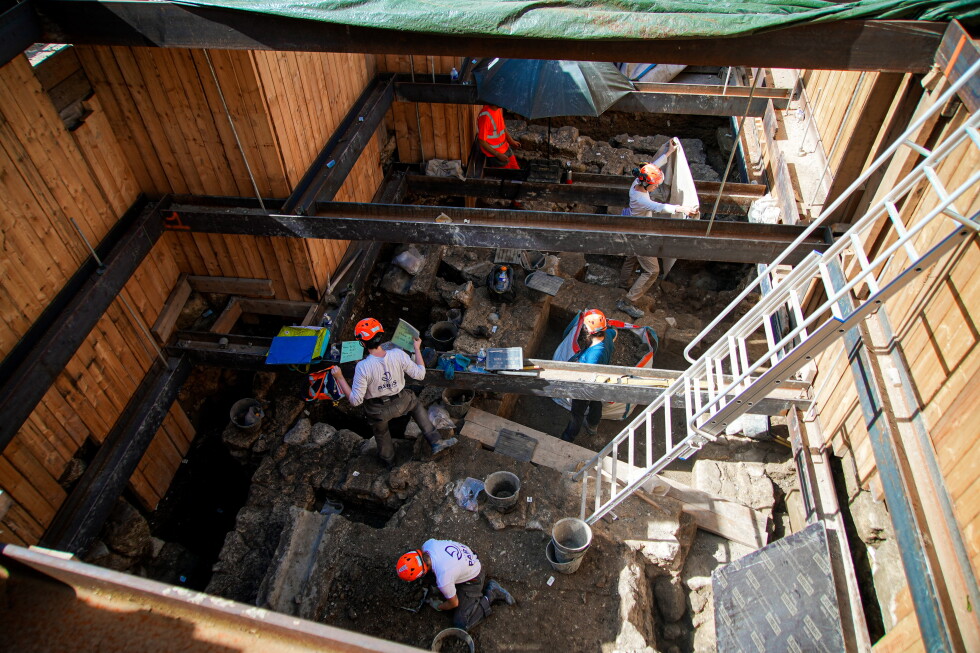
Only on AP: Under Notre Dame cathedral, a ‘dig of the century’ unearths 1,700 years of history
Beneath the baking summer sun where crowds of tourists queue to climb the iconic Notre Dame cathedral and glimpse its famous gargoyles, an unprecedented archaeological excavation is unfolding 13 feet underground. This dig is not just a side project to post-fire reconstruction: it is a journey back through millennia, pulling back the curtain on the layered origins of Paris, from its Roman beginnings to the medieval era and beyond.
Five years after a devastating 2019 fire collapsed Notre Dame’s spire in an event watched by the world, the historic cathedral completed its extensive reconstruction and reopened to the public in late 2024. As part of post-reopening improvements, city officials planned to transform the harsh, sunbaked public square in front of the cathedral into a greener, shaded space to accommodate visitors and combat rising temperatures linked to climate change. Under French archaeological protection rules, however, any ground disturbance for construction must be preceded by full excavation to protect undiscovered historical artifacts. What began as a pre-construction survey quickly grew into what local French media has dubbed the “dig of the century.”
“It’s a rare opportunity for us to work on something that’s tangibly going to make a difference to the history of Paris,” explained Lucie Altenburg, a conservator with Paris’ municipal archaeology unit, in an interview with the Associated Press. Already, the small excavation team has uncovered hundreds of significant objects, ranging from a well-preserved 4th-century Roman coin bearing the portrait of Emperor Constantine to fragments of medieval pottery marked with undeciphered symbols that have left experts baffled — a puzzle many on site compare to a real-life ancient Da Vinci Code.
For tourists visiting the newly reopened landmark, the active dig has added an unexpected layer of magic to their trip. “It makes Notre Dame feel alive again,” shared Emily Carter, a 34-year-old visitor from Manchester who was waiting in the tourist line with her two children. “You come to see the cathedral, then realize there’s another city under your feet. That’s almost more moving.” Just 20 inches below the surface, the first traces of earlier settlements emerge, and the team has continued to recover new artifacts all the way down to the 13-foot depth. On busy dig days, the team fills up to 15 crates of finds from ground that has remained undisturbed for hundreds of years.
This type of layered urban archaeology is not unique to Paris, but it offers one of the clearest glimpses into how ancient cities evolve. As the old adage goes: in historic global cities, the past is not kept in a distant museum — it lies directly beneath the modern streetscape. Every successive civilization builds its new structures atop the rubble of the one that came before it, pushing the ground level higher over centuries. For context, ground level in central Rome has risen roughly 30 feet since the fall of the Western Roman Empire in the 5th century, and the large-scale Athens metro construction ahead of the 2004 Olympics triggered the largest archaeological excavation in Greek modern history, unearthing tens of thousands of artifacts that are now displayed directly in the city’s metro stations. Paris is no exception to this rule.
All of Paris traces its origins to the small Ile de la Cite, the island in the Seine River where Notre Dame now stands. When construction first began on the cathedral in 1163, the entire forecourt area was tightly packed with medieval homes, divided only by a single narrow street, according to Camille Colonna, the lead archaeologist heading the excavation. Colonna’s team has already excavated down to the cellars of these long-gone medieval homes, placing them firmly in their historical context. Deeper still beneath these cellars lie grain pits dating to the Merovingian and Carolingian eras, between the 6th and 10th centuries. Further down, researchers have uncovered a dense residential quarter from Roman Lutetia, dating to the 4th and 5th centuries. In total, 20 centuries of human settlement are compressed into just 4 meters of earth — roughly the height of two and a half Napoleon Bonapartes stacked atop one another.
“Here you can see the layers — medieval Paris, Roman Paris, maybe even before that,” said Yasmine Benali, a 22-year-old archaeology student observing the dig from behind public barriers. “It makes the city feel less like a postcard and more like something still being discovered.”
Some of the most well-preserved finds have come from an unexpected source: the deep medieval latrine pits that doubled as community trash dumps centuries ago. The anaerobic, soft waste environment cushioned fragile ceramic objects, leaving many fully intact even after hundreds of years. The team has pulled whole jugs, cups, and drinking vessels out of these pits, alongside broken pottery fragments and animal bones. “It’s rare to find complete ceramics,” noted Valentine Breloux, an archaeologist with the Paris unit, adding that the intact pottery recovered at the site is nothing short of miraculous.
The most puzzling discovery so far is a series of faint red markings painted on the inner surface of multiple medieval pottery shards. No expert has yet been able to decode the meaning of the repeated symbols, which Breloux describes as the most “astonishing” find from the dig to date.
Coins recovered from the dig also play a critical scientific role beyond their historical value. After cleaning and X-ray analysis, one heavily corroded black disc was confirmed to be a 4th-century coin bearing the face of Emperor Constantine, who ruled Rome in the early 300s AD. Dated objects like these coins allow archaeologists to accurately assign timelines to each stratigraphic layer of the excavation, Altenburg explained.
For the research team, the Roman-era finds are the most valuable, as they fill major gaps in historical knowledge. Researchers have long known that the center of Roman Lutetia was originally located on the Seine’s Left Bank, and as the Roman Empire collapsed in Western Europe, the local population retreated to the defensible Ile de la Cite, reusing stone from older Roman structures to build new fortifications. The Notre Dame dig has already turned up physical proof of this practice: a large Roman doorstep, taken from a much grander public building, flipped upside down, and repurposed as paving stone for a medieval road.
All artifacts recovered from the excavation are transported to Paris’ central regional archaeology center, a large, secure storage facility Colonna describes as “a huge archaeological store” and a hidden treasure house of Parisian history.
For archaeological teams across Europe, large open urban digs like this only happen when major construction is scheduled, a dynamic Altenburg compares to industrial quarry workers stumbling on dinosaur fossils. “This only happens because the city of Paris decided it wanted to beautify the area,” she said.
The redevelopment of Notre Dame’s forecourt is scheduled for completion by 2028. The new public space will be designed as a shaded woodland clearing, planted with 160 new trees and fitted with a shallow cooling water feature to combat the extreme summer heat waves that have become more frequent due to climate change. Tourists who currently wait in direct sun to enter the cathedral will eventually queue in cool shade, and the existing underground parking lot will be redeveloped into a new public visitor center overlooking the Seine.
Until construction begins, however, the excavation team plans to continue digging deeper, pushing past the Roman layers to search for traces of the Gaulish settlement that gave Paris its original name. “The hope is that we are able to go back in time even further than we’ve ever been before,” Altenburg said.
-

Watch: Moment a meteor creates sonic boom over Massachusetts
On a recent day that drew widespread public attention, a dramatic celestial event unfolded over Massachusetts, as a streaking meteor blazed through the upper atmosphere before breaking apart in a violent burst that generated a noticeable sonic boom across much of the state. Multiple eyewitnesses captured footage of the glowing fireball as it tore across the sky, with videos of the event quickly spreading across social media platforms and sparking fascination among casual stargazers and astronomy enthusiasts alike.
Following the sighting, NASA experts stepped in to analyze the energy released during the meteor’s fragmentation. According to official assessments from the U.S. space agency, the breakup of the incoming space rock unleashed energy equivalent to roughly 300 tons of TNT – a force large enough to generate the shockwave that many residents across Massachusetts heard and felt as a deep, resonant boom.
Meteor events of this scale are classified as small to medium-sized entry events, according to astronomical records. Most meteors that enter Earth’s atmosphere burn up completely before reaching the surface, and this event was no exception; NASA has not reported any findings of surviving meteorite fragments reaching the ground as of current updates. The event has renewed public interest in near-Earth objects and the regular cosmic activity that interacts with our planet on a daily basis, often going unseen by most people.
-
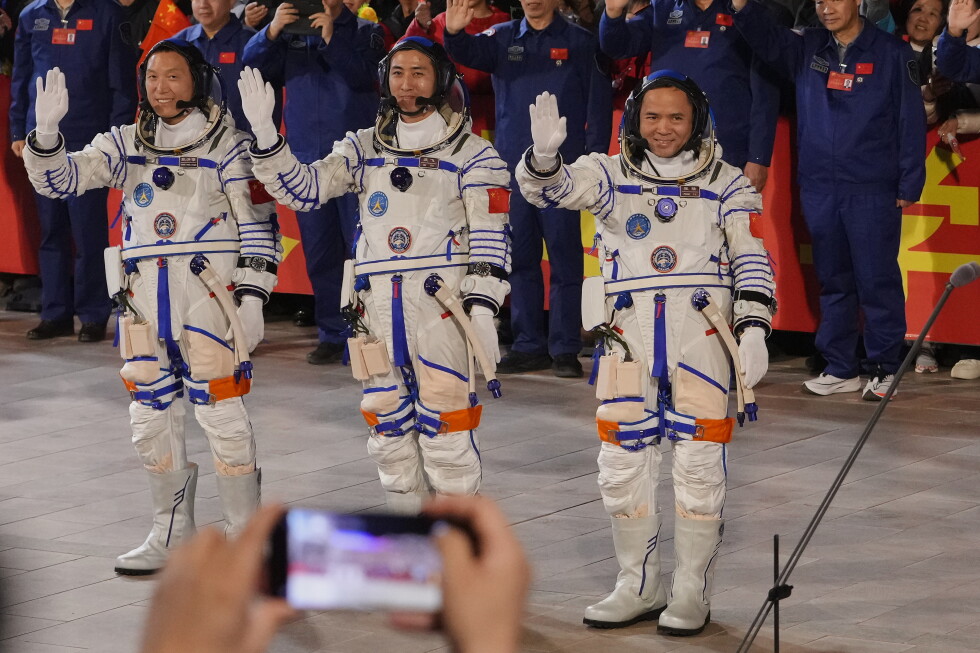
China’s Shenzhou 21 astronauts returns to Earth after nearly 7 months in space
BEIJING – Three Chinese taikonauts from the Shenzhou 21 mission touched down safely on Friday evening at the Dongfeng landing site in northern China’s Inner Mongolia Autonomous Region, wrapping up a nearly seven-month stay aboard the country’s Tiangong Space Station and completing a formal handover to the newly arrived Shenzhou 23 crew earlier this week.
The successful return of crew members Zhang Lu, Wu Fei and Zhang Hongzhang marks another key milestone for China’s expanding human spaceflight program, which is currently accelerating development work ahead of the country’s planned first crewed lunar landing by the end of the 2020s. According to official statements from the China Manned Space Agency (CMSA) carried by China’s national news agency Xinhua, the Shenzhou 21 team checked off a full roster of technical and scientific objectives during their orbital mission.
Beyond maintaining the space station’s operational systems, the crew processed and transmitted a large volume of data from ongoing on-orbit experiments, coordinated the transfer of leftover supplies to the incoming crew, and conducted in-depth experience sharing sessions with the three Shenzhou 23 astronauts, who arrived at Tiangong on Monday. Prior to their departure, the crew also completed three extravehicular activities (EVAs), more commonly known as spacewalks.
CMSA spokesperson Zhang Jingbo noted that mission commander Zhang Lu, who previously flew on the Shenzhou 15 mission to Tiangong, has now completed seven spacewalks across his career — a new record for the most spacewalks by any Chinese astronaut. This achievement underscores the growing experience and expertise of China’s astronaut corps as the program takes on more ambitious deep-space objectives.
The handover to Shenzhou 23 opens a new chapter for Tiangong operations: one of the incoming crew, Lai Ka-ying (also transliterated as Li Jiaying from Mandarin), a native Hong Konger, made history as the first astronaut from Hong Kong to participate in a Chinese space station mission. Additionally, one Shenzhou 23 crew member is scheduled to remain on orbit for a full 12-month stay, a first for China’s human spaceflight program that will generate critical data on long-duration human exposure to microgravity.
China’s Tiangong Space Station was developed and constructed independently after the country was barred from participating in the International Space Station (ISS) over national security concerns raised by the United States, which has since emerged as China’s primary competitor in the 21st-century space race. Currently, NASA is pursuing its own Artemis program objectives, targeting a crewed lunar landing for 2028, two years ahead of China’s planned touchdown.