分类: science

  • ‘Morale boost’: NASA carries out Moon mission during tough year for science

    ‘Morale boost’: NASA carries out Moon mission during tough year for science

    In a moment decades in the making, NASA’s long-awaited Artemis II mission reached its dramatic milestone this week, as four astronauts guided the Orion spacecraft on a close swing around the far side of the Moon. While the mission unfolded 240,000 miles from Earth, hundreds of agency staff packed into Houston’s historic Johnson Space Center White Flight Control Room on Monday to capture a celebratory group photo, their grins reflecting the excitement of a feat not accomplished by American astronauts in 50 years. For thousands of NASA team members who have spent years, even decades, developing the Artemis program, this successful lunar flyby comes at a uniquely challenging moment for American scientific research. The Trump administration has ushered in sweeping cuts to federal science spending, frozen long-planned projects, and reduced agency workforces across the sector. Just one week before Artemis II reached its lunar milestone, the White House tabled a new budget proposal that would slash NASA’s overall operating budget by 23%, with deep cuts to the agency’s core science programs. Space policy analyst Clayton Swope of the Center for Strategic and International Studies notes that NASA has navigated these severe headwinds to deliver on one of the nation’s most high-profile exploration goals. “It’s been under very challenging circumstances,” Swope told Agence France-Presse, affirming that the mission team has delivered on its promise despite widespread resource cuts. For the scientists and engineers who built the Artemis program, the successful mission has been far more than a technical achievement — it has been a much-needed injection of institutional morale. Exploration scientist Jacob Bleacher, who has worked on the initiative for more than a decade, called the milestone a “massive positive moment” for the entire agency. Speaking from Johnson Space Center’s Science Mission Operations Room, Bleacher described the experience as surreal. Most current NASA staff and the majority of the American public were not alive during the 1960s Apollo Moon landing era, turning the iconic lunar missions into a distant historical myth rather than a living, ongoing achievement. “This is my generation’s first chance to step up and really do this,” Bleacher said. “I like to think about it as walking through a doorway into how humankind explores the solar system going forward.” Amanda Nahm, a program scientist based at NASA Headquarters, echoed that sentiment, saying the mission’s progress has already offered a substantial “morale boost” for staff across the agency. “We all work at NASA because of this — and I think it’s helping remind us that our base mission is this hard, exciting exploration — seeing new things, trying out new things we’ve never done before,” Nahm said. “I think it will hopefully reinvigorate us all.” For the four astronauts on board Artemis II, the weight of the moment has not been lost on the crew. Mission commander Reid Wiseman emphasized that the mission’s success belongs to the thousands of ground staff who prepared for the flight over years of work. “We just feel like we’re lifted up by the team that supports us, and you just sort of execute the plan,” Wiseman said as the crew traveled away from Earth. “A lot of people telling us how to work this and manage this vehicle, and a lot of great training, and you just kind of go step by step, which I think is pretty remarkable, what this team can do. It really highlights their excellence.” The Artemis program’s ultimate goal — set by the Trump administration, which has pushed for a crewed lunar landing before the end of the second presidential term in 2029 — remains on the horizon, but this first crewed lunar flyby in a generation has already renewed momentum for a program navigating significant political and budgetary headwinds.

  • Watch: Artemis II mission loses contact with Earth for 40 minutes

    Watch: Artemis II mission loses contact with Earth for 40 minutes

    NASA’s Artemis II lunar mission faced an unexpected disruption on Tuesday when all communications between the spacecraft and ground control on Earth were cut off for nearly 40 minutes, triggering temporary concern among mission teams monitoring the test flight. The 40-minute blackout, which unfolded as the crew conducted routine system checks ahead of their planned lunar flyby, marked one of the first major unplanned technical hurdles for the Artemis program’s first crewed mission.

    Once ground controllers reestablished stable communication links with the spacecraft, astronaut Christina Koch, one of the four members of the Artemis II crew, shared her first reaction to reconnecting with mission control. “It is so great to hear from Earth again,” Koch said in remarks that were broadcast publicly shortly after contact was restored.

    Mission officials have not yet released a full public explanation of what caused the communications outage, but initial preliminary assessments indicate the issue was linked to a planned testing procedure that temporarily switched off the spacecraft’s primary communication transponders, rather than an unexpected technical failure. The Artemis II mission, which is scheduled to carry four astronauts around the moon and back to Earth later this year, is a critical precursor to the Artemis III landing mission that aims to put the first woman and person of color on the lunar surface. The mission is designed to test all of the core systems required for long-duration deep space human flight, including communication networks, life support, and navigation capabilities, ahead of future crewed lunar landing missions and eventual crewed missions to Mars.

  • Lunar crater named after Artemis commander’s deceased wife

    Lunar crater named after Artemis commander’s deceased wife

    In a deeply emotional moment that blended humanity, exploration, and remembrance during NASA’s historic Artemis II lunar flyby mission, the four-person crew announced a heartfelt proposal Monday to name a prominent lunar crater after mission commander Reid Wiseman’s late wife, Carroll Taylor Wiseman, who lost her battle with cancer in 2020.

    Canadian astronaut Jeremy Hansen shared the announcement during a live global broadcast from the crew’s spacecraft, thousands of kilometers from Earth. “It’s a bright spot on the Moon. And we would like to call it Carroll,” he said, noting that the crater is visible from Earth during specific points of the Moon’s orbital transit around our planet. As Wiseman and his crewmates wiped away tears, the group shared a quiet, weightless embrace floating in the microgravity environment of their deep space craft.

    Alongside the proposal for the crater named Carroll, the crew also put forward a second name, “Integrity,” for another nearby lunar feature — a tribute to the name the crew has given their Artemis II spacecraft. A NASA spokesperson based in Houston confirmed Monday that all naming suggestions put forward by the Artemis II crew will be formally submitted to the International Astronomical Union (IAU), the globally recognized governing body responsible for officially naming celestial bodies and surface features across the solar system.

    Monday’s announcement came as the Artemis II crew made history of their own, becoming the humans who have traveled farther from Earth than any previous mission. As part of the flyby mission, the crew is preparing to observe regions of the lunar far side that have never before been viewed directly by the human eye, a milestone that paves the way for future crewed lunar landings as part of NASA’s broader Artemis program, which aims to establish a sustained human presence on the Moon.

    Hansen emphasized that the mission’s legacy extends beyond this single flight, framing it as a call to action for current and future generations of explorers. “We most importantly choose this moment to challenge this generation and the next, to make sure this record is not long-lived,” he said.

    Reid Wiseman, a former U.S. fighter pilot, has raised the couple’s two young daughters as a single parent since Carroll’s passing from cancer in 2020. The tribute on the Moon stands as a permanent memorial to her, carried into the final frontier by the husband who continues her legacy on Earth.

  • Moment Artemis II sets distance record being farthest from Earth

    Moment Artemis II sets distance record being farthest from Earth

    In a historic milestone that marks another leap forward in human deep space exploration, the four-person crew of NASA’s Artemis II mission has surpassed a half-century-old space distance record, pushing farther from Earth than any human mission has ever traveled.

    By early Saturday, the mission had already exceeded the 248,655-mile (400,171-kilometer) benchmark set by the Apollo 13 crew back in 1970, a record that stood unbroken for 54 years. What makes this achievement even more remarkable is that the Artemis II spacecraft is still continuing its outbound trajectory, adding more distance between the crew and our home planet with every passing hour of the mission.

    The record-breaking flight is a key test for NASA’s ambitious Artemis program, which aims to establish a sustained human presence on the moon and pave the way for future crewed missions to Mars. Apollo 13’s original record was set amid a harrowing near-disaster, when an oxygen tank explosion crippled the craft mid-mission and forced the crew to slingshot around the far side of the moon on their emergency return journey, racking up the distant milestone unexpectedly. In contrast, Artemis II’s flight is a carefully planned demonstration mission, designed to test all of the Orion spacecraft’s critical systems ahead of future lunar landing missions, carrying human astronauts deeper into the solar system than we have gone in decades.

    As the mission continues its path beyond the moon, the Artemis II crew is already writing a new chapter in human space exploration, proving once again the continuous progress of humanity’s quest to explore beyond Earth’s boundaries.

  • What’s on the far side of the Moon?

    What’s on the far side of the Moon?

    For decades, the hidden far side of the Moon has captivated astronomers, space enthusiasts, and researchers alike, its rugged terrain locked from view from Earth’s surface and shrouded in a veil of scientific mystery. Now, a milestone in modern human space exploration has pulled back that curtain a little further: the four-person crew of NASA’s Artemis II mission has successfully completed a looping flyby trajectory that carried the spacecraft directly around the little-explored far side of Earth’s celestial companion.

    The Artemis program, NASA’s flagship initiative to return humans to the lunar surface for the first time since the end of the Apollo program half a century ago, marked a critical proof-of-concept with this mission. Unlike the Apollo missions that primarily targeted near-lunar orbit and selected surface landing sites, Artemis II’s carefully calculated orbital path was designed specifically to test spacecraft systems, navigation capabilities, and deep space communication infrastructure while giving human observers their first up-close look at the lunar far side in decades.

    During the period the spacecraft was blocked from direct line-of-contact with Earth, mission control teams relied on NASA’s lunar relay satellite network to maintain continuous communication with the crew, testing infrastructure that will support the upcoming Artemis III surface landing mission. The far side of the Moon, which differs dramatically from the near side in its geological composition — boasting thicker crust, more impact craters, and far fewer dark volcanic maria — offers unique scientific opportunities that have only been sampled by uncrewed orbiters and landers until now.

    This successful flyby paves the way for future robotic and human exploration of the lunar far side, which scientists believe holds critical clues about the formation of the Earth-Moon system, early solar system impacts, and even offers a uniquely radio-quiet environment ideal for future deep space astronomy observations. For the Artemis program, the completion of this leg of the mission confirms that human deep space exploration capabilities are on track to establish a sustainable lunar outpost, and eventually prepare for human missions to Mars.

  • Emotional crew names Moon crater after commander’s late wife

    Emotional crew names Moon crater after commander’s late wife

    In a heartfelt, emotional tribute that blends personal loss with humanity’s ambition for deep space exploration, the four-member crew of NASA’s Artemis II mission has named a prominent crater on the surface of the Moon after the late wife of the mission’s commander, Reid Wiseman.

    Wiseman’s spouse, Carolyn, lost her battle with cancer in 2020, when she was just 46 years old, leaving behind a legacy of warmth and resilience that her husband and his teammates have carried with them through every step of training for the historic lunar mission. The gesture, announced by the crew as they finalize preparations for their upcoming 10-day lunar flyby, marks a rare and deeply personal connection between a space exploration team and the celestial body they are set to study.

    Carolyn Wiseman was widely remembered by those close to the couple as a passionate supporter of Reid’s career in spaceflight, often accompanying him to public events and encouraging his work advancing human exploration beyond low-Earth orbit. Her long fight with cancer, which ended three years before the Artemis II mission was scheduled to launch, became a source of quiet strength for Wiseman as he stepped into the role of leading NASA’s first crewed lunar mission in over 50 years.

    For the Artemis program, which aims to establish a long-term sustainable presence on the Moon and pave the way for future human missions to Mars, the naming honors both personal loss and the often-unrecognized contributions of family members who stand behind astronauts as they pursue historic goals. The crater, located on the lunar near side in a region that will be clearly visible to the Artemis II crew during their orbit, will carry Carolyn’s name permanently in lunar mapping records, creating a lasting memorial that ties her memory to one of humanity’s greatest adventures.

    Members of the crew have shared that the decision to name the crater was a unanimous one, rooted in their respect for the hardship Wiseman has overcome and the impact Carolyn had on everyone involved in the mission. What began as a personal journey through grief has become a universal reminder of the human stories that underpin every major space exploration achievement.

  • China overtakes US in R&D, but genesis spark still lags

    China overtakes US in R&D, but genesis spark still lags

    For decades, experts have predicted the moment would come, and 2024 has delivered a historic shift in global research and development. Fresh data from the Organization for Economic Co-operation and Development (OECD) confirms China’s total annual R&D investment reached $1.03 trillion this year, edging past the United States’ $1.01 trillion to claim the top spot globally for the first time in recorded history.

    This milestone was far from an unexpected surprise. After 20 consecutive years of double-digit annual growth in R&D outlays, the question facing analysts was never if China would surpass the U.S. in total spending, but when. Now that the symbolic threshold has been crossed, however, the critical conversation shifts to what this shift actually means for global science and innovation — and the answer is far more nuanced than many sensational headlines suggest.

    The headline figures are indeed striking on their own. Since 2004, China’s R&D spending has expanded at an average annual rate of more than 14%, pushing its R&D intensity (the share of GDP dedicated to research) to 2.7%, a figure that now approaches the average for advanced OECD member economies. Looking ahead, Beijing has locked in plans to grow national science budgets by 7% annually over the next five years, with a planned 16.3% jump in central government funding for basic research set for 2026 alone.

    Beyond funding, China has built up its human capital pipeline at an unprecedented pace. Its universities now graduate twice as many students with science, technology, engineering, and mathematics (STEM) degrees as U.S. institutions. In 2022 alone, Chinese universities awarded more than 53,000 doctoral degrees in STEM fields, compared to fewer than 45,000 awarded across the United States. This growing talent base has translated directly to measurable research output: on the 2025 Nature Index, which tracks high-impact publications in the world’s leading peer-reviewed science journals, nine of the top 10 global research institutions are now Chinese, up from just one a decade earlier in 2016.

    Industry analysts have also noted China’s growing edge in strategically critical technology research. A 2025 report from the Australian Strategic Policy Institute found that China now leads the world in high-quality research across 66 of 74 prioritized strategic technologies. Even global pharmaceutical leaders have acknowledged China’s unique efficiency in advancing research: Pfizer CEO Albert Bourla recently noted that R&D work in China typically moves at “three times the speed, half the cost” of comparable projects in Western markets.

    Still, experts warn against jumping to conclusions about a shift in global scientific hegemony just yet. Historical context offers important perspective: at the height of the Cold War, the Soviet Union claimed the world’s largest scientific workforce, yet it ultimately could not match the pace of innovation driven by the United States’ more open, decentralized research ecosystem.

    Total spending and publication counts are key inputs, not final measures of success. The true test of scientific leadership lies in whether research delivers groundbreaking theoretical insights, transformative commercial technologies, and tangible benefits to global society — and on these metrics, the global landscape remains far more complex.

    China has already established clear leadership in several applied research domains, including electric vehicles, advanced energy storage, solar photovoltaic technology, 5G and next-generation wireless telecommunications, and humanoid robotics. Its domestic pharmaceutical sector is also rapidly narrowing the innovation gap with Western industry leaders. But when it comes to foundational, paradigm-shifting discovery, gaps remain. For context, just one Chinese scientist has won a Nobel Prize in a scientific field for research conducted entirely within mainland China. While China’s share of the world’s most highly cited, influential research is growing rapidly, the U.S. still retains a leading edge in the proportion of research that falls into the highest tier of global impact.

    These differences are not contradictions, but rather natural markers of a research ecosystem that is maturing at extraordinary speed but has not yet fully reached its full potential. What receives too little attention in most coverage of this milestone is the systemic difference between the two nations’ approaches to supporting science. Research does not thrive in a vacuum; it grows strongest in ecosystems built on openness, talent mobility, intellectual freedom, and long-term patient capital.

    The U.S. built its post-war scientific dominance not only through heavy public and private investment, but by creating an ecosystem that attracted global talent: merit-based funding allocation, world-class research universities, and an immigration system that for decades drew the brightest scientific minds from every corner of the globe. Over the past 25 years, 40% of U.S.-based Nobel laureates in the sciences have been immigrants, and immigrants have founded more than half of all billion-dollar technology startups in the country.

    China’s innovation model follows a different structure: it is centrally coordinated, strategically targeted at priority sectors, and disciplined in execution. This approach has proven extraordinarily effective at scaling proven technologies and closing historical development gaps. What remains unproven is whether this model can equally support the serendipitous, often inefficient process of fundamental discovery that produces true paradigm-shifting breakthroughs. Centuries of scientific progress have shown that the relationship between state direction and scientific creativity is not linear; excessive centralized control can limit innovation just as severely as insufficient funding.

    Instead of framing this shift as a binary race where one nation wins and another loses, a more productive framing is to recognize that global R&D is not a zero-sum enterprise. When Chinese chemists advance next-generation battery technology or Chinese engineers pioneer low-cost solar manufacturing, the entire world benefits from lower carbon emissions and more affordable clean energy — just as the entire globe gained from the U.S.-led development of mRNA vaccine technology that saved millions of lives during the COVID-19 pandemic.

    The real global risk is not that one nation invests more in research than another, but that growing geopolitical rivalry will push both sides to erect new barriers to knowledge sharing, restrict cross-border talent flows, and prioritize political goals over scientific merit. This milestone should push policymakers on both sides to engage in honest self-assessment, not reach for alarmist rhetoric.

    No matter what a single annual spending ranking shows, the nations that will prosper in the long run are those that invest consistently in basic research, cultivate STEM and research talent, protect academic freedom, and remain open to international collaboration. Nations that treat science primarily as a tool for geopolitical competition may end up leading the spending metric, while losing sight of what makes scientific progress possible.

    China’s surpassing of the U.S. in total R&D spending is a critical data point, not a final verdict on global scientific leadership. The full story of this shift is still being written, in laboratories, lecture halls, and policy offices across every continent. As scientific capacity becomes more broadly distributed across the globe, middle powers and regional innovation hubs across Asia and beyond have new room to shape the next era of global progress through targeted specialization, collaborative research, and strategic investment.

    A more multipolar global research ecosystem could ultimately prove more resilient and more inventive than the unipolar system that dominated the late 20th century — provided it remains open enough for ideas and talent to cross borders even as nations compete. The wisest response to this milestone is neither panic nor complacency, but a recommitment to the core conditions that enable great science. Those conditions have never been the exclusive property of any single nation, and they never will be.

    This analysis is by Y. Tony Yang, an Endowed Professor at the George Washington University in Washington, D.C.

  • Young gray whale dies after swimming up river in Washington state

    Young gray whale dies after swimming up river in Washington state

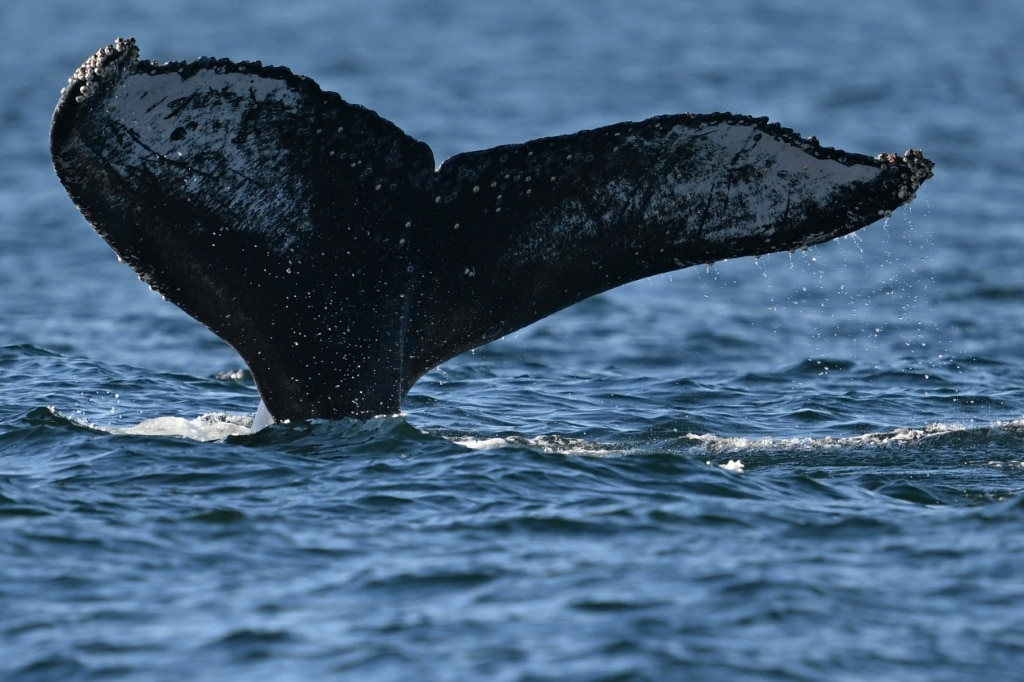
    A young gray whale that wandered more than 20 miles inland into a Washington state river has been found dead, with marine researchers pointing to severe food scarcity along the species’ iconic migration route as the most probable cause.

    The Cascadia Research Collective, a leading marine science research organization based in the Pacific Northwest, announced the death of the juvenile whale — nicknamed “Willapa Willy” by local community members — in a Facebook update shared Saturday. The group confirmed that it is currently assessing site safety conditions to conduct a full necropsy to confirm the exact cause of death.

    Willapa Willy was first spotted last Wednesday in the north fork of the Willapa River, located roughly 145 miles southwest of Seattle. At the time of its initial sighting, researchers noted that while the whale appeared noticeably underweight, it showed no visible signs of injury and was behaving consistently with typical gray whale activity. Research teams held out hope that the animal would navigate back out to the Pacific Ocean on its own, but those hopes went unfulfilled when the whale was found dead days later.

    John Calambokidis, a veteran research biologist with Cascadia Research Collective, explained to the Associated Press that unusual inland sightings like this are often tied to the species’ annual spring migration pattern. Every year, gray whales travel hundreds of miles north along the Pacific Coast to reach feeding grounds in the Arctic, drawing down stored fat and nutritional reserves to fuel the long journey. When food becomes scarce along the route or at their destination, hungry whales often stray far from their normal path in a desperate search for viable feeding areas — exactly the scenario that likely led Willapa Willy into the Willapa River, Calambokidis said.

    In recent years, eastern Pacific gray whales have faced dramatic declines in available food sources in the northern Bering and Chukchi seas off Alaska’s coast, a crisis that sits at the center of growing threats to the species, Calambokidis added.

    According to the U.S. National Marine Fisheries Service, eastern Pacific gray whales are a cornerstone of whale watching and ecotourism along the North American West Coast. Fully grown adults can reach up to 15 meters (49 feet) in length and weigh as much as 40,000 kilograms (90,000 pounds). Along their multi-thousand mile migration routes, the species already faces widespread threats from ship strikes and entanglement in commercial fishing gear. Unlike many other cetacean species, gray whales tend to travel alone, and long-term social bonds between individual whales are considered rare, per NOAA data.

    Willapa Willy’s death is not an isolated incident: earlier this month, two full-grown adult gray whales washed up dead on beaches in the nearby Ocean Shores area. Post-mortem assessments found both adults were severely malnourished, and the male whale also showed major head trauma consistent with a ship strike.

    Latest population surveys conducted in winter 2025 confirm that the overall eastern Pacific gray whale population continues to decline. NOAA Fisheries estimates the current population stands at roughly 13,000 individuals, the lowest recorded population count since the 1970s.

  • Artemis mission headed for first lunar flyby since 1972

    Artemis mission headed for first lunar flyby since 1972

    Fifty-two years after the final Apollo mission departed the Moon’s vicinity, NASA’s groundbreaking Artemis program is on the cusp of a new era of human lunar exploration, with four international astronauts approaching the historic milestone of the first crewed lunar flyby since 1972. The four-person crew — mission commander Reid Wiseman, Christina Koch, Victor Glover of the United States, and Jeremy Hansen representing the Canadian Space Agency — is closing in on the moment when lunar gravity will capture the Orion capsule’s trajectory, slinging it into a loop around the Moon that marks a turning point for modern deep-space human spaceflight.

    This mission is packed with unprecedented firsts that expand the face of space exploration. Koch will make history as the first woman to fly around the Moon, while Glover, a Black astronaut, will go down in textbooks as the first person of color to complete a lunar flyby. For Hansen, the mission cements his place as the first non-American astronaut to accomplish the feat. The mission’s core objectives stretch far beyond symbolic milestones, however: during their planned flyby on Monday, the crew will spend hours documenting lunar surface features, collecting critical data that will lay the groundwork for future crewed lunar landings.

    Days ahead of the planned flyby, the crew has already achieved a first in observational astronomy. Early Sunday, NASA released a new image captured by the Artemis crew showing the massive Orientale basin on the Moon’s far side, marking the first time human eyes have ever viewed the entire sprawling crater directly. The bullseye-shaped impact crater, often called the Moon’s equivalent of the Grand Canyon, had only ever been photographed by robotic orbital cameras before this mission. Speaking in a live question-and-answer session with Canadian schoolchildren from space, Koch described the crew’s excitement at the unprecedented view. “It’s very distinctive and no human eyes previously had seen this crater until today, really, when we were privileged enough to see it,” she said.

    As the capsule swings around the far side of the Moon near the end of the flyby, the crew will also get a rare front-row seat to a deep-space solar eclipse, where the Moon will pass directly between the Orion capsule and the Sun, leaving only the Sun’s wispy outer corona visible. In addition to observational work, the mission carries a critical engineering mandate: the astronauts are the first to test NASA’s new Orion Crew Survival System (OCSS) spacesuits in the actual space environment. The bright orange suits, designed to protect the crew during launch and atmospheric reentry, can also provide up to six days of breathable air in an emergency scenario. The crew will run through functional tests to assess how quickly they can don and pressurize the suits, gathering real-world performance data that cannot be replicated in ground simulations.

    While the Artemis II crew will not land on the lunar surface itself, they are on track to break a 50-plus-year-old record: they will travel farther from Earth than any human in history. NASA Administrator Jared Isaacman outlined the mission’s broader significance in a televised interview with CNN on Sunday, noting that the data collected on this flight is irreplaceable for upcoming Artemis missions. Over the coming day, while the crew operates on the far side of the Moon out of direct communication with Earth, they will eclipse the previous distance record, and engineers will collect vital performance data on Orion’s systems. “This is the first time astronauts have ever flown on this spacecraft before,” Isaacman said. “That’s what we’re most interested in getting data from.”

    As of Sunday, the crew had already completed a successful manual piloting demonstration and walked through their full flyby plan, reviewing all lunar surface features scheduled for analysis and photography. The data collected during this mission will be critical to preparing for Artemis III, the first crewed lunar landing scheduled for 2027, and the subsequent landing mission Artemis IV planned for 2028, Isaacman added. “The information will be pretty paramount to set up for subsequent missions,” he said, emphasizing that Artemis II is far more than a demonstration flight — it is the foundational step for NASA’s long-term goal of establishing a sustained human presence on and around the Moon.

  • The 40 minutes when the Artemis crew loses contact with the Earth

    The 40 minutes when the Artemis crew loses contact with the Earth

    When NASA’s Artemis II mission crew glide into the shadow of the Moon on Monday, they will enter a rare and profound chapter of human space exploration that few have experienced before. Scheduled to begin at approximately 23:47 BST, the Moon’s bulk will completely block the radio and laser signals that connect the four astronauts aboard the Orion capsule to mission control 240,000 miles away on Earth. For nearly 40 minutes, the Artemis II crew will travel through the dark of the lunar far side, completely cut off from all contact with home.

    This moment of intentional isolation is not an unplanned mishap—it is an unavoidable milestone of any lunar mission, one that links the current generation of Artemis explorers directly to the Apollo astronauts who first blazed this trail more than half a century ago. No human has ever traveled farther from Earth than the Artemis II astronauts, who have maintained a steady, calming connection with Houston mission control through every phase of their journey so far. That steady link, which has anchored the crew to home throughout their outward voyage, will vanish abruptly when they dip behind the lunar horizon.

    In a pre-mission interview with BBC News, Artemis pilot Victor Glover shared his reflection on the coming silence, asking people across the globe to seize the 40 minutes as a moment of shared connection rather than distance. “When we’re behind the Moon, out of contact with everybody, let’s take that as an opportunity,” Glover said. “Let’s pray, hope, send your good thoughts and feelings that we get back in contact with the crew.”

    The experience of lunar radio blackout carries heavy echoes of the 1969 Apollo 11 mission, when command module pilot Michael Collins faced a nearly identical period of isolation while Neil Armstrong and Buzz Aldrin made their historic first steps on the lunar surface. For 48 minutes as his module circled the far side of the Moon, Collins lost all contact with both his crewmates on the surface and mission control back on Earth. In his 1974 memoir *Carrying the Fire*, Collins wrote that he felt “truly alone” and “isolated from any known life,” but noted that he felt no fear or crippling loneliness. In later years, he even recalled the silence as a moment of unexpected peace, a welcome break from the constant stream of communications from mission control that filled his active workday.

    While the astronauts themselves will get a rare, undisturbed window to focus on lunar observation during the blackout—capturing high-resolution imagery, mapping lunar geology, and simply absorbing the unparalleled view of the Moon up close—teams on the ground will spend the 40 minutes in quiet anticipation. At Goonhilly Earth Station in southwest England, a massive deep-space antenna has been tracking Orion’s position throughout the mission, feeding precise location data back to NASA headquarters. This marks the first time the facility has tracked a human-crewed lunar mission, and Goonhilly chief technology officer Matt Cosby admits the team will feel a flicker of tension during the blackout.

    “We’re going to get slightly nervous as it goes behind the Moon, and then we’ll be very excited when we see it again, because we know that they’re all safe,” Cosby told the BBC. For the future of lunar exploration, however, communication blackouts like this one are expected to become a thing of the past. As NASA and other global space agencies work toward establishing a permanent sustainable lunar base and expanding exploration of the far side of the Moon, constant, reliable communications coverage will be a non-negotiable requirement.

    “For a sustainable presence on the Moon, you need the full comms – you need the full 24 hours a day, even on the far side, because the far side will want to be explored as well,” Cosby explained. Initiatives like the European Space Agency’s Moonlight program are already moving forward with plans to deploy a network of communications satellites in lunar orbit, designed to deliver uninterrupted coverage for all future missions, regardless of where a craft or surface outpost is located around the Moon.

    As the Artemis II crew prepare for their 40 minutes of silence, millions around the world will be waiting alongside ground teams for the moment the Orion capsule emerges from the Moon’s shadow. When the signal reconnects, the world will breathe a collective sigh of relief, and the history-making crew will once again be able to share their unprecedented views of the Earth and Moon with everyone waiting back home. The stunning new image of Earth captured by the crew from Orion in the past week, which has already captivated the public, offers a small preview of the breathtaking sights the astronauts will share once contact is restored.