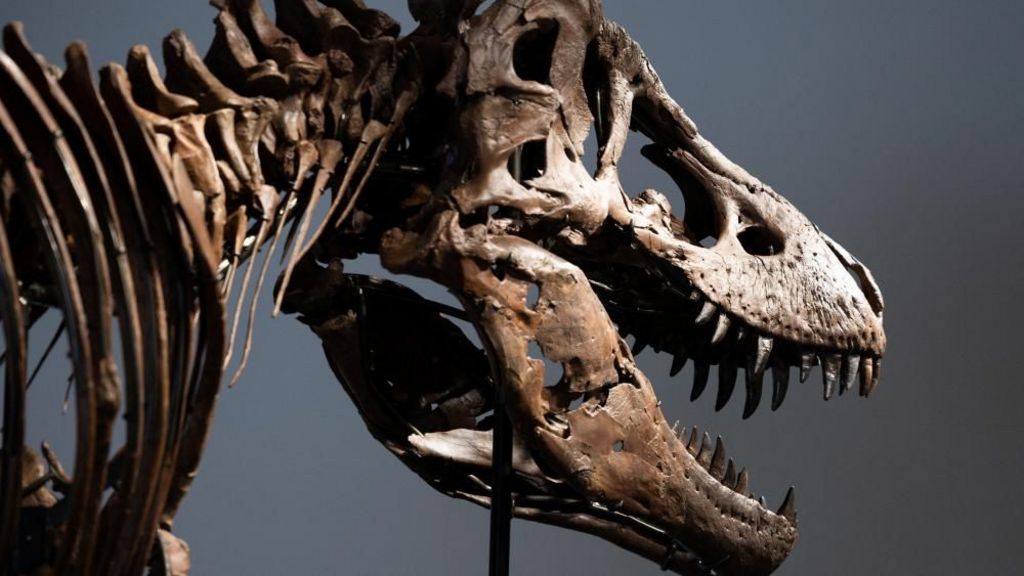
A remarkable 67-million-year-old Tyrannosaurus rex fossil, nicknamed ‘Gus’, has made history by becoming the most expensive dinosaur fossil ever sold at auction, surpassing a record that stood for less than a full year. The fossil, which preserves rare bone structure from one of the most iconic predators to ever walk the Earth, fetched a final sale price that outstripped the previous high mark set by a well-preserved Stegosaurus specimen auctioned in 2024. Paleontology enthusiasts and private collectors alike have followed the sale closely, as high-profile dinosaur fossil auctions continue to spark conversation about accessibility to important prehistoric specimens. The unprecedented price tag for ‘Gus’ underscores the intense demand among private collectors for one-of-a-kind prehistoric artifacts, a trend that has reshaped the market for rare fossils over the past decade. While the sale confirms the significant cultural and commercial value of iconic dinosaur remains, it also reignites ongoing debate within the scientific community about whether such rare specimens should remain publicly accessible for research rather than entering private collections. Experts note that ‘Gus’ offers valuable insights into the biology and evolution of Tyrannosaurus rex, one of the most studied yet still poorly understood apex predators of the Cretaceous period. The new record set by this sale signals a continuing shift in the global fossil market, where rare, charismatic specimens draw increasingly high bids from wealthy collectors around the world.
分类: science
-
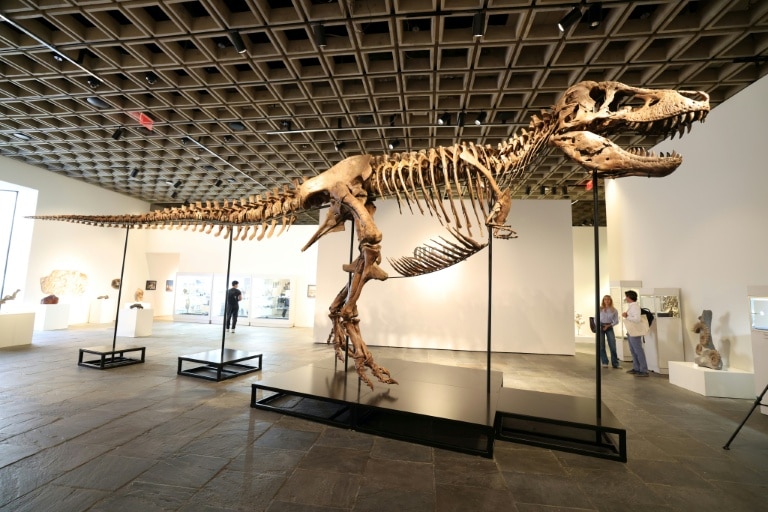
‘Gus’ the T. rex fetches record $50.1 mn at US auction
A nearly 76-million-year-old Tyrannosaurus rex skeleton, famously nicknamed “Gus,” has made history as the most expensive dinosaur fossil ever sold at auction, fetching a staggering $50.1 million at Sotheby’s New York location this Tuesday. The landmark sale came after a tense 10-minute bidding war that saw seven prospective buyers compete for the extraordinary specimen, with the final purchase going to an anonymous bidder whose identity has not been released.
Unearthed just three years ago on a working cattle ranch in South Dakota, Gus stands out as one of the most complete and largest T. rex skeletons ever documented by paleontologists. The fossil retains 183 original bones, bringing its overall completeness to roughly 63 percent, and stretches an imposing 38 feet (11.6 meters) from snout to tail. The giant predator roamed western North America between 72 and 66 million years ago, during the late Cretaceous period — an era marked by global warm temperatures, elevated sea levels, and extensive coastal floodplains that supported diverse prehistoric ecosystems.
The record-breaking sale has reignited long-running debates surrounding the private ownership of scientifically significant fossils, a practice that draws sharp criticism from many paleontological researchers. Critics argue that when rare specimens pass into private collections, they are closed off to scientific study and public education, robbing the global research community of opportunities to advance understanding of prehistoric life.
Cassandra Hatton, Sotheby’s global head of science and natural history, explained ahead of the auction that the commercial sale of such fossils is uniquely permitted under U.S. law. Unlike most other nations, the U.S. classifies dinosaur fossils found on private land as the personal property of the landowner. “If you own the land, you own the fossil and you have the right to sell it. So if you want a dinosaur, this is the only place that you can get it,” Hatton told Agence France-Presse prior to the bidding.
Gus’ sale shatters the previous fossil auction record set earlier in 2024, when a Stegosaurus skeleton nicknamed “Apex” sold for $44.6 million to Ken Griffin, the billionaire founder of the Citadel hedge fund. The skyrocketing final price for Gus underscores a rapidly growing global market for rare dinosaur fossils, where demand from wealthy private collectors has driven sale prices to unprecedented heights over the past decade.
-
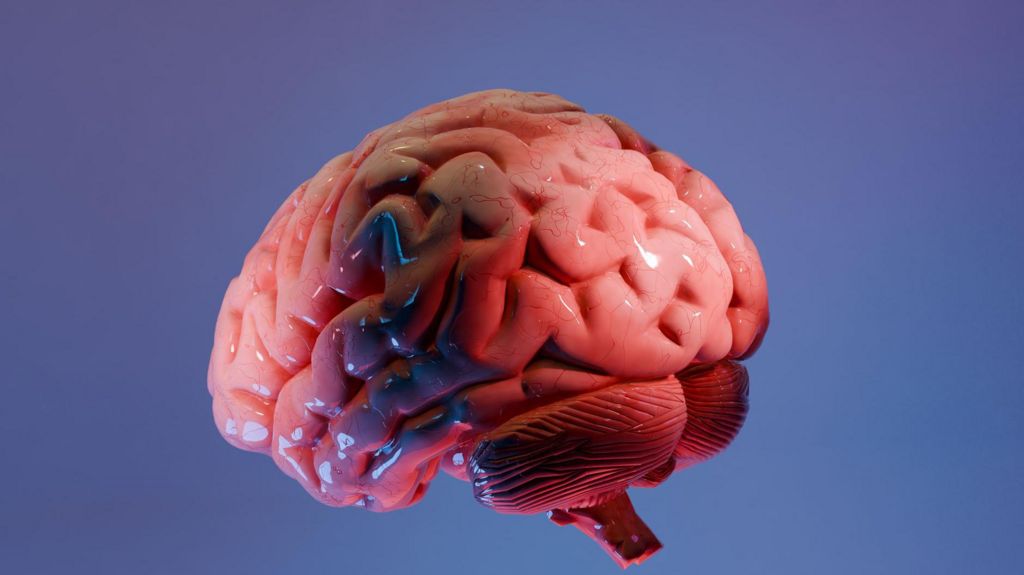
How Indian scientists are mapping the brain’s last frontier
For over 100 years, neuroscience has progressed like early geographic exploration: researchers have pieced together fragments of the human brain’s complex structure from scattered, isolated observations, leaving vast uncharted territory still waiting to be explored. Even today, when clinicians diagnose neurodegenerative conditions such as Alzheimer’s disease, they typically only examine a tiny handful of tissue samples from an organ that contains roughly 86 billion neurons – meaning most of the brain’s landscape remains unseen.
Now, a team of scientists at the Sudha Gopalakrishnan Brain Centre (SGBC) based at the Indian Institute of Technology, Madras (IIT-M) have announced a breakthrough that addresses one of the largest gaps in modern neuroscience. The team has created what they call the world’s most detailed three-dimensional cellular-resolution atlas of the human brainstem, a fully digital mapping tool that allows researchers to navigate seamlessly from full-brain MRI scans all the way down to the level of individual nerve cells.
Named Anchor, short for *Atlas of Neurochemical Characterisation of the Human Brainstem with 3D Reconstruction*, the new resource integrates data from more than 500 tissue samples harvested from foetal, childhood, and adult human brains. Unlike high-resolution brain mapping projects that rely on expensive molecular sequencing techniques, Anchor is constructed from high-magnification microscope images of thin tissue slices, enabling it to generate a comprehensive 3D map of the brainstem that identifies more than 200 distinct cell clusters and neural pathways. Eight targeted chemical markers are used to differentiate between cell types, producing one of the clearest portraits ever compiled of this critical but vastly understudied brain region.
Though the brainstem makes up only a tiny fraction of the brain’s total volume, it is indispensable to human survival. Serving as the physical and functional link between the cerebral cortex and the spinal cord, the brainstem regulates core involuntary processes that sustain life: breathing, heart rate, sleep-wake cycles, and basic movement control. Even small lesions to tiny cell clusters within the brainstem can cause catastrophic, fatal damage, but the region’s tightly packed, intricate architecture has long stymied efforts to map it in fine detail.
The true significance of Anchor extends far beyond adding another anatomical reference to neuroscience. For decades, two core branches of brain research have operated largely in isolation: whole-brain medical imaging, which provides a broad overview of brain structure but lacks fine cellular detail, and cellular pathology, which examines individual cells one slice at a time but cannot contextualize those observations within the brain’s overall 3D architecture. Anchor bridges this long-standing divide.
Shubha Tole, a leading neuroscientist at the Tata Institute of Fundamental Research, described the project as a visionary achievement that places India at the forefront of global neuroscience, calling it an unprecedented integration of engineering, neuroscience, and clinical medicine.
Rebecca Folkerth, a neuropathologist affiliated with Harvard Medical School and New York University who collaborated on the project, explained the long-standing limitations of traditional brain research practices. “As a neuropathologist, I begin by examining an entire brain with the naked eye before looking at small pieces under the microscope,” she said. “For Alzheimer’s disease, we may examine only 15 to 20 sections – just a fraction of a percent of the whole organ.” This fragmented approach has been the standard since the pioneering work of Santiago Ramón y Cajal, the father of modern neuroscience, more than a century ago. Modern MRI can capture the full structure of a living brain, but cannot resolve individual cells; microscopes can show individual neurons, but only in disconnected, thin tissue slices.
“What the Indian centre has created is essentially what I dreamed of early in my career – to have brain scans match the brain’s microscopic anatomy,” said Folkerth, who has examined thousands of human brains over a 30-year career in research.
Anchor’s interactive design allows users to zoom continuously from a full-resolution MRI view of the entire brainstem down to individual neurons, while preserving the precise spatial relationships between all structures. To advance global research, the SGBC team has made the full atlas freely accessible online, with the goal of it becoming a standard reference tool for neuroscientists, neurologists, and neurosurgeons around the world.
The potential applications of the atlas reach far beyond basic anatomical research. By comparing healthy mapped brainstem tissue to samples from patients with neurological conditions, researchers can gain new insights into a wide range of disorders including Parkinson’s disease, stroke, Alzheimer’s disease, and sudden infant death syndrome (SIDS). A more accurate 3D map of the brainstem will also allow neurosurgeons to navigate this delicate, high-stakes region with greater precision and lower risk during procedures.
Importantly, Anchor is not designed to be a direct clinical diagnostic tool. Instead, its greatest value lies in enabling researchers to ask and answer new questions that were previously impossible to address. Partha Mitra, a leading brain scientist at Cold Spring Harbor Laboratory in New York who has collaborated with SGBC, notes that detailed cell-level atlases like Anchor could have a transformative impact on neurological disease research. By comparing cell-by-cell structure between healthy brains and those affected by conditions such as Alzheimer’s or autism, researchers can identify previously unrecognized pathological changes. Mitra also added that the atlas could help unpack how viral infections such as Covid-19 trigger long-term neurological damage in patients suffering from long Covid.
Using stroke as an example, Folkerth explained that the new atlas has already revealed previously unrecognized anatomical features that could help clinicians preserve brain tissue that is injured but not yet permanently damaged, ultimately improving patient outcomes. The resource’s accessible design also makes large-scale brain mapping far more affordable for research institutions around the world, as it relies on standard high-resolution microscopy rather than costly molecular techniques. This affordability allowed the SGBC team to map the human brainstem at an unprecedented scale that would have been out of reach for many projects using alternative approaches.
The project reflects a broader shift in modern neuroscience, where progress now depends as much on advances in engineering and computational science as it does on biological research. Around 20 SGBC scientists spent 18 months manually analyzing more than 200 brain sections, integrating MRI data, microscopic anatomy, and 3D reconstruction into a single unified digital resource. Today, the SGBC brings together more than 200 researchers, engineers, and technicians working with international collaborators across the globe to advance human brain mapping.
Mohanasankar Sivaprakasam, head of SGBC, noted that while the brains of several common animal model species have been mapped in extraordinary detail, the human brain remains vastly under-charted due to the limited availability of well-preserved human tissue for detailed research. While many brain atlases already exist, each fills a unique niche: MRI-based atlases capture broad structure but not cellular detail, histological atlases offer cellular resolution but lack 3D context, and newer molecular atlases identify cell types but do not yet map large-scale 3D architecture at scale. Anchor fills a critical gap that no existing resource has addressed.
Even with this breakthrough, much remains unknown about the human brain: researchers still have very little understanding of how the brain’s roughly 20,000 proteins are distributed across different regions and cell types, a frontier that will define the next generation of brain mapping research. As Folkerth puts it, “Every brain is a treasure chest of new knowledge.”
Looking ahead, SGBC plans to continue its work by imaging more than 100 whole human brains spanning different life stages and neurological conditions, including Alzheimer’s disease and dementia, to build a comprehensive reference library that will reveal how disease reshapes the human brain one cell at a time. While the new Anchor atlas will not solve all the mysteries of the human brain overnight, it gives researchers a far more detailed map to guide their work, helping them ask better questions – and ultimately find the answers that could transform neurological care.
-
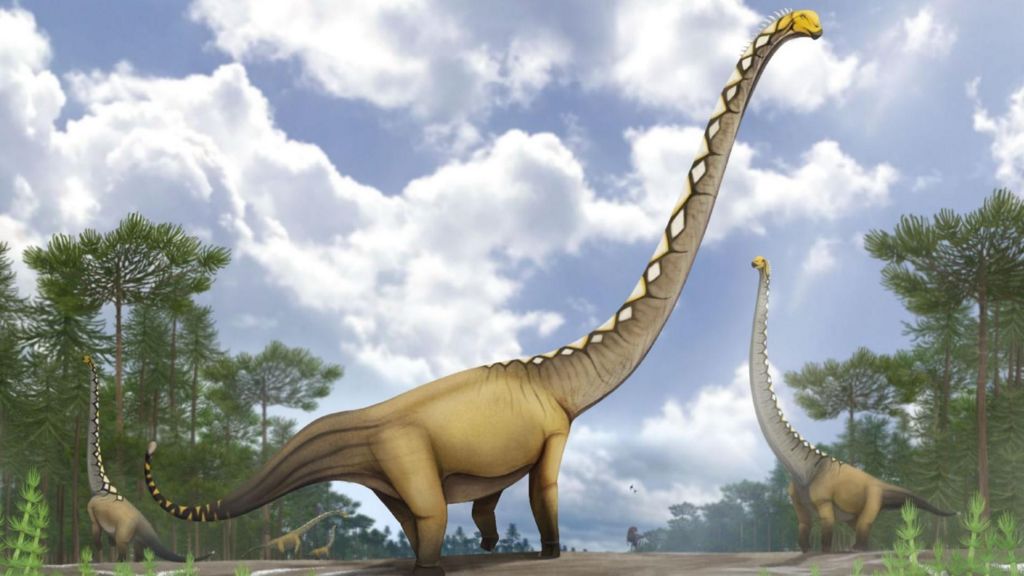
New dinosaur species with neck as long as cricket pitch discovered in Thailand
A groundbreaking paleontological discovery from northeastern Thailand has reshaped scientific understanding of sauropod dinosaur distribution across Asia, with researchers confirming the identification of an entirely new species that roamed the planet 150 million years ago. The new herbivorous species, named *Uragasaurus kalasinensis*, is a member of the Mamenchisauridae family — a group of massive sauropods defined by their extraordinarily elongated necks — and was uncovered from fossil deposits in Kalasin Province’s Phu Noi site.
The story of the discovery stretches back to 2008, when a local resident stumbled upon unusual fossil fragments that looked like serpent scales, leading to the formal identification of the Phu Noi dig site. For more than 15 years, research teams from Mahasarakham University have systematically excavated the site, which has proven to be a rich Late Jurassic fossil bed where over 90 percent of recovered remains belong to various dinosaur species. While exploring the site, the team uncovered a range of fossilized teeth and bones, but it was a single well-preserved dorsal vertebra — a bone from the middle to upper back — that held the key to the new species identification, bearing distinct, never-before-documented anatomical features.
Detailed CT scanning of the fossil confirmed its placement within Mamenchisauridae, a sauropod group whose members typically evolved extremely long necks to access vegetation across a wide range of heights, allowing them to exploit multiple food sources without repositioning their massive bodies. Prior to this find, nearly all confirmed Mamenchisauridae fossils had been discovered in China, making this the first confirmed instance of the family in Thailand. Scans also revealed unique structural traits, including a Y-shaped arrangement of supporting bone layers called laminae and a one-of-a-kind air cavity system that has not been observed in any other known dinosaur species.
Dr. Apirat Nilphanaphan, lead researcher on the project from Mahasarakham University, shared his reaction to the discovery with BBC Thai, explaining that he was so excited when he confirmed the find that he accidentally broke his keyboard, describing the moment as a mix of overwhelming exhilaration and long-awaited relief. The team’s research was published in the peer-reviewed scientific journal Nature earlier this week. This discovery marks the second new species of large long-necked herbivorous dinosaur identified in Thailand in 2026, following the announcement of *Nagatitan* in May. That species, which tipped the scales at an estimated 27 tonnes — equal to the weight of nine adult Asian elephants — and stretched 27 meters long, is currently the largest dinosaur ever discovered in Southeast Asia.
Paleontologists note that the back-to-back discoveries at Thai dig sites highlight the region’s understudied role in Jurassic dinosaur evolution, suggesting that Southeast Asia hosted far more diverse sauropod populations during the Late Jurassic than previously assumed.
-

New footage shows first look at Ernest Shackleton’s final ship Quest
For more than a century, the final resting place of polar explorer Ernest Shackleton’s iconic last ship has rested out of human sight, hidden beneath the frigid, dark waters of the South Atlantic. Now, a team of marine scientists has changed that, capturing the first high-quality footage of the wrecked vessel Quest, the ship that carried Shackleton on his final Antarctic adventure.
Shackleton, one of the most legendary figures of the early 20th century’s Heroic Age of Antarctic Exploration, first captured global attention for his daring expeditions into one of the harshest, most unforgiving environments on Earth. His final journey came to an abrupt end in January 1922, when he suffered a fatal heart attack aboard the Quest shortly after the ship arrived at South Georgia Island, a remote outpost in the sub-Antarctic. Following his death, the ship continued on with its expedition, but eventually sank years later under unknown circumstances, leaving its location a mystery for decades.
The newly released footage marks the first time researchers have been able to document the wreck in detail, after locating the site in recent expeditions. Marine scientists say the footage offers an unprecedented glimpse into a pivotal piece of polar exploration history, allowing historians and the public alike to connect with a story that has captivated adventure seekers for generations. The discovery also opens new doors for archaeological research, giving experts the chance to study early 20th-century polar expedition ship construction and better understand the conditions that led to the vessel’s sinking.
For the scientific team behind the project, the capture of this footage is more than a technological achievement—it is a moment that honors the legacy of one of exploration’s most iconic figures. “This is a moment we’ve spent years working toward,” said one expedition lead in a statement following the footage’s release. “Shackleton’s story of resilience and ambition has inspired generations, and being able to share the first clear look at his final ship is a privilege that connects past and present.”
-
Gold rings around 2,000 years old found during dig at Thailand archaeological site
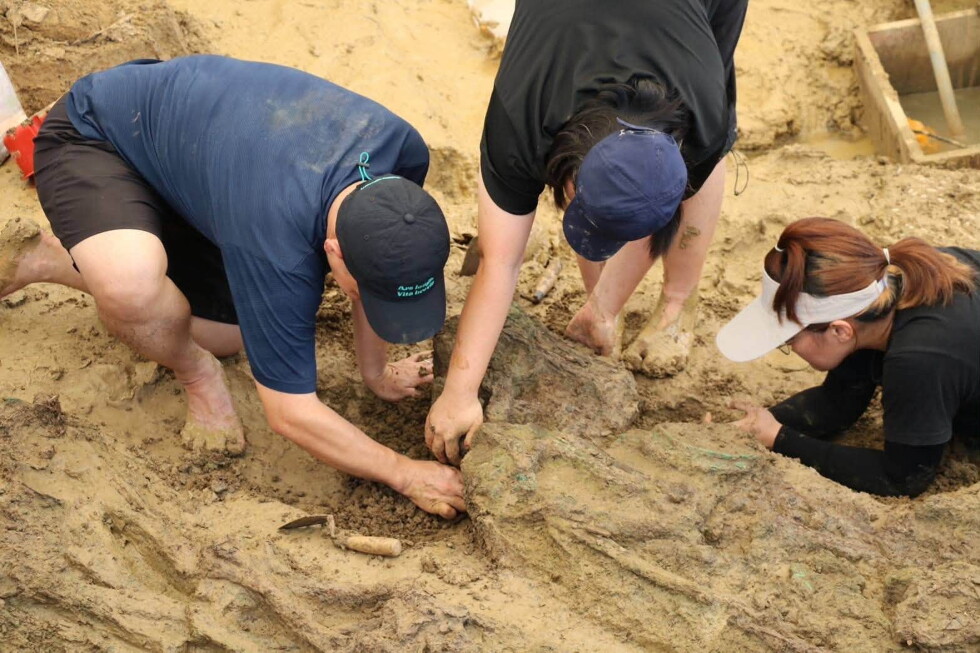
Archaeological excavations in western Thailand have uncovered a pair of 2-millennia-old gold rings that offer striking new evidence of ancient cross-cultural trade connections between South Asia and Southeast Asia, Thailand’s Fine Arts Department announced this week. The artifacts were recovered alongside partial human skeletal remains during an ongoing dig at the Don Yai Thong site, located in Phetchaburi province roughly 130 kilometers southwest of Bangkok, and their discovery is reshaping current understandings of regional Iron Age social structures and commercial networks.
The site itself first came to the attention of cultural authorities earlier this year, when local rice farmers working in their fields stumbled on fragmented pieces of ancient bronze drums. The accidental find prompted the Fine Arts Department to launch a full systematic excavation starting in February, which has already produced a remarkably rich collection of prehistoric artifacts. To date, archaeologists have recovered eight complete human skeletons, a range of bronze and gold decorative pieces, handcrafted pottery, and other objects that point to this being a ceremonial burial ground reserved for elite or wealthy members of Iron Age Thai society.
Of all the finds uncovered so far, the two gold rings recovered last week have emerged as the most significant. The first, unearthed Thursday, bears a fine engraved inscription in Brahmi script, an ancient writing system that originated in India and spread across much of South and Southeast Asia along early trade routes. Initial expert analysis has translated the inscription as *pusarakhitasa*, a term meaning “the one protected by Pushya.” In traditional Indian astronomy, Pushya is classified as one of the most auspicious zodiac signs, linking the artifact to South Asian cultural and astrological traditions. The second ring, found alongside the first in the same burial, is an unadorned solid gold band with no engravings or decorative patterns.
Based on the inscribed text and the presence of two gold items in a single burial, department experts have put forward a working hypothesis that the individual interred here was a merchant belonging to the Vaishya caste, the traditional merchant and trading class of ancient India’s social structure. This aligns with growing evidence that active maritime and overland trade routes connected the Indian subcontinent to mainland Southeast Asia by the Iron Age, creating deep cultural and economic ties that predated later state formation in the region.
The Don Yai Thong site is officially dated to Thailand’s late prehistoric Iron Age, a window of human settlement that falls between 2,500 and 1,500 years before the present, placing the newly found rings at roughly 2,000 years old. The excavation is scheduled to conclude in one month, after which the Fine Arts Department plans to organize a public exhibition of all the significant artifacts recovered from the site to share this new chapter of Thailand’s ancient history with local and international visitors.
-

‘Hotter and hotter and hotter’ – Europe’s new climate in seven charts
Just four days into July 2026, the United Kingdom and much of Western Europe have already experienced two historic, record-shattering heatwaves that experts say offer a clear preview of the region’s new, warmer climate reality. The extraordinary heat events came in rapid succession: an unseasonably warm May was immediately followed by a June heat event so intense that the United Nations’ weather agency labeled it extraordinary across the European continent. After only a short period of cooler temperatures, forecasters are already warning that a third heatwave is looming on the horizon.
While this string of extreme heat may feel out of the ordinary to most residents, climate scientists confirm it aligns exactly with long-held predictions for a human-warmed world. The primary driver of this shift is the continued burning of fossil fuels, which releases heat-trapping greenhouse gases into the atmosphere that raise global average temperatures. “Human-induced climate change has made events like this more likely and more intense,” explained Professor Stephen Belcher, chief scientist at the UK Met Office.
The scale of June’s temperature anomalies is unprecedented across the UK. Provisional data shows temperatures peaked at 37.7°C in Lingwood, Norfolk—far exceeding the UK’s previous all-time June record of 35.6°C, a mark that stood from 1957 until it was tied in 1976. Multiple weather stations across the country broke this decades-old record, and even the UK’s longest-running measurement sites saw their previous June records shattered by 2°C or more. “We normally expect the records broken by small amounts – tenths, maybe up to a degree or so,” noted Ed Hawkins, a professor of climate science at the University of Reading. “So to have it shattered by such a large amount is noticeable and extraordinary, and of course this comes after a similar event in May.”
June’s heatwave was made particularly oppressive by a dangerous combination of extreme high temperatures and elevated humidity. High humidity prevents the human body from cooling itself effectively through perspiration, leaving outdoor workers—who are among the most vulnerable groups to extreme heat—at heightened risk of heat-related illness. Overnight temperatures also remained unusually high across most of the UK, creating widespread “tropical nights” where temperatures never dropped below 20°C, a phenomenon that was extremely rare in the UK historically. On the night of June 24 into June 25, Cardiff recorded an overnight low of 23.5°C, making it the warmest June night ever recorded in the country. Hawkins explained that as global temperatures continue to rise, these uncomfortable, unhealthy tropical nights will become increasingly common across the UK.
The same high-pressure “heat dome” that triggered the record heat in the UK also smashed temperature records across the entire European continent. More than a dozen countries spanning western, central, and eastern Europe broke their national June temperature records, with some new records exceeding previous marks by 2 to 3°C. Multiple nations recorded temperatures above 40°C in June—a month that is typically far cooler than July—with some even setting all-time national temperature records for any month of the year. National weather agencies across the continent described the event as historic and exceptional: Germany’s Deutscher Wetterdienst called it “a heatwave for the history books,” while France’s Météo-France labeled it “exceptional” and “historic.” France and Spain also set new records for the hottest average national June temperature on record.
Even Switzerland, an Alpine nation with historically cool summer temperatures, recorded a June high of 39°C, beating its previous June record by more than 2°C. Sonia Seneviratne, a professor at the Institute for Atmospheric and Climate Science at ETH Zurich, noted that while the event was highly unusual compared to historical measurements, it did not come as a surprise to climate scientists who have long warned of rising heat extremes in a warming world. “When you know that we have a warming climate, I was not that surprised to see this happen,” she said.
Europe has emerged as one of the fastest-warming regions on the planet, leaving it disproportionately exposed to frequent and increasingly intense extreme heat events. Scientists point to two key factors driving this accelerated warming: the ongoing melting of the region’s bright snow and ice cover, which previously reflected large amounts of solar energy back into space, and reductions in tiny polluting aerosols in the atmosphere, which also used to reflect sunlight away from the planet’s surface. Some researchers also hypothesize that long-term warming is altering European atmospheric circulation patterns in ways that increase the frequency of the high-pressure systems that spawn heatwaves, though this connection has not been definitively proven.
This summer, European coastal waters are also experiencing record-breaking marine heatwaves, amplified by the recent record-breaking air temperatures above the surface. Unlike air temperatures, which cool relatively quickly after a heatwave passes, ocean water retains heat for far longer periods. This residual ocean heat reduces the cooling effect of coastal sea breezes, creating a feedback loop that can intensify future heatwaves on land.
Climate scientists are unified in their conclusion that human-caused long-term warming has already made extreme heat events like June 2026’s heatwave significantly more intense than similar weather patterns would have been a century ago. “The only way to explain [such strong heatwaves] is to taking into account this [long-term] warming,” Seneviratne explained. “When you have a high-pressure system, this heatwave will tend to be much hotter [now]. This is very well understood.”
The long-term trend of rising average temperatures means that what once qualified as extreme heat in the UK and Europe is quickly becoming the new normal. Only a few decades ago, the UK seeing temperatures rise above 30°C in June was a relatively rare event. Today, it is a routine occurrence. Scientists emphasize that the long-term warming trend does not guarantee every subsequent heatwave will be hotter than the last, or that every summer will be warmer than the previous one. However, as long as global greenhouse gas emissions continue to drive rising average temperatures, summers across the UK and Europe will inevitably grow warmer on average. “Our heatwaves will get hotter and hotter and hotter until we get to global net zero greenhouse gas emissions [and] we stabilise the climate,” Hawkins said.
-

Nasa launches mission to save falling space telescope
On Friday, NASA made space exploration history by launching a first-of-its-kind, funded mission to rescue the iconic Swift Observatory, a pioneering space telescope that has unlocked groundbreaking insights into the universe’s most extreme cosmic events, before it burns up during atmospheric reentry in the coming months.
Launched originally in 2004, the car-sized Swift Observatory was purpose-built to detect and study gamma-ray bursts—cataclysmic explosions triggered by the death of massive stars or collisions of neutron stars that release as much energy in seconds as the sun will output over its 10-billion-year lifespan. Built for speed and agility to capture these fleeting, high-energy events (for which it earned its name), Swift has operated for more than two decades, delivering transformative data that allows astronomers to study phenomena that no other active instrument can observe. In 2022 alone, it captured a detailed image of a gamma-ray burst originating from a dying star 2 billion light-years from Earth.
In recent years, however, increasing solar activity has expanded Earth’s upper atmosphere, creating drag at Swift’s current orbital altitude that has gradually slowed the telescope and pulled it lower. From its original 600-kilometer (373-mile) orbit, Swift’s altitude has dropped to roughly 360 kilometers (220 miles), with most of that decline occurring in just the last two years. Left unaddressed, it will fall below 300 kilometers (186 miles) in the coming months, making any rescue attempt impossible, before eventually reentering the atmosphere and burning up completely.
For the global astronomy community, losing Swift would be an irreversible blow. “It’s an important telescope that enables us to study super high-energy phenomena that we have no other means to study,” explained Dr. Simeon Barber, a senior research fellow at the Open University and a space scientist familiar with the mission. While he acknowledges the operation is “high risk,” Barber added that the scientific community remains optimistic that the unprecedented attempt is worth pursuing.
Tasked with the extraordinary rescue is Arizona-based startup Katalyst Space Technologies, which was given less than a year to design, build, and launch its custom-built LINK intercept craft. In a remarkable engineering feat, the Katalyst team completed the entire project in just eight months. “What the Katalyst team has accomplished in just eight months is extraordinary,” said Katalyst CEO Ghonhee Lee. “The team designed, built, tested, and integrated a robotic spacecraft capable of performing one of the most ambitious commercial servicing missions ever attempted.”
The fridge-sized LINK craft is fitted with three robotic gripper arms, an array of high-resolution cameras, precision navigation sensors, and small maneuvering thrusters. Launched aboard a Pegasus XL rocket that placed it in the general vicinity of Swift’s orbit, LINK will spend the next several weeks systematically powering on and testing all its systems to confirm they survived launch.
Over the following three to four weeks, LINK will conduct a precision approach to the moving, descending telescope, gradually maneuvering into formation. Before attempting a capture, LINK will circle Swift and capture full imagery of the observatory—critical because 22 years in orbit have likely altered the telescope’s structure, and it was never originally designed to be grappled in space.
The LINK craft will approach at an extremely slow pace before its three arms extend to secure a firm grip on Swift. If capture is successful, LINK will slowly fire its thrusters over two to three months to gently lift the combined craft back to Swift’s original stable 600-kilometer orbit, allowing the decades-old telescope to resume its critical scientific work.
This ambitious mission has never been attempted before, and success is far from guaranteed: countless variables must align perfectly for the operation to reach its goal. If the rescue of Swift succeeds, however, space experts say the next candidate for an orbital rescue mission could be one of astronomy’s most beloved instruments: the iconic Hubble Space Telescope. The astronomy community worldwide will be watching closely as the unprecedented operation unfolds over the coming months.
-

Space tests to aid blood and brain research
More than a month after docking at China’s Tiangong Space Station, the three-person Shenzhou XXIII crew has completed a diverse slate of cutting-edge scientific experiments spanning space medicine, neuroscience, robotics and microgravity physics, China’s manned space agency has confirmed. Led by mission commander and spaceflight engineer Colonel Zhu Yangzhu, with spacecraft pilot Colonel Zhang Zhiyuan and science payload specialist Lai Ka-ying completing the team, the astronauts have supported pioneering research designed to advance human understanding of long-duration spaceflight and improve future deep space mission capabilities.
In a series of collaborative medical procedures, the crew performed reciprocal ultrasound scans of multiple body regions including the neck, wrist, and abdomen. The biometric data collected during these scans is now being analyzed by terrestrial researchers to map how microgravity alters blood vessel structure, blood flow dynamics, and the adaptive remodeling of sensitive human muscle groups — insights critical for protecting astronaut health on months-long missions beyond low-Earth orbit.
The team also advanced in-orbit robotics research, conducting haptic interaction trials using the experimental robot Xiaohang. Early findings from these tests will be used to refine motion planning algorithms, a key step toward developing more capable, reliable autonomous robots that can assist astronauts with routine and complex tasks during future space expeditions.
Neuroscience research forms a core pillar of the mission’s scientific agenda. The Shenzhou XXIII crew used electroencephalogram recording equipment to run multiple experiments focused on visual-motor processing and how human behavioral responses shift under different space-based lighting conditions. Complementing this work, they deployed near-infrared functional brain imaging technology to collect high-resolution data on how long-duration space exposure alters the brain’s functional network organization, as well as the brain’s innate ability to self-adjust and adapt to the extreme environment of space.
Beyond life sciences, the crew installed and serviced several leading-edge microgravity physics experimental facilities, advancing global research into physical phenomena that can only be observed in weightless conditions. In a novel addition to the mission’s health research, the team also used a specialized diagnostic tool integrating traditional Chinese medicine diagnostic principles to collect physiological data. This data is expected to lay a solid foundation for developing more effective long-term astronaut health monitoring protocols for future missions.
When off-duty from scientific tasks, the crew made a small piece of culinary history: using a specially designed hot air oven, they prepared roasted pumpkin — a dish no space crew has cooked before. The novel meal follows the 2025 precedent set by Shenzhou XX and Shenzhou XXI crews, who cooked and enjoyed grilled chicken wings and steak, marking the first publicly broadcast space barbecue in human spaceflight history.
Liu Weibo, an engineer at the Astronaut Center of China, explained that China’s proprietary space oven is a world-first innovation: unlike earlier space cooking devices, it integrates fume extraction, food residue collection, even heating, and food securing systems all within a single closed chamber. While the United States sent an oven to the International Space Station in 2019 for an experiment that baked cookies in microgravity, those cookies were never consumed by crew and were returned to Earth solely for research, making China’s crew space cooking milestones unprecedented.
Launched on May 24, 2026, the Shenzhou XXIII mission reached Tiangong the following day. It marks China’s 17th overall manned space mission and the 11th crewed expedition to the Tiangong Space Station, continuing the country’s steady progress in building a permanent, research-focused outpost in low-Earth orbit.
-
What news reports from 1600s tell us about life in Mughal India
Long before European printing presses turned newspapers into a mass information medium, the sprawling Mughal Empire of South Asia built one of the early modern world’s most sophisticated, far-reaching news networks. From the late 1500s onward, armies of trained scribes, court agents, and administrative secretaries produced regular documents called *akhbarat* — handwritten Persian bulletins that captured everything from royal court intrigue and military campaigns to official appointments, treasury updates, and even elite gossip.
Drafted quickly on fragile paper, these hybrid documents served multiple purposes at once: they functioned as internal intelligence briefings, official government circulars, and public news bulletins rolled into one. On any given day, hundreds, and possibly thousands, of these reports circulated between the imperial court in Delhi and provincial administrative hubs across the subcontinent. For a empire that, at its 17th century peak, controlled most of South Asia and ruled nearly a quarter of the global population, this network was the glue that held its sprawling territories together. Many reports were read aloud to gathered local officials, carrying updates from the emperor’s court to the most distant corners of his domain.
For decades, tens of thousands of pages of these *akhbarat*, along with complementary administrative orders and records, have rested dormant in archives and libraries across India and the United Kingdom. While the historical community has long been aware of their existence, very few scholars have ever committed to deep dives into these unindexed, massive collections. That changed when University of California, Berkeley historian Munis D. Faruqui dedicated nearly 20 years of his academic career to untangling the stories held within these documents.
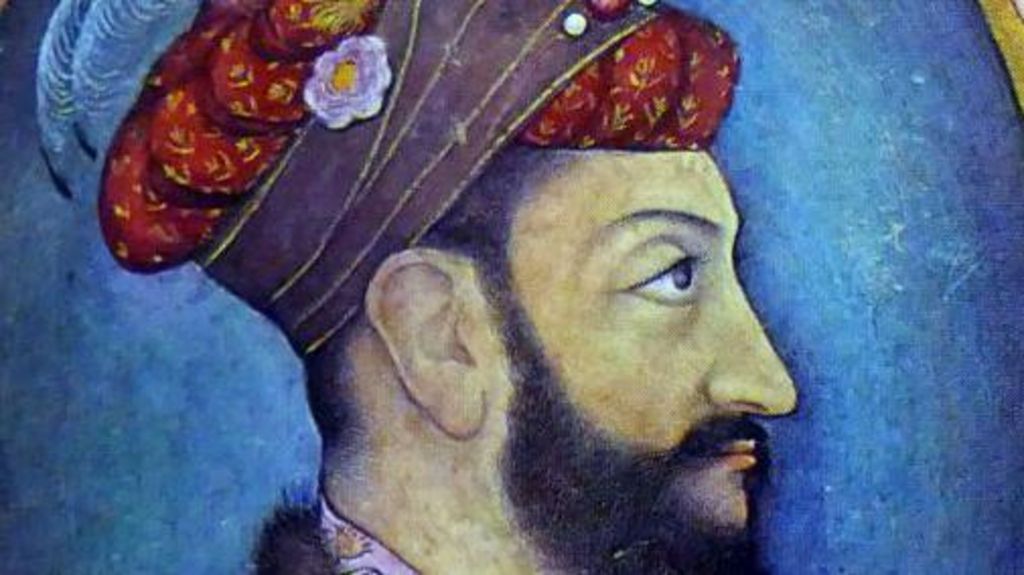
Faruqui began his work in 2007, diving into the *Akhbarat-i Darbar-i Mualla* (Newsletters of the Exalted Court), a massive collection split across archival institutions in both India and the UK. Working through more than 6,500 pages held at Kolkata’s National Library alone, Faruqui traced the lives of princes, military generals, court advisors, royal women, imperial eunuchs, and other lesser-known historical figures across tens of thousands of individual entries. The product of this decades-long work is an upcoming new history of Mughal emperor Aurangzeb — also known by his regnal title Alamgir — and the Mughal state during the late 17th century that promises to rewrite long-held assumptions about both the emperor and how his empire actually functioned.
Today, four major collections of these *akhbarat* are confirmed to exist, held in London, Bikaner, Sitamau, and Kolkata, though historians suspect additional caches may be held in private collections. One large set of documents was stored for decades in bundles in the cool, dry basement of Jaipur Fort. In the early 1800s, James Tod, an East India Company official and early antiquarian, borrowed a large portion of these reports, but failed to return them when he departed for Britain in 1823. He later donated the entire collection to the library of the Royal Asiatic Society of Great Britain and Ireland, where it remains today.
The most extensive surviving collection is held at Kolkata’s National Library, which holds 21 full volumes of *akhbarat* specifically documenting the reign of Aurangzeb, who ruled the Mughal Empire from 1658 to 1707 as its last great expansionist emperor. These volumes were once part of the personal archive of Sir Jadunath Sarkar, the pioneering Indian historian and Aurangzeb’s most influential 20th century biographer.
At first glance, the content of the reports can seem overwhelmingly mundane. Most entries focus on routine administrative details: new official appointments, local land disputes, troop movements, ceremonial gift exchanges, reports of royal illnesses, and endless granular administrative updates. But when read as a whole, Faruqui argues, these documents create something extraordinarily rare: an almost uninterrupted record of an empire monitoring its own day-to-day operations.
Archival coverage of Aurangzeb’s first 20 years on the throne is spotty, but surviving material from the early 1680s onward is remarkably extensive, providing an almost daily record of court and empire life for years at a time. All together, the documents shed new light on roughly a third of Aurangzeb’s 49-year reign.
Faruqui, who has spent his entire academic career studying late 17th century Mughal India — a period when the empire was at its territorial peak, but already showing early signs of the decline that would eventually open the door for British colonial rule — says the *akhbarat* have completely reshaped his understanding of the era. “My whole experience of working with the akhbarat has been one big eureka moment after another!” he explained in an interview. “It never ceases to amaze me how the density of the informational ecosystem was at the time.”
The reports Faruqui studied were originally created for the Raja of Jaipur, but hundreds of other regional nobles, princes, and high officials almost certainly received similar regular updates from their own agents stationed across the empire. This created a connected information ecosystem that was remarkably advanced for the pre-modern world. “I am floored when I think about the ecosystem that spawned such rich knowledge gathering and transference,” Faruqui added.
The sheer volume of information flowing through the network confirms that, by pre-modern standards, the Mughal state maintained a surprisingly detailed awareness of events across its vast territories. While Faruqui notes the state’s ability to act on this information was inconsistent, the network’s reach shaped the lives of tens of millions of people, for better and for worse.
Time and again, the contents of the *akhbarat* upended long-held historical assumptions that Faruqui had accepted early in his career. For example, he found very little evidence in the reports of the widespread forced religious conversions that have long been closely associated with Aurangzeb’s rule. The research also revealed that the imperial harem and the corps of imperial eunuchs wielded far more political influence than most modern historians have recognized.
Aurangzeb himself comes off as less distant and coldly austere than popular and historical narratives have often portrayed him. Faruqui also found far fewer hostile references to Sikh communities and leaders than he expected, a finding that contradicts a long-standing Sikh historical tradition that holds Aurangzeb responsible for the persecution of Sikh communities and spiritual leaders as early as 1711.
Many of Faruqui’s most important discoveries came not from dramatic single revelations, but from noticing repeated patterns across hundreds of entries. One name that appeared again and again throughout the newsletters was Zinat-un-Nisa, Aurangzeb’s daughter. While historians have long known of her existence, almost nothing had been written about her actual role in Aurangzeb’s court. But entry after entry placed her at the center of key political events.
Within weeks of starting his research, Faruqui realized Zinat-un-Nisa was far from a minor royal figure. He found she was a powerful political actor in her own right, and an “extraordinarily influential and important political bulwark for her ageing and politically vulnerable” father during the final years of his reign. She will now feature prominently in Faruqui’s new discussion of the political role of the Mughal imperial harem.
Each new discovery forced Faruqui to rethink decades of established scholarship. “Many of the stories I had been telling myself since the 1990s [when I first heard about the akhbarat] required rethinking,” he said. The *akhbarat*, he argues, offer historians a once-in-a-generation chance to reassess not just Aurangzeb’s legacy, but the entire structure and function of the Mughal Empire.
So why have most historians avoided working with these vast collections? Faruqui says he understands the hesitation. Early in his own career, he spent seven frustrating weeks working through another massive unindexed Mughal archive before ultimately abandoning the project. That experience left him wary of large, unorganized collections for nearly a decade.
The *akhbarat* present exactly the same challenge. “Searching for anything in it is like hunting for a needle in a haystack,” he says. With no central index and tens of thousands of unorganized entries, working through the archive requires extraordinary patience, stamina, and a willingness to read hundreds of pages just to identify subtle patterns and critical information.
Faruqui notes that Aurangzeb has remained one of the most debated figures in Indian history in part because of the sheer volume of surviving documentary evidence from his reign. While the surviving record for earlier Mughal emperors is relatively sparse, by Aurangzeb’s rule the documentary trail expands dramatically: administrative archives, private correspondence, regional court histories, biographical collections, poetry, European trading company records, and traveller accounts are all abundant.
For Faruqui’s research, the *akhbarat* were irreplaceable, but they are only one small part of a much larger body of underused Mughal archival material. “Dozens of books, if not more, can be written based on all the materials that are out there waiting for intrepid historians to come along and utilise them,” he says.
When Faruqui first opened the Kolkata collection nearly 20 years ago, he had no idea how transformative the material would be. “Upon turning the very first page of the first volume, I realised what an extraordinary resource this collection is,” he recalls. “I immediately saw storylines that had been long ignored or barely touched.”
His upcoming book only explores a small fraction of the new historical narratives held in the collection. “There are so many, many others that remain to be explored by others,” he says.