分类: science

  • UAE lunar exploration: Rashid Rover 2 to pioneer historic far side moon mission in 2026

    UAE lunar exploration: Rashid Rover 2 to pioneer historic far side moon mission in 2026

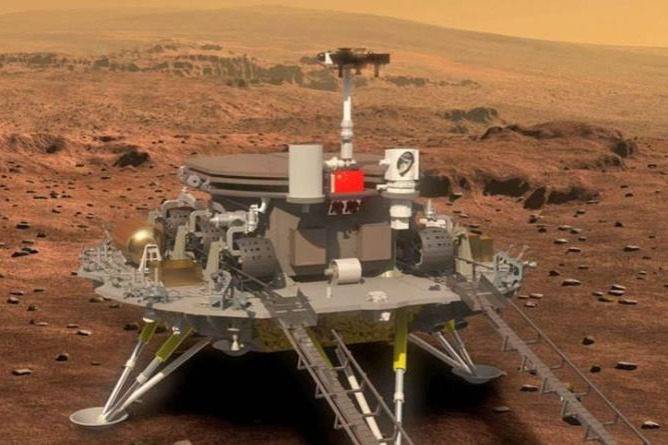
    The United Arab Emirates is preparing to make space exploration history with its Rashid Rover 2 mission, scheduled for launch in 2026. This ambitious endeavor will position the UAE as only the second nation to attempt a landing on the Moon’s mysterious far side, following China’s successful Yutu-2 deployment in 2019.

    Developed entirely within the UAE by the Mohammed Bin Rashid Space Centre (MBRSC), the rover represents a significant leap in the country’s space capabilities. The mission forms a crucial component of the Emirates Lunar Mission program, which aims to deploy multiple rovers to various lunar locations, each with distinct scientific objectives. The program honors the legacy of the late Sheikh Rashid Bin Saeed Al Maktoum, the visionary builder of modern Dubai.

    Rashid Rover 2 will face extraordinary challenges operating on the Moon’s far side, where rugged terrain, complex communication barriers, and extreme environmental conditions present formidable obstacles. The rover has undergone rigorous testing, including thermal vacuum simulations conducted in France, to ensure its systems can withstand the lunar environment’s harsh realities.

    International collaboration plays a pivotal role in this mission. The UAE has partnered with Texas-based Firefly Aerospace, whose Blue Ghost Mission 2 will transport the rover to the Moon using the Elytra Dark orbital vehicle. Additionally, a memorandum of understanding with the French space agency CNES will provide advanced imaging technology, including two high-resolution cameras and a CASPEX imaging module proven effective in previous planetary missions.

    The scientific objectives are both ambitious and practical. Researchers will study geological and thermal aspects of the lunar surface, analyze dust properties, map electrical charge processes, and conduct experiments on materials and mobility systems. Particularly valuable will be testing various materials fitted to the rover’s wheels, with results informing future designs for spacesuits, habitats, and vehicles destined for lunar or Martian operations.

    This mission follows the loss of Rashid Rover 1 in 2023 when its lander failed during descent. Rather than deterring the space program, this experience strengthened the UAE’s resolve, leading to enhanced technological refinement and mission precision.

    Sheikh Hamdan bin Mohammed bin Rashid Al Maktoum, Crown Prince of Dubai and President of MBRSC, emphasized that the mission represents the UAE’s commitment to “generate meaningful knowledge that contributes to humanity’s understanding of the universe.” The project aligns with the nation’s broader vision for economic diversification, scientific advancement, and inspiring future generations to pursue STEM fields.

    As the rover proceeds to the United States for prelaunch preparations, the UAE stands at the threshold of a new era in space exploration—one driven not by prestige but by purpose, collaboration, and a genuine contribution to global scientific knowledge.

  • Shenzhou XXI crew set for first extravehicular activities

    Shenzhou XXI crew set for first extravehicular activities

    China’s ambitious space program reaches another milestone as the Shenzhou XXI astronauts aboard the nation’s orbiting space station prepare to conduct their inaugural extravehicular activities (EVAs) in the coming days. The China Manned Space Agency officially confirmed the planned operations during Thursday’s announcement, marking a significant advancement in China’s celestial capabilities.

    The upcoming spacewalks represent a critical phase in China’s ongoing space station operations, demonstrating the country’s growing proficiency in complex orbital maneuvers. These activities will involve crew members exiting the station’s pressurized modules to perform external maintenance, scientific experiments, and equipment testing in the vacuum of space.

    This mission continues China’s steady progression in space exploration, building upon previous successful missions that established the country as a major spacefaring nation. The carefully orchestrated EVAs require meticulous planning and coordination between the astronauts and ground control teams to ensure absolute safety during the high-risk procedures.

    Technical teams at mission control have been conducting comprehensive simulations and system checks to prepare for the operations. The astronauts have undergone extensive training in both underwater simulations and virtual reality environments to master the complex movements required for working in microgravity conditions while encumbered by pressurized spacesuits.

    The successful execution of these spacewalks will provide invaluable data for China’s future space station operations and potential lunar missions, contributing to humanity’s broader understanding of long-duration space habitation and extravehicular operations.

  • ‘Every drop matters’: Nobel laureate Omar Yaghi to turn UAE desert air into water by 2026

    ‘Every drop matters’: Nobel laureate Omar Yaghi to turn UAE desert air into water by 2026

    Nobel Prize-winning chemist Omar Yaghi is spearheading revolutionary technology capable of extracting clean drinking water directly from atmospheric air, even in Earth’s most arid regions including the Gulf desert. The Jordanian-born scientist, whose childhood experiences in a refugee camp shaped his understanding of water scarcity, has developed reticular materials that function like molecular sponges to capture atmospheric moisture.

    Yaghi’s California-based startup Atoco has announced plans to deploy commercial-scale atmospheric water harvesting units in the second half of 2026, with production capacities reaching thousands of liters daily. The technology utilizes porous crystalline materials featuring internal surface areas equivalent to a football field per gram—engineered to selectively attract and retain water molecules from ambient air.

    The breakthrough system operates through minimal temperature variations, releasing captured water with exceptional efficiency even in low-humidity environments. This innovation holds particular significance for the Gulf region, where water stress significantly impacts both communities and industries.

    Atoco is currently engaged in advanced discussions with regional companies, anticipating early adoption across GCC nations. The technology promises to support desert agriculture, remote community water needs, and irrigation systems without depleting natural water reserves. Additionally, the system integrates seamlessly with green hydrogen production—requiring approximately nine liters of ultra-pure water per kilogram of hydrogen—by utilizing waste heat from electrolyzers.

    The atmospheric harvesting technology also offers sustainable cooling solutions for data centers, using server heat to generate pure make-up water. While not intended to replace desalination, the system provides crucial diversification of water sources and enhanced supply resilience, potentially operating without electrical input in specific configurations.

    Yaghi, recipient of the 2025 Nobel Prize in Chemistry for “discoveries that have conferred the greatest benefit to humankind,” emphasizes that the recognition has intensified his commitment to translating scientific breakthroughs into societal benefits. Reflecting on his journey from discovering molecular diagrams in a library to Nobel recognition, he advocates maintaining curiosity through uncertainty as the pathway to transformative innovation.

  • Genes key to increasing heat tolerance of grains

    Genes key to increasing heat tolerance of grains

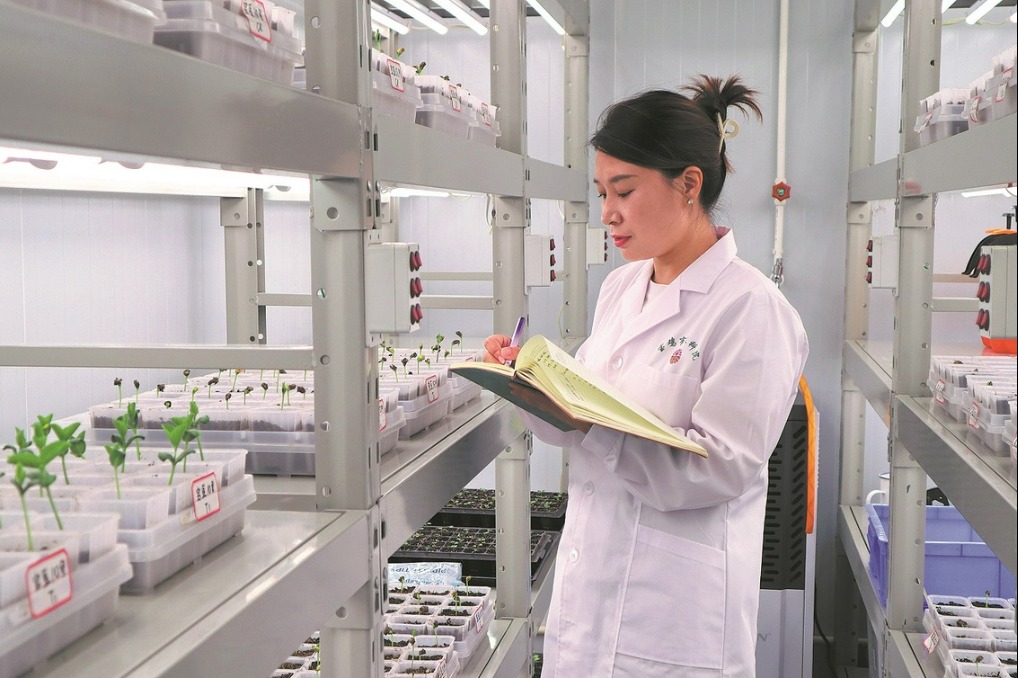
    In a groundbreaking development addressing global food security challenges, Chinese researchers have decoded the molecular mechanisms behind heat tolerance in rice crops. The study, published in the prestigious journal Cell on December 4, 2025, reveals two critical genetic regulators that enable plants to withstand extreme temperature conditions.

    The research team from Chinese Academy of Sciences Center for Excellence in Molecular Plant Sciences, Shanghai Jiao Tong University, and Guangzhou Laboratory conducted extensive field simulations replicating future climate scenarios. Their investigation identified DGK7 (a kinase) and MdPDE1 (a lipase) as essential components in rice’s thermal response system. These function as a sophisticated biological alarm mechanism, converting external heat signals into cellular instructions that trigger protective responses.

    Experimental results demonstrated remarkable yield improvements: single-gene modifications increased production by 50-60%, while dual-gene modifications nearly doubled output compared to control groups. The research maintained crop quality under simulated heat waves reaching 46°C (115°F) during peak daylight hours, without compromising yield under normal growing conditions.

    Dr. Lin Hongxuan, corresponding author of the study, emphasized the precision engineering capabilities now possible: ‘Scientists can not only enhance heat tolerance but design gradient heat-resistant varieties tailored to specific climate conditions.’

    The findings offer transformative potential for securing global food supplies as climate change intensifies. The identified genetic markers provide a blueprint for developing resilient strains of major cereal crops including wheat and corn, potentially mitigating projected yield declines from rising global temperatures.

    This research represents a significant advancement in climate-adaptive agriculture, combining fundamental biological discovery with immediate practical applications for sustainable food production.

  • Indian scientists find galaxy like Milky Way from 12 billion years ago

    Indian scientists find galaxy like Milky Way from 12 billion years ago

    A groundbreaking discovery by Indian astronomers using the James Webb Space Telescope (JWST) has revealed a fully-formed spiral galaxy dating back to when the universe was merely 1.5 billion years old, fundamentally challenging existing models of early galactic evolution. This cosmic structure, named Alaknanda after a Himalayan river, exhibits symmetrical arms and a distinct central bulge remarkably similar to modern spiral galaxies like our Milky Way, despite existing during the universe’s infancy.

    The research team led by PhD candidate Rashi Jain and Professor Yogesh Wadadekar from Pune’s National Centre for Radio Astrophysics identified the galaxy while analyzing approximately 70,000 celestial objects in JWST data. Alaknanda spans approximately 30,000 light-years in diameter and contains an estimated 10 billion solar masses of stars, representing approximately one-third the size of our Milky Way but with a star formation rate 20-30 times greater.

    Published in the prestigious journal Astronomy and Astrophysics, these findings contradict prevailing astronomical theories suggesting the early universe was predominantly populated by irregular, chaotic galactic structures. The presence of such a sophisticated spiral formation merely 1.5 billion years after the Big Bang indicates the universe achieved structural maturity much earlier than previously believed.

    ‘This galaxy had to assemble tremendous stellar mass and develop complex spiral architecture within just a few hundred million years—an incredibly rapid timeline by cosmic standards,’ Professor Wadadekar explained. The discovery suggests current models may significantly underestimate the speed and complexity of galactic evolution in the universe’s formative epochs.

    The researchers plan to conduct follow-up observations using both JWST and the ALMA observatory in Chile to investigate the mechanisms enabling such rapid spiral arm formation. As light from Alaknanda has traveled 12 billion years to reach Earth, astronomers are essentially observing the galaxy’s ancient state, with its current condition remaining unknown until future light arrives.

    This discovery adds to growing evidence from JWST observations that the early universe contained more sophisticated structures than previously theorized, prompting potential revisions to our understanding of cosmic dawn and galactic development processes.

  • How a sperm bank for cheetahs might one day save the fastest land animal

    How a sperm bank for cheetahs might one day save the fastest land animal

    CAPE TOWN, South Africa — For over three decades, pioneering American zoologist Dr. Laurie Marker has been meticulously building a biological insurance policy against the potential extinction of the world’s fastest land mammal. At her Cheetah Conservation Fund laboratory in Namibia, she has assembled one of the world’s most comprehensive cheetah sperm banks—a collection she hopes conservationists will never need to use.

    This genetic repository, established in 1990 and containing specimens from approximately 400 individual cheetahs, represents a critical safeguard against what Marker describes as a ‘worst-case scenario’ for the species. The initiative comes as cheetah populations face unprecedented threats, with fewer than 7,000 individuals remaining across just 33 fragmented wild populations, primarily throughout Africa.

    The urgency of such conservation measures was highlighted on World Cheetah Day, with current cheetah numbers mirroring those of critically endangered black rhinos. Modern threats including habitat fragmentation, human-wildlife conflict, and illegal wildlife trafficking have reduced global cheetah populations by 80% over the past half-century, eliminating them from 90% of their historical range.

    Compounding these challenges is the species’ concerning genetic profile. Scientific research indicates cheetahs narrowly avoided extinction during the last ice age approximately 10,000-12,000 years ago, resulting in significantly reduced genetic diversity. This historical bottleneck, combined with contemporary population isolation and documented reproductive challenges—including 70-80% abnormal sperm rates—creates a perfect storm of vulnerability.

    Marker’s approach represents a established conservation strategy increasingly employed for endangered species worldwide. Similar reproductive technologies are being deployed in the desperate attempt to save the northern white rhino, of which only two females remain. While that effort has yet to produce successful pregnancies, other species like the black-footed ferret have been successfully bred through artificial reproduction techniques after reaching critically low population levels.

    The Cheetah Conservation Fund collects samples opportunistically rather than through active pursuit—gathering genetic material during veterinary interventions with injured or captured animals, as well as from deceased specimens. All samples are preserved at ultralow temperatures using liquid nitrogen technology.

    While approximately 1,800 cheetahs currently exist in captive environments worldwide, Marker notes that the species breeds poorly in captivity, making the frozen genetic repository potentially essential for future conservation efforts. ‘Without this resource,’ Marker emphasizes, ‘we simply wouldn’t have much of a chance should the species face imminent extinction.’

  • Chinese researchers achieve thorough simulation of Martian dust cycle

    Chinese researchers achieve thorough simulation of Martian dust cycle

    Chinese scientists have made a monumental leap in planetary science by successfully completing the first comprehensive simulation of Mars’ complex dust cycle. The breakthrough comes from researchers at the Institute of Atmospheric Physics, Chinese Academy of Sciences, who employed their independently developed next-generation Mars general-circulation model called GoMars.

    The research, detailed in the prestigious journal Advances in Atmospheric Sciences, represents a critical advancement in understanding the behavior of atmospheric dust on the Red Planet. This achievement establishes a fundamental foundation for reliable Martian weather forecasting and long-term climate projections, addressing what has historically been one of the most challenging aspects of Martian atmospheric modeling.

    Mars, frequently described as Earth’s closest planetary relative, presents severe environmental challenges including an extremely thin atmosphere, intense radiation levels, and violent dust storms. These planet-wide dust events, which can emerge without warning, constitute extreme weather phenomena that dramatically influence annual climate variations on Mars.

    The research team conducted an extensive 50-Martian-year dust cycle simulation, enabling GoMars to replicate the complete life cycle of airborne dust particles. Despite limitations in existing observational data—which suffers from significant gaps in temporal continuity, spatial coverage, and resolution—the numerical model effectively fills critical knowledge voids.

    In validation tests, researchers compared GoMars’ surface wind-stress dust lifting flux against established models including MarsWRF. The results demonstrated strong agreement between models regarding both seasonal timing and geographic patterns of dust activity.

    Remarkably, GoMars demonstrated capability to spontaneously generate simulated planet-encircling dust storms, accurately identifying their initiation dates, epicenters, and transport pathways. These simulations align closely with actual observational data from specific Martian years, despite the sparse nature of available measurements.

    Looking forward, the scientific team plans to integrate Martian water cycle dynamics into the model to examine intricate interactions between dust and water vapor. The ultimate objective involves transforming GoMars into an operational system that will incorporate real-time data from China’s upcoming Tianwen 3 mission, potentially enabling daily weather briefings for future Martian exploration activities.

  • ‘Come and kill me’: Sick ants invite destruction to save colony

    ‘Come and kill me’: Sick ants invite destruction to save colony

    In a remarkable display of social immunity, scientific research reveals that terminally ill ant pupae actively signal worker ants to destroy them to prevent colony-wide infection outbreaks. The study, led by behavioral ecologist Erika Dawson at Austria’s Institute of Science and Technology, demonstrates how ant colonies function as cohesive super-organisms with sophisticated disease containment strategies.

    Unlike many species that conceal illness for social reasons, ant colonies have evolved mechanisms reminiscent of cellular responses in complex organisms. When infected cells in human bodies emit ‘find-me and eat-me’ signals, similarly, young ants trapped in their cocoons—unable to practice social distancing—release specific chemical cues when fatally diseased.

    The research team working with Lasius neglectus, a common black garden ant species, discovered that worker ants respond to these olfactory signals by tearing open the cocoons and administering poison that simultaneously eliminates both the pathogen and the developing pupae. This disinfectant process protects the broader colony from potential epidemics in the densely populated nest environment.

    Crucially, the study established that pupae only produce these chemical signals when workers are present, confirming intentional communication rather than passive chemical leakage. This represents an evolutionary adaptation where individual sacrifice benefits genetic survival through colony preservation.

    Notably, queen pupae exhibit different behavior—they neither send destruction signals nor fall victim to this altruistic protocol. Researchers attribute this exception to queens’ superior immune systems, which typically enable them to overcome infections without requiring intervention. The differential treatment underscores the colony’s prioritization of reproductive success over individual worker lineages.

    The findings, published in Nature Communications, provide new insights into social insect evolution and disease management strategies in highly organized animal societies.

  • Renowned astronomers push to protect Chile’s cherished night sky from an industrial project

    Renowned astronomers push to protect Chile’s cherished night sky from an industrial project

    The pristine darkness of Chile’s Atacama Desert, long considered astronomy’s crown jewel, now faces an existential threat from industrial development. This uniquely inhospitable region along the Pacific coast has attracted the world’s premier astronomical projects due to its rare combination of extreme dryness, high altitude, and near-total isolation from light pollution.

    A coalition of 30 distinguished international astronomers, including 2020 Nobel laureate Reinhard Genzel, has issued an urgent warning to the Chilean government regarding a proposed renewable energy complex. The project, planned by AES Andes (a subsidiary of U.S.-based AES Corp.), would situate massive wind and solar farms, a desalination plant, and a new port merely three kilometers from the Paranal Observatory—one of Earth’s most productive astronomical facilities operated by the European Southern Observatory.

    Scientists describe the development as ‘an imminent threat’ to humanity’s cosmic research capabilities. The facility’s high-powered telescopes, which enabled groundbreaking black hole research, would be compromised by multiple factors: increased light pollution estimated at 35%, atmospheric turbulence that blurs stellar observations, ground vibrations, and dust particles. These disturbances would fundamentally degrade the site’s unique atmospheric stability, where stars famously don’t twinkle—a critical condition for cutting-edge astronomy.

    The conflict represents a global pattern as dark sky sanctuaries worldwide face encroaching development. With 40% of the world’s astronomy infrastructure located in Chile, the outcome has international implications. While AES Corp. maintains its project is ‘fully compatible’ with astronomical activities and complies with light pollution regulations, astronomers argue the damage would be irreversible and affect studies ranging from planetary formation to the early universe.

    This confrontation between economic development and scientific preservation reflects a broader tension tearing at countless countries as light pollution brightens the night sky by approximately 10% annually, threatening humanity’s window to the cosmos.

  • Paleontologists uncover ancient elephant relative in Ningxia

    Paleontologists uncover ancient elephant relative in Ningxia

    In a significant paleontological discovery, researchers have unearthed a remarkably well-preserved fossil of a tetralophodon—an ancient progenitor of modern elephants—from a retired mining site in Wuzhong, Ningxia Hui Autonomous Region. The specimen, estimated to be approximately 9 to 11 million years old, represents the first completely intact large-mammal fossil recovered in the region over the past decade.

    The excavation team, comprising leading paleontologists, conducted meticulous fieldwork at the location, revealing the exceptional preservation of the skeletal remains. Tetralophodons, characterized by their four-ridged molar teeth, inhabited various ecosystems during the Miocene epoch and are considered crucial evolutionary links in understanding proboscidean development.

    This discovery provides unprecedented insight into the migration patterns and anatomical evolution of prehistoric elephant species across Asia. The finding’s significance extends beyond mere anatomical preservation, offering researchers valuable data about regional climate conditions and ecological systems that existed millions of years ago in what is now northwest China.

    The Ningxia discovery marks a substantial contribution to vertebrate paleontology, potentially reshaping understanding of proboscidean dispersal routes across the Asian continent. Local authorities have implemented enhanced protective measures at the excavation site while scientists continue detailed analysis of the specimen, which may reveal new information about the species’ adaptation mechanisms and eventual extinction.