分类: science

  • Artemis’s stunning Moon pictures – science or holiday photos?

    Artemis’s stunning Moon pictures – science or holiday photos?

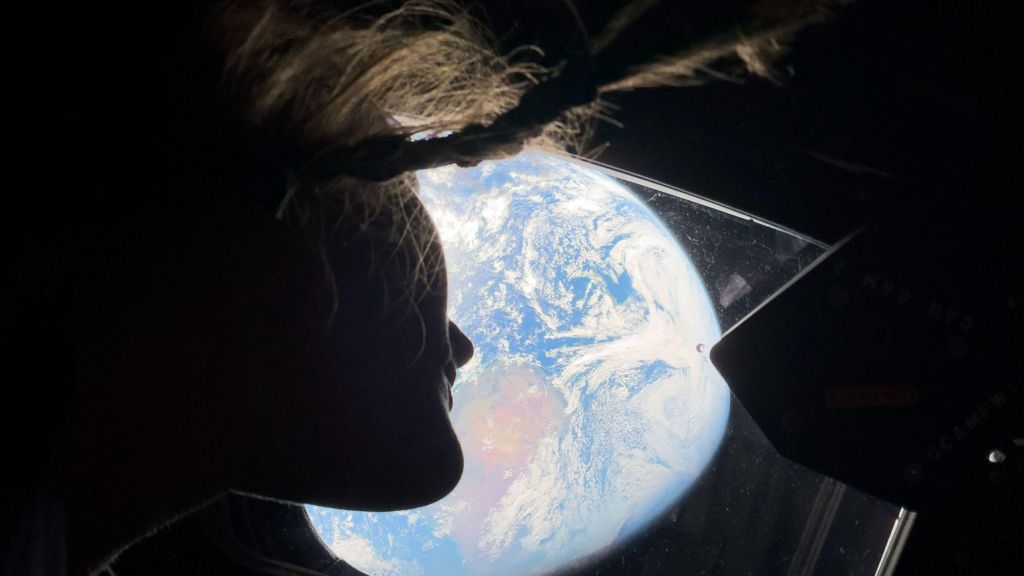
    More than five decades after the final Apollo mission carried humans farther from Earth than any expedition in history, NASA’s Artemis II mission is making new headlines for a cascade of breathtaking high-definition imagery of the Moon and our home planet captured by its four-person crew. Shared widely across social media platforms, where the photos have racked up millions of likes, the shots showcase both celestial bodies from rarely seen vantage points, bringing the awe of deep space exploration directly to the public. But the striking visuals have sparked a key debate: do these images offer groundbreaking new scientific insight, or are they simply the space equivalent of scenic holiday snapshots?

    To build public buy-in for the ambitious program, NASA has leaned into transparency and accessibility throughout the 10-day mission. The entire journey is live-streamed for global audiences, and the four astronauts deliver regular video updates, narrating their progress with palpable excitement. The crew has been so eager to observe the passing Moon and Earth that the viewing window of the Orion spacecraft even became smudged, forcing mission control to send step-by-step instructions for the astronauts to clean it mid-flight.

    This mission marks the first time consumer digital cameras have been deployed this deep into space. The Orion capsule is outfitted with 32 imaging devices total: 15 mounted to the craft’s exterior and 17 held by the crew for handheld shooting. Contrary to assumptions that NASA would rely on cutting-edge custom hardware, most of the equipment consists of off-the-shelf models more than a decade old, including Nikon D5 DSLRs, GoPro action cameras, and standard smartphones. NASA even publishes photo metadata on its Flickr photostream that explicitly notes which device captured each publicly released shot.

    The first major set of images from the mission dropped last Friday. The iconic shot “Hello, World” was captured by Commander Reid Wiseman when the capsule was positioned nearly equidistant between Earth and the Moon: 142,000 miles from our home planet and 132,000 miles from lunar surface. The image captures a rare double aurora during an Earth eclipse of the Sun, with the planet Venus glowing brightly at the frame’s bottom. Earth appears upside down in the composition, with the Sahara Desert and Iberian Peninsula visible on the left, and eastern South America on the right. While widely praised as a visually stunning shot, astronomers note it holds little new scientific data; NASA’s own Deep Space Climate Observatory, which launched in 2015 with the Earth Polychromatic Imaging Camera (Epic), regularly captures imagery of Earth from nearly one million miles away, far farther than Artemis II’s current position.

    A day later, NASA released a second historic image, tagged “history in the making”, that captures the Orientale basin: a massive impact crater located on the Moon’s little-seen far side, a region defined by a thicker crust and a far higher density of impact craters than the near side that always faces Earth. The image was released in advance of the mission’s Monday lunar flyby, when the crew will circle the far side and pass within just 4,600 miles of the lunar surface. NASA says the shot marks the first time the entire Orientale basin has been observed directly by human eyes; even Apollo mission astronauts never got a full view of the crater, limited by their orbital paths and illumination conditions during their flights.

    NASA has emphasized that the unique contribution of this mission lies in human observation, rather than data collected by robotic explorers. The agency notes that the human eye and brain are far more sensitive to subtle variations in color, texture, and lunar surface characteristics than automated instruments, a capability that could lead to unexpected new discoveries and a deeper, more nuanced understanding of the Moon’s geologic features.

    But not all experts agree. Chris Lintott, an astrophysics professor at the University of Oxford and co-host of the BBC’s long-running astronomy series *The Sky at Night*, argues that the primary value of the Artemis II images is aesthetic and cultural, not scientific. Lintott explains that ever since the Apollo program of the 1960s and 1970s, robotic missions have comprehensively mapped the Moon’s far side. In 2023, India’s Chandrayaan-3 probe captured highly detailed imagery of the same Orientale basin terrain, and in 2024, China’s Chang’e-6 mission collected the first ever surface samples from the far side, following up China’s 2019 milestone as the first nation to land a robotic probe on the region.

    “Unless something very unusual happens, there will be nothing for the [Artemis] astronauts to discover,” Lintott explained. While he acknowledges that the crew could potentially spot an impact flash if a large meteoroid strikes the far side’s dark surface, any systematic survey of such events would be far better conducted with automated video cameras than human observers scanning from a capsule window. Still, Lintott stresses that the lack of new scientific discovery does not make the mission meaningless. “The [images] we already have back are beautiful, stunning and iconic – taken by astronauts not by robots. This is a voyage of exploration, not lunar science and that’s fine!” he said.

    While NASA frames the mission and its imagery around scientific progress, a closer look reveals broader political and institutional context that shapes the program. The United States is currently locked in a new 21st century space race with other global powers, most notably China, with both nations competing to be the first to return humans to the lunar surface. A successful Artemis II mission would signal that the U.S. has taken a decisive early lead in this competition for now.

    The mission also comes at a critical moment for NASA’s institutional standing. Current U.S. policy has cut funding for many federal scientific institutions, putting increased pressure on NASA to demonstrate its public value at a time when private space companies like SpaceX are rapidly advancing their own human spaceflight capabilities and raising expectations for accessible deep space travel. As history shows, scientific progress is driven by inquiry and evidence, but it is never isolated from political and institutional priorities.

    This is not the first time a NASA lunar mission has produced culturally transformative imagery. In 1968, Apollo 8 astronaut Bill Anders captured the iconic “Earthrise” photograph from lunar orbit, which showed our blue planet rising above the gray lunar surface. The image highlighted Earth’s fragility at the height of Cold War global tension, reminding audiences across the world that all humans share a single home planet. It proved that a single powerful image could reshape public understanding of our place in the universe, and NASA is hoping Artemis II will deliver a similarly resonant cultural moment for a new generation. For now, audiences across the world can only sit back, enjoy the journey, and marvel at the stunning new views of space captured by the Artemis II crew.
  • Artemis astronauts glimpse Moon’s ‘Grand Canyon’ ahead of historic lunar flyby

    Artemis astronauts glimpse Moon’s ‘Grand Canyon’ ahead of historic lunar flyby

    Nearly five decades after the last Apollo lunar mission, humanity is once again on the cusp of a groundbreaking space milestone. Four astronauts traveling aboard NASA’s Orion capsule as part of the Artemis II mission have already captured never-before-seen views of the Moon’s surface, even before completing their highly anticipated close lunar flyby, the U.S. space agency confirmed Sunday.

    By the end of their fourth day in orbit, the 10-day mission had passed its two-thirds completion mark. Per NASA’s real-time mission tracking dashboard, the crew was positioned roughly 200,000 miles from Earth and 82,000 miles from the Moon as they ended their workday Sunday. The handout image released by NASA, taken by a crew member earlier that day, reveals the massive Orientale Basin—nicknamed the Moon’s “Grand Canyon”—stretching across the distant lunar surface, a sight no human had ever witnessed directly before this mission.

    “This mission marks the first time the entire basin has been seen with human eyes,” NASA stated in an official release. While orbiting robotic probes have previously photographed the bullseye-shaped impact crater, the crater formed by an ancient asteroid collision has only now been observed by human vision.

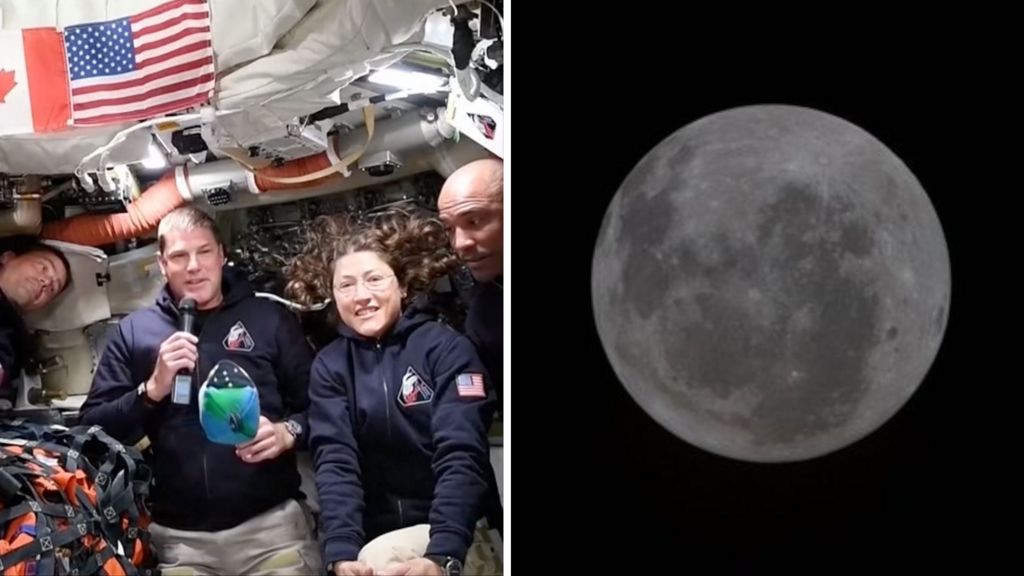
    During a live public Q&A session with Canadian schoolchildren hosted by the Canadian Space Agency, mission specialist Christina Koch shared the crew’s excitement over the unprecedented view. “It’s very distinctive and no human eyes previously had seen this crater until today, really, when we were privileged enough to see it,” she said. Koch also added that the crew had already observed the Moon’s far side for the first time, describing the view as “absolutely spectacular.”

    The mission’s next key milestone is scheduled for overnight Sunday into Monday, when Orion will enter the Moon’s sphere of influence—the point where lunar gravity exerts a stronger pull on the spacecraft than Earth’s gravity. If all systems operate as planned, the flyby that follows will make history: the four-person crew, made up of Americans Reid Wiseman, Victor Glover, and Christina Koch, alongside Canadian Jeremy Hansen, will travel farther from Earth than any human in history.

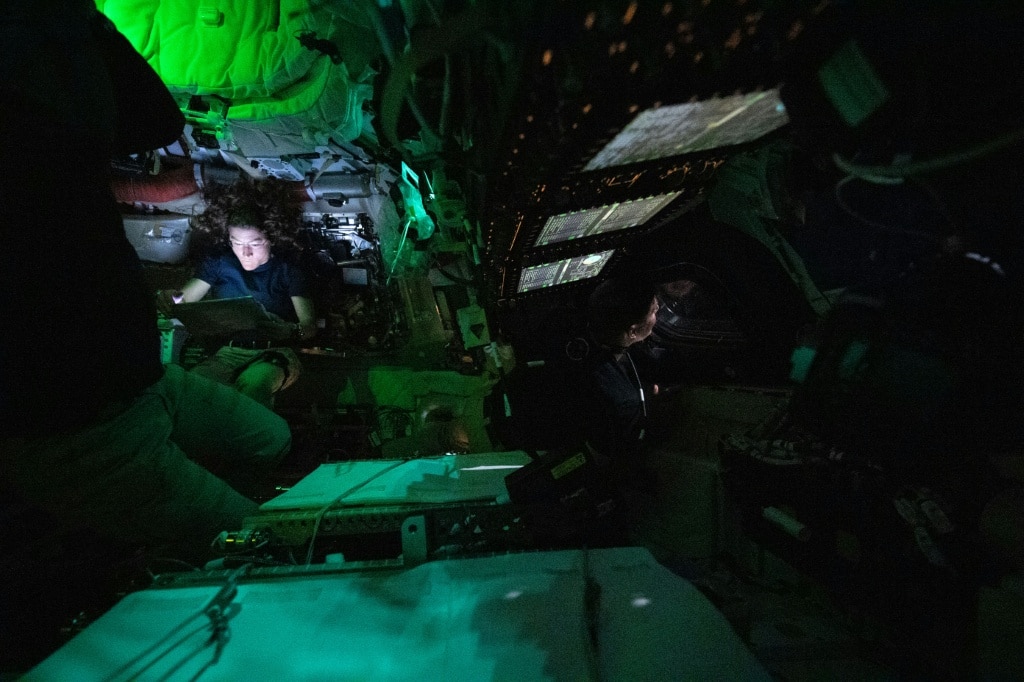
    To prepare for the flyby, the crew has already completed a manual piloting test and a full review of their flight plan, which includes mapping and photographing key lunar surface features during their pass. The crew’s day-to-day operations have blended rigorous mission work with small, personal moments: the team began one recent day with a breakfast of scrambled eggs and coffee, woken by Chappell Roan’s hit pop song “Pink Pony Club,” and mission commander Wiseman noted that morale onboard remains high following a chance to video call his two daughters.

    “We’re up here, we’re so far away, and for a moment, I was reunited with my little family,” Wiseman told a live press conference. “It was just the greatest moment of my entire life.” Wiseman called the entire mission a Herculean feat, one humanity has not attempted in more than 50 years.

    Unlike the Apollo missions of the 1960s and 1970s, which orbited just 70 miles above the lunar surface, Artemis II will make its closest approach at roughly 4,000 miles from the Moon. This higher vantage point allows the crew to observe the entire circular face of the Moon, including polar regions never before seen by human observers. Crew members completed extensive geology training ahead of launch to help them identify and document key lunar features, from ancient lava flows to massive impact craters. The crew has even been permitted to use personal smartphones to capture imagery, a new policy approved by NASA for crewed spaceflights.

    Before the release of the Orientale Basin image, NASA had already published a stunning full portrait of Earth captured from Orion, showing the planet’s deep blue oceans and swirling cloud formations against the black of deep space.

    Artemis II serves as a critical crewed test flight for NASA’s broader Artemis program, which aims to establish a permanent sustainable outpost on the Moon as a stepping stone for future crewed missions to Mars. For the astronauts on board, however, the mission is also the fulfillment of decades-long dreams of space exploration, with crew member Jeremy Hansen describing the simple joy of floating in microgravity: “It just makes me feel like a little kid.”

  • ‘Absolutely spectacular’: Artemis II crew see first glimpse of far side of Moon

    ‘Absolutely spectacular’: Artemis II crew see first glimpse of far side of Moon

    In a landmark moment for human space exploration, the four-member crew of NASA’s Artemis II mission has become the first group of astronauts in more than 50 years to lay eyes on the Moon’s little-seen far side, marking a major milestone on their four-day lunar flyby journey.

    Wednesday marked the third day of the mission, which launched earlier this week from NASA’s Kennedy Space Center in Florida. As the Orion capsule completed its critical maneuver to swing around the far side of the Moon — the portion of the lunar surface that never faces Earth — the crew pulled back the capsule’s observation window covers and got their first unobstructed look at the rugged, crater-pocked landscape that is rarely viewed directly by human eyes.

    Mission control confirmed that the crew described the view as “absolutely spectacular”, sharing the first crew-captured images of the far side back to Earth for both scientific analysis and public release. Unlike the familiar near side of the Moon, which features large, dark maria (ancient volcanic plains), the far side is dominated by heavily cratered highland terrain, a geological difference that has puzzled planetary scientists for decades.

    This mission is the first crewed lunar voyage since NASA’s Apollo program ended in 1972, and it serves as a critical test flight to validate all systems for future crewed landings, including the first Artemis III landing that will put the first woman and person of color on the lunar surface as early as 2026. Data and observations from Artemis II will help engineers refine safety protocols and navigation systems ahead of the landing mission, while also giving the crew a chance to test human observation capabilities in deep space that cannot be replicated by robotic probes.

  • Artemis II crew now halfway to Moon as they take ‘spectacular’ image of Earth

    Artemis II crew now halfway to Moon as they take ‘spectacular’ image of Earth

    Fifty-four years after the final Apollo lunar mission, NASA’s Artemis II program has delivered a breathtaking new look at our home planet, marking a historic milestone in human deep space exploration. The first crewed mission beyond low Earth orbit since 1972 has reached the halfway point between Earth and the Moon, and NASA has released the first batch of high-resolution Earth photographs captured by the mission’s crew aboard the Orion capsule.

    The stunning shots were captured by mission commander Reid Wiseman shortly after the team completed a critical final engine burn that locked the Orion spacecraft onto its trans-lunar trajectory. By 07:00 BST on mission day two, NASA’s real-time tracking dashboard logged the craft at 142,000 miles (228,500 km) from Earth, and just 132,000 miles away from its destination. This milestone was achieved 2 days, 5 hours, and 24 minutes after the mission’s launch from Florida’s Kennedy Space Center, and astronaut Christina Koch shared that the entire crew reacted with a shared outburst of excitement when the milestone was confirmed.

    The first released image, dubbed *Hello, World*, offers a striking perspective of Earth that can only be achieved from deep space. The frame captures the deep blue expanse of the Atlantic Ocean, edged by the soft glowing halo of Earth’s atmosphere. The shot is taken during a solar eclipse from the capsule’s perspective, as Earth passes directly between Orion and the Sun, and vivid green auroras are visible at both the north and south poles. Earth appears upside down in the frame, with the western Sahara and Iberian Peninsula visible on the left side of the shot and the eastern coast of South America on the right; the bright celestial body visible in the bottom right corner has been confirmed by NASA as Venus.

    A second shot, titled *Artemis II Looking Back at Earth*, was taken through one of Orion’s four primary observation windows, offering a wider panoramic view of our planet hanging in the black of deep space. A third image captures the so-called “terminator” — the sharp dividing line between night and day as it cuts across Earth’s surface. A fourth final shot captures Earth fully eclipsing the Sun, with the warm twinkle of human-made city lights glowing across the dark night side of the planet.

    The historic trans-lunar injection burn that set Orion on its path was completed in the early hours of Friday, pulling the craft out of its initial Earth orbit and setting the four-person crew on a more than 200,000-mile journey to the Moon. The mission is following a looping flight path that will carry the crew around the far side of the Moon, with the lunar pass scheduled for April 6, before the craft returns to Earth for a Pacific Ocean splashdown on April 10.

    In communications with mission control in Houston, mission specialist Jeremy Hansen shared that immediately after the burn was completed, the entire crew was “glued to the windows” capturing the view, saying “We are getting a beautiful view of the dark side of the Earth, lit by the Moon.” Commander Wiseman even joked with controllers after the shooting session, asking for instructions to clean the spacecraft’s windows after all the pressing and handling from eager astronauts. Wiseman also noted that he initially struggled to adjust his camera settings for the long-distance shot, comparing the challenge to taking a photo of the Moon from a backyard on Earth — but he soon worked through the issue to capture the crisp, vivid images released this week.

    To mark the milestone, NASA also released a side-by-side comparison of the 2026 Artemis II view of Earth and an equivalent shot captured by the 1972 Apollo 17 mission, the last human mission to the lunar surface. In a social media post accompanying the comparison, NASA wrote, “We’ve come so far in the last 54 years, but one thing hasn’t changed: our home looks gorgeous from space!”

  • Watch: Artemis II’s journey so far as it leaves Earth orbit… in 85 seconds

    Watch: Artemis II’s journey so far as it leaves Earth orbit… in 85 seconds

    A newly released 85-second timelapse video has condensed months of preparation and progress for NASA’s Artemis II mission, offering audiences a sweeping look at the spacecraft’s journey from development through its eventual departure from Earth orbit. This condensed visual chronicle pulls back the curtain on one of the most anticipated space exploration initiatives of the decade, highlighting key milestones that have brought NASA one step closer to returning human explorers to deep space near the Moon.

  • NASA launches Artemis II crewed moon mission

    NASA launches Artemis II crewed moon mission

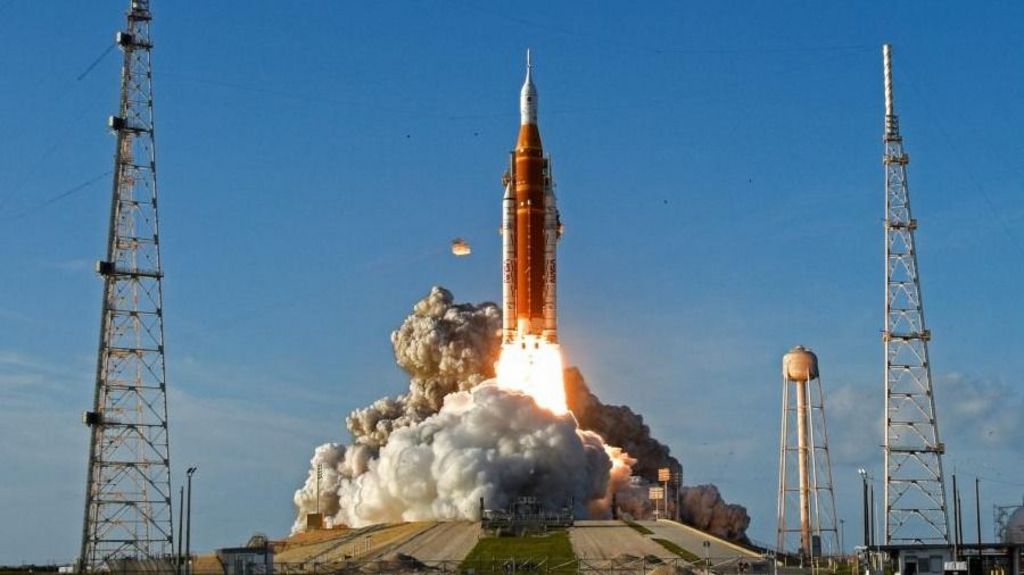
    CAPE CANAVERAL, Fla. — NASA has made history on Wednesday, marking the first launch of a crewed mission around the moon since the final Apollo mission more than half a century ago, when its long-awaited Artemis II lifted off from Kennedy Space Center in Florida.

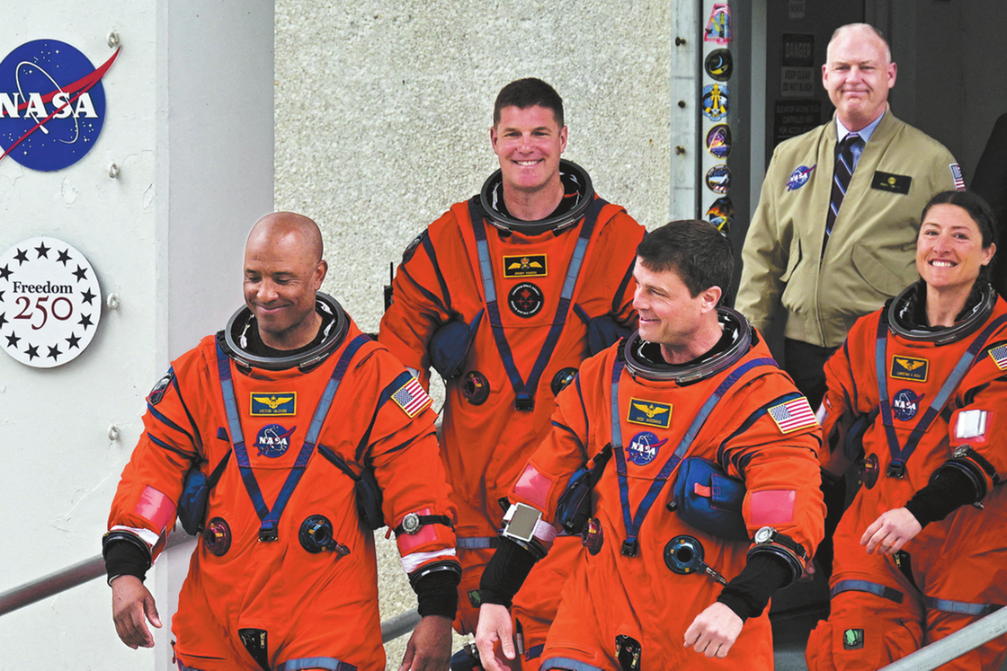
    Carrying four astronauts from two nations, the 322-foot Space Launch System heavy-lift rocket roared off Launchpad 39B at 6:35 p.m. Eastern Time, carrying the Orion deep-space crew capsule atop its frame to begin a landmark 10-day lunar flyby expedition. The international crew includes three NASA astronauts — commander Reid Wiseman, pilot Victor Glover, and mission specialist Christina Koch — alongside mission specialist Jeremy Hansen from the Canadian Space Agency, who walked to the astronaut transport van for their trip to the launchpad as crowds of aerospace officials and spectators watched.

    By all initial accounts, the opening phases of the mission unfolded largely according to NASA’s pre-planned timeline. Just eight minutes after liftoff, the rocket’s core main engines completed their burn and separated from the interim cryogenic propulsion stage and the Orion capsule. By 24 minutes post-launch, all four of Orion’s extended solar array wings had fully deployed and started generating the electrical power required for the spacecraft’s deep-space operations. In the coming days, the mission team will carry out key scheduled maneuvers: a perigee-raise burn to raise Orion’s closest approach to Earth, followed by an apogee-raise burn to position the capsule for its trans-lunar journey. When complete, the crew will travel roughly 7,400 kilometers beyond the moon’s far side before heading back for an Earth splashdown.

    However, the mission encountered an early technical anomaly. Speaking at a post-launch press briefing, NASA Administrator Jared Isaacman confirmed that 51 minutes into the flight, Orion suffered a temporary partial communications outage during a planned handover between tracking satellites. The agency has not yet identified the root cause of the disruption, and engineering teams are currently reviewing telemetry data to trace the issue.

    This mission marks the first crewed flight test of NASA’s $93 billion Artemis lunar exploration program, first unveiled in 2017 with an initial goal of landing the first woman and person of color on the moon by 2024. Artemis II is designed to test and validate a wide range of critical deep-space capabilities, most notably the Orion capsule’s life support systems that will sustain crew members during long-duration deep space missions, while allowing the four-person team to practice operational procedures that will be central to future lunar landing missions. The program’s first test flight, Artemis I, was an uncrewed lunar orbiting mission completed successfully in November 2022.

    The launch of Artemis II comes after years of repeated delays driven by persistent technical setbacks. Just two months prior, in early February, a countdown dress rehearsal was halted by dangerous hydrogen fuel leaks in the Space Launch System, forcing NASA to roll the rocket back to the vehicle assembly building for repairs and conduct a second full pre-launch test. After completing that retest later that month, teams discovered a second issue with helium flow to the rocket’s upper stage — a system critical to purging engine lines and maintaining fuel tank pressure — requiring additional corrective work before launch could be cleared.

    In February, NASA released an updated timeline for the Artemis program that pushed the first crewed lunar landing from 2027 to 2028, and added a new mission to the sequence to reduce technical risk ahead of the landing. Under the revised roadmap, Artemis III will now focus on testing core mission systems in low Earth orbit in 2027, while the Artemis IV mission will carry out the first crewed lunar landing near the moon’s south pole in 2028.

  • Why isn’t Artemis II landing on the Moon?

    Why isn’t Artemis II landing on the Moon?

    NASA’s ambitious Artemis program has sparked widespread curiosity among space enthusiasts around the globe, particularly regarding the upcoming Artemis II mission. Many following the program’s progress have posed one pressing question: if the United States targets a human lunar landing by 2028, what is the core purpose of Artemis II, which will not touch down on the Moon’s surface at all?

    To answer this question, it is critical to contextualize the phased approach of the entire Artemis initiative. Unlike the Apollo program that raced to put the first humans on the Moon half a century ago, Artemis is built as a sequential, sustainable program designed to lay long-term groundwork for lunar exploration and eventual deep space missions to Mars. Artemis I, the first uncrewed test flight completed in 2022, successfully validated the Space Launch System rocket and Orion capsule’s deep space capabilities, proving the core hardware could operate as designed in the harsh environment of cislunar space.

    Artemis II, the program’s first crewed mission, represents the next critical milestone in this step-by-step framework. Scheduled for launch no earlier than September 2025, the four-person crew will embark on a roughly 10-day mission that will loop around the Moon before returning to Earth. This journey is not intended to end with a surface landing; instead, its primary goal is to comprehensively test all life support systems, communication networks, navigation tools, and abort capabilities with humans on board, gathering real-world data that no uncrewed test can provide.

    The mission will also allow crew members to evaluate how the human body responds to the radiation exposure and microgravity conditions of deep space travel beyond low-Earth orbit, filling critical gaps in medical data that has not been updated since the final Apollo missions in the 1970s. Engineers will monitor every system’s performance during the flight to identify and resolve any unforeseen issues before committing to a landing attempt with Artemis III, currently targeted for September 2026, later pushed back to 2028 due to development delays in the human landing system and spacesuits.

    This incremental approach prioritizes crew safety above all else, a core principle that has guided NASA human spaceflight for decades. By skipping the landing on Artemis II, mission planners can focus entirely on validating the foundational capabilities that any successful lunar landing and future sustained lunar operations depend on. The data collected from Artemis II will not only inform the Artemis III landing mission but also support the long-term goal of establishing a permanent lunar outpost called Gateway, which will serve as a testing ground for technologies needed for eventual human missions to Mars.

    In the broader scope of space exploration, Artemis II holds historic significance of its own, even without a landing. It will mark the first time humans have traveled beyond low-Earth orbit since Apollo 17 in 1972, and its crew will include the first woman, first person of color, and first non-US astronaut to journey to the lunar vicinity. While the final landing goal remains targeted for 2028, Artemis II itself is a landmark step that will open a new era of human deep space exploration.

  • How a chance meeting shaped Canadian Jeremy Hansen’s mission to the Moon

    How a chance meeting shaped Canadian Jeremy Hansen’s mission to the Moon

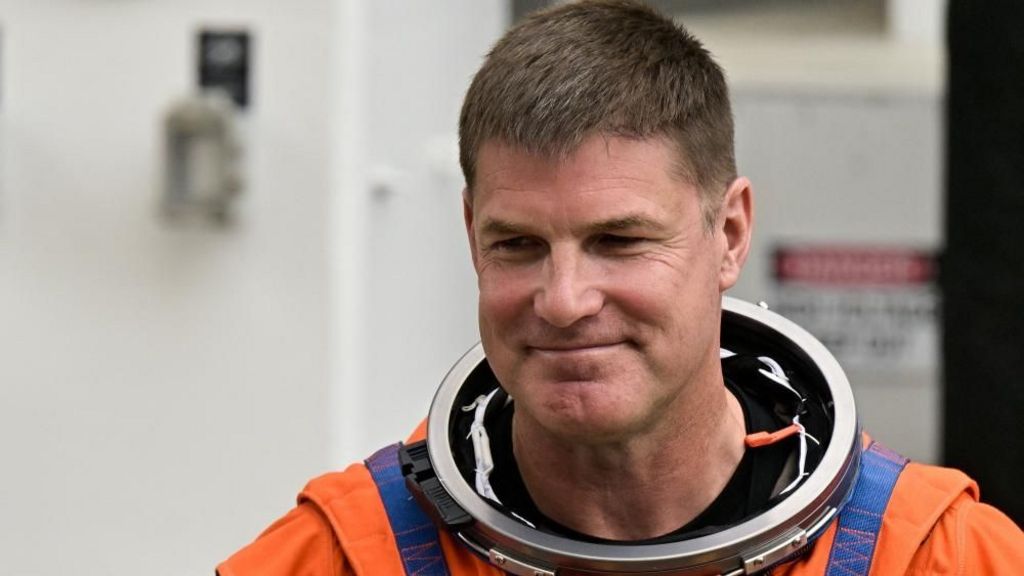
    Fifty years after the last Apollo mission carried humans to the Moon’s vicinity, Canadian astronaut Jeremy Hansen stands on the cusp of making history as the only non-American crew member of NASA’s groundbreaking Artemis II mission – a milestone decades in the making, rooted in childhood wonder and a chance mentorship that shaped his path to space.

    Long before his name was attached to humanity’s first crewed lunar orbit mission in a generation, Hansen was a curious five-year-old growing up on a small farm outside London, Ontario. His passion for space ignited unexpectedly when he stumbled on an encyclopedia entry featuring Neil Armstrong and the iconic 1969 Apollo 11 lunar landing image. That moment left an indelible mark: “That page is still burnt in my brain,” Hansen recalled in a recent interview with *Spaceflight Now*. The young aspiring explorer quickly converted his family’s treehouse into a makeshift rocket, turning childhood daydreams into the first step of a decades-long journey.

    By his teens, Hansen had translated that fascination into action, joining the air cadets youth program before pursuing degrees in space science and physics at university. He went on to become a Royal Canadian Air Force fighter pilot, flying CF-18 jets out of Cold Lake, Alberta’s military base and collaborating with the North American Aerospace Defense Command (NORAD). But a chance encounter during his first year at the Royal Military College of Canada in 1995 would cement his trajectory: the young cadet met his idol, fellow Canadian astronaut Chris Hadfield – years before Hadfield would take command of the International Space Station.

    Hansen worked up the courage to ask Hadfield for his email address, and the quick exchange sparked a years-long mentorship that would guide Hansen’s career. When Hansen joined the Canadian Space Agency (CSA) in 2009, following in Hadfield’s footsteps as both a fighter pilot and astronaut, Hadfield remained a key advisor, leaving Hansen with one simple, enduring piece of advice: chase the work that sets your passion alight. “Jeremy has been getting ready for this flight since he was five years old,” Hadfield noted in a March podcast conversation with Canadian singer Emm Gryner.

    Fourteen years after joining the CSA, Hansen’s lifelong preparation culminated in a historic selection: he was named mission specialist for Artemis II, the first crewed mission to travel beyond low-Earth orbit and circle the Moon since NASA’s Apollo program concluded in the 1970s. Over the 10-day mission, Hansen and three crewmates – commander Reid Wiseman, pilot Victor Glover, and fellow mission specialist Christina Koch – will travel farther from Earth than any human group in history.

    Hansen is under no illusion that the groundbreaking mission will be without risk. “To do something that has never been done before means that your team is very likely to face failure,” he shared in an interview with the CSA. But that uncertainty has not dimmed his commitment to pushing human exploration forward. “I like the fact that in space, we are committed to bold goals to the extent that we will not let periodic failure stop our forward progress,” he added.

    For the historic flight, Hansen has woven personal and cultural meaning into every detail of his mission. He will carry four small moon-shaped pendants, each engraved with a birthstone for his wife and three teenage children. His custom blue spacesuit bears a mission patch designed by Anishinaabe artist Henry Guimond, with input from Dave Courchene III of Manitoba’s Sagkeeng First Nation. The patch’s heptagonal shape and featured animals draw from Indigenous teachings that center on four core values: love, respect, courage and humility for all people. Hansen says the patch is a deliberate tribute to Indigenous peoples of Canada and their millennia of traditional knowledge.

    In a recent BBC interview with science editor Rebecca Morelle and 13 Minutes podcast host Tim Peake – himself a former astronaut – Hansen opened up about the moments he is most anticipating. He is already looking forward to his first glimpse of Earth from orbit during his opening hour in space, but the highlight he expects will be the view of the Moon in the foreground, with our home planet hanging delicate and blue in the black distance behind it.

    For Hansen, the mission is about more than just pushing the boundaries of human exploration: it is a reminder of what humanity can achieve when we work together. “I hope humanity will stop for a moment when four humans are on the far side of the Moon, and just look at some of the imagery that we are sharing – and just be reminded that we can do a better job as humans of just lifting each other up,” he said. “Not destroying but creating together.”

  • Danish warship sunk by Nelson’s British fleet discovered after 225 years

    Danish warship sunk by Nelson’s British fleet discovered after 225 years

    On the 225th anniversary of one of the most pivotal naval battles of the Napoleonic era, marine archaeologists from Denmark’s Viking Ship Museum have announced a landmark discovery: the wreck of the Danish flagship *Dannebroge*, sunk by British forces under Admiral Horatio Nelson during the 1801 Battle of Copenhagen, has been located on the seabed of Copenhagen Harbor.

    The conflict that claimed the *Dannebroge* was rooted in 19th century European geopolitics. Denmark had joined the League of Armed Neutrality, an alliance of Northern European powers including Russia, Prussia and Sweden, that sought to protect neutral shipping from British blockades during the Napoleonic Wars. To prevent the Danish navy from falling under French control, Nelson led a British fleet in a surprise attack on the Danish blockade positioned outside Copenhagen Harbor on April 2, 1801. The brutal, hours-long clash killed and wounded thousands of combatants, and remains remembered as one of Nelson’s most famous military victories. It was during this battle that Nelson, who had lost vision in his right eye decades earlier, allegedly ignored a recall order from his superior, famously remarking, “I have only one eye, I have a right to be blind sometimes” — an anecdote that gave rise to the enduring idiom “to turn a blind eye.”

    As the Danish flagship and Nelson’s primary target, the 48-meter *Dannebroge* commanded by Commodore Olfert Fischer bore the brunt of the British attack. Cannon fire shredded its upper deck, and incendiary shells sparked an uncontrollable blaze. “When a cannonball hits a ship, it’s not the cannonball that does the most damage to the crew, it’s wooden splinters flying everywhere, very much like grenade debris,” explained Morten Johansen, head of maritime archaeology at the Viking Ship Museum, describing the nightmare conditions for sailors on board. The badly damaged vessel drifted northward in the harbor before eventually exploding, with historical records noting the blast produced a deafening roar heard across the entire city of Copenhagen.

    For more than two centuries, the exact location of the wreck remained a mystery. That changed when archaeologists launched targeted surveys of the area late last year, zeroing in on a site that aligned with historical accounts of the *Dannebroge*’s final resting position, 15 meters below the water’s surface. Working in thick seabed sediment with near-zero visibility, the team has already confirmed the wreck’s identity: the dimensions of recovered wooden fragments match 19th century ship schematics, and dendrochronological dating, which uses tree rings to date wood, confirms the timber matches the period when the *Dannebroge* was built. So far, divers have recovered two intact cannons, military uniforms, metal insignia, footwear, glass bottles, ceramic fragments, basketry, and even a partial human lower jawbone, likely belonging to one of the 19 *Dannebroge* crew members still unaccounted for after the battle.

    Working at the site is a grueling challenge. Silt stirred up by divers’ movements keeps the water in near-complete darkness. “Sometimes you can’t see anything, and then you really have to just feel your way, look with your fingers instead of with your eyes,” said Marie Jonsson, a diver and maritime archaeologist on the project. Even more pressing is the race against time: the wreck site lies in the footprint of Lynetteholm, a massive planned coastal housing and development project scheduled to begin construction on the site in the near future, with completion targeted for 2070. The months-long underwater excavation is being rushed to recover as much of the wreck and its artifacts as possible before construction begins.

    For Denmark, the discovery of the *Dannebroge* is far more than a archaeological find: the 1801 battle is deeply woven into the country’s national identity. “It’s a big part of the Danish national feeling,” Johansen noted. While the battle has been extensively documented by historians for more than two centuries, much of what is known comes from secondhand accounts from outside observers. Archaeologists believe the wreck holds untold new details about what life was really like for sailors caught in the brutal fighting, and may uncover long-lost personal stories of the men who served on the flagship. “There are bottles, there are ceramics, and even pieces of basketry,” Jonsson said. “You get closer to the people onboard.” The Associated Press was the only international news outlet granted exclusive access to the excavation site.

  • Xiong’an national observatory officially inaugurated

    Xiong’an national observatory officially inaugurated

    BEIJING – On Wednesday, China formally launched its 27th national climate observatory in the Xiong’an New Area, a strategically planned modern development zone located in Hebei Province, northern China. The inauguration marks a key milestone in strengthening the country’s national climate monitoring network and advancing meteorological research for one of China’s most ambitious urban development projects.

    Officials from the China Meteorological Administration confirmed that the new observatory features a structured network of one central main monitoring station and eight regional auxiliary stations. This distribution allows the facility to capture comprehensive climate data across four distinct major ecosystem types that exist within the Xiong’an region, including dense urban development zones, natural forest landscapes, protected wetland reserves, and large-scale agricultural farmland areas.

    Unlike traditional static observation facilities, all meteorological data collected across the Xiong’an network is transmitted instantly in real time to a cloud-hosted big data platform. This digital integration dramatically boosts local and national capabilities in continuous climate monitoring, rapid extreme weather early warning, and customized meteorological services tailored to the needs of different economic and public service sectors.

    Located approximately one hour’s drive southwest of central Beijing, Xiong’an New Area was first established by Chinese authorities in 2017. Widely referred to as China’s “city of the future,” the development is a core component of the national strategy to relocate non-essential capital functions from Beijing to ease urban overcrowding pressure, while driving coordinated economic and social development across the Beijing-Tianjin-Hebei region. As the new city continues its phased construction and population growth, robust meteorological infrastructure has become an urgent priority to support sustainable urban planning and daily operation.

    Following its official inauguration, the Xiong’an National Climate Observatory will take on dual roles beyond basic climate data collection. In addition to fulfilling routine long-term climate observation tasks, the facility will also conduct targeted cutting-edge research in multiple key climate-related fields. The data and research output from the observatory will provide more robust, reliable technical support for national efforts including climate resource assessment, long-term climate change tracking and impact analysis, and early identification of meteorological disaster risks across the region and beyond.

    Over the past several years, local meteorological authorities in Xiong’an have already made significant progress in building out smart meteorological infrastructure, establishing a preliminary integrated regional monitoring network that covers the entire new area.

    “Moving forward, our team will continue to strengthen core capabilities across three key areas: meteorological disaster risk monitoring and early warning, ecological meteorological support for environmental protection and restoration, and high-quality meteorological services that support stable urban operation,” said Guo Yitao, deputy director of the newly inaugurated Xiong’an observatory.